Song of the Day: The Breaking of the Fellowship (by Howard Shore)


With my favorite scene from The Fellowship of the Ring chosen and posted it’s now time to pick my favorite piece of music from that film’s orchestral soundtrack. This was a soundtrack that I consider just one-third of a massive 12-hour symphony. The song I’ve chosen is actually a re-edited version of this film’s “Complete Recordings” release: “The Breaking of the Fellowship”.

Howard Shore’s work as composer for Peter Jackson’s monumental and epic (if there was ever a subject deserving of that overused word it would be Jackson’s fantasy trilogy) has been hailed by critics and fans alike as one of the best, if not the best, film score of the new millennium. Shore doesn’t go for the typical overly bombastic score that’s become the go-to style for epic films of any stripe. His work on this first third of the total Lord of the Rings score even manages to outdo John Williams’ own compositions for the other major fantasy series to come out the same year in Harry Potter and The Sorcerer Stone.

Where Williams’ had begun to partially cannibalize his own past film scores for his recent ones, Shore was able to look at what Jackson was creating and decided to base the entire score for The Fellowship of the Ring on three motifs which were airy, subtle with the loud and expressive brass section only appearing in one of these three. “The Breaking of the Fellowship” ends the film on a mixture of triumph and sadness as the track’s title describes. Shore takes the peaceful “hobbit theme” from the beginning of the film and combines it with the more rousing “Fellowship theme” then topped with as bonus with sections from the “Rivendell theme”. These three themes combine to highlight not just the breaking of the fellowship in the end of the film, but some sense of loss of innocence of the hobbits in the group as heard by a more somber and pensive rendition of the “hobbit theme”.

Of all the musical cues in The Fellowship of the Ring it’s the one which makes up “The Breaking of the Fellowship” that fully expresses the overall thematic and narrative themes of the film. It’s a song that tells the audience that the peaceful nature of the hobbits have now been tempered by their complete understanding of the exact nature of their fellowship’s quest. It also underscores how even in triumph the fellowship will encounter heartbreak and tragedy. These two themes will continue to be explore in the next two films and their respective score, but it’s in this first one that it truly shines.

Scenes I Love: The Lord of the Rings: The Fellowship of the Ring


“I would have would have followed you, my brother… my captain… my king.” – Boromir, Captain and High Warden of the White Tower

It’s been five days since the season finale of the first season of Game of Thrones and the withdrawal symptoms are definitely starting to kick in. Season two of this fabolous series won’t be back for at least ten months. To help alleviate some of the withdrawal symptoms I decided to go on The Lord of the Rings Trilogy marathon all weekend. Tonight will be The Fellowship of the Ring (Extended Edition). It’s from this first leg of the trilogy that I choose today’s scene that I love.

The scene I have chosen is very close to the end of the film and it’s a scene between Viggo Mortensen’s Aragorn and Sean Bean’s Boromir. It’s soon after the attack of Saruman’s Uruk-Hai on the group. Boromir valiantly tries to protect and save Merry and Pippin from the Lurtz and his band of Uruk-Hai. It’s the scene which arrives after that really hits home for me just how great Peter Jackson’s adaptation of the first part of Tolkien’s massive tome.

This quiet and heartbreaking scene between Aragorn and Boromir cements Viggo’s performance as the reluctant hero moving towards embracing his legacy and destiny while at the same adding complexities to Sean Bean’s performance as Boromir being a flawed and tragic hero in his own right. It is a scene that will cause more than just a few tears to be shed.

Trailer: Captain America: The First Avenger (Theatrical)


The summer of 2011 has been called the Summer of Superhero Films. In early May we had Marvel Studios’ Thor film premiere to good reviews and it has had a certain level of success (though not the level of The Dark Knight success rabid fanboys and jaded film bloggers think every comic book-based film should be doing). Then next up was the fourth X-Men film from Twentieth Century Fox by Matthew Vaughn that seem to reboot the franchise from it’s downward spiral begun by the third film and the Wolverine origins film. This film garnered even higher praise than Thor and many saw it as equaling or surpassing the X2. While it’s box-office success has been good it didn’t make the sort of money previous films in the franchise have made in years past. Then we come to the recently released Green Lantern from Warner Brothers and DC Entertainment.

This film was to be the next crown jewel to join DC’s successful Batman film franchise and iconic Superman series which seems to be the only DC properties to have had a successful live-action adaptation. While the film did very good in it’s first weekend the reviews of the film range from “ok and fun” at best to “downright awful” at its worst. All three films have huge budgets and, most likely, all three will be a profit for their studios, but not runaway hits.

Maybe the public has begun to tire of superhero films as a cause for the less than cosmic box-office returns. One other reason could be that too many people have been blinded by the massive box-office success of Christopher Nolan’s The Dark Knight that every superhero film must now be compared to that one fair or not. This makes the job much harder for Marvel Studios’ second film of the summer, Captain America: The First Avenger, as that film looks to cement the foundation for next summer’s major blockbuster ensemble superhero film, The Avengers.

I don’t see Captain America doing TDK level money, but early screenings of the film has earned it some major positive buzz that had been missing from Thor. That early positive buzz and this latest trailer which really showcases the action of this period piece of a superhero film should help push Captain America to be a success no matter if it makes 200million dollars domestic or more.

One thing I’m sure of is that this latest trailer should be more people excited for Captain America: The First Avenger when it comes out on July 22, 2011.

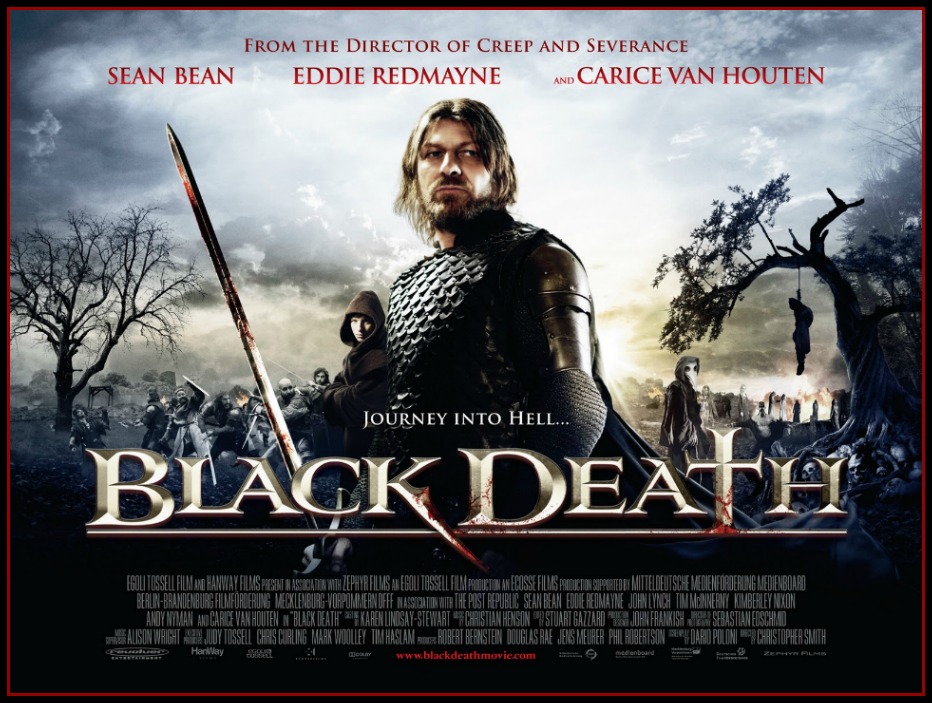
Quickie Review: Black Death (dir. by Christopher Smith)


British filmmaker Christopher Smith has been flying under the radar of most of the film-going public. He’s already a filmmaker with five films to his credit of varying quality, but each showing his growth as a director with each successive release. In 2010, Christopher Smith released his sixth film in the UK with some film festival showings in the US soon thereafter. Black Death continues Smith’s work in the horror genre with this latest film a historical horror piece which tries to take a look at the subject matter of the Black Death of medieval Europe in a realistic, gritty light.

The film is set during in 1348 plague-ravaged England where a Osmund, a young monk, has a crisis of faith as he agonizes over his celibate vows to God and his love for Avrill, a young woman in town who also has feelings for Osmund. Avrill gives Osmund a week to find the answer to his dilemma and will wait for him at the marshes in that alloted time. Osmund finds his answer as templar knight Ulric (played by Sean Bean) and a group of his soldiers arrive at the monastery on a mission to find a village said to be untouched by the plague and one which might be providing a safe haven for a necromancer who has brought the dead back to life. Osmund seizes on this chance to leave the monastery and lead Ulric and his men through the marshes and to this village.

During their travel the group loses a couple men to bandit attacks and to the plague itself. They also come across a band of villagers about to burn a young woman for witchcraft. At first, Ulric seems to take pity and show compassion to this young woman, but instead kills her himself for the crime she is accused of. Ulric reminds Osmund and his men that they have no time for such distractions as they a much more important task ahead of them. A task which soon brings them to the very village which seem to be free from the plague many attribute to God punishing the sinners and other’s as the Devil tormenting the faithful.

It’s this ambiguous theme of how the Black Death was seen by villagers, soldiers and faithful which becomes an overriding theme in the film. Smith, using Dario Poloni’s screenplay, goes about exploring how those in power on both sides of the question — of whether God or the Devil was responsible for the plague — hold such a major influence on the minds of the uneducated populace. Ulric, Osmund and the group do find their necromancer, but it’s not all what they’ve expected and, for Osmund, this mission becomes a tragic one which tests his faith in God, his church and all that he’d been taught (indoctrinated some would call it) to believe. Osmund becomes the spiritual battleground from which Ulric and the necromancer fight over his eternal soul and the effect this has on the young monk turns out a surprising fashion which brings to mind Michael Reeves own historical piece and one of the greatest horror films of all-time in Witchfinder General.

Christopher Smith’s direction continues to improve and shows in Black Death as he’s able to make not just the subject of this horrific era in Europe’s medieval past, but at the same time use a deft hand to explore themes of faith, spirituality, role of religion as control and how fundamentalism doesn’t just affect those with religious conviction but also those who follow the secular path. It helps that Smith had a capable ensemble cast led by Sean Bean’s usual strong performance. Eddie Redmayne as Osmund seemed to be a one-note cipher through the first-half of the film, but once he arrives in the village his character begins to open up in complex ways that we’re never sure if he’ll fall on the side of the angels or the demons even right up to the end and even then it’s left ambiguous.

Black Death marks the latest in Christopher Smith’s tour of the horror genre and it’s many varying subjects to hone his growing craft as a filmmaker. The film ended up being entertaining despite having such an oppressive atmosphere and tone to not just the story, but to the very setting. There’s enough blood and gore spilled (using practical effects and not a sign of CGI to be seen) during scenes of fighting and torture to satisfy gorehounds who might come across the film. It also should work the mind of those also looking not just for the grue but also something to stimulate the mind. It’ll be interesting to see what Christopher Smith has next to follow-up this well-done and executed historical horror film.

AMV of the Day: Devil’s Game


madokamagica

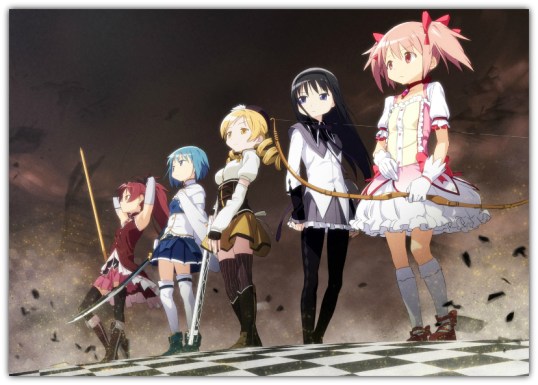
The latest “AMV of the Day” is another one which is based on the mahou shoujo series, Puella Magi Madoka Magica. It’s become one of my favorite anime series of late and with each repeat viewing just increases my love for it. This latest anime music video takes that “magical girl” anime series and combines it with a symphonic rock song to create an AMV titled, “Devil’s Game”.

“Devil’s Game” is not just my latest pick for “AMV of the Day” but also the latest from AMV creator-extraordinaire Chiikaboom whose anime music video creations have always become instant favorites of mine. This latest really highlights the darkness that permeates throughout the anime series. For a mahou shoujo series, Puella Magi Madoka Magica get pretty dark and the subgenre as a whole uses themes of darkness to balance out the cute magical girl art design.

Within Temptation’s “A Demon’s Fate” is quite an appropriate song to use for this video. The series is all about Magi (magically-enhanced teen girls) fighting evil Witches to save the innocent people and the world. The series also includes Kyubey whose extremely cute appearance hides a secret that the song’s lyrics and title really meshes well with.

Chiikaboom’s editing of the video was not as extensive as some past ones which really comes and goes in rapid-fire fashion. For this video the editing and scene transitions matches very well with the bass drum sections in the song that it’s not noticeable at first glance, but really shows after repeat viewings. And it’s well-made AMV’s like this using scenes from this series that really should help sell Puella Magi Madoka Magica to the uninitiated whose experience with anime is from Adult Swim showings on Cartoon Network.

“Devil’s Game” is the best Puella Magi Madoka Magica AMV I’ve seen, so far, hand’s down.

Anime: Puella Magi Madoka Magica

Song:  “A Demon’s Fate” by Within Temptation

Creator: Chiikaboom

Trailer: A Dangerous Method (dir. by David Cronenberg)


To say that I am a huge fan of Canadian auteur and all-around genius filmmaker David Cronenberg would be the understatement of the decade. I count him as one of the greatest filmmakers of the last 30 years. Seen his style go from grindhouse video nasties type of horror to the sublime. He’s one filmmaker who has never had to compromise his filmmaking style to suit the audience. You either accept what he has crafted or not.

The last 5-6 years has seen his stock rise amongst the film community as films like A History of Violence and Eastern Promises has gotten him recognition from the Academy voters, Film Circles and others in the film elite community. At the same time these films have been widely regarded by film fans as some of the best of the past decade. It helps that he seems to have found a partner-in-crime in another auteur with actor Viggo Mortensen who played lead in both those films.

Now for 2011 the two partner up again for the third time for Cronenberg’s film adaptation of the stage play “The Talking Cure” which itself was adapted from the non-fiction book, A Most Dangerous Method. The film is called A Dangerous Method and stars Viggo Mortensen as Sigmund Freud, Michael Fassbender as Carl Jung and Keira Knightley as Sabina Spielrein. These three become the focal point of a sort of relationship triangle as the friendship between Freud and his younger apprentice in Jung becomes even more complicated when young Sabina get’s between the two men who would give rise to the study of psychoanalysis.

That brief synopsis doesn’t make this film very interesting at first glance, but this is Cronenberg who never picks projects and stories to tell unless it appealed to him. I wouldn’t be surprised if the film wasn’t just a story about three individuals and their relationships towards each other, but something even more abstract as Cronenberg’s bound to explore the early days of psychoanalysis itself.

Here’s to hoping A Dangerous Method delivers on everything fans of Cronenberg have come to expect from him…or not expect as the man has a tendency to surprise with each new film.

100 Bullets To Be Developed For Showtime


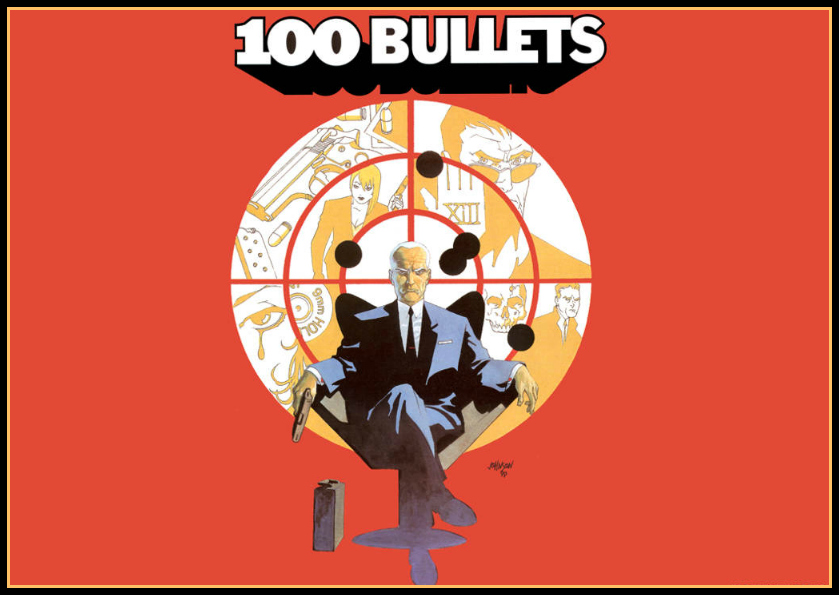
One of my favorite comic book titles ever ended up not being a superhero title, but an inventive take on the pulp noir stories which has it’s basis on the stories of such luminaries as Dashiell Hammett, Mickey Spillane, Jim Thompson and Raymond Chandler. 100 Bullets by DC Comics’ Vertigo imprint is that very title and it’s creative team of Brian Azzarello (writer) and Eduardo Risso (artist) were able to fit a complex, morally ambiguous tale of betrayal, conspiracies and bloodshed.

In years past there had been talk of adapting the 100-issue maxi-series into an HBO series, but those plans went for naught. With DC now hellbent on adapting much of their comic book properties to the big and small screen it was a nice surprise to read from Slashfilm.com that 100 Bullets is in development for premium cable channel Showtime with David Goyer executive producing the show. Whether this news ultimately reaches it’s logical conclusion and Showtime picks up the show is still up in the air.

The fact that there’s a good chance the series will finally have it’s live-action realization has made this news a happy one for me. I have always thought that Azzarello and Risso created something that was tailor-made for premium cable. Even the way Risso drew the scenes on the pages of the comic was done so as if through a film camera recording every detail. The series also has quite a cast of characters that makes it easy for an audience to latch onto and invest themselves emotionally for their well-being.

Here’s to hoping that Goyer is able to set aside his ego and find quality writers to help him adapt the series. Of all the details about this news it’s his name that worries me the most. Showtime definitely needs a new series to counter the runaway hit HBO has in it’s hands with it’s Game of Thrones series. I believe that 100 Bullets could be Showtime’s counter to HBO’s new show if they decide to pick it up.

Source: /Film

Review: Game of Thrones Ep. 10 “Fire and Blood”


[spoilers within!]

“You should get some sleep. It’s going to be a long war.” – Jaime “Kingslayer” Lannister

We’ve finally reached the season finale of what’s been an excellent first season of Game of Thrones. When news that HBO was adapting George R.R. Martin’s epic medieval fantasy (it’s a fantasy of the historical medieval event known as “The War of the Roses”) there was much rejoicing from fans of the Martin’s “A Song of Ice and Fire Saga” then once the news had settled came the trepidation. How would showrunners Weiss and Benioff be able to adapt the first book (titled A Game of Thrones) faithfully without trimming away so much to fit almost 1000-pages of story into a 10-episode first season.

When the season premiere came and went most of the book’s fans trepidation were assuaged and with each new episode only the most nitpicky and intractable hardcore fans of the book even complained about changes from book to screen. HBO’s Game of Thrones has been one excellent piece of long form TV storytelling with characters people have grown to love, accept and mourn over (really go through the 5 Stages of Grief after Episode 9). We last left the show with the show’s face having sold out his honor in an attempt to save his daughters. Ned Stark, Lord of Winterfell and Warden of the North, was a great soldier and a loyal friend to the departed King Robert Baratheon, but he was never fit to play “the game of thrones” as he wasn’t able to compromise his sense of duty and honor to win a game where such virtues were really more of detriments to winning. So, newly crowned Joffrey (Bieber) Baratheon decides to ignore his mother’s advice and goes to show he’s his own man and, a ruthless one at that, demands for Ned’s head and gets it. The scream of NOOOOO! and WTF?! from across the world once that final scene hit could be heard around the internet and beyond. I wouldn’t be surprised if alien races passing by the system picks up those tweets and blog posts reacting over Ned Stark’s death.

The season finale begins soon after that final scene of episode 9. Ned Stark’s head gets picked up by Ser Ilyn Payne (Joffrey’s executioner) as Arya gets taken away by Yoren of the Night’s Watch to try to save her from Joffrey and the Lannisters bound to continue searching for her. This scene showed just how much Arya seems to be one of the few Starks who has learned the need to survive when surrounded by enemies. Once again it’s been a joy to witness Maisie Williams in the role of Arya Stark. Child actors are usually hit or miss when given big roles in film or tv, but Maisie Williams seem to have taken to the role of the tomboy Arya with gusto which has made her a fan favorite of the show.

“Fire and Blood” explores through much of it’s running time the reaction by the show’s many players and factions to the death of Ned Stark by the command of King Joffrey. It doesn’t matter which faction the episode focused on the reaction seemed universal: Joffrey was stupid to have executed Ned Stark. From the grief and anger by Robb Stark and his mother Catelyn who promised her grieving son that once the Stark girls have been retaken and safe then “they will kill all of them”. It’s not strictly implied if she meant just the Lannisters or everyone who has had a hand in the Stark travails or failed to help. It helps lay a seed for a new storyline for the upcoming second season as war truly breaks out in Westeros. We now have Robb Stark anointed by Lord Greatjon Umber as King of the North with the rest of the Stark bannermen following suit. Then we hear news from the Lannister war council that Renly and Stannis Baratheon have amassed their own armies to force their own individual claims to the Iron Throne.

The time spent in the Lannister camp shows Tyrion (and Peter Dinklage always at his best) not just gaining the trust and respect of his father Tywin, the Lion of Lannister, but being given the title of Hand of the King. His dumbstruck expression at becoming the second most powerful man in the Seven Kingdoms (after Tywin) was priceless as was his decision to bring Shae the prostitute along as the Hand’s Lady even though it meant disobeying his father’s explicit orders that he not do so. It’s been great to see Tyrion always unsure of his footing when dealing with his father, but never letting that keep him from still trying to rebel against the person who had shunned and ridiculed him all his life. This is another seed that should bear very interesting fruit for season 2 especially now that war will soon come for the Lions of Casterly Rock and King’s Landing.

But the episode is all about Jon Snow at The Wall and Daenerys Targaryen at Vaes Dothrak across the Narrow Sea. While the Starks, Lannisters and Baratheon houses with their respective bannermens and allies make their plans to either carve out their own nation or seize the Iron Throne at King’s Landing, from The Wall and across the Narrow Sea two groups make gamechanging decisions that will affect the Seven Kingdoms for season two and beyond as it has in the books.

Jon Snow still decides to leave Castle Black and break his oath to the Night’s Watch in order to rejoin his brother Robb and his army on their march south against the Lannister’s. This decision doesn’t sit well with Sam Gamg…I mean Samwell Tarly who continues to remind Jon of his oath and the consequences of breaking it. The first season really highlights one thing which fans of the book really never got to see. Jon Snow, as dreamy as might be to some, is really quite an immature young man who thinks his decision to run back to his family as they go off to war is not just his duty but honorable. Then when everyone around him, from rivals, mentors and friends, disagrees with him Jon begins to stamp his feet and pout like a little boy who has been told he can’t have his dessert before supper. It’s why I’m glad that Sam has been written in the show to be less a sidekick to Jon, but the logic and common sense voice always making sure Jon understands where his try duty lies.

The scene in the woods were Sam and the rest of the Night’s Watch brothers who forms Jon Snow’s little entourage catches up to Jon and recite the Night’s Watch oath one at a time then together to re-forge the bond they will all need. They will need to rely on each other as Lord Commander Jeor Mormont has decided to take the Night’s Watch north of the wall to find not just Jon’s uncle, Benjen Stark, but to find out once and for all why the wildling tribes have been fleeing south and if the White Walkers are truly back and on the move. The use of a military-variant of the show’s main title theme music score’s the men of the Night’s Watch moving out of Castle Black and into the wilderness north of the wall. It was an inspired scene that promises not just action, but hopefully more signs and encounters with the boogeymen north of the Wall.

Once we leave the snow confines of The Wall and the North we switch to the sunny plains of Vaes Dothrak where Daenerys finally learns the consequence of showing mercy to the people she saw as helpless and in need of her protection from the ravages of Khal Drogo and his khalasar. Dany learns the hard way through the stillborn birth of her son, Rhaego, and the mindless state Drogo has come to under the ministrations of her witch-woman, Mirri Maz Duur. To say that this latest life lesson continues to add to Dany’s growing sense of becoming the warrior queen she was meant to be would be an understatement.

She shares a final tender night’s moment with her husband, Khal Drogo, knowing that his mind has left his body. She reminisces the times they both shared in their short time together before finally releasing Drogo from his state through a mercy killing. If the final moments of this episode will say anything about Dany it’s that she has learned her lesson about mercy and the consequences of when not to give it.

Emilia Clarke has been great in the show as Daenerys. We’ve seen her grow from the meek younger sister of the deluded Viserys to being the wife and growing equal of Khal Drogo to the final moments of “Fire and Blood” where we finally learn the true meaning of her having the blood of the dragon. This was a scene that fans of the books were very wary of. HBO is one of the premiere cable channels, but they still operate under budgets that doesn’t match those of epic fantasy films like Lord of the Rings. Would the producers and the channel be able to pull off the reveal in the end. We see Dany walk into the blazing funeral pyre made for Drogo and where she has sentenced Mirri Maz Suur to burn, but will the morning after be able to satisfy not just the fans of the books but also new fans who have stayed with the show even after Ned Stark’s surprising death. I am happy to say that seeing Dany rising up from the ashes of Drogo’s pyre unharmed with three new additions to her own khalasar should satisfy everyone.

It’s a great way to end the first season which really plays out more like a prologue to the true story that season 2 will tackle. We see the dragon eggs have hatched overnight and bear witness to the most powerful things in the world of the Game of Thrones. Dany doesn’t need the Dothraki who have abandoned her when she now has Rhaegal, Drogon and Viserion to be her firepower to conquer a new army to take back to Westeros and reclaim the Iron Throne of the Seven Kingdoms. I love how the last thing we hear as the episode fades to black is the loud, defiant screech of one of her newly hatched dragons signalling the return of the true Targaryen’s to the story the show has told, so far.

Season 1 has done all it could to stay true to George R.R. Martin’s writing and has done so well even when the show’s writers saw it fit to change some minor things in the narrative to fit the tv format and also add in a couple new characters. “Fire and Blood” wasn’t as shocking as episode 9’s “Baelor”, but what it lacked in surprise it more than made up with a cliffhanger that should leave fans of the books and the show wanting for season 2 to arrive now instead of the Spring of 2012.

Game of Thrones has whetted the appetite of new and old fans alike and, barring any sudden change of heart at HBO, the show should only get better from here on out. All the main characters have been introduced with just a few more to make their arrival known in season 2. The game of thrones itself has now fully engulfed the Seven Kingdoms with Dany in the east and winter coming from the north waiting to sweep down to take everyone at any time. This season also ended with the show finally embracing the long-forgotten magic which characters in the show has mentioned but we’ve never really seen. Here’s to hoping that Spring 2012 arrives as soon as space-time continuum as possible. A ten month wait for the next season will be torture with only the first season dvd/blu-ray set to assuage that long wait.

A few highlights from “Fire and Blood”

  • Sansa finally seeing Joffrey for the little douchebag monster that he was when forced by him to looked at her father’s head on a spike and threats of having her older brother’s head on another one for his rebellion. Sansa still seems the weakest of the Stark children, but the realization of not just the real Joffrey, her fantasy life as queen and how much of a fool she has been was a strong sequence. Seeing Sandor “The Hound” Clegane stopping her from tossing Joffrey off the bridge and showing a semblance of compassion toward’s her should make for very interesting scenes between Sansa and The Hound in seasons to come.
  • Catelyn Stark confronting Jamie Lannister at the Stark camp really showed some new layers of complexity to the character of the Kingslayer. At once we see his usual cavalier attitude towards his rivals and the situation he finds himself in, but we also see a hint of regret for what he and his sister have begun. There’s a reason why the Kingslayer in the novels have become such a favorite amongst fans. He’s a character who also has a certain sense of honor and duty like Ned Stark, but  sees love of family (not just figuratively but literally) as first and foremost before honor. It will be interesting to see how the writers continue to develop Jaime for season 2 and how they’ll figure out to give him more scenes since Jaime wasn’t in A Clash of Kings as much as the initial novel.
  • The relationship between Tyrion and Shae continues to grow in a much more interesting way in the series than it had in the books. Whoever decided to cast Sibel Kekilli as Shae should be commended. The show could’ve easily went with an actress who was ridiculously hot, but instead went for exotic and added fire and brains to the character to better match wits with Tyrion who is growing to see Shae not just as a bed companion, but one who may be his equal. Here’s to hoping the writers continue on this path for the Tyrion/Shae pairing.
  • We finally see the final Stark direwolf. Shaggydog, Rickon Stark’s (youngest of the Stark brood) direwolf, shows up and scares the living daylights and shit out of Tonks…I mean Osha and Bran as they tour the Stark crypts. Even though it’s only for a brief moment we start to see how even the youngest Stark has begun to change in personality as winter is definitely coming and war ravages Westeros.
  • We get another great scene with just Varys and Littlefinger testing each other out in the throne room. Despite knowing that both have their own agendas and probably don’t ever see each other becoming fast friends they do respect each other’s abilities to stick to the roles they’ve learned to play in the “game of thrones”. These two just highlight how they will never see themselves as heroes, but do see themselves as the smartest people in the room, thus the ones who have the best chance of surviving the games these wanna-be kings hope to play and win. Even seeing Grand Maester Pycelle really being more than he appears to the many further shows that the principals of the game really do not know just how much they’re being manipulated by those they see as being weaker and cowardly. Varys and Littlefinger is like the Seven Kingdom’s version of Mad Magazine‘s Spy vs Spy.
  • Seeing for the first time that Cersei’s more than sisterly love and affection toward’s her twin brother Jaime may not be an accident of those two’s close bond as twins. It looks like Cersei has found a temporary replacement for Jaime in the form of her younger cousin Lancel Lannister. While Jaime is the image of martial beauty and confidence who probably didn’t fall for Cersei’s manipulative wiles as much as she’d want it looks like Lancel is going to be much more pliant in the living arms of Cersei. This scene just continues to build on just how screwed up House Lannister really seems to be and how Tywin and Tyrion seem to be the only ones who has kept the intellect in the family.
  • Finally, the addition of two new musical pieces by the show’s composer Ramin Djawadi. First, the version of the main title theme but with a martial tone to it as the Night’s Watch marches north of The Wall to sees exactly what’s going on with the wildlings and if the White Walkers are really on the move. The second being the rousing, but ominous version which scores the arrival of Daenerys as the true heir of the Targaryen and the birth of her three children in Rhaegal, Viserion and Drogon.

Feel free to comment and discuss what you thought of this season finale episode and the season as whole below….

….Season 2 in ten months and Winter is still coming….

Songs of the Day: Game of Thrones Main Theme and Finale


A Sunday night has arrived and that means the latest episode of HBO’s instant medieval fantasy hit series, Game of Thrones, adapted from the George R.R. Martin novel of the same name. This show has pretty much ruled my Sunday nights and for the past ten weeks I and a couple other writers for the site have done recaps and reviews of each episode. As great as the show has been the soundtrack to the show has been equally grand and epic in sound. Tonight’s season finale finally unleashes the finale music and, paired with the now recognizable “Main Title” music for the show, becomes the latest song to make “Song of the Day”.

I can’t pick the “Finale” by Ramin Djawadi without also including the “Main Title” music which the former is born from. Ramin Djawadi has taken the initial song, with its blending of medieval chamber sound with some Mediterrean stylings, and adds in an ominous and martial quality for the finale. It helps punctuate the season finale and how it ties up the loose ends of the premiere season’s prologue storylines and lays the foundation for what looks to be second season with the world of Game of Thrones fully at war with dangers not just from north of The Wall, but now a resurgent old royal line across the Narrow Sea.

The “Finale” doesn’t actually return to the “Main Title” motif until a third of the way through but certain notes and chords from that initial theme could be heard throughout until the finale reaches it’s final 30 seconds and the “Main Title” motif returns in a crescendo of brass, percussion and strings before finishing suddenly. It’s a testament to Ramin Djawadi that the score never dominates the show unless it’s in the intro title sequence and the end credits when the music won’t overcome the performances on the screen. Other composer might look at the opportunity to flex their musical muscle and just go full bore from beginning to end, but not this score.

It’s a good thing I bought the Game of Thrones soundtrack off of iTunes. It’s definitely joined the Conan the Barbarian and Lord of The Rings orchestral score as some of my favorites.

Review: La Horde (dir. by Benjamin Rocher and Yannick Dahan)


“When the dead come for you, there’s no place left to run.”

Most zombie films tend to be average at best, often falling into outright mediocrity. Because this subgenre is relatively easy to create, many aspiring filmmakers believe they can produce the next standout hit with just an HD camera, a modest budget, and a cast drawn from friends and family. Naturally, this formula has led most zombie movies to occupy the low end of the horror genre in terms of quality. However, every so often, a truly exceptional film emerges. Edgar Wright’s Shaun of the Dead became an instant classic by blending horror with comedy, and Zack Snyder’s remake of Romero’s Dawn of the Dead delivered intense, action-packed thrills.

The 2009 French horror film La Horde—directed by Benjamin Rocher and Yannick Dahan—leans toward Snyder’s style. It strips away societal commentary, opting instead for raw action and relentless gore. This might suggest a mindless movie, but La Horde proves to be as engaging and nihilistic as Snyder’s film, perhaps even more so by its conclusion.

The directors spare no time on exposition, diving straight into the plot. The story follows a group of French police officers—most likely narcotics agents—who plan to take revenge on a Nigerian crime lord responsible for killing one of their own. Their chosen battlefield is a dilapidated high-rise apartment complex in a crime-infested district of Paris. However, their operation quickly unravels when the ambush goes disastrously wrong. What begins as a gritty crime thriller transforms abruptly into an apocalyptic battle for survival, as the police and rival gang members are forced to join forces against a sudden zombie outbreak sweeping through Paris and possibly beyond.

Once the zombies arrive, the film shifts into high gear. The action and gore come fast and furious, skillfully choreographed and unflinching. Secondary characters are swiftly dispatched, leaving only the most capable to fight their way through a tenement overrun by fast, aggressive zombies akin to those in Snyder’s Dawn of the Dead or Boyle’s 28 Days Later. Though some purists might balk at sprinting zombies, they fit perfectly with the film’s frantic pace. Notably, the film does not attempt to explain the outbreak’s origin, leaving audiences as disoriented as the characters, glimpsing only fragmented news reports for context.

The remainder of the film is an intense descent through the building, with the survivors battling floor by floor in search of an exit and safety at a nearby military base. Choosing characters familiar with violence—cops, criminals, and a hardened local survivor—grounds their fierce will to survive in realism. Even the lone resident they encounter brings useful skills born from a violent past.

While La Horde does not offer complex character development, its finely tuned action scenes keep the audience fully engaged, masking the story’s simplicity. By the film’s end, viewers are likely to forgive any flaws, having been thoroughly entertained. A few characters, such as the composed officer Oussme (Jean-Pierre Martins) and the crime lord Markudi (Eriq Ebouaney), achieve extra depth, but most are archetypes serving the survival narrative. Still, this works well given the film’s focus on high-stakes survival.

Though La Horde never secured a major U.S. release, it gained attention on the international genre festival circuit starting in 2010. While it may primarily appeal to zombie and horror aficionados, it also offers plenty for action fans. Its brutal, relentless energy earns it a strong recommendation as an exhilarating experience from start to finish.