Review: Die Hard (dir. by John McTiernan)


“Welcome to the party, pal!” — John McClane

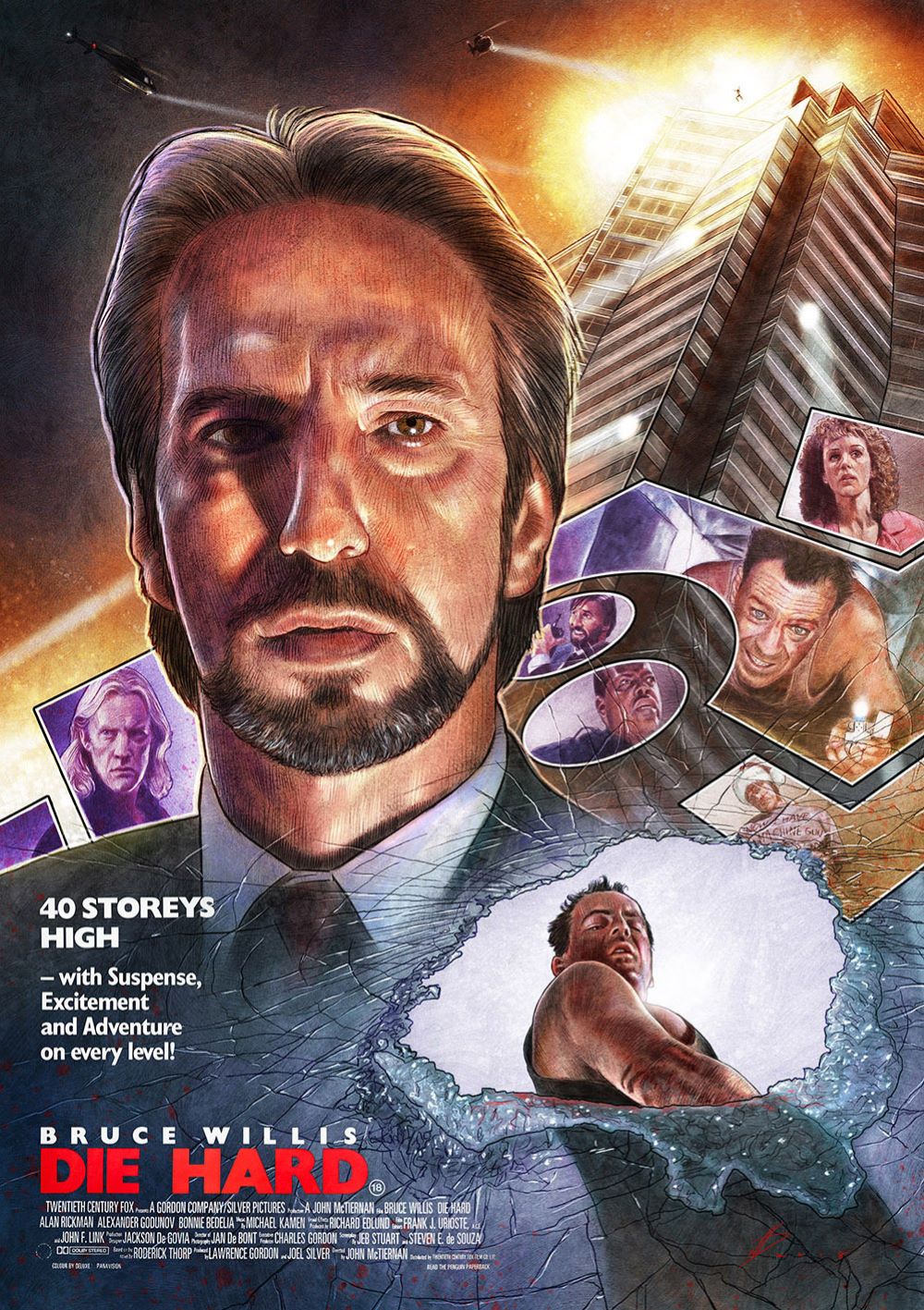
Die Hard is the ultimate Christmas film (though not the greatest) disguised as an action thriller, blending holiday cheer with high-stakes mayhem in a way that has sparked endless debates and turned it into a seasonal staple for millions. It stands as a landmark action movie and a sharp, character-driven thriller that continues to set the standard for the genre. The film mixes bombast with genuine heart, balancing tension, wit, and raw emotion so effectively that its imperfections only add to its enduring appeal.

Released in 1988 under John McTiernan’s direction, Die Hard follows New York cop John McClane (Bruce Willis) arriving in Los Angeles during the holidays to reconcile with his estranged wife Holly at her office Christmas party in Nakatomi Plaza. He’s fresh off a transcontinental flight, nursing a cocktail of jet lag and marital tension, hoping a festive gathering might thaw the ice between them after her career move to the West Coast has strained their family life. No sooner has he kicked off his shoes—famously leaving him barefoot for most of the chaos—than a disciplined crew of armed robbers, masquerading as terrorists under the command of Hans Gruber (Alan Rickman), storms the building, holding the revelers captive and forcing McClane to fight back shoeless and outgunned amid the towering offices. This lean setup—one man, one skyscraper, one chaotic evening—drives the story’s relentless pace, with straightforward spatial awareness keeping viewers locked into the rising peril. The Christmas setting isn’t just window dressing; twinkling lights, carols on the soundtrack, and a rooftop Santa sleigh add layers of irony and warmth to the gunfire, making the film a peculiar but perfect yuletide watch.

The movie refreshingly casts its action lead as an everyday underdog, full of sarcasm and frailty rather than invincible machismo. McClane takes real damage—he’s slashed by glass, battered by falls, and wheezing from asthma attacks—freaks out under pressure, second-guesses himself constantly, and limps through the ordeal covered in cuts and shards while grumbling about his lousy luck. These moments of raw vulnerability humanize him in a genre often dominated by perfect physiques and unflappable cool. Bruce Willis brings a rumpled, relatable edge to the role, drawing from his TV background on Moonlighting to infuse McClane with quick-witted banter and hangdog charm, making his pigheaded risks and desperate quips—like his tense radio chats or infamous air vent shuffle—land as the outbursts of an ordinary Joe desperate for survival and a way out. Willis’s casting was a gamble at the time, pivoting from wisecracking detective to gritty hero, but it paid off by redefining what an action star could be: flawed, funny, and fiercely determined.

Hans Gruber remains a standout antagonist, living up to every ounce of his legendary status—and remarkably, this was Alan Rickman’s very first film role, launching him into stardom with a performance that still defines screen villainy. Fresh from stage work, Rickman infuses him with suave detachment and subtle menace, his silky British accent dripping with condescension as he portrays a criminal mastermind who approaches the heist like a hostile merger, his cultured facade slipping just enough to reveal cold ruthlessness. Lines like his mocking “Mr. Mystery Guest” taunts or his gleeful disdain for American excess have become iconic, delivered with a theatrical precision that elevates Gruber above typical thugs. Clever writing highlights his contempt for yuppie excess and delight in red tape, while McTiernan’s direction turns their encounters into personal showdowns brimming with verbal sparring beyond mere firepower, turning cat-and-mouse into a battle of intellects as much as endurance.

A strong ensemble bolsters the narrative without bogging down the momentum. Bonnie Bedelia’s Holly exudes quiet strength, proving herself a sharp professional unafraid of bosses or bandits, which elevates her rapport with McClane above clichéd rescue tropes—she’s calling shots from the hostage room and holding her own in tense negotiations. Reginald VelJohnson’s Sergeant Al Powell elevates a stock radio contact into the story’s heartfelt core, offering McClane solace and shared regrets during their poignant nighttime talks about lost family and second chances, creating an unlikely but touching bromance across police lines. Figures like Hart Bochner’s smarmy Ellis, with his coke-fueled deal-making, or William Atherton’s pushy journalist Richard Thornburg, chasing scoops with ruthless ambition, add biting commentary on greed and sensationalism, sharpening the film’s take on ’80s excess and how corporate snakes and media vultures complicate the crisis. Even smaller roles, like the hapless deputy chief or the bickering SWAT team, paint a vivid picture of institutional incompetence that McClane must navigate alone.

Die Hard excels in choreographing escalating clashes within tight quarters, turning the skyscraper into a multi-level chessboard. McTiernan masterfully exploits Nakatomi’s design—raw construction levels with exposed beams, service elevators for ambushes, fire stairs slick with tension, upper decks for sniper duels, and cubicle warrens for close-quarters chaos—to distinguish every skirmish from rote shootouts, ensuring each fight feels unique and earned. Precise editing weaves between McClane’s scrambles, captive dread, robber schemes, and external responders, layering suspense without devolving into explosive filler; the cross-cutting builds dread as plans intersect disastrously. Standout sequences thrill because of careful buildup around deadlines and official blunders, like ill-timed interventions that raise the stakes sky-high. The practical effects—real stunts, squibs, and pyrotechnics—give the action a tangible weight that CGI-heavy modern films often lack, grounding the spectacle in sweat and physics.

Blending laughs with savagery proves the film’s toughest feat, yet it mostly triumphs. McClane’s biting comebacks, taped to dead bodies or barked into walkie-talkies, and the dark comedy amid cop-thug banter sustain levity amid dire threats and mounting casualties, preventing the film from tipping into grim slog. Gags like the executive’s C4 “gift” or Powell’s Twinkie diet poke fun at excess without diffusing danger. Certain gags and era-specific jabs feel dated—like mockery of inept brass or overzealous feds—but this institutional skepticism fuels the plot, portraying red tape and hubris as lethal as automatic weapons, a theme that resonates in any age of bloated bureaucracies.

The film’s action overload, ironically its signature strength, occasionally trips it up. Later stretches bombard with relentless blasts and ballets, prompting some to decry the carnage’s intensity or plot holes from initial reviews, where critics noted the escalating body count’s numbing effect. Elements like tactical decisions by authorities or vault breach logistics falter on nitpicks, relying now and then on lucky breaks to align the chaos, such as perfectly timed discoveries or overlooked details in the heist plan. Fans of taut caper tales might see the wilder antics as indulgence over invention, prioritizing popcorn thrills over airtight logic. Yet these are minor quibbles in a runtime that clocks in under two hours, keeping energy high without exhaustion.

Yet a solid emotional arc lends depth beyond mere spectacle. Fundamentally, it’s about a bullheaded officer confronting his marital neglect, enduring brutal comeuppance while seeking redemption amid the tinsel and terror. His raw confessions to Powell inject humanity that heightens the personal stakes, turning isolated survival into a quest for reconnection. The script, adapted from Roderick Thorp’s novel Nothing Lasts Forever, weaves family drama into the frenzy without halting the pace, making quieter moments—like shared vulnerabilities over radio—punch harder than any explosion.

Technically, Die Hard brims with assured flair bordering on swagger. Cinematographer Jan de Bont’s lenses capture glassy surfaces, mirrors for disorienting reflections, and soaring perspectives to render the tower both glamorous and hostile, a glassy trap turned warzone that mirrors the characters’ fractured relationships. Crisp cuts allow pauses for character amid the rush, preserving brisk tempo without shortchanging development; McTiernan’s post-Predator confidence shines in rhythmic pacing that breathes. Michael Kamen’s soundtrack fuses orchestral surges with jingly carols like “Let It Snow,” amplifying the bizarre fusion of festivity and fusillades that forever fuels “Christmas movie” arguments—ho-ho-hos interrupted by hails of bullets.

Die Hard‘s influence reshaped action cinema, birthing the “Die Hard in a [location]” trope for enclosed thrillers, from buses to battleships, spawning endless imitators chasing its formula. Sequels amplified scale at the cost of grounded heroism, proving surface mimics—snark, stunts, scheming foes—miss the original’s vulnerable punch, as later entries piled on global threats and gadgets. Detractors note it paved paths for bloated pyrotechnics in successors, but that’s on copycats, not this taut gem; its box-office success—over $140 million worldwide—proved audiences craved smart spectacle.

All told, Die Hard delivers razor-sharp, hilarious, masterfully built blockbuster entertainment that ages like fine whiskey. Pairing a rugged everyman lead, suave nemesis, and geography-smart sequences, it raises a benchmark few match. Flaws like overkill blasts or shaky rationale aside, its tension, depth, and gritty laughs cement its throne in action lore, a holiday gift that keeps on giving.
Guilty Pleasure No. 95: The Delta Force (dir. by Menahem Golan)


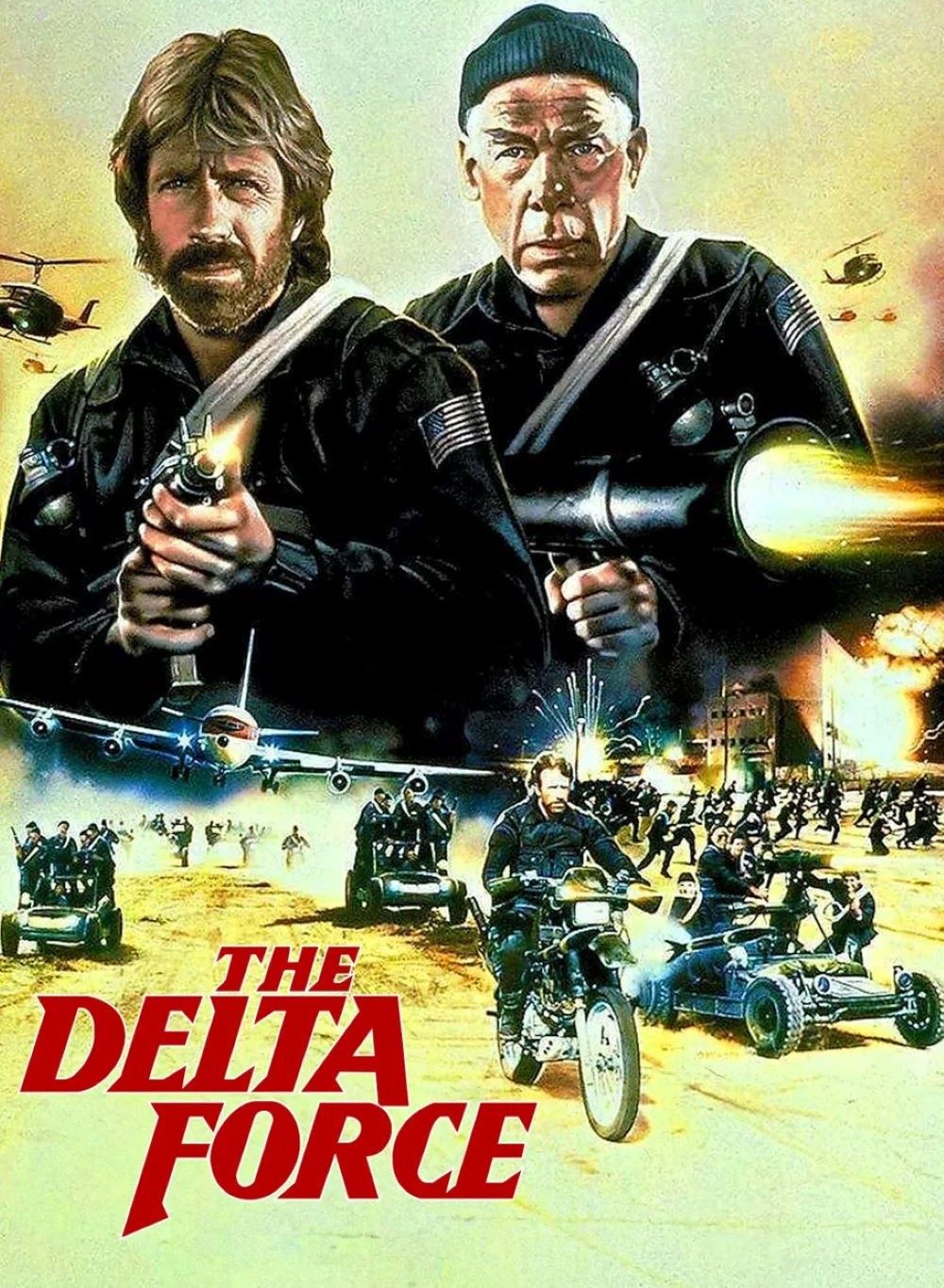
The Delta Force is the ultimate guilty pleasure from the ’80s, that rocket-bike-riding, Chuck Norris-kicking fantasy you pop on when you need two hours of unapologetic, brain-off escapism. It’s a hijacking thriller crossed with Cannon Films overkill, blending real Middle East tensions with pure action movie wish fulfillment, and yeah, it’s politically charged and dated as hell, but damn if it doesn’t deliver the kind of dumb-fun thrills that make you grin despite yourself.

Right from the jump, the film sets up its hook with a failed Delta Force raid in Iran, nodding to the real-life Eagle Claw disaster that still stung in 1986. Fast-forward, and Lee Marvin’s grizzled Colonel Nick Alexander gets yanked out of retirement when Lebanese militants hijack an Athens-to-New York flight, forcing it to Beirut and beyond. Enter Chuck Norris as Major Scott McCoy, the brooding ex-operator haunted by that botched op, who’s all too ready to strap on his gear when innocents are on the line. The setup drags you through passenger terror and terrorist demands, then explodes into rescue mayhem—it’s like the movie knows you’re here for the payback, and it serves it up hot.

As a plot, it’s pure popcorn simplicity: plane gets taken, hostages split by nationality and faith, planes hopscotch across terror hotspots, and Delta swoops in for the save. Drawing from the TWA 847 ordeal, the onboard stuff feels eerily real at first—sweaty close-ups of scared folks like Shelley Winters’ kvetching grandma or Martin Balsam’s anxious exec, turning the cabin into a pressure cooker. George Kennedy’s priest adds heart, and you almost buy the drama until Norris’ dirt bike starts spitting missiles, flipping the script to glorious absurdity. That’s the guilty pleasure pivot: from newsreel grit to arcade-game heroics, and you can’t help but love the whiplash.

Once the action ramps, The Delta Force leans into its B-movie soul with reckless abandon. McCoy’s team hits beaches, raids compounds, and yeah, that motorcycle sequence where Norris zips through baddies like a one-man apocalypse? Iconic cheese that screams “turn off your brain and enjoy.” It’s less about realism and more about catharsis—after watching hostages suffer, the third act’s bullet ballet feels like the justice porn we all secretly crave in these flicks. No deep strategy, just explosions and one-liners, perfectly tuned for that “hell yeah” rush that keeps you glued.

The cast is a riot of guilty-pleasure gold. Marvin, in his last role, growls through command with that unbeatable world-weary vibe, making every order land like gravitas wrapped in grit. Norris? Stone-faced perfection—says little, does everything, his quiet rage bubbling just enough to humanize the roundhouse legend. The passenger ensemble shines in panic mode: Winters chews scenery, Balsam frets convincingly, Kennedy prays with soul. Villain Robert Forster? Over-the-top terrorist glee, accent thick as plot armor, stealing scenes with gleeful menace that’s so cartoonish, it’s addictive.

Sure, the politics are a time-stamped minefield—terrorists as flat-out monsters, Middle East as villain playground, America as lone savior—but that’s part of the era’s guilty thrill. In a post-9/11 world, the stereotypes jar, yet for ’80s nostalgia buffs, it’s that raw, unfiltered patriotism dialed to eleven, the kind you laugh at now but cheered then. The film doesn’t pretend to balance views; it picks a lane—righteous rage—and floors it, making the righteousness feel perversely fun amid the preachiness.

Technically, it’s rough-around-the-edges charm personified. Menahem Golan directs with propulsive energy, keeping the 126 minutes zipping between dread and dazzle. Action’s shot clean—no shaky cam nonsense—with wide lenses capturing chaos in practical, pre-CGI glory that pops on a big screen. The score? Brass-blasting heroism that’s comically epic, sticking like glue and amping every slow-mo strut. Sets fake Beirut convincingly enough, backlots be damned, all fueling that immersive, low-budget magic.

The Delta Force thrives on its split personality: tense hijack bottle episode crashing into commando wet dream. Plane scenes build real unease, echoing headlines, but then rocket bikes and cheering crowds yank it back to fantasy ad. That clash? Pure guilty pleasure fuel—serious enough to hook you, silly enough to forgive its flaws, never letting tension sag.

Bottom line, embrace The Delta Force as peak time-capsule junk: terrorism tamed by ‘stache and firepower, geopolitics as blockbuster bait. Norris and Cannon diehards will fist-pump through every raid; casual viewers get a hoot from the excess. It’s flawed, fervent, and fantastically rewatchable— the kind of flick where you know it’s ridiculous, but two hours later, you’re humming the theme and plotting your next viewing. Guilty pleasure? Abso-freaking-lutely, and wear that shame badge proud.

Previous Guilty Pleasures

  1. Half-Baked
  2. Save The Last Dance
  3. Every Rose Has Its Thorns
  4. The Jeremy Kyle Show
  5. Invasion USA
  6. The Golden Child
  7. Final Destination 2
  8. Paparazzi
  9. The Principal
  10. The Substitute
  11. Terror In The Family
  12. Pandorum
  13. Lambada
  14. Fear
  15. Cocktail
  16. Keep Off The Grass
  17. Girls, Girls, Girls
  18. Class
  19. Tart
  20. King Kong vs. Godzilla
  21. Hawk the Slayer
  22. Battle Beyond the Stars
  23. Meridian
  24. Walk of Shame
  25. From Justin To Kelly
  26. Project Greenlight
  27. Sex Decoy: Love Stings
  28. Swimfan
  29. On the Line
  30. Wolfen
  31. Hail Caesar!
  32. It’s So Cold In The D
  33. In the Mix
  34. Healed By Grace
  35. Valley of the Dolls
  36. The Legend of Billie Jean
  37. Death Wish
  38. Shipping Wars
  39. Ghost Whisperer
  40. Parking Wars
  41. The Dead Are After Me
  42. Harper’s Island
  43. The Resurrection of Gavin Stone
  44. Paranormal State
  45. Utopia
  46. Bar Rescue
  47. The Powers of Matthew Star
  48. Spiker
  49. Heavenly Bodies
  50. Maid in Manhattan
  51. Rage and Honor
  52. Saved By The Bell 3. 21 “No Hope With Dope”
  53. Happy Gilmore
  54. Solarbabies
  55. The Dawn of Correction
  56. Once You Understand
  57. The Voyeurs 
  58. Robot Jox
  59. Teen Wolf
  60. The Running Man
  61. Double Dragon
  62. Backtrack
  63. Julie and Jack
  64. Karate Warrior
  65. Invaders From Mars
  66. Cloverfield
  67. Aerobicide 
  68. Blood Harvest
  69. Shocking Dark
  70. Face The Truth
  71. Submerged
  72. The Canyons
  73. Days of Thunder
  74. Van Helsing
  75. The Night Comes for Us
  76. Code of Silence
  77. Captain Ron
  78. Armageddon
  79. Kate’s Secret
  80. Point Break
  81. The Replacements
  82. The Shadow
  83. Meteor
  84. Last Action Hero
  85. Attack of the Killer Tomatoes
  86. The Horror at 37,000 Feet
  87. The ‘Burbs
  88. Lifeforce
  89. Highschool of the Dead
  90. Ice Station Zebra
  91. No One Lives
  92. Brewster’s Millions
  93. Porky’s
  94. Revenge of the Nerds

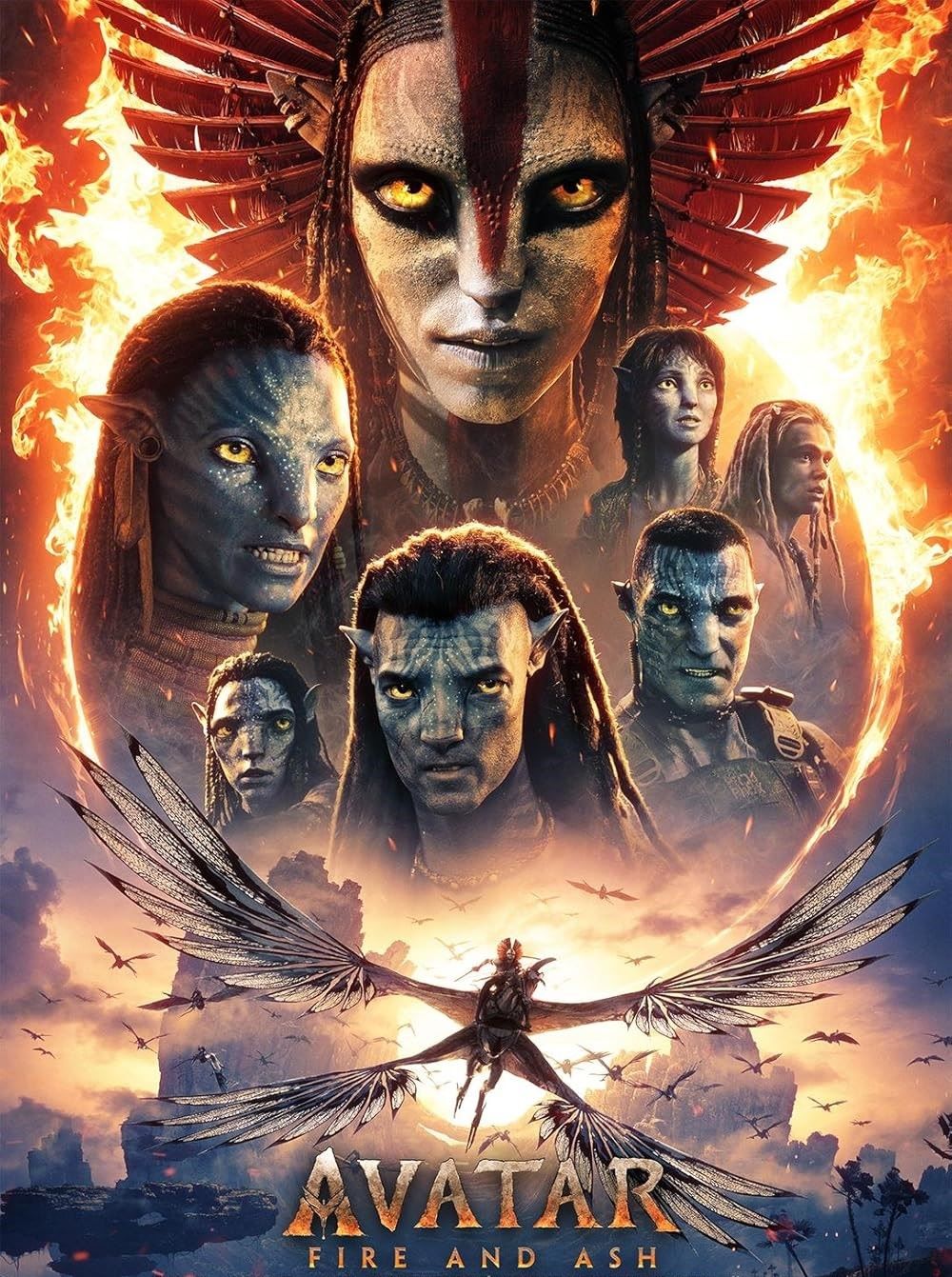
Avatar: Fire and Ash Review (dir. by James Cameron)


 “The fire came from the mountain… Eywa did not come. So I went to the fire, and I learned its way” – Varang

Avatar: Fire and Ash plays like a massive, molten crescendo for Cameron’s Pandora saga—visually overwhelming, emotionally heavier than the last two entries, but also very familiar in ways that will either feel comfortingly mythic or a little déjà vu, depending on your tolerance for repetition. The ash-choked skies, lava rivers, and volcanic Na’vi clans are often more compelling than some of the story beats, and the final stretch delivers the kind of operatic, war-movie scale that makes the three-plus-hour runtime go down easier than it should, even though the film clearly didn’t need to run this long.

This time around, the series leaves behind the cool blues and oceanic calm of the previous chapter for a harsher, volcanic corner of Pandora that feels like a nature documentary shot in a furnace. Jagged black rock, roiling lava, and smoke-stained skies dominate the frame, with creatures and plant life that look as if they evolved to survive heat and ash rather than coral reefs and open water, giving the movie an immediately distinct visual identity even when the story rhythms feel familiar.

At the center of this environment are the Ash People, or Mangkwan clan, a Na’vi group shaped by relentless scarcity and violence. They ride creatures adapted to fire and ash instead of waves, cover themselves in soot-black markings, and fight using a deliberate blend of traditional Na’vi weaponry and repurposed human tech, putting them ideologically at odds not just with the human invaders, but with other Na’vi clans who still cling to older, more spiritual ways of living with Eywa.

The story picks up with Jake and Neytiri’s family still reeling from Neteyam’s death, and the film leans hard into unresolved grief as its emotional baseline. Jake doubles down on his protector persona, treating every decision as a matter of survival, while Neytiri’s pain expresses itself as barely controlled rage, and that emotional weather trickles down to their children, who are increasingly frustrated at being treated like liabilities. The problem is that a lot of this family dysfunction was already unpacked in the second film, so instead of evolving those arcs, the script often feels like it is rehashing earlier conflicts.

The dynamic between Jake and Lo’ak is the clearest example of this repetition. Jake’s exasperation with Lo’ak’s impulsive, run-toward-the-bullets mentality resurfaces again and again, echoing arguments audiences have already seen: the father insisting his son isn’t ready, the son bristling at never being trusted. These moments still have emotional sting, but they circle the same drain so often that entire conversations could have been trimmed or removed without sacrificing character depth, and tightening that thread alone would have shaved a noticeable chunk off the runtime.

Where the film becomes more thematically interesting is in how it reframes Pandora’s conflict. Instead of a simple “Na’vi versus humans” setup, it pits the more traditional Na’vi clans—those still committed to a symbiotic relationship with Eywa—against the Ash People, whose warlike nature and embrace of human weaponry make them ideological outliers. That split plays as a pointed echo of historical events in the Americas, where European colonial powers armed and favored specific Indigenous nations to fight their neighbors, turning native communities into proxies in conflicts that ultimately benefitted outsiders more than the people doing the actual bleeding.

The analogy becomes sharper in how human forces hang back and quietly exploit these new divisions. By giving the Ash People access to superior firepower and nudging them toward confrontation, the outsiders effectively inflame existing grievances and reshape local power dynamics, much like colonial regimes once did by supplying guns and promises to one group while framing another as the enemy. The result is a Pandora that feels more fractured and politically complex, where internal Na’vi conflict is as dangerous as external invasion.

Varang, the leader of the Ash People, is one of the film’s strongest assets. She’s portrayed as a true believer who has taken real suffering and twisted it into a doctrine of purifying destruction, convinced that burning the world is the only way to save it. The character blends zealotry and charisma in a way that makes her both frightening and compelling, and she wields faith, desire, and fear as weapons with unnerving ease, giving the movie a volatile energy whenever she’s on-screen.

Her alliance with Quaritch pushes the story into darker, more uncomfortable territory. What begins as a pragmatic arrangement—a trade of firepower and influence for help tracking Jake—evolves into a twisted, intimate partnership that underlines just how far both are willing to go to achieve their goals. Their connection is meant to feel toxic and predatory, and it succeeds on that front, though some viewers may find the intensity of those scenes off-putting compared with the relatively straightforward romance and family dynamics of earlier entries.

On a craft level, the film is almost absurdly polished. Even if it no longer feels like a quantum leap in visual effects, the execution is meticulous: volcanic vistas glow with molten light, ash storms swirl with tactile grit, and the interplay of fire, smoke, and bioluminescence gives many shots a painterly quality. The action sequences rely on clear geography and patient staging, so even when the screen is full of creatures, machines, and chaos, it remains surprisingly easy to track who is where and what’s at stake.

The final act is where the movie unleashes everything it has: parallel battles on land, in the air, and over volatile seas, stitched together into a long, escalating crescendo. Familiar James Cameron signatures return—heroic last-second saves, nature itself intervening, climaxes that mirror earlier films—but the pacing of these sequences is handled with enough control that they rarely collapse into pure noise. Still, you can’t help but feel that with a leaner, more disciplined buildup, that climax would have hit even harder.

Structurally, the story leans heavily on patterns that loyal viewers will recognize. There is yet another relocation to a new culture, another period of uneasy assimilation, another slow slide into open warfare, and another sacrificial, emotionally charged finale. Whether that comes across as mythic repetition or simple recycling depends on how patient you are with Cameron’s tendency to “rhyme” his narratives rather than reinvent them.

Most of the main character arcs feel like refinements rather than reinventions. Jake remains the guilt-ridden warrior father terrified of losing his children; Lo’ak edges closer to full-on protagonist status as the reckless but big-hearted son; Kiri’s mystical bond with Eywa deepens while remaining intentionally enigmatic; and Quaritch once again fills the role of relentless, personal antagonist. With the same father–son friction repeatedly dragged back into the spotlight, the emotional landscape can feel stuck in place, and a stricter editorial hand might have refocused attention on the fresher elements—like Varang and the Ash People’s worldview.

Tonally, the film pushes into darker territory while still staying within a mainstream rating. The battles feel more brutal, with a greater emphasis on the physical cost of arrows, explosions, and close-quarters fighting, and there’s a persistent sense that no one is truly safe. That harshness extends to the emotional side as well, as the Sully family finds itself cornered into choices where every option exacts a price, reinforcing the idea that survival in this version of Pandora demands constant compromise.

Thematically, Avatar: Fire and Ash weaves together ideas about faith, extremism, and the way trauma can be weaponized. The Ash People act as a distorted mirror of earlier Na’vi cultures: a society that has taken genuine pain and turned it into an excuse for cruelty, abandoning balance in favor of cleansing violence. Layered on top of that is the divide-and-rule dynamic, where more technologically advanced outsiders stoke internal conflicts for their own advantage, mirroring how colonial powers in the Americas encouraged Indigenous groups to fight one another while expanding their control and extracting resources.

Despite all the digital wizardry, the performances still manage to cut through. Jake and Neytiri’s scenes carry the weight of years of loss and sacrifice, and there’s a believable exhaustion in the way they argue and compromise. The younger characters, especially Lo’ak and Kiri, feel more rooted and central than they did before, which helps sell the gradual shift toward a new generation, even if the script keeps dragging them back through conflicts that feel like reruns instead of genuine evolution.

At the same time, the movie sometimes undercuts its best character work in its rush to reach the next big set piece. Quieter moments that might have deepened side characters or given the Ash People’s beliefs more nuance are often compressed or sidelined, while scenes rehashing Jake and Lo’ak’s issues are allowed to run long. If the film had trusted audiences to remember the family dysfunction carried over from the second installment and cut down on repeated arguments, those smaller, richer beats could have had more space—and the whole piece would likely feel tighter and more focused.

For viewers already invested in Pandora, Avatar: Fire and Ash is clearly built for the biggest screen available: the volcanic vistas, layered sound design, and carefully staged action set pieces are all engineered to overwhelm in the best way. It delivers a darker chapter without abandoning the earnest, sometimes corny sincerity that has always defined this series, and as a conclusion to this phase of the story, it feels emotionally full even as it insists on revisiting familiar territory and stretching its narrative longer than necessary.

For more casual viewers or anyone who found the earlier films predictable, this is unlikely to be the conversion point. The structure is recognizable, the dialogue is often workmanlike rather than sharp, and the movie leans so hard into repeating certain family conflicts that it can feel like the story is padding itself instead of evolving. But if you can live with those flaws—the repetition, the length, the occasional heavy hand—the combination of technical craftsmanship, volcanic imagery, heavy emotional stakes, and that quietly pointed commentary on colonial-era divide-and-rule tactics makes Avatar: Fire and Ash a fiery, flawed, but undeniably impressive ride.

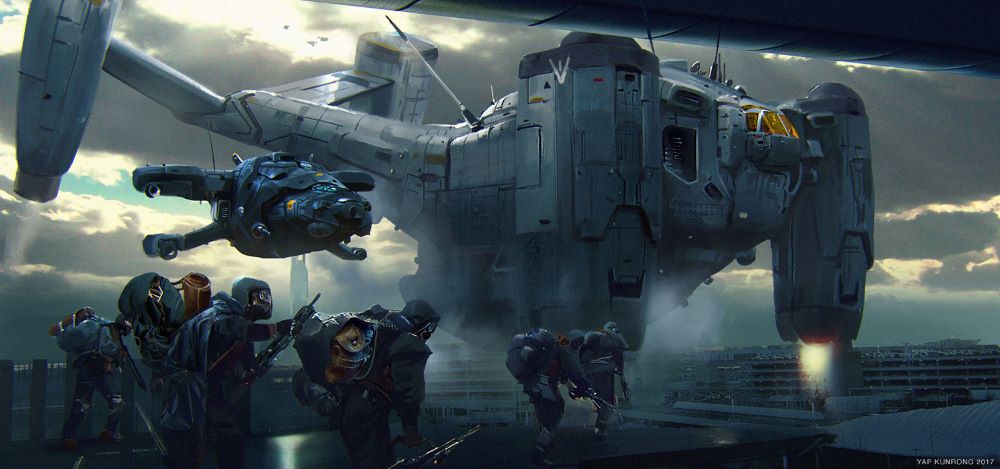
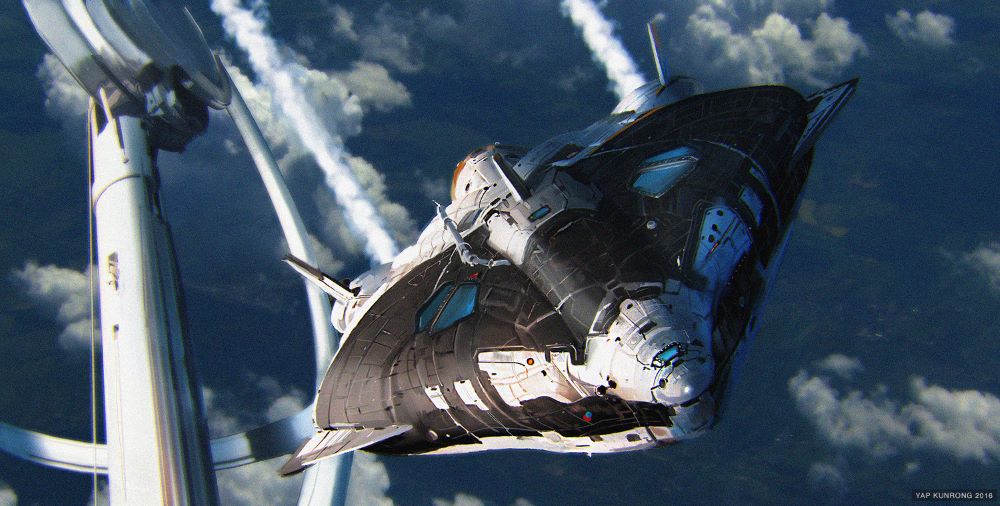
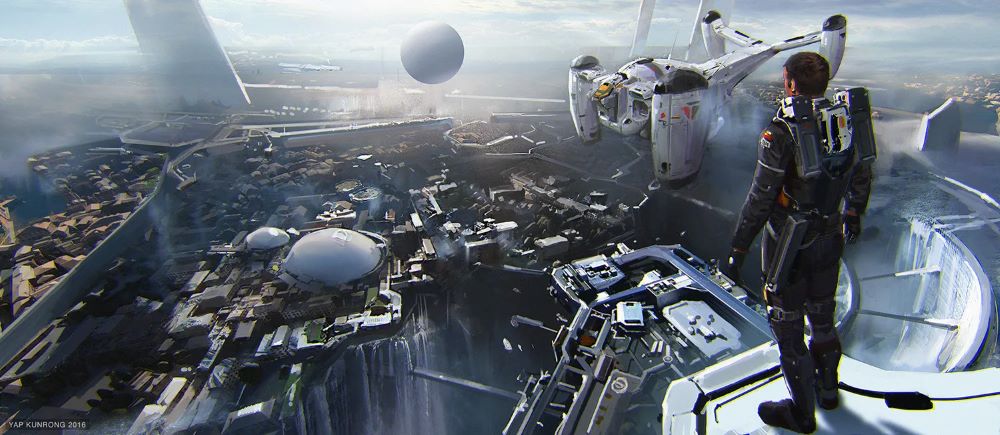
Artist Profile: Kunrong Yap (aka Krypt)


Kunrong Yap, aka Krypt, crafts sci-fi concept art that drops you into wild future worlds. His work shows off huge alien vistas, bio-mechanical mashups, and futuristic gear, all with sharp details in big layouts. Check out his portfolio at ArtStation (krypt.artstation.com).

He mixes tight digital skills with smooth organic touches, throwing in strong lights and chill atmospheres for that spooky space vibe. Cool blues, shiny metals, and faint fire pops build up with stacked textures and soft blends that feel real.

From Singapore roots and Tokyo days, Yap pulls in subtle Asian vibes and punchy Western film energy through bold angles and story-heavy designs for games and movies. It keeps his range wide with a solid cyberpunk kick.

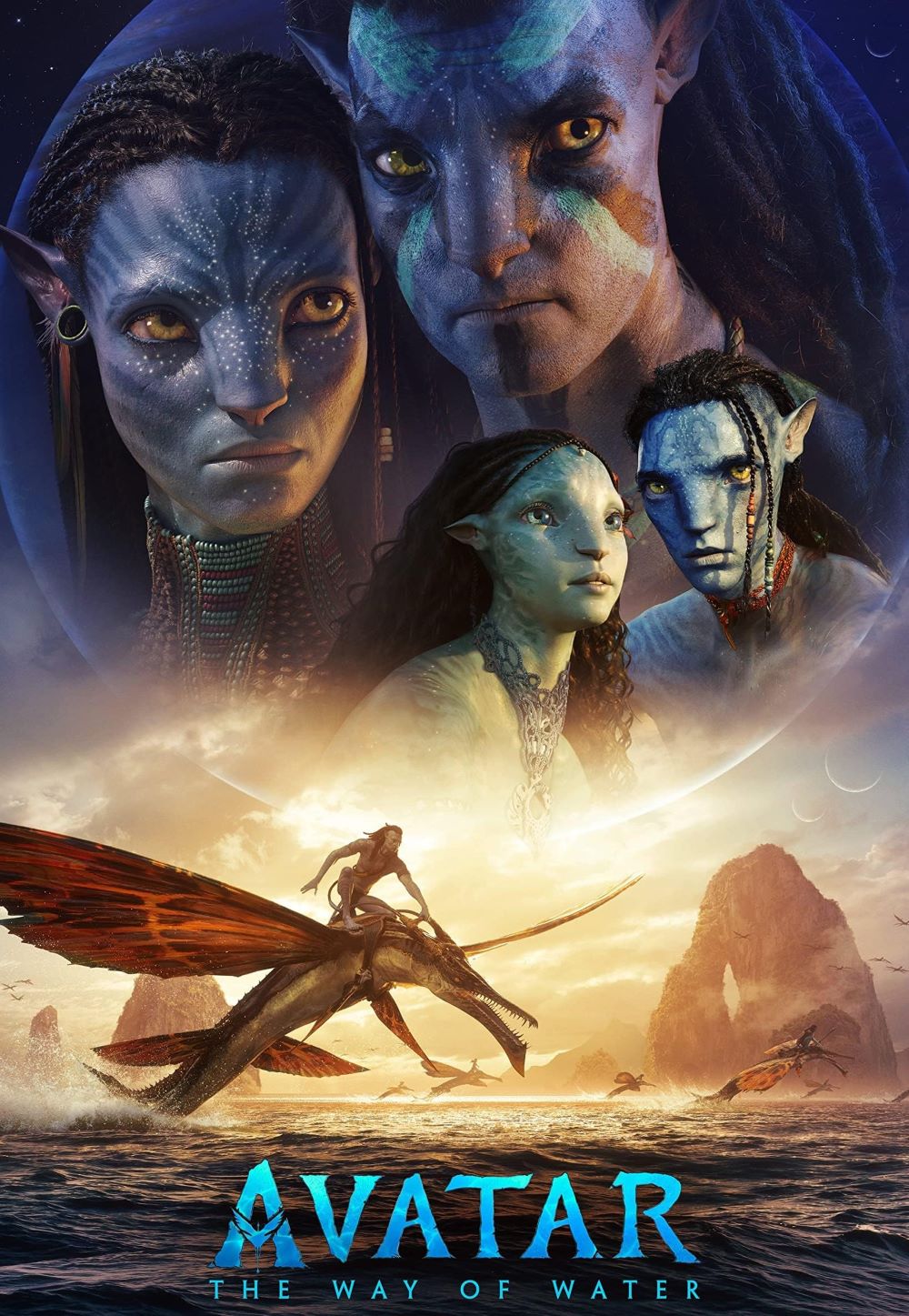
Avatar: The Way of Water Review


“I see now. I can’t save my family by running. This is our home. This is our fortress. This is where we make our stand.” — Jake Sully

Avatar: The Way of Water delivers jaw-dropping visuals and a sincere dive into family struggles, but it drags under its three-hour weight with repetitive plotting and uneven character depth that keeps it from breaking truly new ground.

James Cameron returns to Pandora over a decade after the original Avatar, catching up with Jake Sully and Neytiri as they’ve built a sprawling family amid fragile peace—only for human colonizers, the so-called Sky People, to crash back with upgraded tech, ruthless determination, and a deeply personal grudge led by a vengeful Colonel Quaritch reborn in Na’vi avatar form. This forces the Sullys into a desperate flight to the Metkayina, a reef-dwelling Na’vi clan whose ocean-adapted physiology and customs—broader tails for swimming, gill-like breathing aids, a deep spiritual bond with marine life—present a whole new cultural and environmental challenge, transforming the story from the first film’s jungle rebellion into a watery survival tale laced with themes of displacement and adaptation.​

What truly sets the film apart, even if the story treads familiar “pursued heroes vs. imperial baddies” territory without bold twists, is how it masterfully expands the Avatar universe’s worldbuilding, turning Pandora from a singular bioluminescent jungle into a teeming planet with diverse ecosystems and cultures. The Metkayina villages perch on floating lattices of woven kelp and coral, lit by phosphorescent anemones pulsing like underwater stars, while daily life revolves around symbiotic ties with ilu (skittish six-finned mounts) and skimwings (leathery ocean skimmers); nomadic Tulkun society—intelligent, philosophical whale-like beings communicating via sonic songs—clings to a strict non-violence “tulkun way” brutally shattered by human whalers.

These layers emerge organically through the Sullys’ awkward integration, like mastering fluid sign language or breath-holds for deep dives, and the spectacle dazzles relentlessly, powered by advancements in hyperrealistic CG that continue to erode the uncanny valley effect on characters—Na’vi faces now convey micro-expressions of pain, joy, and exhaustion with lifelike subtlety, their skin textures responding to water and light in ways that feel organic rather than synthetic.​

Bioluminescent reefs glow in electric blues and greens, iridescent fish schools dart through sun-dappled shallows, and massive Tulkun glide with skyscraper grace and scarred hides. Cameron’s pioneering underwater motion capture—actors in massive tanks layered with tactile CG—makes every bubble, flipper stroke, and coral sway palpably real, as Na’vi teens free-dive twisting kelp forests and maze-like atolls in lung-burning tension. The film also pushes 3D technology to new heights since the first film, baked natively into every frame rather than tacked on as a post-production gimmick—this integral approach ensures depth pops organically, from swirling plankton clouds enveloping swimmers to layered reef foregrounds framing distant horizons.​

The action peaks in the third-act frenzy of ship crashes against waves, flare-lit dogfights, Tulkun rams crumpling hulls, and a claustrophobic flooding vessel breach where air dwindles second-by-second. Cameron’s chaos clarity—echoing The Abyss or Titanic—ties stakes to family peril, amplified by thundering sound (crashing surf, whale calls, Na’vi gasps) and Jon Landau’s IMAX polish into sensory overload.

Family drives the lived-in, flawed emotional core: Jake (Sam Worthington’s gravelly gravitas) wrestles fatherhood’s math—stern orders backfiring into guilt—as he clashes with impulsive Lo’ak (Britain Dalton’s sulky edge), whose outsider rage forges a bond with scarred Tulkun Payakan, flipping “monster” tropes for real agency; dutiful Neteyam buckles under expectations, innocent Tuk (Trinity Jo-Li Bliss) witnesses horrors, and mystic Kiri—Grace’s avatar-born daughter linked to Eywa—teases lore like planetary souls, while Neytiri (Zoe Saldana’s fiery sorrow) simmers with grief-fueled, mama-bear savagery, her outbursts piercing deeper than rifles.​

These arcs convert invasions into gut punches on protection, belonging, parental failures, and war’s selfish costs—specific melodrama over generic heroism. Yet simplicity amplifies flaws over runtime: a chase loop (hunts, hides, teen trouble, repeat) grates, with middle sags of cultural lessons (sign language, ilu taming, Tulkun reverence) feeling like filler; humans are greed caricatures—whalers gutting pacifists for longevity goo amrita, suits enabling genocide—lacking nuance despite Earth’s biosphere desperation nods, preaching eco-colonialism to the choir. Neytiri gets benched post-roars (a co-lead letdown), Quaritch dangles complexity (death memories, Spider ties) but snarls relentlessly; reef archetypes (wise Tonowari, omen-Ronal, bully-to-ally Aonung) lopsided the cast, Tulkun elders out-nuancing humans.​

The film’s themes land with sincere force: whaling atrocities, from harpooned flesh and bloodied seas to a mother’s primal rage, hammer home human irredeemability without much subtlety, while family adaptation explores “forest people” taunts, strained bonds, and Eywa’s mystical interventions that weave personal growth into planetary balance—heartfelt without ironic quips, either refreshing in its earnestness or manipulative depending on your taste. Pacing remains deeply polarizing, offering immersive vibes for world-huggers who savor the slow builds but feeling bloated and front/back-loaded for plot purists impatient with the expansion-heavy middle.

Ultimately, Avatar: The Way of Water triumphs as a visual banquet and saga extender, hooking viewers with its aquatic marvels, raw parental fears, peerless craft (hyperreal CG and improved 3D elevating it), and smart universe growth through new clans, beasts, and lore seeds—all sans true narrative reinvention, as bloated length, repetitive echoes, and flat foes keep it from pantheon status. Fans of Pandora dive in sated; skeptics surface impressed by the technical wizardry yet impatient with the sprawl. It’s pure Cameron—huge swings promising more sequels ahead. Worth submerging for the spectacle.

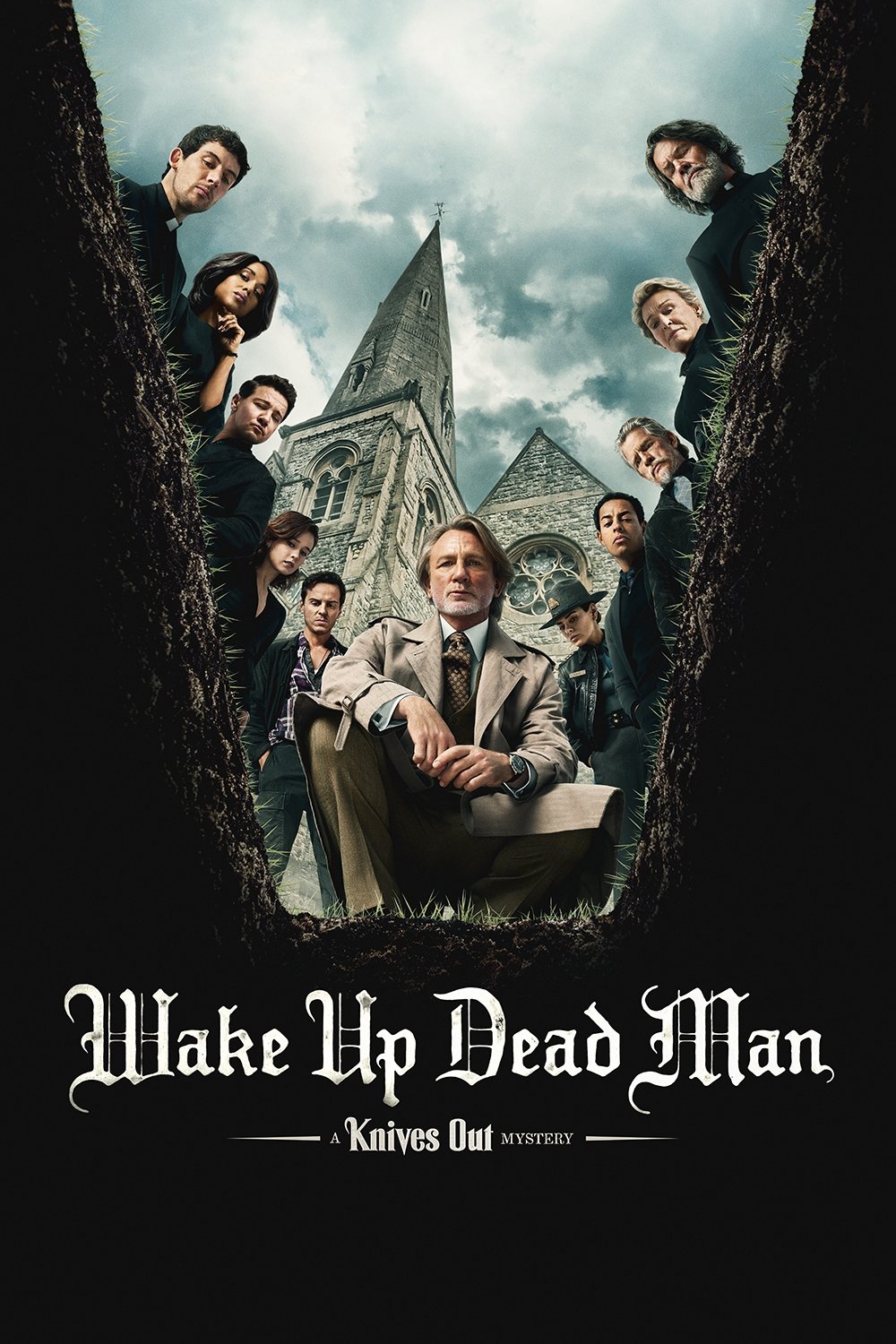
Review: Wake Up Dead Man (dir. by Rian Johnson)


“Grace isn’t cheap. It’s bought with blood and fire, not your weak-kneed handshakes with sin.” Monsignor Jefferson Wicks

Wake Up Dead Man: A Knives Out Mystery is Rian Johnson’s latest entry in his whodunit series. It reunites Daniel Craig with his charismatic detective Benoit Blanc. The film trades the intimate family drama of the first movie and the over-the-top glamour of the second for a tense, small-town tale of faith, secrets, and an impossible crime at a rural church. It’s an ambitious evolution. Yet it doesn’t always land every punch in the trilogy.

To appreciate where this fits, glance back at the predecessors. The original Knives Out from 2019 burst onto the scene. It updated classic mystery tropes cleverly. The story centered on the death of a wealthy author. The dysfunctional Thrombey family circled like vultures over his estate. Blanc’s folksy charm cut through the lies with surgical precision. He delivered razor-sharp twists. His commentary bit into privilege and entitlement. All this wrapped in a snug, stage-play setup. It felt like a modern And Then There Were None. Every character popped—from Chris Evans’ smirking man-child to Ana de Armas’ wide-eyed nurse. The script’s misdirections kept you guessing until the final gut-punch reveal. It was tight, surprising, and endlessly rewatchable. Humor, heart, and social satire blended into a perfect whodunit package.

Glass Onion: A Knives Out Mystery followed in 2022. It cranked up the scale dramatically. A billionaire’s private island became the playground. A squad of self-important influencers played at being geniuses. The satire shifted gears. It skewered tech elites and performative allyship. Bigger laughs came from set pieces like the glass onion puzzle. Wilder ensemble clashes featured Edward Norton’s bumbling Miles Bron. Blanc unraveled the chaos with gleeful theatricality. Sure, it leaned heavier into farce than the original’s grounded tension. But those oh-so-satisfying reveals kept the momentum roaring. Janelle Monáe’s layered turn helped too. Each film stands alone as a self-contained puzzle. Yet they build Blanc’s legend incrementally. They refresh the murder-mystery playbook. Johnson’s signature flair nods to Agatha Christie roots.

Wake Up Dead Man arrives a few years after those events. Blanc looks more rumpled—bearded and brooding. He carries the visible weight of prior investigations. These have chipped away at his unflappable facade. Detective Benoit Blanc dives into a fresh case. It orbits a magnetic priest, Monsignor Jefferson Wicks. His tight-knit parish sits at Our Lady of Perpetual Fortitude. This is a fading rural church in snow-dusted upstate New York. A baffling death strikes right in the middle of services. It’s a stabbing during a Good Friday ritual. The congregation watches it unfold. It’s framed as an impossible crime with no clear entry or escape. Blanc must sift through hidden motives. He navigates frayed bonds and simmering tensions in the flock. His goal is to expose the culprit. Young assistant priest Rev. Jud Duplenticy becomes an unlikely ally.

Josh O’Connor stands out as Jud. He’s the earnest, ex-boxer priest. He brings raw vulnerability and quiet intensity. This grounds the film’s more outlandish elements. The powerhouse lineup fuels suspicion and sparks. Josh Brolin plays the commanding, domineering Wicks. His sermons blend fire-and-brimstone charisma with manipulative control. Glenn Close is the loyal church pillar Martha Delacroix. She’s his steely right-hand woman. She hides decades of devotion and resentment. Mila Kunis is police chief Geraldine Scott. She’s tough and skeptical but out of her depth. Jeremy Renner plays local doc Dr. Nat Sharp. His bedside manner conceals shadier dealings. Kerry Washington is attorney Vera Draven. She’s sharp-tongued and protective. Thomas Haden Church is reserved groundskeeper Samson Holt. He observes everything with cryptic folksiness. Andrew Scott plays best-selling author Lee Ross. He peddles scandalous exposes on the parish. Cailee Spaeny is the disabled former concert cellist Simone Vivane. Her ethereal presence masks deeper pain. Daryl McCormack is aspiring politician Cy Draven. He’s ambitious and entangled in family webs. Noah Segan pops up as sleazy Nikolai. It’s a fun callback to his earlier roles. This adds series continuity without stealing focus. The ensemble ignites every scene. Clashing agendas and barbed dialogue keep the paranoia boiling.

This installment carves its own distinct path. It embraces a darker, more introspective tone. Think faith-versus-reason noir laced with locked-room impossibility. The setting is a snow-dusted upstate New York parish. This contrasts the polished puzzle-box feel of the originals. The church throbs with simmering divisions. They feel palpably real. Fiery sermons alienate younger parishioners. They drive attendance into the dirt. Whispers hint at buried family fortunes. These tie to the church’s crumbling foundations. Rituals mask exploitation, abuse of power, and grudges. All hide under a veneer of piety.

Cinematographer Steve Yedlin works masterfully. He captures stark contrasts. Candlelit services flicker against vaulted ceilings. Shadowy mausoleums hide grisly secrets. Fog-shrouded grounds host midnight confessions that turn sinister. A cold, wintry palette amplifies isolation. Nathan Johnson’s score blends ominous orchestral swells. It adds subtle choral hints and dissonant organ tones. This creates a haunting vibe. It underscores spiritual unease without overpowering dialogue. Blanc prowls with trademark wit and theatrical flourishes. But a deeper layer emerges. He grapples with existential questions. These involve belief, deception, and waking from illusions. The title ties in directly. It calls amid apparent miracles, staged resurrections, and devilish symbolism. This blurs divine intervention and human malice.

The storyline thrives on classic misdirection. It piles on clues like a stolen devil’s-head knife from the altar. Vanished evidence dissolves in acid. Eerie occurrences hint at the otherworldly. Ghostly apparitions and bleeding statues appear. Then it snaps back to human frailty and greed. The film peels back the parish’s seedy underbelly. Hypocrisy rules the pulpit. Opportunism infects the flock. Buried sins span generations. It avoids preachiness or heavy-handedness. Instead, it fuels interpersonal fireworks. These erupt in confessionals, potlucks gone wrong, and heated vestry arguments.

Highlights abound. Blanc holds probing chats during tense masses. A single hymn masks frantic whispers. Late-night graveyard prowls use flashlights. They reveal half-buried scandals. A pulse-pounding chase winds through labyrinthine catacombs. Jud’s raw confession scenes blend vulnerability with defiance. The unmaskings cascade like dominoes. They form a brilliantly orchestrated finale. This echoes the first film’s precision. But it adds emotional stakes. Themes of redemption, forgiveness, and blind faith’s cost hit hard. They linger longer.

Flaws exist. The runtime stretches past two hours, leading to noticeable drag in the back half where explanatory flashbacks overstay their welcome and blunt the mounting tension. The crowded suspect list feels star-studded to a fault, with the expanded cast and their distinct personalities—from Renner’s oily doc to Washington’s sharp lawyer—often coming across more as a parade of familiar cameos than fully fleshed-out suspects. This dilutes the razor-sharp individual motivations that made the earlier entries so airtight, as some characters blend into the background despite the name recognition.

Craig remains the beating heart. He refines Blanc into a weary yet unbreakable warrior. Twinkling eyes hide hard-earned cynicism and quiet scars. This bridges the series’ growth perfectly. He evolves from wide-eyed newcomer to seasoned truth-seeker. Notably, his performance dials back bombastic Foghorn Leghorn bluster. It drops the scenery-chewing antics from Glass Onion. Instead, it opts for nuanced eccentricities. Subtle drawl inflections shift from playful to piercing. Haunted pauses carry unspoken regrets. Layered glances reveal a detective worn by deceptions. He keeps infectious charm and deductive brilliance.

He bounces off O’Connor’s conflicted priest. Their electric, buddy-cop chemistry grounds the mystery. It adds human connection amid supernatural tinges. Brolin chews scenery as tyrannical Wicks. His booming voice and piercing stare dominate. Close brings steely devotion to Martha. She layers quiet menace under pious smiles. The ensemble delivers scene-stealing turns. Renner’s oily doc has subtle tics. Washington’s lawyer cuts through BS like a blade. Church’s groundskeeper drops cryptic wisdom. Spaeny’s cellist haunts the score. The group dynamic crackles. Suspicion, snark, and alliances build tension. It doesn’t fully match Knives Out‘s intimacy. Nor does it rival Glass Onion‘s ego clashes. Raw charisma and sharp writing carry it far. Tighter arcs would elevate it further.

Behind the camera, Johnson amps visual and thematic style. It reflects the trilogy’s arc masterfully. The debut had cozy, rain-lashed Thrombey manor confines. The sequel brought flashy, tropical island excess. This film offers brooding parish grit. Sacred spaces twist into battlegrounds. Production design captures ecclesiastical opulence turned sinister. Vibrant stained glass casts blood-red shadows. Ancient relics whisper curses. Fog-shrouded grounds pulse with menace. It avoids campy parody. The balance feels reverent yet unsettling.

Dialogue pops with Blanc’s poetic rants. Extended musings explore faith’s illusions. They mirror “dead men walking” through empty rituals. This weaves personal growth into procedural beats. It never halts the pace. Screenplay-wise, it remixes boldly. It expands from domestic squabbles to global posers. Now it targets a fractured flock in dogma and greed. Subtle nods hint at Blanc’s odyssey. No direct sequel hook burdens it. No franchise baggage weighs it down.

In the end, Wake Up Dead Man solidifies the saga. It spins timeless whodunits freshly and vitally. Each outing sharpens the social knife. Targets evolve—from greedy kin to tycoons to holy hypocrites wielding faith. Pacing hiccups hit the bloated third act. The overwhelming ensemble poses challenges. Still, it grabs from the opening sermon-gone-wrong. It rewards with twists, depth, and a hopeful close. This lingers like a benediction. Devotees find layers to chew. Mystery fans geek over mechanics. Newcomers benefit from earlier starts. But this standalone shines. Johnson’s vision evolves fearlessly. Craig’s magnetism deepens. The door cracks for more mayhem. Pop the popcorn. Dim the lights. Let confessions begin.

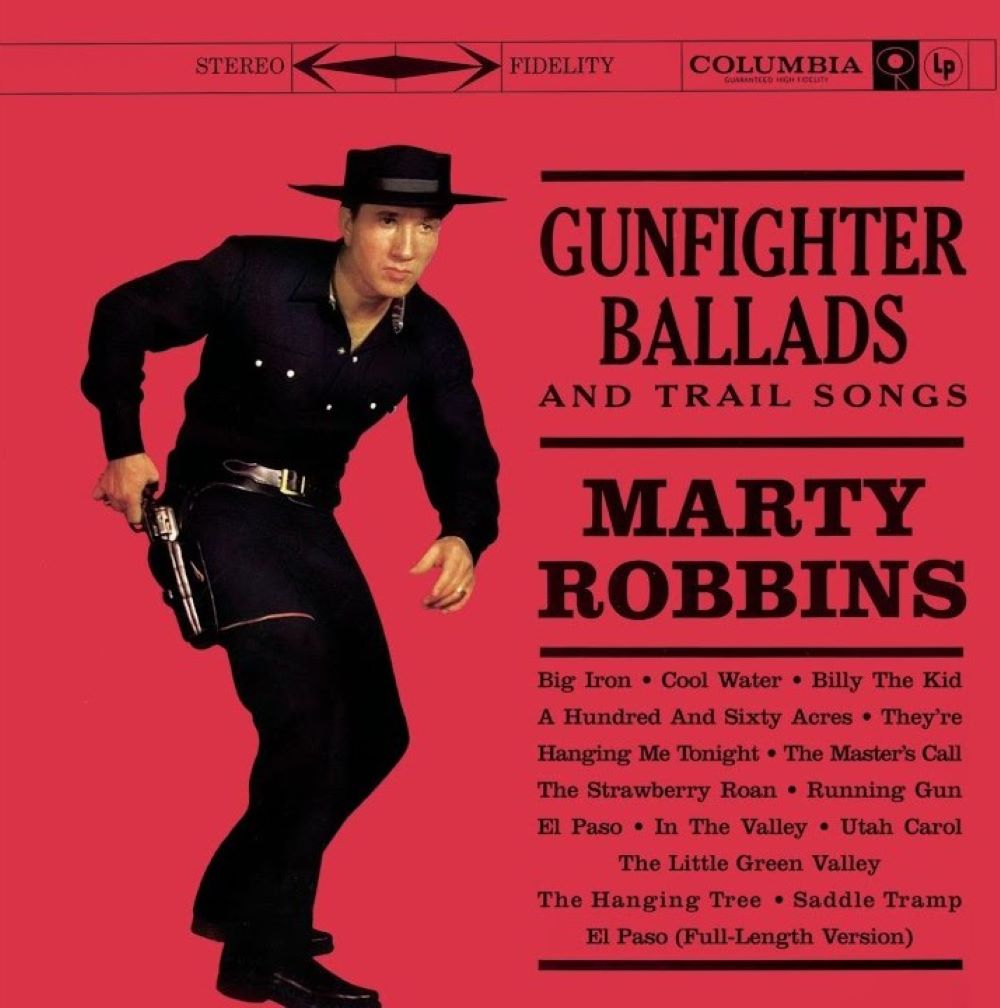
Song of the Day: Big Iron (by Marty Robbins)


Marty Robbins’ “Big Iron” is one of those songs that instantly takes you back to the Old West. It’s simple but powerful—a ranger rides into town to face down an outlaw, and you just feel that quiet tension building with every verse. Robbins’ steady voice gives the story a calm, almost cinematic vibe, like a slow pan across a dusty street before the final showdown. It’s storytelling stripped to the bone: two men, one promise of justice, and the air thick with purpose.

What’s cool is how “Big Iron” hasn’t just stayed stuck in the past. It’s popped up everywhere—from memes to movies to, of course, Fallout: New Vegas. That game gave the song a second life as a kind of anthem for wanderers—loners crossing desolate landscapes where myths feel more real than history. There’s something timeless about its message: standing your ground, even when the whole world’s gone sideways.

So when “Big Iron” opens the first episode of Fallout Season 2, it feels like a perfect fit. The familiar twang instantly throws you into that classic Fallout energy—part Western, part apocalypse. It’s not just a fun musical nod; it sets the tone for everything that follows. The song reminds us that even in a broken world, we’re still drawn to stories about courage, justice, and lone figures walking into danger with purpose. Robbins’ ballad might be old, but in Fallout’s world, it feels right at home.

Big Iron

To the town of Agua Fria rode a stranger one fine day
Hardly spoke to folks around him, didn’t have too much to say
No one dared to ask his business, no one dared to make a slip
For the stranger there amongst them had a big iron on his hip
Big iron on his hip

It was early in the morning when he rode into the town
He came riding from the south side slowly lookin’ all around
He’s an outlaw loose and running came the whisper from each lip
And he’s here to do some business with the big iron on his hip
Big iron on his hip

In this town there lived an outlaw by the name of Texas Red
Many men had tried to take him and that many men were dead
He was vicious and a killer though a youth of twenty-four
And the notches on his pistol numbered one and nineteen more
One and nineteen more

Now the stranger started talking, made it plain to folks around
Was an Arizona Ranger, wouldn’t be too long in town
He came here to take an outlaw back alive or maybe dead
And he said it didn’t matter, he was after Texas Red
After Texas Red

Wasn’t long before the story was relayed to Texas Red
But the outlaw didn’t worry men that tried before were dead
Twenty men had tried to take him, twenty men had made a slip
Twenty-one would be the ranger with the big iron on his hip
Big iron on his hip

The morning passed so quickly, it was time for them to meet
It was twenty past eleven when they walked out in the street
Folks were watching from the windows, everybody held their breath
They knew this handsome ranger was about to meet his death
About to meet his death

There was forty feet between them when they stopped to make their play
And the swiftness of the Ranger is still talked about today
Texas Red had not cleared leather for a bullet fairly ripped
And the Ranger’s aim was deadly with the big iron on his hip
Big iron on his hip

It was over in a moment and the folks had gathered ’round
There before them lay the body of the outlaw on the ground
Oh, he might have gone on living but he made one fatal slip
When he tried to match the Ranger with the big iron on his hip
Big iron on his hip

Big iron, big iron
When he tried to match the Ranger
With the big iron on his hip
Big iron on his hip

Guilty Pleasure No. 94: Revenge of the Nerds (dir. by Jeff Kanew)


Revenge of the Nerds captures the wild, unfiltered spirit of 1980s college comedies, blending underdog triumph with over-the-top raunchiness that feels both nostalgic and awkwardly dated today. Released in 1984, this Jeff Melman-directed flick stars Robert Carradine and Anthony Edwards as Lewis and Gilbert, two freshmen nerds who face relentless bullying from the jock-dominated Alpha Beta fraternity at Adams College. What starts as a straightforward tale of misfits fighting back evolves into a chaotic mix of pranks, parties, and questionable morals, making it a polarizing watch that still packs a punch for fans of the era’s humor.

The story kicks off with Lewis and Gilbert arriving full of optimism, only to have their dreams torched—literally—when the Alpha Betas accidentally burn down their dorm during a hazing gone wrong. Relocated to a rundown gym with other campus outcasts, the nerds band together under the banner of Tri-Lam, turning their rejection into fuel for clever retaliation. From panty raids to talent show showdowns, the film barrels through a series of escalating antics, peaking at the Greek Games where brains battle brawn in absurd competitions like tricycle races and tug-of-war twists. It’s pure 80s escapism, with a runtime under 100 minutes that keeps the energy high and the laughs coming in rapid-fire succession, even if not every gag is a home run.

The nerd ensemble steals the show, each character a walking stereotype brought to vivid life. Carradine’s Lewis is the slick-talking instigator with a knack for schemes, while Edwards’ Gilbert provides the earnest heart, delivering a pivotal speech about acceptance that gives the movie unexpected emotional depth. Curtis Armstrong as Booger delivers unforgettable gross-out moments, from belching symphonies to shameless flirtations, and Larry B. Scott’s Lamar brings flamboyant athletic flair that subverts expectations. The jocks, led by Ted McGinley’s smug Stan, serve as perfect foils—arrogant, muscle-bound villains who embody the era’s macho excess. Supporting turns, like Julia Montgomery’s Betty navigating boyfriend drama, John Goodman’s boorish Coach Harris, or Bernie Casey’s wise U.N. Jefferson, add layers to the campus power struggle.

Humor-wise, Revenge of the Nerds leans hard into juvenile territory: fart jokes, streaking, and wild panty raid sequences filmed with hidden cameras that push boundaries even for the time. The film’s climax involves Lewis impersonating Stan to woo Betty, a plot point that plays as triumphant revenge but lands as deeply problematic through today’s lens, highlighting consent issues amid the cheers. Similarly, the sorority spying and casual objectification reflect 80s attitudes toward women and minorities that feel crass now, contributing to its mixed modern reception. Yet, these elements are balanced by genuine camaraderie among the nerds, fostering a sense of belonging that resonates as a counter to real-world bullying.​

Technically, the movie holds up as a product of its time. The soundtrack, featuring the iconic title track by The Rubinoos and funky cues during party scenes, amps up the fun, while practical effects like the nerds’ gadget-filled house add quirky charm. Cinematography emphasizes the divide between polished frat row and the nerds’ scrappy turf, with wide shots of campus chaos underscoring the rebellion. Written by Tim Metcalfe, Steve Zacharias, and Jeff Buhai, the script zings with quotable lines—”We are the sons of the sons of bitches”—and smartly flips the slobs-vs-snobs formula by rooting for the geeks.

Culturally, Revenge of the Nerds helped define the “nerd pride” archetype, paving the way for films like PCU and influencing pop culture’s embrace of geek culture from The Big Bang Theory to Marvel dominance. It spawned three sequels, a musical adaptation, and endless references, cementing its place as a time capsule of Reagan-era college life—rowdy, rebellious, and unapologetically politically incorrect. For balance, its strengths lie in infectious energy, memorable characters, and a pro-outsider message, but weaknesses include uneven pacing in setup scenes and humor that too often punches down rather than up.

The film continues the trend of 80s raunchy teen comedies first popularized by Bob Clark’s Porky’s, ramping up the gross-out gags and frat-house antics while shifting the focus to nerd empowerment over sexual hijinks. The nerds’ talent show finale, uniting misfits in a joyous medley, delivers pure catharsis, proving brains and heart can topple bullies. It’s not flawless—some jokes bomb, and the ending rushes a bit—but its scrappy spirit endures for those who grew up quoting Booger’s lines or cheering Tri-Lam’s win. Fans of Animal House or Old School will find familiar thrills, while modern audiences might prefer the cleaner satire of The Good Place. Ultimately, Revenge of the Nerds earns a solid recommendation with caveats: a rowdy good time if you roll with the 80s vibe, but skip if consent gags are deal-breakers.

Previous Guilty Pleasures

  1. Half-Baked
  2. Save The Last Dance
  3. Every Rose Has Its Thorns
  4. The Jeremy Kyle Show
  5. Invasion USA
  6. The Golden Child
  7. Final Destination 2
  8. Paparazzi
  9. The Principal
  10. The Substitute
  11. Terror In The Family
  12. Pandorum
  13. Lambada
  14. Fear
  15. Cocktail
  16. Keep Off The Grass
  17. Girls, Girls, Girls
  18. Class
  19. Tart
  20. King Kong vs. Godzilla
  21. Hawk the Slayer
  22. Battle Beyond the Stars
  23. Meridian
  24. Walk of Shame
  25. From Justin To Kelly
  26. Project Greenlight
  27. Sex Decoy: Love Stings
  28. Swimfan
  29. On the Line
  30. Wolfen
  31. Hail Caesar!
  32. It’s So Cold In The D
  33. In the Mix
  34. Healed By Grace
  35. Valley of the Dolls
  36. The Legend of Billie Jean
  37. Death Wish
  38. Shipping Wars
  39. Ghost Whisperer
  40. Parking Wars
  41. The Dead Are After Me
  42. Harper’s Island
  43. The Resurrection of Gavin Stone
  44. Paranormal State
  45. Utopia
  46. Bar Rescue
  47. The Powers of Matthew Star
  48. Spiker
  49. Heavenly Bodies
  50. Maid in Manhattan
  51. Rage and Honor
  52. Saved By The Bell 3. 21 “No Hope With Dope”
  53. Happy Gilmore
  54. Solarbabies
  55. The Dawn of Correction
  56. Once You Understand
  57. The Voyeurs 
  58. Robot Jox
  59. Teen Wolf
  60. The Running Man
  61. Double Dragon
  62. Backtrack
  63. Julie and Jack
  64. Karate Warrior
  65. Invaders From Mars
  66. Cloverfield
  67. Aerobicide 
  68. Blood Harvest
  69. Shocking Dark
  70. Face The Truth
  71. Submerged
  72. The Canyons
  73. Days of Thunder
  74. Van Helsing
  75. The Night Comes for Us
  76. Code of Silence
  77. Captain Ron
  78. Armageddon
  79. Kate’s Secret
  80. Point Break
  81. The Replacements
  82. The Shadow
  83. Meteor
  84. Last Action Hero
  85. Attack of the Killer Tomatoes
  86. The Horror at 37,000 Feet
  87. The ‘Burbs
  88. Lifeforce
  89. Highschool of the Dead
  90. Ice Station Zebra
  91. No One Lives
  92. Brewster’s Millions
  93. Porky’s

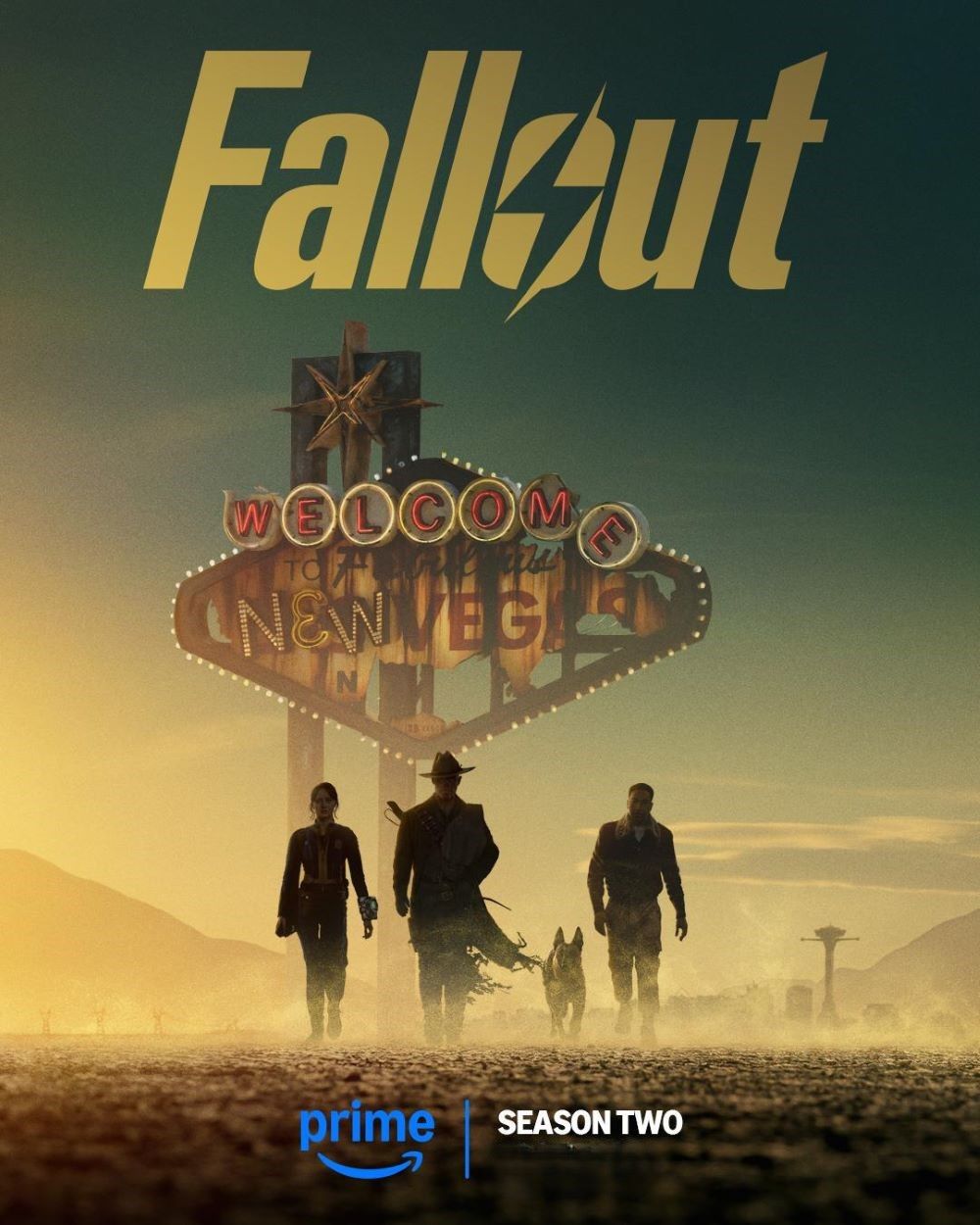
Review: Fallout (Season 2, Episode 1 “The Innovator”)


“Control is not control unless it’s absolute.” — Robert House

Episode 1 of Fallout Season 2 eases us back into the irradiated chaos with a deliberate pace that prioritizes atmosphere over non-stop action, reminding everyone why this show’s wasteland feels so lived-in and unpredictable. Titled something along the lines of a nod to foresight amid apocalypse, it shifts the spotlight toward the glittering promise of New Vegas while weaving in threads from the vaults and the open road, all without feeling like it’s just recapping old ground. The result is a premiere that builds quiet dread and dark laughs in equal measure, setting up a season that promises to dig deeper into the franchise’s corporate nightmares and personal vendettas.

Right from the jump, the episode grabs attention with a slick demonstration of pre-war tech gone horribly right—or wrong, depending on your perspective. Justin Theroux as Robert House commands the screen as a slick-suited mogul, his magnetic performance dripping with oily charisma and precise menace as he demos a mind-control gadget on skeptical workers, his unhinged glee peaking in a catastrophic head-explosion that hilariously exposes tech’s lethal limits. It’s peak Fallout absurdity: blending high-tech horror with retro-futurist flair, like if a 1950s infomercial took a fatal detour into Black Mirror territory. This opener not only hooks you visually but plants seeds for how old-world ambition fuels the post-apoc mess, tying neatly into the larger puzzle of who pulled the triggers on those bombs.

The core trio gets prime real estate here, each storyline humming with tension that advances their arcs without rushing the reveals. Lucy (Ella Purnell), still clinging to her vault-bred optimism, teams up with The Ghoul (Walton Goggins) for a Mojave trek that’s equal parts banter and brutality. Their pit stop at a rundown motel turns into a classic role-playing moment—talks fail, bullets fly, and suddenly you’re knee-deep in the kind of chaotic shootout that screams video game roots, but with character stakes that make the gore hit different. The Ghoul’s gleeful savagery clashes beautifully with Lucy’s reluctant humanity, sharpening their odd-couple dynamic into the show’s emotional engine, where every kill or quip peels back layers of trauma and growth.

Meanwhile, flashbacks to the days before the flash illuminate the cowboy’s (Walton Goggins) haunted past, dropping him into a high-stakes conspiracy involving energy breakthroughs and power grabs that could rewrite history. These segments pulse with moral ambiguity, showing how one man’s vision—or hubris—shapes the ruins we roam today, all delivered through sharp dialogue and tense standoffs that avoid info-dumps. It’s a smart way to expand the lore, making the pre-war era feel as treacherous and satirical as the wasteland, while hinting at butterfly effects that ripple straight to the present-day action.

Back underground in Vault 31, Norm (Moisés Arias) faces a grueling isolation game, rationed and rationed until desperation breeds rebellion. Pacing a sterile corridor lined with frozen execs, he grapples with the cold calculus of survival versus unleashing corporate ghosts, culminating in a choice that’s as chilling as it is inevitable. This thread underscores the series’ knack for turning confined spaces into pressure cookers, where ideology and instinct collide, and it mirrors the surface-level horrors in a way that unifies the episode’s split timelines. No capes or saviors here—just raw human (or post-human) frailty amid institutional rot.

What elevates this opener beyond fan service is its thematic cohesion: progress as the ultimate wasteland monster, whether it’s mind-bending devices in hidden labs, faction wars over scraps of the old world, or vaults masquerading as utopias. The production design shines, from neon-drenched ruins evoking casino glamour turned grim to grotesque experiments that nod to the games’ darkest quests without aping them beat-for-beat. Humor lands in the margins—snarky one-liners amid mayhem, visual gags like branded apocalypse merch—keeping the bleakness palatable and true to the source material’s satirical bite.

Pacing-wise, it unfolds like a slow-burn fuse: the front half reacquaints us with players and places, building investment through intimate beats, while the back ramps up with visceral twists that leave you hungry for more. A few moments drag if you’re craving instant explosions, but that’s by design—this isn’t a rollercoaster start; it’s a deliberate march toward war, factions aligning, and secrets cracking open. Lucy’s pursuit of family truth intersects with tech terrors in ways that feel organic and ominous, promising escalations that blend personal drama with world-shaking stakes.

Visually and sonically, Fallout Season 2 flexes harder, with practical effects that make every mutant skirmish or gadget malfunction pop off the screen, backed by a score that mixes twangy guitars with synth dread for that signature retro-punk vibe. Layered atop that is the inspired use of 1950s-era music—crooning ballads and peppy tunes playing ironically over carnage and corporate horror—anchoring the show’s aesthetic in its ironic nostalgia for a “better” past that led to ruin. The leads ooze chemistry, stealing scenes with micro-expressions that convey volumes, while supporting turns add layers of menace and mirth. It’s not flawless—the multi-threaded structure demands attention, and some setups tease bigger payoffs down the line—but as a launchpad, it nails the balance of homage, innovation, and binge bait.

Ultimately, this episode thrives on Fallout’s core irony: in a world built on fallout from unchecked ambition, our survivors scrape by with grit, guns, and grudging alliances. It honors the games’ sprawl while carving its own path through New Vegas’ shadows, teasing faction intrigue, tech horrors, and moral quagmires that could redefine the Mojave. If Season 1 proved the concept, Episode 1 of Season 2 whispers that the real radiation burns are just heating up—grab your Pip-Boy, because this wasteland’s about to get a whole lot wilder.

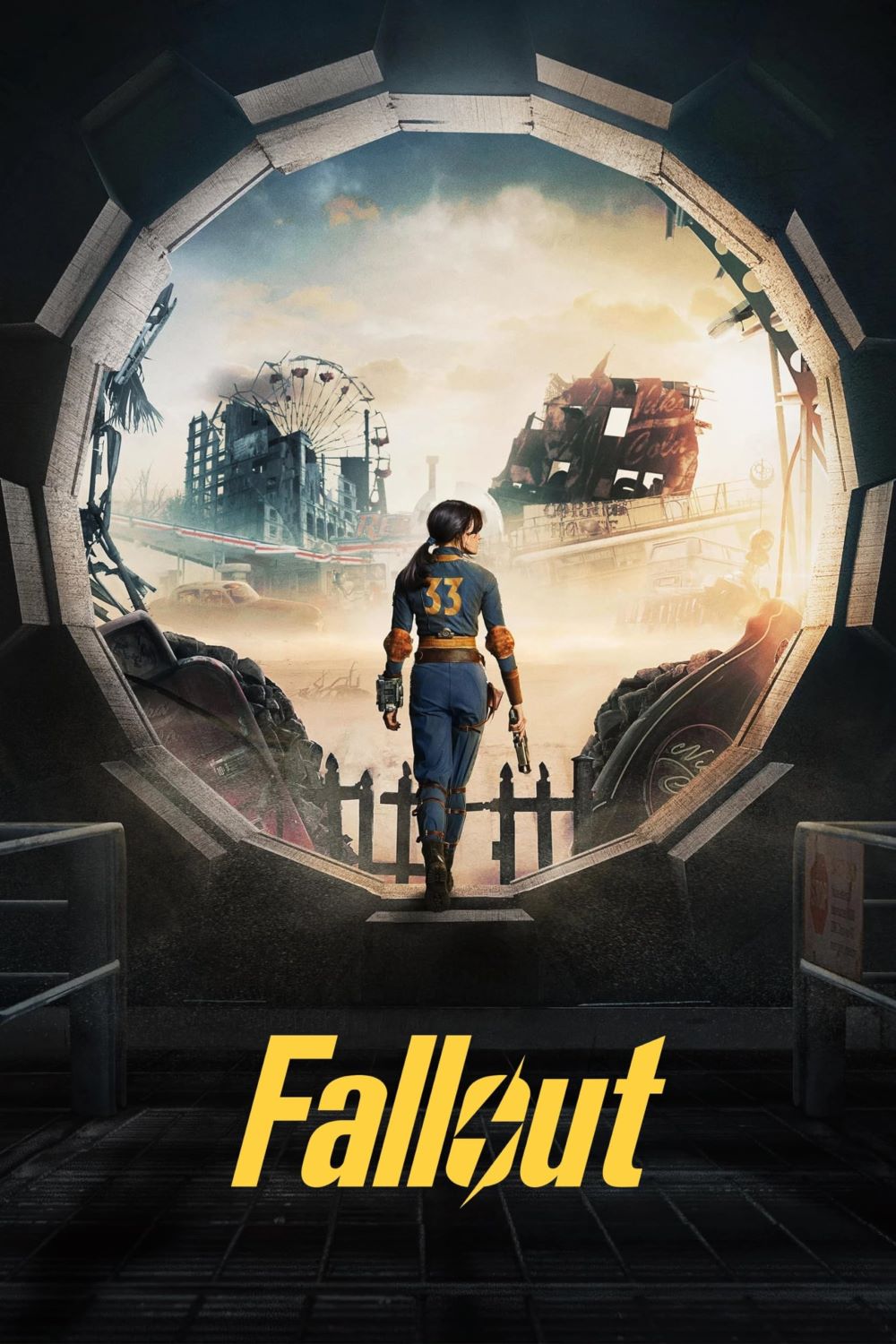
Review: Fallout (Season 1)


“War never changes. You look out at this Wasteland, looks like chaos. But here’s always somebody behind the wheel.” — The Ghoul

Fallout’s first season lands like a mini-nuke: messy around the edges, but undeniably powerful and surprisingly fun. It’s one of those adaptations that feels comfortable being both a love letter to the games and its own weird, often hilarious beast.

Set a couple of centuries after nuclear war, Fallout drops viewers into a retro-futurist wasteland where 1950s aesthetics collide with irradiated horror and corporate evil turned up to eleven. The show splits its focus between three main threads: Lucy, a bright-eyed vault dweller forced to leave her underground utopia; Maximus, an eager but insecure squire in the Brotherhood of Steel; and The Ghoul, a bounty hunter whose past life as a pre-war actor slowly bleeds through his charred exterior. The decision to juggle these perspectives is smart, because each storyline scratches a different itch: Lucy carries the emotional core and fish-out-of-water comedy, Maximus gives the militaristic, power-armor fantasy with a side of satire, and The Ghoul supplies the hard-boiled noir edge and moral ambiguity. The result is a season that rarely feels static; even when one plotline stalls a bit, another kicks in with fresh energy.

The tone is one of the show’s biggest strengths. Fallout leans hard into pitch-black humor without ever completely undercutting the stakes, which is harder to pull off than it looks. Limbs fly, heads explode, dogs get eaten, and yet the show keeps finding a way to make you laugh at the absurdity without turning the apocalypse into a joke. The violence is graphic and frequent, but it usually serves a purpose: to remind you that this world is brutal, even when the characters are cracking wise or bartering over chems. If the games felt like wandering into a deranged theme park built on the ruins of civilization, the series captures that same feeling of “this is horrible, but also kind of hilarious.” That balance, more than any specific lore reference, is what makes it feel like Fallout rather than just another grimdark sci-fi show.

Performance-wise, the casting is pretty inspired. Ella Purnell plays Lucy with this mix of optimism, naivety, and stubborn decency that could easily have been grating, but instead becomes the emotional anchor of the whole season. She brings just enough steel to the character that her idealism feels like a choice, not a default setting. Aaron Moten’s Maximus is a slower burn, and early on he risks fading into the background as “generic soldier guy,” but the more the show digs into Brotherhood politics, insecurity, and the pressure to be “worthy” of power armor, the more interesting he becomes. Walton Goggins, though, more or less walks away with the show. As The Ghoul, he’s vicious, funny, and weirdly tragic, and the flashbacks to his pre-war life give the season some of its most compelling dramatic beats. There’s a sense of continuity in his performance between the slick actor he was and the monster he becomes that keeps the character from feeling like a one-note cowboy caricature.

Visually, Fallout looks a lot better than a streaming adaptation of a video game has any right to. The production design leans into practical sets and tactile props where possible, and it pays off. Power armor has real heft, the vaults look lived-in rather than just glossy sci-fi hallways, and the wasteland feels like a place where people actually scrape out a living instead of just a CGI backdrop. The show has fun with the franchise’s iconography—Nuka-Cola, Pip-Boys, Vault-Tec branding, goofy radios—but it rarely pauses to point and wink too hard. The design team clearly understands that Fallout is basically “atomic-age corporate optimism weaponized into apocalypse,” and that theme is baked into everything from costumes to billboards rotting in the sand. Even the creature designs, like the mutated critters and ghouls, walk that line between unsettling and cartoonishly over-the-top, which fits the overall tone.

On the writing side, the structure of the season feels very much like an RPG campaign. Episodes often play like individual “quests” that build toward a bigger mystery: Lucy stumbling into a bizarre settlement, Maximus dealing with Brotherhood politics, The Ghoul chasing a lead that intersects with both of them. That quest-chain structure gives the first half of the season a propulsive, almost episodic energy, and it’s one reason the show is so watchable. At the same time, this approach has trade-offs. Sometimes character development feels a bit checkpoint-driven—people change because the story needs them to for the next “quest,” rather than as a smooth emotional progression. You can occasionally see the writers nudging the pieces into place, especially as the season barrels toward the finale.

Fallout sits in an interesting sweet spot when lined up against another prestige video game adaptation like HBO’s The Last of Us. Instead of treating the games as a sacred script that must be recreated line for line, it treats the Fallout universe as a shared sandbox—a tone, a style, a set of rules—rather than a fixed storyline that must be obeyed. Where The Last of Us is largely a faithful retelling of Joel and Ellie’s journey, Fallout seems far more interested in asking, “What else can happen in this world?” instead of “How do we restage that iconic mission?” It borrows the franchise’s black-comedy vibe, retro-futurist Americana, and corporate dystopia, then builds mostly original plots and character arcs on top.

That choice immediately gives the writers room to play. They’re not constantly checking themselves against specific missions, boss fights, or famous cutscenes; they’re free to jump around the timeline, invent new factions or townships, and reframe old ideas in ways that a beat-for-beat adaptation could never manage without sparking outrage. This approach also lets Fallout add to the lore instead of just reanimating it in live action. Because it’s not locked into recreating a particular protagonist’s path, the show can explore corners of the wasteland that were only hinted at in the games, complicate existing factions, or take big swings with backstory and world history. That kind of freedom inevitably creates some continuity friction for hardcore fans, but it also keeps the series from feeling like a lavish, expensive recap of something players already experienced with a controller in hand. Where The Last of Us excels by deepening and humanizing a story many already know, Fallout thrives by expanding its universe sideways, treating the source material as a toolbox rather than a template—and that makes it feel more like a genuine new chapter in the franchise than a live-action checklist.

Thematically, the show has more on its mind than explosions and fan-service, which is nice. Fallout keeps circling back to questions about corporate power, the illusion of safety, and how far people will go to preserve their own little slice of control. Vault-Tec’s smiling fascism is a blunt but effective metaphor for real-world systems that promise protection while quietly planning for everyone’s demise. The Brotherhood of Steel, meanwhile, becomes a vehicle for exploring militarized religion, hierarchy, and the dream of “owning” technology and knowledge. None of this is subtle, but Fallout isn’t a subtle franchise to begin with, and the series has enough self-awareness to let its satire stay sharp without slowing everything down for speeches. When it hits, it feels like the writers are asking, “Who gets to decide what’s worth saving when everything’s already gone?”

Where the season stumbles most is consistency. The pacing isn’t always smooth; some mid-season episodes are stacked with memorable set pieces and character moments, while others feel like they’re mostly there to set up endgame twists. The finale, in particular, is likely to be divisive. On one hand, it ties several plot threads together, drops a couple of bold lore swings, and sets up future seasons with a few big, crowd-pleasing reveals. On the other hand, it rushes emotional payoffs and leans heavily on explaining rather than letting certain developments breathe. The shift in tone in the last episode is noticeable enough that some viewers may feel like they suddenly switched to a slightly different show. It’s not a deal-breaker, but it does mean the season ends with more “wow, that was a lot” than a clean emotional landing.

As an adaptation, this freedom-to-expand strategy pays off by appealing to longtime fans and welcoming newcomers without getting bogged down in purist debates. Fans of the games will catch tons of details, locations, and tonal echoes that feel like affectionate nods rather than empty easter eggs. At the same time, the show isn’t just re-skinning existing game plots, which is a good call. It feels like a side story in the same universe rather than a strict retelling. That said, the lore choices late in the season—especially around the broader timeline and certain factions—are bound to spark arguments. If someone is deeply attached to the canon of the older games, some of the retcons and reinterpretations might play like a slap in the face. If someone is more relaxed about canon and just wants an entertaining, coherent story in that world, the show will probably land much better.

The writing of individual scenes shows a lot of care, especially in the way humor and dread coexist. Some of the best moments aren’t the big action beats but the small conversations: a strange, tense chat in a ruined diner, a piece of pre-war media resurfacing at the worst possible time, or a casual bit of wasteland banter that suddenly turns threatening. The dialogue sometimes leans too modern for the retro setting, but the rhythm feels natural enough that it rarely jars. When the show is firing on all cylinders, it nails that specific Fallout flavor: characters staring at incomprehensible horror and responding with a joke, a shrug, or a desperate sales pitch.

If there’s one area where the season could improve going forward, it’s in fleshing out the secondary cast and giving certain arcs more emotional weight. Some supporting characters are memorable and sharply drawn, while others feel like they exist mainly to be lore-delivery devices or cannon fodder. The world feels rich enough that it can absolutely sustain more side stories and slower, character-focused detours. A little more breathing room for relationships—whether friendships, rivalries, or romances—would help the big twists land harder and keep the show from occasionally feeling like it’s sprinting from spectacle to spectacle.

Overall, Fallout’s first season is a strong, confident debut that understands what made the games stand out without being slavishly beholden to them. It’s funny, brutal, stylish, and surprisingly character-driven for a show that spends so much time reveling in bloodshed and nuclear kitsch. The missteps in pacing and the polarizing choices in the finale keep it from being flawless, but they also signal a series willing to take risks rather than play it safe. For viewers who enjoy genre TV with personality, and for gamers who have been burned by adaptations before, this season is absolutely worth the trip into the wasteland. It doesn’t just survive the jump to live action; it stomps into it in full power armor, flaws and all.