Retro Television Review: Homicide: Life On The Street 6.2 “Blood Ties, Part Two”


Welcome to Retro Television Reviews, a feature where we review some of our favorite and least favorite shows of the past!  On Sundays, I will be reviewing Homicide: Life On The Street, which aired from 1993 to 1999, on NBC!  It  can be viewed on Peacock.
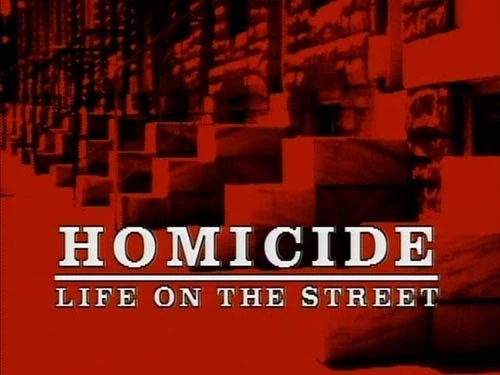
This week, the investigation into Melia’s murder continues.

Episode 6.2 “Blood Ties: Part 2”

(Dir by Nick Gomez, originally aired on October 24th, 1997)

Detectives Munch and Kellerman investigate a murder at Camden Yards, where the Orioles are playing the A’s and also where someone beat a loudmouth New Yorker to death in the stairwell.  Munch and Kellerman’s investigation is hindered by the fact that there’s a baseball game going on and every single witness would rather watch the action on the field then discuss the murder.  In fact, most of them don’t even consider it a crime to kill a Yankees fan.  Eventually, even Kellerman decides that he’d rather just watch the game.

In the end, though, Kellerman and Munch do make an arrest.  The murderer turns out to be another Yankees fan who was upset because he thought the Yankees were going to be playing the Orioles.  He’s even willing to sign a confession as long as he’s allowed to watch the end of the game.

Meanwhile, Pembleton and Bayliss continue to investigate the murder of Felix Wilson’s maid, Melia.  While Ballard and Gharty think that Pembleton should be looking at the Wilsons (and Gharty specifically feels that Pembleton is biased because the Wilsons are black and rich), Pembleton theorizes that the maid was killed by her abusive ex-boyfriend.  However, when it turns out that the boyfriend is still in prison in Haiti, Pembleton finally calls in Felix Wilson.

In the Box, Pembleton tells Felix that Melia had sex before she was murdered and that he needs a blood and hair sample so that both Felix and his son Hal (Jeffrey Wright) can be  eliminated as suspects.  “I had sex with her,” Felix says.  Felix goes on to say that he didn’t kill her.  Later, Felix’s attorney shows up at the station and announces that Felix has not only exercised his right to legal counsel but he will also not be submitting either his blood or his hair without a court order.  Both Pembleton and Giardello are left shaken.  Could Felix Wilson, a man admired by both of them, be a murderer?

This episode was an improvement on last week’s episode.  Munch and Kellerman got a decent, non-Luther Mahoney storyline.  The Wilson storyline is bringing out the best in both Yaphet Kotto and Andre Braugher and the great James Earl Jones is perfectly cast as Felix Wilson.  Ballard and Gharty held their own against Pembleton and Bayliss and, as opposed to last week, both of them seemed like they actually belonged in the Homicide Unit.  There was a great breakroom confrontation between the four detectives.  Even better, there was a genuinely funny scene in which Bayless called in his junior high French teacher to talk to the police in Haiti.

And yet, we still had to sit through a bunch of nonsense with Detective Falsone.  Falsone is still investigating the Luther Mahoney shooting, even though no one has asked him to do and all of the detectives involved were cleared of any wrongdoing.  Why, Falsone, why?  Why is Falsone so determined to prove that Lewis and Kellerman did something wrong in the shooting?  Why are we expected to sympathize with a character like Falsone?  This episode even features Falsone having a chance meeting with Dr. Cox and flirting with her.  Hey, Falsone — that’s Kellerman’s routine!  What the Hell!?

This would be a fine episode if not for Falsone and his vendetta against his fellow cops.  The show is really determined to try to make me like Falsone but …. I don’t think it’s going to happen.
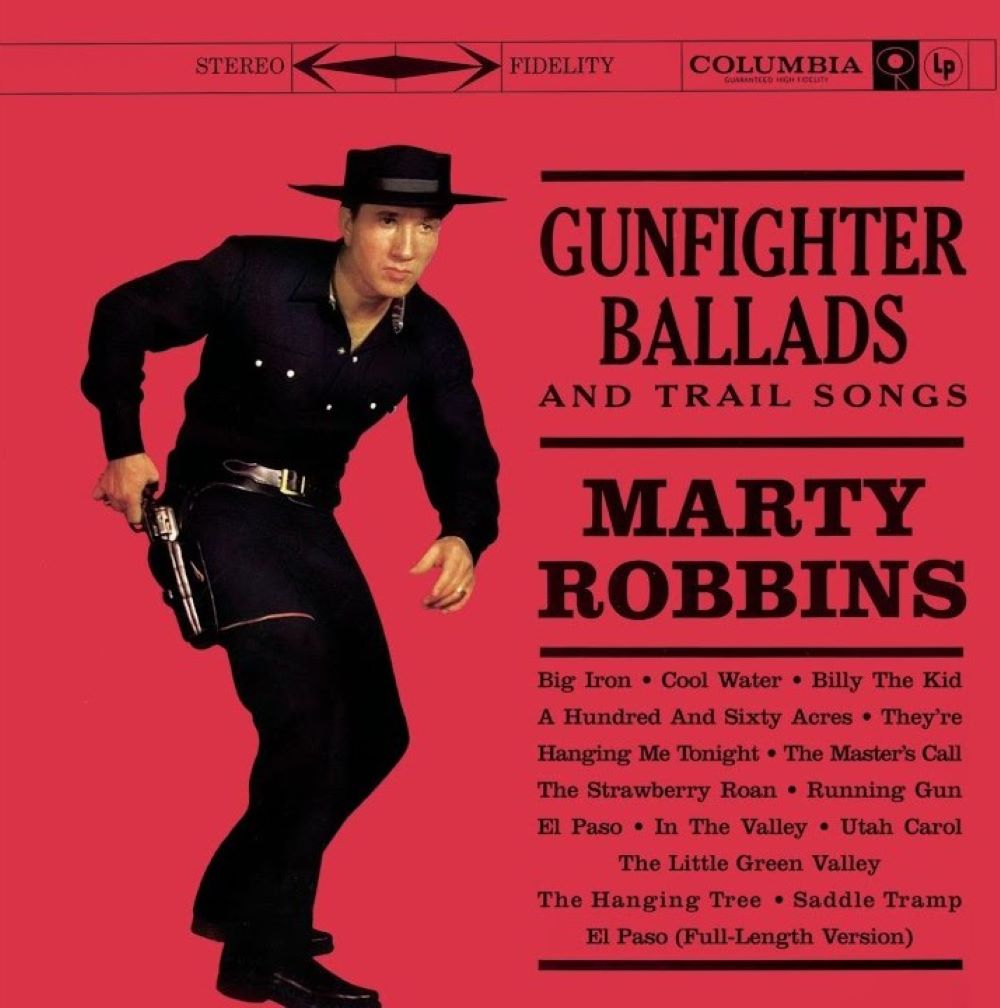
Song of the Day: Big Iron (by Marty Robbins)


Marty Robbins’ “Big Iron” is one of those songs that instantly takes you back to the Old West. It’s simple but powerful—a ranger rides into town to face down an outlaw, and you just feel that quiet tension building with every verse. Robbins’ steady voice gives the story a calm, almost cinematic vibe, like a slow pan across a dusty street before the final showdown. It’s storytelling stripped to the bone: two men, one promise of justice, and the air thick with purpose.

What’s cool is how “Big Iron” hasn’t just stayed stuck in the past. It’s popped up everywhere—from memes to movies to, of course, Fallout: New Vegas. That game gave the song a second life as a kind of anthem for wanderers—loners crossing desolate landscapes where myths feel more real than history. There’s something timeless about its message: standing your ground, even when the whole world’s gone sideways.

So when “Big Iron” opens the first episode of Fallout Season 2, it feels like a perfect fit. The familiar twang instantly throws you into that classic Fallout energy—part Western, part apocalypse. It’s not just a fun musical nod; it sets the tone for everything that follows. The song reminds us that even in a broken world, we’re still drawn to stories about courage, justice, and lone figures walking into danger with purpose. Robbins’ ballad might be old, but in Fallout’s world, it feels right at home.

Big Iron

To the town of Agua Fria rode a stranger one fine day
Hardly spoke to folks around him, didn’t have too much to say
No one dared to ask his business, no one dared to make a slip
For the stranger there amongst them had a big iron on his hip
Big iron on his hip

It was early in the morning when he rode into the town
He came riding from the south side slowly lookin’ all around
He’s an outlaw loose and running came the whisper from each lip
And he’s here to do some business with the big iron on his hip
Big iron on his hip

In this town there lived an outlaw by the name of Texas Red
Many men had tried to take him and that many men were dead
He was vicious and a killer though a youth of twenty-four
And the notches on his pistol numbered one and nineteen more
One and nineteen more

Now the stranger started talking, made it plain to folks around
Was an Arizona Ranger, wouldn’t be too long in town
He came here to take an outlaw back alive or maybe dead
And he said it didn’t matter, he was after Texas Red
After Texas Red

Wasn’t long before the story was relayed to Texas Red
But the outlaw didn’t worry men that tried before were dead
Twenty men had tried to take him, twenty men had made a slip
Twenty-one would be the ranger with the big iron on his hip
Big iron on his hip

The morning passed so quickly, it was time for them to meet
It was twenty past eleven when they walked out in the street
Folks were watching from the windows, everybody held their breath
They knew this handsome ranger was about to meet his death
About to meet his death

There was forty feet between them when they stopped to make their play
And the swiftness of the Ranger is still talked about today
Texas Red had not cleared leather for a bullet fairly ripped
And the Ranger’s aim was deadly with the big iron on his hip
Big iron on his hip

It was over in a moment and the folks had gathered ’round
There before them lay the body of the outlaw on the ground
Oh, he might have gone on living but he made one fatal slip
When he tried to match the Ranger with the big iron on his hip
Big iron on his hip

Big iron, big iron
When he tried to match the Ranger
With the big iron on his hip
Big iron on his hip

October Hacks: Sorority House Massacre (dir by Carol Frank)


The 1986 film, Sorority House Massacre, tells the story of two people who share a psychic bond.

Beth (Angela O’Neill) is a college student who can’t remember anything about her childhood and who was raised by her aunt.  After her aunt dies, Beth joins a sorority and moves into their house.  Almost from the minute that she arrives, Beth starts to have disturbing visions and dreams of a man with a knife and blood dripping from the ceiling.  With most of the members of the sorority leaving for the Memorial Day weekend, Beth ends up staying with Linda (Wendy Martel), Sara (Pamela Ross), and Tracy (Nicole Rio).  The other girls want to have a fun weekend but instead, they find themselves dealing with Beth and her glum attitude.  Linda and Sara sincerely want to help.  Tracy is a bit annoyed with the whole thing and I don’t blame her.

Meanwhile, a man named Bobby (John C. Russell) is a patient at a mental asylum.  He’s been a patient ever since he was arrested for murdering almost his entire family.  Bobby has been in a rage for the past few days, beating his head on the walls and attacking anyone who enters the room.  Just as Beth finds herself having visions of Bobby, Bobby has visions of Beth.  When Bobby does finally manage to escape from the hospital, the first thing he does is break into a hardware store and steal a hunting knife.  (He uses the knife to take care of the owner of the store.)  Then he steals a car and promptly drives off towards Los Angeles and the sorority house.

Sorority House Massacre was produced by Roger Corman and, just as he did with Slumber Party Massacre, he hired a woman to both direct and write the film.  As such, while Sorority House Massacre has all of the usual scenes of sorority girls taking showers, trying on clothes, and running around in states of undress, it’s still never as misogynistic as some other slasher films.  Beth, Sara, Linda, and Tracy all come across as being fully-rounded characters and the viewer doesn’t want anything bad to happen to any of them.  If anything, in this film, it’s the various boyfriends who are portrayed as being somewhat disposable and easily victimized.  Certainly, not a single one of the guys proves to be particularly useful once Bobby shows up at the sorority house and starts his massacre.

Why is Bobby fixated on the sorority house and Beth in particular?  Director Carol Frank does a good job of portraying the killer’s mental state, with a good deal of the film’s scenes being shot from his own point of view.  (Perhaps the scariest moments are not the ones featuring blood and knives but the ones in which the killer moves from location to location and we see, through his point of view, just how relentless he is.)  Frank also takes us straight into Beth’s mind, showing us her vivid hallucinations as they happen and the end result is that Sorority House Massacre often has an unexpectedly surreal feel to it.  It’s a low-budget slasher film that plays out like a filmed nightmare and it sticks with you, even after the end credits.