Tonight’s episode of Friday the 13th: The Series is the finale of the first season. When the spirit of Uncle Lewis (R.G. Armstrong) attempts to re-enter the world of the living, it leads to Micki and Ryan reliving some of their worst memories.
Over the course of his long and distinguished career, Harvey Keitel has only been nominated once for an Academy Award.
And, amazingly enough, he wasn’t nominated for any of the films for which he is best remembered. He wasn’t nominated for Mean Streets or Taxi Driver or any of his other collaborations with Martin Scorsese. He wasn’t nominated for playing the Wolf in Pulp Fiction or Mr. White in Reservoir Dogs. He was not nominated for The Piano. He certainly wasn’t nominated for baring his soul in Bad Lieutenant. Instead, Harvey Keitel’s only nomination was for playing real-life gangster Mickey Cohen in the 1991 Best Picture nominee Bugsy.
Bugsy was one of the many films to be made about the life of Bugy Siegel, the reputedly psychotic gangster who left New York for Hollywood and who later helped to create the wonderland of Las Vegas. In both the movie and real-life, Siegel was gunned down by his former associates, who felt that he was recklessly wasting their money out in the middle of the desert. It’s generally agreed that the order to murder Siegel was given by Lucky Luciano and Meyer Lansky, two of Siegel’s long-time friends and business partners. In Bugsy, Lansky was played by Ben Kingsley. Kingsley was also nominated for Best Supporting Actor. Unfortunately, whenever two actors from the same film are nominated for an Oscar, they usually end up canceling each other out. That’s what happened in the case of Bugsy, with both Kingsley and Keitel losing the Oscar to City Slickers‘s Jack Palance.
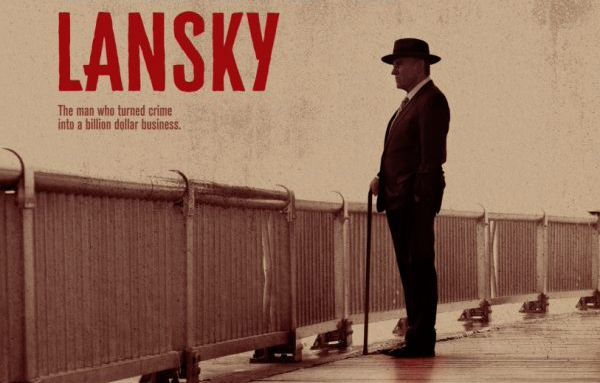
30 years after Busgy, Harvey Keitel once again acted out of the story of the death of Bugsy Siegel. Except, things time, Keitel played Meyer Lansky, Mickey Cohen was nowhere to be seen, and the film was called Lansky.
Of course, there’s more to Lansky than just the falling out with Bugsy Siegel. As you can tell from the film’s title, it attempts to deal with Lansky’s entire life. The film starts in 1979, with a friendly but terminally ill Meyer Lansky meeting with a writer named David Stone (Sam Worthington). David desperately needs the money that would come from writing the only authorized biography of Meyer Lansky. Lansky, knowing that he’s dying, wants to tell his story. Of course, Lansky has a few conditions. David can only publish the book after Lansky has died and David is not to talk to anyone about anything that Lansky tells him. David agrees.
From there, the film jumps back and forth in time. We watch the young Lansky (played by John Magaro) as he teams up with Lucky Luciano (Shane McRae) and Bugsy Siegel (David Cade) to change the face of organized crime. Along the way, he gets involved in the casino business, the CIA, and the Cuban revolution, and he fights Nazis at home and abroad. Lansky turns organized crime into a business and, as a result, becomes known as “the Mob’s accountant.” The FBI hounds him for almost his entire life, determined to discover where he’s hidden the millions of dollars that he’s rumored to have earned through his crimes.
While Lansky tells his story to David, the two of them form a slightly uneasy friendship Lansky is friendly and curteous but, as becomes clear as the film progresses, he’s still as capable of ordering a murder as ever. David, meanwhile, is being pressured by the FBI. They want him to become an informant and to press Lansky for information on where he’s hiding his money.
Lansky is a film that requires some patience. The first hour or so is a bit messy, with the film awkwardly trying to strike a balance between the flashbacks and the scenes of David talking to Lansky. At times, the film becomes a bit of an odd buddy picture, with Lansky offering David some unexpected life advice. However, once the FBI starts pressuring David, things pick up. The arrival of the FBI adds some much needed tension to the film’s storyline. As you watch the main agent (played by David James Elliott) pressure David into becoming an informant and essentially put his life at risk, it’s hard not to contrast Lansky with the men who are determined to put him away. Lansky may be a criminal but he has a code of ethics and, most importantly, he doesn’t harass innocents. The FBI, though, has no problem with bullying and manipulating informants and witnesses, all in the name of trying to figure out where a dying man is hiding his money. When the attention shifts from Lansky telling his story to Lansky outwitting the FBI, the film takes on an entirely new feel. When a smug FBI agent flies all the way to Israel in search of Lansky’s money, it’s impossible not to cheer a little when he gets outsmarted.
Due to the film’s flashback structure, Harvey Keitel is not in as much of Lasnky as you might expect. And yet he dominates the entire film. He perfectly captures both Lansky’s determination and his grim humor. Even facing death, Lansky is determined to keep control over every situation. In the film’s most powerful moments, he discusses what it’s like to be an outsider in America. Lansky knows that, as a Jew, he’ll never be fully accepted by the establishment. So, instead of begging for hand-outs, Lansky created his own establishment, one that operated in the shadows but which ultimately proved to be as successful as any corporation. When Lansky discovers that the American government is pressuring Israel to refuse to grant Lansky citizenship, Keitel perfectly captures both Lansy’s pain and his defiance. It all leads to a haunting final scene of Lansky on the beach. Appropriately enough, Meyer Lansky is alone.
Lansky is a both a portrait of a fascinating life and a tribute to the talent of Harvey Keitel. It may require some patience but that patience will be rewarded.
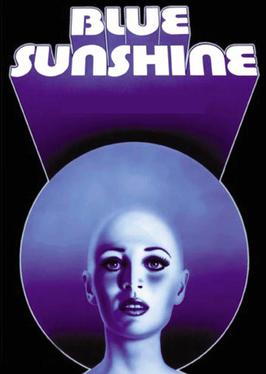
Today’s scene that I love comes from Jeff Lieberman’s 1978 film, Blue Sunshine.
If you haven’t seen the film, Blue Sunshine is the nickname for the acid that a group of characters dropped while in college during the 60s. Unfortunately, ten years later, all of them are losing their hair, suffering from extreme migraines, and turning into psycho killers. It’s the worst acid flashback of all time!
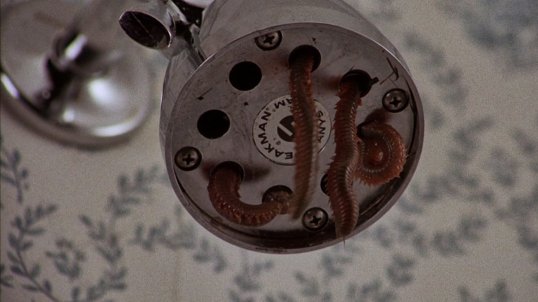
This is a pretty good film, one that uses the horror genre as a way to explore the contrast between the idealism of college and the realities of the real world. It’s also, as you can see in the scene below, quite suspenseful and more than a little frightening.
That can be a dangerous thing to admit nowadays. Clint is not a popular man on social media. The older critics have yet to forgive him for endorsing Mitt Romney over Barack Obama in 2012, despite the fact that Eastwood’s empty chair speech was quite a bit tamer than some of the other criticisms and insults that were being lobbed at both Obama and Romney at the time. The younger critics are still angry that he made Richard Jewell, a film that was seen as criticizing the press at a time when Trump was doing the same thing, this despite the fact that Eastwood never endorsed Trump in 2016 or 2020. (Beyond having a strong individualistic streak, Eastwood’s films are usually apolitical.)
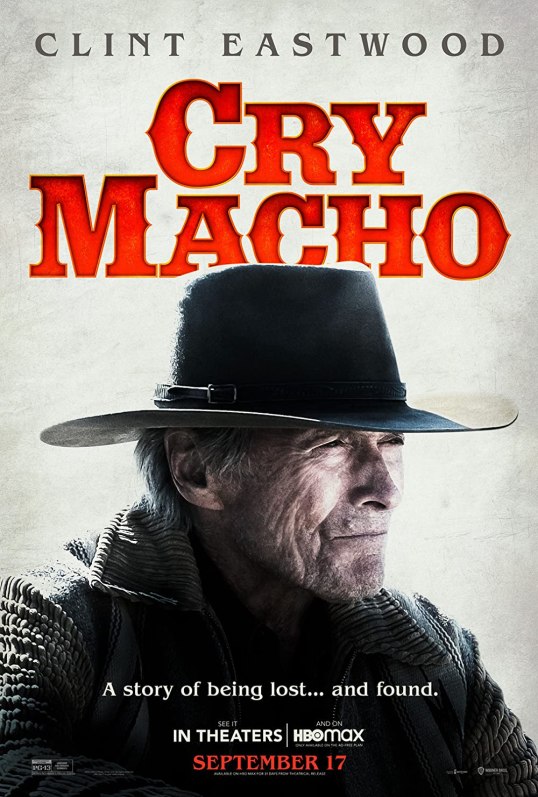
He’s one of those cultural figures that drives Twitter crazy. No one can deny that he’s a film icon and that he’s directed several good and a handful of great films. But, because he doesn’t seem to care what the online crowd thinks and probably isn’t even totally sure what Twitter is, there’s this need to try to tear him down. As such, I wasn’t surprised when his latest film, Cry Macho, received mixed reviews. At this point in the game, any film that Eastwood makes is going to be criticized.
Don’t get me wrong, of course. Sometimes, the criticism is correct, even if it is more motivated by personal animus than anything else. Some of his recent films have been a bit weaker than his earlier ones. I wasn’t a fan of Jersey Boys but I figured that Eastwood was in his 80s and he probably had always wanted to do a musical and, if anyone has earned the right to cross a few things off of his bucket list, it’s Clint Eastwood. Having the three men at the center of The 15:17 to Paris play themselves is something that worked better as an idea than in the actual execution. J. Edgar was a mess and so was Hereafter.
And yet, for every weak Eastwood film, there’s also a recent film that reminds us that he’s still a good director and that he’s still far more willing to explore new territory than some of his contemporaries. The Mule is a film that, like Cry Macho, received mixed reviews but which looks better with each subsequent viewing. Sully was a moving tribute to professionalism and grace under pressure and featured one of Tom Hanks’s best performances. American Sniper was far more nuanced that most critics were willing to admit. All of these films received mixed reviews, even the Oscar-nominated American Sniper. All of them have benefitted from reevaluation.
Will Cry Macho be another Eastwood film that will be embraced in later years? It’s too early to say but I think it will be. Now, again, don’t get me wrong. Some of the criticism that the film has received is justified. In Cry Macho, Clint plays a rodeo rider who, a year after being forced to retire due to a back injury, is hired to go down to Mexico and track down Rafo (Eduardo Minett), the teenage son of a wealthy businessman (Dwight Yoakam). Clint Eastwood is 91 years old and, let’s just be honest, he looks like he’s 91 years old as well. Thirty or even twenty years ago, Clint would have been perfect for the role of Mike Milo. Today, Clint is a bit too old for the role and it’s hard not to notice that, whenever Mike does throw a punch in the film, the scene is edited so that we see the fist and we see the results of the hit but we don’t actually see the punch itself. Clint is old in this film and, even more importantly, he comes across as being old.
But you know what? It almost doesn’t matter. He may be old but he’s still Clint Eastwood. He’s a pop cultural icon. He’s a legend. He epitomizes an era that Cry Macho acknowledges is coming to an end. It’s a bit of a meandering film. Though Rafo’s mother refuses to allow him to leave with Mike, Rafo still sneaks into Mike’s truck and travels with him to the border. Along the way, some men working for Rafo’s mother try to stop them from leaving Mexico. There are a few small action scenes but they’re not what the movie is about and it’s significant that this is a rare Eastwood film in which no one, not even the main bad guy, dies. Instead, the movie is about Mike and Rafo bonding on the road and discussing what it truly means to be macho. Mike is someone who has spent his entire life being “macho” but now he’s old and he’s broken down and he’s realizing that there’s more to life than just trying to live up to some sort of idealized version of manhood. Rafo is young and Mike is very old but, over the course of the movie, they both learn the same lesson. It’s okay to just be yourself. That may be a simple lesson but it’s one worth hearing.
As a director, Eastwood leaves room for the story to wander a bit but he still keeps the action moving at a steady pace. He gets good performances out of his cast. Despite being miscast, he still manages to gets a good performance from himself, though you may cringe a little at his insistence of still trying to present himself as being a romantic lead. (This was played for laughs in The Mule.) The film’s cinematography, courtesy of Ben Davis, is breathtaking. Even while helping Rafo leave the country, Mike falls in love with Mexico and, looking at the beautiful landscapes in this film, you can’t blame him. All in all, it’s a good film. If it had been made a few decades earlier, it would have been a great film but still, this is Eastwood at his most gentle and self-reflective. Future reviewers, free from the need to appease the online mob, will appreciate this film more than the modern ones.
4 Shots From 4 Films is just what it says it is, 4 shots from 4 of our favorite films. As opposed to the reviews and recaps that we usually post, 4 Shots From 4 Films lets the visuals do the talking!
Yesterday was the birthday of the great director, Jeff Lieberman, who was responsible for some the best and most unusual horror thrillers of the 70s and the 80s! Today, TSL honors this talented filmmaker with….
4 Shots From 4 Jeff Lieberman Films
Squirm (1976, dir by Jeff Lieberman, DP: Joseph Mangine)
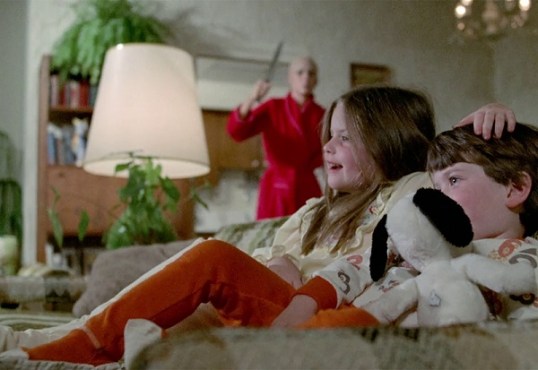
Blue Sunshine (1978, dir by Jeff Lieberman, DP: Don Knight)
Just Before Dawn (1981, dir by Jeff Lieberman, DP: Joel King and Dean King)
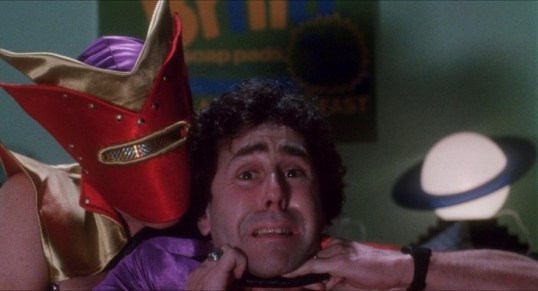
Remote Control (1988, dir by Jeff Lieberman, DP: Tim Suhrstedt)
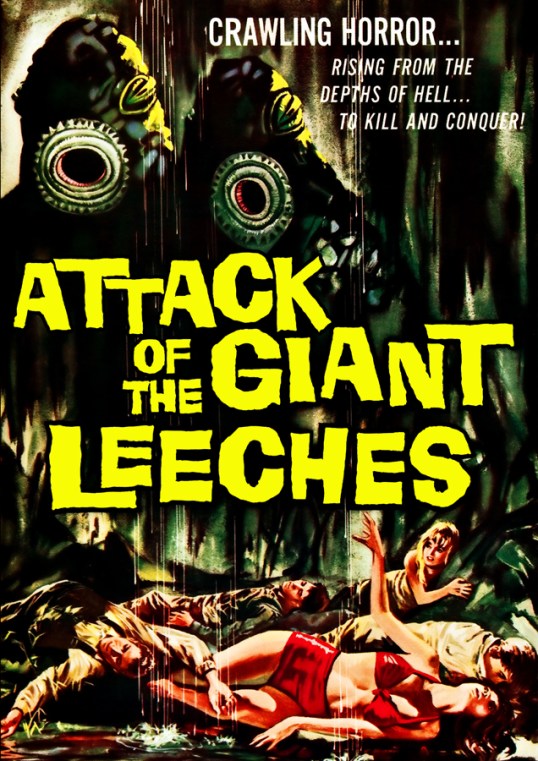
For today’s public domain horror film, I present to you 1959’s Attack of the Giant Leeches. This 60-minute film is a classic Drive-in film. While it has its slow spots, it also features an iconic performance from Yvette Vickers, who is like one of my favorites of the strong, confident, unapologetically sexy women who dominated the old B-movies. (Plus, she was only 5’3 and it’s not easy being brave when you’re having to look up at everyone. Trust me, I know.) This short little film is steamier than Louisiana in August and is full of bayou atmosphere.
I have to admit that I’m kinda freaked out by the scenes of people floating underwater in this film. And leeches … agck! Don’t even get me started on leeches. Especially giant leeches…
I didn’t watch much TV this week. I’ve kind of made the decision to hold off on a lot of shows until after October so no Dancing With The Stars or The Voice for now.
Here’s what little I did watch:
Allo Allo (Sunday Night, PBS)
With the Gestapo looking to arrest Rene, Rene was forced to disguise himself by wearing a putty nose. Yes, the nose did get smashed. Yes, Rene did try to smoke a cigar. Yes, the nose did catch on fire. Rene, being the bravest man in France, ripped those nose off and threw it out the cafe, where it promptly exploded. It was an interesting episode.
Bar Rescue (Weekday Mornings, Paramount Network)
I watched two episodes on Monday morning. Judging from all the yelling and the scowling, apparently there is no more important job in America than being a good bar owner.
Friday the 13th: The Series (Yahoo)
I’m still having fun watching and sharing this series on the Shattered Lens!
Gabby Petito: ID Special Report (Wednesday Night, ID)
This didn’t really reveal anything about the case that I didn’t already know. John Walsh showed up to say that he thinks Brian Laundrie is still alive. I agree but, at the same time, I’m not sure if sending Dog the Bounty Hunter after him is the best way to eventually capture him. So many people are using the Petito case to build up or reboot their own brand that I fear that Gabby herself is getting forgotten in the rush. My heart breaks for her and her family.
The Office (Thursday Night, Comedy Central)
It watched an episode on Thursday. It was from the final season. Andy got out his guitar and started singing. It was cringe city.
Open All Hours (Sunday Night, PBS)
Help I’m Being Held Prisoner, Granville painted on the store window. No one came to his aid. This is the darkest British sitcom that I’ve ever seen.
Parking Wars (Weekday Mornings, A&E)
A&E’s tribute to fascism continues to be must-viewing for anyone who wants to understand how authoritarianism took root in the United States. I watched a few episodes on Monday morning while I was straightening up around the house. There was one terrifying parking cop in general, who kept complaining about people making excuses but who, at the same time, seemed to feel that she was a victim just because people didn’t appreciate getting ticketed. Giving out tickets to the guilty is one thing. Whining because people aren’t kissing your ass in response is another.
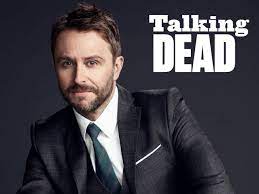
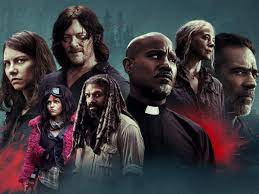
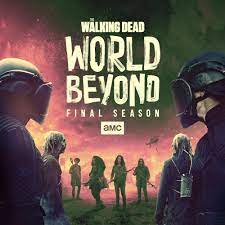
In the past, I was often bored with The Walking Dead but charmed with Talking Dead. This season, I’ve pretty much had the opposite reaction. Every good episode of The Walking Dead is followed by a boring Talking Dead. It doesn’t help that Talking Dead also has to hype up stuff like World Beyond. It’s been a long time since that night that Chris Hardwicke shed a tear while discussing the death of Herschel. (We miss you, Scott Wilson!)
Eh, who cares? I set the DVR for it. I watched it. It didn’t interest me. It feels too much like Walking Dead fanfic, to be honest. I guess I’ll give it another chance next Sunday but, so far, this show just is not holding my interest at all. It’s like the CSI: Cyber of The Walking Dead franchise.
On tonight’s episode of Friday the 13th: The Series, Ryan discovers that his own father has been using a cursed pipe to get ahead in business!
This episode originally aired on July 16th, 1988. Ryan’s father is well-played by Michael Constantine, a familiar character actor (he was the father in My Big Fat Greek Wedding) who passed away on August 31st of this year.
In the 2013 film, Dead in Tombstone, Danny Trejo plays Guerrero De La Cruz, an old west outlaw who is loyal to his family, who has no problem robbing banks, but who also is not a fan of unnecessary bloodshed. Even though the film opens with Guerrero and his gang gunning down a posse of men, that’s just because they were saving the life of Red (Anthony Michael Hall), who just happens to be Guerrero’s half-brother. No sooner than you can say, “In what world could Danny Trejo and Anthony Michael Hall possibly be related?,” Red is asking Guerrero to help him pull off a daring robbery.
Guerrero helps Red because Guerrero is all about family. Unfortunately, Red is all about money and, not wanting to share the loot after the robbery, he promptly guns Guerrero down. Not only does Red shoot Guerrero but he insists that each member of the gang shoot him as well, implicating all of them in the crime.
Guerrero dies and promptly goes to Hell, where he’s met by Lucifer (Mickey Rourke). Guerrero doesn’t want to go to to Hell. He wants to get revenge. He offers to send a lot more souls down to Hell if Lucifer gives him a chance to return to the world of the living so that he can kill Red and the former members of his gang. Amused, Lucifer agrees but with a condition: Guerrero only has 24 hours to kill all six of his killers and Guerrero has to do all of the killing himself. He can’t hire someone else to do it or ask anyone for help. Guerrero agrees.
Unfortunately, as Guerrero soon discovers, he’s not the only one who wants Red dead. He’s going to have to move quickly if he’s going to kill all the members of the gang before Calathea (Dina Meyer), the wife of a sheriff killed by Red, gets a chance to do it herself!
Dead In Tombstone is one of those films that sounds a lot more interesting than it is. The concept behind the film is actually a pretty neat one and I like the idea of Guerrero actually having competition. This isn’t one of those westerns where everyone patiently waits their turn to go after the bad guys. The entire world wants these guys dead! Plus, who wouldn’t be excited about the idea of watching Danny Trejo and Mickey Rouke act opposite each other? With his weathered features and stoic demeanor, Danny Trejo is the perfect choice to play an outlaw and, for that matter, Rourke’s gravelly whisper and permanent smirk are put to good use in the role of the Devil. And while Anthony Michael Hall might seem like an odd choice to play Danny Trejo’s half-brother, he’s still properly villainous and loathsome in the role of Red.
And yet, the overall film itself is a bit uneven. The film looks good (especially for a straight-to-video project) but it never really seems to develop any sort of narrative momentum and there’s more than a few slow spots. At times, the film seems to be unsure of just how seiously it wants to take itself and, as a result, the story exists in a kind of limbo between being a straight western with supernatural elements and send-up of the whole genre. The end result is pretty uneven but the dream combination of Rourke and Trejo still makes it worth watching.
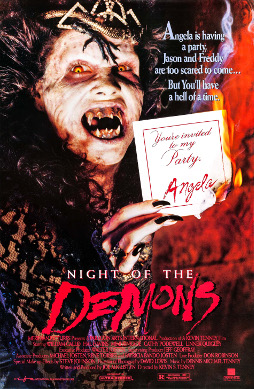
Last year, a group of friends and I watched 1988’s Night of the Demons for our weekly #ScarySocial live tweet. Not surprisingly, everyone loved the film. This scene below, featuring a possessed Angela dancing, was especially popular. Since today is director Kevin Tenney’s birthday, it only seems appropriate to celebrate by making it today’s horror scene that I love!