This haunting piece of music comes from the soundtrack of 2013’s A Field In England.
Last night, I watched Thank God It’s Friday with the Tubi Thursday gang. (I also watched the eclipse!)
Thank God It’s Friday is admittedly not a great film but it does have a few fun moments. One of my favorites is Chick Vennera’s exuberant dance scene. Here he is, using a bunch of cars as his dance floor.
4 Or More Shots From 4 Or More Films is just what it says it is, 4 shots from 4 of our favorite films. As opposed to the reviews and recaps that we usually post, 4 Shots From 4 Films lets the visuals do the talking!
Today, the Shattered Lens wishes a happy 64th birthday to David Fincher! It’s time for….
4 Shots from 4 David Fincher Films
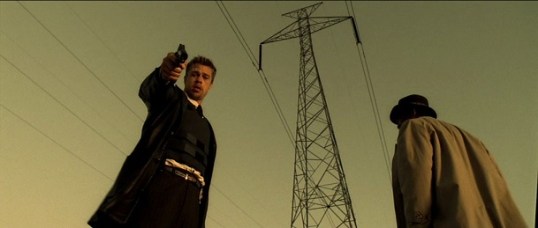
Seven (1995, dir by David Fincher. DP: Darius Khondji)
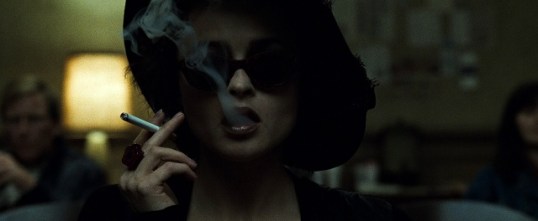
Fight Club (1999, dir by David Fincher, DP: Jeff Croneweth)

Zodiac (2007, dir by David Fincher, DP: Harris Savides)

Mank (2020, dir by David Fincher, DP: Erik Messerschmidt)
Welcome to Late Night Retro Television Reviews, a feature where we review some of our favorite and least favorite shows of the past! On Thursdays, I will be reviewing Hunter, which aired on NBC from 1984 to 1991. The entire show is currently streaming on Tubi and several other services!
This week, things are getting hot!
Episode 1.18: “Fire Man”
(Dir Tony Mordente, originally aired May 11th, 1985)
Somebody in Los Angeles has got a military-grade flamethrower and is using it to set fires all over the city.
When a homeless man perishes in a burning warehouse, Hunter and McCall get involved. Their first suspect is a nervous man named Jack Lachman (William Russ, giving a better performance than the material probably deserved), who always seems to show up in the crowds that gather to watch the flames. Jack swears he’s innocent and that the arsonist is instead a former Special Forces operative with whom he served in Vietnam. Jack also claims that the arsons are connected to a war crime that Jack and his fellow soldiers covered up.
Also getting involved is Matt Gold (Mark Schneider), a reporter determined to get the story and unconcerned about whether he messes up the investigation in the process. At first, McCall thinks Matt is harmless. Hunter does not. Not surprisingly, Hunter turns out to be right: the media gets in the way of solving and preventing crimes.
This episode was all about visual style. The plot wasn’t terribly complicated, but the shots of the arsonist setting his fires were disturbing, as were the images of the flames quickly consuming anything they touched. The scene in which the arsonist takes out a witness was disturbingly violent, even by Hunter’s standards. At the same time, the song that seemed to play whenever the arsonist appeared quickly got old.
As violent as the episode got, there was something reassuring about Hunter and McCall once again stopping the bad guy and saving the city—and doing it while trading quips. It’s a scary world out there, this episode seemed to be saying, but luckily we’ve got Hunter and McCall to take out the trash.
Welcome to Retro Television Reviews, a feature where we review some of our favorite and least favorite shows of the past! This Thursday, I will be reviewing Juvenile Court, which aired its only episode in syndication in 1958. The show can be found on YouTube!
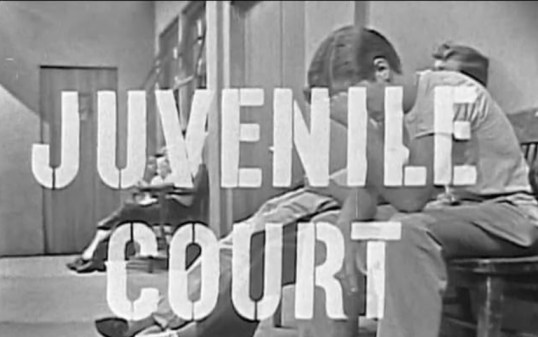
Episode 1.1 “Pilot”
(Dir by Ralph Nelson, originally aired on September 1st, 1958)
Fifteen-year-old Raymond Pearson (Lee Kinsolving) has been charged with trying to steal a car and almost beating the car’s owner to death. Now he sits in a courtroom with his stepparents and sullenly listens as Commissioner Robert Dortman (Ken Lynch) questions his family and his squirmy accomplice, Charlie Wiggins (Tommy Cook). Dortman’s questions eventually reveal that Raymond’s crimes are linked to his conflicted feelings about his biological father, who wants nothing to do with him. Though Dortman has sympathy for Raymond, he still has to sentence him to juvenile hall. His stepfather promises to support Raymond as best he can.
The key to understanding Juvenile Court is a title card at the start that thanks the Los Angeles Juvenile Courts for their assistance. The pilot is a no-frills courtroom drama that takes place in one location and is essentially just a guy asking questions and then listening to the answers. One can understand why it didn’t become a series: while the actors are all good and believable, the episode’s style is extremely dry.
The interesting thing about this episode is the way it mixes the approaches of both the Left and the Right when it comes to examining Raymond’s crimes. The liberal will look at this show and say, “Raymond became a criminal because he never had a chance to be anything else, not with his father and his insecurities.” The conservative will look at it and say, “Raymond nearly beat a man to death. That’s all that matters.” The show says, “You’re both right!” We learn about Raymond’s sad background, but we also watch as Raymond is sentenced to confinement.
This show reminded me a bit of Decoy, the Beverly Garland cop show that I recently finished reviewing. They’re both from the late ’50s, and they both attempted to capture the feel of a documentary. Just as Decoy’s Casey Jones often had to arrest people who weren’t entirely evil, the commissioner has to send Raymond to juvie despite understanding what led Raymond to commit his criminal acts.
Seen today, Juvenile Court is the type of thing that appeals largely to history nerds like me. There’s not much drama, but it’s still interesting to see what the world was like nearly 70 years ago.
Hi, everyone! Tonight, on Mastodon, I will be hosting the #TubiThursday watch party! Join us for 1978’s Thank God It’s Friday!
You can find the movie on Tubi and you can join us on Mastodon at 9 pm central time! (That’s 10 pm for you folks on the East Coast.) We will be using #TubiThursday hashtag! See you then!
According to Checkiday, today is Tarzan Day!
In honor of everyone’s favorite lord of the jungle, here is today’s song of the day!
Today’s scene that I love comes from Lars Von Trier’s Melancholia. Von Trier is always going to be controversial filmmaker but no one has ever matched his brilliance when it came to capturing the end of existence.
In Melancholia, a depressed woman (played in a revelatory performance by Kristen Dunst) finds unexpected strength in the end of the world. As can be seen in the scene below, it’s a beautifully sad film, one that ends on a note of triumphant apocalypse:
4 Shots From 4 Films is just what it says it is, 4 shots from 4 of our favorite films. As opposed to the reviews and recaps that we usually post, 4 Shots From 4 Films lets the visuals do the talking!
Today, TSL wishes a happy birthday to cinematographer Robert Richardson. It’s time for….
4 Shots From 4 Robert Richardson Films
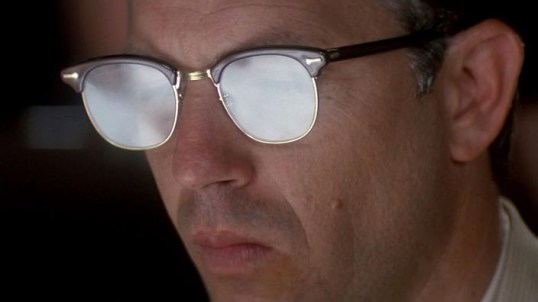
JFK (1991, dir by Oliver Stone, DP: Robert Richardson)
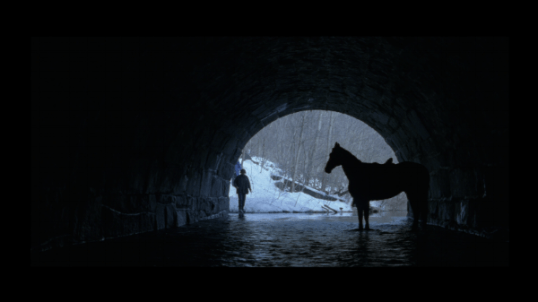
The Horse Whisperer (1998. dir by Robert Redford, DP: Robert Richardson)
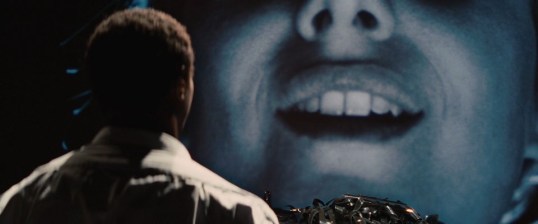
Inglourious Basterds (2009, dir by Quentin Tarantino, DP: Robert Richardson)
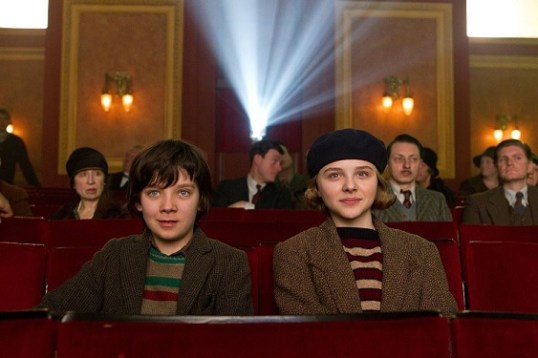
Hugo (2011, dir by Martin Scorsese, DP: Robert Richardson)
Welcome to Late Night Retro Television Reviews, a feature where we review some of our favorite and least favorite shows of the past! On Wednesdays, I will be reviewing 1st and Ten, which aired in syndication from 1984 to 1991. The entire series is streaming on Tubi.
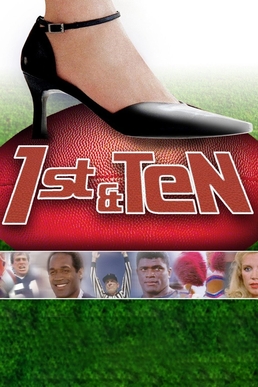
This week, the fourth season comes to a close!
Episode 4.14 “The Irreducible Bottom Line”
(Dir by Stan Lathan, originally aired on January 4th, 1989)
The Bulls are going to the championship game, and Joe Namath is hosting a documentary about them. In mockumentary style, Namath and his cameras follow the players around as they prepare for the big game. Quarterback Doug Clayton is told to say, “I’m going to Play Land!” if he wins. Bubba insists on wearing his lucky shirt, no matter how sweat-stained it gets. A decal for a burger chain is placed on all the footballs. The game is as much about big money as it is about victory. In the end, the Bulls win easily, and Coach Denardo finally gets a post-game call from the President.
This is a weird episode. According to IMDb, it ran 26 minutes when it premiered on HBO — the standard running time for 1st & Ten. The version streaming on Prime and Tubi, however, is only 12 minutes long and is full of abrupt jump cuts. Those streaming copies are the syndication edits. Because the series originated on HBO, most episodes included a little nudity and a lot of profanity, all of which was cut for syndication. In this case, about 14 minutes appear to have been removed. One can only assume the Bulls really partied before and after the big game.
Unfortunately, that makes it pretty much impossible to review the episode properly. A few amusing moments still land, mostly the ones that treat sports as a business. It’s also obvious that large stretches of the story were cut. All I can say is that the Bulls finally won the championship, and the rather uneven fourth season of 1st & Ten is over. We’ll start season five next week.

