A Few Thoughts on … Lucifer 1.1 (“The Pilot”)


Lucifer

So, earlier tonight, I watched the first episode Lucifer.  Lucifer is the new cop show on Fox.  It’s about an eccentric crime solver who uses unorthodox methods to solve crimes and his partner, with whom he shares sexual tension and the occasional sardonic aside.  It sounds a lot like Elementary, Castle, the X-Files revival, and a whole lot of other TV shows of the past, present, and future as well.

The main difference between Lucifer and those other shows is that the title character is the Devil.  That’s right.  The Devil has gone from starring in Milton’s Paradise Lost to working with the LAPD to solve crimes.

(In high school, one of my best friends read Paradise Lost and ended up getting a huge crush on Satan.  I wonder if she watched Lucifer tonight.)

From what I understand, Lucifer is loosely based on a comic book series in which Lucifer gets bored with ruling Hell and comes to Los Angeles, where he runs a piano bar and spends a lot of time considering whether or not there really is such a thing as free will.  And that actually sounds pretty interesting.  That sounds like it would make for an edgy, thought-provoking series.

What is not particularly interesting is the idea that Lucifer would come to Los Angeles, open a piano bar, and then decide to spend his time helping the LAPD solve crimes.  It really sounds like the punchline to an overtold joke, doesn’t it?  “She’s a non-nonsense detective.  He’s the Prince of Darkness.  Together, they fight crime.”

There were a few things that I did like about the pilot.  I liked the fact that it opened and closed with No Rest For The Wicked, even though that song’s going to be stuck in my head for the next few days.  I thought Lauren German did a pretty good job as Detective Chloe Dancer.  There were a few scenes — mostly the ones that featured Lucifer hanging out at his piano bar — that were shot and acted in a entertainingly over-the-top style.  I like the idea that Lucifer can terrify people whenever he feels like it.  I think Tom Ellis could be really good in the title role but not if the series insists on straight-jacketing him into a typical “eccentric detective” role.

My advice to this show?  Get Chloe Dancer out of the LAPD as quickly as possible.  The character has potential and I can easily imagine Lauren German and Tom Ellis developing a really amazing chemistry but having to deal with a case-a-week format is going to rob this show of everything that could potentially make it special.  So, get Chloe off of the LAPD.  Have her work as a head of security for Lucifer’s bar or something.  Keep them together but forget about solving crimes.  Instead, allow Lucifer to truly explore the philosophical and theological concepts that were merely hinted at in the pilot.  It might not win the show a huge audience but it will win it a loyal and intelligent audience.  At the very least, it should be enough to score 6 seasons and a movie.

Lucifer has potential but not as a cop show.

A Few Thoughts On … The X-Files 1.1 (“My Struggle”)


XF_sc7_0259rjw_hires1

Tonight, after a football game that apparently everyone but me was super excited about, the first episode of The X-Files revival premiered on Fox.  The episode was called My Struggle, I watched it, and now I’m going to offer up just a few thoughts on it.

Why just a few?

Well, first off, it’s just the first of six episodes.  As I watched tonight, I had to keep reminding myself that My Struggle was just the first episode and you really can’t say much about a show based on just the first episode.  My Struggle felt rushed but then again, it had a lot to do.  It had to reintroduce Mulder and Scully, it had to lay the foundation for the rest of the series, it had to introduce a few new characters, and it had to leave the audience intrigued enough to actually watch the 2nd episode.  It was a balancing act that My Struggle often struggled to maintain but I’ve also been told, by people who have claimed to have seen it, that tomorrow’s episode is going to be a lot better.

BN-MF556_xfiles_G_20160122094014

So, I am going to try to put off passing judgment on The X-Files until I at least see that second episode.  When you’re a critic, putting off judgment goes against your every natural instinct but that’s what I am going to try to do.

I should also admit that, unlike apparently everyone else in the world, I am hardly an expert on The X-Files.  I’ve seen reruns but I didn’t watch the show regularly when it originally aired.  When I think of The X-Files, my first thought will always be laughing at the opening of the first movie, which featured a kid falling into an underground cave in North Texas.  (As a resident of North Texas, I can assure you that we don’t have caves and the last thing you’re going to see in Dallas is a mountain on the horizon.)

My Struggle started out well.  I enjoyed the pre-credits scene, where David Duchovny explained everything that had happened in the past.  Along with telling us about the previous series, he also talked about the history of UFO sightings and Duchovny’s hypnotic delivery was perfect.

I was a bit less impressed with what immediately followed the credits.  The early scenes, of Mulder and Scully meeting talk show host Tad O’Malley (Joel McHale), felt extremely forced.  I found myself wondering how long I was going to have to listen to Mulder and O’Malley debate gun control.  The attempt at political satire was predictable and tedious.  But I stuck with it because … well, it’s Joel McHale.  Who doesn’t love Joel McHale?

For the first half of the episode, I was bored out of my mind.  It was too talky and all the mumbling was getting on my nerves.  Gillian Anderson — who was so brilliant in The Fall — seemed totally bored and I was not feeling any of that famous chemistry between her and Duchovny.

8d12d480eb128ca13bde395ebde5674a

But then, things started to get better.  O’Malley showed Mulder a flying saucer that had been made from alien technology and not only did Mulder get excited but the previously stone-faced David Duchovny finally started to show some emotion.  He got excited and his excitement was fun to watch.

And then we got a lengthy monologue from Tad O’Malley, one that basically explained how the military-industrial complex uses alien technology to secretly (and not-so-secretly) rule America and being the lover of history and conspiracy theories that I am, I was absolutely enthralled.  (Though, if the show really had guts, it would have featured a clip of Barack Obama during the conspiracy montage, to go along with the clip of George W. Bush.)  That monologue really saved the episode for me.

Obama-Meets-Alien

In fact, as I watched, I realized that I may by a skeptic about many things but I am definitely pro-paranoia.  Paranoia makes for a better and more thrilling story and, hopefully, that’s what this new version of The X-Files will continue to focus on.

So, overall, this was a very uneven hour of television.  But I’m still definitely going to set the DVR to record the next episode.

the-x-files-600x800

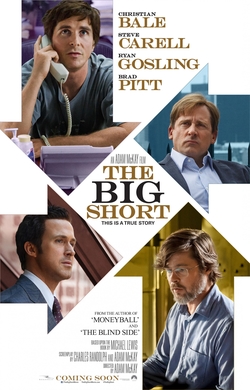
The Producers Guild Loses Its Damn Mind And Declares The Big Short To Be The Best of 2015!


The Producers Guild of America, which is generally considered one of the most reliable of the Oscar precursors, announced it’s pick for the best film of the year earlier today.  They had earlier nominated ten films and, out of those ten, they picked…

THE BIG SHORT!?

That’s right!  The worst best picture nominee since Crash pulled off an upset victory and defeated both Spotlight and The Revenant.  It now may even be the new front runner for best picture.

(Actually, if we’re going to be exact, The Big Short is just the 2nd worst best picture nominee since Crash.  It’s easy to forget that Extremely Loud and Incredibly Close was actually nominated.)

As I made clear in my review, I didn’t think much of The Big Short but I do understand the film’s popularity.  Appropriately enough for a film that’s been embraced by both Sasha Stone and Jeff Wells, it’s an angry and simplistic film and we live in an angry and simplistic time.  Pretending to be complicated while actually saying nothing worked out well for Crash and it looks like it might pay off for The Big Short as well!

Congratulations to The Big Short on its undeserved victory!

The_Big_Short_teaser_poster


Lisa Reviews An Oscar Nominee: Skippy (dir by Norman Taurog)


Skippy1931

(SPOILERS BELOW!)

Oh my God, they actually killed the dog…

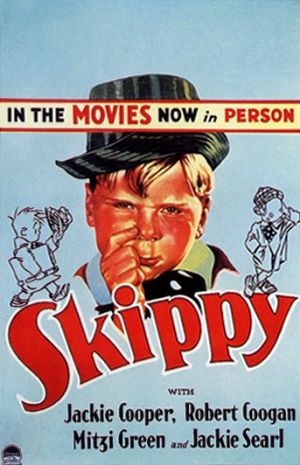
That was my main reaction, this morning, as I watched the 1931 film Skippy.  Skippy aired on TCM earlier this morning and I set the DVR to record it because, long ago, Skippy was nominated for best picture and, for quite some time, it has been my goal to see and review every single film ever nominated for the best picture.

And I have to admit that for the first hour or so, I wasn’t sure if I’d actually be able to get all the way through Skippy.  Skippy is very much a film of the early 30s and you never known how much you appreciate jump cuts, tracking shots, and even the occasional hand-held camera shot until you watch a movie that features none of them.  It’s definitely a different style of story telling and I sometimes found myself struggling to adjust to it.

Add to that, Skippy was a film about children and, while the film’s star, 9 year-old Jackie Cooper, was a natural before the camera, the other child actors often seemed forced.  There was a lot of overacting that, if nothing else, made me appreciate even more Jacob Tremblay’s subtle performance in Room.

There were a few things that I did appreciate about Skippy.  As I’ve stated on the site before, I love history and Skippy was definitely a time capsule.  The film follows 6 year-old Skippy (Jackie Cooper) as he leaves the safety of his upper class home and explores the poor side of the town and the film does a good job of contrasting Skippy’s sheltered home with the nearby neighborhood of Shantyown.  It’s while wandering around Shantytown that Skippy meets and befriend Sooky (Robert Coogan).  Skippy and Sooky accidentally break a windshield that belongs to the evil dogcatcher, Mr. Nubbins (Jack Rube Clifford).  Mr. Nubbins retaliates by taking away Sooky’s dog and demanding that the boys pay him 3 dollars for the dog’s freedom.  Though it’s a mighty struggle that involves many comedic schemes, the boys manage to raise the 3 dollars.  Mr. Nubbins takes the money, says that he’s going to use the money to buy a new windshield, and that he’s going to kill the dog anyway.  So, Skippy and Sooky have to raise three dollars more just to discover that Mr. Nubbins has already shot their dog.

As Sooky sobs, Skippy fights back tears and asks if they can at least have the dog’s body so they can give it a proper burial.

“It’s already been disposed of,” Mr. Nubbins snarls.

And, at this point, I was just sitting there and thinking, “What the HELL!?”  Seriously, I can only imagine what it must have been like to be a child in 1931, watching this film (which was based on a comic strip that all the kids probably read every day), laughing at jokes that were probably quite funny back then, and then suddenly being smacked in the face by Mr. Nubbins announcing that not only was the dog dead but his body had been cremated.  I can only imagine that amount of tears that were shed in those 1931 theaters!

(Making things even worse is the discovery that the town’s rules for dealing with stray dogs were written by none other than Skippy’s father.)

And as I thought more about it, it occurred to me that this is one thing that would never happen in a movie today.  You don’t kill the dog, unless you want Keanu Reeves to show up and kill you.

Sooky breaks into tears as soon as he hears that his dog has been killed.  Skippy manages to hold back until he gets home and then he breaks into sobs.  (According to Jackie Cooper, director Norman Taurog threatened to kill the dog in real life unless Cooper gave him authentic tears.)  Fortunately, all is eventually resolved by both Skippy and Sooky getting new dogs and Skippy’s dad beating up Mr. Nubbins.  Yay!

Anyway, for the most part, Skippy is one of those films that will mostly be interesting to Oscar completists for me.  However, I will always be stunned by the fact that, in the film, Mr. Nubbins actually killed that dog.

Lisa Reviews An Oscar Nominee: Sense and Sensibility (dir by Ang Lee)


Sense_and_sensibility

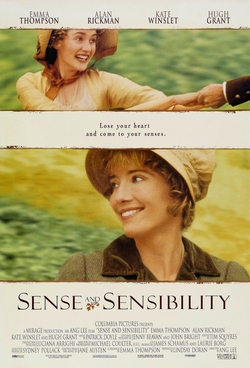
I just finished watching the 1995 best picture nominee Sense and Sensibility on TCM and, despite the fact that I’ve watched it several times in the past, I’m glad that I took time to rewatch it.  Sense and Sensibility is one of those very special films that you should rewatch every few months just to be reminded of how good it is.  There’s no CGI in Sense and Sensibility.  Instead, there’s just some very good writing, some excellent performances, and some lushly wonderful images of the English countryside, courtesy of director Ang Lee.  It’s a deliberately paced film, one that proves the virtue of a subtle touch.

The film tells the story of the Dashwoods.  As Mr. Dashwood (Tom Wilkinson) dies, he tells his son by his first wife, John (James Fleet), to take care of his second wife (Gemma Jones) and their three daughters, Elinor (Emma Thompson), Marianne (Kate Winslet), and Margaret (Emilie Francois).  Naturally enough, John does the exact opposite and soon the Dashwood sisters are forced to leave their large estate and fend for themselves.

The film centers on the practical Elinor and the passionate Marianne.  Elinor meets and falls in love with Edward (a surprisingly restrained Hugh Grant), an aspiring clergyman who is also John’s brother-in-law.  Edward comes from a wealthy family but will be disinherited if he marries someone who has neither money nor social prominence.  Marianne, meanwhile, has fallen in love with John Willoughby (Greg Wise), who is handsome, dashing, rich, and a bit of a cad.  (Cad is such a cool word.  People should start using it more.)  Marianne is so in love with the unworthy Willoughby that she misses the fact that the kindly Col. Brandon (Alan Rickman) has also fallen in love with her.

Sense and Sensibility is based on a Jane Austen novel and, in its very British way, it’s a wonderfully romantic film.  Tonight, when viewed in the shadow of the recent passing of Alan Rickman, the scenes featuring Col. Brandon were even more poignant than usual.  His love for Marianne is perhaps the most pure and selfless love to be found in the entire film.  There’s a scene where Col. Brandon is speaking to Elinor and Marianne, inviting them to his estate.  Marianne ignores him until Brandon mentions that Willoughby is also inspected.  Suddenly, Marianne looks up and smiles and Alan Rickman allows just a hint of pain to enter his voice.  It’s a masterful performance.

But really, the reason why I love this film is because it’s about sisters. I am the youngest of four sisters and, whenever I see this film, it’s hard for me not to see the Bowman sisters in the Dashwood sisters.  There is so much about Marianne that I relate to, from her passionate pursuit of “true love” to her artistic sensibility to her somewhat dangerous habit of wandering around in the middle of thunderstorm.  You never doubt for a second that Emma Thompson and Kate Winslet could be related and this film always makes me appreciate my own sisters.

Sense and Sensibility was nominated for Best Picture of 1995 but it lost to a film that is its total opposite, Mel Gibson’s Braveheart.

Cleaning Out The DVR: I Have Your Children


I Have Your Children

After watching 911 Nightmare, I continued to clean out the DVR by watching I Have Your Children.  I Have Your Children originally aired on Lifetime on January 1st.  That’s right — this is the first Lifetime film of the year!

Anyway, I Have Your Children is a film about hostage negotiation and, after reading that, are you still awake?  For whatever reasons, there have been hundreds of movies and TV shows about hostage negotiators and they’re usually pretty boring and predictable.  Some crazy person takes a group of people hostage.  The SWAT team surrounds him.  A hostage negotiator who is haunted by a past failure shows up and does the whole, “Just talk to me” routine.  The SWAT team just wants to shoot the guy and the negotiator does the whole, “You are putting the hostages in danger!” routine.  Usually, it turns out that the guy holding the hostages is doing so because he was screwed over by a bank or health insurance company or maybe he lost all of his money due to a smarmy stockbroker.  There’s usually a scene where the negotiator delivers food to the hostages.

Seriously, a hostage negotiator film just writes itself.  Maybe that’s why there’s so many of them.

Anyway, at first glance, I Have Your Children seems like pretty much your standard hostage negotiator film.  A guy named Calum stops taking his mediation and hijacks a school bus.  It turns out that Calum’s mother is dying but she can’t get the treatment she needs because of the big horrible health insurance company!  Calum is demanding a huge ransom, enough money to be able to pay for his mother’s treatment.  One of the kidnapped kids is the daughter of a claims adjuster at the insurance company!

The SWAT Team just wants to rush in with guns blazing and if that means that all the hostages die, so be it.  Fortunately, Amber Cross (Alaina Huffman) is there to negotiate with Calum.  Amber, of course, has issues of her own.  A hostage died during one of her previous negotiations.  Her ex-husband is planning on marrying a younger woman.  (It’s a Lifetime film, after all.)  Her son is being bullied at school.  Fortunately, Amber’s father-in-law happens to be the chief of police and he’s going to keep Amber employed, even if a snarky reporter and the fascistic SWAT Team leader continue to insist that she’s thoroughly incompetent…

However, towards the end of the film, there’s a big twist and it kind of makes up for how predictable the film has been up to that point.  Obviously, I can’t really reveal the twist without spoiling the film but I will say that it was clever and fairly unexpected and it pretty much saved the entire film from being totally forgettable.  So, if you happen to watch I Have Your Children, the best advice I can give is to stick with the movie and have some faith that it will eventually pay off!

Seriously, there’s nothing wrong with having a little faith.

Cleaning Out The DVR: 911 Nightmare (dir by Craig Moss)


911

It’s amazing how quickly a DVR can fill up.  Just a few weeks ago, as December came to a close, I went through my DVR, watched a lot of Christmas movies, and cleared up about 30 hours of space.  At the time, I was pretty proud of myself but now, a month later, I find myself once again in the same situation.  I am running out of space.

In other words, it’s time to clean out the DVR yet again.

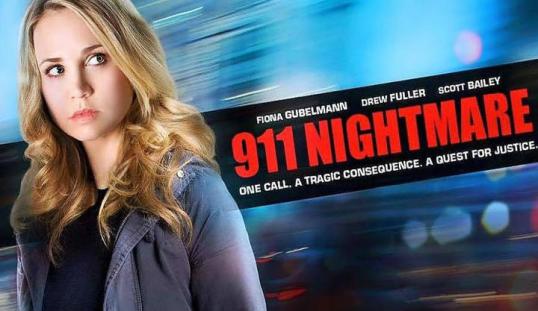
I got things started by watching 911 Nightmare, which premiered on the Lifetime Movie Network on January 10th.  And let’s give credit where credit is due.  That is a brilliant title, especially for a Lifetime film.  It not only promises a nightmare (perhaps even a sexy nightmare) but it also promises so much danger that someone is going to have to call 911.  A sexy nightmare and danger?  How can I say no to that!?

(According to the imdb, this film was originally called Dispatch.  911 Nightmare is a clear improvement.)

Anyway, as for the rest of the film, it tells the story of Christine McCullers (Fiona Gubelmann).  When we first meet Christine, she’s a cop and she’s carrying on a family tradition of law enforcement.  However, when she gets cornered by a perp (that’s right, I said “perp” because I love to use that official police talk) in an alley, her partner gets a bullet in the head and Christine gets a bullet in the leg.

Now wearing a big ugly brace and moving with a pronounced limp. Christine is working as a 911 operator.  One night, a call comes in.  Christine answers.

“911,” she says.

“The boogeyman is here!” a little kid says.

Christine tells the kid to get some sleep and to stop playing pranks and she threatens to tell his parents what a bad son they have.  She hangs up on the kid and, as a result, the kid’s best friend is murdered…

And I have to admit that this is where I kind of lost interest in 911 Nightmare.  The rest of the film deals with Christine trying to solve the murder and we’re clearly supposed to feel sorry for her because everyone is blaming her for what happened but you know what?  She deserves to be blamed because she messed up!  The film goes out of its way to convince us that Christine made an understandable (if unfortunate) mistake but it never quite convinces us.

Perhaps it would have worked better if the kid had been attacked while he was on the phone with Christine and killed before the police arrived.  And maybe then the police could try to blame Christine for their own failure (and certainly, they would point to her previous wounding in the line of duty as proof of her incompetence).  Then you would really root for Christine.

But no.  Christine is terrible at her job and it’s difficult to really root for a character who screws up that badly.  There’s a scene where Christine views all of the mean comments that have been posted about her online and it was probably a bad sign, as far as the film’s effectiveness was concerned, that I agreed with almost every single comment.

Anyway, Christine does go on to investigate the murder and, since this is a Lifetime movie, she also gets a boyfriend during the course of her investigation.  Good for her.  Unfortunately, however, the film fell apart as soon as she told that kid to go back to sleep.

OMG! HERE’S THE SUPER ADORABLE TRAILER FOR KEANU!!!!!!!


Oh my God, I can’t wait to see Keanu!  Not only does it star the hilarious Key and Peele, it also features one of the cutest kittens ever to show up in a red band movie trailer.  Run, Keanu, run!

Keanu will be in theaters on April 29th!

Lisa Reviews An Oscar Nominee: For Whom The Bell Tolls (dir by Sam Wood)


For_whom_movieposter

After I watched The Pride of the Yankees, it was time to watch For Whom The Bell Tolls on TCM.  Based on the classic novel by Ernest Hemingway, the film version of For Whom The Bell Tolls was released in 1943 and, when I first started watching it, I was a little bit worried.

For, you see, For Whom The Bell Tolls is an extremely long film.  It’s a film that takes its time.  It’s also a very talky film and I have to admit that one reason I was worried was because the movie started at 11:30 and it was scheduled to last until 2:15 a.m.  Oh my God, I wondered, as the film started to slowly play out before me, am I going to end up dozing off before this is finished?

Well, I need not have worried.  Yes, For Whom The Bell Tolls does take a while to get started but it all pays off in the end.  By the time the film concludes, you realize why it had to take its time and why we had to spend so much time listening to these characters talk about what they did in the past, why they’re doing what they’re doing in the present, and what they’re hoping for in the future.

Not that all of the characters have a future.  At the start of the film, Robert Jordan (Gary Cooper) gets his palm read by Pilar (Katina Paxinou).  Pilar refuses to tell him what she saw in his future but it’s not difficult to guess.  Robert is on a suicide mission and everyone knows it.  Even when he falls in love with the beautiful Maria (Ingrid Bergman), he does so with the knowledge that he’ll be dead in just a few days.

Robert is an idealistic American who, as the film opens, is in Spain.  It’s the 1930s and Spain is embroiled in a civil war between fascists and guerrillas … well, if you’ve read Hemingway’s novel, you know that the guerrillas are communists.  But this is a Hollywood film so, for the most part, we don’t hear much about ideology.  But, then again, audiences in 1943 undoubtedly remembered the Spanish Civil War and understood that the guerrillas were fighting the forces of Gen. Francisco Franco.  And, for audiences today, all that matters it that the guerrillas are trying to overthrow a government.  Seriously, who doesn’t want to see the government overthrown?

(Full disclosure:  My grandmother on my mother’s side came to this country from Spain and frequently insisted that Franco had not been that bad.  At the time, not knowing one way or the other, I usually just smiled and nodded.)

Robert is fighting on the side of the guerrillas.  In four days, a major offensive is going to be launched against the fascists and, in order to keep fascist forces from pursuing the guerrillas, Robert has been assigned to blow up a mountain bridge.  Robert knows that he won’t survive this mission and, as he waits to die, he camps out with a small guerrilla band that is led by Pablo (Akim Tamiroff).  At first, Pablo refuses to take part in a mission that he considers to be futile but he is overruled by his strong-willed wife, Pilar (Katina Paxinou).

Among Pablo’s group is the beautiful Maria (Ingrid Bergman), a young woman whose family was killed by the fascist forces.  Robert and Maria fall in love, even as Robert prepares for his eventual death.

And then, finally, after two hours of screen time, Robert and the guerrillas head for that bridge and suddenly, we understand why the film took its time to reach this point.  By the time Robert reaches the bridge, we’ve come to know and care about both him and the other guerrillas.  And, as a result, we care about whether or not they survive.  When the fascists launch their own counter attack, every death counts.  We feel the loss of every casualty and we understand what they’re dying for.  After two hours of talk, For Whom The Bell Tolls ends with a genuinely exciting and even moving action sequence.  It all leads up to a final shot that will blow you away in more ways than one.

From Whom The Bell Tolls is a film that will reward those with the patience to stick with it and I’m glad that I turned out to be one of those people.  It was nominated for Best Picture of 1943 but lost to another film about an anti-fascist who fought in Spain, Casablanca.

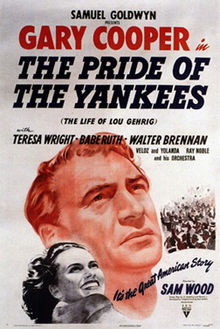
Lisa Reviews An Oscar Nominee: The Pride of the Yankees (dir by Sam Wood)


220px-The_Pride_Of_The_Yankees_1942

“People all say that I’ve had a bad break. But today … today, I consider myself the luckiest man on the face of the Earth.”

— Lou Gehrig (Gary Cooper) at the end of The Pride of the Yankees (1943)

After airing Foreign Correspondent earlier tonight, TCM followed up by showing the 1943 best picture nominee, The Pride of the Yankees.  Knowing that Pride of the Yankees was going to be a baseball film and that I know next to nothing about baseball, I recruited my sister, the Dazzling Erin, to watch the movie with me.  Erin loves baseball and I knew that she would be able to explain anything that went over my head.

Well, I absolutely loved watching this movie with my sister but it turns out that The Pride of the Yankees isn’t really much of a baseball movie.  True, it’s about a real life baseball player.  Several actual players appeared as themselves.  About 85% of the film’s dialogue deals with baseball and probably about 70% of the film features characters playing some form of the game.  But the film never goes into any great detail about baseball or how it’s played.  There’s no talk of strategy or rules or deeper meaning or anything else.  Going into the film, I knew that baseball was a game that involved throwing, swinging bats, and running.  And it turns out that was all that I needed to know.

The Pride of the Yankees is less about baseball and more about celebrity.  It’s a biopic of Lou Gehrig, who today is best known for his battle with ALS, a disease that is also known as Lou Gehrig’s disease.  Lou Gehrig died on June 2, 1941 and The Pride of the Yankees was released just a year later.  Watching the film, it’s obvious that Gehrig was a beloved figure, the type of celebrity who, if he were alive today, would probably be the center of stories like, “Lou Gehrig Did Something This Weekend And It Was Perfect.”  Watching the film, it easy to imagine how traumatic it must have been for the nation when a beloved athlete like Lou Gehrig died at the age of 37.

As a result, The Pride of the Yankees is less a biopic and more a case for canonization.  From the minute that the film’s Lou Gehrig appears on-screen, he is presented as being the type of saintly athlete who, by promising to hit two home runs in one game, inspires a crippled child to walk.  Lou is modest, kind, unpretentious, and never gets angry.  Over the course of the film, he takes care of his mother, displays a worthy work ethic, and marries Eleanor.  He and Eleanor have a perfect marriage without a single argument or a hint of trouble, except for the fact that Lou sometimes gets so busy playing baseball with the local children that he’s late coming home.  There’s not a hint of sadness in their life, until Lou suddenly gets sick.

And really, it should not work.  If ever there’s ever been a film that should be painfully out-of-place in our more cynical times, it would be The Pride of the Yankees.  However, the film still works because Lou is played by Gary Cooper and Eleanor is played by Teresa Wright.  These two excellent performers bring their considerable talents to making overly sentimental scenes feel credible.  Gary Cooper was 40 years old when he made The Pride of the Yankees and there’s a few scenes — especially the ones where Lou is supposed to be a student at Columbia University — where Cooper is clearly too old for the role.  But, for the most part, Gary Cooper did a great job as Lou Gehrig.  Cooper is especially memorable when Lou first starts to show signs of being ill.  Watching Lou struggle to swing a bat, I was reminded of a horse struggling to stand on an injured leg.  It was almost painfully poignant.

The Pride of the Yankees was nominated for 11 Academy Awards, including best picture.  However, it lost to another sentimental film that featured Teresa Wright, Mrs. Miniver.