Cleaning Out The DVR, Again #13: Final Destiny (dir by Michel Poulette)


47fa7fe28b159a6f21d08620b6288817

In an effort to clean out my DVR and make room for endless episodes of reality television (not to mention the Olympics), I am currently in the process of watching the 40* films that I recorded from the beginning of March to the end of June.  The 13th film on my DVR was Final Destiny, which originally aired on the Lifetime movie network on April 3rd.

This will be a quick one.  Usually, I try to come up with at least 500 words for every movie that I review but it’s going to be a struggle as far as Final Destiny is concerned.  There’s really just not much to say about this particular film.

According to the imdb, Final Destiny was originally entitled Brace For Impact and I assume that the title was changed in an effort to fool viewers into thinking that Final Destiny had something to do with the Final Destination films.  Well, Final Destiny does start out with a scenario that could be lifted from one of those films.  Sofia Gilchrest (Kerry Condon) gets on an airplane with her brother, Shane (Ian Lake).  Right before the plane is scheduled to take off, Sofia gets the feeling that something bad is going to happen.  She freaks out and she’s kicked off the plane.  The plane then takes off and crashes, killing her brother.

Unfortunately, that’s about all that this film has in common with Final Destination.  The plane crash does not lead to a series of increasingly macabre accidents as death attempts to correct itself by killing Sofia.  Tony Todd never shows up to talk about destiny.  There’s no humor, which is a shame because Final Destiny could have used some humor.

(The only humor comes from the fact that, beyond ripping off a more successful franchise, Final Destiny makes absolutely no sense as a title!  That said, Brace For Impact was kind of a crappy title too…)

Instead, Final Destiny turns into a plodding procedural.  It turns out that Sofia is a flight crash investigator, which means that she now gets to investigate the crash that her killed brother.  Or, at least, it would if not for the fact that all of Sofia’s colleagues are totally corrupt and have no faith in her abilities.  It turns out that, in the past, Sofia has been too quick to assume that every plane crash was the result of a conspiracy.  Plus, she is such a careful investigator that it sometimes takes her years to determine why a plane crashed.  The government wants quick answers but Sofia would rather be right than be fast!

But here’s the problem with the movie: Sofia is a totally unlikable character.  That’s a bold statement to make about someone who is investigating the death of her brother but, even with that added layer of motivation, Sofia still comes across as being shrill, self-centered, and generally unpleasant.

It also doesn’t help that the cause of the crash is pretty obvious from the start.  About an hour into the movie, Sofia figures out that it was the act of domestic terrorists and then she spends the rest of the movie telling everyone that it was the work of domestic terrorists and then, at the end of the movie, she’s like, “Yep, domestic terrorism,” and that’s pretty much it.

There, of course, are a few subplots but none of the subplots are that interesting.  Sofia’s mother is shocked to discover that Shane was gay.  Sofia’s best friend is discriminated against because of his religion.  Sofia is angry because she didn’t get a promotion.  It’s all really predictable and it doesn’t add up too much.

In the end, Final Destiny didn’t even feel like a movie.  It felt like a pilot for a TV show that nobody would want to watch.  If ever a film needed Tony Todd to show up and start talking about life and death, it was this one.

—

*Yes, I know that I originally said I would have to watch 36 films to clean out my DVR but I recorded 4 more films since making that statement.  So now, it’s 40 films but I’m still hoping to be finished with the series by the end of next week.
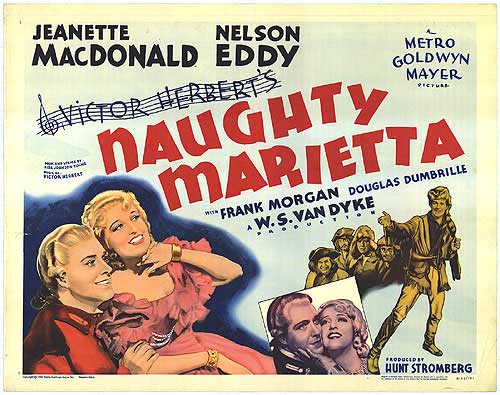
Cleaning Out The DVR, Again #12: Naughty Marietta (dir by W.S. Van Dyke)


b70-4632

Continuing the process of cleaning out my DVR, I watched the 1935 film, Naughty Marietta.  I recorded Naughty Marietta off of TCM on April 3rd.  Like many of the films that I record off of TCM, Naughty Marietta was nominated for Best Picture.  In fact, if not for that Oscar nomination long ago, Naughty Marietta would probably be totally forgotten.

Instead, it’s only partially forgotten.

Based on an operetta and containing at least one song that I’ve sung while drunk (that song, incidentally, would be Ah!  Sweet Mystery of Life), Naughty Marietta tells the story of Princess Marie (Jeanette MacDonald).  A Spanish princess, Marie is engaged (against her will) to the elderly Don Carlos (Walter Kingsford).  In order to escape a life of forced marriage, Marie pretends to be a servant girl named Marietta and stows away on a boat to New Orleans.  The boat is carrying women to the new world so that they marry French colonists.  The other women on board are shocked when Marietta announces that she plans to never marry.

However, they are even more shocked when the boat is taken over by pirates!  The pirates kill the crew and take the women prisoner.  The pirates take the women to Louisiana where, fortunately, a group of mercenaries led by Captain Richard Warrington (Nelson Eddy) show up and rescue the women.

Marie negotiates for Warrington to take the women to New Orleans and it’s obvious from the start that Marie and Warrington are attracted to each other.  However, Warrington claims that, much like Marie, he plans to never marry!  Oh my God, could it be that these two are meant to get together!?

It has all the potential for being a good musical and Jeannette MacDonald gives a good performance as Marie.  But, unfortunately, Nelson Eddy is a lot less charismatic in the role of Warrington.  Even his singing voice is a bit blah.  Oddly, Naughty Marietta was one of many romantic musicals that Jeanette MacDonald and Nelson Eddy made together.  The reason I use the term “odd,” is because — judging from this film — they didn’t appear to have much onscreen chemistry.  Whereas MacDonald is personable and relatable, Nelson Eddy seems to hold the audience at a distance.  Watching a film like this, you can’t help but regret that Jeanette MacDonald didn’t have someone like Fred Astaire for a co-star.

As for Naughty Marietta‘s best picture nomination — well, it was a big production and it was also an adaptation of a popular operetta.  At a time when 10 films were nominated every year and the studios pretty much controlled which one of their films was nominated for best picture, Naughty Marietta got a nomination.  However, the Oscar went to Mutiny on the Bounty.

4 Shots From 4 Films: Gone With The Wind, The Snake Pit, Lady In A Cage, The Swarm


Olivia De Havilland and Friends

Olivia De Havilland and Friends

I hope that you will join us all in wishing a happy birthday to the wonderful and legendary Olivia De Havilland, who turns 100 years old today!  Not only is Olivia the last surviving cast member of Gone With The Wind but she’s also one of the last surviving stars from Hollywood’s Golden Age!  Not only was she a wonderful actress but Olivia’s rivalry with sister Joan Fontaine continues to be one of the legendary moments of Oscar history!

This edition of 4 Shots From 4 Films features four movies that starred the one and only, Olivia De Havilland!

4 Shots From 4 Films

Gone With The Wind (1939, dir by Victor Fleming)

Gone With The Wind (1939, dir by Victor Fleming)

The Snake Pit (1948, dirby Anatole Litvak)

The Snake Pit (1948, dir by Anatole Litvak)

Lady in a Cage (1964, dir by Walter Grauman)

Lady in a Cage (1964, dir by Walter Grauman)

The Swarm (1978, dir by Irwin Allen)

The Swarm (1978, dir by Irwin Allen)

By the way, do you know who shares a birthday with Olivia De Havilland?  OUR VERY OWN PATRICK SMITH!  Happy birthday, Pat!!!!!!

Happy Canada Day From The Shattered Lens!


Happy Canada Day!

Now, as our regular readers know, I absolutely adore Canada.  I love the people, I love the movies, and I especially love the television!  In honor of Canada Day, I thought I would share a great moment from Canadian history!

That moment, of course, is the night that Downtown Sasquatch defeated Hell Hath No Fury at the Toronto Battle of the Bands!  It was this victory that not only introduced Spinner Mason to the rest of the Toronto but it also launched Craig Manning into super stardom.

First, a little background.  Craig was one of the most popular students at Degrassi Community School but he shocked the entire student body when he cheated on his girlfriend, Ashley Kerwin, with Manny Santos.  The end result is that Manny ended up pregnant and had to get an abortion.  Ashley, meanwhile, challenged her rage by forming a band called Hell Hath No Fury.  Hell Hath No Fury specialized in singing songs about how much they hated Craig.

Craig, of course, was already the lead singer for Downtown Sasquatch.  When it came time to write a song for the upcoming battle of the bands, Craig was stunned to discover that his band would be competing against Hell Hath No Fury.  Craig was hit with writer’s block.  With Craig unable to come up with lyrics for a new song, drummer Spinner Mason and guitarist Jimmy Brooks decided to try to help out.  Here’s what they came up with:

Things looked bleak for Downtown Sasquatch.  Things looked even bleaker when, on the night of the battle of the band and with Craig still unable to write, Hell Hath No Fury — while wearing shirts that portrayed Craig burning in Hell — performed their anti-Craig anthem, Mr. Nice Guy:

When Downtown Sasquatch took the stage, it was as a power trio.  Craig had mysteriously disappeared.  Bravely, Spinner attempted to kill time but it was obvious that the audience had turned against Downtown Sasquatch.  The future of Canadian music was in peril.

Then, suddenly, Craig returned, walking out on stage with freshly written lyrics in his hands.  The rest is history:

Happy Canada Day, everyone!

LOVE YOU, CANADA!

Cleaning Out The DVR, Again #11: Cavalcade (dir by Frank Lloyd)


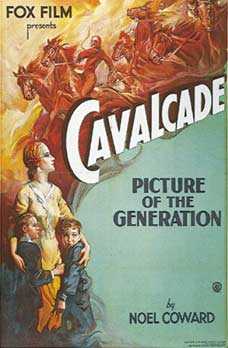
Cavalcade_film_poster

So, I’ve been cleaning out the DVR for the past week.  Fortunately, I’m going to be off work for this upcoming week, which should give me a lot of extra film-watching time.  That’s a good thing because I’ve got 36 movies that I’ve recorded on the DVR since Thursday and, over the past seven days, I’ve only watched 13 of them!  That’s 23 movies to go and I hope to be finished by the end of the next week.

The 11th film that I found on my DVR was the 1933 film, Cavalcade.  I recorded it off of FXM on April 3rd.

The main reason that I recorded Cavalcade was because it was the 6th film to win the Oscar for Best Picture.  Now, I have to admit that I wasn’t expecting much from Cavalcade.  It’s a film that many Oscar historians tend to list as being one of the lesser best picture winners.  Cavalcade is often unfavorably compared to the films that it beat — movies like I Am A Fugitive From A Chain Gang, A Farewell To Arms, Little Women, and The Private Life of Henry VIII.  Cavalcade was the first British to ever win the Best Picture and its victory is often cited as the beginning of the Academy’s love affair with British productions.

And really, Cavalcade couldn’t be more British if it tried.  Based on a play by Noel Coward, Cavalcade follows two families through several decades in British history.  One family is wealthy and is anchored by a patriarch who is knighted in the Boer War.  The other family is lower middle class, anchored by a patriarch who starts out as a butler but who eventually manages to open up his own pub.  Through the eyes of these two families, we view what, in the 1930s, was recent British history.

For modern viewers, it may be helpful to watch Cavalcade while consulting Wikipedia.  For instance, the film starts with the two father figures preparing to leave to fight in the Boer War and I’m sorry to admit that I really wasn’t totally sure what that was.  I had to look it up in order to discover that it was a war that the British fought in South Africa.

But you know what?  That’s not really a complaint.  I may not have known what the Boer War was before I started the film but that had changed by the time that I finished watching Cavalcade.  Several times, I’ve mentioned on this blog how much I love history but watching Cavalcade made me realize that I still have more to learn.  Even more importantly, it encouragds me to learn.  That’s always a good thing.

Certain other historical events were more familiar.  As soon as I saw the title card announcing that the date was 1914, I knew that I would soon be seeing a World War I montage.  And, as terrible as World War I was (though, naturally, the film refers to it as being “the Great War,” and, for a few moments, I considered the fact that there was a time when nobody thought there would ever be a second world war), I was actually kind of happy for the montage because it got the characters out of the drawing room and out of the pub.  Cavalcade is a very stagey film.  Though there are a few attempts to open up the action, you’re always very aware that you’re essentially watching a filmed play.

Of course, the film’s best historic moment comes when a recently married couple goes on their honeymoon.  We see them standing on the deck of a cruise ship, talking about how much they love each other and how wonderful life will be.  They then step to the side and we see the name of the ship: RMS Titanic.

In many ways, those dismissive Oscar historians are correct about Cavalcade.  It’s stagey and it’s old-fashioned and some of the performances are better than others.  But, dammit, I liked Cavalcade.  As the upper class couple, Diana Wynyward and Clive Brook made for a likable couple and they got to exchange some sweet-natured dialogue at the beginning and the end of the film.   Add to that, it was a film about history and I love history.

Cavalcade is hardly a perfect film and it probably didn’t deserve to win best picture.  But it’s still better than its reputation suggests.

Cleaning out the DVR, Again #10: Get Out Alive (dir by George Erschbamer)


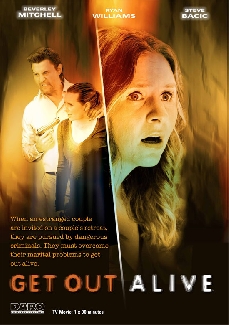
20810

After I finished up with The Perfect Daughter, it was time to continue cleaning out the DVR by watching Get Out Alive.  Get Out Alive originally aired on March 27th on the Lifetime Movie Network and it is quite possible the silliest movie that I’ve ever seen on Lifetime.

Now, that’s not necessarily meant as a complaint.  Part of the appeal of the movies that premiere on Lifetime and LMN is often the very fact that they are so silly and melodramatic.  Get Out Alive is a film that not only embraces the melodrama but practically drapes itself in it.  And while the naysayers may complain that Get Out Alive doesn’t make much sense, they’ll be missing the point.  It’s not about making sense.  It’s about being entertaining.

Or, at the very least, memorable.

Or, at the very, very least, it’s about going totally batshit crazy during the second half of the movie.  Get Out Alive started slow.  For the first hour, I was unimpressed.  But then it went totally batshit crazy during the second hour and I said to myself, “This is why we watch Lifetime movies!”

Get Out Alive tells the story of a young married couple.  On the outside, they look perfect.  But, once you start to dig and actually look under the surface, you discover that they are on the verge of breaking up.  Lucy (Beverely Mitchell) is organized and practical to a fault.  She is not spontaneous.  She does not take risks.  For some reason, she wears absolutely no makeup, which she really could have used in a few scenes.  (She also could have benefited from doing something with her hair.)  Meanwhile, husband Greg (Ryan Williams) is all about taking risks and living life to the fullest.   Their marriage has become so strained that Greg was even briefly tempted to cheat.

Well, what better way to fix things than to go to a marriage retreat?  They’re invited by another couple, both of whom swear that the retreat will work miracles.  And, at first, everything seems fine.  The retreat is located in a beautiful wilderness.  The cabins are nice.  There’s an older, friendly couple who immediately befriend Lucy.  Sure, the guy in charge (played by Vincent Gale) is a little creepy but who are we to judge, eh?

(Did I mention that, like most good Lifetime films, Get Out Alive is a Canadian production?)

However, there are a few things that make Lucy suspicious.  For instance, there are guards wandering all over the compound.  The old couple vanishes.  At one point, Lucy tumbles down a hill.  Greg suggests that maybe she just tripped but Lucy is convinced that she was pushed!

So, what’s happening here?  Well, as I watched Get Out Alive, I came up with two theories.

My first theory is that the whole thing was just a big trick to make Lucy think that she was in danger.  Seeing Lucy frightened would cause Greg to realize how much he loved his wife and then the movie would end with the guy in charge emerging and revealing the hoax.  “You saved our marriage!” Greg would happily proclaim.

That was one theory.  My other theory was that the retreat was actually an elaborate ruse to steal Lucy and Greg’s internal organs and sell them to the highest bidder.

Which theory was right?  You’ll have to watch the movie to find out!  I’m sure it’ll show up on Lifetime again at some point in the near future.  Lifetime is pretty good about continually rerunning their movies.

But anyway, my point is that Get Out Alive is totally ludicrous and kind of silly but that’s kind of the film’s charm.  It makes so little sense and takes place so far outside of the realm of probability that it becomes oddly fascinating.  Add to that, the film’s title doubles as good advice.

You should always get out alive!

Cleaning Out The DVR, Again #9: The Perfect Daughter (dir by Brian Herzlinger)


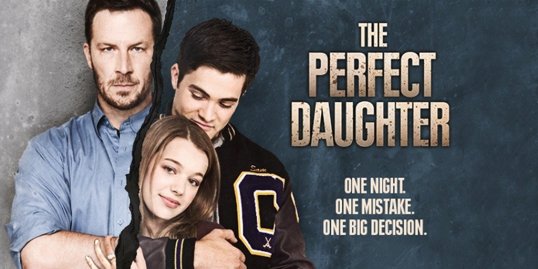
The_Perfect_Daughter_2015_7811901

After I finished watching Anne of the Thousand Days, the next film on my DVR was The Perfect Daughter.  The Perfect Daughter originally aired on March 26th on Lifetime.  According to the imdb, it was originally called The Carpenter’s Daughter but I imagine Lifetime changed the title so that it could fit in with films like The Perfect Teacher.

(Add to that, The Carpenter’s Daughter sounds like it should be another one of those films where Tom Hanks argues that Jesus survived the crucifixion and ran off with the Magdalene.)

Anyway, the perfect daughter of the title is Natalie Parish (Sadie Calvano).  Natalie seems to have a great future in front of her.  She’s pretty, she’s smart, and she’s responsible.  She has the grades to get into the Ivy League college of her choice.  On top of all that, despite being shy, she has just been elected student council president!

Oh sure, not everything is perfect for Natalie.  She doesn’t have a boyfriend.  She’s frequently insecure.  She idolizes a mother that she’s never met and her father, Martin (Brady Smith), may be a hunky blue-collar type of guy but he’s also extremely over protective.  He worries that Natalie will grow up to be like her mother, who apparently was not the saint that Natalie believes her to be.

Martin grows even more concerned when, while driving home one night, he comes across his daughter in the middle of the road.  She went to a party, she got drunk, and she had sex with popular jock Sam Cahill (Reiley McClendon)!  Martin freaks out and takes his daughter to the hospital, causing her nonstop embarrassment at school.  He also demands that Sam be arrested for raping his daughter.

Of course, what Martin is overlooking is that Sam did not rape his daughter.  As Natalie tells him, the sex was consensual.  Martin is shocked but he’ll be even more shocked when Natalie reveals that she’s pregnant.

Complicating matters is that Martin is working for Sam’s father, the snobbish Bruce Cahill (Parker Stevenson).  The film also suggests that Martin may be in love with Bruce’s wife, Julie (Meredith Salenger).

What I was wondering, as I watched the film, is why Natalie was chasing after Sam when Martin’s business partner, Nick (Johann Urb), was so much hotter.  And he was also single!  Seriously, Sam was a nice guy and everything but Nick epitomized this sort of sweaty, manly glory, the type of sexy that otherwise seems to be limited to the guys that you see in pickup truck commercials.

ANYWAY — The Perfect Daughter may sound like a typical Lifetime film but actually, it’s not.  Though there is a little bit of melodrama towards the end, The Perfect Daughter is more of a character study of an overprotective father struggling to accept that his daughter is growing up.  The story has a bit more nuance than the typical Lifetime story but, at the same time, the decision to tone down the melodrama comes at a cost.  The Perfect Daughter is a well-acted and intelligent film but it’s not a particularly fun movie.

In the end, it’s okay but it’s no Perfect Teacher.

Film Review: The Conjuring 2 (dir by James Wan)


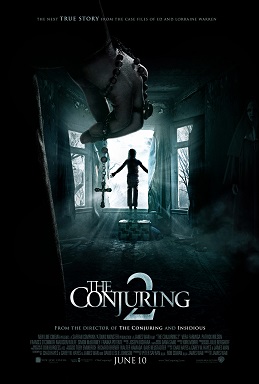
Conjuring_2

The Conjuring 2 will scare the Hell out of you.

Seriously, I’ve seen a lot of horror films, including the first Conjuring (which I absolutely loved).  I’ve seen ghosts, vampires, demons, werewolves, psycho killers, and threats in the shadows.  I’ve seen cats jump out of closets.  I’ve seen ghostly faces suddenly appear in the darkness.  I’ve heard screams and chants and howls.  I’ve seen limbs severed in every possible way.  I’ve seen a lot of cinematic horror and, as a result, I tend to feel that there is nothing that can scare me.

Well, it turns out that’s not true because The Conjuring 2 scared the Hell out of me.

In many ways, The Conjuring 2 tells a familiar story.  Once again, the film begins with an opening crawl that informs us that what we’re about to see is based on a true story.  Once again, a loving but chaotic family is being haunted by evil spirits and the Church has asked paranormal investigators Ed and Lorraine Warren to investigate.

The setup may sound familiar but director James Wan manages to keep the scares compelling.  Over the past few years, Wan has emerged as one of our greatest genre filmmakers.  Whether he’s directing an Insidious film or the latest Fast & Furious installment, James Wan knows how to hold an audience’s attention and how to make the potentially predictable compelling.  In The Conjuring 2, Wan creates and maintains such an atmosphere of dread that even the expected scares (bumps in the dark, voices in the shadows, slamming doors, and faces suddenly appearing in the background) take on an ominous intensity.  From the very first shot, Wan leaves the audience with a profound feeling of unease.  I was not alone in covering my eyes during a few scenes.  I was also not alone is occasionally looking around the darkened theater, just to make sure that there weren’t any ghosts creeping up on me.

That said, we all already know that James Wan is a master of horror.  We know that he can tell a ghost story and, from the minute we saw the first trailer, we all knew that The Conjuring 2 was going to be scary.  What sets The Conjuring 2 apart is the same thing that made the first Conjuring so special.  (For that matter, it’s the same thing that made Wan’s Furious 7 so special.)  Wan fills the screen with horror and spectacle but he also finds the time to celebrate his character’s humanity.

There’s a scene that occurs about 90 minutes into The Conjuring 2.  Ed (Patrick Wilson) and Lorraine (Vera Farmiga) are visiting with the haunted family.  The family has been shaken by both the supernatural and the fact that so many people refuse to believe that they are actually being haunted.  Ed spies a guitar sitting in the corner of the room.  He grabs it and, with the haunted children gathered around them, he launches into a surprisingly good Elvis impersonation.  He sings I Can’t Help Falling In Love With You, all the while glancing over at Lorraine standing in the doorway.

(What makes this especially touching is that Lorraine has been having premonitions of Ed’s violent death and is terrified that she’s going to lose him before they finish investigating this case.)

It’s a totally unexpected scene and yet it works perfectly.  Some of it is because Patrick Wilson and Vera Farmiga have this great chemistry that makes you believe that they actually have been married for years.  But it’s also because the scene reminds us that The Conjuring 2 is about more than just ghosts and scares.  It’s also about love and family.  The haunting is threatening to end Ed and Lorraine’s love story.  The haunting is threatening to destroy a loving family.  Ed and Lorraine aren’t just investigating a ghost but they’re also saving a family.  They’re not just fighting against the supernatural.  They’re fighting for love.

And, in our cynical times, that may sound corny or silly or old-fashioned.  Well. you know what?  The Conjuring was an old-fashioned film and, in a way, so is The Conjuring 2.  But who cares?  Horror works best when it’s mixed with humanity.  The Conjuring 2 may be a horror film but it’s also a celebration of humanity, love, and family.

You may have noticed that I haven’t go into many specifics about the plot of The Conjuring 2.  I don’t want to spoil it for you.  This is a film that you should experience with fresh eyes.  I could tell you about the scariest scene in this film but, if I did, you would not get the full experience.  I’ll just say that I’ve seen a lot of scary movie nuns but none of them can compare to The Conjuring 2.

The Conjuring 2 is the best supernatural horror film that I’ve seen this year so far.  It will scare you and it will touch your heart.  See it.

Also, be sure to stay for the end credits, which feature a lot of genuinely creepy snapshots of the actual locations where the film’s haunting is said to have occurred.  Not only are the pictures scary but they also show the care with which The Conjuring 2 recreated 1970s London.  Is the picture below a scene from the film or is it a picture that was taken during the actual haunting?  You’ll have to see The Conjuring 2 to find out!

the-conjuring-2-1


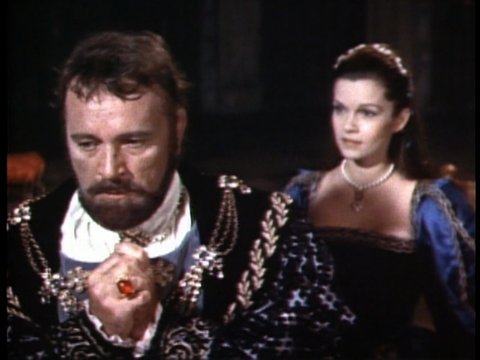
Cleaning Out The DVR, Again #8: Anne of the Thousand Days (dir by Charles Jarrott)


Anne

After I finished writing my review of Rolling Thunder, I continued the process of cleaning out my DVR by watching the 1969 film, Anne of the Thousand Days.  How does a film like Anne of the Thousand Days compare to a film like Rolling Thunder?

They might as well have been conceived, written, directed, and released on different planets.

I recorded Anne of The Thousand Days off of TCM on March 26th.  The main reason that I set the DVR to record it was because Anne was a best picture nominee.  It may seem strange to think that this rather conventional film was nominated the same year as Butch Cassidy and the Sundance Kid, Z, and Midnight Cowboy.  It gets even stranger when you consider what wasn’t nominated that year: Medium Cool, If…, Last Summer, They Shoot Horses, Don’t They?, Alice’s Restaurant, The Wild Bunch, Once Upon A Time In The West, and a long list of other films.  In fact, if I wanted to, I could probably spend this entire review listing all of the 1969 films that feel like a more appropriate best picture nominee than Anne of the Thousand Days.

And yet, Anne was nominated for best picture.  In fact, it received a total of 10 Oscar nominations, the most of any film that year.  Tellingly most of the nominations were in the technical categories and the only Oscar that it won was for its costumes.  Genevieve Bujold received a nomination for playing the title character and Richard Burton became the third actor to receive a nomination for playing King Henry VIII.

As for the film, Anne of the Thousand Days tells the oft-told story of King Henry VIII and his marriage to Anne Boleyn.  Told in flashback as both Henry and Anne wait for her to be executed on charges of adultery, the film shows us how middle-aged Henry VIII first met and fell in love with 18 year-old Anne Boleyn.  Standing in the way of Henry’s pursuit of Anne was the fact that 1) Anne intensely disliked him, 2) Anne was already engaged, 3) Anne’s sister was already Henry’s mistress, and 4) Henry was already married to Catherine of Aragon (Irene Papas).

Fortunately, Henry happens to be king and being king comes with its perks.

For instance, as king, he can order Anne and her fiancée to break up.  As king, he can casually dismiss his former mistress.  And, as king, Henry has the power that Anne finds to be the ultimate aphrodisiac.  At first, Anne merely loves the fact that Henry is obsessed with her.  But slowly, she comes to love Henry as a man as well…

The only problem is that Henry is still married and Catherine is still popular with the people.  Even after Henry divorces her and marries Anne, the common people refuse to accept Anne as their queen.  When Sir Thomas More (William Squire) refuses to recognize Anne as queen, Anne demands that More be executed.  When Henry initially shows reluctance, Anne announces that she will not sleep with him until More is dead.

Needless to say, Thomas More is quickly executed.

However, Henry’s attention has already moved on to Jane Seymour (Lesley Paterson) and, desperate to get Anne out of his life, he arranges for Cardinal Cromwell (John Colicos) to frame Anne on charges of adultery and incest.  With Anne facing a humiliating trial and the possibility of execution, Henry makes her an offer.  If she agrees to an annulment, he’ll free her.  However, their daughter — Elizabeth — will lose her claim to the throne…

It’s telling that Charles Jarrott did not receive an Oscar nomination for his work as Anne of the Thousand Day‘s director.  There are a lot of technically good things about Anne of the Thousand Days but, despite all of the melodrama and sex and historical detail to be found in Anne, it never comes to life as a movie.  The costumes are to die for, the sets are impressive, and the cast is full of talented British character actors but the whole movie just feels oddly flat.  Try as it may, it can never convince us that either Henry VIII or Anne Boleyn is worth all the trouble.

Anne of the Thousand Days was obviously a big production, which probably explains all the Oscar nominations.  But otherwise, it’s one of the more forgettable best picture nominees.