A Late Tribute To Bud Cort


Bud Cort died on February 11th, at the age of 77.  He was a beloved character actor, one who had a real skill for bringing eccentric characters to life.  He became a star briefly with films like Brewster McCloud and especially Harold and Maude but Hollywood never really knew what to do with him.  After he was nearly killed in a car accident in 1979, his momentum stalled.  Smart directors still cast him because he always gave good performances but he spent most of his career in small roles.  (In Heat, he was the obnoxious restaurant manager who drove Dennis Haysbert back into a life of crime.)

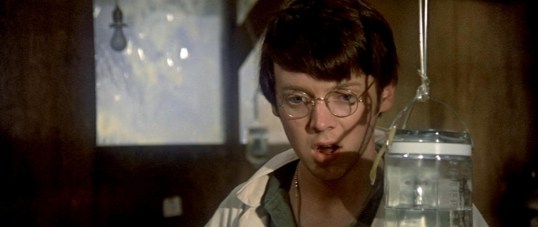
When Cort died, most of the stories focused on his performance in Harold and Maude.  That was understandable.  That said, I’ve always been touched by Cort’s performance in 1970’s MASH and I wanted to take a moment to just express how wonderful I thought he was in the role of Private Boone.

Though he had previously appeared in two earlier films, Cort got an “introducing” credit for his role in MASH.  He played Boone, a usually quiet corpsman who speaks with a slight stutter.  When a patient in Post-Op develops complications, Major Frank Burns (Robert Duvall) tells Boone to get a cardiac needle.  Boone obviously isn’t sure what Burns needs but Burns snaps at him to get it.  When Boone comes back with a needle, the patient has already died.  Burns calls Boone an idiot for getting the wrong needle.  Burns offers to get a nurse.  “It’s too late, Boone,” Burns says, motioning at the dead man, “you killed him.”  Burns walks away as Boone, a look of shock on his face, tries not to cry.

And I have to admit that I want to cry with him.  It’s one of the more shocking scenes in Altman’s film and it works because of not only Robert Duvall’s memorably nasty turn as Burns but also Bud Cort’s emotional vulnerability of Boone.  Boone, who is in Korea because he was drafted, has not only seen a man die but he’s been told that he’s responsible.  With just the slightly cocking of his head and the sniffling of a young man who doesn’t want to cry on duty, Bud Cort shows us just how devastated Boone is.

And, of course, Boone was not responsible.  Trapper John (Elliott Gould) takes one look at the patient’s chart and sees that it was Burns’s own incompetence that is to blame.  When Trapper punches out Burns, it’s a cathartic moment.  The only thing you regret is that Boone wasn’t in the room to see it.

That was Bud Cort’s big moment in MASH, though he appears throughout the film.  Indeed, if you watch carefully, there’s a subplot in which Boone starts dating one of the nurses and eventually becomes much more confident in himself.  We don’t know much about Boone but we do see that he’s become a member of the gang.  Unlike Burns or David Arkin’s Sgt. Vollmer, Boone is accepted by the inhabitants of the Swamp.

He even gets to attend the mock suicide of Painless..  Reportedly, Boone’s line of “You’re throwing away your whole education,” was improvised on the spot by Bud Cort.

Ah, Bud Cort.  Rest in peace, you wonderful actor.

Retro Television Review: Homicide: Life on the Street 4.22 “Work Related”


Welcome to Retro Television Reviews, a feature where we review some of our favorite and least favorite shows of the past!  On Sundays, I will be reviewing Homicide: Life On The Street, which aired from 1993 to 1999, on NBC!  It  can be viewed on Peacock.

Oh my God, this episode….

Episode 4.22 “Work Related”

(Dir by Jean de Segonzac, originally aired on May 17th, 1996)

At first, the fourth season finale of Homicide: Life On The Street feels like a typical episode of Homicide.

Lewis, having just returned from his honeymoon, obsesses on a case in which a man was killed by a bowling ball dropped from an overpass.  Kellerman doesn’t feel that the case can be solved.  The murder was just too random.  Lewis, however, refuses to let it go.  As Kellerman soon deduces, Lewis doesn’t want to go home because he and his new wife are already fighting.

Meanwhile, Bayliss is frustrated by Pembleton’s refusal to act like a sentimental new father.  While Bayliss talks about the wonder of life, Pembleton coldly talks about how expensive it’s going to be to raise a child.  It’s the typical Bayliss/Pembleton dynamic.  Bayliss wants his partner to open up.  Pembleton wants to keep things strictly business.  Bayliss wants to find the deeper meaning of every event.  Pembleton wants to remain rational and focused on doing his job.  They’re both spiritual men, in their way.  It’s just that Bayliss is a seeker whereas Pembleton is a man on a mission.

Bayliss and Pembleton investigate a shooting at a fast food restaurant.  It doesn’t take much of an investigation to realize that the shooter was a recently fired employee and that his accomplice was a friend who still worked there.  When Pembleton and Bayliss get the friend into the box, it seems like it’s going to be an easy investigation.

That’s until Pembleton suddenly yells out, grabs his head, and has a violent seizure.  He collapses into the lap of a venal defense attorney who quickly shoves Pembleton away.  Pembleton is rushed to the hospital.  He’s had a stroke.  The rest of the Homicide squad sees a comatose Pembleton lying in bed.  But the viewer has seen the inside of Pembleton’s mind, where Pembleton is currently lying in a coffin and screaming to be released.

Agck!

I knew this episode was coming.  Ever since I started reviewing Homicide, people have told me about the stroke episode.  That said, it still took me by surprise when Pembleton collapsed.  Pembleton has always been the strongest character on the show, the one who never lost control and whose mind could unravel any alibi and solve any mystery.  Pembleton crashing to the ground, helpless and unable to speak, was not easy to witness.  Andre Braugher was a great actor and he proved it in this episode.

That was how the fourth season ended, with Pembleton lying in a hospital bed and Giardello trying to keep the squad focused on doing their job while Bayliss — poor Bayliss! — found himself once again trying to understand the cruelty of fate.  It was powerful, it was disturbing, it was sad, and I think it was the type of thing that only a show as good as Homicide could have pulled off.

Next week, we begin season 5.  I’m almost scared to see what happens.

I Watched Heart Of The Country (2013, Dir. by John Ward)


After her husband is arrested for financial fraud, country singer Faith (Jana Kramer) returns home to North Carolina and reconnects with her estranged family.  Her father (Gerald McRaney) is there to offer support and small-town, no-nonense wisdom and she’s going to need all of it when she has to choose between the hot local doctor and her repentant husband.

Because Faith’s father was dying of a brain tumor, I assumed this was a Nicholas Sparks movie but it wasn’t.  It was just a close copy.  Heart of the Country was a movie about the importance of keeping your marriage together, even if your husband was involved in a Ponzi scheme!  Faith’s husband (Randy Wayne) didn’t have anything to do with the scheme but he knew it was going on at his firm and he didn’t say anything.  When he thinks about rejecting a plea deal that would keep him out of prison because it would mean admitting his guilt and embarrassing his old money family, Faith’s father tells him to be a man and admit that he knew what was going going on at his firm.

Other than some mild language, Heart of the Country could have easily passed for a Hallmark movie.  I didn’t agree with Faith’s decision at the end but I did like the way the movie portrayed the relationship between her and her father.  Gerald McRaney was really good in the role.  It was the last movie that I watched yesterday and I’ll give it a mild recommendation just because of McRaney and some of the music on the soundtrack.  If you’re into Hallmark-style movies, this one was okay.

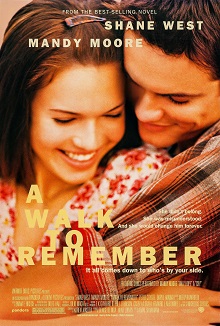
I Watched A Walk To Remember (2002, Dir. by Adam Shankman)


After popular high school student Landon Carter (Shane West) gets busted for drinking on school property and pulling a prank that nearly killed another student, he’s given a choice.  He can either be expelled or he can tutor other students and take part in the school play.  At both tutoring and play rehearsals, he gets to know Jamie Sullivan (Mandy Moore), the daughter of the local reverend (Peter Coyote).  Even though Jamie doesn’t wear makeup and only owns one sweater, Landon falls in love with her.  Too bad she’s dying.

A Walk To Remember is a movie that I can remember walking down to the movie theater to see with my friends.  Shane West was so handsome.  Mandy Moore was so beautiful, even if she did only own one sweater.  The film taught us all that there’s nothing more romantic than falling in love when you only have a year to live.  (At least, that’s what it taught us girls.  The boys just learned that they could nearly kill someone and their only punishment would be having to appear in a school play.)  I loved it when I first saw it and I still enjoyed it when I rewatched it yesterday, even if I now realize that it never made sense that Mandy Moore would only own one sweater.  There’s a lot about the movie that doesn’t make any sense but Shane West and Mandy Moore had that irresistible chemistry.  Early on, when Jamie warns Landon not to fall in love with her and Landon says it will never happen, that’s when everyone knows that they’re destined to be together.

The movie still made me cry, even though I now know that someone has to die in every Nicholas Sparks story.  Getting married right out of high school makes sense when one of you is going to be dead before college reopens for the fall.  Did Landon ever remarry?  He better not have.  I will never forget A Walk To Remember.

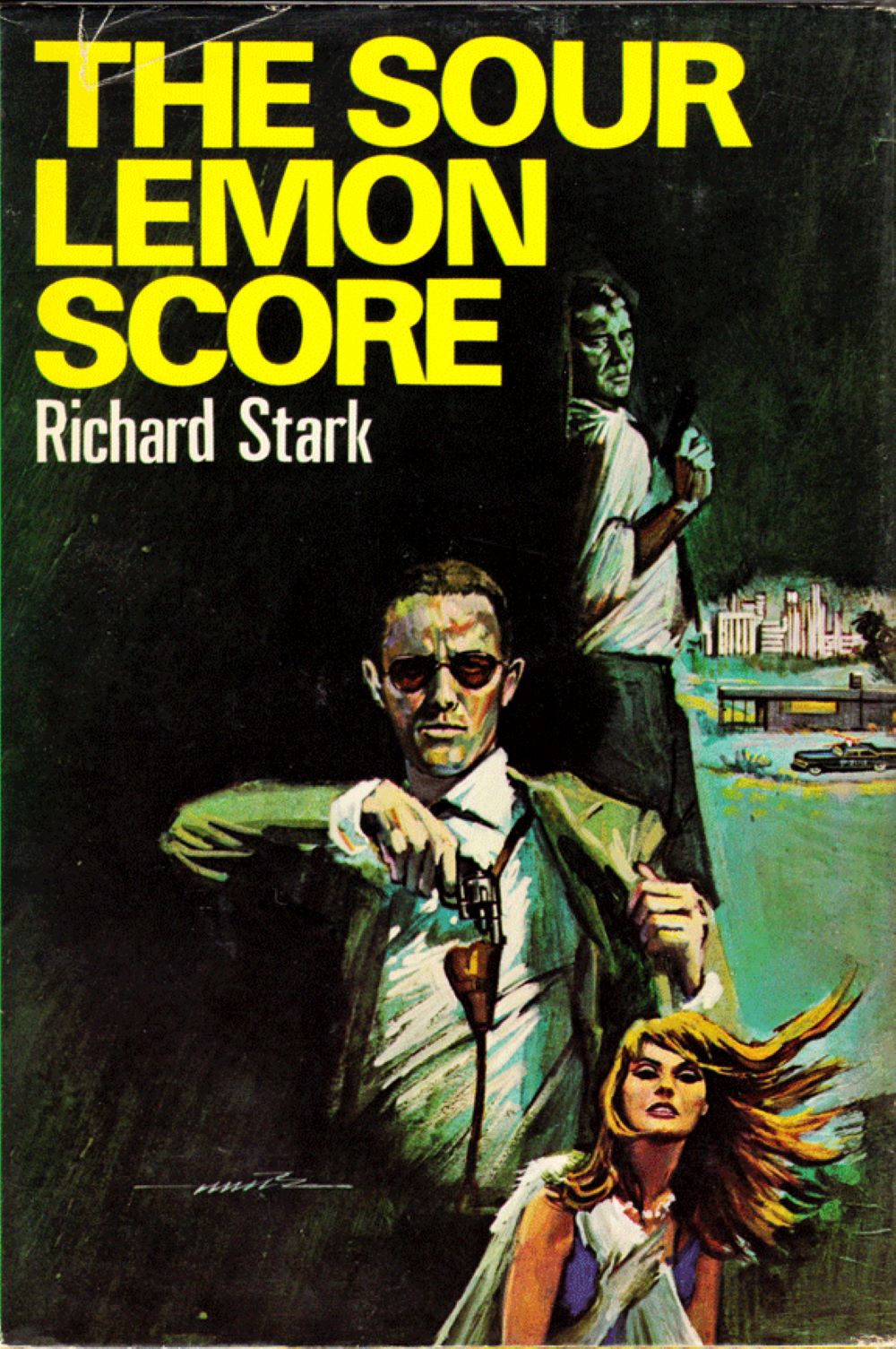
Guilty Pleasure No. 104: The Parker Series (by Richard Stark)


Richard Stark’s Parker novels are the kind of crime fiction that feel like they’re bad for you in all the right ways: lean, mean, amoral heist stories that work as both clinical studies of professional thieves and utterly shameless page‑turners. Taken across the 24-book run, from The Hunter in 1962 through Dirty Money in 2008, the series is remarkably consistent, yet also strange and jagged enough that you never quite relax into it. Reading Parker is like chain‑smoking noir paperbacks—self‑aware guilty pleasure with just enough bite and bleakness that you can pretend it’s good for you.

The basic premise barely changes, and that’s part of the appeal. Parker is a professional robber who prefers big, high‑yield scores: armored cars, payrolls, entire towns temporarily cut off from the world. He’s not an antihero in the modern prestige‑TV sense so much as a working stiff whose job happens to be violent crime, a man who approaches robbery with the same cold professionalism most people reserve for accounting. In The Hunter, the novel that kicks everything off, he’s double‑crossed by his wife and partner, shot, and left for dead, and the story is essentially one long act of payback as he claws his way back to New York and into the orbit of the Outfit, the crime syndicate that ultimately ends up with his money. That mix of stripped‑down revenge and procedural detail sets the tone for almost everything that follows, even when the later books drift away from personal vendetta into cleaner, job‑of‑the‑week capers.

What makes the series work—what makes it weirdly addictive—is how mercilessly Donald Westlake (under the Stark pseudonym) commits to Parker as an almost inhuman constant in a chaotic world. He’s often described by fans as a kind of force of nature, and that tracks with how he moves through these books: stoic, unadorned, perpetually assessing angles, crew members, and exit routes. Traditional redeeming qualities—sentimentality, guilt, even much curiosity about other people—just aren’t there; what you get instead is a kind of brutal efficiency that, perversely, becomes its own charisma. The guilty‑pleasure element kicks in because the novels quietly invite you to enjoy watching a ruthless pro outthink and outmuscle everyone in his path, even though the moral framework is closer to nihilism than romantic outlaw fantasy. There’s pleasure in the competence and in the clean lines of the plotting, even as you’re aware you’re rooting for someone who treats human beings like moving parts in a job.

Formally, the books have a recognizable skeleton that Stark keeps returning to and subtly bending. Most of the novels are divided into four sections: first, Parker’s point of view as he’s planning or executing a job; second, a continuation that usually ends with a betrayal or reversal; third, a shift into the perspective of whoever is double‑crossing or hunting him; and finally, a return to Parker as he fixes what’s gone wrong and settles accounts. This architecture does a couple things. It gives the series a strong procedural rhythm that fans can relax into—you know there will be a job, a screw‑up, and a payback—but it also keeps the tension high by delaying gratification until that fourth‑quarter rampage. You get both the chess match and the inevitable explosion. It’s formulaic in the same way a great blues progression is formulaic: you come for the structure, you stay for the particular variations each time.

The prose is another major part of the series’ guilty‑pleasure charge. Westlake pares the language down to something close to bare steel; the description is sparse, the sentences short, the dialogue practical and unfussy. Reviewers frequently point to how there’s “not a wasted word,” and that seems right: you feel like every line is there to move money, people, or bullets into position. In an age where a lot of thriller writing leans on verbosity and constant internal monologue, Parker’s tight focus can feel almost cleansing. At the same time, that same spareness means the violence can land with an extra jolt—there’s no cushioning around it, no moral throat‑clearing, just the fact of what Parker decides to do when someone gets in his way.

Across the series, the quality is not perfectly even, and that’s where a fair, balanced take has to admit some dips. The early stretch—The HunterThe Man with the Getaway FaceThe OutfitThe Score, and The Jugger—has a raw momentum and a sense of discovery as Westlake works out how far he can push a protagonist this cold. Later titles, especially in the first run up to Butcher’s Moon, often expand the canvas, giving more time to side characters and to elaborate, multi‑phase heists. Some readers and critics consider The Score, with its audacious robbery of an entire mining town, a high‑water mark; others see it as simply a particularly well‑executed entry in a series where the baseline is already high. Then, after the long break between the 1970s and the 1990s revival with Comeback and Backflash, you can feel Westlake adjusting the formula to a slightly different era, with Parker still fundamentally the same but the world around him updated. Those later books are often solid and occasionally excellent, but the sheer shock of the early ones is hard to recapture.

From a modern perspective, one of the more interesting tensions in reading Parker is the question of identification. The books are not satire, and they aren’t quite celebrations; they’re closer to case files written with a strong sense of style. The theme that emerges most strongly is the amoral logic of criminal enterprise: loyalty is provisional, greed is constant, and institutions—whether the Outfit or banks or small‑town cops—are just different power systems to be exploited. There’s no sentimental criminal code here, only practical rules about not talking, not freelancing, and not getting sloppy. That worldview can be bracing and, frankly, kind of fun to inhabit for a few hundred pages at a time, particularly because Westlake doesn’t ask you to endorse it; he just drops you in and lets you watch how it operates.

At the same time, that detachment and hardboiled minimalism can turn some readers off. If you need emotional growth, redemptive arcs, or a sense that the universe punishes the wicked, Parker is going to feel either empty or actively hostile to your expectations. The closest the series comes to sentiment is in Parker’s occasional, grudging respect for other professionals who do their job well—safecrackers, drivers, heist planners—and even that is strictly bounded by the demands of survival and profit. Women, in particular, can feel underwritten or instrumental in some entries, especially the earlier books, reflecting both the genre conventions of the time and the series’ focus on Parker’s narrow, self‑interested worldview. It’s possible to argue that this is part of the point—these are Parker’s stories, and he does not care about anybody’s inner life—but it does mean the books can feel airless if you’re reading a bunch in a row.

Still, that’s the strange magic of Parker: for all the limitations and repetitions, you finish one and almost immediately think about the next job, the next crew, the next betrayal. The series taps into a very specific pleasure center: watching a ruthlessly competent person navigate systems stacked with corruption and stupidity, using only planning, discipline, and a willingness to hit back harder than anyone expects. It’s not aspirational, and it’s not comforting, but it is undeniably gripping. If you can accept an unapologetically amoral center and you have a taste for stripped‑down crime fiction with a strong procedural spine, Parker is easy to devour and just as easy to feel a little guilty about enjoying as much as you do.

Previous Guilty Pleasures

  1. Half-Baked
  2. Save The Last Dance
  3. Every Rose Has Its Thorns
  4. The Jeremy Kyle Show
  5. Invasion USA
  6. The Golden Child
  7. Final Destination 2
  8. Paparazzi
  9. The Principal
  10. The Substitute
  11. Terror In The Family
  12. Pandorum
  13. Lambada
  14. Fear
  15. Cocktail
  16. Keep Off The Grass
  17. Girls, Girls, Girls
  18. Class
  19. Tart
  20. King Kong vs. Godzilla
  21. Hawk the Slayer
  22. Battle Beyond the Stars
  23. Meridian
  24. Walk of Shame
  25. From Justin To Kelly
  26. Project Greenlight
  27. Sex Decoy: Love Stings
  28. Swimfan
  29. On the Line
  30. Wolfen
  31. Hail Caesar!
  32. It’s So Cold In The D
  33. In the Mix
  34. Healed By Grace
  35. Valley of the Dolls
  36. The Legend of Billie Jean
  37. Death Wish
  38. Shipping Wars
  39. Ghost Whisperer
  40. Parking Wars
  41. The Dead Are After Me
  42. Harper’s Island
  43. The Resurrection of Gavin Stone
  44. Paranormal State
  45. Utopia
  46. Bar Rescue
  47. The Powers of Matthew Star
  48. Spiker
  49. Heavenly Bodies
  50. Maid in Manhattan
  51. Rage and Honor
  52. Saved By The Bell 3. 21 “No Hope With Dope”
  53. Happy Gilmore
  54. Solarbabies
  55. The Dawn of Correction
  56. Once You Understand
  57. The Voyeurs 
  58. Robot Jox
  59. Teen Wolf
  60. The Running Man
  61. Double Dragon
  62. Backtrack
  63. Julie and Jack
  64. Karate Warrior
  65. Invaders From Mars
  66. Cloverfield
  67. Aerobicide 
  68. Blood Harvest
  69. Shocking Dark
  70. Face The Truth
  71. Submerged
  72. The Canyons
  73. Days of Thunder
  74. Van Helsing
  75. The Night Comes for Us
  76. Code of Silence
  77. Captain Ron
  78. Armageddon
  79. Kate’s Secret
  80. Point Break
  81. The Replacements
  82. The Shadow
  83. Meteor
  84. Last Action Hero
  85. Attack of the Killer Tomatoes
  86. The Horror at 37,000 Feet
  87. The ‘Burbs
  88. Lifeforce
  89. Highschool of the Dead
  90. Ice Station Zebra
  91. No One Lives
  92. Brewster’s Millions
  93. Porky’s
  94. Revenge of the Nerds
  95. The Delta Force
  96. The Hidden
  97. Roller Boogie
  98. Raw Deal
  99. Death Merchant Series
  100. Ski Patrol
  101. The Executioner Series
  102. The Destroyer Series
  103. Private Teacher

Song of the Day: Sister Suffragette


There aren’t many songs for Susan B. Anthony Day so I guess Sister Suffragette from Mary Poppins will have to suffice!  This song is about the struggle of women to get the vote in England so it mentions Emmeline Pankhurst instead of Susan B. Anthony.

In America, the 19th Amendment, guaranteeing all women the right to vote, was ratified in 1920.  Thank you, Susan B. Anthony!


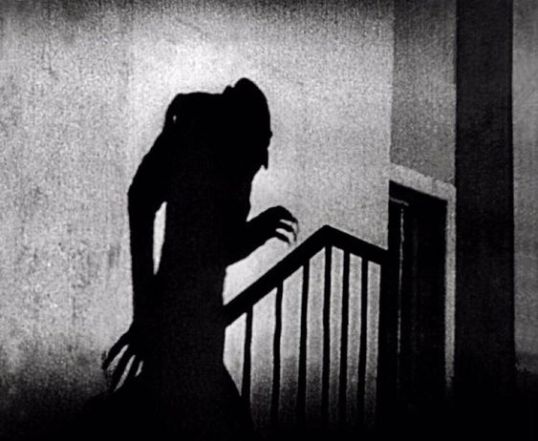
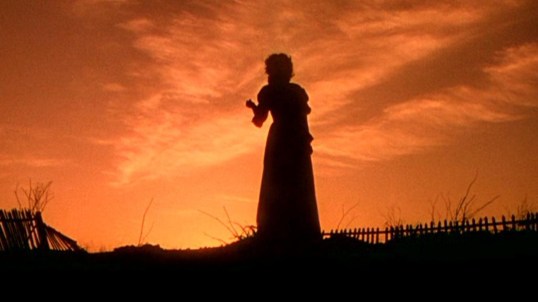
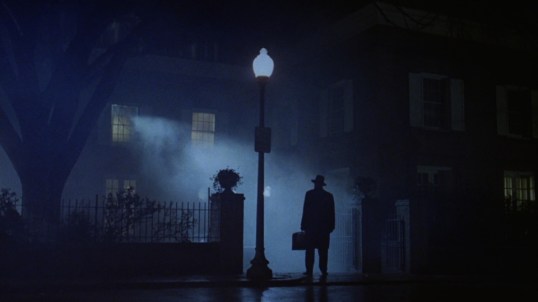
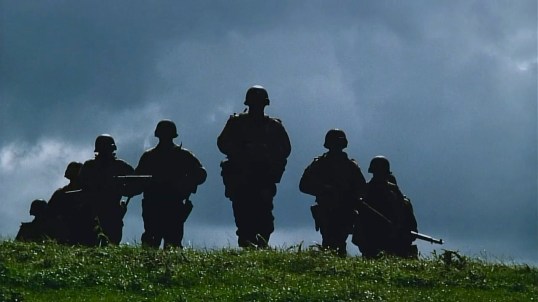
4 Shots From 4 Films: Celebrating The Silhouette…Again!


4 Or More Shots From 4 Or More Films is just what it says it is, 4 shots from 4 of our favorite films. As opposed to the reviews and recaps that we usually post, 4 Shots From 4 Films lets the visuals do the talking!

As a photographer, I love a good silhouette shot.  Here are some more of my favorites.

4 Shots From 4 Films

Nosferatu (1922, Dir. by F.W. Murnau)

Gone With The Wind (1939, Dir. by Victor Fleming)

The Exorcist (1973, Dir by William Friedkin)

Saving Private Ryan (1998, Dir. by Steven Spielberg)