
by Erin Nicole
The night is almost here.
by Erin Nicole
The night is almost here.
What’s an Insomnia File? You know how some times you just can’t get any sleep and, at about three in the morning, you’ll find yourself watching whatever you can find on cable or Netflix? This feature is all about those insomnia-inspired discoveries!
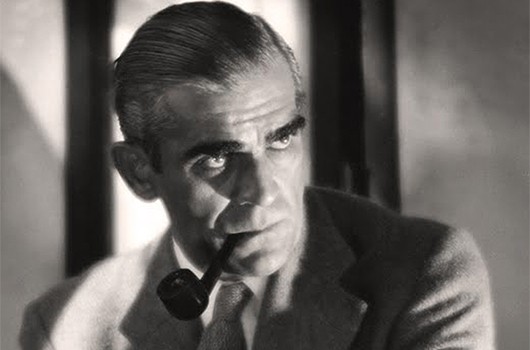
Ah, the mystery of Boris Karloff.
On screen, Karloff was a horror icon. He brought Frankenstein’s Monster to life and influenced generations of actors and horror filmmakers. He was also the Mummy and the first actor to play Sax Rohmer’s international criminal, Fu Manchu and, of course, he won over a whole new generation as narrator of How The Grinch Stole Christmas. Over the course of his long career, Karloff appeared in movies both good and bad. He worked for Mario Bava and Roger Corman and James Whale and Peter Bogdanovich. He was also the host of Thriller, a much-beloved horror anthology series. At the height of his fame, he was often credited by just his last name. Everyone knew who Boris Karloff was.
Off screen, Boris Karloff was a quiet and rather dignified gentleman, one who was widely considered to be one of the kindest and most generous men in Hollywood. Born William Henry Pratt, Karloff’s father was a diplomat and his family assumed that he would follow their career. Instead, William Henry Pratt immigrated first to Canada and then to California and transformed himself into Boris Karloff.
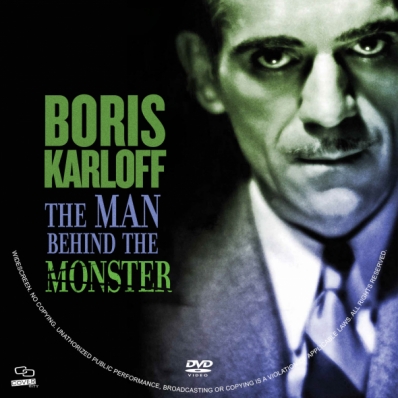
Boris Karloff: The Man Behind The Monster is a documentary that both explores the mysteries of Karloff’s life and also pays tribute to him as an actor. It attempts to answer the question of how such a kindly man could also be responsible for some of the greatest moments in horror. Full of archival footage and interviews with those who worked with Karloff and also those who were influenced by his films (like Guillermo del Toro), the film presents a portrait of a talented actor who was as expressive onscreen as he was somewhat withdrawn in real life. For Karloff, his roles became a way to escape from the troubles of the real world. As the film makes clear, Karloff didn’t start his career planning to eventually become a horror actor and, occasionally, he did chafe a bit at being typecast. However, regardless of what role he was playing, Karloff always gave it his best. He may have appeared in some bad films but he never gave a bad performance. The film not only includes clips from his films but also an examination of what made his performances so special. The analysis of Frankenstein, The Mummy, The Terror, and Targets is especially interesting.
If you’re a fan of horror, this documentary is for you. It’s currently available on Shudder.
Previous Insomnia Files:
This is the second video for the Pet Shop Boys’s West End Girls, updated for the age of lockdowns. In 2020, you could still sing about the girls in the West End. You just couldn’t leave your house and go down there to see them.
Enjoy!
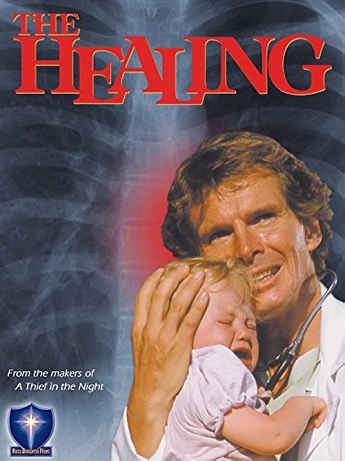
The 1983 film, The Healing, tells the story of Dr. John Lucas (played by Brian Jones).
Dr. Lucas has a bright future ahead of him. He’s a successful and popular doctor in Des Moines. He’s making a good deal of money. He’s socially well-connected. He enjoys playing golf every weekend. Unfortunately, he also tends to neglect his wife and son. His wife continually reminds Dr. Lucas that he was originally planning on becoming a doctor so that he could honor God. But now Lucas has gotten materialistic and callous. Lucas laughs off her concerns until, one day, Lucas is interrupted at the country club by a phone call informing him that his wife and son have both been killed in a car accident.
Sinking into despair, Dr. Lucas starts to drink. Soon, he’s such an alcoholic that he has lost his job and his place in society. With the exception of his fellow alcoholics, no one wants anything to do with Lucas. Lucas is prepared to drink the rest of his life away but then, he sees an elderly homeless man having a medical emergency. His natural instincts kick in and Dr. Lucas saves the man’s life and takes him down to the local shelter. At the shelter, Lucas agrees to act as a doctor on the condition that no one push any religious stuff on him. Following another tragedy, Lucas regains his faith. However, his new-found idealism is put to the test when a junkie shows up at the clinic, carrying a switchblade and demanding a fix….
The Healing is another low-budget faith-based film from director Russell Doughten, Jr. Doughten, who started out his film career working on 1958’s The Blob, directed several independent Christian films towards the end of his career. This month, we’ve previously taken a look at Nite Song, Face in the Mirror, and Brother Enemy. Like those films, The Healing was filmed on the streets of Des Moines, Iowa. If nothing else, Doughten’s films served as a reminder that “urban” problems were not just limited to cities like New York, Los Angeles, and Chicago. Instead, homelessness and crime were problems that afflicted every city, even the seemingly quite ones sitting in the middle of the country. Unfortunately, The Healing often portrays the homeless as being plot devices as opposed to actual human beings. In particular, one older gentleman’s only role in the film is to provide Lucas with some advice before promptly dying.
The Healing is achingly sincere in its desire to try to make the world a better, there’s no denying that. Unfortunately, the film’s execution doesn’t always match its high ideals. Brian Jones does a good of turning Dr. Lucas into a sympathetic character but the rest of the cast seems to the struggle with their underwritten characters. The scenes featuring Dr. Lucas and the junkie also feel a bit rushed, as if the film itself was in a hurry to wrap things up. As such, the conclusion of the junkie storyline never feels authentic and since the end of that storyline is also the end of the film, it casts a pall over the entire film.
Personally, as a history nerd, I’m glad that Doughten captured what Des Moines looked like in the early 80s. If I ever find myself in Des Moines, I’ll compare the modern city to the 1983 version. The film has its strengths but ultimately, it’s a bit too uneven to really work.
To be honest, tonight’s episode of HBO’s Tales From The Crypt isn’t really a traditional horror story. Instead, it’s a somewhat satiric homage to film noir. But I’m going to share it anyway. Halloween is about more than just ghouls and ghosts and goblins, right?
You, Murderer is an experiment that doesn’t quite work but is interesting all the same. This episode is basically one long POV shot. Whenever our protagonist sees his reflection, we see Humphrey Bogart staring back at us. Actual footage of Bogart was used in the show. Sometimes it work, sometimes it just looks strange. But it’s always interesting!
This episode originally aired on January 25th, 1995. Enjoy!
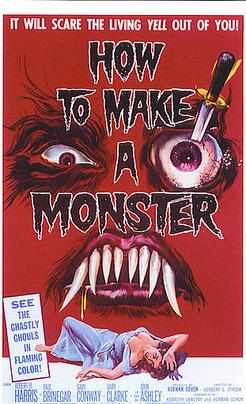
How do you make a monster?
According to this 1958 film, the man to ask is Pete Dumond!
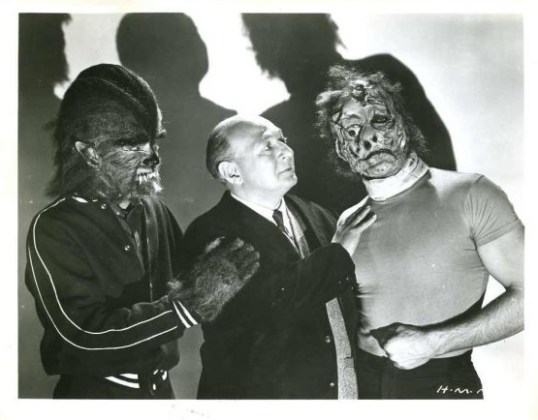
As played by Robert H. Harris, Pete Dumond is the chief make-up artist at American International Pictures. He’s so good that he can easily transform handsome teen idols like Tony Mantell (Gary Conway) and Larry Drake (Gary Clarke) into convincing monsters. Everyone loves Pete but there’s a problem. As the new studio head explains it, horror just isn’t that popular anymore. Teenagers are no longer interested in seeing movies about werewolves and Frankenstein’s Monster. Instead, teens now only care about rock and roll. Elvis has killed horror!
(Actually, the film argues that a recording artist named John Ashley killed horror. At the time this movie was made, John Ashley was under contract to American International Pictures and the film even includes a dance number where Ashley performs his latest hit. Ashley wasn’t a bad singer but it’s still hard to believe that he could have killed horror. That said, the choreography is fun and every horror movie needs at least one random dance number.)
Sadly, Pete is about to be out of a job. However, what the studio heads don’t realize is that Pete is more than just a makeup artist! He’s also a master hypnotist! Soon, Pete is using a special foundation cream to hypnotize Tony and Larry. Once he has them under his control, he sends them, in full costume, on a mission to kill anyone who thinks that horror is dead!
There’s a lot of enjoyment to be found in How To Make A Monster. The film not only takes place at American International Pictures but it was produced by AIP as well, so the entire movie is basically full of in-jokes that would only be appreciated by B-movie fans. For instance, the makeup effects that Pete creates are the same ones that were used in I Was A Teenage Frankenstein and I Was A Teenage Werewolf. (Gary Conway wore the Frankenstein makeup in both Teenage Frankenstein and this film.) Towards the end of the film, when Larry and Tony confront Pete at his home, the walls are decorated with all of the monsters that Pete has created throughout the years and attentive viewers will recognize them as coming from such previous AIP films as The She-Creature, It Conquered The World, and Invasion of the Star Creatures. (Seriously, I loved seeing the big crab monster from It Conquered The World hanging on Pete’s wall. I’m sure horror and sci-fans in the 1950s felt the same way.) While the majority of the film is in black-and-white, the scenes in Pete’s home are in full and vibrant color, as if AIP was announcing, “This is what makes the movies fun!”
Needless to say, How To Make A Monster is not a film that was ever meant to be taken seriously. Instead, it’s a rather cheerful send-up of both the film business and AIP’s own status as a B-studio. (At times, I felt like the film could just as easily have been called Sam Arkoff’s The Player.) Watching the film, one gets the feeling that it was largely made as a lark, an inside joke amongst friends. As such, it’s impossible to dislike this energetic little film. Director Herbert L. Strock keep the action moving along and, in the lead role, Robert H. Harris gives exactly the type of over-the-top performance that this material needs.
If you’re a fan of 50s drive-in movies, How To Make A Monster is a film that you simply must see!
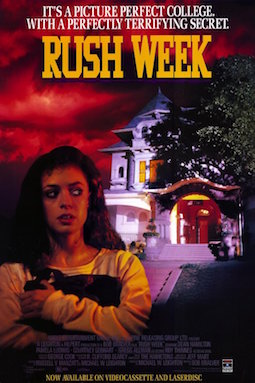 When campus coeds start to go missing, student journalist Toni Daniels (Pamela Ludwig) investigates. At first, she suspects that a local fraternity is responsible and that all of the disappearances are linked to the college’s notoriously wild rush week. But, after she starts dating Jeff (Dean Hamilton), the president of the fraternity, Toni decides that the killer is probably actually Arnold (John Donavon), a cook in the school’s cafeteria who asked all of the missing girls to model for him. While Toni and Jeff try to prove that Arnold is responsible for all of the recent disappearances, the school’s puritanical Dean (Roy Thinnes), tries to keep rush week under control. Good luck with that because no one controls rush week.
Rush Week is a mixes two genres, the campus comedy and the slasher film and it tries to proves that not even a string of murders can spoil a good frat party. Unfortunately, it doesn’t do a very good job at it. The comedy isn’t funny, the kills aren’t scary, and the identity of the murderer is obvious from the start. (Surprise, it’s not Arnold.) The best performance comes from Roy Thinnes, who gives a performance as the Dean that would make John Vernon proud. (Almost every actor eventually reaches a point where they have to start taking John Vernon roles to pay the bills.) Like a lot of bad 90s slashers, Rush Week used to be show up frequently on Late Night Cinemax. Most people who watched it probably did so because Kathleen Kinmont played the student whose disappearance sets the entire movie in motion. Kinmont plays a character named Julie Ann McGuffin. She’s an actual MacGuffin and that’s about as clever as the script gets.
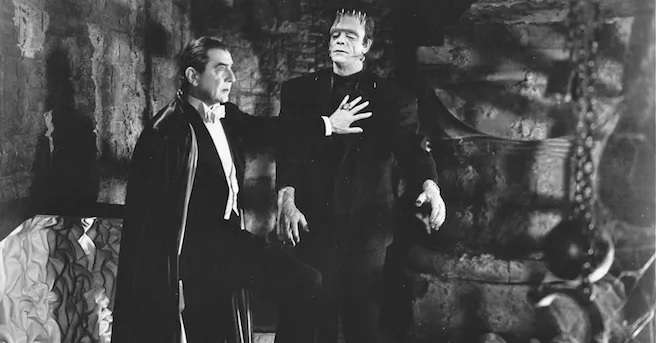
If the next presidential election were held today and the major candidates were Frankenstein, Dracula, and The Mummy, who would win?
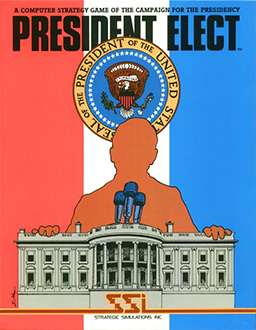
I know that’s a question that has been on everyone’s mind and, in order to find out, I went to the Internet Archive and ran the scenario through a game called President Elect. President Elect was developed as an election simulator in the 80s and it is still considered to be one of the best and most accurate games of its type. Over the years, President Elect has correctly predicted the results of almost every election since 1988.
After setting the game to duplicate both the fragile state of the American economy and the uncertain outlook of our current place in the world, I then selected my three nominees. Frankenstein’s Monster ran as the Democratic candidate. He had no platform, beyond more funds for fire prevention. As a public speaker, I had to give him a low rating and I also had to admit that he wasn’t good at maintaining his cool under pressure. However, I did give him high marks on the “personal magnetism” scale because people have been fascinated by the monster for over two hundred years. Frankenstein’s Monster may seemed like the underdog but perhaps voters would be moved by his personal story and his refusal to take definite positions on the issues.
Running for the Republicans was Dracula. As for as public speaking, personal magnetism, and staying calm under pressure, Dracula got the highest rating available. But his platform was undeniably extreme, with absolutely no concern for human rights. Dracula was the only candidate to be opposed to the agendas of the Religious Right, the National Organization for Women, and the NRA. (The last thing that a vampire would want would be for everyone to have access to silver bullets.) Would he be too extreme for the voters?
Finally, running as an independent was the Mummy. The Mummy had roughly the same platform as Dracula but little of the personal magnetism. In fact, the Mummy could not even speak. But he was determined to get what he wanted and again, he scored high on the personal magnetism because he’s been in so many movies despite spending all of his time under wraps.
I allowed the game to simulate the 9 weeks between Labor Day and the election. Not surprisingly, Frankenstein’s Monster refused to debate Dracula. As a third party candidate, the Mummy struggled to keep up financially. I was expecting a close election with a lot of fireworks but instead, it was clear from week one who was going to win. Dracula led in the polls from the start and, within the first hour of election night, he had the 270 electoral votes necessary to claim the presidency. He went on to win a lot more than just 270 though.
Here are the votes by state:
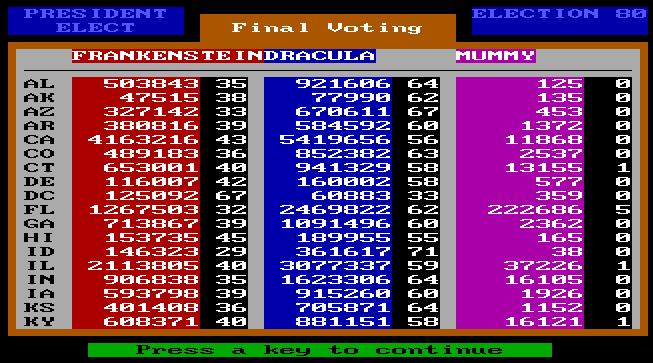
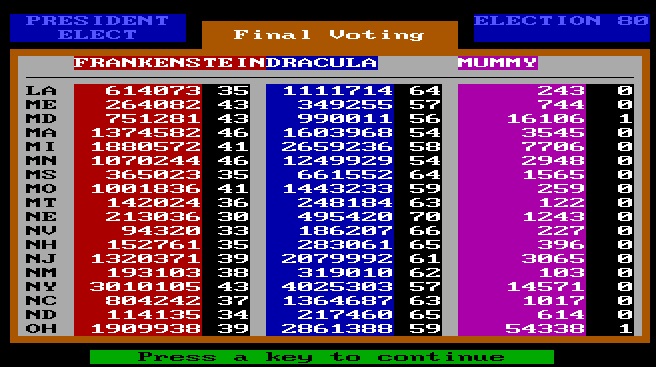
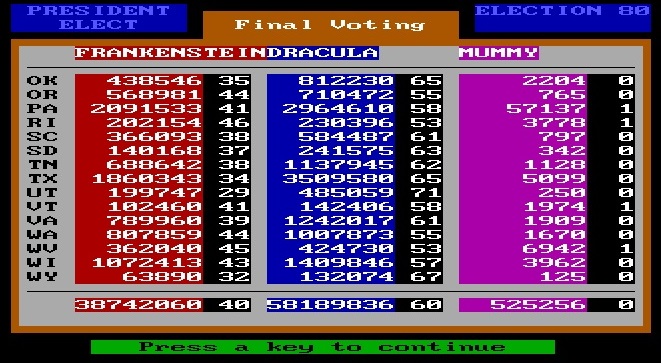
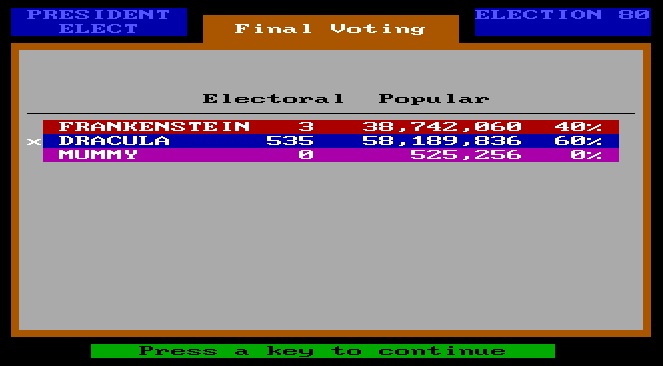
America went full Dracula, not only giving him 60% of the popular vote but also 535 electoral votes. Frankenstein’s Monster won only the District of Columbia and, even then, he only received 67% of the vote in this Democratic stronghold. After D.C., Frankenstein’s best states were Minnesota and Rhode Island, in which he took 47% of the vote. The Mummy turned out not to be a factor at all, despite winning 5% of the vote in Florida. Frankenstein’s Monster may have had the most compassionate platform but Dracula had the charisma. His best states were Idaho and Utah, both of which he won with 71% of the vote.
See you at the inauguration!
Welcome to Retro Television Reviews, a new feature where we review some of our favorite and least favorite shows of the past! On Fridays, I will be reviewing One World, which ran on NBC from 1998 to 2001. The entire show is currently streaming on Tubi!

The Cast of One World
One world, one world …. but will those brothers and sisters uptown ever stop living on the streets….
One World 2.4 “The Tangled Web”
(Directed by Mary Lou Belli, originally aired on October 9th, 1999)
Every TNBC show featured at least one episode about waiting in line for concert tickets. (On Saved By The Bell, it was all about getting U2 concerts at the mall.) Every TNBC show would also feature at least one or two episodes about sneaking out of the house late at night. Apparently, that was almost as big a problem in the 90s as teenage gambling. One World combined these two storylines by having Jane and Sui sneak out of the house to get concert tickets.
Meanwhile, at The Warehouse (a.k.a., Miami’s Hottest Under-21 Club), Ben wants to date the new waitress, Gina. Marci warns that Gina has just come out of a bad relationship and is very fragile. “She needs a certain type of man,” Marci says, “and that man is not you!”
“Awwwwww!’ the audience replies.
Anyway, Sui and Jane get busted by the cops for violating curfew. A social worker is sent to the house to determine whether or not the Blakes are adequate foster parents. For some reason, Sui and Jane decide that it’s a good idea to hire actors to pretend to be their parents. (You may remember Zach doing the same thing when Mr. Belding wanted to see his father.)
Meanwhile, Ben dates Gina but he tries to condition himself so that he won’t try to kiss her. He does this by having Neal and Cray administer electric shocks to him while he watches Baywatch….
Especially when compared to the first season’s episodes, it’s all a bit too cartoonish for its own good. Far too often, TNBC shows featured problems that could have easily been solved by the people on the show not acting like a bunch of idiots. This is one of those episodes. Let’s move on.
One World 2.5 “Playing the Field”
(Directed by Mary Lou Belli, originally aired on October 16th, 1999)
“No more rules for anyone!” Dave Blake announces, trying to teach his children why the house rules are important. Soon, the house descends into chaos.
Even more importantly, the coach of a rival school is sending Sui gifts in an effort to bribe her into switching schools! Isn’t that illegal? Sui also gets a new boyfriend but it turns out that it’s all a part of the plot to get her to transfer. Boooo! What an evil school.
Watching this episode, I found myself kind of wishing that I had played soccer in high school. Getting gifts from other coaches seems like it would be fun!
Anyway, this was a cool episode because it was a Sui episode but I do have to admit that I couldn’t stop cringing at the sight of that progressively messier house. We’re all living in one world. Keep it clean!
Twin Peaks: The Return was full of creepy characters but the Woodsmen may have been the creepiest.
“Gotta light?”
 Through the Shattered Lens