
by Erin Nicole
by Erin Nicole
Tasya Vos (Andrea Riseborough) is a professional assassin.
That really shouldn’t come as too much of a surprise. For whatever reason, films about assassins have become very popular over the past few years and those assassins are often women. However, what sets Tasya apart from other assassins is the technique that she uses. Under the direction of Girder (Jennifer Jason Leigh), Tasya can possess someone else’s body. While controlling that other person’s body, Tasya commits her murders and then commits suicide. The host dies while Tasya’s mind returns to her original body. The media then reports that the murder was some sort of random incident and, with the killer dead by their own hand, their true motives will probably never be known. It’s an outlandish premise and yet, it’s one that feels oddly plausible. Most mass shootings and random acts of violence remain a mystery precisely because their perpetrators often take their own lives. Three years after the deadliest mass shooting in U.S. history, we still don’t know why Stephen Paddock opened fire on a music festival in Las Vegas. We’ve become conditioned, I think, to accept that these things just happen.
Wisely, Possessor doesn’t go into too much details about just how exactly Tasya possesses other people. We see that it involves a lot of odd technology and we also discover that Tasya struggles to return to her “normal” self after her mind returns to her body. That’s really all we need to see. Too many films make the mistake of trying to explain all of the little details, as if the audience is going to be concerned as to whether or not a film about possession is 100% plausible. The director of Possessor, Brandon Cronenberg, understands that all he really has to do is make it look convincing. He doesn’t have to explain it and, indeed, there’s much that Cronenberg doesn’t explain.
Tasya’s latest assignment takes her into the body of Colin Tate (Christopher Abbott), who is engaged to marry the daughter of arrogant businessman named John Parse (Sean Bean). Colin and Tasya find themselves fighting for control of Colin’s body. Even while Tasya is setting up the circumstances that will lead to Colin killing both his girlfriend and her father, Colin is resisting and struggling to take control. It all leads to some disturbingly surreal imagery, as well as some shockingly gory violence. There’s a lot of blood in Possessor. Both figuratively and literally, Possessor is a film that’s obsessed with what lies under the skin. Throughout the film, bodies and minds are ripped open and what we discover inside of them is frequently grotesque.
Possessor is a film that raises a lot of questions and which often refuses to provide easy answers. Does Girder sincerely care about Tasya or is she just manipulating her emotions to get the result that she desires? Who exactly does Girder work for? Does Tasya truly want to get back together with her estranged husband, Michael (Rossif Sutherland)? Is Michael as clueless as he seems or does he secretly understand that Tasya is lying whenever she says that she has to go away on business? Possessor is not always an easy film to follow but Cronenberg’s visuals are so strong and the performances are so wonderfully off-center that it remains enthralling regardless of whether or not it always makes it sense. By the time one person is wearing someone else’s face as a mask, it’s pretty much impossible to look away.
With its emphasis on body horror and loss of identity (as well as its chilly Canadian setting), Possessor has a lot in common with the early work of David Croneberg. That’s perhaps not surprising, considering that Possessor was directed by David’s son, Brandon Cronenberg. Unfortunately, Possessor doesn’t really have the same dry sense of humor that distinguished David Cronenberg’s best films. (David Cronenberg was, in his way, as much of a satirist as a horror director and Possessor doesn’t quite have the same subversive charge as something like Rabid or Shivers.) That said, Possessor is still a fascinating and enthralling film, one that will stick with you long after it ends.

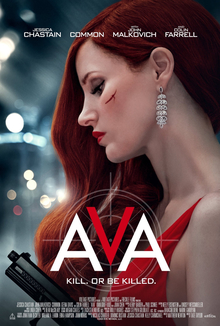
Ava tells story of Ava Faulkner (Jessica Chastain), who has a troubled past, a turbulent present, and an uncertain future.
As we learn via a series of still frames during the film’s opening credits, Ava was the valedictorian of her high school class but her bright future was derailed by her own alcoholism. She killed two of her friends while driving drunk and, presumably to avoid prison, she instead went into the army. In the army, she was noted for being an efficient killer while, at the same time, being a bit unstable. She has issues with authority. Well, don’t we all? When she got out of the army, she was recruited by Duke (John Malkovich), who taught her how to be an international assassin!
Unfortunately, since Ava screwed up her last mission and has gotten into the habit of talking to her targets before she kills them, Simon (Colin Farrell) wants her dead. Simon also used to be a student of Duke’s but now he is Duke’s boss or something. It’s all a bit vague and, to be honest, I found myself spending way too much time trying to figure out the corporate structure of whatever group it was that everyone was supposedly working for. Apparently, Duke works for Simon but Simon still has to get Duke’s permission before trying to kill Ava or, failing that, try to kill Duke so that Duke won’t complain about it. Duke spends a lot of time fishing and Simon spends a lot of time with his adorable family. I liked Simon’s house.
Anyway, Ava has returned to Boston, where she’s trying to reconnect with her family. It turns out that teenage Ava discovered that her father was cheating on her mom and that’s what set Ava on her downward spiral. Mom (Geena Davis) is now a hypercritical semi-recluse. Meanwhile, Ava’s sister, Judy (Jess Wexler), is a singer in a band and she’s engaged to Michael (Common, who, for some reason, keeps getting cast in all of these extremely wimpy roles), who just happens to be Ava’s ex-boyfriend. And Michael is a gambling addict who owes a ton of money to Toni (Joan Chen). It’s hinted that Toni and Ava also have a past but then again, everyone in the film has a past with Ava. It’s get a little bit difficult to keep track of it all.
Ava gets off to a bad start by making us sit through one of Ava’s jobs. She kills an accountant but first she asks him a lot questions about why anyone would want him dead because apparently, she’s an ethical assassin. The scene goes on forever and it features Jessica Chastain trying to speak with an Arkansas accent. Things picked up a bit during the opening credits, which was largely made up of still frames from Ava’s past. However, once the credits ended and the film’s actual story got started, things quickly went back downhill.
The main problem with Ava is one of sensibility. Both Jessica Chastain and director Tate Taylor have totally the wrong sensibility for a film like this. Ava is essentially a work of pulp fiction but Chastain takes herself far too seriously to actually bring a sense of fun to the title role. Meanwhile, Tate Taylor directs as if he’s never had a single subversive thought in his life. (In Taylor’s defense, he was a last minute replacement for the film’s original director, Matthew Newton.) Ava is a film that cries out for a star like Gina Carano and a director like John Stockwell, people who have no hesitation about totally digging in and embracing the silliness of it all. Instead, we get Chastain and Taylor trying to give us a semi-realistic look at a woman battling her addictions and trying make peace with her past. Malkovich, Farrell, and Chen all seem to get the fact that Ava should be a fun B-movie, unfortunately, Taylor and Chastain apparently didn’t get the memo. (Of course, Chastain produced the film so maybe it was her co-stars who didn’t get the memo. Who knows?)
Ava commits the sin of taking itself too seriously. Check out John Stockwell’s In The Blood or Phillip Noyce’s Salt instead.
Merry Christmas to all of our readers! Let’s get the day started right with this joyous holiday video from Si Cranstoun!
Dancing with Si in this video are Corina Wuersch, Lowri Evans, and Chloe Gatward!
Enjoy!
In a normal year, this would be my final Oscar prediction post. All of the critics groups and the Golden Globes and the SAG would have, by this point, painted a pretty clear picture of what and who was going to be nominated in January. However, as we all know, 2020 was not a normal year and we’ve still got another two months to go until the 2020 awards season comes to its climax.
Though a few regional groups have announced their picks for the best of 2020, most of the major precursors are delaying announcing their picks in order to better influence the Academy in February. Of the major groups, only the LAFCA stuck to their usual December schedule and they proceeded to honor Small Axe, which will probably not even be submitted for Oscar consideration.
That said, I still think the Oscar picture has cleared up a bit. Hillbilly Elegy is no longer contender, beyond maybe Glenn Close. Mank is a contender but probably not the powerhouse that many of us were expecting. Nomadland and First Cow appear to coming on strong. The Trial of the Chicago 7 will probably receive some Academy love, even if it hasn’t exactly overwhelmed the critics.
I feel good about these predictions below. If you want to see how my thinking has evolved, check out my predictions for January, February, March, April, May, June, July, August, September, October, and November!
Best Picture
Da 5 Bloods
The Father
First Cow
Ma Rainey’s Black Bottom
Mank
Minari
Nomadland
Promising Young Woman
Sound of Metal
The Trial of Chicago 7
Best Director
David FIncher for Mank
Spike Lee for Da 5 Bloods
Kelly Reichardt for First Cow
Aaron Sorkin for The Trial of the Chicago 7
Chloe Zhao for Nomadland
Best Actor
Riz Ahmed in Sound of Metal
Chadwick Boseman in Ma Rainey’s Black Bottom
Anthony Hopkins in The Father
Delroy Lindo in Da 5 Bloods
Gary Oldman in Mank
Best Actress
Viola Davis in Ma Rainey’s Black Bottom
Sidney Flanigan in Never Rarely Sometimes Always
Vanessa Kirby in Pieces of a Woman
Frances McDormand in Nomadland
Carey Mulligan in Promising Young Woman
Best Supporting Actor
Chadwick Boseman in Da 5 Bloods
Brian Dennehy in Driveways
Billy Murray in On the Rocks
Leslie Odom, Jr. in One Night In Miami
Paul Raci in Sound of Metal
Best Supporting Actress
Ellen Burstyn in Pieces of a Woman
Glenn Close in Hillbilly Elegy
Olivia Colman in The Father
Amanda Seyfried in Mank
Yuh-jung Youn in Minari

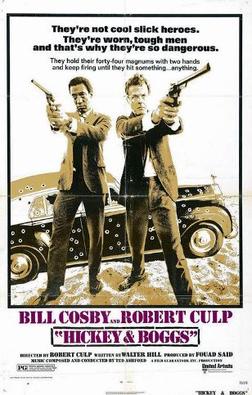 Frank Boggs (Robert Culp) and Al Hickey (Bill Cosby) are two private investigators who are constantly in danger of losing their licenses and going out of business. Hickey is the responsible one. Boggs is the seedy alcoholic. When Hickey and Boggs are hired to track down a missing woman, their investigation lands them in the middle of a war between the mob and a group of political activists who are fighting over who is going to get the loot from a recent robbery. Hickey and Boggs are targeted by the mob and soon, everyone is dying around them.
With its cynical themes and downbeat ending, Hickey & Boggs is very much a 70s film. The script was written by future director Walter Hill and when it was eventually offered to Bill Cosby, Cosby agreed to star on the condition that his I Spy co-star, Robert Culp, be hired to direct. Producer John Calley hired Culp but after Calley refused to provide the budget that Culp requested, Culp bought the script and raised the money himself.
There are a few problems with Hickey & Boggs, the main one being that the plot is next to impossible to follow. As a director, Robert Culp apparently didn’t believe in either filming coverage or providing establishment shots so, especially early on, it is often impossible to tell how one scene is connected to another or even how much time has passed between scenes. I don’t know if this was an intentional aesthetic decision or if the production just ran out of money before everything could be shot but it makes it difficult to get into the film’s already complicated story. On a positive note, Culp did have a flair for staging action scenes. The film ends with a shoot out on the beach that’s is handled with such skill that it almost makes up for what came before it. Also, like many actors-turned-director, Culp proved himself capable of spotting talent. Along with giving early roles to Vincent Gardenia, James Woods and Michael Moriarty, Culp also took the chance of casting sitcom mainstay Robert Mandan as a villain. It was a risk but it worked as Mandan convincingly portrays the banality of evil.
Of course, the biggest problem with Hickey & Boggs is that it stars Bill Cosby as a straight-laced hero and that’s no longer a role that anyone’s willing to believe him in. Cosby actually does give a convincing dramatic performance in Hickey & Boggs. Just look at the final scene on the beach where Hickey has his “what have we done” moment and shows the type of regret that Cosby has never shown in real life. The problem is that to really appreciate Cosby’s performance, you have to find a way to overlook the fact that he’s Bill Cosby and that something that I found impossible to do while watching Hickey & Boggs. When you should be getting into the movie, you’re thinking about how many decades Bill Cosby was able to get away with drugging and assaulting women. If not for a comment from Hannibal Buress that led to a social media uproar, Cosby would probably still be getting away with it. If Buress’s anti-Cosby comments hadn’t been recorded and hadn’t gone viral, Bill Cosby would still be free and the media would probably still be holding him up as some sort of role model.
At the time Hickey & Boggs was made, both Bill Cosby and Robert Culp were at a career crossroads. Cosby was hoping to transform himself into a film star. Culp was hoping to become a director. Hickey & Boggs, however, was disliked by critics and flopped at the box office. Culp never directed another film and we all know what happened with Bill Cosby. (Of course, it wasn’t just the box office failure of Hickey & Boggs that kept Cosby from becoming a movie star. Say what you will about Robert Culp as a director, he had nothing to do with Leonard Part 6.) Hickey & Boggs is too disjointed to really work but Robert Culp and Bill Cosby were convincing action stars and the film’s downbeat style and cynical worldview is sometimes interesting.
Happy Christmas Eve, everyone!
It’s been a relatively quiet Christmas Eve down here at the TSL Offices. We’ve wished each other a Merry Christmas and a happy holiday.
We’ve definitely devoted some time to trying to keep up with what’s going on with Santa and his trip around the world.
There was a brief moment of panic when it appeared that Santa may have disappeared. I wondered if maybe he had been called away to once again conquer the Martians.
Resolutions were made:
https://twitter.com/casewrites/status/1342142271551131648
Treats were considered:
Nostalgia was indulged:
And, in the end, we watched a lot of movies. Myself, for instance, I watched Less Than Zero, Elf, Miracle on 34th Street, and It’s A Wonderful Life today. I’ve still got the first two Die Hards and A Christmas Story to look forward to. That’ll be after midnight mass, of course.
And finally, as he does every year, Patrick helped bring this Christmas Eve to a perfect close by sharing the Night Before Christmas.
Here’s hoping that everyone has a good holiday tomorrow! Thanks for reading and we look forward to ringing in the new year with you!
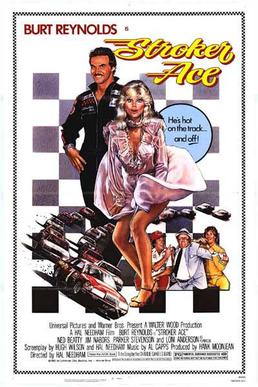 In 1983, Burt Reynolds had the choice of appearing in two films.
He was offered the role of former astronaut Garrett Breedlove in Terms of Endearment, a role that director/screenwriter James L. Brooks wrote specifically with Reynolds in mind. The role was designed to play to all of Reynolds’s strengths and none of his weaknesses. It was also a key supporting role in a film that was widely expected to be an Oscar contender.
Or, Reynolds could star in Stroker Ace, another car chase film that was going to be directed by his old friend, Hal Needham. No one was expecting Stroker Ace to be an Oscar contender but Needham and Reynolds had made three similar films together and all of them had been hits at the box office.
Reynolds decided to star in Stroker Ace. Jack Nicholson received the role of Garrett Breedlove and went on to win his second Oscar. As for Burt, he later called Stroker Ace “the beginning of the end.”
The title character of Stroker Ace is a good old boy race car driver. He’s a typical Reynolds character. He grew up in the South and learned how to race cars by watching moonshiners outrun the police. Now, he’s a star on the NASCAR circuit but he’s also arrogant and needlessly self-destructive. Because this is a Hal Needham car chase movie, those are portrayed as being good traits. When Stroker loses his former sponsor after pouring wet concrete on him, he’s forced to accept sponsorship from a crooked chicken mogul (played by Ned Beatty, who deserved better). When Stroker’s not driving his car while dressed as a chicken, he’s romancing the prudish Pembrook Feeney (Loni Anderson).
It’s hard to describe the plot of Stroker Ace because it really doesn’t have a plot. There’s a few scenes where Burt looks directly at the camera and smirks. It’s supposed to remind us of Smoky and the Bandit but Stroker Ace doesn’t have the spectacular stunts that the first film had nor does it have the comedic energy of Jackie Gleason. Instead, it’s got Jim Nabors as a mechanic named Lugs. The former star of Gomer Pyle does say “Golly” but he doesn’t sing.
The main problem with Stroker Ace is that there’s no reason to root for Stroker Ace. The Bandit was good at his job and cared about his car. The same thing is true about the stuntman that Burt played in Hooper. Stroker is a racer who would rather destroy his car than come in second and who loses his sponsorships because of his own stupid behavior. Stroker Ace doesn’t care about anything so it’s difficult to get outraged over him having to wear a chicken suit while racing.
Reynolds later described turning down Terms of Endearment for Stoker Ace as being one of the biggest mistakes of his career. When he talked about how the Terms of Endearment role won Nicholson an Oscar, Reynolds added that he didn’t win anything for Stroker Ace because “they don’t give awards for being stupid.” It was a missed opportunity for sure and Reynolds would have to wait another fourteen years before Boogie Nights finally proved that he could do more than drive cars and smirk at the camera.
Despite the failure of Stroker Ace, Reynolds and Needham remained friends and even made two more film together (Cannonball Run II and Hostage Hotel). Their friendship later served as the basis for the relationship between the characters played by Leonardo DiCaprio and Brad Pitt in Quentin Tarantino’s Once Upon A Time In Hollywood.
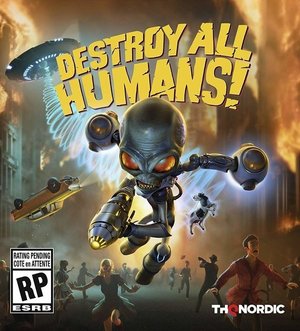
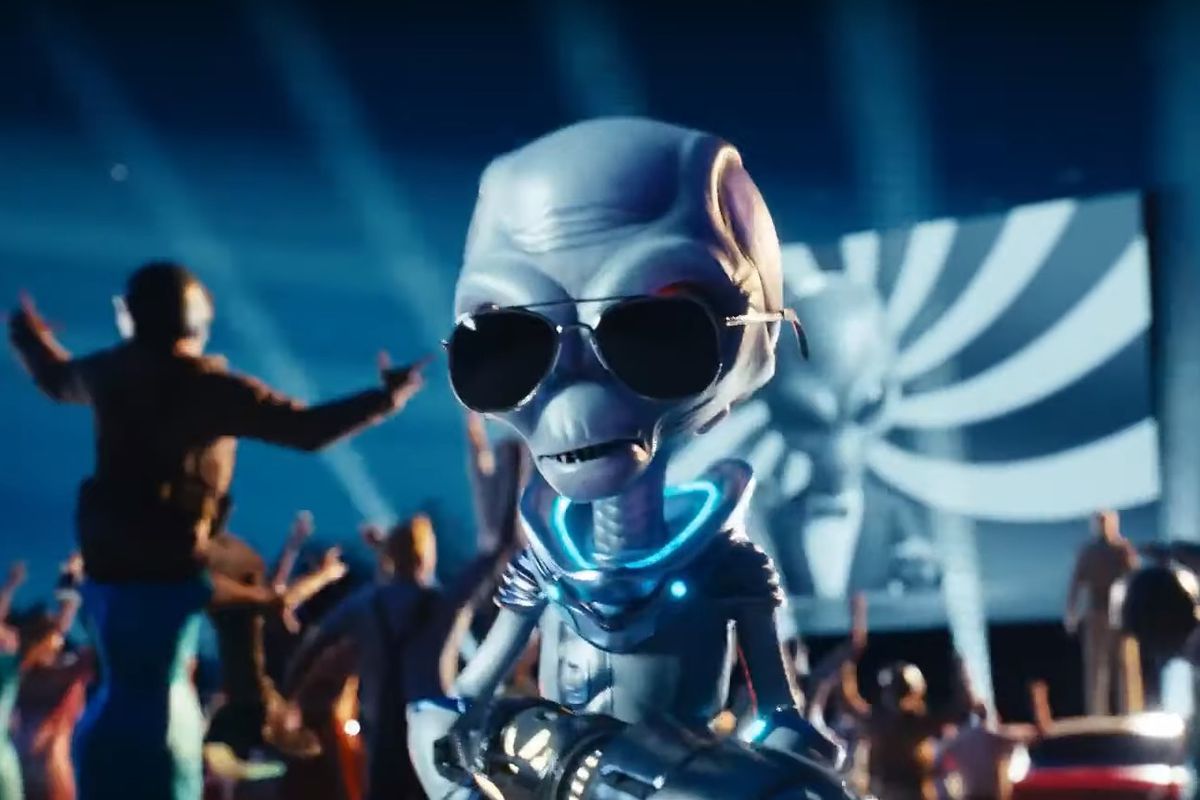
When I reviewed Destroy All Humans! last year, I ended the review by saying that I couldn’t wait for the remake to be released in 2020. When I wrote those words, I didn’t know just how much 2020 would sometimes make me want to destroy all humans. It’s been a hell of a year and distractions from reality have been not only welcome but necessary. I’m happy to say that the remake of Destroy All Humans! lived up to all of my expectations and it’s often been just the distraction that I needed.
With the exception of one new mission (which was planned for but cut from the original), the remake of Destroy All Humans! is the same game as the original. Some of the images are a little crisper and the sound quality has been improved but there really aren’t any major differences as far as gameplay is concerned. For me, that’s not a problem because I consider the original Destroy All Humans to be about as perfect as game from the period can be.
For me, Destroy All Humans! is the perfect game for 2020. If there’s ever been a year that’s called for a full scale alien invasion, it’s been this one. I’ve destroyed Santa Modesta and the Turnipseed Farm more times than I care to count. When the news is bad, there’s something very gratifying about boarding a spaceship and blowing up a grain silo. Normally, I’m not a fan of mindless violence but the key to Destroy All Humans! is that, no matter how many times you blow Santa Modesta, the town is always rebuilt by the time you return. Destroy All Humans! may not have been made to show that humans are resilient but it really one of the main lessons of the game.
Thank you, Destroy All Humans!, for being there when we needed you. Now, let’s just hope for a remake of Destroy All Humans 2!
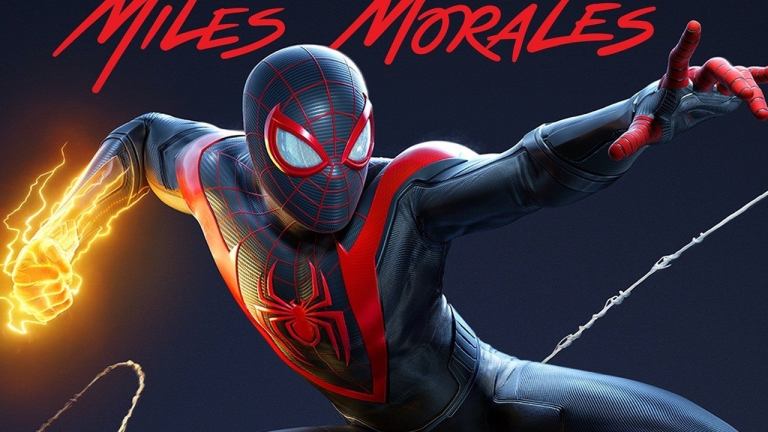
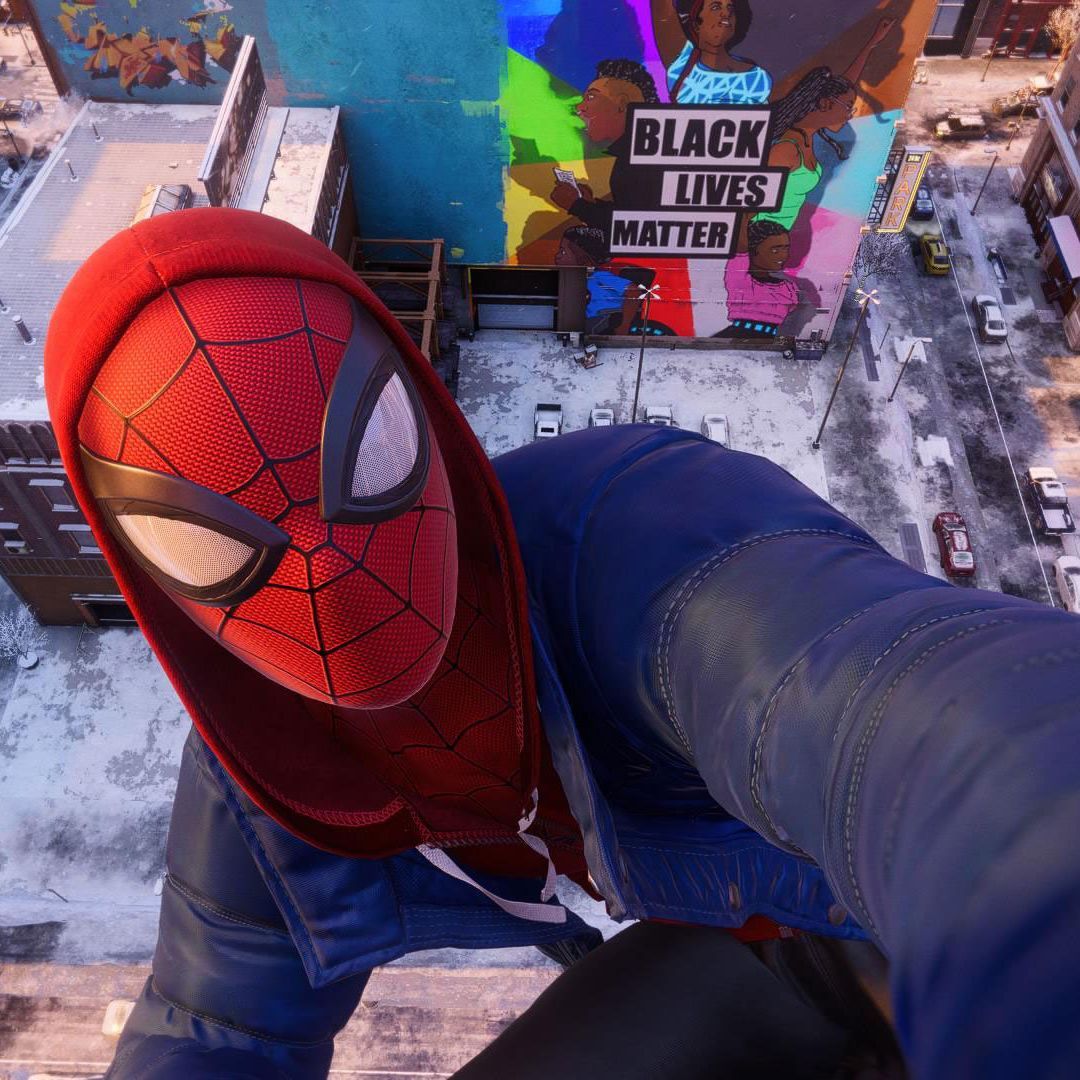
The much anticipated sequel to PS4’s Spider-Man, Spider-Man: Miles Morales puts you in control of the title character, a teenage super hero and scientific genius who is still struggling to learn how to use his powers. It’s been a year since the conclusion of the previous game and, in that time, Manhattan has struggled to recover from the Devil’s Breath incident. Crime is still rampant but, luckily, Spider-Man has an assistant to help him out. Now living in Harlem, Miles Morales can not only do everything that a spider can but he also has a whole host of new powers that the original Spider-Man could only dream of. Miles is going to need all of them because the original Spider-Man is going to be in Europe for the next few weeks and Miles is going to have to protect New York City on his own.
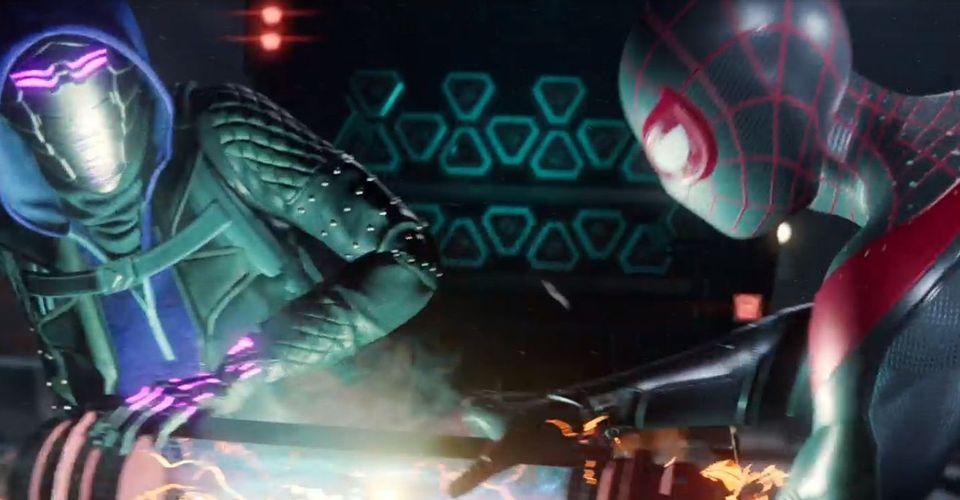
The main mission finds Miles caught in the middle of a war between Roxxon Oil and the mysterious Tinkerer. The side missions give Miles a chance to do everything from looking for lost cats to preventing another old foe from engineering a criminal takeover of Harlem. Along the way, Miles discovers that his uncle is the mercenary known as the Prowler and that his oldest friend, Phin Mason, has a big secret of her own. He also discovers that he has an entire community willing to support him in his time of need.
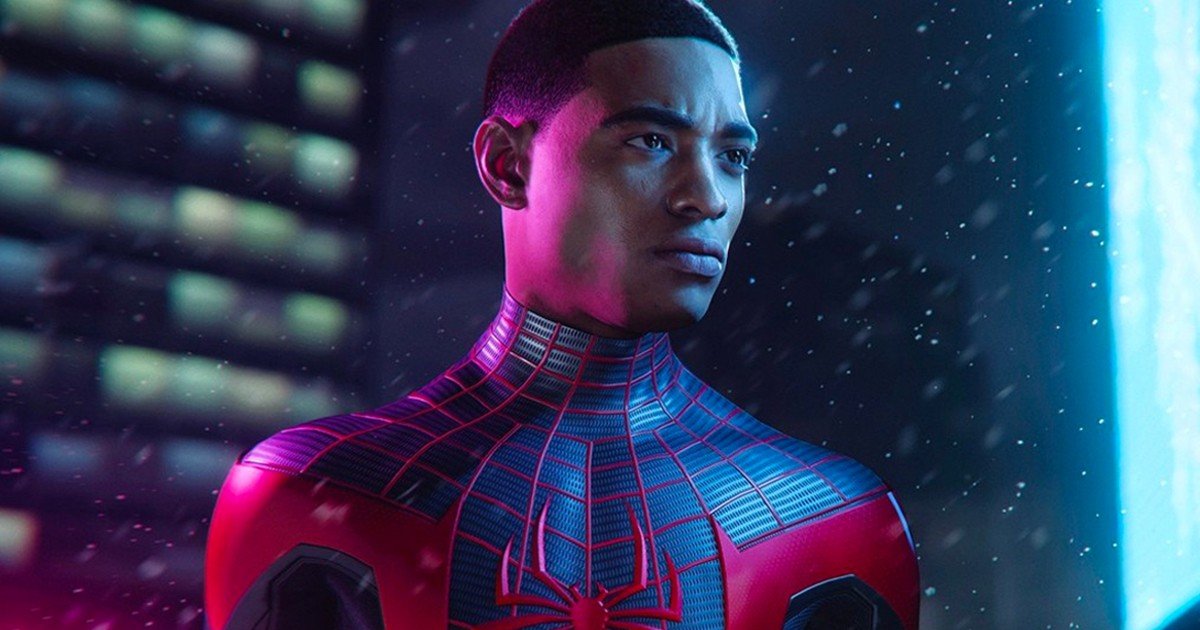
I have to admit that it took me a while to get into Spider-Man: Miles Morales. At the start of the game, Miles is so inexperienced and nervous about filling in for Spider-Man that he actually came across as being a little whiny. As the game progressed, Miles got more confident and stronger and so did the story. Spider-Man: Miles Morales is best viewed as a coming of age story. In the first game, Peter Parker was already an experienced Spider-Man and he knew what he was capable of doing. Spider-Man: Miles Morales gives us a chance to watch as Miles first comes to realize just how powerful he can be. The game is all about Miles learning what it means to be a hero and coming to realize that it takes more than just super powers to make the world a better place. Miles not only discovers his own inner strength but he also the strength of his community. The game is as much about the people that Miles helps as it is about Miles himself.
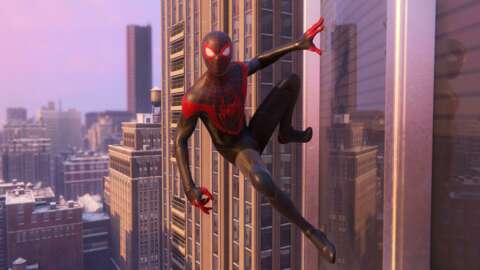
Spider-Man: Miles Morales looks great. While I would like to see a Spider-Man game that takes place in a location other than Manhattan, the island still looks great and one of the joys of the game is just to swing form building to building and appreciate the amount of detail that has been put into the setting. The game takes place during the holidays, which means that it never stops snowing. The final battle takes place during a fierce blizzard and it’s a visual tour de force. The game controls are still simple and easy to master. Once you figure out how to throw a venom punch, it’s hard not to resist the temptation to do it every single chance that you get.
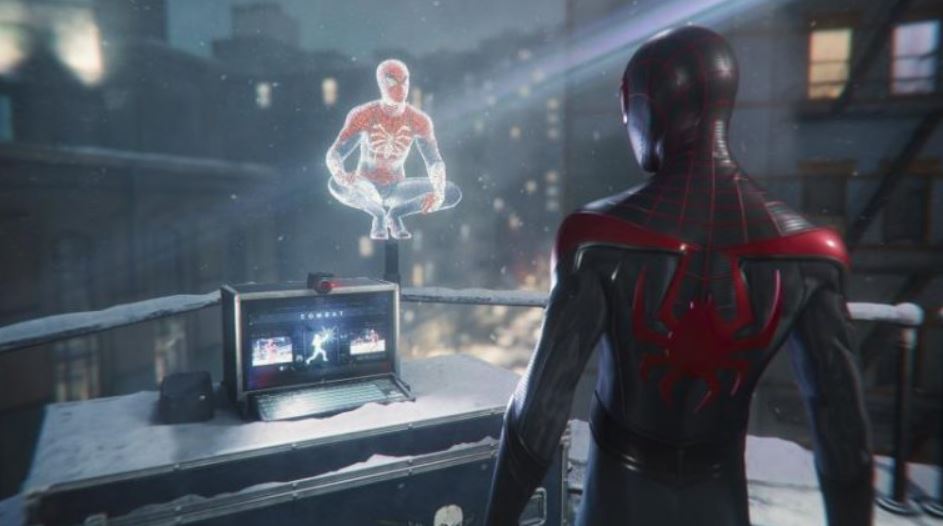
If I do have a complaint with the game, it’s that it’s too short. The main mission resolves itself too quickly and the game could have used a few more side missions. The side missions are often fun and diverting but none of them can really compare to the first game. None of them are as exciting or as challenging as trying to take down Tombstone or battle the Taskmaster. Spider-Man: Miles Morales is still a fun game but, because of its shortened length, it feel very much like just one chapter in a much bigger saga. Fortunately, the main story ends with a hint as to what’s waiting in the future and you’ll definitely want to play the game to the end so that you can see it for yourself.
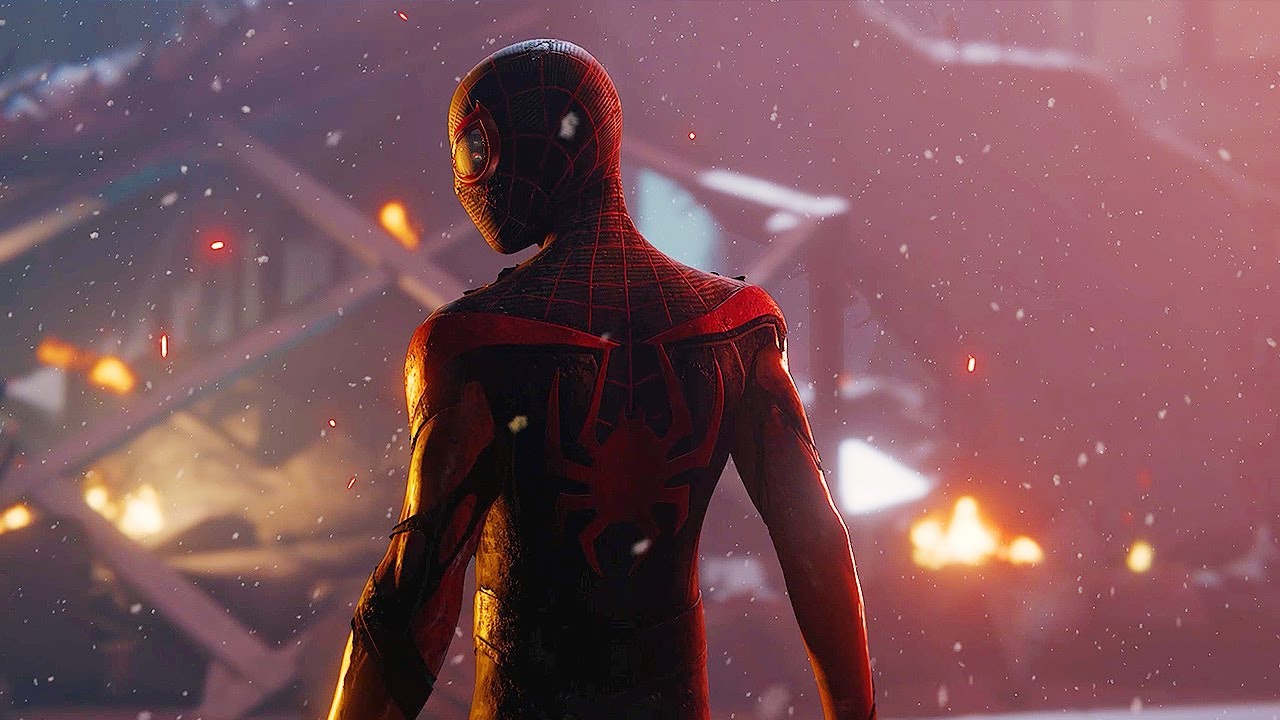
For the most part, I enjoyed playing Spider-Man: Miles Morales and I look forward to seeing what the future holds for the Spider-Man video game franchise.
 Through the Shattered Lens