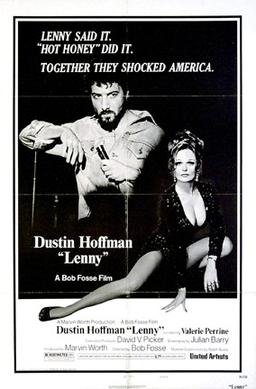
Lisa Reviews An Oscar Nominee: Lenny (dir by Bob Fosse)


Yes, it’s true.  Long before the creator of The Marvelous Mrs. Maisel was even born, Lenny Bruce was a real comedian who was challenging the status quo and going to jail for using words in his routine that were, at the time, considered to be so obscene that they couldn’t even be uttered in public.  Today, of course, we hear those words and they’re so commonplace that we barely even notice.  But, in the 50s and the early 60s, it was not uncommon for Lenny Bruce to get arrested in the middle of his act.  Club owners could literally be fined for allowing Lenny Bruce to perform on their stage.  At the height of his fame, it was a struggle for Lenny to find anyone willing to even consider booking him.

Whether it was his intention or not, Lenny Bruce became one of the first great warriors for the 1st amendment.  It made him famous and a hero to many.  Many people also believe that the pressure of being under constant legal threat led to his death from a drug overdose in 1966.  Lenny Bruce was only 40 years old when he died but he inspired generations of comedians who came after him.  It can be argued that modern comedy started with Lenny Bruce.

Directed by Bob Fosse and based on a play by Julian Barry, 1974’s Lenny takes a look at Lenny Bruce’s life, comedy, legal battles, and eventual death.  As he would later do in the thematically similar Star 80, Fosse takes a mockumentary approach to telling his story.  Clips of Lenny Bruce (played by Dustin Hoffman) performing are mixed in with “interviews” with actors playing the people who knew him while he was alive.  Because the story is told out of chronological order, scenes of a young and enthusiastic Lenny are often immediately followed by scenes of a burned-out and bitter Lenny reading from the transcripts of his trial during his stand-up.  Fosse never forgets to show us the audience listening as Lenny does his act.  Most of them laugh at Bruce’s increasingly outrageous comments but, to his credit, Fosse never hesitates to show us the people who aren’t laughing.  Lenny Bruce, the film tells us, was too honest to ever be universally embraced.

The film doesn’t hesitate to portray Lenny Bruce’s dark side.  For much of the film, Lenny is not exactly a likable character.  Even before his first arrest, Lenny comes across as being a narcissist who is cruelly manipulative of his first wife, stripper Honey Harlow (Valerine Perrine).  As opposed to the somewhat dashing Lenny of The Marvelous Mrs. Maisel, Dustin Hoffman’s Lenny Bruce comes across as someone who you would not necessarily want to be left alone with.  The film’s Lenny is a hero on stage and frequently a hypocrite in his private life but that seems to be the point of the movie.  Lenny argues that one of the reasons why Lenny Bruce could so perfectly call out society for being fucked up was because he was pretty fucked up himself.

As with all of his films, Lenny is as much about Bob Fosse as it is about Lenny Bruce.  As a director, Fosse often seems to be more interested in Bruce’s early days, when he was performing in low-rent strip clubs and trying to impress aging vaudevillians, than in Bruce’s later days as a celebrity.  (The world in which the young Lenny Bruce struggled was a world that Fosse knew well and its aesthetic was one to which he frequently returned in his films and stage productions.)  It’s also easy to see parallels between Lenny’s uneasy relationship with Honey and Bob Fosse’s own legendary partnership with Gwen Verdon.  The film’s grainy black-and-white cinematography captures not only the rough edges of Lenny’s life but also perhaps Fosse’s as well.  Just as Lenny Bruce performed confessional stand-up comedy, Lenny feels like confessional filmmaking.

Of course, it’s not always a pleasant film to watch.  Dustin Hoffman does a very good job of capturing Lenny Bruce’s drive but he doesn’t really have the natural comedic timing necessary to be totally convincing as a stand-up comedian.  (The film sometimes seems to forget that, as much as Lenny Bruce was admired for his first amendment activism, he was also considered to be a very funny stand-up.)  Still, it’s a valuable film to watch.  It’s a document of history, a reminder of a time when you actually could get arrested for saying the “wrong” thing.  Some people would say that we’re returning to those times and it’s easy to imagine that the real Lenny Bruce (as opposed to the idealized version of him) would not be welcome to perform on most college campuses today.  One can only imagine how modern audiences would react to a part of Lenny’s stand-up where he repeats several racial slurs over and over again.  (If Lenny Bruce had lived to get a twitter account, he would be getting cancelled every week.)  Lenny‘s vehement celebration of freedom of speech is probably more relevant in 2020 than it was in even 1974.

Lenny received several Oscar nominations, including best picture.  However, 1974 was also the year of both The Godfather, Part II and Chinatown so Lenny failed to win a single Oscar.

(Interestingly enough, Fosse’s previous film, Cabaret, was also prevented from winning the award for best picture by the first Godfather, though Fosse did win best director over Francis Ford Coppola.  Five years after the release of Lenny, Fosse would make All That Jazz, which was partially based on his own health struggles that he suffered with during the filming Lenny.  In All That Jazz, Cliff Gorman — who starred in the stage production of Lenny — is frequently heard reciting a Lenny Bruce-style monologue about death.  Fosse’s All That Jazz would again compete with a Francis Ford Coppola production at the Oscars.  However, Kramer vs Kramer — starring Lenny‘s Dustin Hoffman — defeated both All That Jazz and Apocalypse Now for the big prize.  22 years later, Chicago, which was based on Fosse’s legendary stage production and which featuring the song that gave All That Jazz it’s name — would itself win best picture.)
The New Mutants has a new date and trailer.


Marvel’s The New Mutants was a film that was supposed to come out in mid 2019, but was pushed back. The New Mutants focuses on a set of kids in a hospital and takes more of a horror/drama stance that’s similar to F/X’s Legion.  It’s a little different for Marvel, and fits for the Fox banner.

The New Mutants, starring Anya Taylor-Joy, Maisie Williams, Alice Braga, and Charlie Heaton, is set to premiere in cinemas on April 2020.

About Last Night: A Few Thoughts on the Golden Globes


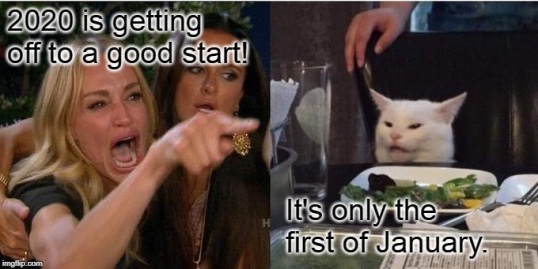
Watching the Golden Globes is always an odd experience.

First off, there’s the mix of TV awards with movie awards.  For someone like me, who spends most of January thinking about the Oscars, it’s always somewhat annoying to have to sit through all of the television awards before even getting to the first film award.  The Emmys are over so it’s not like winning a Golden Globe is going to give Chernobyl or Fleabag the boost necessary to win a real award.

(Especially since those two shows already deservedly cleaned up at the Emmys….)

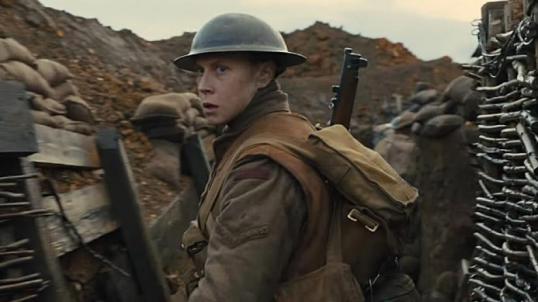
When it comes to the Globes, we care about the movies.  I was happy with the majority of the film awards.  I was especially happy to see the underrated Missing Link pick up the award for Best Animated Film.  I was glad that Once Upon A Time In Hollywood was named Best Comedy, even though I think it’s debatable whether or not the film was actually a comedy.  I’m sorry Eddie Murphy didn’t win for Dolemite Is My Name but, at the same time, Taron Egerton gave an outstanding performance in Rocketman.  I haven’t seen 1917 yet so I’m not going to comment on whether it should have won Best Drama or whether Sam Mendes deserved to defeat Scorsese and Tarantino.  That said, upset victories are always fun.

Of course, this morning, most of the Golden Globe coverage is not centered on 1917 defeating both The Irishman and Marriage Story for Best Drama.  Instead, almost everyone is talking about Ricky Gervais.  It says something about the vapidness of pop cultural criticism in the age of social media that Gervais was apparently “too mean” for some people.

When it comes to a show like the Golden Globes, the host sets the tone.  For instance, when Tina Fey and Amy Poehler hosted, they set a tone that basically said: “Look at us and all of our famous friends!”  It’s a friendly tone where everyone tells everyone else how great they are.  When Ricky Gervais hosts, the tone of the evening is usually a lot more awkward because no one is quite sure what Gervais is going to say and, being the Brit who created The Office, it’s not like Gervais is going to suffer if no one in Hollywood ever returns another one of his calls.  Both approaches have their strengths and their weaknesses.  There have been some years when I’ve been in the mood for the Fey/Poehler approach.  This year, with its promise of 11 months of wealthy celebrities trying to tell everyone else how to vote and probably getting angry because people in Iowa don’t care about funding Amtrak, I was in the mood for someone willing to shake things up and say, “Get over yourselves.”  In other words, I was in the mood for RIcky Gervais.

During Gervais’s opening monologue, he touched on several topics that everyone should have known he was going to touch on.  He said that Epstein didn’t kill himself and then accused everyone in the room of being his friend.  He told the assembled that Ronan Farrow was coming for all of them.  He told everyone that no one wanted to hear their political opinions because they had no idea what it was like to live in the real world and that they had less schooling than Greta Thunberg.

And whether you think any of that is funny or not is up to you.  Humor is subjective.  Personally, I think that the most important thing that a comedian can do is ridicule people who think that they’re above ridicule.  I also think that any belief or ideology that’s worth anything will be able to survive being the subject of a joke.  Many of my followers on twitter were not amused that Ricky Gervais made a joke about Greta Thunberg but so what?  If what she’s doing is truly worthwhile, it’ll be able to survive someone making a joke about her skipping school.

Besides, Gervais made a few good points.  Jeffrey Epstein didn’t kill himself and a lot of famous people did hang out with him, even after he was first arrested.  The majority of Hollywood did work with Harvey Weinstein, even though apparently his behavior wasn’t exactly a secet.  There are many self-proclaimed “woke” celebrities who do work for terrible companies.  (And let’s not even get into the people who refuse to criticize China.)  And when it comes to politics, Patricia Arquette proved Gervais’s point to be correct during her acceptance speech.

(The audience, I noticed, was surprisingly lukewarm to Arquette’s anti-war speech.  There was some applause but still, one got the feeling that the room’s reaction was largely, “Oh God, Patricia’s talking politics again.”  Personally, I was more impressed with Joaquin Phoenix’s speech, if just because it may have been inarticulate but it was also sincere.  Of course, as soon as he said that celebs didn’t need private jets, the music started.)

Good points or not, you could tell that the audience was often not sure how to react to Gervais’s comments.  Tom Hanks looked shocked, though I think that has more to do with Hanks being the most impossibly wholesome film star working today than with what Gervais saying.  (Seriously, if anything bad ever comes out about Tom Hanks, my entire belief system will crash.)  Others, though, had that “OMG — WHAT’S HAPPENING!?” look on their face.  It reminded me a bit of the 2013 Country Music Awards, when Carrie Underwood made a joke about the Obamacare website crashing and the audience clearly didn’t know whether or not it was safe to laugh.

(Of course, the same people who loved it when the CMAs made fun of Obamacare weren’t amused when future ceremonies featured jokes about Trump.  So often, people’s attitude towards humor seems to be, “I love it when you make jokes about the other side but if you make a joke about me, you’re the worst person who ever lived.”  Eventually, Gervais will tweet out an anti-Trump joke and the people who love him now will suddenly hate him and the people who currently hate him will go back to retweeting him.  What a vapid time to be alive.)

Anyway, last night’s Golden Globes ceremony was a typical awards show ceremony and no one will remember a thing about it in a week.  The Globes are pretty much there to tide us over until the Oscar nominations are announced.  They did their job and life goes on.

Music Video Of The Day: White Lines by Melle Mel (1983, directed by Spike Lee)


This song, one of the first hit rap songs about drugs, is often mistakenly described as being a collaboration between Grandmaster Flash and Melle Mel.  Grandmaster Flash actually had nothing to do with the song.  He had already left Sugar Hill Records before the song was even recorded.  When the single was first released, it was credited to “Grandmaster and Melle Mel,” in order to create the impression that Flash was involved.  In his autobiography, Flash wrote that he once heard the song was while he was on the way to buy crack and, at that moment, he felt that Melle Mel was specifically speaking to him.

This song was recorded at a time when much of America — specifically, white America — was either unaware of or unconcerned with the drug epidemic that was ravaging America’s poorest neighborhoods.  White Lines attacks both cocaine and a legal system that punishes poor black kids more harshly than rich, white businessmen.  “The businessman who is caught with 24 kilos” is a reference to car manufacturer John DeLorean, who was arrested after trying to buy 24 kilos from an undercover FBI agent.  DeLorean was later acquitted after he made the case that the FBI agent had entrapped him.

(DeLorean today is best remembered for designing the car made famous by Back to the Future.  Between 1981 and 1983, 9,000 Deloreans were manufactured and 6,500 of them are reported to still be in working condition.  I once came across a classified ad from someone who was looking to sell his DeLorean.  I called and offered him a thousand dollars.  He laughed and hung up.)

This video was shot by Spike Lee, who was a film student at NYU at the time and yes, that is Laurence Fishburne.  Fishburne appeared in this video shortly after playing Cutter in Death Wish II and he has the same look in the video as he did in the movie.

Enjoy!


Lisa’s Week In Review: 1/1/20 — 1/5/20


The first week of 2020 is in the books and I think we did a pretty good job ringing in the new year here at the Shattered Lens.  The Oscars are approaching.  The Super Bowl commercials are being filmed.  We’ve got a lot to look forward to.

But, first, let’s look back at the week that was:

Films I Watched:

  1. A Lover Scorned (2019)
  2. Abducted: The Mary Stauffer Story (2019)
  3. Am I A Serial Killer? (2019)
  4. Best Friend’s Betrayal (2019)
  5. Deadly Assistant (2019)
  6. Escaping My Stalker (2020)
  7. Gamera vs. Monster X (1970)
  8. Her Deadly Reflections (2020)
  9. Is My Daughter Really Dead? (2019)
  10. Logan’s Run (1976)
  11. Love You To Death (2019)
  12. Psycho BFF (2019)
  13. Psycho Granny (2019)
  14. The Resurrection of Gavin Stone (2017)
  15. Secrets In A Small Town (2019)
  16. A Star Is Born (2018)
  17. Star Wars: The Rise of Skywalker (2019)
  18. Uncut Gems (2019)
  19. Was I Really Kidnapped? (2019)
  20. Westworld (1973)

Television Shows I Watched:

  1. Beverly Hills 90210
  2. The Circle
  3. Couples Court with the Cutlers
  4. Ghost Whisperer
  5. The 77th Annual Golden Globe Awards
  6. It’s Always Sunny In Philadelphia
  7. Judge Jerry
  8. Lauren Lake’s Paternity Court
  9. The Love Boat
  10. Newsradio
  11. Project Runway
  12. Saved By The Bell

Books I Read:

  1. Imaginary Friend (2019) by Stephen Chbosky
  2. The Wallflower Wager (2019) by Tessa Dare

Music To Which I Listened:

  1. Above & Beyond
  2. Adam Rickfors
  3. Adi Ulmansky
  4. Alvin Risk
  5. Amy Winehouse
  6. Armin van Buuren
  7. Avicii
  8. Big Data
  9. Blanck Mass
  10. Bloc Party
  11. Bob Dylan
  12. Britney Spears
  13. Cage the Elephant
  14. Cedric Gervais
  15. The Chemical Brothers
  16. Coldplay
  17. The Crystal Method
  18. Dillon Francis
  19. DJ Judaa
  20. Fitz and the Tantrums
  21. Icona Pop
  22. Jakalope
  23. Jake Bugg
  24. Joywave
  25. Lady Gaga
  26. LAKS
  27. Moby
  28. Muse
  29. Neon Indian
  30. Phantogram
  31. Radiohead
  32. Rich White
  33. Robert DeLong
  34. Saint Motel
  35. Sleigh Bells
  36. Swedish House Mafia
  37. Tiesto
  38. UPSAHL

Awards Season Links:

  1. The Houston Film Critics Society
  2. North Carolina Film Critics Association
  3. The Dorian Nominations
  4. Georgia Film Critics Association Nominations
  5. National Society of Film Critics
  6. The Golden Globes

News From Last Week:

  1. Joker Success Not Related to Batman, Says Phillips
  2. Bobbi Kristina Brown’s Ex-Boyfriend Nick Gordon Dies at 30 from Drug Overdose
  3. Captain America Actress Arrested For Allegedly Killing Her Mom
  4. ‘Fifty Shades of Grey’ was the dominant book of the decade
  5. Marianne Williamson Has Laid Off Her Entire 2020 Campaign Staff
  6. LORI LOUGHLIN HIRES EXPERTS TO PREPARE FOR PRISON AMID COLLEGE ADMISSIONS SCANDAL

Links From Last Week:

  1. Goodbye 2010s! A Decade in Review
  2. Classic “B” Movies! Body Heat! Battle Royale! Bogart Too! Cinema’s Greatest Films That Begin With A “B”!

Links From The Site:

  1. Erin shared Peaceful Fountain, In The Beginning, Double Detective, The Wanton, and Commuting Wife!  She also shared the Covers of Master Detective!
  2. Doc wished everyone a Happy 2020!
  3. Jeff shared music videos from Talking Heads, Peter Gabriel, Creedence Clearwater Revival, Europe, and Yello!  He paid tribute to Max Julien and Leon Isaac Kennedy!  And he reviewed Delta Force 2, White Mile, Extramarital, American Outlaws, and The Take!
  4. Val served the 25 Best, Worst, and Gems that she saw last year!
  5. Necromoonyeti shared his top albums of 2019!
  6. Ryan reviewed Snake Creek, Faults, Constantly, and Keeping Score!
  7. I reviewed Escaping My Stalker, Her Deadly Reflections, Coming Home, Darkest Hour, Hope and Glory, The Barretts of Wimpole Street, and A Star is Born!  I shared my Oscar predictions for January!

More From Us:

  1. Ryan has a patreon!  Please consider subscribing!
  2. Over at my online dream journal, I shared My First Dream of 2020!
  3. On my music site, I shared songs from LANKS, Robert DeLong, UPSAHL, Bob Dylan, and The Crystal Method!
  4. On her photography site, Erin shared: New Year’s Day, Speed Bump Ahead, City, Mood, and Lighthouse!
  5. On Pop Politics, Jeff shared: My 2020 Resolutions, Julian Castro is Out, Friday Notes, and Is It Time For Tom Brady To Retire?

Check out the last week of 2019 by clicking here!


Here Are Your 2019 Golden Globe Winners!


Best Actor, TV Musical or Comedy — Ramy Youssef in Ramy

Best Actor, Limited Series or TV Movie — Russell Crowe in The Loudest Voice

Best Supporting Actor, Series, Limited Series, or TV Movie — Stellan Skarsgard, Chernobyl

Best TV Series, Drama — Succession

Best Actress, TV Musical or Comedy — Phoebe Waller-Bridge, Fleabag

Best Foreign Language Film — Parasite

Best Actor, TV Series Drama — Brian Cox, Succession

Best Screenplay, Motion Picture — Quentin Tarantino, Once Upon A Time In Hollywood

Best Motion Picture, Animated — Missing Link

Best Supporting Actress, Film — Laura Dern in Marriage Story

Best TV Series, Musical or Comedy — Fleabag

Best Original Song, Motion Picture — “I’m Gonna Love Me Again” from Rocketman

Best Supporting Actress, Series, Limited Series. or TV Movie — Patricia Arquette in The Act

Best Actress, TV Series, Drama — Olivia Colman in The Crown

Best Director, Motion Picture — Sam Mendes, 1917

Best Actress, Limited Series or TV Movie — Michelle WIlliams in Fosse/Verdon

Best Limited Series or TV Movie — Chernobyl

Best Original Score, Motion Picture — Joker

Best Supporting Actor, Motion Picture — Brad Pitt, Once Upon A Time In Hollywood

Best Actor, Comedy Motion Picture — Taron Egerton, Rocketman

Best Actress, Comedy, Motion Picture — Awkwafina, The Farewell

Best Motion Picture, Comedy or Musical — Once Upon A Time In Hollywood

Best Actor, Drama, Motion Picture — Joaquin Phoenix in Joker

Best Actress, Drama, Motion Picture — Renee Zellweger in Judy

Best Motion Picture, Drama — 1917


The Take (1974, directed by Robert Hartford-Davis)


Lt. Terrence Sneed (Billy Dee Williams), a tough and suave cop from San Francisco, is sent to New Mexico to help Police Chief Berrigan (Eddie Albert) take down the local crime syndicate.  No sooner has Sneed arrived in town than he’s helping to prevent a prison break and killing gangsters.  Berrigan is impressed and explains to Sneed that the local crime boss is Victor Manso (Vic Morrow).  Even though everyone knows that Manso is crooked, the police haven’t ever been able to put together a case that will stand up in court.  Maybe Sneed is the man who can do it.

What Berrigan doesn’t know is that Sneed is a crooked cop, himself.  As soon as Sneed leaves his meeting with Berrigan, he goes over to Manso’s office and collects his money.  Manso assigns Sneed to work with another crooked cop, Captain Dollek (Albert Salmi).  However, it turns out that Sneed has plans of his own.  While still on Manso’s payroll, Sneed starts to put together a case that might finally take Manso down.

The Take is full of good actors in small roles.  If you have ever wanted to see Billy Dee Williams share a scene with Frankie Avalon, The Take is the film for you.  Avalon plays Danny James, a small-time hood who is arrested and interrogated by Sneed.  At first, Danny is cocky and arrogant but, as soon as Sneed removes his jacket and his watch and makes a fist, Danny starts crying and begging Sneed not to beat him.  Danny is soon turned into an informant and then disappears from the movie.  The beautiful model Kathirine Baumann plays Danny’s girlfriend.  While only wearing a towel, she gives Capt. Dollek the finger and looks amazing doing it.  Sorrell Brooke, who later found fame as Boss Hogg on The Dukes of Hazzard, also has a few good scenes as Sneed’s deceptively respectable money launderer.

The Take can be a confusing film to watch because it’s never firmly established just how corrupt Sneed actually is.  Sometimes, Sneed just seems like he’s trying to make a little extra money and then, other times, he comes across as being a full-blown gangster.  Despite being on Manso’s payroll, Sneed seems to be determined to take him down and the film never makes clear why.  Billy Dee Williams is his usual supremely cool self but he seems almost too cool to play a morally ambivalent cop.  More impressive are Vic Morrow and Eddie Albert, who both shamelessly chew the scenery as two leaders on opposite sides of the law.

The Take is often mistakenly referred to as being a blaxploitation film but it’s really just a cop film with a lead actor who happens to be black.  Unlike the best blaxploitation films, there’s no political subtext to be found in the movie.  Sneed could just as easily be a corrupt white detective and, with the exception of one throwaway line, race is never mentioned.  While this is a minor cop film, it features a few good action scenes and, again, it’s your only chance to see two very different pop cultural icons, Billy Dee Williams and Frankie Avalon, acting opposite of each other.  That’s not a bad pay-off for 91 minutes of your life.

Lisa Reviews An Oscar Nominee: A Star Is Born (dir by Bradley Cooper)


Happy birthday, Bradley Cooper!

Bradley Cooper is 45 years old today.  With all the recent talk about how people’s lives have changed over the past decade, let’s take a minute to appreciate just how spectacularly things have gone for Bradley Cooper, career-wise.  Ten years ago, Bradley Cooper was probably best-known for playing the smarmiest member of The Hangover‘s quartet of friends.  Now, Cooper is known for not only being one of the best actors working today but also for making an acclaimed directorial debut with the 2018 Best Picture nominee, A Star Is Born.

Cooper not only directed A Star is Born but he also starred in it.  He played Jackson Maine, a country musician who has been drinking for as long as he can remember.  He used to drink with his father and when his father died, Jackson continued to drink alone.  (At one point, Jackson says that he was a teenager when his father died.)  Managed by his older brother, Bobby (Sam Elliott), Jackson became a star but his career has been in decline for a while.  For all of his talent and for all of his belief that he has something worth saying, Jackson is drinking his life away.  He stumbles from show to show and is often dependent upon Bobby to tell him what he missed while he was blacked out.

When Jackson stumbles into a drag bar and sees Ally (Lady Gaga, making her film debut) singing a song by Edith Piaf, he is immediately captivated by her talent.  Ally, whose father (Andrew Dice Clay) is a limo driver who once aspired to be bigger than Sinatra, is at first weary of Jackson but he wins her over.  After she punches a drunk and he takes her to a grocery store to construct a makeshift cast for her hand, she sings a song that she wrote and Jackson decides to take her on tour.  Soon, they’re in love and, before you know it, they’re married!

Unfortunately, Jackson’s alcoholism threatens both their happiness and their future.  While Ally’s star rises, his continues to dim.  Will Ally sacrifice her career for Jackson or will Jackson sacrifice his life for Ally?

It’s a familiar story, one that’s been told many times.  The first version was 1932’s What Price Hollywood, which featured aspiring actress Constance Bennett falling in love with an alcoholic director played by Lowell Sherman.  In 1937, What Price Hollywood? was unofficially remade as A Star Is Born, with Janet Gaynor as Esther, the actress who falls in love with faded matinee idol, Norman Maine (Fredric March).  The next version came out in 1954 and featured Judy Garland as Esther and James Mason as Norman.  Significantly, the 1954 version added music to the plot, with Judy Garland singing The Man That Got Away.  

In 1976, the story was told a third time.  This version of A Star is Born starred Barbra Streisand as singer Esther Hoffman and Kris Kristofferson as a self-destructive rock star named John Norman Howard.  The 1976 version was terrible, largely because there was zero chemistry between Streisand and Kristofferson.  And yet, one gets the feeling that the 1976 version is the one that had the most influence on the 2018 version.  Not only does Bradley Cooper’s version of A Star Is Born make the story about aspiring singers but one gets the feeling that Cooper watched the 1976 version, saw the lack of chemistry between Kristofferson and Streisand, and said, “There’s no way that’s going to happen in my movie!”

Indeed, it’s the chemistry between Bradley Cooper and Lady Gaga that makes the latest version of A Star Is Born so compulsively watchable.  I mean, we already know the story.  From the minute that Jackson and Ally meet for the first time, we know what’s going to happen.  But Cooper and Lady Gaga have got such an amazing chemistry, that it almost doesn’t matter whether the movie surprises us or not.  There’s a scene where Ally says that she’s always been told that her nose is too big and Jackson responds by nonchalantly touching her nose and, with that one simple and very naturalistic gesture, the film convinces us that Jackson and Ally are meant to be together, even if just for a while.  It also makes it all the more upsetting when a drunk and jealous Jackson later uses Ally’s insecurities against her.

(Of course, I should admit that I’ve always been insecure about my own nose so, at that moment, I totally understood what Ally was feeling.)

It’s an unabashedly romantic and sentimental film but it works because, as a director, Cooper brings just enough of an edge to the story.  Cooper, who has been sober since 2004, has been open about his past struggle with alcoholism and, as both an actor and director, he’s smart enough not to romanticize Jackson’s addictions.  In many ways, Jackson Maine is a pain in the ass to be around.  We watch as he goes from being a fun drunk to a sad drunk to a mean drunk, all the while lashing out at anyone who gets too close to him.  At the same time, Cooper also captures the spark of genius and the hints of inner goodness that would explain why he is never totally rejected by those that he’s hurt.  Cooper offers up hints of who Jackson could have been if he hadn’t surrendered to pain and addiction.  We understand why Ally and Bobby stick with him, even if we wouldn’t blame either one of them if they refused to have anything more to do with him.

Lady Gaga, meanwhile, gives a performance is that is down-to-Earth and instantly relatable.  Anyone who has ever been insecure or who has ever felt as if she was being punished for being independent or thinking for herself will understand what Ally’s going through.  At some point, we’ve all been Ally and we’ve all had a Jackson Maine in our lives.  Sadly, these stories rarely have happy endings.

For most of 2018, it was assumed that A Star Is Born would be the film to beat at the Oscars.  While it was eventually nominated for 8 Oscars, Bradley Cooper did not receive a nomination for Best Director.  (Cooper, Lady Gaga, and Sam Elliott were all nominated in the acting categories.)  In the end, Green Book won Best Picture while A Star Is Born only won one award, for Best Original Song.

Of course, Bradley Cooper and Lady Gaga’s performance of that song was perhaps the highlight of the entire Oscar ceremony.

That’s the power of good chemistry.


The National Society of Film Critics Honors Parasite and Little Women!


Yesterday, the National Society of Film Critics announced their picks for the best of 2019!

Now, it’s not really a surprise that Parasite won best picture because Parasite has been popular with the critic groups this season.  For me, what’s more significant is just how well Little Women did, coming in second for Best Picture and winning Best Director for Greta Gerwig.  Could this be evidence of a late surge in momentum for Little Women?  Or is it just of one those quirks of the awards season?  There’s always a tendency to read too much into the results of these contests, especially when the guilds are usually the best precursor to go with.

Anyway, here are the NSFC winners!

2019 NSFC Winners:

Best Picture: PARASITE (44 points)
Runners-up: LITTLE WOMEN (27 points); ONCE UPON A TIME… IN HOLLYWOOD (22 points)

Best Actor: Antonio Banderas, PAIN AND GLORY (69 points)
Runners-up: Adam Driver, MARRIAGE STORY (43 points); Adam Sandler, UNCUT GEMS (41 points)

Best Actress: Mary Kay Place, DIANE (40 points)
Runners-up: Zhao Tao, ASH IS PUREST WHITE (28 points) Florence Pugh, MIDSOMMAR (25 points)

Best Supporting Actor: Brad Pitt, ONCE UPON A TIME… IN HOLLYWOOD (64 points)
Runners-up: Joe Pesci, THE IRISHMAN (30 points) Wesley Snipes, DOLEMITE IS MY NAME and Song Kang Ho, PARASITE (18 points each)

Best Supporting Actress: Laura Dern, MARRIAGE STORY and LITTLE WOMEN (57 points)
Runners-up: Florence Pugh, LITTLE WOMEN (44 points) Jennifer Lopez, HUSTLERS (26 points)

Best Director: Greta Gerwig, LITTLE WOMEN (39 points)
Runners-up: Bong Joon Ho, PARASITE (36 points); Martin Scorsese, THE IRISHMAN (31 points)

Best Screenplay: Bong Joon Ho and Han Jin Won, PARASITE (37 points)
Runners-up: Quentin Tarantino, ONCE UPON A TIME… IN HOLLYWOOD (34 points); Greta Gerwig, LITTLE WOMEN (33 points)

Best Cinematography: Claire Mathon, PORTRAIT OF A LADY ON FIRE and ATLANTICS (41 points)
Runners-up: Robert Richardson, ONCE UPON A TIME… IN HOLLYWOOD (29 points); Yorick Le Saux, LITTLE WOMEN (22 points)