I’ve covered every Universal Horror Boris Karloff and Bela Lugosi made together on this blog but one… it’s a Universal Picture, but not a horror! Instead, the Demonic Duo make cameo appearences in 1934’s GIFT OF GAB, an “all-star comedy with music” featuring the likes of Edmond Lowe, Gloria Stuart , singers Ruth Etting and Ethel Waters, Victor Moore, and others. In this scene, Paul Lukas , Binnie Barnes, Chester Morris, Roger Pryor, and June Knight perform a murder mystery sketch in which the Twin Titans of Terror make all-too-brief cameos:
The Terror Twins worked together one other time, in a 1938 guest shot on Ozzie Nelson’s radio program, “singing” (if you could call it that!!) a little ditty called “We’re Horrible, Horrible Men”:
Thankfully, Boris and Bela stuck to acting… though I have to admit, their singing’s pretty scary, too!!
“If you want to taste the night, come downstairs.”
— The Professor (Pier Ugo Gragnani) in The Vampire and The Ballerina (1960)
A young woman relaxes with her friends at a waterfall. She sees a funeral procession passing by and cheerfully announces, “A funeral! It brings good luck!”
One person who would disagree with that would be the girl in the coffin. She’s just the latest villager to have been found passed out in a field in the middle of the night, lacking blood. The locals say that there’s a vampire on the loose. The local doctor insists that the girl is just anemic and will recover in ten days. Instead, the girl ends up in a coffin, only opening her eyes while being carried to her grave. From her point of view, we watch as clumps of dirt are tossed onto the coffin, one after another until finally all is dark.
At night, she leaves her grave and runs into the horribly disfigured vampire who previously bit her. He greets her and tells her to lie down in his coffin. As soon as she does, he drives a take through her heart and says that he must remain “the master of my world.”
It’s a strange world. In the village, a dance troupe is, for some reason, staying at a villa belonging to an older man (Pier Ugo Gragnani) who is called both “grandpa” and “The Professor.” (Despite the film’s title and some of the dialogue, they are clearly a modern dance troupe.) The professor tells the dancers a story about vampires. Everyone’s amused. Interestingly, most of the dancers seem to believe that there is a vampire on the loose but none of them seem particularly concerned about it. From my own experience, this is probably the most realistic part of the film. When you’re a dancer, that’s pretty much all you worry about.
Later, two of the dancers, Luisa (Helene Remy) and Francesca (Tina Gloriani), are walking around the woods with Francesca’s fiancée, Luca (Iscaro Ravaiolli) when it starts to rain. They take refuge in a nearby castle, one which they believe to be deserted. It turns out that it’s not. Countess Alda (Maria Luisa Rolando) lives there with her manservant, Herman (Walter Brandi). Alda explains that she allows the villagers to believe the castle is deserted and haunted because she doesn’t want to be bothered by them. Luca is immediately enchanted with Alda while Francesca wonders why Alda looks exactly like the woman in a 400 year-old painting that is hanging in the dining room. Luisa wanders off and gets bitten by the same disfigured vampire who has been preying on the villagers.
That night, Luisa waits in bed until the vampire comes to her. Meanwhile Luca sneaks back to the castle to see Alda. Alda claims that Herman is holding her prisoner but, when Herman suddenly shows up, Alda orders Luca away and proceeds to drink Herman’s blood and he goes from being a handsome servant to being the disfigured vampire that we saw earlier in the film. It turns out that Alda and Herman’s blood-soaked relationship is all about trying to stay young. When Herman ages, he drinks the villager’s blood to become young again. Then Alda drinks his blood to retain her youth, which means that the now aged Herman again has to go out and drink more villager blood….
Meanwhile, the dance troupe’s choreographer has a brilliant idea! Why don’t they do a number about vampires!?
1960’s The Vampire and the Ballerina is a personal favorite of mine. That really shouldn’t surprise anyone, of course. I love vampires. I love to dance. Of course, I’m going to love a film that brings those two things together! But beyond that, The Vampire and The Ballerina is just such a strange little film. From the off-center performances to Angelo Baistrocchi[‘s haunting cinematography, The Vampire and the Ballerina plays out like a filmed fever dream. The fact that the plot often doesn’t make sense only adds to the film’s surreal atmosphere.
Continuing what Hammer started with the Horror of Dracula, The Vampire and the Ballerina takes the sexuality that has always been the subtext of most vampire films and instead puts it front and center. The formerly repressed Luisia writhes in bed as she waits for the vampire to come to her. Luca stares at Alda with an obsessive intensity before forcefully kissing her hand. Alda and Herman torment each other, even though one could not exist without the other, a relationship that is more sado-masochistic than supernatural.
The Vampire and the Ballerina is an Italian horror film that deserves to be better known than it is. I mean, seriously, how can anyone resist a movie that has this many vampires and this much dancing?
I love horror movies but, unfortunately, many of them tend to get a bit less scary upon repeat viewings. Once you already know where the vampire is going to be hiding or who the werewolf is going to attack next, it becomes a bit more difficult to fall under in the film’s chilling spell.
To be honest, all of the Body Snatcher films scare me, even the really bad ones. Invasion of the Body Snatchers deals not only with the horror of conformity but also the horror of knowing what’s going on but being helpless to stop it.
The Exorcist (1973)
Maybe it’s because of my Catholic background but, despite the fact that it’s been endlessly imitated, this film scares me every time that I see it. I think a lot of it has to do with the documentary approach that William Friedkin takes to the material.
Shock (1977)
Mario Bava’s final film gets me every time. Even though I now know how many of the big scares were actually pulled off, this movie still makes me jump. In this film, Daria Nicolodi gives the best performance of her legendary career.
The Shining (1980)
Agck! Those little girls! That elevator full of blood! The way Wendy kept interrupting Jack while he was trying to write!
Sinister (2012)
Sinister gave me nightmares the first time that I saw it and it still does. That ending. AGCK!
The Conjuring (2013)
This is definitely one of the best haunted house films to come out over the past ten years. This film is scary because you actually care about the family in the house. They’re not just disposable victims. Also holding up well is The Conjuring 2.
We’ve finally reached the finish line. It’s now Halloween. Enjoy the sun while it out and about because when it goes down and the sky darken and turns to black, the ghouls and monsters come out to play.
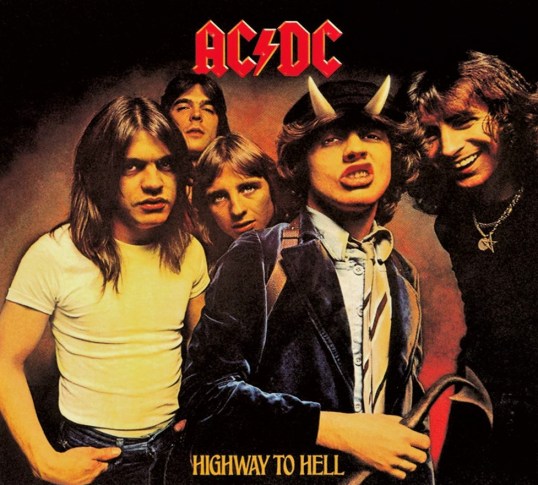
Those inclined towards enjoying the darker aspects of life will dance and play throughout the night as they continue their way down the highway to hell.
“Highway to Hell”
Living easy, livin’ free Season ticket, on a one – way ride Asking nothing, leave me be Taking everything in my stride Don’t need reason, don’t need rhyme Ain’t nothing I would rather do Going down, party time My friends are gonna be there too
I’m on the highway to hell On the Highway to hell Highway to hell I’m on the highway to hell
No stop signs, speedin’ limit Nobody’s gonna slow me down Like a wheel, gonna spin it Nobody’s gonna mess me ’round Hey Satan! Paid my dues Playin’ in a rockin’ band Hey Mama! Look at me I’m on my way to the promise land
I’m on the highway to hell Highway to hell I’m on the highway to hell Highway to hell
Dont stop me!
I’m on the highway to hell! I’m on the highway to hell! I’m on the highway to hell! I’m on the highway to hell!
And I’m goin down..all the way! I’m on the highway to hell..
4 Shots From 4 Films is just what it says it is, 4 shots from 4 of our favorite films. As opposed to the reviews and recaps that we usually post, 4 Shots From 4 Films lets the visuals do the talking.
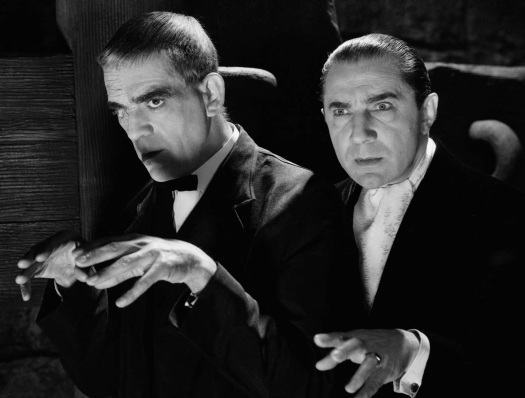
For our final 4 Shots From 4 Films of this October season, we pay tribute to William Henry Pratt, the patron saint of horror cinema, with….
It is hard to say when Halloween first became truly popular in the United States. Most historians seem to agree that the traditions of Halloween were first brought to the U.S. in the 19th century by immigrants from Scotland and Ireland. Though Halloween had its roots in pagan holidays, most Americans initially knew Halloween as being an evening of celebration before All Saints Day.
The commercialization of Halloween began in the early 1900s. That was when postcards featuring pumpkins and black cats and even the occasional witch first started to become popular. The postcards from this era were more playful than frightening, with several wishing their recipient a “Merry Halloween!” Below are a few vintage Halloween postcards that show how Halloween was viewed at the start of the 20th Century.
When we first meet Nadja (Elina Löwensohn), the title character of this odd, 1994 film, she is walking around New York, wearing a cape and picking up men in bars. She speaks with a thick, Eastern European accent and when she’s asked what she does, she explains that she comes from an old and very wealthy Romanian family. As we quickly guess, Nadja has lived for centuries. She’s a vampire, a daughter of Count Dracula. Everything she says and everything she does is drenched in the ennui of someone who wishes to be set free but who knows she is destined to live forever in the prison of her existence. Even when she has visions of her father getting a stake through the heart, it doesn’t provide her with the relief for which she was hoping.
It probably won’t come as a surprise to learn that it was a member of the Helsing family that drove the stake through Dracula’s heart. However, having killed the vampire, Van Helsing (Peter Fonda) finds himself in trouble with the police. Apparently, the cops don’t believe Van Helsing when he insists that he was just killing a vampire. As far as they can tell, Van Helsing just killed a man with a sharp piece of wood. Fortunately, Van Helsing’s nephew, Jim (Martin Donavon), also lives in New York and can bail his uncle out of jail.
While Jim is dealing with his uncle, Nadja is meeting a woman in a bar, a woman named Lucy (Galaxy Craze). Both Lucy and Nadja feel empty and unfulfilled. Lucy, who happens to be married to Jim, is soon inviting Nadja back to her home and becoming obsessed with her. However, Nadja is more concerned with her brother, Edgar (Jared Harris). Edgar lives in Brooklyn with his lover and nurse, Cassandra (Suzy Amis). When Nadja visits Edgar, she decides to take Cassandra away from him. Of course, Cassandra just happens to be Van Helsing’s daughter and Jim’s cousin!
Nadja is an odd film. On the one hand, it’s pretentious in the way that only a mid-90s, New York art film can be. Director Michael Almereyda shot the majority of film at night and a good deal of it with a PXL-2000, which was basically a toy video camera that was specifically marketed to children. As a result, the black-and-white images are usually dark and grainy. Sometimes, it’s a bit of struggle to tell just what exactly is happening on-screen. And yet, at the same time, it kinda works. Those hazy images, combined with the largely deadpan performances of the cast, give the film an undeniably dream-like feel. When we see Nadja walking through the city, we feel her ennui and otherworldly presence. At its best, the film achieves a hypnotic visual beauty. If ever there was an American city that benefits from being filmed in grainy black-and-white, it’s New York City.
The film plays out like a satire of the typical decadent vampire film. (Nadja even has a Renfield of very own.) Nadja is so obviously a vampire that it’s impossible not to be amused by the fact that hardly anyone else seems to pick up on it. However, the film’s most subversive element is Peter Fonda’s performance as Van Helsing. With his long hair and a demented gleam in his eye, Fonda totally upends all our assumptions about who someone named Van Helsing should be.
In many ways, Nadja plays out like an elaborate inside joke but it’s just strange enough to always be watchable. David Lynch, whose influence is obvious, has a cameo as a morgue attendant and he feels right at home. This deadpan vampire film many not be for everyone but then again, few worthwhile films are.
Bobby “Boris” Pickett’s 1962 hit “The Monster Mash” was not only a graveyard smash, but has become an annual Halloween tradition here on Cracked Rear Viewer. This season, I’ve picked out a Monster Mash-Up of clips starring Universal Horror icons Boris Karloff and Bela Lugosi set to Pickett’s groovy ghoulie tune. Break out your dancing shoes and get ready to Do The Mash with Boris and Bela:
Well, as another horrorthon draws to a close, it’s time for another Shattered Lens tradition! Every Halloween, we share one of the greatest and most iconic horror films ever made. For your Halloween enjoyment, here is George Romero’s Night of the Living Dead!
May your Halloween bring you more candy than rocks and we hope you enjoy the last day of our annual horrorthon! Be safe, be sincere, and don’t forget the true meaning on Halloween!

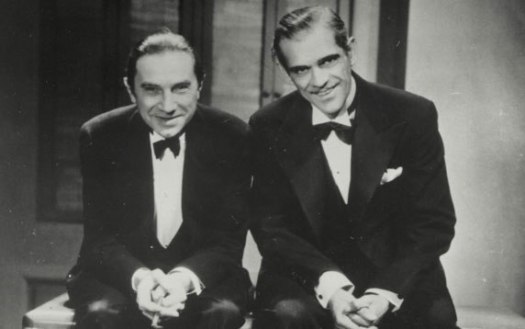
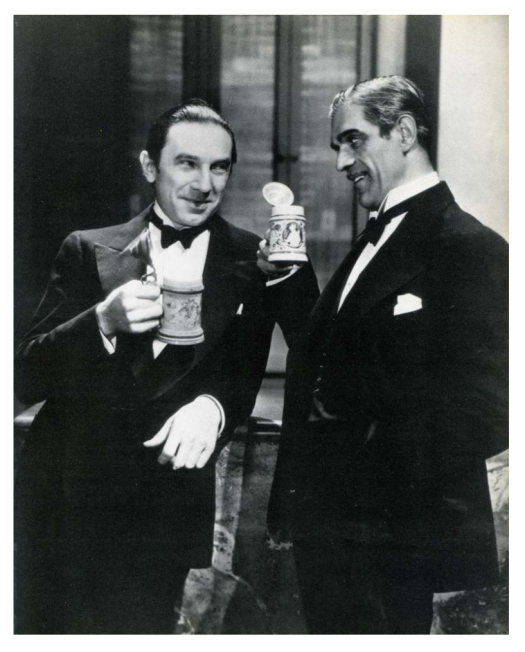 Happy Halloween from Bela and Boris!





 Through the Shattered Lens