A Quickie With Lisa Marie: The Campaign (dir. by Jay Roach)


Opening last weekend, The Campaign is the latest comedy from director Jay Roach.  The film tells the story of North Carolina Congressman Cam Brady (played by Will Ferrell), a Democrat who will remind viewers of such previous party statesmen as John Edwards and Anthony Weiner.  The complacent Brady has been in office for nearly a decade and he is regularly reelected without opposition.  However, when Brady accidentally leaves an obscene message on a random family’s answering machine, the multimillionaire Motch brother (John Lithgow and Dan Ayrkroyd) see a chance to replace Brady with a congressman who will essentially belong to them.  They recruit the naive and well-meaning Marty Huggins (Zach Galifianakis) to run against Brady.  While Huggins is initially an awkward and unimpressive candidate, his image is soon transformed by a possibly demonic campaign manager (Dylan McDermott).  As Huggins starts to move up in the polls, Brady reacts by having a nervous breakdown of his own and soon the campaign gets very personal as both Huggins and Brady go to increasingly outrageous lengths to win the election.

As a work of political satire, The Campaign is fairly uneven.  This is largely because, while the film raises some valid points, those points are still the same points that have been made by hundreds of other films about the American political system.  If you didn’t already know that the American political system was controlled by wealthy corporations before you saw The Campaign then you probably shouldn’t be allowed to vote in the first place.  At its best, the film reminds us that both the Democrats and the Republicans pretty much answer to the same corporate masters.  At its worst, the film’s “message”  just feels like a stale and predictable lecture that one might hear while visiting an old  Occupy camp site.

But if the film doesn’t quite come together as a satire, it does work wonderfully well as a comedy.  Will Ferrell and Zach Galifianakis are two of the funniest guys around and they are at the top of their game in this film.  Both of them bring such a sincerity to their absurd characters that even the most predictable of punchlines feel fresh and hilarious.  Zach Galifianakis is surprisingly likable and earnest as the painfully sincere Marty.  It’s no surprise to see Galifianakis playing someone who could charitably be described as a weirdo.  However, Galifianakis also bring a gentleness of spirit to the role and it’s impossible not to root for him.  Meanwhile, Will Ferrell not only manages to master a North Carolina accent but also manages to capture both the arrogance and the ignorance that’s necessary for a truly mediocre man to become a succesful politician.

However, the film’s best comedic performance comes from, believe it or not, Dylan McDermott.  Playing a slick political operative who always dresses in black and who, occasionally, appears to be possessed by the devil, McDermott is a wonder to behold in this film.  He steals every scene that he appears in and the prospect of his return alone should be reason enough for some brave film executive to greenlight The Campaign Part 2.

The Campaign works best when it’s content to simply make us laugh.  When it attempts to make a serious statement about the state of American politics, the film often feels flat.  But as a laugh-out-loud comedy, The Campaign is a definite winner.

Hottie of the Day: Leticia Dolera


LETICIA DOLERA

The latest “Hottie of the Day” arrives courtesy of the Spanish horror film sequel REC 3: Genesis.

Miss Leticia Dolera takes on the role of Clara who happens to be the bride of the wedding setting that makes up the second sequel to the Spanish horror franchise REC. I won’t go into detail about whether this latest sequel is worth checking out. For some it was and for others it was a major letdown. One thing that everyone who has seen the film could agree on was Leticia Dolera being one of the highlights of the film. Ms. Dolera was something fierce in REC 3: Genesisand her performance made the film worth watching.

A Spanish actress who began her career in 2000 with the Spanish tv series Al salir de clase and who has become a fixture in Spanish entertainment, Ms. Dolera should become even more well-known around the world especially with the genre crowd because of her appearance in performance in REC 3: Genesis. She has that exotic look that Spanish women are always able to pull off without even trying. I wouldn’t be surprised if she one day makes the jump from Spain to Hollywood.

PAST HOTTIES

VGM Entry 15: A question of authorship (part 1)


VGM Entry 15: A question of authorship (part 1)
(Thanks to Tish at FFShrine for the banner)

Everyone has likely heard at least some passing reference to the “console wars” between Nintendo and Sega beginning with the release of the Sega Master System in 1985. I am curious to know whether this is a posthumous attribution. The Master System never had a leg to stand on outside of Europe, and the heat never really came on until Sega released the Genesis/Master System in 1988. (Their rapid transition from third to fourth generation console may have had a lot to do with this.) Nintendo and Sega became ruthless rivals in the 1990s, playing all sorts of mind games with their markets and seeking out every legal loop-hole in the book. It makes for quite an interesting story, and I was initially inclined to think that frequent efforts to root out its origins in the third generation era generated some misconceptions over just how directly these companies targeted each other in the mid-80s. But perhaps I am wrong. Was the Master System’s flop a direct result of Nintendo strong-arming the market?

A part of this origin story lies in Nintendo’s licensing policies. One can frequently find such statements as “Any developer who signed on to produce software for the NES was trapped into an exclusivity contract. They were not allowed to develop games for competing systems for two years following the beginning of the contract, and they were limited to releasing only five games a year.” (Lucas DeWoody, “Nintendo vs. Sega: The Console War: Part One”, October 24, 2007. The original online publication appears to have been deleted.)

This sounds like quite a pickle, but I would like to know its more precise ramifications and loop-holes. What constituted a competing system? If these merely meant the Sega Master System and the Atari 7800, not home computers, then that could explain a lot, but it seems odd to me that Nintendo would let so many other competitors squeak by.

The reason I bring this up in the first place is because, come 1986, it feels as though nearly every game not published by Nintendo was appearing in half a dozen different formats. This has quite a few consequences for video game music, because the variance in sound quality from one medium to the next was vast. It becomes very difficult to point out a stellar soundtrack when the particular arrangement of that soundtrack, more often than not created by someone other than the original songwriter, is such a pivotal factor.

I would like to spend some time on this topic. Let’s look again at “Vampire Killer” and “Wicked Child” from Castlevania.

http://www.youtube.com/watch?v=cHvG0j0ekXM

Does anything sound a bit different? Well, the tracks I posted yesterday should have sounded more like this:

http://www.youtube.com/watch?v=KI2aB86u-zQ

Konami released Vampire Killer for the MSX2 about a month after they released Castlevania for the NES. MSX was a home computer architecture employed by a large variety of manufacturers. You could have a Yamaha MSX, a Sony MSX, a Sharp MSX, etc. Did that, along with a name change, get Konami around Nintendo’s licensing clause? Well, Castlevania series enthusiasts may claim that Vampire Killer was its own distinct game, but it doesn’t look it to me. Nintendo had no trouble pulling Rainbow Arts’ The Great Giana Sisters off the shelves despite it copying Super Mario Bros. to a lesser extent than Vampire Killer copied Castlevania (I’ll be covering that later). Whether Konami were less legally bound or simply had a sort of gentleman’s agreement (Nintendo had a lot more to lose by pissing them off) will remain a mystery to me for the time being.

But anyway, this is only the first example of many, and I wish to emphasize the musical distinctions. “Vampire Killer” in Vampire Killer has a much more crisp sound, which I would say is more readily appealing. But you’ll notice that early into the first break away from the main chorus, precisely at 22 seconds in both videos, a lot of the subtler notes which give the Castlevania version its real charm are completely missing in Vampire Killer. It’s enough to make or break the song for me, and moreover it could be enough to make or break the composer.

Now skip ahead to 1:32 in Vampire Killer and 1:35 in Castlevania and let’s take a look at “Wicked Child”.(Garudoh really did an outstanding job of syncing these up.) Here the distinction is shamefully obvious. The entire dramatic introduction is missing in Vampire Killer, and worse yet, the alternating bass beat of the main chorus has been reduced down to a single repeated note. I can’t bare to go any farther; Vampire Killer‘s soundtrack is a travesty compared to the original.

Or does it simply make do with the MSX2’s limitations as best it can? How do I know whether this was a cheap, hasty reconstruction or a thoughtful, best possible scenario? I suppose I’ll never know unless I attempt to reconstruct it myself or else listen to a whole bunch of other soundtracks released for both systems. But if I have to contextualize all of this stuff within a given system, and a lot of the best soundtracks appear on multiple systems, and a lot of their authors had nothing to do with the port arrangements, well this is all getting to be quite messy.

I observed in my last post that Kinuyo Yamashita refrained from disclosing which Castlevania tracks she wrote, despite having written most of them. Perhaps this is because game composition was far more of a group project than meets the eye. Satoe Terashima appears to be credited for both games under “music and sound effects”, and I tend to associate sound effects more directly with sound programming, but even the credits here are by no means official in the form I found them, and I have found plenty of fan-based game credits which falsely attribute the original sound programmer to a port. This distinction is critical. We have reached a point in time here where ‘composer’ and ‘sound programmer’ begin to branch off into separate jobs. Writing a catchy tune is one thing, and arranging it for a given platform is quite another. In the computer world the two jobs may have remained synonymous, but this was not so on the Nintendo. Where multiple parties are involved in this process, the qualities which distinguish an outstanding video game musician become hopelessly obscured.

It’s nice to put names and faces to the songs I love, but it’s important to realize that at least at some level this can be a facade. Even if Konami had never produced a quick port to the MSX2 and the Nintendo version was all we had to roll with, there’d be no telling which of the soundtrack’s more subtle thrills derived from the main melody’s author.

Review: True Blood S5E10 “Gone Gone Gone”


Before I talk about tonight’s episode of True Blood, I have to offer up an apology to you, my wonderful readers.  I’m running a bit behind on writing this review because, as a result of bad weather in my area of the world, I did not get to see tonight’s episode when it was first broadcast.  Instead, I had to wait for the second showing and now, I find myself rushing a bit as I attempt to write up my thoughts on “Gone Gone Gone”

My initial response to “Gone Gone Gone” was one of very genuine surprise.  As a character, Hoyt’s been pretty annoying as of late.  Over the course of this season, he’s managed to establish himself as such an irredeemable dumbass that even Andy has started to look better by comparison.  I mean, seriously — how much sympathy can you have for someone who nearly gets everyone killed just because he somehow managed to accidentally join up with a bunch of murderous rednecks?

And yet, the best moments of tonight’s episode all centered around Hoyt.  Having finally figured out that there’s nothing left for him in Bon Temps (which, incidentally, mirrors the fact that showrunner Alan Ball has probably figured out that there wasn’t really anything left to do with Hoyt as a character), Hoyt announced his intention to move to Alaska and get a job working with a drilling crew.  However, before he left, he had a final meeting with Jessica and Ryan and, in a scene that was surprisingly moving, Jessica erased Hoyt’s memory and finally granted him the peace that he’s spent this season so desperately searching for.

As powerful as that scene was, it was nothing compared to Hoyt’s final appearance in the episode (and, I assume, the series as a whole).  When Jason pulled the oblivious Hoyt over for speeding, Hoyt greeted him by asking if he was related to Sookie.  Despite the fact that Hoyt no longer remembered him or their friendship, Jason still got a chance to say goodbye to his former best friend before going back to his cruiser and sobbing as Hoyt drove off.  This scene was especially well-played by Ryan Kwanten, who has really come into his own as an actor this season.  More and more, it’s hard not to feel that Jason has become the show’s moral center and who would have guessed that when season 5 first started?

In other Jason news, he and Sookie discovered a parchment that was hidden under the floorboards in Sookie’s bedroom.  After several attempts to get the odd writing on the parchment translated, they took it to the faeries who informed them that the parchment was a contract that essentially promised the first-born Stackhouse of fairy origin to someone named Warlow (who, I’m assuming, is the same vampire who killed Sookie’s parents).

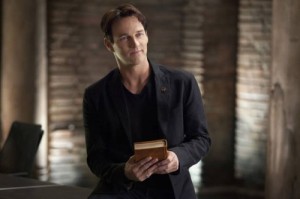
The rest of tonight’s episode was pretty much centered around the vampires.  Because of the “terrorist” bombings of the True Blood factories, vampires are starting to feed on human beings.  (Among the unfortunate human victims is the county coroner who, after he turns into a vampire, ends up attacking Sookie and, in a funny if implausible twist, gets staked by a pair of chopsticks.)  Elijah, the greasy-haired sheriff who showed up at the end of last week’s episode, made the mistake of attempting to bully both Tara and Pam.  Tara reacted by killing him and for that, I say, “Yay, Tara!” because Elijah was seriously not a character that I was looking forward to spending too much more time with.  

Meanwhile, Rev. Newlin and Russell are continuing their creepy little courtship and Newlin is still keeping wolf puppy Emma as his personal pet.  Fortunately, Sam and Luna shifted into two of the most adorable white mice that I’ve ever seen and, as tonight’s episode concluded, they had managed to infiltrate the Authority’s underground bunker.

Bill, meanwhile, appears to have truly gone over to the other side as, during tonight’s episode, he continued to drink Lillith’s blood and even “arranged” for Eric to have a vision of Lillith killing Godric, a vision that apparently convinced Eric to come over to the Authority’s side.  As I’ve stated before, I’m not a huge fan of born again Bill and I’m still holding on to my ever dwindling hope that all of this is just some elaborate scheme of his.  On the plus side, Eric didn’t seem all that sincere about his conversion.

If there is something that might keep Bill from totally going over to the “dark side,” it’s that Russell is obsessed with drinking faerie blood and being able to walk around in daylight.  Russell is so obsessed with this idea that he gets into a violent brawl with Salome when Salome says that it’s not Lillith’s plan for them to walk in the daylight.  Denis O’Hare has always been so wonderfully decadent and evil as Russell but tonight featured some of his best moments since the third season.

After a few episodes the bordered on almost being frantic with activity and intrigue, “Gone Gone Gone” was nice change of pace with scenes (and characters) being allowed to naturally develop and the show’s signature melodrama a bit muted to make room for reflection.  The result was a surprisingly moving episode that will be remembered as one of the best of season 5.

Random Thoughts and Observation:

  • Tonight’s unofficial scene count: 32
  • They killed off my favorite minor supporting character tonight.  Molly, the wonderfully sarcastic techie vampire, was staked and wow, didn’t Rev. Newlin just go so excited by it all?  I really hope somebody stakes Rev. Newlin before the end of this season.  He’s a putzhead.
  • How neat was it when Lafayette and Sam were both taking care of those rednecks in the bar?  I like it when Sam gets to be all manly and stuff.  Not as much as I like it when Alcide does it but, unfortunately, Alcide is apparently still hanging out in that trailer with his drunk dad.
  • There’s an art to acting confused and Ryan Kwanten has mastered it.  Seriously, his performance of Jason has been one of the season’s highlights.
  • Only two (count ’em) more episode left this season!

First Impression: Telltale Games’ The Walking Dead: Episode 2 “Starved For Help”


Telltale Games released the first episode in their adventure game The Walking Dead months ago. Due to some of their past titles not panning out despite hype from the studio this time around it seems like Telltale may have finally found their groove with this game set in the zombie apocalypse world created by critically-acclaimed comic book author Robert Kirkman. With the first episode, A New Day, the company was able to capture the chaos and danger of the early days that was only hinted at in the comic book and in the AMC tv series.

That first episode introduced gamers to the two main characters that would be the focus of this horror-adventure title. Lee Everett and Clementine were characters rare in licensed video games in that they’re original to the title and also one of the better written and realized fictional characters in gaming. The first episode did a great job in setting up these two characters and the world that some thought the problems that has plagued Telltale Games with their episodic titles would pop up once more: great beginnings that would fizzle out with each new episode.

I’m happy to say that episode 2, Starved For Help, doesn’t fall in Telltale Games’ past pattern. In fact, this latest episode in the game actually builds on the strength of the first episode and improves upon what made it fun and very good while minimizing some of the flaws with that initial episode. We find Lee, Clementine and the survivors of the first episode (how a player made their decisions on who lives or dies in the first episode will determine the roster for episode 2) still at the motel complex from the first episode. They’ve been largely kept safe at their makeshift haven but the prospect of dwindling supplies has forced Lee and the group to venture out into the surrounding forest to forage for food. It’s during one such foraging mission that the group comes across another group that would kick-off the story for Starved For Help.

Telltale Games doesn’t try to recap too much of the first episode in this follow-up, but does let the dialogue between Lee and others remind gamers about their decisions in the first episode and how it has affected the situation Lee and his group has itself in. The addition of some new members to the group doesn’t feel forced but actually feel quite welcome as it helps keep the growing rift between two factions in the group from becoming too static. In fact, this episode actually makes some of the decisions made by characters we initially found to be on our side to be counter-productive and dangerous while those who came off as too rigid and confrontational end up being more sympathetic.

It’s during these dialogue sequences where players once again have a timed-limit to make their dialogue choices and decisions that The Waling Deadcontinue to impress. Once again players must make their dialogue-choices from four choices that doesn’t really come off as evil, good, indifferent, etc. It’s up to the player to determine just exactly which dialogue answer best fit the sort of game they’re playing. I’ve played through both episodes trying out myriad of choices available to me and with each and every different choices the game plays out much differently, but still continues to straddle the grey area. There’s no good or bad decision and it’s what makes this game’s dialogue-mechanic so much better than most games that use something similar.

The action part of the episode has some tweaks to QTE (quick time event) combat mechanic that makes targeting a tad better than what was available in the first episode, but this part of the game still remains the weakest link in what has so far been a stellar game. After just two episode I wouldn’t be surprised if most fans of the title just wish for the QTE’s to go away and let actions in future episode be determined by dialogue choices. It would definitely help keep the gamer’s from being pulled out of the narrative immersion they find themselves in.

Starved For Help is a great example of how a studio can learn from it’s past mistakes and improve on the template they’ve decided on from the beginning. Even the story that unfolds in episode 2 is a huge improvement from the first episode that was very good to begin with. We see Telltale Games handle the themes of survival vs living, moral grey areas in an apocalyptic world and survival at the cost of others with deft hands that best exemplifies what has been great about the comic book series. There’s been times when the narrative in the game actually comes off as more subtle and less exposition-heay than Kirkman’s own writing which for some is an improvement in itself.

With two episode now released it’s going to be interesting if Telltale Games can continue their new found groove of keeping things consistently good to great which their past games didn’t seem to have. Now three episodes remain and from the ending of episode 2 the group has found a new reprieve from their dire problem of low supplies, but at a cost that may come back to haunt Lee, Clementine and others.

Episode 1: A New Day

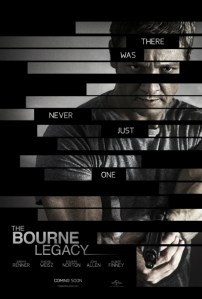
Quick Review: The Bourne Legacy (dir. by Tony Gilroy)


After completing The Bourne Ultimatum, Director Paul Greengrass and Actor Matt Damon were probably asked if they’d ever come back to do another. When you look at the overall story, Bourne’s journey was pretty complete, and Damon voiced that he’d only consider doing another if Greengrass did. After Greengrass bowed out, the notion of another chapter in the Bourne saga was dead in the water.

Universal had other ideas, deciding on moving forward and having the trilogy’s screenwriter, Tony Gilroy direct The Bourne Legacy. No stranger to making films, Gilroy is more known for making “slow burn” features like Duplicity and one of my favorites, Michael Clayton. If he were working on a remake to “All the President’s Men”, I’d be certain it was a perfect fit. For Bourne, however, we get something of a different result. Not a terrible one, but possibly not the one that everyone was hoping for. This almost makes sense, considering that even the Bourne novels themselves were taken over by Eric Van Lustbader after Robert Ludlum’s death.

The Bourne Legacy takes place during the same time period as The Bourne Ultimatum. The story expands not on what happened to Bourne post Ultimatum, but what happened to the programs in place in the aftermath of Bourne’s visit to New York. We find Aaron Cross (Jeremy Renner), part of a separate program that goes beyond Treadstone and Blackbriar, making his way through a snowy Alaskan wilderness. The new breed of agents (assets, as they’re referred to in the Bourne Universe) are genetically augmented by way of meds they call “Chems”. The Chems give the assets the edge they need to do what they do.

This bothered me a little, because Jason Bourne got by with none of that for years, but I chalk that part of the storyline to the notion that Gilroy has this thing for Pharmaceuticals and Chemicals. Michael Clayton’s antagonist worked for a Chemical Company. Duplicity’s spies were trying to steal secrets from a pair of what seemed like pharmaceutical companies. The reasoning behind Cross’ need for the Chems is made clear through the story, but it was a strange angle to go on, I felt.

During the course of Aaron’s trip, the Powers That Be, played by, Stacy Keach, Donna Murphy and an underused Edward Norton decide that Bourne’s actions (along with Joan Allen’s Pamela Landy) are going to cause all of their programs some serious trouble and decide to wipe the slate clean. Cross needs to both escape this while still finding a way to get a hold of the Chems he needs to stay at peak performance. That’s the idea behind the Bourne Legacy in a nutshell.

On a casting level, The Bourne Legacy is actually very good. Both Renner and Rachel Weisz handle their parts well, I thought (for what they were given). A few of the cast members return from the previous Bourne films, but their appearances are so brief that it may leave you feeling as if they were just a piece of leftover film from the Original Trilogy. If there’s anyone who feels out of place, it would have to be Edward Norton. He comes across in this movie like he wasn’t sure what he wanted to take on and decided to just do this to pass the time.

The action in the Bourne Legacy is on par with the other films, but this being Gilroy, there’s more of a distance between the action and the drama.  When I really think about it, there’s about the same amount of it as there was in The Bourne Identity or Supremacy – neither one of those were die hard action films – but the potential to wish for more is greater with Legacy. This is especially true with the way it was advertised. Just about every action scene in the film is in the trailer. That said, Gilroy has gotten better at being able to handle these scenes. A few more films like this and he should do really well in the future.

Just like Michael Clayton, however, the movie ends so abruptly that you may blink a few times in protest. Gilroy needs to work on that part.

So overall, The Bourne Legacy wasn’t a story that was needed, nor does it really add too much more to the Bourne Universe over all, but it’s nice to return to the espionage that surrounds it. Here’s hoping that this could give something more for Renner, Gilroy and the rest of the team.

VGM Entry 14: Konami in ’86


VGM Entry 14: Konami in ’86
(Thanks to Tish at FFShrine for the banner)

I never actually got into the Castlevania series until Symphony of the Night came out in 1997. It was conspiratorially taken off my radar. My parents weren’t about to have any of that demonic, Satan-worshiping trash in OUR household. Here’s some change, go pick up that new one I heard about in Reader’s Digest. M.C. Kids was it? (We actually owned a copy of the infamous unlicensed Bible Adventures.)

But I digress.

What drew me to Symphony of the Night in the first place was Michiru Yamane’s outstanding soundtrack. Her classical compositions drove the game, defining the setting and mood in a way that graphics alone could never accomplish. What I hadn’t known at the time was that this was a series tradition dating all the way back to the 1986 original. Even some of the tracks remained. Vampire Killer, arguably the most iconic song of the series (its rival, Bloody Tears, first appeared on Simon’s Quest in 1987), was in place from the get-go.

Konami is an especially difficult company to sort out soundtrack credits for. Kinuyo Yamashita has acknowledged that she composed most of the soundtrack, but refrained from disclosing which tracks specifically were her work. Her official biography confirms Wicked Child and Heart of Fire. The rest is anyone’s guess. The classical influences in both of these songs, which so appropriately set the mood for the entire game series, may well have been a part of her conceptual contribution.

Of course the entire soundtrack isn’t this great. Vampire Killer, Wicked Child, and Heart of Fire stand pretty far above the rest. The music varies from excellent to merely sufficient, though much to its credit it never devolves further. Kinuyo Yamashita still struggled I suppose, as did most of her contemporaries, to make do with the highly limited sound selections technology made available. But if some of the tracks sink a bit into mediocrity, they at least never dip below it. The classical influences maintain the work’s consistency and provide the requisite spooky haunt of a vampire game. She never tries to get too experimental about creating a sinister sound (as opposed to say, Hirokazu Tanaka on Metroid, which was just a little more hit-or-miss than people care to remember), and the decision pays off.

http://www.youtube.com/watch?v=-w_E4MmOugU
(Ganbare Goemon! Karakuri Dōchū)

Another significant Konami series launched in 1986 is Ganbare Goemon, familiar to western audiences as Legend of the Mystical Ninja. Konami never made a real go at marketing this series in North America. The SNES title Ganbare Goemon: Yukihime Kyuushutsu Emaki, appearing in North America as The Legend of the Mystical Ninja in 1992, was our first of very few ported installments. In fact, Wikipedia lists a whopping 35 Ganbare Goemon titles, of which only five were ever ported. At least up through the SNES era they all featured the Asian folk style you are currently hearing.

The first was Mr. Goemon, a 1986 arcade game, but Ganbare Goemon! Karakuri Dōchū followed that same year for the Famicom and was not a port. Satoko Miyawaki is occasionally credited with the composition of the latter, however I could not confirm this, nor whether he had any involvement in the arcade version. This musical style, similar to that of Yie Ar Kung-Fu, was and remains relatively unique for video games. Konami’s musicians would continue to improve upon it over the years, making it a staple feature of all of the early Ganbare Goemon games.

Scenes I Love: Apocalypse Now


It’s been awhile since I put up a scene I love from a film I love. Time to change that and what better way to do it than pick a favorite scene from one of the best films ever made: Apocalypse Now.

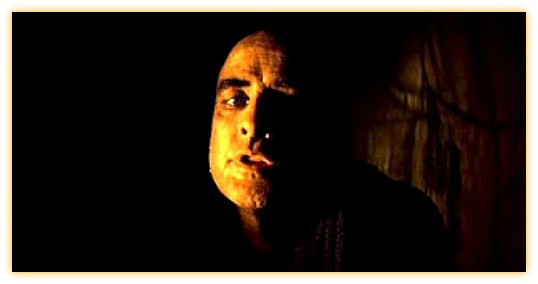
This particular scene occurs in the last act of the film which finally puts Capt. Willard (Martin Sheen) face-to-face with his target in the off-the-reservation Special Forces  commander Col. Kurtz. This is the first time we actually see Marlon Brando in the role of Kurtz in a film that’s been obsessed with his character right from the very beginning. The glimpses we get of Kurtz are fleeting as he remains in the shadows with only his rumble of a voice giving weight to his presence in the scene. I have to admit that even after seeing this film for over a hundred times through the years it’s still pretty difficult to understand some of what he is saying. Yet, when such an occurrence would be a death for a scene it doesn’t for this scene. It only helps highlight just how far down the abyss this former paragon of American military might has put himself in to accomplish a mission given to him by people he dismissively call “grocery clerks”.

There’s no soundtrack to try and manipulate the scene for the audience. It’s just the ambient noises of the jungle and the ancient temple Kurtz and his people have called home. Even the dialogue in the beginning of the scene where Kurtz inquires about where Willard was from was full of menace and hidden dangers. It’s very difficult not to get hypnotized by this scene. There’s not a fake beat to the dialogue between Sheen and Brando. The way the scene unfolds almost acts like a metronome that lulls the viewer until the reveal in the end when we finally see Kurtz’s face in full for the very first time.

Coppola has done great work before this film with hi first two Godfather films but this scene in this film I consider the best he has ever put on celluloid.

Kurtz: Are you an assassin?

Willard: I’m a soldier.

Kurtz: You’re neither, you’re an errand boy, sent by grocery clerks to collect a bill”

VGM Entry 13: Darius


VGM Entry 13: Darius
(Thanks to Tish at FFShrine for the banner)

Taito have kindly sent me a letter informing me of their intention to sue me for this post, and in particular for its visual and audio depictions of an out of print soundtrack for an out of print arcade machine, if I do not remove such content immediately. Taito being a subsidiary of Square Enix, I highly encourage you to boycott all Square Enix products in the future. Since their games are terrible these days anyway I am probably doing you a favor.

Unfortunately Hisayoshi Ogura is the one that suffers here, since Square Enix have simultaneously expressed no intention of legally distributing his work and barred all attempts by fans to share it.

It is very easy to get on a one-track mind and focus down home gaming in total disregard for the arcade. Arcade composers rarely had the lasting impact of Nintendo and computer game music, perhaps in part because arcade gaming as a business was pretty much dead by the end of the 80s. Where arcade music is still remembered today, it is usually in the form of NES and C64 port renditions. Yet in the mid-1980s, some producers still placed their finest resources into refining the arcade game first and foremost. Taito’s Zuntata sound team most significantly, and also Konami’s Kukeiha Club and Capcom’s Alph Lyla, were composing arcade music that far exceeded in sound quality anything ever heard on a home system. Taito did it best, and among their eccentric and innovative staff no one shines brighter than Hisayoshi Ogura. When Taito released its arcade shooter Darius in 1986, it achieved a level of sound quality that would not be surpassed until at least the late 1990s.

***Video removed due to Square Enix’s corporate bullying.***
Chaos and Boss 4

A collection of experimental oddities both catchy and disturbing, it could not have been better suited for the game it represents. Darius was experimental and innovative in many ways, featuring a triple-screen ultra-wide display and a non-linear level progression which would mix up the seven stages between (I believe) twenty-six possible maps, creating a slightly different experience on every play through. It even featured multiple endings–something you might not expect from a shooter game.

You probably wouldn’t expect to be fighting giant evil space fish, either. Darius receives pretty mixed reviews from a lot of shooter junkies these days, but if I was going to spend my quarters on anything in 1986 I know it’s the first game I’d have tried. It attempts to awe and bewilder, and it succeeds.

***Video removed due to Square Enix’s corporate bullying.***

You can really tell that Ogura designed his score to exploit every technological possibility available to him. The depth and fullness of the sound is overwhelming. It reminds me of the sort of audio experience I got from Square’s Einhänder–a game I bought specifically for the music. But Einhänder was released in 1997! Darius was 11 years old by then.

If it doesn’t sound that special to you, try plugging in headphones. Much like Kenneth W. Arnold’s Ultima soundtracks, my lousy laptop speakers can’t do it justice. I also recommend you try to get your hands on a copy of the soundtrack; Taito released a version as early as 1987, fully aware of its significance. I included a gameplay video of “Chaos” to showcase the music in action, but a playlist of the ost is also available. (Youtube link removed due to threats by Square Enix.) You can find full gameplay videos of each level with music on youtube thanks to *censored*.

***Video removed due to Square Enix’s corporate bullying.***

“The Sea” might be the most eclectic song in the mix. It’s certainly my favorite. You quickly discover that it does not intend to be a typical aquatic theme when the demented chime tones come into play. The next transition back to relative normalcy is quickly derailed by an erratic explosion of mechanized blast beats, and Hisayoshi Ogura wraps it all up in fittingly weird form with what feels like some sort of proto-dubstep.

Taito knew they were kings of the arcade. Their house band, Zuntata, even went so far as to perform some of the Darius soundtrack live.

***Video removed due to Square Enix’s corporate bullying.***
Chaos, performed live by Zuntata

A lot of game developers had “house bands” in the early days. This is part of why it is difficult to attribute authorship to a lot of game soundtracks of the era. Taking a closer look at these bands could prove pretty interesting–perhaps another task for another summer. Hisayoshi Ogura was not the first video game composer to perform his material live. I believe that credit goes to Koichi Sugiyama. But this concert, dated to 1990, has to be among the first.

Darius–a 1986 video game music masterpiece. Considering how easily it might have slipped by me unnoticed, I have to wonder how much more I am leaving behind.