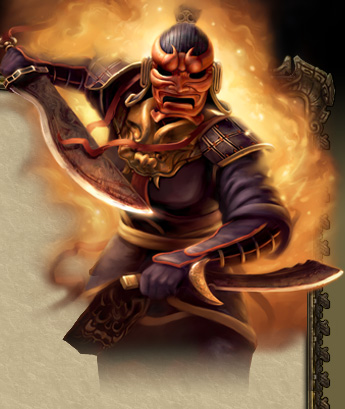
What I Played Today: Jade Empire


Every so often – because I like old games better than I like new ones, or so I’m told – I like to revisit a classic game. I’m sure, if you read my columns often, you’ve noticed that by now. Continuing this month’s theme of BioWare inundation (spurred, of course, by the release of Dragon Age II and the Arrival DLC) today I decided once again to play a little Jade Empire. Longtime WRPG fans will remember the title from its 2005 debut. Newcomers to BioWare’s camp may have missed this jewel. In the interests of saving the integrity of the game for anyone who never played the original release, I’m going to avoid serious game spoilers here, even though the game has been out for six years now.

The first thing I’ll say is that this game holds up better than most other original XBox titles with graphics that are bearable, at least, and smooth play on the XBox 360. I never played the game when it was originally launched on XBox, and only got into it after a friend recommended that I fork over the cash to buy it on the XBox Originals in Marketplace. Smooth emulation aside, I immediately fell in love with the title. Jade Empire offers a highly interactive game-play experience (more on this later) that is settled on the solid foundation of classic BioWare RPG structure. We slowly accumulate a group of loyal followers, whose personal story develops through conversation options between major plot developments in the overall story. Although many of these characters follow what we might call the “BioWare Rules” in terms of their personality archetypes (although Dawn Star is unconventional, she still reeks of Carth Onasi, doesn’t she?) they’re predictably detailed, with a diverse set of backgrounds and motivations. In this respect, I hardly think that Jade Empire is the gold standard for WRPGs. Its relatively simple story progression doesn’t lend toward diverse side missions undertaken in far-off locales.

The game’s outstanding feature, however, is not the party members, the story, the voice acting, the graphics… or even the interesting-in-theory morality system of competing philosophies. Unfortunately, while the idea of two philosophies competing against one another (Open Palm and Closed Fist) sounds compelling, and a refreshing departure from someone merely being good or evil, light or dark side, it amounts to the same thing. The complex motivations that would drive a practitioner of the Closed Fist according to the game’s story ultimately don’t matter; points are accrued by being a jerk, just as always. Sliding scale morality systems are always going to be imperfect in general, of course, while we’re on the subject… but I almost feel as if Jade Empire could have benefitted from a dual system; having both a good vs. evil slider, as well as competing philosophies (in this scenario, we might wish for more than two that are so diametrically opposed). Oh, and why can’t we ever have a philosophy of neutrality in these games? Wouldn’t that be fun? Maybe not.

The reason I keep revisiting Jade Empire, attempting to jump off for the third time, is because of the interactive game-play system. Even Mass Effect with its shooter based game-play doesn’t explore the potential as deeply as Jade Empire, which plays successfully like some kind of action game, only with distinct RPG elements. It lacks the elaborate combos that we might see from Devil May Cry or similar games, but it interweaves level-ups and equipped items just like a more traditional RPG. Unlike latter-day BioWare offering Dragon Age, we are truly rewarded in Jade Empire for dodging, and knowing when (and from where) to use our different martial arts styles and their different unique powers. Now, of course, those who are traditionalists and would rather have the stats decide things (this also includes people who just aren’t that good at action games) I suppose this is probably frustrating. I personally think it’s mild enough that once you get the hang of it almost anyone could have fun with the system and be successful in the game. For me, this outstanding combat system makes the game incredibly easy to just drop in to and play. In fact, every time I load it up and play, I angst over how much fun it is… and how it’s the one game amongst all of BioWare’s RPGs that never got a sequel.

Oh, yeah, and as a side bonus, the game features a 2-D scroller style airplane game where you pilot your airship and fire your weapon straight up toward a variety of aerial enemies and hazards that cross the screen and generally try to ruin your day. All of these sequences but the first one are optional, but they provide a nostalgic element for me…  and completing them provides a bunch of XP within the game, too.

And hey, maybe if enough people realize what a great game Jade Empire was… we’ll get that sequel after all.

Battlefield 3: “My Life” Trailer and 12-minute Gameplay Footage


One game which has been on my radar for months now and will be so for the rest of the year until it comes out in November 2, 2011. That’s a long time to wait for a game, but just looking at the footage and the trailer has sold me on this game. As much as I enjoy playing Activision’s Call of Duty series (both it’s Modern Warfare and Black Ops iterations) it will be nice to finally get something new to beat back that juggernaut.

One thing which the Battlefield games have always had above and beyond every other FPS shooters is the ability in multiplayer to not just be a boots-on-the-gorund grunt but also drive tanks and armored vehicles, pilot gunships and fighters. It looks like from this latest trailer (making great use of the song “My Life” from the Swedish band jj.) that driving tanks and piloting jets is still part of the gameplay.

For a game that’s showing gameplay footage at Pre-Alpha Stage of development this game looks beautiful. It’s only a wonder how it will finally end up looking when it’s gone gold and released to the general public. A general public with cash waiting to be spent with me one of said cash spenders.

Review: Game of Thrones Ep. 01 “Winter Is Coming”


[some spoilers]

George R.R. Martin’s historical fantasy series, A Song of Ice and Fire, has been decades in the making and has gained such a massive and loyal following that when news arrived several years back that HBO will adapt the first book in the series, A Game of Thrones, the news was welcome with cheers and some trepidation. Cheers because finally one of the most beloved fantasy novels of the last couple decades was finally getting a live-action treatment it’s fans were clamoring for. The trepidation came from these very same fans hoping that those involved in adapting the book didn’t screw things up and ruin something very precious to them.

Showrunners David Benioff and Dan Weiss have adapted what some consider a very complex and dense fantasy novel and came up with something that stays true to the source material while still keeping things from becoming too overly complicated. The first episode is aptly titled, “Winter Is Coming” and we see the show begin with an impressive panoramic scene showing the Wall in all its imposing grandeur as several member’s of it’s Nightwatch Brotherhood venture north of it into the snow-covered, icy wasteland in search of the nomadic wildlings. Their search find them not just a tribe of wildlings (not in a condition one would consider living) and something else which their Brotherhood were created to protect the rest of the Seven Kingdoms of Westeros south of the wall from. The Others make a brief and chilling appearance in the first ten minutes of the episode to give a glimpse as to the true danger poised to strike down on Westeros.

The episode soon moves to the kingdom who stands guard just south of the Wall and whose lord, Eddard Stark, stands to be one of the first line of defense against the winter that is coming and the dangers it brings. Lord Eddard “Ned” Stark is the sort of noble, uncompromising lord that stories of chivalry have taught readers for hundreds of years, but who really is the rare gem in a sea of rough and flawed stones that make up the other lords and knights of the Seven Kingdoms. We see him tending to his castle-fortress of Winterfell as he oversees not just his growing sons and daughters, but the sudden news that his old friend and liege, King Robert Baratheon (played with gluttonous glee by Mark Addy), will be arriving with his entourage to Winterfell.

The episode is slighty a few minutes above an hour in running time and in that time Benioff and Weiss were able to introduce a multitude of characters both large and small which would remain important throughout this series’ 10-episode run. We meet the rest of the Stark clan from Ned’s loyal and down-to-earth wife Catelyn (from House Tully) to his sons, Robb, Bran, Rickon and Jon Snow (Ned’s bastard son hence the “Snow” surname). Then there are his two daughters who are sun and moon in difference with Sansa the older and more social-conscious daughter to Arya the tomboy younger sister who wishes nothing more than to learn how to be a knight. Maisie Williams as Arya Stark is a joy to watch in her brief scenes in the episode. She fully embodies the spirit of Arya which has made the character such a fan favorite since she was first introduced by Martin to readers everywhere in August 1996.

Other fine performances of note in the episode were the ones put forth by Peter Dinklage as the dwarf Lannister brother to the gleaming beauties of his twin siblings, Queen Cersei Lannister (Lena Headey in a haughty performance so similar to her Gorgo role in 300, but minus the nobility inherent in the title) and Jaime “Kingslayer” Lannister (Nicolas Coster-Waldau playing the role as a bon vivant, pretty boy knight). It doesn’t take long to see Dinklage not as a dwarf actor playing a dwarf role, but just as Tyrion the bitter, world-weary son who knows his place in the scheme of things and have accepted them thus making him one of the most honest characters in this episode to date outside of Ned Stark.

The cinematography for this first episode was stunning to say the least. From the frozen forests and domain north of the Wall shot in such stark white and blues to the lush and earthy look given to the tropical domain of the Dothraki where the surviving children of the former king of Westeros now reside looking to find allies to retake their rightful place as ruler of the Seven Kingdoms. Even Winterfell is given such loving detail in how its shot to allow it to gain a semblance of personality. A personality of a kingdom harsh and one to brook the foolhardy and soft. Winterfell looks like a place that produces hardy, fatalistic, but able men willing to do that which must be done.

For fans of the book this episode shouldn’t be too difficult to follow despite all the characters being introduced. In fact, for a first episode it really packs in the details that set’s up what will become the many different plot strands that will begin to weave itself into complex tapestry of a tale that will take audiences from the stark realm of the The Wall and Winterfell to the lush seat of power at King’s Landing to the tropical and savannah flatlands for the Dothraki realm. It’s this attention to detail that may lose some non-fans of the books as it could be too much too handle right away. But I think viewers of HBO drama series of the past should be well-versed in juggling such amounts of details right from the get-go. If loyal fans of the Wire, Oz, Deadwood, True Blood and The Sopranos can attest to it’s learning how to handle such details in stride and just let the story take them away.

“Winter Is Coming” goes a long way towards quieting any lasting trepidations fans of the novels may have of this live-action adaptation. All the hype and media ad blitz HBO has created to push this series had given it a high bar to reach before an episode had even aired, but now that the first one has aired I’m happy to say that it more than reached that high bar and looks to surpass it with each coming new episode. If there was ever a scent that should truly sell this show to fans and non-fans alike it is the final three minutes. As lurid and licentious a sequence as it may be it is also one that sets the wheels turning for the rest of the series and show that Game of Thrones is not your typical fantasy drama on TV.

As an aside, the second viewing of this episode I ended up muting the early intro sequence and just listened to German power metal band’s song about Game of Thrones…it actually fit in well according to my fantasy nerd sensibilities.

Scenes I Love: Seven


[MAJOR SPOILERS!!!!!]

My weekend was full of sleep, coughing and just vegetating in front of my bedroom tv as I tried to get better from my bout of the cold and flu. For some reason or another AMC channel decided to hold a mini-marathon of David Fincher’s classic neo-noir thriller, Seven, and I must say that I probably saw all three straight showings before sleep finally took over. It surely made for some very unusual, drug-induced dreams.

I’ve always seen Seven as Fincher at his most exploitative best. If there was ever a modern grindhouse exploitation film of the past twenty years I would have to consider Seven as one of them. From start to finish the film just felt grimy and made one feel dirty just for having seen it. Take away all the gloss and veneer afforded Fincher due to modern film technology and techniques this film was grindhouse to its core. No better scene exemplifies and solidifies Seven as a grindhouse exploitation film than it’s shocking, nihilistic ending which bucked traditional Hollywood happy ending (or at least and ambiguous one).

It’s been made famous due to the powerful performances from the three leads who dominate the scene. It is almost played off like a stage play with some gorgeous camera work from cinematographer Darius Khondji switching from Morgan Freeman to Kevin Spacey to Brad Pitt with mathematical precision as the scene unfolds through very strong dialogue by screenwriter Andrew Kevin Walker.

The performances shown by Spacey is both chilling and otherworldly as the sociopathic John Doe urging Pitt’s Det. Mills to become wrath and punish him for his sin of envy. Looking helpless and desperate is Freeman’s Det. Somerset trying to talk some sense and decency to the rapidly unraveling Mills who has just learned that what is inside the box he’s been screaming for is his wife’s head.

The fact that the unfolded and ended the way it did honors the grindhouse sensibilities of past exploitation films where the good guys never always win and even when they do it’s at a very heavy cost to the victor. This climactic ending to Seven is so nihilistic that when the film was first shown in 1995 many walked out grumbling at such a dark and heavy ending. Where was the Hollywood happy ending everyone was so used to. There was no cavalry charging last second to save the day. No deus ex machina intervening to show that Mill’s wife was still alive. No, Fincher and crew knew they had something special in their hands and went full tilt to see it through.

It’s no wonder I still consider Seven to be David Fincher’s best film to date.

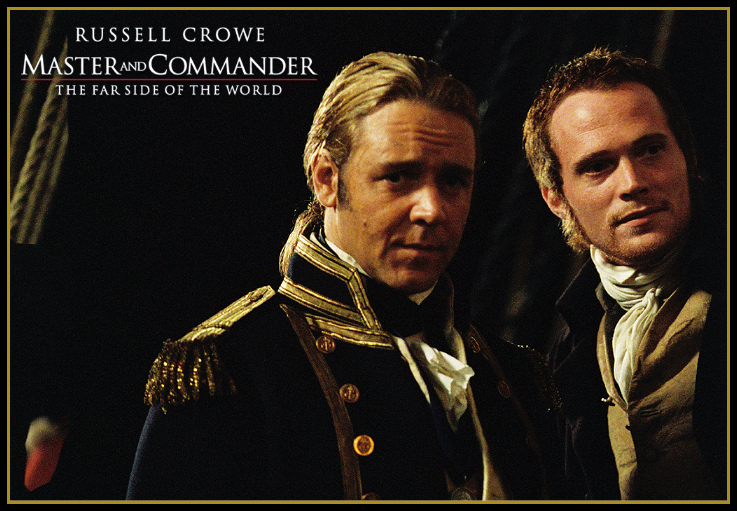
Quickie Review: Master and Commander: The Far Side of the World (Peter Weir)


If there was a film which deserved better when it first came out in 2003 it would be Peter Weir’s epic adaptation of the Patrick O’Brian seafaring novels starring the character of Capt. Jack Aubrey. It was just bad luck on the part of Weir’s film that it came out the same year and month as the juggernaut that would sweep through not just the box-office for the 2003 holiday season, but all through the award-season. If Master and Commander: The Far Side of the World had only come out a year later there’s a great chance it would’ve been the frontrunner for 2005 Academy Awards for Best Picture, Best Director, Best Adapted Screenplay and many more. But the juggernaut that was Peter Jackson’s Lord of the Rings: The Return of the King would not be denied after two previous years when Jackson and his magnum opus were passed over.

To say that Peter Weir was at the top of his game with Master and Commander would be an understatement. Working from a script written by Weir himself and John Collee, the film would take several episodes from the Patrick O’Brian Aubrey-Maturin novels and combine them to make a coherent and thrilling period piece that rarely ever get made anymore. This was epic filmmaking at its finest with Weir’s direction keeping the long-running time of the film from becoming too tedious. Yet, he was also able to keep the film from becoming one battle setpiece following another. There was enough of a balance between the quiet storytelling, especially between the characters of Capt. “Lucky” Jack Aubrey (played by Russell Crowe in what had to be his best role ever) and his close friend and ship’s doctor Stephen Maturin (Paul Bettany matching Crowe scene for scene) to keep the film grounded in reality.

Master and Commander is set during the Napoleonic Wars when France and England battle it out on land and in the high seas. On one side is the HMS Surprize captained by Jack Aubrey which patrols the sea lanes from French privateers looking to attack and loot the rich English whaling ships to help fund Napoleon’s ambitions. The film is actually a cat-and-mouse thriller wrapped around a character piece as Aubrey’s ship and crew, outgunned and less armored than the French frigate Acheron it has come across during its patrol, must not just try and survive but find a way to beat it’s larger opponent. It’s during the quiter scenes in-between sea engagements that the film actually becomes stronger. We see life onboard the HMS Surprize as being quite harsh and primitive and not so glamourous as past films about sailing life would have audiences believe. The film shows how this harsh life for volunteers and press-ganged crew ratings creates a strong bond of fellowship amongst the crew members that when they believe someone is jeopardizing their lives they quickly turn on that individual. But it’s through the near-dictatorial handling of his crew which keeps both ship and crew from devolving into mutiny. Crowe does a great job of giving Jack Aubrey that balance of ruthless taskmaster whose word is law onboard, but also gives his captain that bon vivant flair which when used accordingly makes Aubrey a hero to the very men he has to lord over.

This benevolent dictator was balanced out by Bettany’s Dr. Maturin who acts not just as the scientific counter to Aubrey’s militaristic personality, but also as the conscience of the ship who looks first to the crew’s well-being. This dynamic between Crowe and Bettany kept the film anchored and stabilized as we see the long-standing friendship between these two get tested not just by the crisis they find themselves in but also the vast ideological differences between the military man and the scientist. Yet, despite all their problems and difference when things became rough the two would settle it amicably and concentrate on their shared task with their bond of friendship intact and much stronger after.

The film doesn’t shirk it’s thrills as Master and Commander provides audiences with some of the most thrilling and accurate portrayal of naval combat during the Napoleonic era. There are no steel-hulls or rapid-fire guns. The engagements between the HMS Surprize and the Acheron were all brutal affairs from the first time the latter ambushes Aubrey’s ship early in the film to the final battle which sees not just ship-to-ship fighting but boarding actions as the crew of the Surprize attempt a desperate gamble to take the fight to the bigger French privateer. It’s a testament to Weir’s direction that even through the chaotic nature of each battle he’s able to keep each scene easy to follow and allow for main characters to stand out for audiences to recognize.

It’s a shame that the film didn’t succeed in the box-office more than it did. Master and Commander: The Far Side of the World showed that there was still old-school epic filmmaking left in Hollywood with filmmakers willing to tell a grand story with bigger-than-life characters on a broad canvas. The fact that it took an even more epic film to surpass Peter Weir’s film shouldn’t detract from this film’s accomplishments.

With Love, 6 Trailers From Lisa Marie and Evelyn


So, last night, I was feeling a bit down for a number of reasons so my BFF Evelyn came over and we had a little slumber party of sorts in my living room.  And before everyone does a double take and accuses me of trying to be all like Paris Hilton, let me just explain that when we refer to each other as being “BFFs,” we’re not just being sincere but we’re being postmodernly satiric.  It’s kind of the same principle behind why me and my sister Erin tends to casually toss around the word “bitch” whenever we’re having a conversation.  Of course, “BFF” doesn’t inspire quite the same reaction from the older folks at the family reunion as “bitch” does but that’s a whole other story.

Anyway, as I informed everyone earlier on twitter, Evelyn and I did all the usual things that you do at a slumber party.  We stripped down to our underwear, watched horror movies, ate food that we shouldn’t have eaten, had a violent pillow fight, and swore that we would never reveal the divine secrets of the ya ya sisterhood.  I also recruited her to look through all the possible picks for the latest edition of Lisa Marie’s Favorite Grindhouse and Exploitation Film Trailers and help me narrow them down to just 6 trailers. 

This, she helped me down without (too much) complaint.  Though it may not always be apparent, deciding which 6 trailers to feature each week is actually a pretty long and thorough process and it’s one that can be very tedious if you’re not a fan of these movies.  I think a lot of people would have said, “Who cares?  Just toss up 6 random trailers and be done with it.”  Not Evelyn.  Even as I forced her to watch some really odd and kinda disturbing trailers, she stuck with it until we had this week’s 6 trailers.  She even put up with me explaining to her why a certain trailer was more grindhouse than another.  And that is one of the many reasons why I love Evelyn and why she’ll always be my BFF.

And here’s the 6 trailers that she helped me pick for this week…

1) Stigma (1972)

Okay, Evelyn and me both literally fell in love with this trailer from the minute we heard that narrator say “The curse that begins with a kiss.”  Needless to say, we both jumped to a conclusion as to what that curse was and let’s just say it wasn’t syphilis.  But anyway, this appears to be some sort of cross between an old educational short and a blaxploitation film.  I haven’t seen this film yet and hadn’t even heard of it until I came across the trailer but now, it has become one of my obsessions.  I must see Stigma.  I must find out about the curse that begins with a kiss…

2) The Magic Garden of Stanley Sweetheart (1970)

Wow, isn’t that just the most annoying title ever?  It just screams “FILM SCHOOL GRADUATE!” at the top of its trust funded lungs.  Still, this trailer does have one line that made me laugh out loud and that line was: “Where am I going?”  Otherwise, this trailer is also memorable for the horrid “gingerbread” song that plays over the first few clips .  Evelyn claims that the song is now stuck in her head, which is pretty bad since the entire song is basically “something something gingerbread something something gingerbread…”  Evelyn thinks that Stanley (played by Don Johnson of A Boy and His Dog and The Harrad Experiment) looks hot in this trailer.  I think he’s a little bit too much of a pretty boy.  Neither one of us can believe that he later grew up to be the redneck in Machete.

3) Death Journey (1976)

Fred Williamson is …. Jesse Crowder!  Despite our different feelings concerning the appeal of Stanley Sweetheart, both Evelyn and I agreed that Jesse Crowder would kick his scrawny little ass.  That said, I objected to the “I’m going to bruise you up a little” line towards the end of the trailer but Evelyn defended it, making the argument that Crowder would have bruised up a man with a knife as well.

4) Rivals (1972)

“It could have been … a love story.”  Much like Stigma, this is a case of us just falling in love with a overdramatic tag line.  Apparently, the film itself appears to be a grindhouse version of Cyrus.

5) Zachariah (1971)

We had to include Zachariah because, as the trailer explains, this was the world’s first electric western.  Add to that, Don Johnson looks a bit less fancy here than he did as Stanley Sweetheart.

6) Get Carter (1971)

We saved the best for last.  Now, I know that the original Get Carter is such a classic (especially when compared to the Stallone version) that you might wonder if it really belongs here.  Well, trust me, it does.  Get Carter is pure grindhouse art and this trailer proves it.  Plus, both me and Evelyn were surprised and delighted to discover that once upon a time, Michael Caine was quite the sexy beast.  When, at the end of the trailer, we were told to “Get Carter before he gets you,” we both responded with, “Carter can have us.”

Cowboys & Aliens: Trailer 2


Last night saw the release of the latest (most likely the final) trailer for Jon Favreau’s sci-fi and western mash-up called Cowboys & Aliens.

There’s some new scenes shown in this latest trailer some of which were first shown earlier this month at WonderCon 2011. There’s less of the comedic aspect shown in the past trailers. The usage of Audioslave’s “Show Me How To Live” was a nice touch.

There’s not much else to say other than the film sold me fully at WonderCon 2011 so this latest trailer is just icing on the cake. With three more months to go before it finally sees it’s release there’s going to be a lot of hype surrounding this film and it better live up to it.

Cowboys & Aliens is still set for a July 29, 2011 release.

Rise of the Planet of the Apes: Trailer


The franchise which seemed to have been left for dead by Tim Burton’s attempt to reboot it in 2001 looks to try and make another go at it again ten years later. Tim Burton will not be anywhere near this reboot and instead will be in the hands of British newcomer Rupert Wyatt.

Rise of the Planet of the Apes (originally called Rise of the Apes which I actually prefer) looks to reboot the franchise by taking the origjnal Conquest of the Planet of the Apes ffrom 1972 and using that as the foundation for this reboot’s plot. It will star his Highness himself, James Franco, with Peter Jackson-regular Andy Serkis playing the role of ape leader, Caesar.

This film seems to have the full backing of Jackson’s WETA Digital to create all the apes in the film digitally. There won’t be any prosthetics and make-up work with this film unlike the previous ones. While some may think this is a bad idea I actually think WETA Digital’s work in creating total CG-characters in the past pretty much heads above other FX-shops (and I include Industrial Light & Magic). From the trailer the apes look quite realistic and even Caesar himself look very real.

Time and the film’s release will tell if this reboot will have a better reception than Tim Burton’s film. I, myself, am looking forward to it since of all the Apes film of the past it was always Conquest that remained my favorite of all of them.

Rise of the Planet of the Apes is set for an August 5, 2011 release.

Lisa Marie Hates Your Highness (dir. by David Gordon Green)


I saw the new “comedy” Your Highness a few days ago.  I say “comedy” because I’ve been told that the film is supposed to be a “comedy.”  Usually, however, a comedy also inspires a certain amount of laughter and I laughed exactly one time while watching Your Highness.  I can’t remember what joke it was that made me laugh.  Maybe I just couldn’t believe that this film had been made in the first place. 

The film is meant to be a satire on all of the fantasy films that have come out in recent years.  Danny McBride plays a cowardly prince who goes on a quest to rescue his brother’s fiancée from an evil warlock.  (The brother is played by my future lover, James Franco. )  During the quest … oh Hell, who cares?  The film’s idea of a joke is to have various character say “shit” and “fuck” while wandering around in a suit of armor.  Apparently, this joke is so hilarious that it pops up every 3 minutes or so.  This movie is kinda like an annoying 5 year-old who doesn’t understand that we’ve all heard his freaking knock knock joke before.

Definitely, if someone tries to convince you to see this film, run.  Personally, I watched it because James Franco is in the film but Franco’s hotness is obscured by a really bad wig.  Natalie Portman’s in this film as well, giving a surprisingly good comedic performance, and — check it out, boys! — you get to see her in a thong.  That’s right.  The boys get one of the best actresses of modern times in a thong while me?  I get James Franco with his undeniable sexiness buried underneath a lot of hair.  It doesn’t seem quite fair.

Film Review: Network (dir. by Sidney Lumet)


With the recent passing of director, Sidney Lumet, I decided to watch one of Lumet’s best-known films, the 1976 best picture nominee Network.

Network tells the story of Howard Beale (played by Peter Finch).  Howard is a veteran news anchor at a fictional television network.  Because his ratings are in decline, Howard is fired.  Howard reacts to this by announcing that he will commit suicide at the end of the next broadcast.  Ironically, so many people tune in to see Howard kill himself that his ratings improve and Howard gets to keep his job under the watchful eyes of news director Max Shumacher (William Holden) and network executive Dianne Christiensen (Fay Dunaway). 

At the same time, Max and Dianne are adulterous lovers.  The course of the film’s narrative finds Max abandoning his wife (Beatrice Straight) and Dianne, who is described as a “child of the tube,” enthusiastically trying to produce an early reality television show starring a group of Marxist revolutionaries.  They do this under the paranoid eyes of network president Frank Hackett (Robert Duvall) and Frank’s boss, the corrupt Arthur Jenson (Ned Beatty).

However, Howard Beale isn’t just an over-the-hill news anchor.  He’s actually a seriously mentally ill man who hears voices and who starts to see himself as some sort of messiah.  Eventually, this leads to a disheveled Howard giving a crazed speech in which he encourages viewers to yell, “I’m as mad as Hell and I’m not going to take it anymore!”  Yes, this is the famous scene that is always used whenever some pompous media jackass wants to criticize the current state of television.  Even though I think it’s one of the most overrated scenes in history, here it is:

Anyway, after this scene, Dianne starts to promote Howard as the “Mad Prophet of the Airwaves” and Max gets all outraged over how the news no longer has any integrity (bleh, Max is kinda full of himself) and eventually, Howard’s mad rantings get the attention of Arthur Jenson who has plans of his own for Howard.  The whole thing eventually ends on one of those rather dark notes that’s impressive the first time you watch it but just seems more heavy-handed and clumsy with subsequent viewings.

As you might be able to tell from my review, I almost felt as if I was watching two different movies when I watched Network.  For the first hour, the movie is a sharp and clever satire on the media.  The characters are sharply drawn, the performance are full of nuance, and even the villainous Dianne is allowed a bit of humanity.  And then, Howard gives his famous “mad as Hell” speech and the entire freaking film pretty much just falls apart as suddenly, all the characters start to act like cartoons.  The film’s satire becomes so heavy-handed that you actually find yourself wanting to watch something mindless and brainless just because you know it would piss off self-righteous old Max.  The actors stop acting and instead concentrate on shouting.  Whatever humanity Dianne had been allowed suddenly vanishes and she just becomes yet another stereotypical “castrating bitch.”  Max gets to spend a lot of time telling her why she’s worthless and it pretty much all comes down to the fact that 1) she’s under 40 and 2) she has a vagina.  (Never mind the fact that Max has abandoned his wife, apparently men are allowed to be assholes.)  By the time the 2nd half of the film ends, you don’t care about whatever the film’s message may have been.  You’re just happy that everyone has finally shut up.

As I sat through the second half of this film, it soon became apparent to me why Aaron Sorkin has continually cited Network‘s screenwriter Paddy Chayefsky as a major influence.  Chayefsky won an Oscar for writing Network and he’s constantly cited as one of the greatest screenwriters of all time but, quite frankly, his script isn’t that good.  Much like Sorkin’s work, you’re aware of the screenplay not because of what the characters say but because they say so much.  This is the type of film that is often wrongly called prophetic by bitter old men.  This is largely because the script itself was written by a bitter old man.  The only true insight one gets from this movie is the insight that the old will always view the young and the new as a threat.

And yet, even as the second half of the film collapses around us, Network still holds our attention.  We’re still willing to stick around to see how all of this ends (and keep an eye out for a 17 year-old Tim Robbins who made his uncredited film debut at the end of Network).  This has nothing to do with anything written by Paddy Chayefsky and everything to do with the direction of Sidney Lumet.  I once read somewhere that you can’t make a good film out of a bad script.  I’m not sure who said that though it has a definite William Goldman sound to it.   Well, if nothing else, Network proves that this is not always the case. 

To me, there is no more fitting tribute to Sidney Lumet than to say that he somehow managed to create something worthwhile out of Network.