April Noir: Thief (dir by Michael Mann)


1981’s Thief tells the story of Frank (James Caan).

Frank is a professional diamond thief, one of the best in the business.  He’s so cool that he even has his own Tangerine Dream soundtrack.  After doing a stint in prison, Frank lives his life very carefully and with discipline.  He’s determined not to return to prison.  His mentor (played by Willie Nelson) is still behind bars and will probably die there.  In fact, Frank has even found himself thinking about abandoning his criminal lifestyle.  He’s got two front businesses, both of which are doing well.  (Frank’s used car lot looks like some sort of alien world.)  He’s fallen in love with a cashier named Jessie (Tuesday Weld) and it’s starting to seem like now would be a good time to settle down and become a family man.  The only problem is that Frank is working for Leo (Robert Prosky) and Leo has absolutely no intention of allowing Frank to walk away.  As Leo puts it, Frank belongs to him.  That’s not a smart thing to say to someone like Frank.

Frank’s an interesting character.  He’s the film’s hero, not because he’s a good guy but because he’s a smidgen better than most of the other bad guys.  He’s a professional, one who goes out of his way avoid unnecessary complications.  When we see him on the job, it’s impossible not to admire just how good he is at stealing stuff.  When he uses a blowtorch to break into a store or a safe, the screen is full of sparks and, for a few minutes, Frank looks like some sort of cosmic super hero brought to life.  We admire Frank but we discover early on that he’s willing to get violent.  He’s willing to pull a gun and threaten his way out of a situation.  Frank is loyal.  He visits his mentor in prison.  He takes care of his partner-in-crime, Barry (Jim Belushi, making his film debut).  He truly loves Jessie.  But, at heart, he’s a criminal who doesn’t hesitate to pull the trigger when he has to.  The question the film asks is whether one can just go straight, after years of breaking the law and living in the shadows.  Can Frank abandon the lifestyle, even for love?  Or is he destined to always be a thief?

Thief was Michael Mann’s feature film debut.  (The Jericho Mile was Mann’s directorial debut but it was made for television.)  Thief is full of the usual Mann themes and also Mann’s signature style, showing that Mann knew exactly what type of films he wanted to make from the start of his career.  The nights are full of shadows.  The days are deceptively calm.  The neon of Frank’s car lot glows like another dimension.  The final bloody shoot out takes place at night, in the type of suburban neighborhood in which most people would probably love to live.  And holding the film together is James Caan, giving a coolly centered performance as a man who has learned to hold back his emotions and who won’t be controlled by anyone.  Halfway through the film, Caan delivers a seven-minute monologue about life in prison and it’s an amazing moment, one in which Caan shows just how good of an actor he truly was.  Thief is an effective and stylish neo-noir, one that sticks with you as the end credits roll.
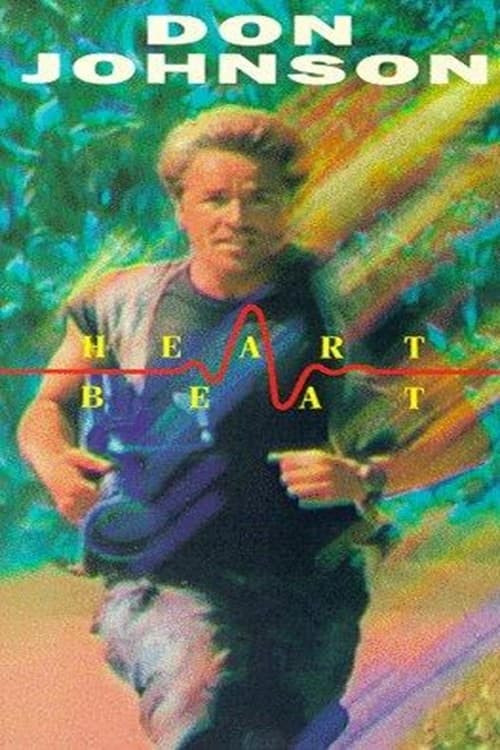
 

Musical Film Review: Heartbeat (dir by John Nicolella)


1987’s Heartbeat opens with Don Johnson in an unidentified Central American country.

Rebels are moving through the jungles.  Helicopters are flying over villages and firing off missiles.  In the middle of it all is Don Johnson, playing a character identified as being “The Documentary Filmmaker.”  Johnson carries a large movie camera with him, recording all of the violence and the carnage.  Is Johnson trying to expose the evils of the government?  Is he trying to expose the rebels?  Is he just an adrenaline junkie who can’t help but go to the most dangerous places in the world?  I have no idea and I’m not sure that the film does either.

A bomb explodes.  Johnson is thrown back.  Soon, Don Johnson is being carried into a dark room on a stretcher.  It appears that he might be dying but, even as his heartbeat is slowing down, his spirit is still hanging around and having flashbacks to the attack on the village, which we just saw less than a minute ago.  Eventually, Johnson’s spirit has other flashbacks.  He remembers talking to Paul Shaffer.  He remembers his strained marriage to an unnamed woman played by Lori Singer.  He remembers his youth as the son of a Las Vegas showgirl who is played by Sandahl Bergman.  (Bergman also played a showgirl in Bob Fosse’s All That Jazz and her scenes in this film often feel as if they’ve been directly lifted from Fosse’s classic film.)  David Carradine shows up as someone who might be Johnson’s father or who might just be some random guy rolling dice in the backroom of a strip club.  Johnson remembers his friendship with a graffiti artist (Giancarlo Esposito), who has a sister (Angela Alvarado) who was a prostitute.  The main message seems to be that the Documentary Filmmaker recorded the dangers of the world while also trying to remain emotionally detached, much like Robert Forster in Medium Cool.  Now that he’s dying, he’s left to wonder whether he made the right choice in refusing to get personally involved.

Oh, and did I mention that this film is basically a 65-minute music video?  Don Johnson sings through the entire movie, in a style that does its best to imitate the tough growl and soulful yearning of Southern rock and roll but which ultimately only serves to show that Johnson made the right decision in focusing on acting instead of singing?

After I came across this film on Lettrboxd and then watched it on YouTube, I did a bit of research (which is a fancy way of saying that I spent a minute reading a Wikipedia entry) and I discovered that, at the height of his Miami Vice success, Johnson released his debut country rock album, Heartbeat.  Heartbeat the film was something that Johnson made in order to promote Heartbeat the album.  Directed by frequent Miami Vice director John Nicollela, Heartbeat the film is so self-indulgent and determined to prove that Don Johnson is a soulful artist that it becomes oddly fascinating to watch.  Johnson’s Documentary Filmmaker is a bit of a cad but the film seems to argue that 1) it’s not really his fault because women find him to be irresistible, 2) it’s really his mom’s fault for getting a job, and 3) it ultimately doesn’t matter because the Filmmaker is a great artist whose work will live on even after he dies.  It’s a vanity film for a vanity album and it’s all so vain that it becomes hard to look away from.

In the end, both the music from the album and the promotional film leave one feeling that, in 1987, Don Johnson might have had an unreasonably high opinion of his musical abilities.  That said, as anyone who has seen Cold In July can tell you, Don Johnson eventually did become a very good actor.

Retro Television Review: Miami Vice 3.7 “El Viejo”


Welcome to Retro Television Reviews, a feature where we review some of our favorite and least favorite shows of the past!  On Mondays, I will be reviewing Miami Vice, which ran on NBC from 1984 to 1989.  The entire show can be purchased on Prime!

This week, Willie Nelson and Steve Buscemi guest star!

Episode 3.7 “El Viejo”

(Dir by Aaron Lipstadt, originally aired on November 7th, 1986)

Using their undercover identities of Burnett and Cooper, Crockett and Tubbs are attempting to take down a Bolivian drug lord named Mendez (Anwar Zayden).  Unfortunately, Crockett’s first attempt to bust Mendez does not go so well.  Their meeting, which is being held at a museum for some reason, is interrupted by a security guard.  In the resulting shootout, the security guard is killed and a green briefcase that’s full of cocaine is stolen by an old man named Jake Pierson (Willie Nelson).  Soon, Jake is attempting to contact Mendez himself, offering to bring him the briefcase.  Jake’s actions also bring him to the attention of Crockett and Tubbs, who both wonder why a 66 year-old Texan with no criminal record is suddenly trying to get involved in their drug deal.

Jake, it turns out, is a former Texas Ranger.  When he was younger, he was a legend.  He and his partner took down criminals like Bonnie and Clyde and protected Texas from Mexican revolutionaries who were preying on the border towns.  It’s been a while since Jack retired.  Now, he lives in a tiny apartment and spends most of his time thinking about the past.  He’s still a killer shot with a gun and knows how to handle himself in a fight.  But he also has a heart condition and, in fact, he would have died early on in the episode if Tubbs hadn’t given him his pills.  Crockett, for his part, idolizes the Texas Rangers, to an extent that almost seems out-of-character when you consider how cynical Crockett is usually portrayed as being.  Crockett is stunned that a former Ranger would be involved with running drugs.  Even though he’s pretending to be career criminal Sonny Burnett, Crockett still asks Jake about all of his adventures as a Ranger and does little to hide how impressed he is.

So, why has Jake gone over to the bad side?  Well, he really hasn’t.  It turns out that the son of his former partner was murdered by Mendez and Jake is looking to get revenge.  It all leads to a number of shoot-outs, including an exciting one that occurs on a Miami highway and an explosive finale at a cemetery.  Jake kills Mendez and his men but, in typical Miami Vice fashion, he takes a bullet himself and dies right after he reveals that he knew Crockett was a cop all along.

This episode features two notable guest stars.  Along with Willie Nelson, Steve Buscemi shows up in a small but memorable role as Rickles, who serves as a go-between for Crockett and Mendez.  Buscemi is as wonderfully weaselly as ever and, even though he’s a bit stiff as an actor, Nelson still brings a lot of Texas authenticity to the character of Jake Pierson.  Of course, in real life, Vice would have stopped Willie and searched his tour bus as soon as he entered the Miami city limits.  This is a pretty dark episode but it’s still amusing to watch iconic hippie stoner Willie Nelson play a cop, even if Jake is retired.

This was a good episode.  That Don Johnson and Willie Nelson were friends in real life is easy to deduce from witnessing how easily they play off of each other in this episode.  This is another episode where the bad guys are defeated but at the cost of a good guy.  Mendez will soon be replaced by another drug lord but no one will ever replace Jake Pierson.


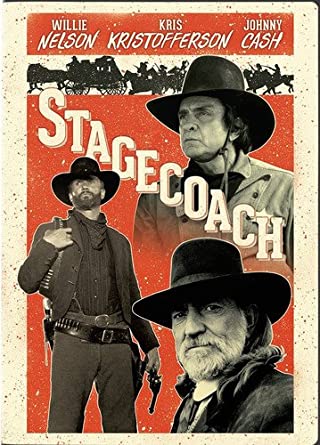
Stagecoach (1986, directed by Ted Post)


The year is 1880 and Geronimo and his Apaches are on a warpath against the people who have taken their land.  Despite the warnings of the local Calvary officers, one stagecoach tries to make the long journey from Arizona to New Mexico.  The seven passengers may start out as strangers but they’re going to have to work together to survive the journey.  The most famous passenger is dentist-turned-gunslinger Doc Holliday (Willie Nelson).  The most infamous is the Ringo Kid (Kris Kristofferson), an outlaw who has recently escaped from prison and who is looking for revenge against the men who framed him for a crime that he didn’t commit.  Henry Gatewood (Anthony Fraciosa) is a banker who has embezzled money and is looking to make a quick escape.  Foppish Trevor Peacock (Anthony Newley) sells liquor.  Dallas (Elizabeth Ashley) is a former prostitute looking to start a new life.  Mrs. Mallory (Mary Crosby) is nine months pregnant and traveling to reunite with her husband, an officer in the Calvary.  Finally, Hatfield (Waylon Jennings) is a chivalrous gambler.  Riding atop the stagecoach is Buck (John Schneider), who gets paid 8 dollars a month to risk his life taking people through Apache country, and Curly (Johnny Cash), the tough-but-fair town marshal who plans to arrest the Ringo Kid as soon as they reach civilization.

Made for television, Stagecoch is an adequate remake of the John Ford classic.  The story remains basically the same, with the main difference being that the majority of the characters are now played by country-western singers who are a few years too old for their roles.  Doc Holliday, who died of “consumption” when he was in his 30s, is played by Willie Nelson, who doesn’t look a day under 70.  The Ringo Kid is played by Kris Kristofferson, who, despite having literally played Billy the Kid a decade earlier, still doesn’t look like he’s ever been called a “kid” at any point in his life.  Compared to their original counterparts, the remake’s characters have been slightly tweaked so that they fit with the outlaw country images of the singers playing them.  Doc Holliday sympathizes with Geronimo and says that his use of whiskey is “medicinal.”  Kristofferson’s Ringo Kid is more openly contemptuous of authority than John Wayne’s.  Waylon Jennings is less of a cynic in the role of Hatfield than John Carradine was and Johnny Cash sits atop the stagecoach like a man on a holy mission.

The cast is the main reason to watch this version of Stagecoach.  The film can’t match the original but Nelson, Kristofferson, Jennings, and Cash obviously enjoyed playing opposite each other and, even if Nelson and Kristofferson are miscast, all of them bring some needed country-western authenticity to their roles.  As for the non-singers, Mary Crosby, Elizabeth Ashley, and John Schneider all make the best impressions while both Franciosa and Newley seem too 20th Century for their western roles.  Director Ted Post does a good job with the action scenes and keeps the story moving, even if the remake’s status as a TV production keeps him from capturing visual grandeur of Ford’s original.  Stagecoach is a respectful remake of a classic, one that can be appreciated when western fans on its own merits.

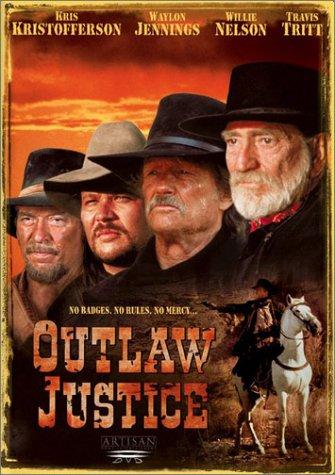
Outlaw Justice (1999, directed by Bill Corcoran)


During the closing days of the old west, the evil Holden (Sancho Garcia) guns down retired outlaw, Tobey Naylor (Waylon Jennings).  Tobey’s son, Bryce (Chad Willett), is determined to get revenge so he teams up with three members of Tobey’s old gang, Lee Walker (Willie Nelson), Jesse Ray Torrance (Kris Kristofferson), and Sheriff Dalton (Travis Tritt).  They ride into Mexico, searching for one final shootout.  Along the way, they befriend the locals, find time to rebuild a burned-out church, and bicker like aging gunslingers in a Larry McMurtry novel.  Chad Willett and Willie Nelson also find time to fall in love with local women because, obviously, the entire film can’t just be gunfights and church-building.

Outlaw Justice is a standard western, which is distinguished only by the casting of the pioneers of outlaw country music as actual outlaws.  Since this was made during the Lonesome Dove-Unforgiven era of westerns, there’s some talk about how Lee and Jesse Ray are past their prime but otherwise, it’s an angle that largely left unexplored.  Of the singers, Kris Kristoffeson and Travis Tritt are probably the best actors but Willie Nelson seems to be having the most fun.  (Nelson has enough natural charisma that he can get away with a lot.)  If you’re a fan of westerns who doesn’t demand too much from the movie you’re watching, Outlaw Justice will probably be entertaining enough.  Otherwise, it’s pretty forgettable.

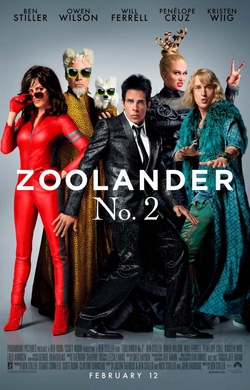
Cleaning Out The DVR Yet Again #16: Zoolander 2 (dir by Ben Stiller)


(Lisa recently discovered that she only has about 8 hours of space left on her DVR!  It turns out that she’s been recording movies from July and she just hasn’t gotten around to watching and reviewing them yet.  So, once again, Lisa is cleaning out her DVR!  She is going to try to watch and review 52 movies by Wednesday, November 30th!  Will she make it?  Keep checking the site to find out!)

zoolander_2_poster

On October 14th, I recorded Zoolander 2 off of Epix.

A sequel to the 2001 cult hit, Zoolander 2 came out earlier this year and got absolutely terrible reviews and quickly vanished from theaters.  Watching the film last night, I could understand why it got such terrible reviews.  Zoolander 2 is not only a terrible movie but it’s also a rather bland one.  Somehow, the blandness is even more offensive than the badness.

Zoolander 2 opens with Justin Bieber getting assassinated and Derek Zoolander (Ben Stiller) being forced to come out of retirement and discover why pop stars are being targeted.  And, of course, Zoolander can’t do it without the help of Hansel (Owen Wilson)!  Penelope Cruz is in the film as well, playing  Zoolander’s handler and essentially being wasted in a role that could have been played by anyone.

Oh!  And Will Ferrell returns as well.  Ferrell gives a performance that essentially shouts out to the world, “Fuck you, I’m Will Ferrell and no one is going to tell Will Ferrell to tone his shit down!”

Actually, I think everyone in the world is in Zoolander 2.  This is one of those films that is full of cameos from people who probably thought a silly comedy would be good for their image.  For instance, there’s a huge number of journalists who show up playing themselves.  Matt Lauer shows up and I get the feeling that we’re supposed to be happy about that.  There was a reason why people cheered when the sharks ate him in Sharknado 3.

You know who else shows up as himself?  Billy Zane!  And Billy Zane has exactly the right type of attitude for a film like this.  He shows up and he mocks the whole enterprise by giving the Billy Zaniest performance of Billy Zane’s career.  For that matter, Kiefer Sutherland also shows up as himself.  I’m not really sure what Kiefer was doing in the film but he makes sure to deliver all of his lines in that sexy growl of his.  Kiefer knows what we want to hear.

You may notice that I’m not talking about the plot of Zoolander 2.  That’s largely because I couldn’t follow the plot.  This is an incredibly complicated film but it’s not complicated in a funny way.  Instead, it’s complicated in a way that suggests that the film was made up on the spot.  It’s as if the cast said, “We’re all funny!  Just turn on the camera and we’ll make it work!”

The problem with Zoolander 2 is obvious.  The first film pretty much exhausted the comic possibilities of making a spy film about shallow and stupid models.  Don’t get me wrong — the first film did a good job but it’s not like it left any material untapped.  But I would ask you to indulge me as I imagine an alternate reality.

Consider this: Terrence Malick was reportedly a huge fun of Zoolander.

Let’s take just a minute to imagine a world in which Ben Stiller asked Terrence Malick to write and direct Zoolander 2.  And let’s say, just for the sake of argument, that Malick agreed!

Just think about it — 4 hours of Zoolander and Hansel staring up at the sky and thinking about nature.  “What is this thing that causes the heart of man to beat?” Zoolander asks.  “Are we nature or has nature become us?” Hansel replies.

That would have been a fun film!

44 Days of Paranoia #16: Wag the Dog (dir by Barry Levinson)


For today’s entry in the 44 Days of Paranoia, we’re taking a look at Barry Levinson’s 1997 political satire, Wag The Dog.

Wag the Dog opens with a White House in crisis.  With two weeks to go until the Presidential election, it’s been discovered that the incumbent President has had a brief dalliance with a girl scout.  Up until the scandal became public, the President was enjoying at 17 point lead in the polls.  Now, that lead is about to evaporate unless something can be done to keep the American public from thinking about the President’s personal life.

Significantly, the President himself never appears on-screen.  We never learn his position on the issues.  We never hear about anything he’s done during his first term.  We don’t even know what political party he belongs to.  (However, his opponent is played by Craig T. Nelson so I’m going to assume that the President is a Democrat.  Because, seriously, it’s hard for me to imagine Nelson being anything other than a Republican…)  The President remains a shadowy and insubstantial figure who, in the end, represents nothing.

Instead of getting to know the President, we instead spend the film with the aides who have to clean up after his mess.  One of those aides, Winifred Ames (Anne Heche), calls in a legendary (and rather sinister) political PR man, Conrad Bean (Robert De Niro).  Conrad announces that the only way to save the campaign is to distract the American public with a quick and totally fake war with Albania.  Why Albania?  According to Conrad, Albania has a sinister name and nobody knows anything about it.

To help create this fake war, Conrad recruits Hollywood film producer, Stanley Motts (a hilariously manic Dustin Hoffman).  Much as Conrad is a legend in politics, Stanley is a legend in Hollywood.  Stanley enthusiastically jumps into the project of creating a fake war of Albania, manufacturing everything from fake war footage to patriotic songs to anything else necessary to rally the American public.  Denis Leary shows up as a mysterious figure known as the Fad King and schemes how to make war with Albania the latest trend.  Willie Nelson sings a song to stir the spirit of every patriotic American.  A very young Kirsten Dunst is recruited to play a terrified orphan in staged Albanian atrocity footage.  A shell-shocked vet (Woody Harrelson) is cast as the Albanian War’s first hero.  Stanley greets every problem with an enthusiastic exclamation of, “This is nothing!”

Along the way, a rather odd friendship develops between the secretive Conrad and the overly verbose Stanley.  However, when Stanley, who often laments that he’s never won an Oscar, starts to complain about the fact that he’s never going to get any recognition for his “greatest production,” Conrad finds himself forced to reconsider their relationship.

Wag the Dog was first released in 1997 and, thanks to David Mamet’s darkly comedic script and Barry Levinson’s brisk direction, the film feels incredibly prophetic.  Indeed, all the film needs is for someone to mention making the war a trending topic and it would be impossible to tell that it was made 16 years ago.  Wag the Dog accomplishes the best thing that any political satire can hope to accomplish: it makes you question everything.  Whenever one watches a news report triumphantly bragging about the latest done strike, it’s hard not to feel that Stanley Motts would approve.

Other entries in the 44 Days Of Paranoia:

  1. Clonus
  2. Executive Action
  3. Winter Kills
  4. Interview With The Assassin
  5. The Trial of Lee Harvey Oswald
  6. JFK
  7. Beyond The Doors
  8. Three Days of the Condor
  9. They Saved Hitler’s Brain
  10. The Intruder
  11. Police, Adjective
  12. Burn After Reading
  13. Quiz Show
  14. Flying Blind
  15. God Told Me To