Review: Sucker Punch (dir. by Zack Snyder)


There have always been films through the years which will garner extreme reactions from its audiences. These reactions will always take two sides on the film. People who see these films will either love them or they will hate them. There is to be little to no middle ground reaction when it comes to these films. In 2009, we had James Cameron’s epic scifi Avatar which had two sets of fans. Those who loved it to the point that it transcended simple fandom into something these people thought as important. Then there were the vocal minority who absolutely hated the film. Whether both fans were right in their opinions was (and continues) to be irrelevent. All that mattered to these people was that they’re right and the other side was wrong.

2011 is entering it’s second season and a film finally arrived which seem to have elicited the same sort of reaction from people who have seen it. Sure, there’s some who saw it merely as entertainment and left it at that, but there’s a growing rift between those who loved the film and those who hated it. The film which seem to have caused this is the action-fantasy film Sucker Punch.

To say that Zack Snyder’s latest visual extravaganza would create discussion amongst filmgoers would be an undertstatement. Sucker Punch has arrived to much genre fandom fanfare. This was a film that seemed to take genres from all corners like scifi, fantasy, anime and manga and mashed them all up into something new and serving it up to the legion of fans who love those very things. Zack Snyder has made his reputation as a filmmaker as a visual artist. His entire filmography from the Dawn of the Dead remake all the way up to his adaptation of the Alan Moore graphic novel Watchmen have all been very strong visually. His grasp of narrative structure continues to grow and improve but it’s always been his handling of dialogue which has tripped him up.

Sucker Punch is a tale within a tale about a young woman we come to know as Baby Doll (played with an almost angelic quality by Emily Browning). The film opens up with the curtain rising on a theater stage and we soon become witness to a dialogue-free opening sequence of the events which transpired to bring Baby Doll to the Lennox House mental institution. This entire opening sequence is a great example of Snyder as a master of creating a montage of striking visuals sans dialogue with only music to break the silence. It helped that the music chosen to accompany this scene was a haunting rendition by Emily Browning herself of the Eurythmics’ “Sweet Dreams (Are Made of These)”. Just like in Watchmen‘s own intro title sequence, Snyder was able to convey the beginnings of the story without the need for dialogue and do it so well that we as an audience understand fully all that’s transpiring on the screen.

Once this prologue ends we move onto the main setting of the film where Baby Doll gets put into the care of the Lennox House’s resident boogeyman in the form of Blue as played with slimy charm and panache by one Oscar Isaac (last scene chewing up the English countryside in Ridley Scott’s Robin Hood). The audience sees what Baby Doll sees as Blue gives her the tour of the facilities which finally ends at the “Theater” where all the female patients act out their problems and fears through the guidance and help of Doctor Gorski (played by the lovely and return Snyder performer, Carla Gugino).

The first 15 minutes of this film was pretty much a basic set-up of what Snyder will use as his blueprint for the rest of the film. All the different levels of fantasy Baby Doll will imagine and inhabit throughout the film is rooted deeply in this initial sequence of events which begins the film. The clues as to who the story is truely about could be found in this intro if one was paying attention to the film instead of being distracted and mesmerized by the visuals Snyder crafts to start the film. While it won’t become apparent until the reveal at the climactic events of the film. Once all are the cards were revealed, so to speak, the beginning of the film begins to make sense. From the curtain rising, the silent film-like scene to begin and the narration to open things up, all those give a hint to what the answer to the question the film’s narrative really asks: “Is what we’re seeing truly real or is it all just fantasy?”

Sucker Punch becomes a sort of a trip down the rabbit hole a la Alice In Wonderland once the film establishes Baby Doll’s predicament upon arriving at the Lennox House (she’s to be lobotomized in 5 days). The film moves from the gray and depressing confines of the Lennox House to the fantasy world centered on a burlesque establishment where Baby Doll is an orphan sold by a decadent priest (the form her stepfather takes in this fantasy) to Blue, the proprietor of this house of ill repute where orphaned young women become burlesque dancers and worst to the clientele. It is in this place we meet the rest of the gang Baby Doll will befriend to help her try to escape the place and thus avoif the “High Roller” who will come to collect her in 5 days.

The film shares something similar with Christopher Nolan’s Inception in that both films deal with different levels of reality or fantasy (depends on how one sees the different worlds shown in both films). Where Nolan’s ideas seem more rooted in what he would consider as more grounded to reality as much as possible Snyder goes the other way and takes the leashes off of Baby Doll’s imagination. This third level Baby Doll goes to as she begins her dance to distract the men of the burlesque house is her mind unfettered and where she’s not helpless but has power not just to protect herself but do so better than the men who inhabit this fantasy world of steampunk zombie soldiers, orcs, dragons, alien robot machines and many other scifi and fantasy tropes which define geek culture through the decades.

If there’s one reason to watch this film it would be just to bear witness to Snyder letting his imagination as a visual filmmaker take over. Some people may not like this and want a strong, structured narrative to balance out the visuals. I, too, would’ve liked to have seen something stronger in terms of story and plot, but there are just instances when the visuals are so striking and wildly imaginative that one just marvels at the scenes unfolding on the screen. If any, Snyder as a visual artist helps prop up the weakness in the story. Snyder would’ve served this film better if he went even further and turned Sucker Punch into an avant-garde silent film of the digital age. That beginning in the film just unfolded so strongly despite no dialogue that the rest of the film could’ve been done in the same manner and be the better for it.

Which brings me to what was the film’s near fatal flaw. A flaw that many of the film’s detractors have taken as the rallying cry to denounce the film as horrible and Snyder as a hack. The interesting thing is that these same people were also the ones who had been praising of Snyder prior to this film. Even those who begrudgingly gave Snyder his props for having some semblance of talent because of the very handling of the visuals that he has now have become much more vocal about how they always knew Snyder was never that good.

I would say that Snyder is not the second coming of Ridley Scott as some of his supporters have anointed him or is he a hack filmmaker who is all flash and no substance. I think he’s somewhere in the middle and still finding his true voice as a filmmaker. I’ve always seen Snyder as being weak when it comes to handling the slower scenes of dialogue and most visual filmmakers tend to be the same when starting out. The dialogue seem to get in the way of what they really want to do and tell the story through striking visual sequences. They’re like painters who don’t need words to convey the emotions they wish to convey. Sucker Punch I believe suffered from Snyder trying to combine his strength on the visual side of the equation with his handling of story through the dialogue which he still hasn’t mastered. If someone else had written, or at the very least, fixed and strengthened the script, I do believe that the film wouldn’t be getting so ripped and trounced by those who had been so excited to seeing one of Snyder’s personal projects.

The performances by the cast ranged from good to just being there. There really wasn’t anyone in particular who performed badly. Everyone from Emily Browning to Oscar Isaac all the way to Abbie Cornish did well enough with the material they were given. Oscar Isaac as both Blue in the insane asylum and as the pimp in the burlesque house did particularly well playing up the fun role of the villain in Baby Doll’s different levels of reality/fantasy. Of the ladies in the film I must point out the performance of Jena Malone and Abbie Cornish as sisters in the second level. While we only get a glimpse of Cornish’s Sweet Pea character in the Lennox House, once in the burlesque setting she becomes the anchor by which the rest of the women in the cast held onto. Jena Malone as the younger sister Rocket who still dreamed hopes of escape was a nice complement to Sweet Pea.

So, we have a film in Sucker Punch which seem to have strength on one side of the filmmaking equation and a major weakness on another. This is the kind of film that I would, in the past, have dismissed as another attempt by Hollywood to pander to the geek crowd with its mash-up of different scifi and fantasy imagery. But this time around I actually enjoyed the film both in a visual sense and how Snyder was able to play with the audience’s personal observations about the themes his film is trying to explore. It’s these very themes which have split audiences into two camps. While the gender politics and stereotypes people have brought up in discussing this film have made for some lively debate I refrain from adding my views on it in this review. I think I’m not well-qualified to debate such discussions.

For me, Sucker Punch succeeds more than it fails because Snyder didn’t play it safe with how he wanted to make his film. He was able to tell the film’s story through the different visual styles for each world the cast played in and did it quite well. While most of the time I wouldn’t give a film a pass for a weak narrative and average dialogue with this film I felt like the experience one gets from experiencing the visual canvas Snyder continued to paint with from beginning to end was enough to balance out the negative. It’s really a film that one must experience for themselves and make their decision on that experience instead of listening to other’s opinions (both good and bad) about the film. One may end up hating the film like some, but then again they may end up like me and forgive Snyder for trying to reach for the sun and failing to do so, but at least tried to with panache instead of playing it safe.

Review: 300 (dir. by Zack Snyder)


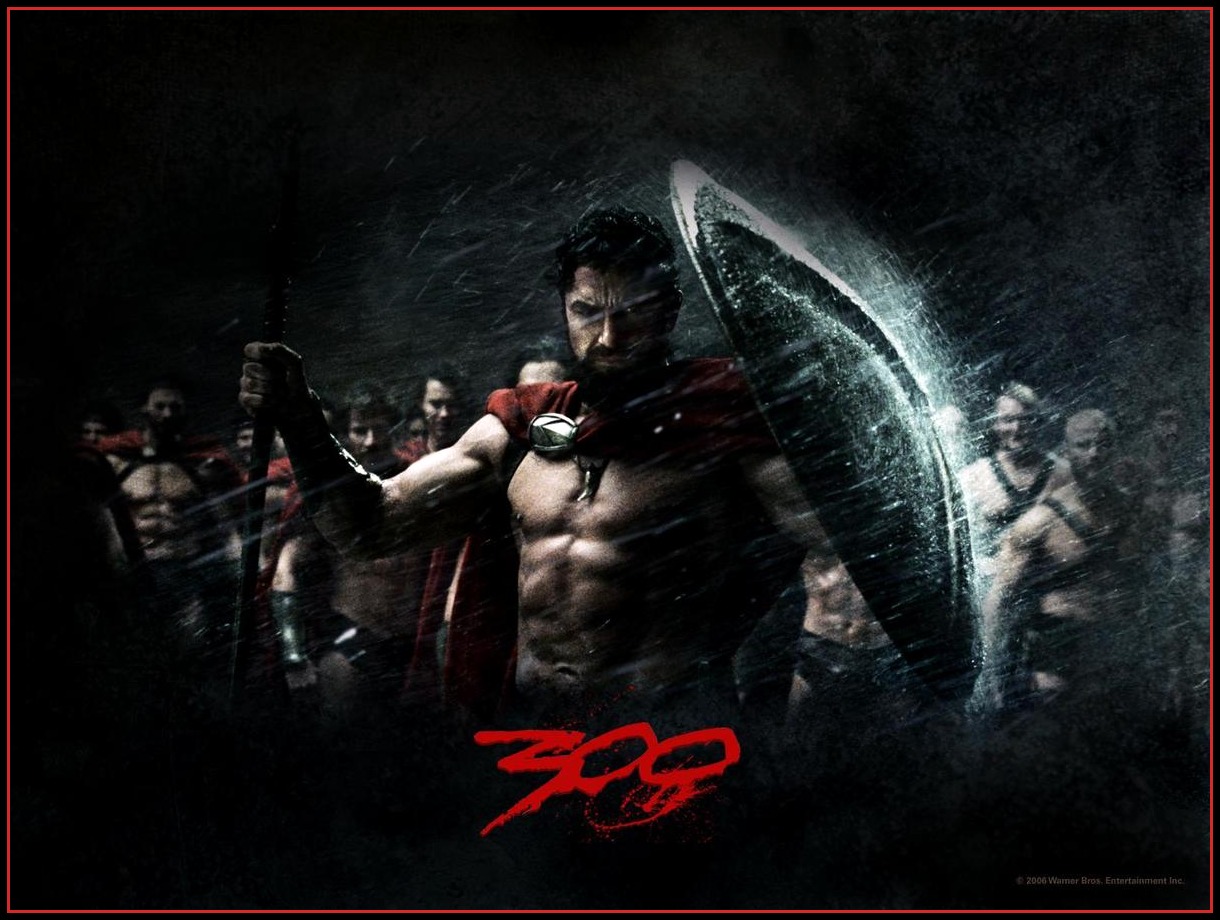
I will get it out of the way and say that this was not and was not meant to be a historically accurate depiction of Ancient Greece. It was never meant to be even when it was still just an Eisner-Award winning graphic novel from the mind of iconic graphic novelist and artist Frank Miller. With that out of the way I was able to watch and enjoy Zack Snyder’s film adaptation on its own terms without the criticism of historical accuracies looming dangerously over my head. 300 deserves the label of being an event film. From start to finish, Snyder’s film practically screams blockbuster and popcorn and I wouldn’t have it any other way.

Frank Miller’s 300 was at its time an interesting depiction of one of history’s greatest military last stands. Miller already known for hyperstylizing the look and feel of the noir genre with his Sin City graphic novels, takes the same approach with his depiction of King Leonidas and his 300 Spartans taking a final last stand against Persian God-King Xerxes at a narrow mountain pass called Thermopylae (literally meaning Hot Gates in Greek). Zack Snyder took this graphic novel and painstakingly stayed true to the visuals Miller and his colorist wife, Lynn Varley put on paper. Looking back at my memory of some of the panels and images from the graphic novel. Snyder and his crew of art directors, cinematographers and CGI-artists were successful in translating almost every page of the graphic novel onto the screen.

Like Robert Rodriguez’s adaptation of Miller’s Sin City, Zack Snyder’s 300 pretty much brings the graphic novel to moving life. This means he stuck to the source material quite literally which limits his own take on the graphic novel. Like Rodriguez, Snyder doesn’t really put his own signature stamp as a director to the film. It’s not too much of criticis since he does a great job of translating Miller’s work onto film, but one wonders what sort of personal touches he could’ve added to the finished look that wasn’t lifted from Miller’s style and whether it would’ve changed the overlook look and feel of the film.

The story is quite simple and just takes the basic summary of the historical event itself. Spartan King Leonidas (played with visceral gusto and machismo by Scottish thespian Gerard Butler) makes a decision to go to war and confront the encroaching and fast approaching massive Persian Army led by Xerxes (Rodrigo Santoro) intent on conquering the Hellenic city-states of the Greek Peninsula. Persian ambassadors ride forth to demand oaths of fealty from those city-states ahead of the army’s path. Sparta is one such city-state, but different from the rest of its Hellenic brethrens. Sparta has gone down in history as a word synonymous with unbending dedication to a strict, ascetic warrior code. Warfare and battle were what Spartans were born and trained to do from an early age. Weakness and physical imperfections weeded out from the time of birth (the film explains just what happens to male newborns with physical imperfections and deformities). The answer Leonidas gives the Persian delegation could be seen as somewhat extreme, but not contrary to his nation’s warrior-culture of never surrendering and seeing death in battle the greatest glory for a Spartan to achieve. From this sequence right up to the end of the film we get to see just how much of a warrior culture the Spartans were in extreme detail.

It’s during the prolonged battle scenes between Leonidas’ Spartans and Xerxes army which will have everyone chomping at the bit. If you have to see this film for any particular reason outside of watching superbly-trained underdogs slaughtering and endless supply of enemy troops then you will most likely be disappointed by the slower scenes away from Thermopylae. Indeed, this film an its original source material would’ve worked even better without the extra filler Snyder and his writers added to give the film more depth. I’m all for more emotional depth and characterization in my films but when a movie is all about a bloody and heroic last stand of a few against the many, scenes which slow the story down does more to break the rhythm and tone of a film than add to it. Othe than a deeper understanding of the kind of partnership Leonidas had with Gorgo, his Spartan Queen, most of the subplots added by Snyder and his writers could easily have been left out and still ge a kick ass action epic.

It’s the action scenes which reall stand out visually. Some people might see the style tricks of speed ramping certain action sequences then slowing it down considerably to show the minute detail of the battle scene as being to gimmicky, but I would disagree and say it actually gives the movie a mythical quality in its storytelling. One thing I have to say about Zack Snyder as a director (his remake of George A. Romero’s Dawn of the Dead better than what detractors have made it out to be) is that he knows how to film action and with special mention to bloody and gory action. He makes these scenes of dismemberments, decapitations, and disembowlments look like a piece of performance art.

These scenes of carnage would be considered extremely gratuitious if it didn’t look so made up good. Even the way the blood flows, spurts and splashes look like something Jackson Pollock would take interest in. The speed up and slow down of the sequences also gives the fight scenes a certain rhythm that once an audience picks up on will follow it through to the end. This is why the scenes back in Sparta with a duplicitous politician and his powerplay to assume control and power seem such a downer instead of enhancing the sacrifice of Leonidas and his men. Those scenes just feel tacked on and completely superfluous. Luckily, there’s not enough of them to slow down the frantic pace developed by the battle itself.

The performances by all actors involved really doesn’t require too much criticism or reflection over. Gerard Butler does a great and convincing job as the Spartan King and his conviction in confronting Xerxes and his army with so few seem very believable. It’s not a star-making performance but it does show that Butler can add a bit of gravitas to a character and role so basic in characterization. Lena Hedley is radiant as his partner and Queen. Despite the weird sounding name of Gorgo, Hedley plays the strong-minded and equally influential wife to Butler’s Leonidas. It’s only her scenes back in Sparta as she tries to rally her people to support their king which keeps these slower sequences from fully pulling down the film. The performances were good enough to keep the acting in the film from becoming too campy or too serious. It’s an action film and with enough action going on in the movie I could forgive the writers (both Miller and the screenwriters) from scrimping on character build up.

All in all, Zack Snyder’s film adaptation of Frank Miller’s 300 succeeds in bringing the book to moving life. Throughout the run of the film it was hard not to get lost in the beautiful visuals. Whether it was the muted color pallette which puts most of the scenes in an almost sepia-tone look to over-emphasizing certain colors to set a certain mood. From oversaturation of reds in one sequence to one where everything seem to be tinted with the many shades of blues at night. This is what 300 will be best remembered for. It’s technical use of CGI to paint the environment in unrealistic but beautiful ways which gives the scenes a lyrical and mythical look to them once the actors were superimposed over them. The film really was a painting come to life and it shows once again how computer and digital filmmaking technology have now afforded directors in making what used to be impossible technically to something that could be done with the limit being the artist’s imagination.

This film will not win many acting, directing and even screenwriting awards (which it didn’t once award season rolled around), but it doesn’t have to for people to enjoy it. It will entertain and pull its audience into a living and modern retelling of a legend. Whether all that happened on the screen was exactly as it happened in 480 B.C. doesn’t matter. What it does show is that through retelling down the years even all the embellishments added to the story of Leonidas and his men doesn’t diminish the fact that what they did and accomplished was how legendary heroes were made and remembered.
Film Review: Red Riding Hood (dir. by Catherine Hardwicke)


My problems with Red Riding Hood are more of a personal nature than anything else. I’m from a family that clashed old world values of women being blindly subserviant to the Man of the House vs. women being fiercely independent and only having a male in their lives to complement things. These elements were my luggage already brought to the table on seeing the film, but it shouldn’t damper one’s opinion on the film. If this review does this, it’s on me personally and not a reflection of the entire Shattered Lens.

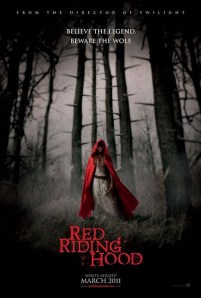
Like Alice in Wonderland before it, Red Riding Hood takes the classic fairy tale and expands on it. While it does so, it doesn’t do it by much. What it has going for it is a nice visual style. Colors are vibrant and director Catherine Hardwicke really has an eye when it comes to forest landscapes (just as she did with Twilight). Mists cover the trees and capes billow in the wind, when it’s not concentrating on the town itself (which does look like a soundstage at times). In the end, however, it suffers from the same quasi teenage issues that Twilight had. I yawned a number of times. Granted, I understand that the movie may be targeted to a younger audience (and for them it may very well work), but even my audience groaned a little and they were target individuals.

Red Riding Hood is the story of Valerie (Amanda Seyfried), who lives in a small village that lives in fear of The Wolf, who has been known to sneak in and attack or kill citizens. To appease the wolf, the townspeople keep animals tied outside. As a child, she forms a bond with a young boy named Peter. Time passes, and we find young Valerie bethrothed to Henry (Max Irons) by way of her mother’s plans (played by Virginia Madsen). Peter (Shiloh Fernandez) still has feelings for Valerie, and this all quickly becomes another Bella / Jacob / Edward triangle. It’s not at the start a story of Valerie choosing her own road, but having to hear from everyone around her that this guy should be the one she marries or that one is the right guy for her. To me, personally, the film in the beginning pushes as much of a pro-“I need a man to survive” stance as Battle:LA does a Pro-Marine one. Is this a terrible thing? Not if that’s where your mindset is, no. Every time I saw them mention anything along the lines of hand and feet worship some guy just because “that’s how it is”, I had to remind myself that it’s just the time period the story takes place in (though I’m sure the audience heard me groan at least once). Again, that’s just me.

In the midst of all this, on being asked to run away with Peter, Valerie is alerted to her sister’s death from the wolf. The townfolk make a point of going after the wolf, and decide to head out the cave where they believe the beast lives. They return with proof of a victory and plan to host a party for the deed. The town priest (Lukas Haas, who somehow seems to less here than he did in Inception) reaches out for help in form of Solomon (Gary Oldman). Solomon, arriving with armed guards warns the townsfolk of the evil of werewolves and that he will hunt it down. The next few nights will be Blood Moon nights, meaning that if the wolf bites anyone during that time, they’ll become werewolves as well. The townsfolk, not buying into this, decide to have a wild party with sexy dancing. This results in a visit from the Wolf, who confronts Valerie and telepathically asks her to come away with it, or the town will be razed. It all kind of escalates from there.

Oldman, for his credit, was fun here and slightly over to the top.  Oldman delivers his lines with flair, being far less subdued here than he was in The Book of Eli. For who better to hunt a wolf than Sirius Black himself, right?

And that’s part of the problem I found with Red Riding Hood. With the exception of Seyfried, the supporting cast is actually stronger than the main group of actors the story focuses on. Julie Christie plays Valerie’s grandmother, in a great turn, and as always Billy Burke (Drive Angry, Twilight) is supportive as Valerie’s father. He’s really one of the highlights of the film. As for Henry and Peter’s characters,  the most I could think of with them were the Winchester brothers in Supernatural. They’re eye candy for the girls, though I should note that none of the girls in my audience were excited as they were when I saw The Twilight Saga: New Moon. There were lots of screaming for that one.

What does work is that the movie is reminiscient of The Beast Must Die. It is a mystery of who the wolf actually is, and both Valerie and the audience are given clues. That I actually enjoyed, and the third act of the film wasn’t too bad. The action is quick and to the point, but again, it all kind of feels like I could have seen this as a series on the CW. There wasn’t as much of a worry about who would fall at the hands of the wolf or what dangers would face Valerie so much as they actually looked cool when it occurred. Easily a Netflix pick.

Review: Unknown (dir. by Jaume Collet-Serra)


In 2009 Liam Neeson began a new phase of his career as an actor. Before 2009 he was always put into roles as the father figure and mentor to a younger protagonist. He did quite well in handling these roles. Most of the time he was the only good thing about the films he was in and it was due to how he handled the supporting role given to him. But 2009 changed everything as Liam Neeson arrived on the film scene as a bonafide action hero in his role as a former CIA Special Activities Division operative in the action-thriller, Taken. That film surprised many and Neeson’s badass portrayal of a father out to save his daughter opened the eyes of many filmgoers who always saw him as the calm, wise elder. He has taken on the mantle of older, action-hero characters from Harrison Ford who lived off and became rich doing roles such as the one in Taken.

Two years later we have another film where we get to see Liam Neeson in another role which cements his place in the action-hero pantheon. Also like Pierre Morel’s film, this one takes place in Europe and directed by another European filmmaker trying to make a name for himself in Hollywood, Jaume Collet-Serra. It would be disingenious to say that Collet-Serra had it in him to direct a film as tight and fast-moving as Unknown. His two Hollywood productions were the remake of the classic horror film, House of Wax, and the underappreciated horror film from 2009, Orphan. With this new action-thriller, Unknown, Collet-Serra and Neeson create a film which owes much of its film dna to Hitchcock and his mistaken-man classic, North by Northwest. I would also say that this film also owes much of its action and characters to one of the early 1990’s best sci-fi action films, Paul Verhoeven’s Total Recall.

The film begins with Neeson’s character, Dr. Martin Harris, and his wife Liz (played by Mad Men‘s January Jones) arriving in Berlin to attend a biomedical conference. Right from the start Neeson makes us believe in Harris being an everyman. The good professor doesn’t seem the alpha male-type. But after certain seemingly random circumstances and events puts Harris in a coma for four days we begin to see signs and glimpses that Neeson’s character may have more to him than meets the eye.

It’s when Harris’ awakens from his coma that the meat of the film’s story begins. We know going in that Neeson’s character knows he’s not crazy and that someone out there has made things appear as if he is becoming insane. Maybe the accident in the beginning of the film have given us a false perspective on the film. What we might be seeing could be a manifestation of Harris’ mental breakdown from the accident and subsequent coma. But little clues in the film’s dialogue keeps things vague, but not so much that our initial stance that Harris’ is being manipulated won’t be the final endgame.

It is the endgame in the film which may make or break the whole production for some people. The screenplay by Oliver Butcher and Stephen Cromwell is not the strongest out there and it tries to be too complex with its red herrings when trying to keep it simple would’ve sufficed. One could almost sense that the two writers were trying to be too Hitchcock that they lost sight of how Hitchcock’s films were simple affairs which only appeared to be complex. Yet, despite some necessary leaps of logic that audiences needed to make to continue believing in the film, Unknown manages to keep the core story moving forward to it’s inevitable conclusion.

The performances by everyone involved is what keeps this film from spiralling out of Collet-Serra’s capable hands. One would almost certainly point out the strong work by Neeson as the Harris. January Jones’ Liz Harris, at first, seemed like an extension of her Betty Draper character from Mad Men, but as the story moves forward we get to see more layers of personalities in her character to make her interesting beyond the dutiful and supportive wife. But the standout performance outside of Neeson has to go to Diane Kruger as Gina, the taxi driver who was involved in Neeson’s character getting in his accident in the beginning of the film.

Kruger arguably is one of Hollywood’s classic beauty, but she has an ability to actually keep that beauty in check with her acting that we believe her to be the “everywoman” in some of the roles she plays. Beauty doesn’t come into the Gina character’s personality. Kruger does a great job of playing the pawn in a much larger game being played on Neeson’s character. Her reluctance to help him gradually crumbles as she soon realizes that her own safety and survival is now inextricably linked to unraveling the mystery of who Martin Harris really is.

Unknown is one of those films that actually has an advantage being released in the so-called dead season which runs from January and into March. It’s a film season when studios put out films they have no faith in being a major blockbuster which means summer and Holiday season release are out. It’s not prestigious enough to be put out in the Fall and early Winter. But as a piece os well-done escapist fare it’s perfect for this so-called dead season. Jaume Collet-Serra has shown that even when working from an average screenplay he knows how to get the best out of his cast to sell the film to the audience. He also has a firm grasped on pacing and how to handle action sequences.

In the end, the film still loves or dies by how the audience reacts to Liam Neeson’s character. While his Martin Harris is not the Bryan Mills from Taken, by the time the final scene fades to black we begin to see how similar the two characters really are and how much they share. Until the big name films start dropping in beginning in March (blockbuster season seem to come earlier and earlier with each passing year), Unknown is one of those films that should help make this early months of the film season more entertaining than it usually is in year’s past.

As an aside, for those who know their films would understand why I say that, in addition to this film having aspirations of being Hitchcockian, Unknown definitely borrows or has been influenced by some of the story and character developments of Verhoeven’s Total Recall. I almost half-expected for a half-mutant seer named Kuato to make an appearance to explain it all to Neeson’s ccharacter.

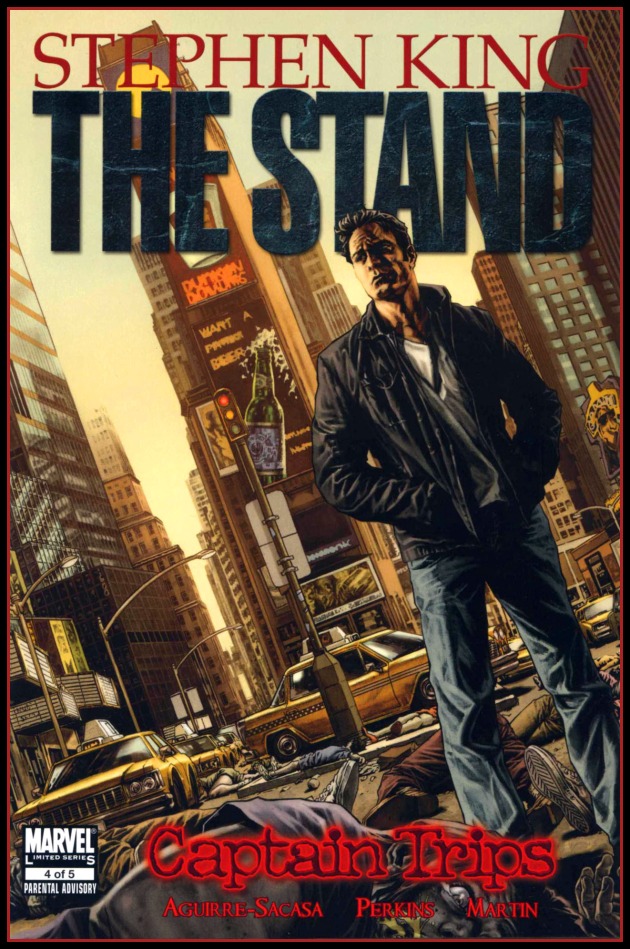
Stephen King’s The Stand to Trip Up Onto the Big-Screen


Stephen King properties sure has been heating up around Hollywood of late. For the past month or so we’ve had almost weekly news about Ron Howard’s plans for King’s massive book series, The Dark Tower. Today news that the role of Roland Deschain, the Gunslinger, has been offered to Spanish-actor Javier Bardem shows that the planned film adaptation of The Dark Tower is moving forward.

Now, according to The Hollywood Reporter blog Heat Vision, Warner Brothers and CBS Films are planning to co-produce the film adaptation of another Stephen King property and one many of his fans consider as their favorite. I consider myself one of those fans and I’m actually quite excited that these two studios are looking to adapt the epic, apocalyptic novel The Stand.

The novel already was adapted into a mini-series by Mick Garris in 1994, but that adaptation didn’t satisfy the book’s fans as its producers were hoping for. This planned film adaptation looks to give The Stand a grand stage to be shown to its old and new fans. While trying to adapt a novel that is over 1200 pages long might seem daunting the same was said about trying to adapt a novel that was three times it’s length and that one succeeded beyond anyone’s expectations. If Peter Jackson can take The Lord of the Rings and create an epic masterpiece out of such a dense piece of literature I think King’s The Stand should make just as good a transition.

Here’s to hoping that this particular apocalyptic project gets on the fast track and doesn’t get bogged down in development hell the way another apocalypse-themed film project has found itself in: Max Brook’s zombie epic novel, World War Z.

Source: The Hollywood Reporter

The Dark Knight Rises Gets Selina Kyle and Bane


January 19, 2011 is the first day of the new year when the internet exploded with reactions concerning Warner Brothers’ announcement about two key characters in Christopher Nolan’s upcoming and final film in his Batman trilogy.

According to a Warner Brothers press release Anne Hathaway will take on the iconic role of Selina Kyle. For those who don’t recognize the name it’s the public face of the female foil for Batman. I’m talking about none other than Catwoman herself. While the press release doesn’t mention the name Catwoman anywhere it would be only logical that Hathaway as Selina Kyle will end up as Catwoman before the film ends.

The other character announcement was about who Tom Hardy was going to portray in the film. Speculation since Hardy was cast mostly had him taking on the role of the villain Hugo Strange, but in a curve out of left field it looks like Hardy will be playing villain Bane.

While reaction on Hathaway as Selina Kyle has mostly been positive the one concerning Hardy as Bane has been met with a combination of guarded optimism (much faith and trust has been earned by Nolan from fans) to outright fanboy rage. Both from film bloggers who should know better and just people who want to grab onto anything that they see as the downfall of the Nolan take on the Batman franchise.

Some still remember the catastrophic Bane from Schumacher’s deservedly-panned Batman & Robin thus think this Nolan take on Bane will be just the same. Others just never bought into the ‘roided-out criminal villain when he was first introduced in the “Knightfall” crossover during the 90’s. If Nolan hadn’t earned my trust as a film and comic book fan from his previous Batman films I would react the same way but I won’t.

While the comic book version of Bane did look like a muscle-bound luchador who used a super-soldier serum called “Venom” to roid-out people fail to remember that bane was very close to Batman’s equal when it came to the intellect department. This was the one villain who deduced Batman’s true identity and found a way to mentally and physically break the Bat down before finally breaking his back.

I believe that Nolan will probably dump the luchador mask and outfit and concentrate on Bane as a criminal kingpin who doesn’t just have the physicality to match Batman punch for punch but also the mental acuity equal to the task of breaking Batman. Does this mean that rumors of the character Hugo Strange has been nixed from the film?

I happen to think that either Hugo Strange will be merged with the character of Bane or may actually appear as the true mastermind who turns Bane loose on the Batman. Either way I’m quite interested in finding out how Christopher Nolan plans to adapt the Bane character to his realistic take on the Batman universe. I’d be very surprised if the wrestling mask and outfit remains. The venom injections could easily be adapted to become more believable and as Tom Hardy has shown in the film Bronson he can physically bulk up and look believable as a muscle-bound heavy.

Source: Slash Film

Green Lantern Official Trailer


DC has always had the Batman franchise as it’s standard bearer when it came to its many properties adapted to the big-screen. In the past one could add the Superman franchise as well, but a return (no pun intended) to that franchise a couple years ago didn’t pan out too well.

Marvel Studios (film division of Marvel Comics) has had a better track record in the past decade in adapting its own franchise characters, both top tier and supporting, to the big-screen. Some of these adaptation have been through other studios like Sony, 20th Century Fox, Paramount and Universal who licensed the characters for film. In the last 3-4 year Marvel has made the decision to adapt their characters themselves to better rake in the profits. This has led to successes and a subsequent purchase of the company as a whole by giant entertainment conglomerate Disney. With Disney’s Scrooge McDuck money bin to help finance further Marvel properties to the big-screen DC and it’s parent company Time-Warner had to respond with something other than Nolan’s Batman franchise.

What DC has decided to answer with first is the live-action adaptation of the iconic DC character Hal Jordan and his Green Lantern persona. The film has veteran action filmmaker Martin Campbell behind the director’s chair with Ryan Reynolds in the title role. The film has finally released it’s first official trailer and the film is set for a Summer 2011 release. A summer that’s becoming more and more crowded with superhero tentpole films not to mention the 800-lb gorilla waiting in the wings to beat everyone senseless: Warner Brother’s final Harry Potter film.

The trailer for Green Lantern just gives enough of a taste about what the film is about but despite some intergalactic scenes was still quite bare in terms of what the story will be about beyond it being an origin tale. Here’s to hoping the next trailer gives a bit more with a much more refined and polished fx work.


Quickie Review: The Town (dir. by Ben Affleck)


If someone just five years ago told me that Ben Affleck would turn out to be a director whose work has been some of the better crime drama/thrillers of the past decade then I would declare shenanigans on that individual. Ben Affleck might have won an Oscar for helping write the screenplay for Good Will Hunting, but his career since could be labeled as being one of a joke (Gigli) interspersed with huge paycheck projects (Armageddon) that showed his range as an actor.

This is not to say that Affleck has no talent in front of the camera. I just believe that early in his career after winning his Oscar he got fooled into thinking that everything else since would be Easy Street paved in gold (financially and critically). To say that it hasn’t turned out to be that way (though he did make a ton of money) would be an understatement. But one thing happened while Affleck’s acting career was heading nowhere but down. He got behind the camera as a director and his very first time directing a feature-length film he would make one of 2007’s best films. I speak of his film adaptation of the Dennis Lehane crime drama, Gone Baby Gone. He didn’t just direct the life out of that film, but he also the screenplay with the help of Aaron Stockard.

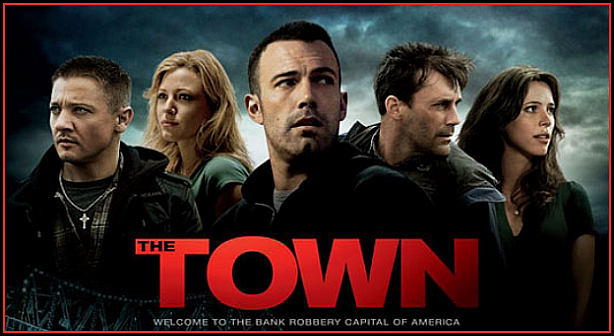
The two of the them would collaborate once again on Affleck’s latest Boston-based crime drama, The Town. He wrote the screenplay and directed the film and pulled in some wonderful performances from an ensemble cast which included Jeremy Renner, Jon Hamm, Rebecca Hall, Blake Lively, Titus Welliver and Pete Postlethwaite. Fellow site writer Lisa Marie already reviewed the film in detail and her review pretty much put down into words exactly what I thought of the film. I will say that I would swerve slightly away from what she considered some of the flaws in the film.

The Town was adapted from Chuck Hogan’s novel, Prince of Thieves. I would consider the screenplay and dialogue as a major strength of the film. While at times it did seemed to follow the step-by-step and by-the-numbers heist thriller story the screenplay itself didn’t ring false. I liken this film to another heist film which shared some themes and similarities. Michael Mann’s Heat also dealt with the cops-and-robbers foundation. Where Mann’s film had a much larger and epic scope to its storytelling it still boiled down to two groups of determined men playing a dangerous game of cat-and-mouse. The women in both film were written just enough that they had distinct personalities, but in the end they were motivations for the men in the film.

Affleck shows that he doesn’t just know how to direct, but continues is reputation as being one very good screenwriter. One just has to be reminded that he is now 3-for-3 when it comes to screenplays he has written which have turned out to be great ones. While he doesn’t have the same flair for words as Tarantino or Mamet when it comes to the screenplay. What he does well was to create an efficient script which flowed from scene to scene. Tarantino’s screenplays are great, but at times he does allow himself to overindulge his inner-film geek and create dialogue that might be Sorkin-like in execution. What I mean is that as great as the dialogue sound there’s no way people really spoke like this to each other. Affleck’s screenplay for The Town felt very natural and even with Jon Hamm’s less than great performance the film had a natural and genuine sound to it’s dialogue.

That’s one flaw pointed out by Lisa Marie that I would disagree with her on. The other two I can see her point, but it bothered me none. Though if I ever took on a life of crime I would hope I find someone just like Rebecca Hall’s Claire. Now there’s a woman who stands by her man no matter what.

I think in the long run this film might just be seen as one of the best of 2010 and some critics have already dubbed it so. While it’s prospects come awards season time is still up in the air I wouldn’t be surprised if it ends up nabbing one of the ten Best Picture nominations when the Oscar nominations get announced. It would be well-deserved and would just prove that Affleck’s career in the film industry might just be hitting its stride. Who would’ve thought it would be as a writer-director and not as an actor.

Sucker Punch Trailer (HD)


While I wasn’t able to attend San Diego Comic-Con 2010 I did try to follow it on-line as much as possible. From what I read through Twitter updates, film blog sites and everything in-between it looks like one of the highlights of the Con was Zack Snyder’s follow-up to Watchmen. His “Alive in Wonderland with machine guns” has been gaining major league hype and buzz since more details were released and shown during it’s panel.

An earlier posting I made showed the beautiful painted character posters for the cast of Sucker Punch. This follow-up post will now show the first trailer for this film which is set for a March 25, 2011 release. From what I could see in the trailer it looks like Snyder hasn’t lost his ability to put on film some gorgeous looking set-pieces. This is a man who definitely has a flair and talent for visuals. The question now (which the trailer didn’t answer in any way) is whether Sucker Punch can match it’s amazing visuals with a worthwhile story.

This film is Snyder’s first project not based on an adapted source. Maybe we’ll see his storytelling skills blossom with Sucker Punch.

SDCC Exclusive: Zack Snyder’s Sucker Punch Cast Photos


Zack Snyder’s upcoming dark urban fantasy called Sucker Punch seems tailor-made for the Comic-Con crowd. It stars some of Hollywood’s loveliest young women like Emily Browning, Jena Malone, Abbie Cornish, Vanessa Hudgens and Jamie Chung. It also stars fanboy favorite Carla Gugino who in past genre flicks wasn’t averse to baring it all for the sake of her art.

Sucker Punch has been described by Snyder himself as Alice in Wonderland but with machine guns, not to mention B-52 bombers, dragons, brothels. From some of the sneak-peeks into the production this particular Alice-themed flick also has zombie soldiers, a mecha-suit with a pink bunny painted on the armor not to mention some steampunk added into the mix.

Just in time for this year’s Comic-Con, Warner Brothers has released for this event some very great and stunning character posters. I am actually very curious as to which artist painted and created these character posters since they’re truly gorgeous. If I only had room in my room’s walls to frame and put them up.I also like the little details in the posters. I had to stifle a silly grin after I noticed the charms hanging off of Babydoll’s automatic pistol.

Take a gander at the posters below.

Emily Browning as Babydoll

Jena Malone as Rocket

Abbie Cornish as Sweet Pea

Vanessa Hudgens as Blondie

Jamie Chung as Amber

Carla Gugino as Madam Gorksi