Villain of the Day: Griffith (Berserk)


(Spoilers ahead)

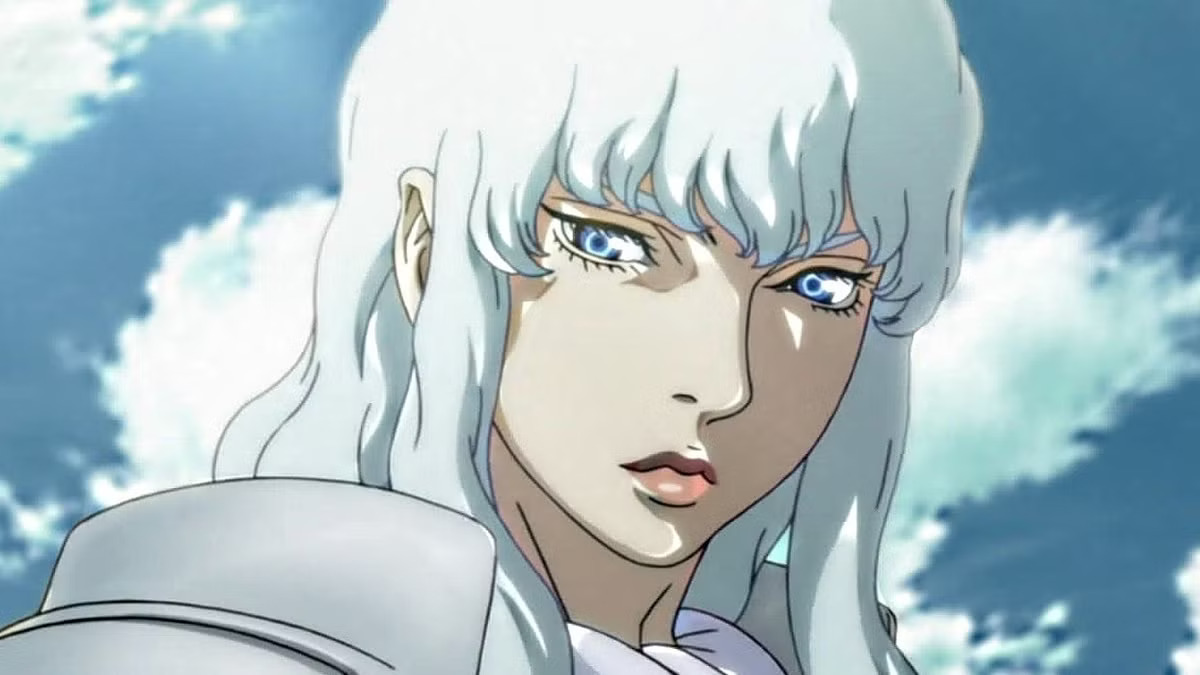
Few villains in fiction command the same level of fascination and revulsion as Griffith from Berserk. At first glance, he’s the archetypal charismatic leader: beautiful, eloquent, and seemingly selfless, rallying orphans and outcasts under the banner of the Band of the Hawk. But what makes him so mesmerizing is that his charm isn’t fake—it’s genuine. He truly believes in his dream of ruling his own kingdom, and that sincerity is what draws people, including the reader, into his orbit. You want to trust him, even as early warning signs—like his cold willingness to sacrifice comrades for political gain—start to pile up. Griffith works because he doesn’t feel like a mustache-twirling schemer; he feels like someone who could be your best friend or your worst nightmare, depending on where you stand in relation to his ambition. And that’s precisely how real history’s most destructive figures have operated—from Napoleon to Hitler to cult leaders like Jim Jones—men whose unshakable belief in their own destiny allowed them to commit unspeakable acts while genuinely convinced they were doing what’s best for their people.

The core of Griffith’s disturbance lies in the infamous Eclipse, where he sacrifices the entire Band of the Hawk—people who loved him, fought for him, and would have died for him—to become the fifth Godhand member, Femto. What makes this gut-wrenching isn’t just the brutality, but the emotional logic behind it. Griffith had been broken after a year of torture: his body ruined, his tongue cut out, his dream of a kingdom seemingly dead. When the Crimson Beherit activates, he’s offered a choice: remain a broken husk or ascend to godhood at the cost of everyone he ever cared about. And he chooses. In that moment, his quiet whisper—“I sacrifice”—isn’t a burst of rage; it’s a chillingly calm affirmation that his dream was always more real to him than the people who helped build it. That’s the horror: Griffith doesn’t betray his comrades out of malice, but out of an almost theological devotion to his own ambition. History offers grim echoes here—Stalin purging his fellow revolutionaries, Caesar turning on old allies—where the people closest to a leader become the first casualties, not because they were enemies, but because their trust made them useful fuel for a greater vision.

What deepens his complexity is that, post-Eclipse, he isn’t just a monster—he becomes a savior. As Femto, he orchestrates the merging of the physical and astral worlds, creating Falconia, a utopian city that protects humanity from the chaos he unleashed. People flock to him as a messianic figure, and from their perspective, he is benevolent. He grants them safety, purpose, and hope. This is where Berserk gets disturbingly real: Griffith’s evil isn’t anarchic destruction; it’s the evil of a flawless leader who has sublimated all human empathy into cold efficiency. He commits atrocities (including the traumatic assault of Casca in front of Guts) and then turns around and saves millions. The narrative forces you to sit with an uncomfortable question: if a demon gives you paradise, do you care that he’s a demon? Real-world tyrants have banked on that same calculus—Hitler’s autobahns and economic recovery, Napoleon’s legal codes and conquered territories. The suffering is real, but so is the public gratitude, and the leader who genuinely believes he’s building heaven rarely notices the hell he’s paving.

Kentaro Miura masterfully contrasts Griffith with Guts, his former best friend and now mortal enemy. Where Guts claws for agency and connection, Griffith embodies the seduction of surrendering your will to a greater cause. Griffith’s dream was never about friendship or love—it was about ownership and legacy. His famous speech about a “friend” being someone who pursues their own dream equal to his own was really a test, one that Guts failed when he left the Hawks. That departure broke Griffith’s ego more than any torture could, proving that his “love” for Guts was possessive, not reciprocal. This makes Griffith a tragic villain in the classical sense: he had everything—loyalty, love, a found family—and he threw it all away because he couldn’t stand not being the absolute center of the universe. It’s the same fatal flaw that undid so many historical figures whose charisma opened doors but whose narcissism burned down the house. The difference is that Griffith got his throne anyway, which might be the most haunting commentary of all: sometimes, the people who sacrifice everyone who loves them do win.

In the end, Griffith is mesmerizing because he reflects a very human darkness: the ability to sacrifice intimacy for ambition, and to dress that betrayal in the language of destiny. He’s not a cackling monster but a serene, beautiful one who genuinely believes his actions are justified. Berserk never lets you forget that his charisma works—on the characters in the story, and sometimes even on the reader. You catch yourself admiring his leadership, his vision, his grace, and then you remember the Eclipse, and you feel sick. That cognitive dissonance is the mark of a truly great villain: not one you love to hate, but one who forces you to understand why people would follow him straight into hell. History’s worst monsters were rarely obvious demons; they were the ones who smiled, who promised salvation, and who convinced themselves that the bodies piling up behind them were just the price of progress. Griffith is their fictional mirror, and that’s precisely why he remains one of the most disturbing, unforgettable antagonists in any medium.

Villain of the Day

Villain of the Day: Anton Chigurh (No Country for Old Men)


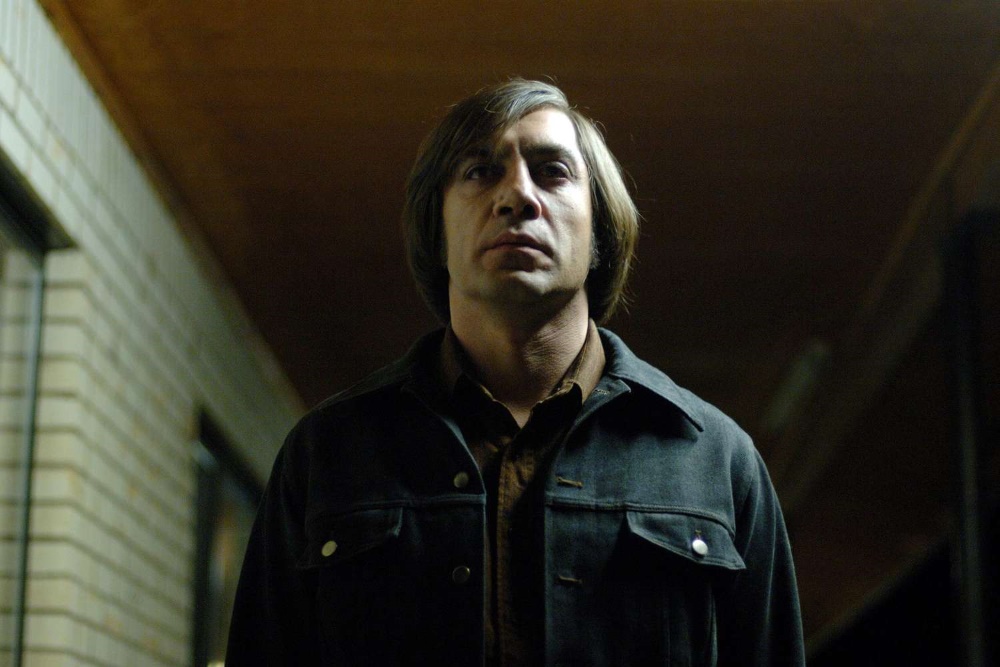
What makes for a great onscreen psychopath? Is it intelligence, unpredictability, complete emotional detachment, or the ability to make audiences uncomfortable without saying very much at all? Few characters embody all of those qualities more effectively than Anton Chigurh in No Country for Old Men. From the moment he appears, there is something unnervingly controlled about him. He rarely raises his voice, almost never shows panic, and carries himself with a cold certainty that makes every interaction tense. What makes Chigurh so mesmerizing is that the film refuses to explain him away with easy psychological answers. He is not presented as a tragic antihero or a charismatic mastermind with grand speeches. Instead, he exists less as a person and more as an unfolding force of inevitability—something closer to a natural disaster than a traditional villain.

Chigurh also carries a clear literary lineage as another Cormac McCarthy creation, and he shares unsettling DNA with Judge Holden from Blood Meridian. Like Holden, Chigurh feels less like a human being and more like a presence that has stepped outside normal moral reality. Both characters operate as if they are not bound by human frameworks of empathy, guilt, or justification. In that sense, they resemble forces of nature rather than characters with inner conflict. Just as Judge Holden moves through the world with an almost mythic authority over violence and meaning, Chigurh moves with the same sense of inevitability—quiet, methodical, and indifferent to the emotional weight of his actions.

This is where the question of morality around Chigurh becomes deliberately unstable. Is he evil, or is he something beyond the concept of evil entirely? Like Judge Holden, he resists moral categorization because he does not appear to participate in the same value system as the people around him. Evil implies choice, intention, even some recognition of wrongdoing, but Chigurh operates as though he is merely enacting a set of principles that already exist independent of him. His coin toss philosophy, for instance, suggests not cruelty but submission to randomness or fate. The horror comes from the fact that human beings experience this as evil, while Chigurh seems to experience it as something closer to logic.

A major reason Chigurh leaves such a strong impression is Javier Bardem’s performance. Bardem strips the character down to the bare essentials, creating someone who feels emotionally alien without becoming cartoonish. His speech patterns are calm and deliberate, often forcing other characters into uncomfortable silence. Even simple conversations become threatening because Chigurh treats life-and-death decisions with the same tone someone else might use to discuss the weather. The famous coin toss scene perfectly captures this quality. Chigurh frames chance as something almost sacred, shifting responsibility away from himself while still remaining the instrument through which fate is delivered. That combination of politeness, inevitability, and menace makes him unforgettable.

The film also makes Chigurh especially unsettling by positioning him in contrast to Sheriff Bell’s worldview in No Country for Old Men. Bell represents an older moral framework where violence, while still real, at least had recognizable motives and boundaries. Chigurh breaks that expectation entirely. He is not driven by greed or revenge, and he does not appear to be psychologically damaged in a way that explains his actions. Instead, he behaves as though he is simply carrying out the consequences of a system that no one else fully understands. That gap between human expectation and Chigurh’s apparent indifference is where his terror truly lies.

Ultimately, Anton Chigurh endures as a villain because he refuses containment within normal storytelling or moral logic. Like Judge Holden, he reads less like a character and more like an embodiment of something larger—chaos given structure, or inevitability given form. No Country for Old Men never fully explains or defeats him because doing so would shrink him into something understandable. Instead, he remains ambiguous, almost elemental. Whether he is evil or something beyond evil is never resolved, and that uncertainty is precisely what makes him so disturbing. He becomes a figure of inevitability itself, a reminder that what humanity calls “evil” may sometimes feel indistinguishable from the indifferent mechanics of the world.