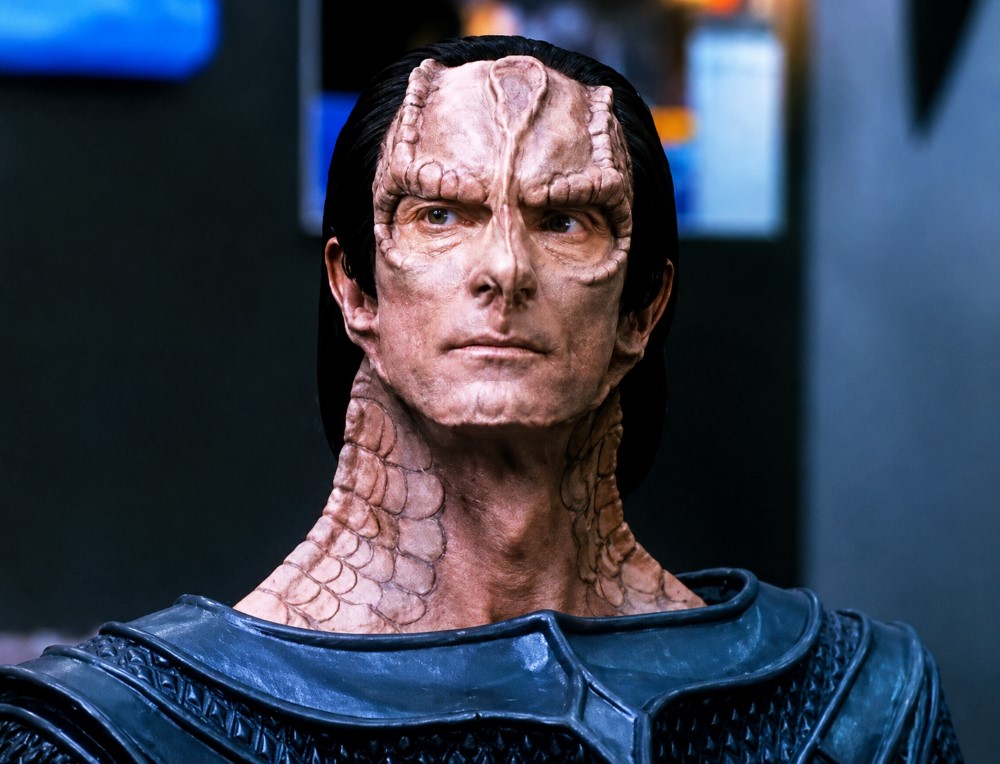
“A true victory is to make your enemy see they were wrong to oppose you in the first place. To force them to acknowledge your greatness.” — Gul Dukat
Few villains in science fiction are as captivating—and repulsive—as Gul Dukat from Star Trek: Deep Space Nine. From his first appearance as the smug, calculating prefect of the Cardassian occupation of Bajor, Dukat defies easy categorization. He is not a mustache-twirling tyrant who revels in evil for its own sake; rather, he genuinely believes himself to be a misunderstood hero. This self-deception is the engine of his charisma. Dukat constantly reminds anyone who will listen that he built schools and reduced labor camp sentences, conveniently omitting that he did so while overseeing the brutal subjugation of an entire species. His charm lies in his utter conviction that he is the victim of Bajoran ingratitude, a twist of logic so audacious it becomes mesmerizing to watch him rationalize atrocity.
What elevates Dukat above a simple megalomaniac is his deeply personal, almost intimate relationship with the protagonists of Deep Space Nine, particularly Commander Benjamin Sisko. Unlike the distant god-like foes of other Star Trek series, Dukat shares a border, a history, and a twisted mutual respect with Sisko. Their face-to-face confrontations crackle with tension because Dukat treats Sisko as a worthy adversary—a peer, even a friend. He craves Sisko’s acknowledgment more than any military victory. When Sisko refuses to validate his worldview, Dukat’s wounded ego curdles into obsessive hatred. This dynamic makes him unpredictable; one episode he is saving the station from a greater threat, the next he is selling out his own daughter, Ziyal, to save his career. His villainy is not abstract—it is a series of intimate betrayals that feel real and devastating.
Another key to Dukat’s magnetism is the show’s willingness to let him be competent, even admirable, in fleeting moments. He is a brilliant strategist, a cultured art lover, and possesses a dark wit that makes him genuinely entertaining. In episodes like “The Maquis, Part II,” he outmaneuvers both Starfleet and the Cardassian Central Command with ease. The series frequently teases redemption: he mourns Ziyal’s death with genuine anguish, he fights alongside the Federation against the Klingons, and he even briefly rejects his former life. Yet, each time, Dukat chooses power and self-justification over change. That tragic cycle—almost becoming better, then plunging further into evil—is what keeps viewers leaning in. We watch not hoping he will be defeated, but wondering if he will finally see himself clearly. He never does.
Dukat’s later descent into pacting with the demonic Pah-wraiths and literal religious madness has been debated by fans, yet it is a fitting culmination of his character. Stripped of his military command, his family, and his self-image as a beneficent ruler, Dukat’s narcissism finds new expression in cosmic evil. He transforms from a political villain into a metaphysical one, declaring himself a god. This shift does not erase his charisma; instead, it reveals that his charm was always a mask for an abyss of ego. Even then, he speaks in smooth, reasonable tones, offering Sisko “peace” if only he will bow. The charisma becomes sinister precisely because it never disappears—he is as persuasive as the devil, and just as hollow.
In the end, what makes Gul Dukat one of the greatest villains in television history is that he is terrifyingly human. He loves his children, believes his own lies, craves respect, and cannot bear to be seen as the monster he is. Deep Space Nine had the courage to let him win small victories, to seduce both characters and audience into almost rooting for him. And every time we feel that pull, the show reminds us: Dukat’s tragedy is not that he is evil, but that he had every opportunity to choose good and refused. His charisma is not a contradiction of his villainy—it is the very mechanism by which he, and we, excuse the inexcusable. That is why, decades later, we still cannot look away.
Villain of the Day

