
Without further ado, here are my top 30 films of 2022!
(Why 30? Because Lisa doesn’t do odd numbers! Also, be sure to check out my picks for 2010, 2011, 2012, 2013, 2014, 2015, 2016, 2017, 2018, 2019, 2020, and 2021! Wow, I’ve been doing this for a while!)
30. Marcel The Shell With Shoes On (dir by Dean Fleischer Camp)
An animated film with heart, Marcel The Shell With Shoes On would probably be ranked higher if Marcel’s favorite news show had been something other than 60 Minutes. Still, questionable viewing habits aside, Marcel and Nana Connie and all the other shells were amazing characters and the end of the movie brought tears to my mismatched eyes. With this film and I Want You Back, Jenny Slate had quite a year.
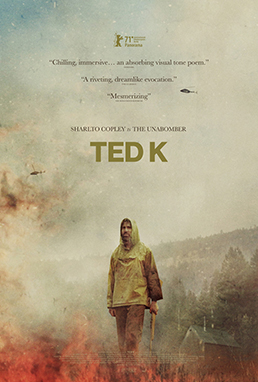
Released in February of this year, this film about Ted Kaczyski and his descent into madness was unfairly overlooked. Sharlto Copley was perfectly cast as Ted K. This is a film that probably won’t make Ted’s supporters happy but, at the same time, it also avoids painting him as just being a straight-out madman. It’s refusal to simplify makes the film far more than just another true crime biopic.

28. Dashcam (dir by Rob Savage)
Starring Annie Hardy as herself, this low-budget horror film is a scathing satire of life during the age of COVID and performative “wokeness.” After the past few years, there’s something rather cathartic about Hardy’s refusal to obey.
27. The Batman (dir by Matt Reeves)
At this point, I’m fairly cynical about comic book movies in general and Batman films in specific. I mean, how many Batmen have we had over the past ten years? (Actually, I think only four but it feels like a lot more!) That said, I enjoyed The Batman, for both its noirish atmosphere and it’s willingness to embrace the melodrama. You have to love the fact that the villain was basically a nerdy podcaster.
26. Operation Mincemeat (dir by John Madden)
Based on a true story, this film was a throwback to the earnest World War II films of the past. Colin Firth, Kelly MacDonald, Matthew McFayden, and Johnny Flynn were all well-cast and did their part to bring this moment of WWII history to life.
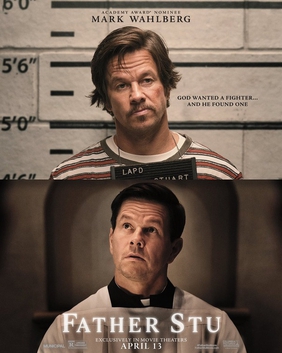
25. Father Stu (dir by Rosalind Ross)
You don’t have to be from a Catholic background to appreciate Father Stu but it probably helps. This was one of those roles that only Mark Wahlberg could have pulled off.
24. See How They Run (dir by Tom George)
This stylized murder mystery was terrifically entertaining and witty. Sam Rockwell and Saoirse Ronan are both treasures.
23. I Want You Back (dir by Jason Orley)
Two friends conspire to win back their respective romantic partners and end up falling in love with each other instead. This was an enjoyable comedy, one that was blessed with an outstanding cast that included Jenny Slate, Charlie Day, Scott Eastwood, and Gina Rodriguez. The scene in which Jenny Slate sings Suddenly Seymour is a classic.
22. Ambulance (dir by Michael Bay)
This was the film that Michael Bay was born to direct. For once, Bay’s hyperkinetic style was perfectly matched by the story being told. It also helped that the ambulance was a real ambulance and not a robot pretending to be an ambulance.
21.Send Me (dir by Nick Palmisciano)
This is a heart-breaking documentary about the efforts of 12 veterans to evacuate as many allies as they could during the disastrous withdraw from Afghanistan. This film deserved more attention than it got.
20. The Bombardment (dir by Ole Bornedal)
Based on a true story, this Danish film deals with the accidental bombing of a school during World War II. It’s been overshadowed a bit by All Quiet On The Western Front but, in its quieter way, The Bombardment is also a strong look at the horrors of war.
19. Goodnight Oppy (dir by Ryan White)
This is a poignant documentary about Opportunity, the NASA exploration rover that spent 15 years exploring Mars. This movie proves that a robot can make you cry.
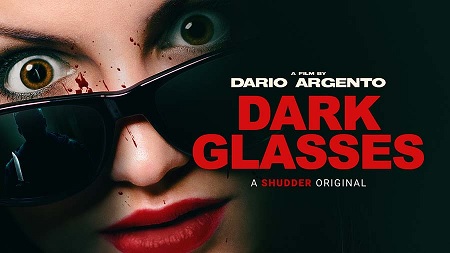
18. Dark Glasses (dir by Dario Argento)
Don’t listen to the critics. This enjoyably over-the-top giallo was an entertaining return-to-form for Dario Argento.
17. Wildcat (dir by Melissa Lesh and Trevor Fost)
This poignant documentary follows a depressed veteran as he finds purpose helping to raise a baby ocelot in Peru. Be prepared to cry.
16. Apollo 10 1/2 (dir by Richard Linklater)
Richard Linklater’s animated film was well-received by critics but it’s still hard not to feel that it’s been a bit overlooked. Narrated by Jack Black, the film details the 1969 moon landing from the perspective of a child with a very active imagination. Nostalgic, sweet-natured, and ultimately rather moving, Apollo 10 1/2 is a film that celebrates life.
15. Three Minutes: A Lengthening (dir by Bianca Stigner)
This haunting and moving documentary, which is narrated by Helena Bonham Cater, examines a three-minute snippet of 16mm film that was shot in a Jewish town in Poland in 1938, shortly before the Nazis invaded. By examining every aspect of those three minutes, this documentary becomes both a memorial for the inhabitants of that town and a much-needed reminder of the horrors and reality of the Holocaust. With anti-Semitism and Holocaust denial on the rise, this is an important documentary.
14. The Northman (dir by Robert Eggers)
The Northman is occasionally thrilling and occasionally ludicrous but it’s always watchable. Robert Eggers finds moments of humor and odd beauty in this Viking epic. Nicole Kidman embraces the melodrama and goes all out. I just hope Valhalla was actually worth all the trouble.
13. Puss In Boots: The Last Wish (dir by Joel Crawford)
Yeah, you knew this film was going to show up on my list. To be honest, the film could have been about just about anything. I’d watch Puss In Boots read the phone book as long as Antonio Banderas returned to do his voice. The fact that the film itself was cute and even touching was an added bonus.
12. Guillermo del Toro’s Pinocchio (dir by Guillermo del Toro and Mark Gustafson)
Yes, a puppet can make you cry.
11. Babylon (dir by Damien Chazelle)
Was it flawed? You bet. Did it run a little bit too long? Yes, it did. Could I have done without the scene with the elephant? You better believe it. That said, this film was so gloriously excessive and over-the-top that it was easy for me to forgive its flaws. The critics may not have liked it but Babylon is a film that will be rediscovered.
10. The Fabelmans (dir by Steven Spielberg)
I went back and forth over whether to put The Fabelmans or Babylon in the number ten spot. In a way, they’re kind of similar in that they have their flaws but they’re both saved by their director’s obvious love of cinema. In the end, David Lynch’s role as John Ford moved The Fabelmans into the 10th spot.

9. Everything Everywhere All At Once (dir by the Daniels)
To be honest, I think some people are going a little bit overboard in their praise for this film. Yes, it’s one of the year’s best but 2022 wasn’t that strong of a year and Everything is one of those probable Best Picture winners that, like Nomadland and CODA, will probably not be quite as celebrated after it actually wins. That said, Michelle Yeoh and especially Ke Huy Quan deserve all the praise that they’ve received and I appreciated that the film featured the destruction of an IRS office. It’s not as perfect as some say but, due largely to the cast, it still deserves to be in my top ten.
8. Nitram (dir by Justin Kurzel)
This is another unfairly overlooked film, this time from Australia. Caleb Landry Jones gives a powerful and disturbing performance as a troubled young man named Nitram who commits an act of shocking violence. Anthony LaPaglia and Judy Davis play Nitram’s parents, who are both troubled in their own individual ways. Essie Davis plays the older woman who falls in love with Nitram, despite the fact that Nitram is incapable of loving anyone.
7. Emily the Criminal (dir by John Patton Ford)
Aubrey Plaza plays Emily, who discovers that not only does crime pay but, in the gig economy, it’s one of those few ways to get ahead. Part thriller and part satire, Emily the Criminal reminds us that Plaza is one of the most interesting actresses working today.
6. All Quiet On The Western Front (dir by Edward Berger)
This German anti-war epic stays true to the themes of its source material while updating the plot for the modern era. The contrast between the generals and the diplomats planning battles and the soldiers dying in them is a powerful one.

5. Elvis (dir by Baz Luhrmann)
This wonderfully excessive biopic features good music, a great performance from Austin Butler, and a wonderfully eccentric one from Tom Hanks. Luhrmann is hardly a subtle director but Butler’s performance keeps the film from spiraling out of control.
4. Vengeance (dir by B.J. Novak)
This whip-smart satire of both true crime podcasts and the red state/blue state divide deserved far more attention than it received. Ashton Kutcher has actually become a surprisingly dependable character actor. Director and screenwriter Novak tells the story with sensitivity and a sharp eye for the absurd.
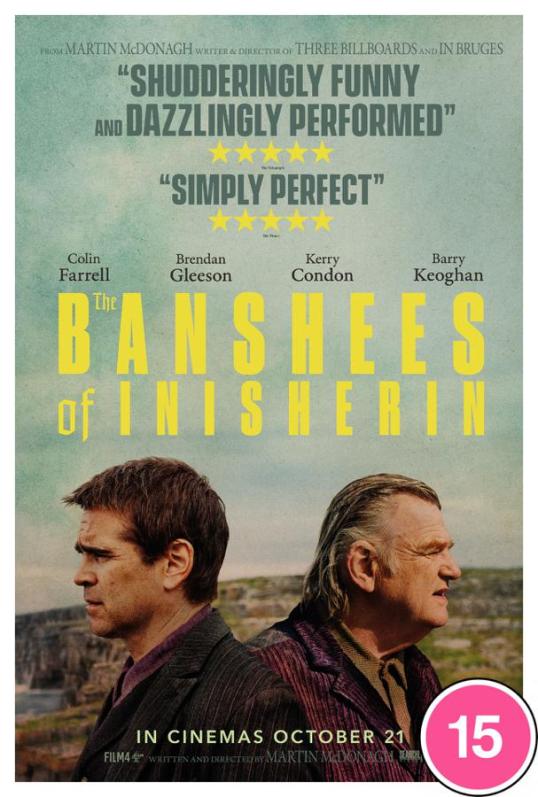
3. The Banshees of Inisherin (dir by Martin McDonagh)
In his best film yet, Martin McDonagh examines friendship, art, violence, and anger in Ireland. Brendan Gleeson no longer wants to be Colin Farrell’s friend. Farrell’s attempts to discover why leads to all sorts of surprising and macabre developments. Gleeson and Farrell have never been better. Kerry Condon and Barry Keoghan offer up poignant support.

2. Tar (dir by Todd Field)
Lydia Tar is a brilliant artist. Does it matter that she also might be a terrible human being? Todd Field’s return to filmmaking meditates on the meaning of art, morality, and the consequences of hubris. Cate Blanchett is perfectly cast. The scene where Tar talks to a student who objects to playing music by a white male is a real litmus test. Do you think Tar is a bully or do you think the student is being too sensitive? For all the talk about how Lydia dismisses the student’s claims, many also fail to note that the student is the one who calls her a “bitch” and runs out of the room. Much as in Field’s previous film, no one is as perfect or as justified or as blameless as they may believe.
And, finally, my top film of 2022 is….
- Top Gun: Maverick (dir by Joseph Kosinski)
After 2 years of lockdowns and pessimism, Top Gun: Maverick was finally released and it reminded audiences of what they loved about movies in the first place. Top Gun: Maverick was the movie that we needed in 2022.

Well, that concludes my late look back at 2022! Now, let’s focus on 2023!
Lisa Marie’s 2022 In Review:
 Through the Shattered Lens