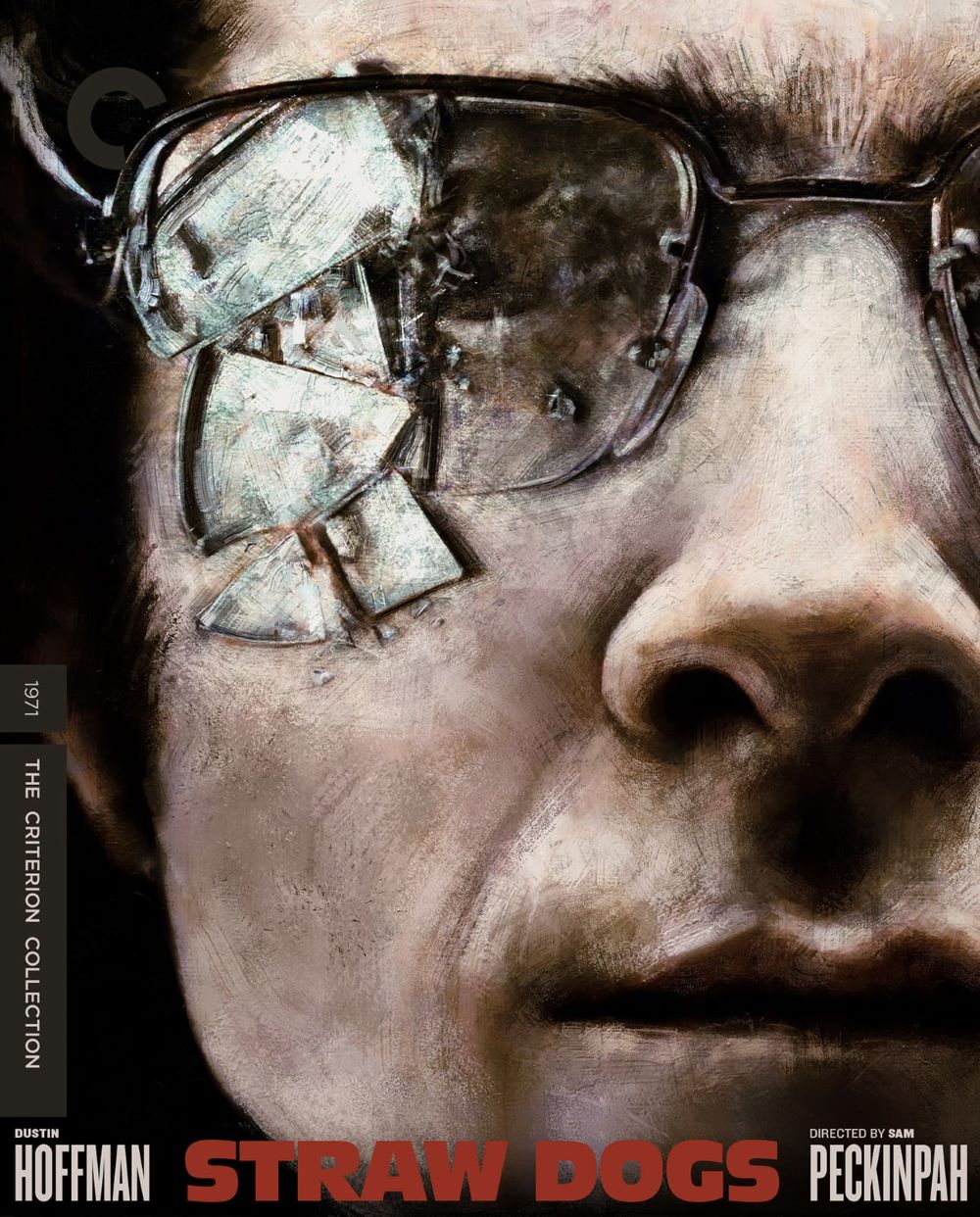
Review: Straw Dogs (dir. by Sam Peckinpah)


“Violence can be the only answer sometimes.” — David Sumner

Sam Peckinpah’s Straw Dogs is a raw, compelling dive into the breakdown of civility and the primal instincts bubbling underneath. The story follows David Sumner, a mild-mannered American mathematician, who moves with his wife Amy to her rural English hometown. The couple’s plan for a quiet life takes a sharp turn when tensions with the locals spiral out of control, resulting in a violent showdown. At its core, the film examines how far a person can be pushed before the veneer of civilization peels away, revealing something much wilder underneath.

The tension starts subtly, as David’s intellectual and pacifist nature clashes with the rough, territorial mindset of the local men. This brewing conflict isn’t just about cultural difference but taps into deeper themes around masculinity, power, and identity. Straw Dogs asks difficult questions about what it means to be a man, exploring how fragile male identity can be when confronted with real or perceived threats. David’s journey is less about heroism and more about the psychological and emotional transformation forced upon a man who initially seems ill-equipped for the violence unleashed around him. The whole film operates as a kind of symbolic stage where primal instincts and societal expectations collide, forcing each character to confront their own limits.

Amy’s role in the film is both pivotal and deeply complex. Her experience of assault, handled with subtle but unflinching attention, adds emotional and thematic weight without dominating the narrative. The film portrays her trauma through its impact on her and the shifting dynamics in her relationship with David, inviting reflection on resilience and struggle for control. Amy is depicted not merely as a victim but as a layered character navigating vulnerability and strength amid the hostile environment. This approach challenges viewers to consider the nuanced and often contradictory responses to trauma, avoiding simplistic victim narratives while emphasizing its profound consequences.

The rural setting of Straw Dogs is more than just a backdrop; it becomes a character in its own right. The close-knit, insular community embodies a microcosm where social order teeters and violence hides just beneath the surface. Law enforcement and authority figures seem ineffective or indifferent, which heightens the sense of isolation and lawlessness. The hostility from some village locals, including Amy’s ex-boyfriend Charlie, feeds into a toxic masculinity that sees David as weak and out of place. Peckinpah carefully stages this clash, using tension and silence as expertly as physical violence, making viewers feel the pressure ramping up until it finally snaps.

Dustin Hoffman’s portrayal of David is quietly brilliant in its subtlety. He plays David as a man trapped between worlds—intellectual and physical, passivity and aggression—with a restrained but deeply affecting performance. Hoffman’s ability to convey complex emotions beneath a calm exterior makes David’s eventual transformation all the more gripping. Susan George delivers an equally powerful performance as Amy, capturing the mixture of fear, defiance, and heartbreak her character endures. Their dynamic feels authentic and layered, making the viewer invested in their peril. The supporting cast, including actors like Peter Vaughan, add a layer of authentic menace, embodying the grim rural antagonists with convincing grit and intensity. The performances overall ground the film’s explosive themes in believable, relatable humans.

Themes in Straw Dogs extend beyond just personal violence to address ideas about identity and societal breakdown. The film explores the notion of the “symbolic order”—how individuals fit into and negotiate the rules and roles imposed by society. David’s identity crisis and his uneasy place within the village spotlight questions of power, emasculation, and rebirth. Peckinpah uses psycho-sexual imagery—such as symbols of emasculation and phallic power—to deepen the psychological stakes of David’s journey. The film conveys how deeply fragile human identity is and how violence can act as a brutal yet transformative force pushing individuals to redefine themselves. At the same time, the portrayal of Amy complicates these themes by challenging traditional gender roles, making the film as much about female agency as male dominance.

The film’s violence is famously brutal and unsettling. Peckinpah does not shy away from showing the full consequences of escalating conflict, culminating in an intense and chaotic finale where the line between victim and aggressor blurs. This isn’t violence for spectacle but a narrative and thematic necessity that Peckinpah uses to strip away pretenses and reveal the raw human instincts beneath. It’s this uncompromising depiction that both shocked audiences at the time and continues to provoke discussion about the nature of power and survival. The film is also notable for its innovative editing, with Peckinpah’s use of jump cuts and slow-motion heightening the emotional intensity and pacing the violence with a rhythmic, almost visceral punch.

Ultimately, Straw Dogs is a challenging film that forces viewers to confront disturbing truths about human nature, relationships, and societal order. Its exploration of violence and masculinity is complex and often uncomfortable, presenting no easy answers. The film remains a significant piece of cinema for its bold themes, outstanding performances, and the way it captures the frailty and ferocity of its characters. Peckinpah’s direction melds tension, psychological drama, and physical action into a gripping, unforgettable experience. Though controversial for its content, Straw Dogs endures as a powerful work that asks what truly happens when the thin line between civilization and savagery breaks down.
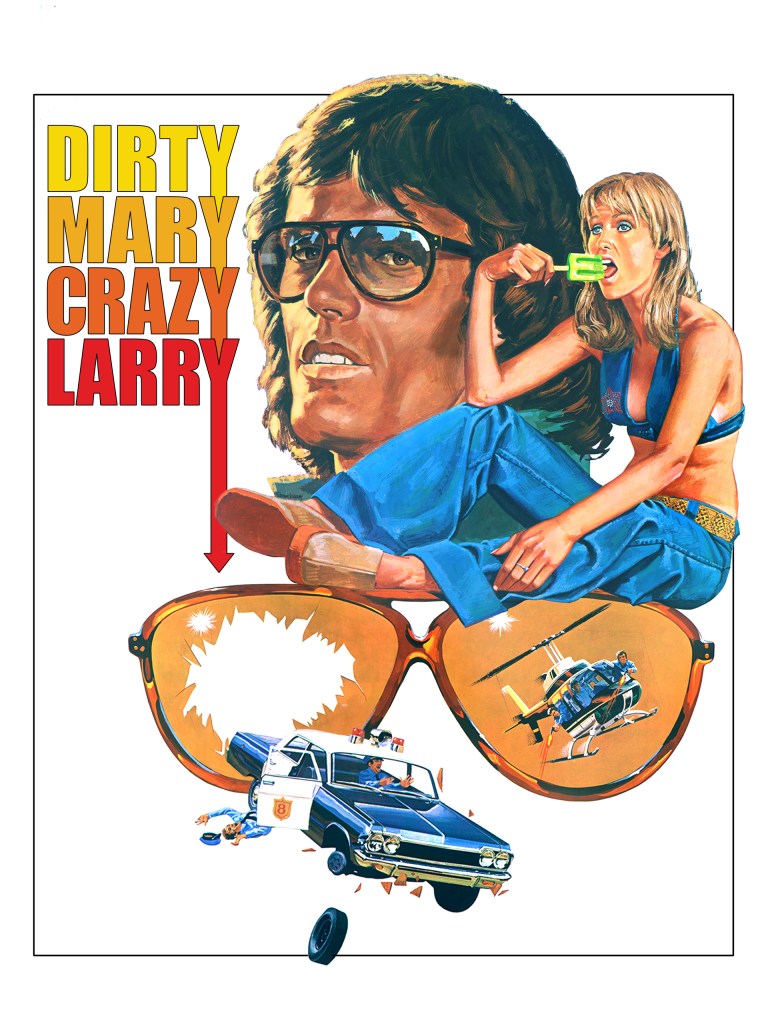
#MondayMuggers – Why DIRTY MARY CRAZY LARRY?


Every Monday night at 9:00 Central Time, my wife Sierra and I host a “Live Movie Tweet” event on X using the hashtag #MondayMuggers. We rotate movie picks each week, and our tastes are quite different. Tonight, Monday December 16th, we’re watching DIRTY MARY CRAZY LARRY starring Peter Fonda, Susan George, Adam Roarke, and Vic Morrow.

So why did I pick DIRTY MARY CRAZY LARRY, you might ask?

  1. I love car chase stunt movies from the 1970’s! We featured WHITE LIGHTNING with Burt Reynolds on here a couple of years ago. This should be another good 70’s car chase movie for the group. I’ve never actually watched the film before today so I’m really looking forward to it.   
  2. I like the cast, especially Susan George. What’s strange is that Susan is in my least favorite Charles Bronson movie of all time, LOLA, but I don’t hold that against her at all. She’s just so beautiful, and with a filmography that includes STRAW DOGS, SONNY AND JED, MANDINGO, and ENTER THE NINJA, what’s not to love?!!
  3. I think it’s cool that Peter Fonda did most of his own driving in the film, often driving over 100 miles per hour. I respect actors who are capable of doing their own stunt work…Jackie Chan, Tom Cruise, and now Peter Fonda!
  4. Quentin Tarantino loves DIRTY MARY CRAZY LARRY! He selected the film for the first “Quentin Tarantino Film Fest” in Austin back in 1996. He also featured a clip from this movie in JACKIE BROWN. It makes it even cooler that the scene in JACKIE BROWN featured Bridget Fonda, Peter’s daughter! If Tarantino loves it, that’s enough for me!

So join us tonight to for #MondayMuggers and watch DIRTY MARY CRAZY LARRY! It’s on Amazon Prime.

Insomnia File #46: Enter the Ninja (dir by Menahem Golan)


What’s an Insomnia File? You know how some times you just can’t get any sleep and, at about three in the morning, you’ll find yourself watching whatever you can find on cable or Netflix? This feature is all about those insomnia-inspired discoveries!

It’s been nearly a year since I did my last Insomnia File.  To be honest, as much as I enjoy writing these posts, I feel like the idea behind the Insomnia File format has become obsolete.  The days of people dealing with insomnia by randomly flipping through movies and infomercials have pretty much come to an end.  Now, if someone has insomnia, they’re more likely to binge an old show on Netflix.

That said, if you had insomnia at one in the morning last night and you didn’t feel like binging The Office for the hundredth time, you could have turned over to TCM and watched the 1981 film, Enter the Ninja.

What would you have gotten out of Enter the Ninja?  Five words: France Nero as a ninja.  Seriously, what more do you need?  Nero plays Cole, a former mercenary who goes off to Japan, trains to become a ninja, and then heads off for the Philippines, where his old mercenary friend, Frank (Alex Courtney), owns a farm.  Frank and his wife, Mary-Ann (Susan George) are having problems because evil businessman Charles Venarius (Christopher George, chewing up the scenery as the bad guy) is determined to force them off of their land.  Add to that, Frank is a pathetic drunk.

Soon, Cole is putting on his white ninja suit and fighting to protect the farm and also dealing with Venarius’s ninja, who just happens to be an old rival of Cole’s.  Cole is also carrying on an affair with Mary-Ann but that’s not big deal because Frank isn’t much of a man.  One of the most interesting things about Enter the Ninja is that it may be a martial arts film but it’s also a modern western and a domestic drama.  Cole could just as easily be a gunslinger, protecting the homesteaders.  Frank and Mary-Ann could just as easily be a couple on a daytime drama.  Instead, they’re all in a ninja film.

The main appeal of Enter the Ninja is Franco Nero, an actor who — in his prime — was one of the sexiest men to ever appear in the movies.  He spends a good deal of the film with his face covered but the important thing is that you can still see those beautiful blue eyes.  As usual, Nero gives a good performance with so-so material.  Nero brings his trademark intensity to the role and he does actually seem to care about whether or not his friends lose their farm.

Enter the Ninja was directed by the legendary Menahem Golan, a filmmaker who understood the importance of never letting the action slow down.  Enter the Ninja is dumb, over the top, and entertaining.  Plus, it’s got Franco Nero!  What else do you need at one in the morning?

Previous Insomnia Files:

  1. Story of Mankind
  2. Stag
  3. Love Is A Gun
  4. Nina Takes A Lover
  5. Black Ice
  6. Frogs For Snakes
  7. Fair Game
  8. From The Hip
  9. Born Killers
  10. Eye For An Eye
  11. Summer Catch
  12. Beyond the Law
  13. Spring Broke
  14. Promise
  15. George Wallace
  16. Kill The Messenger
  17. The Suburbans
  18. Only The Strong
  19. Great Expectations
  20. Casual Sex?
  21. Truth
  22. Insomina
  23. Death Do Us Part
  24. A Star is Born
  25. The Winning Season
  26. Rabbit Run
  27. Remember My Name
  28. The Arrangement
  29. Day of the Animals
  30. Still of The Night
  31. Arsenal
  32. Smooth Talk
  33. The Comedian
  34. The Minus Man
  35. Donnie Brasco
  36. Punchline
  37. Evita
  38. Six: The Mark Unleashed
  39. Disclosure
  40. The Spanish Prisoner
  41. Elektra
  42. Revenge
  43. Legend
  44. Cat Run
  45. The Pyramid

Cleaning Out the DVR #24: Crime Does Not Pay!


gary loggins's avatarcracked rear viewer

We’re way overdue for a Cleaning Out the DVR post – haven’t done one since back in April! – so let’s jump right in with 4 capsule reviews of 4 classic crime films:

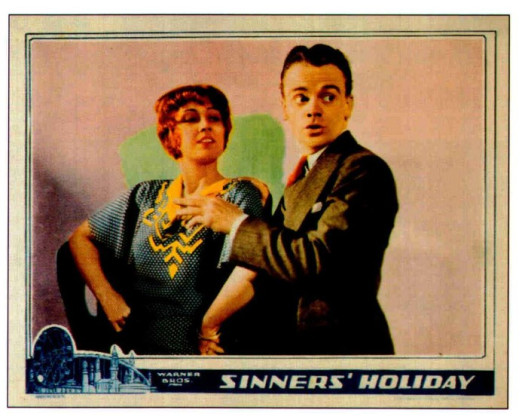
SINNERS’ HOLIDAY (Warner Brothers 1930; D: John Adolfi) – Early talkie interesting as the screen debut of James Cagney , mixed up in “the booze racket”, who shoots bootlegger Warren Hymer, and who’s penny arcade owner maw Lucille LaVerne covers up by pinning the murder on daughter Evalyn Knapp’s ex-con boyfriend Grant Withers. Some pretty racy Pre-Code elements include Joan Blondell as Cagney’s “gutter floozie” main squeeze. Film’s 60 minute running time makes it speed by, aided by some fluid for the era camerawork. Fun Fact: Cagney and Blondell appeared in the original Broadway play “Penny Arcade”; when superstar entertainer Al Jolson bought the rights, he insisted Jimmy and Joan be cast in the film version, and…

View original post 549 more words

Gone With The Whaaat?: MANDINGO (Paramount 1975)


gary loggins's avatarcracked rear viewer

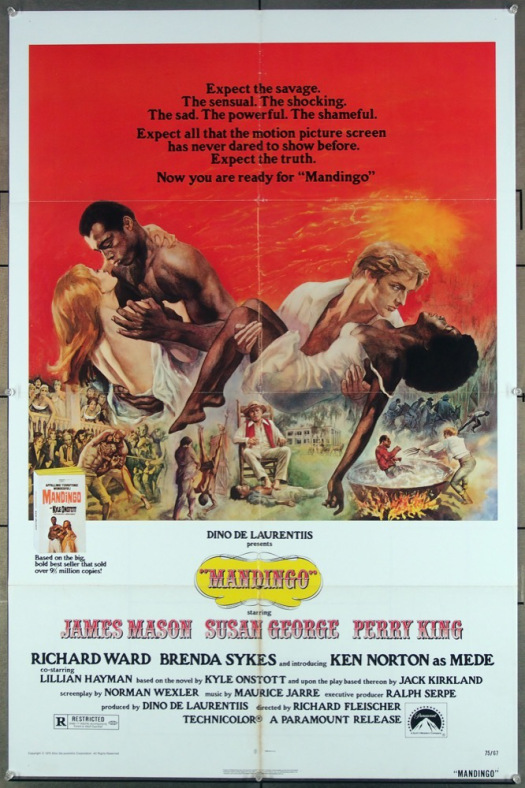
If you’ve never seen MANDINGO, be prepared for loads of gratuitous sex, violence, debauchery, depravity, racism, incest, nudity, and other such unsavory stuff! Some people today discuss the film in a scholarly manner, dissecting the sociological implications of pre-Civil War decadence in the deep South, the plight of the abused slaves, the overindulgent cruelty of the slave owners, and blah blah blah. I’m gonna talk about what the movie really is: pure, unadulterated Exploitation trash, in which some scenes will have your jaw dropping in shock, while others will leave you laughing at the exaggerated overacting and ludicrous dialog!

The movie centers around the Maxwell family and their plantation home, Falconhurst. It’s no Tara; Falconhurst is a run-down, gloomy, decrepit mansion that looks like it belongs in one of those “hillbilly horror” schlockfests of the 60’s or 70’s. Family patriarch Warren Maxwell wants a grandson to carry on the family…

View original post 771 more words

A Movie A Day #281: The House Where Evil Dwells (1982, directed by Kevin Connor)


When writer Ted Fletcher (Edward Albert) moves his family into a house in Kyoto, Japan, he does not know that the house comes with a violent history.  140 years ago, the house was occupied by a samurai and his wife.  When the samurai discovered that his wife had taken a lover, he killed both them and himself.  The three spirits remain in the house, haunting Ted and his wife, Laura (Susan George).  When a possessed Laura starts an affair with Ted’s best friend (Doug McClure), will history repeat itself?
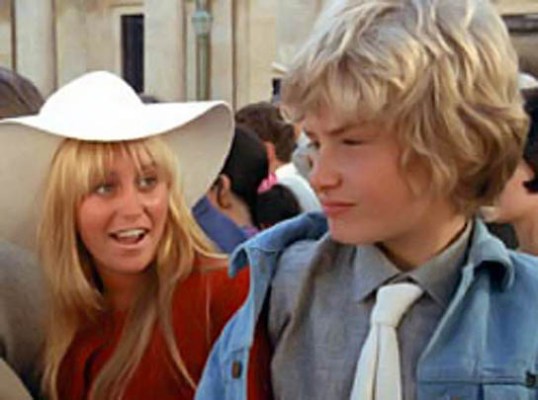
When I was growing up, The House Where Evil Dwells used to frequently show up on television.  When you are a kid, anything that combines ghosts, sex, and samurai swords is automatically the coolest thing that you have ever seen so I used to really like The House Where Evil Dwells.  A few weeks ago, I rewatched it for the first time in years and I was shocked by how boring the movie actually is.  There are a few well-composed scenes with the ghosts silently watching the Fletcher family and Susan George does the best she can do with what she is given but has there ever been any two actors as wooden as Edward Albert and Doug McClure?  Any film about passion and anger is doomed to fail when it stars two actors who cannot show emotion.  This is one haunted house movie that will make you want to hang out with the ghosts because the living are just too boring.


A Movie A Day #14: Eyewitness (1970, directed by John Hough)


eyewitness-1970-film

In Eyewitness (which is also known as Sudden Terror), eleven year-old Ziggy (Mark Lester) witnesses a policeman (Peter Vaughan) assassinating a visiting African dignitary but, because he has a history of “crying wolf,” he can’t get anyone to believe him.  Not his older sister, Pippa (Susan George).  Not his grandfather (Lionel Jeffries), the lighthouse keeper.  Not the housekeeper, Madame Robiac (Betty Marsden).  Not even Tom Jones (Tony Bonner), a tourist who fancies Pippa.  When he sees two policemen driving up to his grandfather’s lighthouse, Ziggy panics and runs.  Though John Hough’s direction, which is full of zoom shots and Dutch angles, is dated, Eyewitness holds up well as a tight thriller.  Susan George was beautiful in 1970 and Peter Vaughan is a great villain.

If Sam Peckinpah had ever made a children’s movie, it would probably look a lot like Eyewitness.  The movie starts out with Ziggy playing on the beach and pretending to be a soldier while imaginary gunshots and explosions are heard in the background.  It ends with a strange joke about a man who looks like Hitler, followed by a cheery freeze frame.  In between all that cheeriness, the assassin and his brother (Peter Bowles) chase Ziggy across Malta and kill anyone who gets in their way, from a friendly priest to a ten year-old girl being held by her father.  I counted ten onscreen death, which is a lot considering that this British movie was released at a time when some were still arguing that Jon Pertwee-era Dr. Who was too scary for children.  There’s even an exciting car chase that ends with one car overturned and the blood-covered survivors struggling to drag themselves out from underneath the wreckage.  How many British children were traumatized by Eyewitness?


Embracing the Melodrama Part II #54: Mandingo (dir by Richard Fleischer)


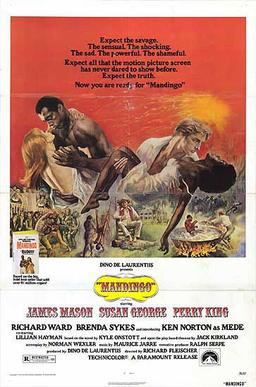
Mandingo_movie_posterUp until last night, I was under the impression that James Mason never gave a single bad performance over the course of his long career.  Oh sure, I knew that Mason had probably appeared in his share of bad films.  But I figured he was one of those actors who was always better than his material.  Just watch Lolita, The Verdict, Julius Caesar, Odd Man Out, Bigger Than Life, or Murder By Decree and you’ll see that James Mason was a great actor.

But then, last night, I finally got around to watching the 1975 film, Mandingo.

I’ve actually owned Mandingo on DVD for a few years.  I bought it on a whim, the result of having seen it listed as one of the worst films of all time in several different reference guides.  But I have to admit that I did not have any great desire to actually sit through the film.  Instead, it was one of those films that you buy just so your very ownership of it can be a conversation piece.

(“Oh my God, Lisa, what’s this?”  “Oh, that little old thing?  That’s my copy of Mandingo…”)

However, when I decided to do Embracing the Melodrama, Part II, I realized that this would be the perfect time to actually watch and review Mandingo.

Mandingo deals with life on a sordid plantation in pre-Civil War Alabama.  Warren Maxwell (James Mason) owns the plantation and he spends most of his time sweating and complaining about his rheumatism.  When a Satanic slave trader named Brownlee (Paul Benedict) suggests that Warren can cure his rheumatism by always resting his feet on the backs of two little slave children, Warren proceeds to do just that.  Seriously, this is a 127 minute film and, nearly every time that Mason appears on screen, he’s got his feet propped up on the children.

Warren’s got a son named Hammond (Perry King).  Hammond walks with a limp, the result of a childhood pony accident.  Warren expects Hammond to sire an heir to Maxwell family legacy but Hammond is only comfortable having sex with slaves.  Finally, during a business trip with his decadent friend Charles (Ben Masters), Hammond meets and marries Blanche (Susan George).  Blanche assures Hammond that she’s a virgin and, on their wedding night, she asks Hammond how to have sex.  “We take off our clothes…” Hammond begins.

However, the morning after, Hammond is convinced that Blanche lied about being virgin because she enjoyed having sex.  Once they return to the plantation, Hammond refuses to touch Blanche and instead ends up falling in love with a slave named Ellen (Brenda Sykes).  When Ellen gets pregnant, Blanche beats her until she miscarries.

And meanwhile, James Mason keeps popping up with two little kids resting underneath his feet…

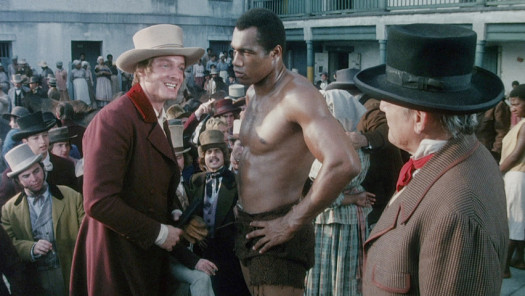
But that’s not all!  Hammond has purchased a slave named Mede (Ken Norton).  Mede is a boxer and wins Hammond a lot of money.  In order to “toughen up” his skin, Mede is also forced to bathe in a cauldron of very hot water.  “Shuck down those pants!” Hammond shouts before Mede gets in the cauldron.

Blanche, who is now an alcoholic, gets her revenge on Hammond by having sex with the the legendarily endowed Mede.  Soon, Blanche is pregnant and Hammond and Warren are both excited.  Then the baby is born and all Hell breaks loose.

And, meanwhile, James Mason rests his feet on the back of two little kids…

Mandingo is one of those films that you watch in wide-eyed amazement, shocked that not only was this movie made but it was also apparently made by a major film studio and directed by a professional director.  (Before he directed Mandingo, Richard Fleischer directed everything from 20,000 Leagues Under The Sea to Doctor Dolittle to Soylent Green.)  I know that some would argue that Mandingo used the conventions of exploitation cinema to expose the sickening inhumanity of American slavery but let’s be honest here.  Mandingo is not Django Unchained.  Instead, it’s a slow-moving soap opera that is occasionally redeemed by some over-the-top dialogue and histrionic performances.

And it’s also proof that James Mason was capable of giving a bad performance.  According to the imdb, James Mason described Mandingo as a film that he did solely for the paycheck.  From his terrible Southern accent to the way that he always seems to be trying to hide his face from the camera, Mason gives perhaps one of the worst performances ever given by a legitimately great actor.

But really, can you blame him?

Is Rod Lurie’s Straw Dogs The Worst Film of 2011?


It’s probably a bit too early to answer that question.  After all, we’ve still got 3 months left to go in the year and Roland Emmerich’s take on Shakespeare (a.k.a. Anonymous) hasn’t been released yet.  So, no, Rod Lurie’s remake of Straw Dogs cannot be called the worst film of 2011 yet.  Instead, it’s just the worst film so far.

Straw Dogs is a remake of the 1971 Sam Peckinpah film.  In the Peckinpah film, David Sumner (played by Dustin Hoffman) is a pacifist who, upon moving to the childhood home of his wife Amy (Susan George), is repeatedly harassed by the locals until he finally takes his very brutal revenge.  It’s a flawed and uneven film that still carries quite a punch.  I wouldn’t say I’ve ever enjoyed watching Peckinpah’s Straw Dogs but it’s undeniably powerful film.  As for the remake, Peckinpah has been replaced with Rod Lurie, Hoffman by James Marsden, and Susan George’s controversial character is now played by Kate Bosworth.  None of these changes are for the better.

Lurie’s version of Straw Dogs almost slavishly follows the plot of the original.  He’s made just a few changes and none of those changes are for the better.  The most obvious change is that, while the first Straw Dogs took place in rural England, Lurie’s version takes place in Mississippi.  It’s pretty easy to guess Lurie’s logic here.  Lurie, after all, previously created the television show Commander-in-Chief in which President Geena Davis heroically struggled to save the nation from fundamentalists with Southern drawls.  Lurie’s vision of Mississippi is some sort of Blue State nightmare where everyone drives a pickup truck, goes to church, cheers at football games, and makes supportive comments regarding the War in Iraq.  In the original Straw Dogs, David Sumner is a truly a stranger in a strange land, an American who doesn’t realize just how out-of-place he is in rural England.  In the remake, David Sumner is just a guy on vacation from the West Coast.  He really has no excuse for being quite as dense as he is when it comes to not pissing off the locals.  By changing the locale, Rod Lurie essentially just makes his film into yet another example of Yankee paranoia.  This wouldn’t be such a problem except that Lurie seems to be taking it all so seriously.  He really seems to feel that he’s making a legitimate contribution to the whole Red State/Blue State divide.  Watching the film, I had to wonder if Rod Lurie truly believed that it’s impossible to get a cell phone signal in Mississippi. 

The other big difference is that in Lurie’s version, David Sumner is no longer a mathematician.  Instead, he’s now a Hollywood screenwriter who is apparently working on an epic screenplay about the Battle of Stalingrad.  (“I figured out a way to get Khrushchev in on the action!” he says at one point.)  To be honest, David’s screenplay sounds kinda boring and it’s hard not to sympathize with the “hillbilly rednecks,” (as David calls them) who ask him why anybody would want to watch his movie.  (The rednecks also ask him if he thinks that God had anything do with the Battle of Stalingrad.  Speaking as a nonbeliever, I have to say that this film was almost hilariously paranoid about any sort of religious belief.)  Part of the power of the first Straw Dogs came from the fact that David was an academic.  He was a man whose life was about theory and that made it all the more shocking to see him explode into action.  It also explained his non-existent social skills, because he was, after all, the product of a very insular, intellectual existence.  However, in the remake, David just becomes a condescending jerk who’s working on a screenplay for a film that most viewers would have little interest in actually sitting through.  (Add to that, it was hard not to feel that this new David was just Rod Lurie’s Mary Sue.)

David is in Mississippi because it’s the childhood home of his wife, Amy.  The character of Amy is problematic in both versions of Straw Dogs but, to be honest, I found her character to be even more illogical and insulting in Lurie’s remake.  In the original Straw Dogs, Amy is portrayed as an idiot who flirts with every man she sees, taunts her husband to the point of violence, and (by that film’s logic) puts herself in a situation that leads to her rape.  The character is, in many ways, an insulting stereotype but at least she’s a consistent insulting stereotype.  The remake’s Amy is presented as being a considerably stronger character.  She doesn’t openly flirt with the local rednecks, she and her husband are a lot more obnoxiously lovey dovey, and (as opposed to in the first film), it’s never suggested that she actually enjoys being raped.  Kudos to Lurie for trying to make her a stronger character.  Yet, at the same time, the remake’s Amy still does a lot of the same illogical things as the original Amy.  The original Amy at least had the excuse of being an idiot.  The remake’s Amy just comes across as being an inconsistent, poorly-concieved character.  Eventually, it becomes obvious that director Lurie wasn’t trying to make Amy into a stronger character as much as he was just trying to be politically correct.  (Another thing that the two Amys have in common is that neither one of them wears a bra.  It made sense in the original film because the original Amy was presented as being something of a wannabe flower child.  In the remake, it just comes across as Lurie’s dirty boy excuse to get a peek at Kate Bosworth’s nipples.  Seriously, who goes jogging without a sports bra?)

Anyway, the remake follows the path of the original.  David and Amy return to Amy’s home village where they meet Amy’s ex-boyfriend Charlie Venner (played by an amazingly hot and sexy Alexander Skarsgard).  David hires Charlie and his redneck buddies to repair the roof of an old barn.  Charlie, who is obviously still attracted to Amy, spends the entire first part of the movie subtly humiliating David and basically being a bully.  Somebody strangles Amy’s cat.  Amy says it was Charlie and his friends.  David replies, “I can’t just accuse them.”  Eventually, David is taken on a deer hunt by Charlie’s friends and while he’s gone, Charlie and his buddy Chris rape Amy. 

(In the original it was a snipe hunt and the sight of Dustin Hoffman searching for a nonexistent creature while his wife is being raped was quite disturbing and perfectly symbolized his character’s impotence.  In the remake, David is once again left alone in the woods but this time, he shoots and kills a deer and, unfortunately, James Marsden isn’t a good enough actor to let us know what that means.)

Amy never tells David that she was raped, nor does she go to the authorities.  (This makes a sick sense in the original.  In the remake, it just seems like an effort by Rod Lurie to degrade a previously strong woman.)  The next night, David ends up sheltering the local sex pervert in his house while Charlie and his drunken friends attempt to break in.  This leads to David revealing that, as opposed to being “a coward,” he’s actually as vicious a killer as everyone else in the film. 

In the original version, this was a disturbing revelation if just because Sam Peckinpah emphasized not so much the killing as the fact that, as the siege progresses, David begins to enjoy the killing more and more.  Once Peckinpah’s David has given into the reality that he too is an animal, you realize that it’ll be impossible for him to return to being the essentially decent man that he was before.  In the original, you start out cheering David’s revenge but soon, you just want it to stop.  Much like the originalTexas Chainsaw Massacre, the film is so thematically nightmarish that you end up thinking you’ve seen a lot more blood than you actually have.  It sticks with you.

However, since Lurie’s remake is a film devoid of nuance or subtlety, the sudden explosion of violence on David’s part is neither surprising nor all that exciting.  And since James Marsden is no Dustin Hoffman (to put it lightly), you don’t see any change in David once the violence begins.  He’s not a man turning into an animal as much as he’s just a 90210 reject with a scowl on his face.  He kills a lot of men but he looks oh so pretty doing it and Amy cheers him on every step of the way.  (In the original, Amy was terrified of her husband’s new side.  I would be too.)  Since Lurie isn’t a good enough director to generate a sincere emotional response to seeing David turn into a killer, he instead lingers over all the blood and gore like a pervert struggling to catch his breath while secretly looking at a snuff website.  In short, the original Straw Dogs condemned violence by pretending to celebrate it.  The remake celebrates it by pretending to condemn. 

Okay, you may be saying, so it’s not a great film.  But is it really the worst of 2011 so far?  After all, Alexander Skarsgard gives a charismatic, bad boy performance and James Woods has a few good scenes as a venomous former football coach.  And director Lurie, while he may be incapable of keeping the action moving at a steady pace, does manage to make Mississippi look pretty.  That’s all true but I still say that Straw Dogs is the worst movie of the year so far.  Why? 

Because it’s not only a remake of a film that didn’t need to be remade but it’s also a remake that was apparently made by people who don’t have a clue about what made the original an important film to begin with.  It’s a film that’s gloriously unaware of its own tawdriness, a sordid mess that can’t even have fun with the possibilities inherent in being a sordid mess.  Arrogantly, director Lurie invited you to compare his film to Sam Peckinpah’s by not just ripping off the film’s story (as countless other enjoyable films have done) but by claiming the title as well.  It’s a film that represents Hollywood at its worst and for me, that’s why it’s earned the title of worst film of 2011 so far.

(One positive note: Perhaps this terrible, insulting remake will encourage someone to track down the original Straw Dogs and see how this story was meant to be told.)

6 Trailers From Out of the Past


From out of the shadows of our shared exploitive past comes 6 more of Lisa Marie’s Favorite Grindhouse and Exploitation Trailers.

1) Dirty Mary, Crazy Larry (1974)

This is a fun trailer.  It comes with its own theme song.  There’s no type of love Dirty Mary won’t make.

2) The Night Evelyn Came Out Of The Grave (1971)

This is one of those public domain films that seems to show up in every other Mill Creek Box Set.  It’s a guilty pleasure of mine and the trailer is all tacky goodness.  Plus, Erika Blanc’s in it.  (And the title has allowed me to have a lot of fun at my friend Evelyn’s expense.)

3) Four of the Apocalypse (1975)

Before he was hired to direct Zombi 2,  Lucio Fulci directed this spaghetti western.  Not surprisingly, it’s one of the darkest, most cynical westerns ever made.

4) Massacre Time (1966)

Nine years before Four of the Apocalypse, Fulci directed another western, this one with Franco Nero.  Have I mentioned the things I would let Franco Nero do to me if I could get my hands on a time machine?  Mmmmm….Franco Nero.

5) 99 Women (1969)

From director Jesus Franco comes “99 women  … without men.” 

6) Ilsa, Harem Keeper of the Oil Shieks (1976)

Don’t watch this trailer if you’re a toadsucker.  Or easily offended.