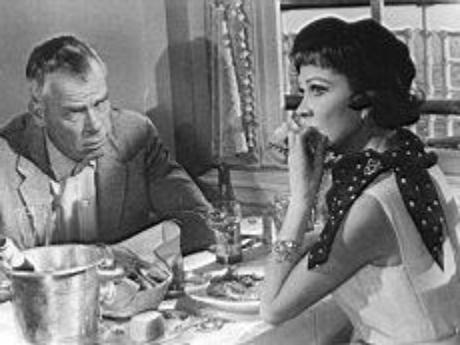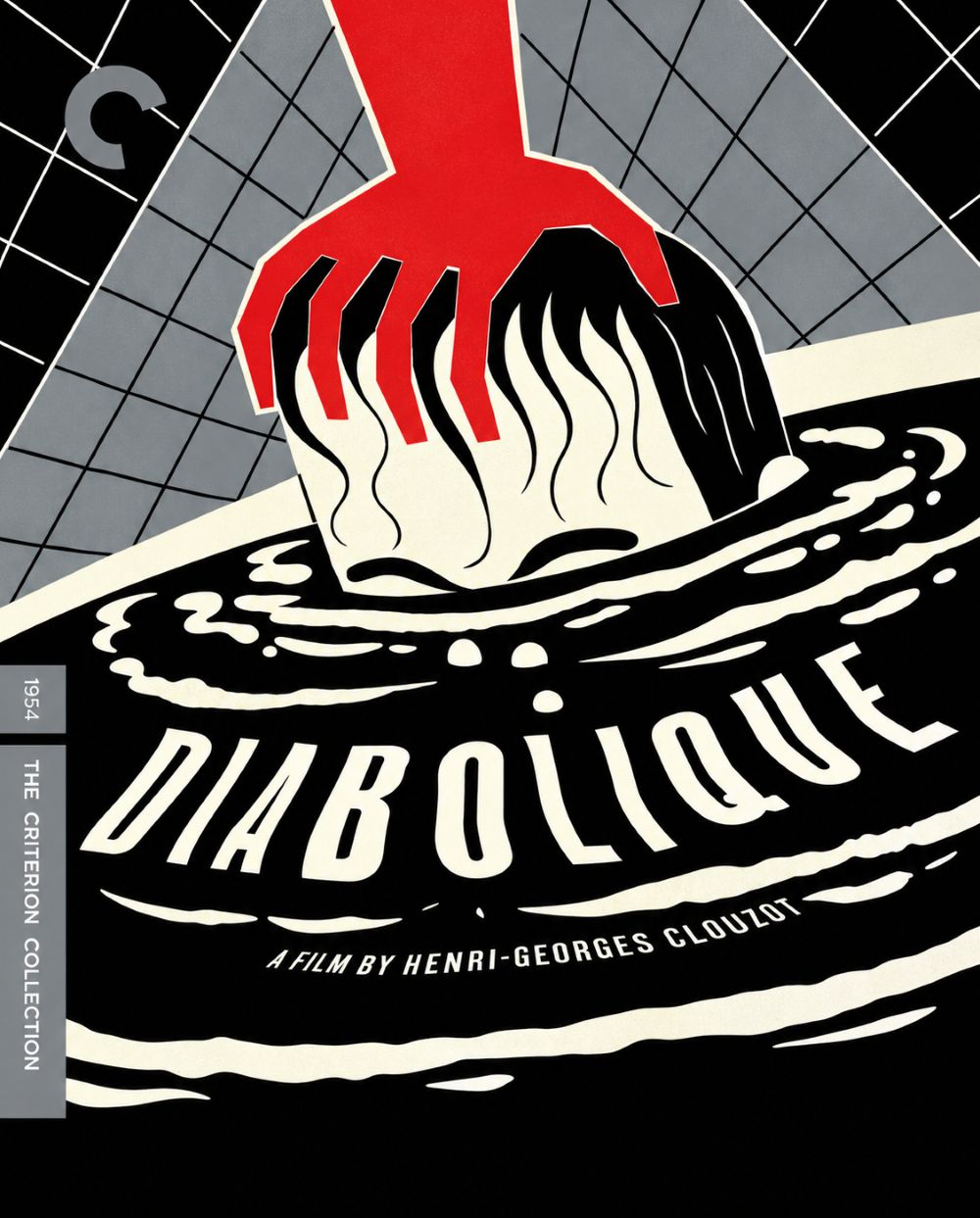
“Some things are hard to swallow, and I’m not talking about the fish.” — Nicole
Watching Les Diaboliques (1955) feels a little like being let in on a secret by someone who enjoys knowing more than you do. Henri-Georges Clouzot gets you close enough to understand a terrible decision, encourages you to hope it works out, and then starts withholding the information you need to feel comfortable. It’s an entertainingly unfair arrangement. His psychological horror-thriller doesn’t just build suspense around a murder; it makes the audience dependent on explanations that become less trustworthy by the minute. The pleasure comes from trying to keep up. The dread comes from realizing that keeping up may be exactly what the film wants you to think you’re doing.
The secret begins at a shabby French boarding school run by Michel Delassalle, played by Paul Meurisse. Michel is married to Christina, played by Véra Clouzot, and having an affair with Nicole, played by Simone Signoret, who also works at the school. Neither woman is getting much happiness out of the arrangement. Rather than remaining rivals, they join forces against the man whose cruelty has made their lives intolerable. Their solution is to murder him and place his body in the school’s swimming pool, making his death look accidental. It’s a plan with obvious risks, but those risks become almost reassuring compared with what follows: when the pool is drained, Michel’s body has vanished.
Clouzot makes that premise work by establishing the misery before introducing the mystery. Michel isn’t a flamboyant villain who announces his wickedness with theatrical flourishes. He’s the sort of petty tyrant who can make a meal unpleasant simply by sitting down. Meurisse gives him a smug confidence that suggests he has rarely had to consider whether anyone might resist him. He humiliates because he can, and because keeping other people uncomfortable reinforces his position. The nastiness feels habitual rather than exceptional. You don’t need a detailed history of the marriage to understand how exhausting it must be to live within reach of this man’s moods.
That gives the women’s conspiracy an uncomfortable appeal. We may not approve of murder, but the film makes it easy to understand why these two people have begun considering it. Then, almost before we notice, understanding turns into investment. We start worrying about whether somebody will interrupt them or whether Christina will lose her nerve. The practical questions push the moral ones into the background. Clouzot has handed us a terrible plan and made us anxious about its success. Once we’ve accepted that position, he can start taking away the certainty that made it possible. We aren’t merely watching the women become confused. We’ve committed ourselves to their understanding of events.
Signoret is crucial to making that commitment feel sensible. Her Nicole possesses the sort of composure that encourages everyone else to stop asking questions. She seems practical, experienced, and unlikely to fall apart when things become unpleasant. Signoret doesn’t need to overplay any of this. A brief look can suggest that Nicole has already considered an objection and would prefer not to waste time discussing it. But that confidence has an edge. She can make reassurance sound very close to an instruction. We’re drawn toward her competence without necessarily being given a good reason to trust everything she says.
Christina is much less able to keep feeling separate from action. Véra Clouzot plays her as physically fragile, frightened, and burdened by religious scruples that don’t disappear simply because Michel is hateful. She wants relief from her marriage, but the means of obtaining it threaten to overwhelm her. Where Nicole concentrates on the next step, Christina feels the weight of the whole undertaking. The contrast can be stark, and there are moments when her distress feels heavily emphasized. Still, it creates an effective imbalance. One woman appears capable of carrying the plan; the other seems barely capable of surviving it.
Their alliance is interesting because it offers support without offering much ease. They agree about Michel, but agreement isn’t the same as emotional intimacy or equal power. Christina needs Nicole’s resolve, and that need makes it harder for her to question Nicole’s judgment. There’s a troubling contradiction in the idea that she can escape a controlling husband only by letting someone else take charge. The film doesn’t have to make that contradiction explicit. It emerges through the way their conversations move: Nicole pushes, Christina hesitates, and the pressure to continue becomes its own argument. Once the plan has begun, stopping seems almost as frightening as going on.
The school gives that pressure somewhere wonderfully inconvenient to operate. This isn’t a secluded house emptied out for a murder story. There are children, staff members, meals, lessons, and people who expect ordinary questions to receive ordinary answers. Christina and Nicole have to carry a private catastrophe through a functioning institution. Their secret doesn’t excuse them from being observed. A casual interruption can become a threat, while a perfectly reasonable inquiry can demand an explanation they haven’t prepared. Clouzot finds suspense in the fact that everyone else’s day keeps moving along. The world refuses to recognize that the women need it to stop.
The setting’s drabness also matters. The school isn’t grand enough to make its decay romantic. It feels worn, practical, and badly cared for, which makes its unpleasantness seem less like a special effect than a condition people have learned to tolerate. The horror grows out of that familiarity. Classrooms, corridors, and bathrooms become dangerous without having to change their basic appearance. Clouzot keeps adjusting what we believe might happen in them. A space that was merely shabby becomes a place where someone could overhear, discover, conceal, or wait.
The murder sequence grounds all of this in physical effort. Drugging Michel, drowning him, and dealing with his body are not elegant moves in an abstract puzzle. They’re ugly tasks involving weight, awkward spaces, and time that seems to move much too slowly. The bathtub makes the violence especially cramped and personal. There’s no comfortable separation between deciding to kill someone and having to manage the result. That practical detail gives the event an apparent solidity. We believe we know what happened because the film has made us sit through the difficulty of making it happen.
Which is why the missing body is such an effective disruption. The pool initially represents a horrible kind of certainty: Michel is there, hidden beneath the water, and the women’s problem is what will happen when he is found. Draining it should move the story toward a recognizable consequence. Instead, the empty space destroys the explanation we’ve been relying on. A corpse would be incriminating, but at least it would confirm reality. Its absence creates a much larger problem. Christina and Nicole no longer know what they need to fear, and neither do we.
From that point, the film’s most valuable resource is doubt. A criminal explanation remains possible, but so does something that feels disturbingly close to a haunting. Has somebody discovered the plan? Has someone interfered with it? Are the women being watched, manipulated, or punished? Clouzot lets those possibilities compete without making the rational ones particularly comforting. If somebody is arranging these disturbances, that person understands Christina’s weaknesses with frightening precision. The supernatural isn’t the only thing capable of making a familiar world feel hostile. Another human being can do the job perfectly well.
The pacing allows that uncertainty to become a habit. Quieter stretches give us time to inspect faces, rooms, and apparently insignificant remarks. We begin looking for reassurance in details that may not deserve our attention at all. This is where the film feels especially mischievous: it makes us work, but it never promises that our work will help. The harder we try to sort the evidence, the more we share the characters’ dependence on incomplete information. By the time the major shocks arrive, the movie has already made the anticipation of something wrong feel almost continuous.
Not every part of that method is equally comfortable or equally subtle. Christina’s fragility can become repetitive, and viewers who don’t connect with her distress may find the emphasis wearing. The plotting occasionally seems a little pleased with how neatly it has positioned its pieces. More troubling is the sustained attention to one vulnerable person’s suffering. Clouzot sometimes makes it difficult to distinguish between exposing cruelty and enjoying the opportunity to prolong its effects. But that harshness is also part of what gives the film its bite. It doesn’t reassure us that suffering produces strength or that recognizing mistreatment automatically teaches someone how to resist it.
The Hitchcock connection adds an appropriately competitive piece of suspense-film lore. According to a frequently repeated, possibly apocryphal account, Alfred Hitchcock missed acquiring the rights to Pierre Boileau and Thomas Narcejac’s source novel, Celle qui n’était plus, by only a few hours because Clouzot secured them first. The timing is better treated as a famous anecdote than settled fact, but it’s easy to see why the story has stuck. Here was material built around the very things that make an audience wonderfully easy to manipulate: sympathy, curiosity, and confidence that seeing an event means understanding it.
Released five years before Psycho, Les Diaboliques also makes a revealing companion to Hitchcock’s film. Both turn ordinary surroundings into places of extreme vulnerability, and both discover how unsettling a bathroom can become when privacy offers no protection. Yet Clouzot’s achievement shouldn’t be reduced to anticipating another classic. His film has its own colder rhythm, built around coercion, uneasy cooperation, and the slow erosion of confidence. The shocks matter, but they emerge from a sustained atmosphere in which nobody seems able to establish a dependable version of events.
That approach helps explain the film’s lasting place in psychological horror. Its unstable alliance, suggestive disturbances, and revelations that change the meaning of earlier scenes offer a powerful model for making human deception feel as frightening as supernatural evil. More importantly, it connects those devices to emotional vulnerability. The mystery isn’t just a challenge placed in front of the audience. It’s something being experienced by people who are frightened, compromised, and poorly equipped to protect themselves. Even when you know where the story is headed, that imbalance remains disturbing.
What makes Les Diaboliques worth returning to, then, isn’t simply the chance to admire how successfully Clouzot keeps his secret. It’s the chance to notice how readily we help him keep it. We trust confidence, follow the explanation that seems most useful, and overlook the discomfort of admitting that we may not understand what we’ve seen. The movie makes those ordinary habits entertaining, then turns them against us. Long after its puzzle has been solved, that little betrayal still has teeth. Clouzot lets us feel like insiders, but he never quite lets us forget who has been running the conversation.