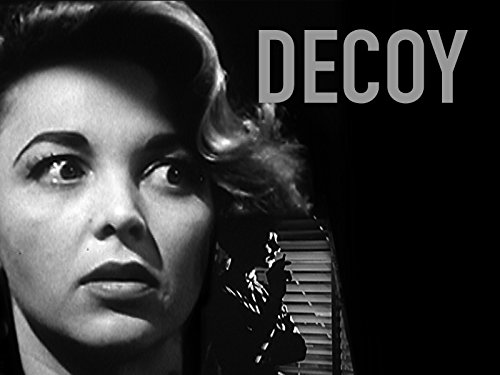
Retro Television Review: Decoy 1.1 “Stranglehold”


Welcome to Retro Television Reviews, a feature where we review some of our favorite and least favorite shows of the past!  On Thursdays, I will be reviewing Decoy, which aired in Syndication in 1957 and 1958.  The show can be viewed on Tubi!

This week, we start a look at Decoy, a show that will hopefully be a considerable improvement on Malibu CA!

Episode 1.1 “Stranglehold”

(Dir by Don Medford, originally aired on October 17th, 1957)

“There are 249 of us in the Department. We carry two things in common wherever we go – the shield, called a “pottsy”, and a .32 revolver. We’re New York’s finest …. we’re police women.”

Those are the words that end the first episode of Decoy and they’re delivered by Casey Jones (Beverly Garland), a former ballet dancer who now works undercover as a member of the NYPD’s Department of Policewomen.  Casey holds up her revolver for the audience to see, leaving them no doubt that she’s telling the truth.  A woman who know how to handle a gun!?  Audiences in 1957 were no doubt stunned.

Of course, the audience had also just spent 25 minutes watching Casey work undercover.  After a merchant seaman is murdered and a woman named Molly Orchid (Joanne Linville) is caught with some of his jewelry, Casey is sent to live across the hall from Molly.  (Casey is also living in the dead man’s apartment.  Casey, a true New Yorker, comments that she’ll do anything to get a good apartment.)  After hiding her gun in a lighting fixture and hiding her badge under her blouse, Casey befriends Molly and tries to meet George, the mysterious boyfriend that Molly says gave her the jewelry.

Molly loves to talk about George but George never seems to be around.  Molly says that George is a musician and that he’s often out of town.  Casey comes to feel sorry for Molly, feeling that the emotionally vulnerable woman is being manipulated by George.  Whereas the male cops would just as soon shoot Molly than try to negotiate with her (this entire show is from the pre-Miranda era), Casey does her best to reason with Molly.  That is the difference between a policewoman and a policeman.

Of course, as you probably already guessed, there is no George.  Casey eventually figures it out after she realizes that Molly has been going to the movies alone as opposed to meeting up with George.  Molly, spotting Casey’s gun, grabs it and finally admits the truth.  The merchant seaman tried to assault her and Molly strangled him in self-defense.  George is a figment of her imagination, someone who she made up as a way to deal with her guilt.  A policeman barges into the apartment and points his gun at Molly but Casey steps in front of him and then manages to talk Molly down.

The first episode of Decoy was distinguished by some on-location shooting in New York City and the performances of Joanne Linville and especially Beverly Garland.  Garland’s empathetic but strong-willed performance dominates the show and it leaves us with little doubt that Casey Jones is the best at what she does.  Meanwhile, Linville, in the role of Molly, may be dangerous but she’s also sympathetic.  Her crime was initially one of self-defense and George was someone she created as her way of surviving in a world where no one was willing to look out for her.

Next week: Casey searches for a missing artist.

Late Night Retro Television Review: 1st & Ten 1.7 “Uneasy Lies The Head”


Welcome to Late Night Retro Television Reviews, a feature where we review some of our favorite and least favorite shows of the past! On Wednesdays, I will be reviewing 1st and Ten, which aired in syndication from 1984 to 1991. The entire series is streaming on Tubi.

This week, Coach Denardo has a bad dream and put the future of the Bulls in jeopardy.

Episode 1.7 “Uneasy Lies The Head”

(Dir by Bruce Seth Green, originally aired on January 6th, 1985)

After having a nightmare in which the members of the Bulls all appear as parts of his failing body and a demonic linebacker (Donald Gibb) and a saintly quarterback (Jeff East) tell him that he has to decide whether he wants to go to Heaven or Hell, Coach Denardo fears that his time is up.

At the next game, Denardo is distracted.  He calls the last time out, not realizing that he doesn’t have any left.  The clocks runs out while the Bulls are trying to get set up for field goal.  “Time out!  Time out!”  Denardo yells.  “You have no time left, coach,” the referee replies, which is maybe not the best way to speak to a man recovering from a heart attack.  As for the game, it’s a humiliating loss.  Denardo says that he might have to retire….

Yeah, that sounds about right.  I don’t know much about football but I can tell that Denardo made a lot of mistakes in the course of  just two minutes.  Get that old man out there!  Heck, just let Diane coach like she did last week….

Diane decides to trick Denardo into staying.  She rolls a really old computer out during practice and lets it call the plays.  Denardo gets angry.  No machine is going to replace Ernie Denardo!

Meanwhile, Bubba (Prince Hughes) upsets his mother-in-law.

Seriously, that’s the entire episode.  That’s all that happens.  I know it doesn’t sound like much but what can I tell you?  I sat through this and spent the whole time wondering when the episode’s actual story was going to start and it really didn’t.  Denardo had a bad dream.  Bubba upset his mother-in-law.  That’s it.

This episode was forgettable.  Diane should have fired Denardo after that loss.  I fear the Bulls aren’t going to make it to whatever this show’s version of the Super Bowl is.

Late Night Retro Television Review: Pacific Blue 2.17 “Runaway”


Welcome to Late Night Retro Television Reviews, a feature where we review some of our favorite and least favorite shows of the past! On Tuesdays, I will be reviewing Pacific Blue, a cop show that aired from 1996 to 2000 on the USA Network!  It’s currently streaming everywhere, though I’m watching it on Tubi.

It’s time for more bicycle action.

Episode 2.17 “Runaway”

(Dir by Charles Siebert, originally aired on January 19th, 1997)

A teenage girl  (Boti Bliss) is missing on the boardwalk.  Maggie Garrity (Justina Vail), who runs the local shelter, is looking for her.  When she asks the bike patrol for help, TC is dismissive up until he looks up from his paperwork and sees Maggie.  I’ve noticed that this is a patten with the bike patrol.  It’s rare that they do anything until they see it will involve hanging out with an attractive members of the opposite sex.

TC recruits Chris to help him put up flyers.  Chris rolls her eyes because, seriously, why should a member of law enforcement be concerned with a teenage girl who has been abducted by a pimp (Gene Lythgow) and his psycho girlfriend (Ami Dolenz)?  Personally, I would dread working for Chris because she never stops complaining.  It says a lot about this show that the we’re nearly done with the second season and Chris still doesn’t have a personality beyond being whiny.

TC falls for Maggie but Maggie’s a nun!  After they manage to rescue the missing girl, TC asks Maggie if maybe she could stop being a nun for a new nights so that they could go out on a date.  Maggie says that it doesn’t work like that.  What I find interesting is that TC has no problem casually asking Maggie to give up her vows just because he wants to date her.  Hey, TC — this is why you’re single!

Meanwhile, Palermo has new expensive bicycle.  What a dork.  When the bike gets stolen, Victor has to find it.  Palermo sure is mad about his missing bike.  What a loser.

This show is not growing on me.

Retro Television Review: Fantasy Island 7.7 “The Wedding/Castaways”


Welcome to Retro Television Reviews, a feature where we review some of our favorite and least favorite shows of the past!  On Tuesdays, I will be reviewing the original Fantasy Island, which ran on ABC from 1977 to 1984.  Unfortunately, the show has been removed from most streaming sites.  Fortunately, I’ve got nearly every episode on my DVR.

This week, Lawrence ruins everything.

Episode 7.7 “The Wedding/Castaways”

(Dir by Bob Sweeney, originally aired on November 26th, 1983)

Ugh, this episode.

Nerdy Fred Connors (Richard Gilliland) wants to spend a weekend alone with a beautiful woman.  His favorite supermodel, Christy Robbins (Phyllis Davis), has been pressured by her manager (Steve Perry) into agreeing to spend the weekend with Fred at Pelican Cove.  Fred and Christy will have their picture taken before and after their weekend together to show just how much spending time alone with Christy Robbins will improve one’s outlook on life.

Let’s just stop here and state the obvious.  This makes ZERO sense.  Christy’s manager has no idea who Fred is.  He doesn’t even meet Fred until it’s time to him and Christy to go to Pelican Cove.  Christy is a world-famous model.  In what world would a celebrity agree to be abandoned on an isolated island with a total stranger?  The photographers aren’t staying on the island with them.  Instead, Christy and Fred are dropped off on the island and then everyone else leaves.  If I was Christy, I would get a new manager.

A rival model named Celina Morgan (Shannon Tweed) was also up for the “abandoned on an island with a possible sex maniac” gig and she’s upset that she lost out to Christy.  So, she sneaks out to Pelican Bay herself and soon, she and Christy are fighting over the right to spend their time with Fred.  It’s dumb and it makes no sense and, considering that the whole fantasy is basically two beautiful woman fighting over one dorky guy, it’s actually feels a bit demeaning and mean-spirited.

Of course, it’s nowhere near as mean-spirited as the other fantasy.  Lucy Gorman (Jeannie Wilson) is unhappy in her marriage to Dr. Jack Gorman (Gordon Thomson).  She tells Roarke that the only good thing that came out of her marriage was her daughter (Andrea Barber) but Lucy even feels jealous of her!  Lucy wants to go back to her wedding day so she can see what would happen if she left her husband at the altar and pursued another doctor (Richard Pierson).

Well, the main that would happen is that Lucy’s daughter would never be born.  But somehow, this doesn’t occur to Lucy until the fantasy has started.  How would that not occur to a mother?  This fantasy was …. I can’t even begin to describe how annoying it was.  Lucy came across as being very self-centered and kind of dumb.

I swear, the seventh season has just been terrible so far and I blame one person.

And, no, it’s not Mr. Roarke.

Seriously, ever since Lawrence showed up, the Island just hasn’t been the same.  Are we sure that Lawrence isn’t the Devil?  I mean, I know the Devil was traditionally played by Roddy McDowall on this show but I’m sure he change his appearance.  There’s something sinister about Lawrence and I don’t trust him.  He doesn’t care about Roarke and he doesn’t care about the fantasies.

What a disappointing trip to the Island.  Traditionally, the last season of any show is usually the worst but it’s still painful to watch Fantasy Island misfire like it did with this episode.

Late Night Retro Television Review: CHiPs 4.10 “Forty Tons Of Trouble”


Welcome to Late Night Retro Television Reviews, a feature where we review some of our favorite and least favorite shows of the past!  On Mondays, I will be reviewing CHiPs, which ran on NBC from 1977 to 1983.  The entire show is currently streaming on Prime!
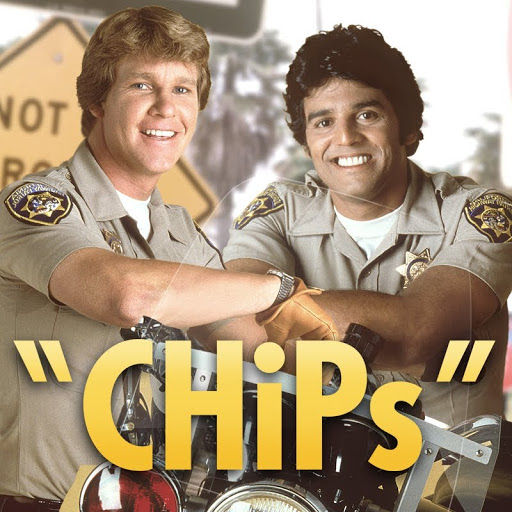
This week, two sets of thieves cause trouble!

Episode 4.10 “Forty Tons Of Trouble”

(Dir by Gordon Hessler, originally aired on January 11th, 1981)

A group of criminals is stealing equipment from construction sites and selling it on the black market.  An attempt to steal a loader leads to it rolling down a Los Angeles street until Baker is able to jump onto it and crash it into a (hopefully) abandoned building.  Getraer points out that Baker just destroyed a building.  Baker shrugs and says he’s always wanted to do that.

A different group of criminals is stealing parts for their drag racer.  The CHiPs have their own car entered into the drag races.  Of course, it’s driven by Ponch.

After two accidents on the highway and several chases, Baker and Ponch (but mostly Ponch) capture the bad guys.  Paula Kohl (Mary Louise Weller), the owner of Kohl Construction, appreciates the efforts of Baker and Ponch (but mostly Ponch).

In other words, this was a typical episode of CHiPs.  Still, it’s memorable because of the supporting cast.  Amongst the construction site thieves is Robert Englund.  Englund thinks that Sarge (Taylor Lacher) is taking to many risks when it comes to trying to steal loaders and bulldozers but Sarge is like, “I got it under control.”  Meanwhile, amongst the drag race thieves, is Chris Mulkey.  Mulkey doesn’t get to do much but he does get two scenes where he smirks at Ponch.  Sadly, both characters end up getting arrested during this episode but have no fear.  Robert Englund went on to play Freddy Krueger.  Chris Mulkey went on to play the sleazy but strangely likable Hank Jennings on Twin Peaks.

As for the rest of the episode — hey, I don’t ask for much from CHiPs.  As long as there’s a good crash scene and a lot of cool cars, I’m happy.  This episode delivered.  One could ask why Ponch is always the one who gets to do the cool things, like driving in the race and taking Paula out on a fancy date.  Earlier seasons usually tried to portray Ponch and Baker as being equals.  This season, though, has clearly been The Ponch Show.  It’s a legitimate criticism but …. eh.  Sometimes, you just want to watch a chase or two.


Retro Television Review: Miami Vice 4.17 “Hell Hath No Fury”


Welcome to Retro Television Reviews, a feature where we review some of our favorite and least favorite shows of the past!  On Mondays, I will be reviewing Miami Vice, which ran on NBC from 1984 to 1989.  The entire show can be purchased on Prime!

This week, Trudy is once again the main character.  Fortunately, there’s no UFOs this time around.

Episode 4.17 “Hell Hath No Fury”

(Dir by Virgil W. Vogel, originally aired on March 11th, 1988)

Alan Beaks (Don Harvey), the scion of a prominent Florida family, has been released from prison after serving only a few years for raping a black school teacher named Ellen Mason (Carla Brothers).  Beaks claims that he’s reformed and, at the start of the episode, he appears on a talk show where the audience agrees that Alan Beaks is the perfect example of someone who has straightened out his life.

“I wouldn’t want it to happen to me,” one woman in the audience says, “but if it did, I would hope he would be as charming as Alan Beaks.”

Beaks now wants to make a public apology to Ellen.  However, she refuses to see him.  When she starts to get threatening phone calls, both she and her best friend Trudy are convinced that Beaks is the one calling.

Castillo, however, doesn’t want Trudy to have anything to do with Ellen or Beaks.  It’ll make the Vice Quad look bad, he says.  (Since when has Castillo ever used that type of logic?)  Still, when Ellen hires a hitman (John Finn) to kill Beaks, the Vice Squad finds itself involved.  No one on the Squad has any sympathy for Beaks and they don’t make much of an effort to protect him.  When a shootout leaves both Beaks and the hitman dead, Castillo tells the members of the Squad that they have failed and if they’re not going to full commit themselves to the job, they can transfer to another department.  Meanwhile, even with Beaks dead, Ellen is still getting phone calls, implying the Beaks was actually not her stalker.  The episode ends with a terrified Ellen listening as the caller threatens her….

Here’s my number one question about this episode: Why didn’t anyone trace the calls?  Ellen, the victim in a high-profile rape case, is getting calls from someone threatening to harm her.  That right there seems like the sort of thing that the police would normally investigate.  Trudy is Ellen’s best friend.  Trudy knows about the calls.  Trudy is a cop.  So, why didn’t the Vice Squad try to track down the caller?  If they could have proven that Beaks was the caller, Beaks would have gone back to prison.  If it turned out that someone else was the caller, that person would have gone to prison.  Beaks would still be free but at least Ellen wouldn’t be getting threatened every ten minutes.  In the past, that’s what would have happened on this show.  For some reason, this episode features everyone forgetting how to act like a cop.

In the end, this episode tried to deal with a lot of issues — tabloid journalism, rehabilitation, vigilante justice, racism, classism — but it ultimately felt like fan faction that was written by someone who really didn’t know much about the show or the characters.  (One would think that Gina, a rape survivor who gunned down her rapist during the first season, would have some thoughts on Ellen’s plan but instead, she spends the episode cheerfully exchanging one-liners with Switek.)  This was another Season 4 disappointment.

Late Night Retro Television Review: Degrassi: The Next Generation 1.2 “Mother and Child Reunion: Part 2”


Welcome to Late Night Retro Television Reviews, a feature where we review some of our favorite and least favorite shows of the past!  On Sunday, I will be reviewing the Canadian series, Degrassi: The Next Generation, which aired from 2001 to 2015!  The series can be streamed on YouTube and Tubi.

This week, Snake shows that whatever it takes, he’s going to make it through.

Episode 1.2 “Mother and Child Reunion: Part 2”

(Dir by Bruce McDonald, originally aired on July 1st, 2002)

Snake threatens to kill a guy in this episode!

Now, to be clear, the guy in question definitely had it coming.  While Spike enjoyed her class reunion, Emma snuck out of the house, went down to a hotel, and waited for Jordan.  Sitting in the lobby, she was approached by Mr. Nystrom (Jeff Gruich), who claimed to be Jordan’s teacher.  Mr. Nystrom, who was carrying a pizza box, invited Emma upstairs to meet with Jordan.  Emma followed him but, once she stepped into his hotel room and discovered that there weren’t any environmentally-minded teens around, Emma realized that there was no Jordan and “Mr. Nystrom” was actually the person who had been e-mailing her.

Fortunately, Manny, Toby, and JT figured out that Emma had gone out to meet Jordan so they hacked her e-mail (Emma’s password was “Pogues,” after Spike’s favorite band) and found out what hotel “Jordan” was staying at.  They then ran to the Degrassi Community School and found Spike and Snake dancing at their reunion.  They told Spike and Snake where Emma was.  Spike and Snake then went to the hotel and Snake banged on the door until Mr. Nystrom answered.

(Oddly, neither one of them appeared to have called the cops on the way over to the hotel.)

While Spike ran into the room to get her daughter, Snake grabbed Mr. Nystrom, pinned him against the wall, and threatened to “snap (his) neck.”  And I have to say that, as dorky as Archie “Snake” Simpson may usually be, that was pretty freaking hot.

Meanwhile, at the reunion, Joey heard Keith talking to Allison Hunter about how he wasn’t sure he actually wanted to marry Caitlin.  That led to Joey getting into a brawl with Keith while Caitlin was giving her “most distinguished alumni” speech.  Caitlin broke up with Keith and she and Joey reconciled.  It wasn’t the first time that they reconciled and it won’t be the last.

At the house, Emma apologized for panicking Spike and then added, “Like you’ve never made a mistake?  Like having me!”  Wow, that’s …. kind of sad.  Spike assures Emma that becoming a mom at the age of 14 was not a mistake.  However, sneaking out to meet a guy you’ve never met is definitely a mistake!  What Spike doesn’t mention is that this could have all been avoided if Emma wasn’t so obsessed with protecting the environment.

Next week: the school year begins!  Hopefully, Emma will have learned her lesson about getting involved in the environmental movement.

(Spoiler: She won’t.)

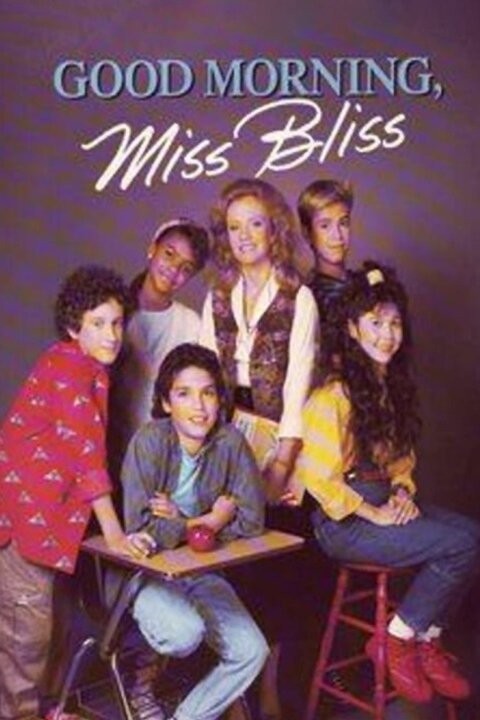
Late Night Retro Television Review: Good Morning Miss Bliss 1.6 “Showdown”


Welcome to Late Night Retro Television Reviews, a feature where we review some of our favorite and least favorite shows of the past!  On Saturdays, I will be reviewing Good Morning, Miss Bliss, which ran on the Disney Channel from 1988 to 1989 before then moving to NBC and being renamed Saved By The Bell.  The entire show is currently streaming on Prime!

This week, a bully can’t read.  Can Miss Bliss reach him?  Or will he just beat up Screech?  Why not both?

Episode 1.6 “Showdown”

(Dir by Gary Shimokawa, originally aired on January 4th, 1989)

“I can’t read!” Deke (Andras Jones) snaps at Screech towards the end of this episode.  Deke is the new student at JFK Junior High, a troublemaker who has continually been transferred to school after school.  Deke was going to beat up Screech but, when Screech didn’t laugh at Deke’s illiteracy, it changed Deke’s life.  That little act of kindness was all Deke needed to approach Miss Bliss and ask for help.

Way to go, Screech!

This is actually one of the better episodes of Good Morning Miss Bliss, as the emphasis is put more on the students and less on Miss Bliss being a sanctimonious nag.  Andras Jones was 21 years old when this episode aired and he really did look too old and too tall to be playing a 9th grader.  (He towers over Hayley Mills.)  But, when you think about, it makes sense.  Deke is probably someone who has gotten held back a few times.  If he looks older, it’s because he is older.  While everyone he knows who is his own age has moved on to high school, he’s still stuck in middle school.  No wonder the kid is pissed off at the world!

To give credit where credit is due, young Dustin Diamond gave a pretty good performance in this episode.  Considering how Saved By The Bell would later transform Screech (and Diamond himself) into the epitome of an annoying sidekick, it’s actually interesting to see how good he actually was on Good Morning, Miss Bliss.  On Miss Bliss, Diamond was allowed to play Screech as just being a nerd as opposed to full-on weirdo.  Seen today, this is actually a very sad episode.  Diamond has no idea what’s waiting for him in the future.

Oh well.  At least Deke might finally make it to the tenth grade….

Lisa Marie’s Week In Television: 8/16/25 — 8/23/25


Aaron Hernandez and The Untold Murders of Bristol (Hulu)

I watched this true crime documentary on the 17th.  As I watched it, I found myself wondering just how many documentaries will ultimately be made about Aaron Hernandez.  I’m going to guess that there will be quite a few just because his story really does capture the current cultural zeitgeist.  Americans love celebrities and they love true crime and the Aaron Hernandez case gives them both, along with CTE and toxic masculinity and repressed sexuality.  As for this documentary, it mostly focused on the Hernandez case but it also told the story of two other football players who went to high school with Hernandez and who also ended up becoming murderers.  I guess there must be something in the Gatorade up in Connecticut.  This documentary didn’t really bring anything new to the table.  Above all else, Aaron Hernandez appears to have just been a total idiot.

Big Brother 27 (CBS, Paramount+, Pluto TV, 24/7)

Go Ava!  If Ava wins, I’ll be happy.  I’ve ben writing about Big Brother over at the Big Brother Blog.

Murder Under Fright Night Lights (Hulu)

The Aaron Hernandez documentary led to me watching two seasons of this true crime show about football-related murders.  The first season was considerably better than the second season, leading me to suspect that the show made the mistake of front-loading all of the interesting stories.  Seriously, you have to spread things out if you want to keep people tuning in.

Retro Television Review: The American Short Story #12: The Man That Corrupted Hadleyburg


Welcome to Retro Television Reviews, a feature where we review some of our favorite and least favorite shows of the past!  On Saturdays, Lisa will be reviewing The American Short Story, which ran semi-regularly on PBS in 1974 to 1981.  The entire show can be purchased on Prime and found on YouTube and Tubi.

This week, we have an adaptation of a Mark Twain novella.

Episode #12: The Man That Corrupted Hadleyburg

(Dir by Ralph Rosenblum, originally aired in 1980)

In this loose adaptation of one of Mark Twain’s darkest novellas, Robert Preston stars as The Stranger.  When we first meet The Stranger, he’s looking down on the small town of Hadleyburg and it’s hard not to notice that he looks a lot like Mark Twain.  The Stranger explains that the people of Hadleyburg consider themselves to be honest and free of sin.  The town’s motto is “Lead us not into temptation!”  The Stranger has a plan to test them.

Riding into town, the Stranger stops at the home of Edward and Mary Richards (Tom Aldredge and Frances Sternhagen).  The Stranger gives them a sack that he claims is filled with $40,000 worth of gold bars.  The Stranger says that he was once a poor man and someone in Hadleyburg gave him $20 and some meaningful advice.  Now that’s he rich, he wants to pay back the person who helped him.  The Stranger explains that there is an envelope inside the sack.  In the envelope, the Stranger has written out the advice he was given by his benefactor.  The Stranger’s instruction is for the man who helped him to write out that advice and give it to Rev. Burgess (Fred Gwynne), who recently lost his church when the citizens of Hadleyburg tired of him calling them out for their hypocrisies.  The honest man who remembers the advice he gave the Stranger will be very rich as a result.  The Stranger then leaves.

News of the sack and the gold travels throughout town and eventually the rest of the nation.  The most powerful families in Hadleyburg, including the Richards family, receive a letter telling them that the advice given to the stranger was “You are far from being a bad man, go and reform.”  Burgess is soon swamped by notes, all featuring that same phrase.  At the town meeting, Burgess reads each note, revealing that everyone wrote down the same phrase and that none of the town leaders is as honest as they claim.

The Man That Corrupted Hadleyburg is one of Twain’s most stinging satires, featuring an ending that is surprisingly dark.  This adaptation takes a much lighter approach to the material, altering Twain’s ending to something much more gentle and friendly.  Unfortunately, changing the ending causes the adaptation to lack the bite of the original short story.  Twain’s portrayal of greed and guilt instead becomes a mild story about a quirky town that learns a lesson.  It’s well-acted, especially by Fred Gwynne, but this adaptation doesn’t honor Twain’s intentions.  It just doesn’t add up to much.