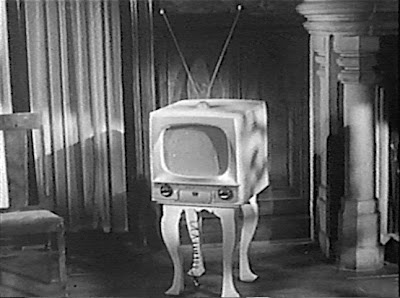
In the third episode of Hammer House of Horror, Denholm Elliott plays an estate agent who finds himself having a series of nightmares about his wife (Pat Heywood) and his secretary (Lucy Gutteridge) and a murder that may or may not have happened on Friday the 13th. This episode is an enjoyably surreal trip into the subconscious.
In the UK, Rude Awakening originally aired on September 27th, 1980.
Welcome to Retro Television Reviews, a feature where we review some of our favorite and least favorite shows of the past! On Saturdays, I will be reviewing Baywatch, which ran on NBC and then in syndication from 1989 to 2001. The entire show can be purchased on Tubi.
Today, I start a new series of reviews. Since I already did Baywatch Nights, it just made sense to go ahead and do Baywatch. All together, this show ran for 11 and a movie so it should only take 241 weeks to finish up the series….
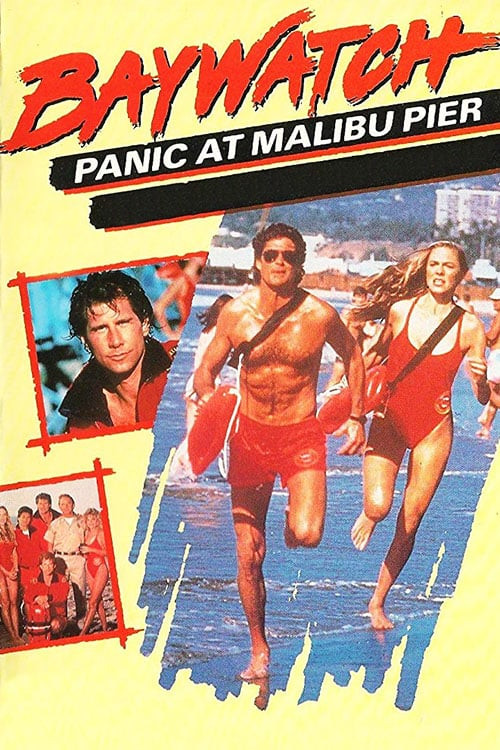
“Baywatch: Panic At Malibu Pier”
(Dir by Richard Compton, originally aired on April 29th, 1989)
It’s not easy being a lifeguard.
That would seem to be the main theme running through Panic at Malibu Pier, the two-hour movie that also served as a pilot for Baywatch. Consider the drama:
Mitch Buchanan (David Hasselhoff) loves the beach and he loves getting in the water but it’s cost him his marriage and now, his ex-wife (Wendie Malick) is suing for sole custody of their young son, Hobie (Brandon Call). Hobie doesn’t like going to school. He doesn’t understand why he can’t just spend all day on the beach like his father. Mitch, meanwhile, has been promoted to lieutenant of Baywatch and he’s now no longer supposed to do rescues. He’s just supposed to supervise the other lifeguard. His boss, Captain Thorpe (Monte Markham), is very insistent on that. Mitch explains that he doesn’t even like wearing socks. Ewwww. You have to wear socks, Mitch!
Eddie Kramer (Billy Warlock) is a rookie lifeguard. He finished at the top of his class but he’s also a tough kid from Philadelphia who grew up in the foster system. Shauni (Erika Eleniak) is another rookie lifeguard who freezes up when she has to provide CPR to a drowned girl. Her mentor, Jill (Shawn Weatherly), tells Shauni that it happens to every lifeguard. I bet it’s never happened to Mitch. Shauni seems to have a crush on Eddie and Eddie seems to be driven to prove himself. Eddie has guts because he wears a Philadelphia t-shirt in California.
Al Gibson (Richard Jaeckel) is the veteran lifeguard who is reaching retirement age and who dies at the end of the episode and gets a big lifeguard funeral on the beach.
Trevor (Peter Phelps) is the Australian lifeguard who calls everyone “mate.”
Finally, Craig Pomeroy (Parker Stevenson) is the attorney who prefers to spend his time in his lifeguard tower. Even when he should be at the office and working for his clients, Craig just hangs out at his tower. He saves the life of a disturbed teenager named Laurie (Madchen Amick). Laurie subsequently becomes obsessed with him. When the married Craig tells her to stay out of his lifeguard tower and stop taking off all of her clothes, she accuses Craig of assaulting her. Later, she tries to murder Craig’s wife (Gina Hecht). This all could have been avoided if Craig had just gone to his office like he was supposed to.
This pilot film for Baywatch has everything that the show would make famous — stiff line deliveries from the supporting cast, red swimsuits, David Hasselhoff’s earnestly goofy sincerity, slow motion, and plenty of musical montages. Amongst the guest cast, Madchen Amick stands out at the obsessive Laurie, showing an ability for handling melodrama that would be put to good use on Twin Peaks. Take a drink every time Mitch says, “Rescue can,” and see how long you can go before passing out. Unlike a lot of pilots that don’t really resemble the eventual show, Panic at Malibu Pier is unmistakably Baywatch.
And, watching it, you can see why the show eventually became a success. The beach scenery is nice. The men are athletic, the women are pretty, and the slow motion is cool the first time you see it. Of course, the most important thing about the pilot — and the show itself — is that it doesn’t require a good deal of attention. It’s one of those things where you can step away from the screen for a few minutes and then come back without having worry about having missed anything important.
Panic at Malibu Pier was a ratings hit. Baywatch followed. We’ll get into that next week.
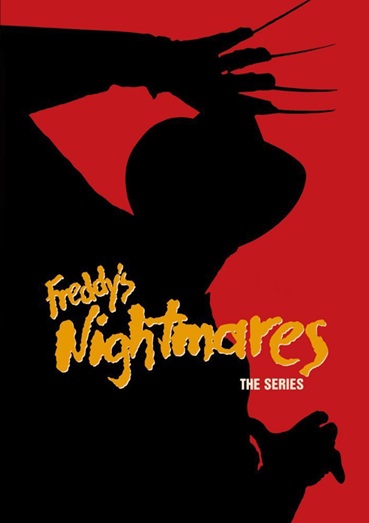
Welcome to Late Night Retro Television Reviews, a feature where we review some of our favorite and least favorite shows of the past! On Fridays, I will be reviewing Freddy’s Nightmares, a horror anthology show which ran in syndication from 1988 to 1990. The entire series can be found on Plex!
This week, there’s a new threat in town!
Episode 1.11 “Do Dreams Bleed?”
(Dir by Dwight H. Little, originally aired on January 8th, 1989)
There’s a new serial killer in Springwood!
We don’t really learn much about the Chopper, other than he attacks people with an axe. When the episode begins, high school football star John Warring (Damon Martin) is dealing with dual trauma of having not only found the Chopper’s latest victim but also being the number one suspect. His grades start to slip. (As was so often the case on this show, his parents are conveniently out-of-town.) He fears that he’s going to lose his girlfriend, Roni (Sarah Buxton). Not even John’s coach, Coach Gacey (Jeff McCarthy), is much help. That’s probably because Coach Gacey actually is the Chopper, not that anyone figures that out. Driven mad by his dreams, John finds himself being taken away to an asylum.
(Really? Coach Gacey? He should have been the number one suspect based on his name alone.)
The second half of the episode follows Ronni as she now starts to have nightmares. She wants to believe that John is innocent but her dreams indicate that she has her doubts. Eventually, John escapes from prison and is able to save Ronni from Coach Gacey. However, when the police arrive, they just assume that Coach Gacey was trying to save Ronni and that John is the Chopper. Ronni is so shaken by the entire experience that she no longer knows what’s true and what’s not.
Wow, that’s dark!
This was actually a pretty good episode. For once the two stories had coherent plots, with Ronni’s story logically building off of John’s. The dream sequences were effectively creepy, director Dwight Little kept the action moving at a good pace, and even the dark ending felt earned as opposed to forced on the narrative. I would have liked to have heard Freddy’s thoughts on Springwood having a new serial killer (instead, during the host segments, Freddy just did his usual bad jokes) but otherwise, this was a surprisingly good episode.
In this episode of Hammer House of Horror, Julia Foster plays a tabloid reporter who is assigned to investigate an unconventional weight loss program. Foster discovers that weight loss is actually the last thing that the clinic is concerned with. This is an enjoyable macabre episode, one the features a particularly nasty twist.
The Thirteenth Reunion originally aired in the UK on September 20th, 1980.
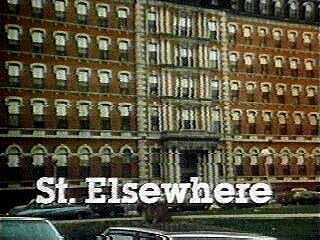
Welcome to Retro Television Reviews, a feature where we review some of our favorite and least favorite shows of the past! On Fridays, I will be reviewing St. Elsewhere, a medical show which ran on NBC from 1982 to 1988. The show can be found on Hulu and, for purchase, on Prime!
This week, Peter White returns to the hospital.
Episode 2.18 “Equinox”
(Dir by David Anspaugh, originally aired on March 14th, 1984)
A college student (Thomas Byrd) comes in after taking a hit to the groin during a touch football game. It turns out that he might have testicular cancer and it falls to Dr. Cavanero to let him know that he will soon be down a ball.
Dr. Chandler is upset when his new girlfriend prefers to hang out with Luther. Chandler accuses Luther of “shuckin’ and jivin’.” Chandler’s girlfriend dumps him for being “mean.” In a well-acted scene, Chandler talks to Morrison about how he’s expected to act one way as a black man and another way as a black doctor.
Fiscus makes the mistake of giving Elliott Axlerod (Stephen Furst) his lucky baseball cap. Axelrod spills a urine sample on it and then accidentally sets the hat on fire while attempting to dry it. Axlerod is having a terrible day until a man dressed like Paul Revere brings his horse into the ER for treatment. It turns out that Axlerod’s father was veterinarian. Axlerod cures the horse but he still has to get Fiscus a new hat.
Finally, Dr. White returns. His charges have been reduced from attempted rape to assault. Wendy Armstrong is not happy and starts to binge eat. (And yet, as several nurses point out, she doesn’t gain a pound. We all know what that means….) When Kathy Martin sees Peter in the cafeteria, she yells that he raped her. “You’re crazy,” Peter lies.
The episode ends with Dr. Chandler going for a run outside, stopping, and screaming into the air.
This episode was a bit uneven. The Axlerod story worked because of the likability of Stephen Furst and not because the story itself was particularly clever. The Philip Chandler/Jack Morrison conversation was the highlight of the episode, though the ending with Chandler screaming into the void was a bit overdone.
As for Dr. White, I’ve reached the point where I can’t even stand to look at him and I feel foolish for having any sympathy for him earlier in the season. Hopefully, this season will end with Dr. White going to prison for life because I’m not sure how many more episodes I can handle of him wandering around the hospital with that smug look on his face.
Seriously, St. Elsewhere, take care of this guy soon….
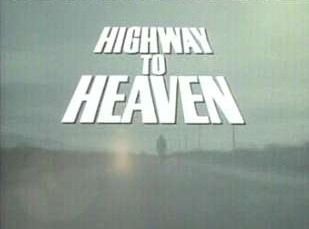
Welcome to Late Night Retro Television Reviews, a feature where we review some of our favorite and least favorite shows of the past! On Thursdays, I will be reviewing Highway to Heaven, which aired on NBC from 1984 to 1989. The entire show is currently streaming on Tubi and several other services!
This week, Mark rejoins the police force and discovers that things have changed since he last wore the blue.
Episode 4.16 “Back to Oakland”
(Dir by Michael Landon, originally aired on February 3rd, 1988)
Jonathan and Mark return to Mark’s old hometown of Oakland, California. When Mark stops by his old precinct, he discovers that most of the police force is home with “blue flu,” protesting budget cuts. Mark volunteers to return to active duty for a few days. He’s paired up with his former partner, Frank Lawler (Kenneth Kimmins).
Mark, however, discovers that things have changed in his absence. Cops are viewed with suspicion by the people that they are supposed to be serving. And Frank is an unrepentant racist who expects Mark to have his back no matter what.
Jonathan, meanwhile, gets a job as a security guard at an all-black apartment complex. “You’re the first white man to ever work here,” he’s told by the landlady (Fran Bennett). The landlady’s son, Albert (Guy Killum), doesn’t trust white people and resists Jonathan’s attempts to reach out to him.
When Albert is caught shoplifting by Mark and Frank, Frank takes him into a back alley. Frank removes his handcuffs and dares Albert to take a swing at him. Mark steps out of the store just in time to see Frank shoot and kill Albert.
“He attacked me!” Frank says.
“I put cuffs on him,” Mark says.
In the end, Mark refuses to cover for Frank. Jonathan arranges for Albert’s younger brother (Kenny Ford, Jr.) to meet with Frank’s son (Mark Sussman). The episode ends with the two of them introducing each other.
This episode was Highway to Heaven at its most earnest and heartfelt. I imagine there are some that would complain that this episode attempts to “both sides” the issue of racism. Both Albert and Frank are portrayed as being obsessed their hatred of another race. That said, only one of the two men is portrayed as being in a position to kill the other and potentially get away with it. The scene of Mark, who has spent the entire series bragging about his time as an Oakland cop, taking a stand and telling the truth about what happened in the alley is surprisingly powerful. Mark does the right thing and he does it without hesitation. Is the ending of the episode a bit naive? Perhaps. But it’s so sincerely done that it’s hard not to appreciate the show’s intentions.
In other words, this episode was an example of what Highway to Heaven did well. It’s not subtle but it’s so heartfelt that the viewer can’t help but be moved.
Hammer House of Horror was a British anthology series that ran for 13 episodes in 1980. As you can tell by the title, the show was produced by Hammer Films. Each episode dealt with a different type of horror and featured some of the best actors working in British film and television.
The first episode aired on September 13th, 1980. Lucinda Jessup (Patricia Quinn), a 17th century witch, escapes from a pack of witch hunters by traveling into the future. Discovering that her former home is now occupied by a film composer (Jon Finch) and his wife (Prunella Gee) and that the marriage is not a happy one, Lucinda puts her mark on the composer. Can the man’s unfaithful wife save him from the witch? The husband isn’t all that sympathetic and I think that many viewers will probably feel that it might be for the best to just let the witch have him but this is still a well-acted and atmospheric episode. Keep an eye for Ian McCulloch of Zombi 2fame as the wife’s lover.
This episode also features some brief nudity so don’t watch it at work.
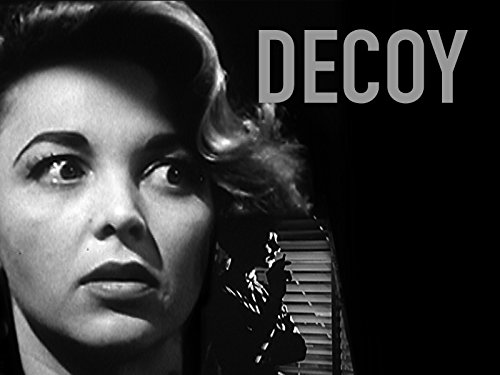
Welcome to Retro Television Reviews, a feature where we review some of our favorite and least favorite shows of the past! On Thursdays, I will be reviewing Decoy, which aired in Syndication in 1957 and 1958. The show can be viewed on Tubi!
This week, Casey gets involved in the shady world of college athletics.
Episode 1.6 “The Savage Payoff”
(Dir by Teddy Sills, originally aired on November 18th, 1957)
When a college basketball player is killed in a car accident, the police discover evidence that he may have been throwing games for the mob. Lt. Franklin (Bill Zuckert) suspects that the dead player’s best friend and roommate, Dave Carter (Don Hastings), might be taking money as well. Disguising herself as the dead player’s sister, Casey introduces herself to Dave and befriends him in an attempt to discover the truth. It turns out that the gangsters have been paying Dave off but, at the last minute, Dave decides not to throw the game and instead leads the team to victory.
This episode bothered me a little. When the episode begins, there is no real evidence that Dave has been taking money from the mob. Instead, Lt. Franklin just assumes that Dave is guilty and, with only his hunch to go on, he assigns Casey to befriend Dave and try to prove his guilt. Obviously, there are times when the police have to go undercover but it was still hard not to feel that the police should have at least had some sort of solid evidence before upending Dave’s life. The fact that Dave was both mourning his friend and was obviously attracted to Casey just made the whole thing feel all the more icky. Indeed, a lot of Casey’s action in this episode seem like they would be considered to be entrapment.
Probably the most interesting thing about this episode was that Dave was played by a young Don Hastings. If you’re like me and you grew up with an aunt who loved As The World Turns, you’ll immediately recognize him as Dr. Bob Hughes. Hastings played Dr. Hughes for a record-setting 50 years and even spoke the show’s final lines when he said, “Good night” on September 17th, 2010. Hastings gave a convincing performance as Dave. I was happy to see him take a stand and refuse to fix the game. I was also happy that Casey didn’t have to take him to jail. That would have been depressing.
Speaking of jail, there’s where Casey’s going next week! We’ll see what happens!
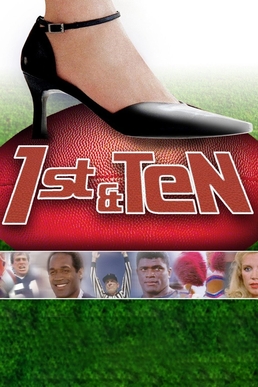
Welcome to Late Night Retro Television Reviews, a feature where we review some of our favorite and least favorite shows of the past! On Wednesdays, I will be reviewing 1st and Ten, which aired in syndication from 1984 to 1991. The entire series is streaming on Tubi.
Is this season over yet?
Episode 1.12 “Not Quite Mr. Right”
(Dir by Bruce Seth Green, originally aired on February 10th, 1985)
The Bulls are going to the “Championship Game!”
They should be getting ready for the game but instead, everyone’s distracted.
Wide receiver Mace Petty (Marshall R. Teague) has been cast in a movie where he will be co-starring with his favorite actor, Larry the Wonder Dog.
Diana is distracted when a former lover (Dennis Holohan) shows up and starts acting like he wants to get back together.
Denardo is distracted by the networks wanting to mic him up during the big game. Everyone agrees that Denardo curses too much to wear a microphone. Since this episode was edited for syndication, we don’t actually heard Denardo curse but we are assured that he does it.
This episode sucked. Right when the football part of the show finally starts to get interesting, 1st & Ten does an episode that takes everyone off the field. Now, I will add one caveat. On Tubi, it appears that they are largely using episodes that were edited for syndication. As a result, there was so pretty obvious dubbing (especially where Denardo was concerned) and some pretty abrupt jump cuts. So, it’s totally possible that the HBO version of this episode might have been a masterpiece. I doubt it, though.
Next week …. it’s not the Super Bowl. It’s the Championship Game!
The year was 1979 and Fred Silverman, the president of NBC, had an idea.
How about a television series in which each week’s episode would depict a different group of passengers going on a trip? The passengers would all be dealing with their own stories, some of which would be dramatic and some of which would be humorous. With any luck, some of them might even fall in love over the course of their journey!
To keep the audience interested, the show would also feature a cast of regular characters, the crew. Edward Andrews would play the captain, a sensible and by-the-book type. Robert Alda played Doc, the doctor who was also a bon vivant. Patrick Collins was the goofy purser. Nita Talbot played Rose, the perky director of entertainment. Michael DeLano was the bartender who always had the best advice for the passengers….
Does this sound familiar?
If you think that it sounds like Fred Silverman just ripped off The Love Boat …. well, you’re wrong. The Love Boat took place on a boat. Supertrain took place on a train.
At the time that Supertrain went into production, it was the most expensive television production of all time. Before the pilot film was even shot, NBC had spent ten million dollars on the Supertrain sets. Not only was a fake train built but two models were also constructed for the shots of the train moving through the countryside. At the time, the assumption was that the costs would be easily covered by the money that NBC stood to make from broadcasting the 1980 Summer Olympics. Unfortunately, Jimmy Carter decided that the U.S. would be boycotting the Olympics as a way to protest Russia’s invasion of Afghanistan. The only thing that kept NBC from going bankrupt was that the BBC was apparently run by someone even more incompetent than Fred Silverman. The BBC paid $25,oo per episode for the rights to air Supertrain in the UK. Supertrain proved to be such a disaster that the BBC never actually aired the episodes that they had purchased.
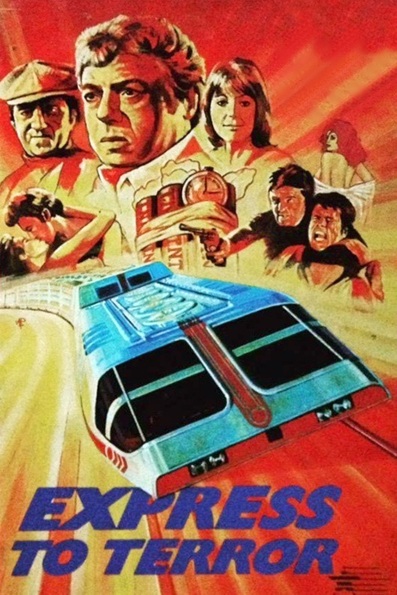
1979’s Express to Terror was the pilot to Supertrain. (It was later released in some territories as a stand-alone film.) Directed by horror impresario Dan Curtis (who was also brought in to produce the series), Express to Terror opens with an apparently drunk Keenan Wynn playing the role of railway baron Winfield Root. Winfield loudly announces to a group of nervous investors that he has created ” an atom-powered steam turbine machine capable of crossing this country in 36 hours!” A few months later, Supertrain sets off from New York to Los Angeles.
The main thing that one notices about the train is that it’s incredibly tacky. For all the money that Winfield Root (not to mention NBC) poured into the thing, it looks awful. The cabins are bland and also seem to be constantly shaking as the train rumbles over its tracks. Whereas The Love Boat featured glorious shots of passengers enjoying themselves on an open-air deck, Express to Terror features a lot of shots of passengers trying to squeeze their way through narrow and crowded hallways. There’s a disco car, which sounds like fun but actually looks like a prom being held in a locker room. There’s a swimming pool but you can’t really lay out by it because it’s on a train. Winfield is among the passengers and he continually refers to the train as being “Supertrain” in conversation, which just sounds dumb. “The next person who stops Supertrain,” he announces “will be walking to L.A!”
The main drama features Steve Lawrence as Mike Post, a Hollywood agent with a gambling problem who thinks that someone on the train is trying to kill him. Actually, the assassin is after a different Mike Post (Don Stroud) but that Mike Post is a criminal who, after entering the witness protection program, changed his name to Jack Fisk. The criminal Post is hoping that the agent Post will be killed by mistake. The criminal Mike Post has a girlfriend named Cindy (Char Fontane) who falls in love with the agent Mike Post. Fred Williamson appears as a football player-turned-assassin. George Hamilton plays a Hollywood executive. Don Meredith is the alcoholic best friend of the agent Mike Post. Stella Stevens is on the train as a diva. So is Vicki Lawrence, playing a naive innocent.
Express to Terror tries to mix comedy and drama but it doesn’t really work because the “Good” Mike Post doesn’t really seem to be worth all the trouble. Steve Lawrence gives a mind-numbingly bad performance in the role and, as a result, “Good” Mike Post really isn’t any more sympathetic than “Bad” Mike Post. The main problem is that “Good” Mike Post comes across as being a coward and there’s only so much time that you can watch a coward act cowardly before you lose sympathy for him. Being scared is one thing. Being so dumb that accidentally gets your fingerprints on a knife that’s just been used to kill a man is another thing.
As for the members of the crew — the captain, the doctor, the bartender, and such, they take a back seat to the drama of the two Mike Posts. It’s a bit odd because no one on the train — not even Winfield Root — seems to be that upset by the fact that one of their passengers is murdered while the train is going through a tunnel. You would think that everyone would be worried about the future of Supertrain at that point. A murder is not good for publicity but Winfield Root is oddly unconcerned about it. I swear, light rail people are almost as heartless as bicyclists!
Of course, the worst thing about Express to Terror is that it promises terror but it doesn’t deliver. When I see a the word “terror” in a film directed by Dan Curtis, I expect a little terror! Other than Steve Lawrence’s overacting, there really wasn’t anything particularly terrifying about Express to Terror.
As for Supertrain, it ran for nine episodes and was promptly canceled. Fred Silverman left NBC and spent the rest of his career as an independent producer. Supertrain’s tracks got too close to the sun and they nearly took down a network.
 Through the Shattered Lens