Horror Film Review: The Shining (dir by Stanley Kubrick)


The Shining is one of the few horror movies that still scares me.

I say this despite the fact that I’ve lost track of the number of times that I’ve watched Stanley Kubrick’s 1980 adaptation of Stephen King’s third novel.  It’s a film that I watch nearly every October and it’s a film that I’ve pretty much memorized.  Whenever I watch the film, I do so with the knowledge that Jack Torrance (Jack Nicholson), the caretaker of the Overlook Hotel, is eventually going to start talking to ghosts and he’s going to try to kill his wife Wendy (Shelley Duvall) and his son, Danny (Danny Lloyd).  Whenever I watch this film, I know what Jack is going to find Room 237.  I know about the blood pouring out the elevator like the Tampax commercial from Hell.  I know what Danny means when he says, “Redrum….”  I know about the twins and their request of “Come play with us, Danny.”  And, of course, I know about the film’s famous ending.

Whenever I start watching this film, I know everything that is going to happen.  And yet, as soon as I hear the booming beat of of Wendy Carlos’s theme music and I see the overhead shot of the mountain roads leading to the Overlook Hotel, I start to feel uneasy.  Whenever Barry Nelson (played the hotel’s general manager) starts to blandly explain that a previous caretaker got cabin fever and chopped up his twin daughters, I smile because Nelson delivers the lines so casually.  But I also get nervous because I know Charles (or is it Delbert) Grady is going to show up later.

(Incidentally, Barry Nelson never gets enough credit for his brilliant cameo as the friendly but guarded hotel manager.  In Stephen King’s original novel, the character was a stereotypically unsympathetic middle manager, a martinet who existed largely to be told off.  In Kubrick’s film, the manager is one of the most fascinating of the supporting characters.)

I still get nervous when I see Wendy and Danny, sitting in their disturbingly sterile Colorado home while Jack interviews for the caretaker job.  Wendy smokes and Danny talks about how his imaginary friend, Tony, doesn’t want to go to the hotel.  With her unwashed her and her tentative voice, Shelley Duvall is a far cry from the book’s version of Wendy.  However, Duvall’s Wendy is also a far more compelling character, an abused woman who finds her strength when her son is put in danger.  Duvall is the perfect choice for Wendy because she seems like someone who you might see in the parking lot of your local grocery store, trying to load the bags in her car and keep an eye on her young child at the same time.  She seems real and her reactions remind us of how we would probably react if we found ourselves in the same situation.  Wendy makes the mistakes that we would all probably make but she refuses to surrender to her fear.

Why does The Shining remain so powerful and so frightening, even after repeated viewings?  Most of the credit has to go to Stanley Kubrick.  Stephen King has been very vocal about his dislike of the film, claiming that The Shining was more Kubrick’s version than his.  King has a point.  Film is a director’s medium and few directors were as brilliant as Stanley Kubrick.  (Along with The Shining, Kubrick also directed Paths of Glory, 2001, Barry Lyndon, Dr, Strangelove, Spartacus, Lolita, The Killing, A Clockwork Orange, Eyes Wife Shut, and Full Metal Jacket.  Stephen King directed Maximum Overdrive.)  From the minute we see the tracking shots that wind their way through the desolate mountains and the empty hallways of the Overlook, we know that we’re watching a Kubrick film.  Those tracking shots also put us in the same role as the spirits in the Overlook.  We’re watching and following the characters, observing and reacting to their actions without being able to interact with them.  King has complained that Kubrick’s version of The Shining offers up no hope.  But, honestly, what kind of hope can one have after discovering that ghosts are real and they want to kill you?  Once Jack Torrance finally accepts that drink from Joe Turkel’s Lloyd and meets Phillip Stone’s Grady, there is no more room for hope.  King’s book ends with the Overlook destroyed and Jack Torrance perhaps redeeming himself in his last moments.  Kubrick’s film suggests that Jack Torrance never cared enough about his family to be worthy of redemption and that the evil that infected the Overlook is never going to be destroyed.  In the end, not even the kindly presence of Scatman Crothers in the role of Dick Halloran can bring any real hope to the Overlook.

The Shining is unsettling because, more than being a ghost story, it’s a film about being tapped.  Physically, the Torrances are trapped by the blizzard.  Mentally, Jack is trapped by his addictions and his resentments.  One gets the feeling that he’s deeply jealous of Danny, viewing him as someone who came along and took away all of Wendy’s attention.  Wendy is trapped in a bad and abusive marriage and there’s something very poignant about the way Duvall both captures Wendy’s yearning for outside contact (like when she uses the radio to communicate with the local rangers station) and her hope that, if she’s just supportive enough, Jack will get his life together.  Danny’s trapped by his psychic visions and his knowledge of what’s to come.  The victims of the Overlook appear to be trapped as well.  Grady’s daughters are fated to always roam the hallways, looking for someone to play with them.  The Woman in 237 will always wait in her bathtub.  Were these spirits evil before they died or were the twisted by the Overlook?  It’s an unanswered question that sticks with you.

As I mentioned earlier, Stephen King has been very vocal about his dislike of both The Shining and its director.  (King once boasted about outliving Kubrick, a comment that showed a definite lack of class on the part of America’s most commercially successful writer.)  Why does King hate the Kubrick film with such a passion?

I have a theory.  Both King’s second novel, Salem’s Lot, and The Shining feature a writer as the man character.  In both cases, King obviously related to the main character.  Ben Mears in Salem’s Lot is charming, confident, articulate, and successful.  He’s a writer that everyone respects and he’s even well-known enough to have a file with the FBI.  Jack Torrance, on the other hand, is a struggling writer who has a drinking problem, resents authority figures (like the hotel manager), and has issues with his father.  Torrance is a much more interesting character than Ben Mears, precisely because Torrance is so flawed.  (King, and I give him full credit for this, has been open about his own struggles with substance abuse and how he brought his own experiences to the character of Jack Torrance.)  I’ve always suspected that, at the time that King wrote Salem’s Lot and The Shining, Ben Mears was King’s idealized version of himself while Jack Torrance, with all of his struggles and flaws, reflected how King actually felt about himself.  (That the Wendy Torrance of the novel is a beautiful blonde who sticks with her husband despite his drinking problem feels like a bit of wish fulfillment on the part of King.)  When Stanley Kubrick made his version of The Shining and presented Jack Torrance as essentially being a self-centered jerk who, even before arriving at the hotel, had a history of abusing his wife and son, it’s possible King took it a bit personally.  Since King had poured so much of himself into Jack Torrance, it was probably difficult to see Kubrick present the character an abusive narcissist whose great novel turned out to be literally a joke.  And so, Stephen King has spent the last 45 years talking about how much he hates Kubrick’s film.

King’s opinion aside, Kubrick’s The Shining is probably the most effective Stephen King adaptation ever made, precisely because Kubrick knew which parts of the book would work cinematically and which parts were best excised from the plot.  As opposed to later directors who often seem intimidated by King’s fame, Kubrick was able to bring his own signature style to the story.  Stanley Kubrick’s The Shining is a masterpiece and one that I look forward to revisiting this October.

Film Review: Stay Hungry (dir by Bob Rafelson)


In the 1976 film Stay Hungry, Jeff Bridges plays Craig Blake.

When we first meet Craig, he doesn’t have much of a personality, though we still like him because he’s played by Jeff Bridges.  Living in Alabama, he’s a young rich kid who, after the death of his parents, divides his time between his nearly empty mansion and his country club.  Craig suffers from a good deal of ennui and seems to spend a lot of time writing letters to his uncle in which he promises that he’s going to eventually get his life together.  Craig eventually gets a job at a real estate firm that is managed by Jabo (Joe Spinell).  We know that the real estate firm is shady because Joe Spinell works there.

Craig is assigned to handle the purchase of a small gym so that he can eventually close the place and allow it to be torn down to make room for an office building.  However, Craig soon falls for the gang of colorful eccentrics whose lives revolve around the gym and bodybuilder Joe Santo (Arnold Schwarzenegger, who gets an “introducing” credit, even though this was his fourth film).  The friendly Franklin (Robert Englund) is Santo’s “grease” man.  Anita (Helena Kallianiotes) is tough and can kick anyone’s ass.  The receptionist, Mary Tate (Sally Field), is a free spirit with whom Craig soon falls in love.  In fact, the only less than likable person at the gym is the former owner, Thor Erickson (R.G. Armstrong), a heavy-drinking perv who has a hole in the floor of his office that he uses to peek down at the women’s locker room.

There’s not much of a plot here.  Instead, the film plays out in a rather laid back manner, with Santo befriending Craig and showing him the joy of embracing life.  Arnold Schwarzenegger actually won an award (well, a Golden Globe) for his performance here and it must be said that he’s very good as the gentle and easy-going Santo.  Because he’s huge and he’s Schwarzenegger, we expect him to be intimidating.  Instead, he’s a soft-spoken guy who is quick to smile and who doesn’t even get upset when he finds out that Mary Tate and Craig are now involved.  There’s even a surprising scene where Joe Santo picks up a fiddle and starts playing with a bluegrass band.  Schwarzenegger is so likable here that it’s easy to wonder where his career might have gone if he hadn’t become an action star.  Even early in his career (and when he was still speaking with a very thick accent), Schwarzenegger shows off a natural comic timing.  He’s fun to watch.

In fact, he’s so much fun that the rest of the film suffers whenever he’s not onscreen.  The cast is full of talented people but the film’s loose, plotless structure keeps us from truly getting too invested in any of them.  (Santo is training for Mr. Universe so at least he gets an actual storyline.)  Sally Field and Jeff Bridges are cute together but their romance is never quite as enchanting as it seems like it should be.  The main problem with the film is that, when it ends, one still feels like Craig will eventually get bored with the gym and return back to his mansion and his country club.  One doesn’t get the feeling that Craig has been changed so much as Craig just seems to be slumming for the heck of it.

There are charming moments in Stay Hungry.  I’m a Southern girl so I can attest that the film captured the feel of the South better than most films.  If you’re a Schwarzenegger fan, you have to see this film because it really does feature Arnie at his most charming and natural.  Unfortunately, despite all that, the film itself never really comes together.

Film Review: Bronco Billy (dir by Clint Eastwood)


In 1980’s Bronco Billy, Clint Eastwood plays Billy McCoy.

Billy is an aging cowboy, a trick-shooter who owns Bronco Billy’s Wild West, a traveling circus that has definitely seen better days.  Bronco Billy and his friends travel the country, going from small town to small town and putting on a show.  Billy is definitely the star and the highlight of each show is him shooting balloons and tossing a knife while his female assistant is strapped on a revolving disk.  Unfortunately, Billy’s latest assistant flinches and gets a knife in her leg.  Billy needs a new assistant and, wouldn’t you know it, Antoinette Lily (Sondra Locke) needs a job!

Antoinette is a runaway bride.  She married John Arlington (Geoffrey Lewis), not because she loved him but because she needed to get married by the time she turned 30 or she would lose her inheritance.  After the ceremony but before the wedding night, Antoinette fled.  The police assume that John murdered her and promptly arrest him.  John, suspecting that his wife is still alive, pleads insanity so that he can avoid the electric chair.

As Billy’s assistant, Antoinette challenges the way that Billy has always done the show, often to such an extent that you really have to wonder why she sticks around.  Since this is a Clint Eastwood film, there a bar brawl where Billy rescues her from being assaulted by a couple of rednecks.  Unfortunately, Antoinette’s arrival coincides with a string of accidents and other unfortunate incidents.  The other members of the show start to suspect that Antoinette might be bad luck.  Myself, I’m not superstitious and I don’t think that people can bring bad luck.  I think people make their own luck.  However, it’s hard to overlook the fact that Antoinette finds out that her husband is facing the death penalty due to her disappearance and her reaction is to basically shrug it off.  Sondra Locke gives a rather flat performance was Antoinette, suggesting none of the quirkiness necessary to make her anything more than a very childish and very self-centered person.  Antoinette is a role that demands the eccentricity of a young Sissy Spacek or Shelley Duvall or even Beverly D’Angelo, who did such a good job in Every Which Way But Loose.  Sondra Locke gives a boring performance and it drags down the film.

That said, there is a lot to like about Bronco Billy.  In many ways, this film feels like Clint Eastwood’s take on a Robert Altman film.  The plot is episodic and casual and the best scenes are the ones the emphasize the members of the circus as being a family of misfits.  (Indeed, one reason why Locke’s performance feels so jarringly wrong is because both she and Antoinette never seem to be interested in the other members of the show.)  Billy may be their leader and their main attraction but every member of the show plays a role in keeping Billy’s Wild West alive.  Scotman Crothers, Sam Bottoms, Bill McKinney, Dan Vadis, and Sierra Pecheur all give likable performances that bring the film’s world to life.  The film becomes about more than just the aging Billy trying to find his place in a changing world.  It’s a film about a group of people who have come together to form their own community and, by the end of the movie, it’s a community that you can’t help but love.  In many ways, this film features both Eastwood the director and Eastwood the actor at his gentlest and most humanistic.  Billy and his show bring the old west to a new America and, in the end, you’re happy they did.

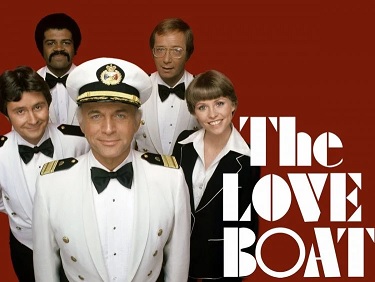
Retro Television Reviews: The Love Boat 1.17 “Winner Take Love / The Congressman Was Indiscreet / Isaac’s History Lesson”


Welcome to Retro Television Reviews, a feature where we review some of our favorite and least favorite shows of the past!  On Wednesdays, I will be reviewing the original Love Boat, which aired on ABC from 1977 to 1986!  The series can be streamed on Paramount Plus!

This week, things get awkward as we set sail on The Love Boat!

Episode 1.17 “Winner Take Love / The Congressman Was Indiscreet / Isaac’s History Lesson”

(Dir by Jack Arnold, originally aired on January 28th, 1978)

It’s the most awkward cruise ever!

A beauty contest is being held on the ship!  The winner becomes Ms. Pacific Princess and, along with getting a lot of money, she also sacrifices a year of her life so that she can go on free cruises and promote the Pacific Princess line.  Along with being beautiful, the winner is also expected to be “virtuous.”  Of course, judging from The Love Boat, the cruise line seems to specifically cater to people who are desperately looking to get laid so the rules seem to be a bit hypocritical.

The head of the contest, Waldo Linden (Graham Jarvis), recruits Captain Stubing to act as host.  Unfortunately, after Stubing gets a few laughs from the jokes that Waldo has written for him, the Captain turns into a prima donna.  He starts punching up the script on his own.  Waldo, however, has even more to worry about than the captain.  Suzy (Maureen McCormick), one of the contestants, is secretly traveling with her boyfriend, Rick (Bobby Sherman).  When Waldo tries to disqualify Suzy for not being “virtuous,” another contestant, the klutzy Jeanette (Priscilla Barnes), asks that Waldo help her zip up her dress and, after Waldo kisses her, she points out that Waldo hasn’t been living up to his own standards.  Due to Jeanette’s blackmail, Suzy is allowed to compete and she wins!  But then she refuses the crown so that she can marry Rick and, as a result, Jeanette becomes Miss Pacific Princess.

While that’s going on, scandal-plagued Congressman John Whitcomb (Dick Van Patten) falls in love with Robin Brandt (Vickie Lawrence).  What the Congressman doesn’t know is that Robin works for a tabloid newspaper and Robin’s editor expects Robin to report on whether or not allegations of an affair are going to led to Whitcomb resigning his seat. 

All of that is certainly awkward but it’s nothing compared to the third storyline.  Almost everyone loves passenger Virgil Gibson (played by the engaging Scatman Crothers), who is always the life of the party and who loves to make people laugh.  The only person who doesn’t like him is Prof. Stephanie Hayden (Vernee Watson), who is on the cruise to work on a study about African-American history.  Hayden feels the Virgil is acting like a fool and playing into all of the demeaning stereotypes that white people have about black people.  Hayden encourages Isaac to learn more about his background and soon, Isaac is being rude to Virgil and telling him not to call people “boss.”

Captain Stubing notices this.  He approaches Isaac — while Isaac is working — and says, “I notice you’ve been reading a lot of black history.”

AGCK!  As soon as the very white Captain Stubing says those words to Isaac, the cringing begins.

Stubing goes on to explain that Virgil was a pitcher in the Negro Baseball Leagues and that, if not for him, blacks would never have made it into the major leagues.  “And I wouldn’t be serving drinks on this cruise,” a remorseful Isaac says.  “And I wouldn’t be teaching,” Stephanie agrees.  Stubing goes on to explain that Virgil is acting the way he acts because that’s the way blacks were expected to behave when Virgil was a young man.  After being chastised by the ship’s white authority figure, Isaac and Stephanie agree that they were wrong to judge Virgil.

And, in many ways, Captain Stubing does have a point about judging people and Isaac and Stephanie were being a bit harsh in their dismissal of Virgil.  But that doesn’t change the fact that this episode features the extremely white Captain Stubing explaining black history to not only the ship’s only black employee but also a black college professor who has spent her entire academic career researching and writing about black history.  Stubing is essentially telling two black people how they should interpret and feel about black history.  It’s incredibly weird to watch and one has to wonder why the writers thought that Stubing — as opposed to Virgil himself — was the correct character to explain Virgil’s past and Virgil’s character.  It just doesn’t feel right, at all.

That said, there was a lot to like about this episode.  Scatman Crothers shows the same charm here that he showed in The Shining.  As cringey as Captain Stubing is when he lectures on black history, the plotline of him turning into a diva was actually pretty funny and Gavin MacLeod seemed to be having fun playing up the pompous side of the character.  The beauty pageant subplot was dumb but Maureen McCormick actually gave a pretty good performance as Suzy.  This episode had its moments though, in the end, it will always be defined by the awkwardness.


Lisa Reviews An Oscar Winner: One Flew Over The Cuckoo’s Nest (dir by Milos Forman)


Technically, the 1975 film One Flew Over The Cuckoo’s Nest is not a horror film.

Though it may take place in a creepy mental hospital, there are no ghosts or zombies.  There’s no masked killer wandering the halls.  The shadows do not leap off the walls and there are no ghostly voice in the night, unless you count the rarely heard voice of Will Sampson’s Chief Bromden.

Admittedly, the cast is full of horror and paranormal veterans.  Michael Berryman, of the original Hills Have Eyes, plays a patient.  Louise Fletcher, who won an Oscar for playing the role of Nurse Ratched, went on to play intimidating matriarchs in any number of low-budget horror movies.  Vincent Schiavelli, a patient in this film, played the angry subway ghost in Ghost.  Another patient, Sidney Lassick, played Carrie’s condescending English teacher in Carrie.  Brad Dourif, who received an Oscar nomination for playing the meek Billy Bibbit, has become a horror mainstay.  Will Sampson appeared in the Poltergeist sequel.  Both Scatman Crothers and Jack Nicholson would go on to appear in The Shining.

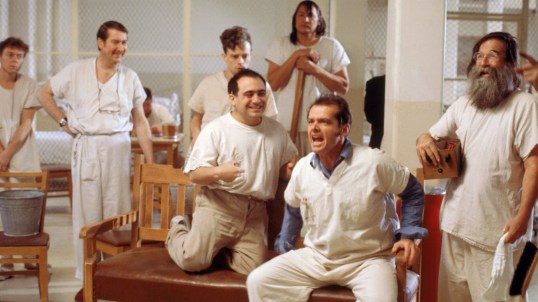
Nicholson plays Randle Patrick McMurphy, a career criminal who, hoping to get out of prison early, pretends to be mentally ill.  He ends up getting sent to an Oregon mental institution, where his rebellious ways upset the administrators while, at the same time, inspiring the patients to actually try to take some control over their lives.  The film is, in many ways, a celebration of personal freedom and rebellion.  The only catch here is that, in One Flew Over The Cuckoo’s Nest, being a little bit too rebellious can lead to not only electroshock treatment but also a lobotomy.  Those in charge have a way of making you permanently compliant.

And really, to me, that’s what makes One Flew Over The Cuckoo’s Nest a horror film.  It’s about the horror of conformity and bureaucracy.  The film may start out as something of a comedy and Nicholson brings a devil-may-care attitude to the role of McMurphy but then, eventually, you reach the scene where McMurphy is tied down and given electrical shocks to make him compliant.  You reach the scene where Ratched coldly informs Billy Bibbit that she will be telling his mother that Billy lost his virginity to a prostitute and Billy reacts by slicing open his wrists.  Finally, you reach the scene where McMurphy returns to the ward having had a bit of his brain removed.  In those scenes, One Flew Over The Cuckoo’s Nest becomes a horror movie.  The monster is not a ghost or a demon or a serial killer.  Instead, it’s a system that is determined to squash out any bit of rebellion or free thought.

What makes Nurse Ratched such a great villain is the fact that, as opposed to being some sort of a maniacal force of evil, she’s really just someone doing her job and refusing to question her methods.  She’s the ultimate symbol of bland authoritarianism.  Her job is to keep the patients from getting out of control and, if that means lobotomizing them and driving one of them to suicide …. well, that’s what she’s going to do.  For all the time that Ratched spends talking about therapy, her concern is not “curing” the patients or even helping them reach a point where they can leave the hospital and go one with their lives.  Ratched’s concern is keeping everyone in their place.  As played by Fletcher, Ratched epitomizes the banality of evil.  (That’s one reason why it was so silly for Ryan Murphy to devote his most recent Netflix series to giving her an over-the-top origin story.  Ratched is a great villain because she doesn’t have any complex motivations.  She’s just doing whatever she has to do to keep control of the people are on her ward.  Part of keeping control is not to allow anyone to question her methods.  Everyone has had to deal with a Nurse Ratched at some point in the life.  With the elections coming up, we’re about to be introduced to whole new collection of Nurse Ratcheds.)

I like One Flew Over The Cuckoo’s Nest, even though it’s an undeniably dated film.  That said, it’s not as dated as the novel on which it’s based, nor is it as appallingly misogynistic.  Jack Nicholson’s rough but charismatic performance holds up wonderfully well.  (I don’t know if an actor has ever matched a character as perfectly as Nicholson does with McMurphy.)  Louise Fletcher brings a steely resolve to the role of Nurse Ratched.  Fans of spotting character actors in early roles will probably get a kick out of spotting both Danny DeVito and Christopher Lloyd as patients.  The movie skillfully combines drama with comedy and the ending manages to be both melancholy and hopeful.

When it comes to the 1975 Oscar race …. well, I don’t know if I would argue that One Flew Over The Cuckoo’s Nest deserved to win Best Picture over Nashville, Dog Day Afternoon, or Barry Lyndon or Jaws.  Dog Day Afternoon and Nashville feel as if they were ahead of their time, with their examination of the media and politics.  Jaws set the template for almost every blockbuster that would follow and it’s certainly one of the most influential horror films ever made.  Barry Lyndon is a stunning technical achievement.  Compared to those films, One Flew Over The Cuckoo’s Nest seems rather simplistic.  Watching it today, you’re very much aware of how much of the film’s power is due to Jack Nicholson’s magnetic screen presence.  Nicholson definitely deserved his Oscar but it’s debatable whether or not the same can be said of One Flew Over The Cuckoo’s Nest as a whole.

So no, I wouldn’t necessary say that One Flew Over The Cuckoo’s Nest was the best of the films nominated that year.  Still, it’s an entertaining film and a helluva ride.  It’s a great film to watch whenever you’re sick of faceless bureaucrats trying to tell you what to do.  And, in its own odd way, it’s a great film for Halloween season.

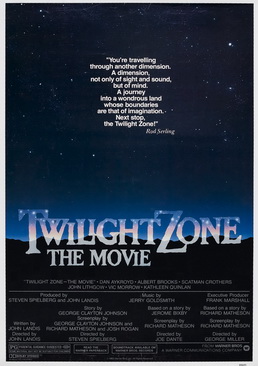
Horror Film Review: Twilight Zone: The Movie (dir by John Landis, Steven Spielberg, Joe Dante, and George Miller)


1983’s Twilight Zone: The Movie is meant to be a tribute to the classic original anthology series.  It features four “episodes” and two wrap-around segments, with Burgess Meredith providing opening and closing narration.  Each segment is directed by a different director, which probably seemed like a good idea at the time.

Unfortunately, Twilight Zone: The Movie is a bit of a mess.  One of the episodes is brilliant.  Another one is good up until the final few minutes.  Another one is forgettable.  And then finally, one of them is next too impossible to objectively watch because of a real-life tragedy.

With a film that varies as wildly in tone and quality as Twilight Zone: The Movie, the only way to really review it is to take a segment at a time:

Something Scary (dir by John Landis)

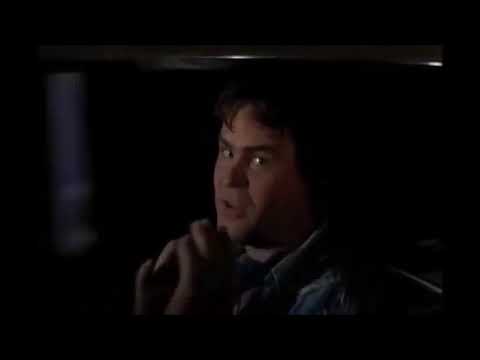
Albert Brooks and Dan Aykroyd drive through the desert and discuss the old Twilight Zone TV series.  Brooks claims that the show was scary.  Aykoyd asks if Brooks wants to see something really scary.  This is short but fun.  It’s tone doesn’t really go along with the rest of the movie but …. oh well.  It made me jump.

Time Out (dir by John Landis)

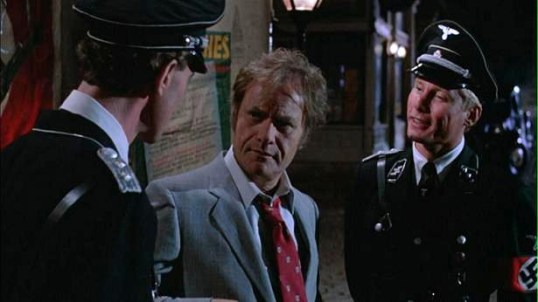
Vic Morrow plays a racist named Bill Connor who, upon leaving his local bar, finds himself transported to Nazi-occupied France, the deep South, and eventually Vietnam.

How you react to this story will probably depend on how much you know about its backstory.  If you don’t know anything about the filming of this sequence, you’ll probably just think it’s a bit heavy-handed and, at times, unintentionally offensive.  Twilight Zone often explored themes of prejudice but Time Out just seems to be using racism as a gimmick.

If you do know the story of what happened while this segment was being filmed, it’s difficult to watch.  Actor Vic Morrow was killed during filming.  His death was the result of a preventable accident that occurred during a scene that was to involve Morrow saving two Vietnamese children from a helicopter attack.  The helicopter crashed, killing not only Morrow but the children as well.  It was later determined that not only were safety protocols ignored but that Landis had hired the children illegally and was paying them under the table so that he could get around the regulations governing how many hours child actors could work.  It’s a tragic story and one that will not leave you as a fan of John Landis’s, regardless of how much you like An American Werewolf in London and Animal House.

Nothing about the segment feels as if it was worth anyone dying for and, to be honest, I’m kind of amazed that it was even included in the finished film.

Kick The Can (dir by Steven Spielberg)

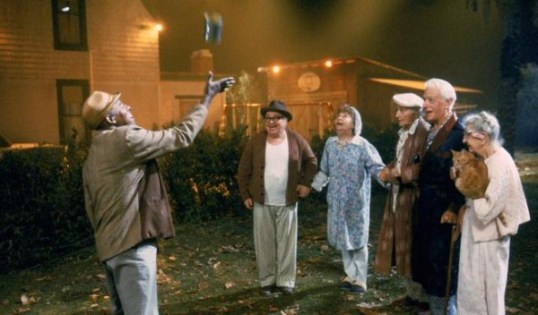
An old man named Mr. Bloom (Scatman Crothers) shows up at Sunnyvale Retirement Home and encourages the residents to play a game of kick the can.  Everyone except for Mr. Conroy (Bill Quinn) eventually agrees to take part and, just as in the episode of the Twilight Zone that this segment is based on, everyone becomes young.

However, while the television show ended with the newly young residents all running off and leaving behind the one person who refused to play the game, the movie ends with everyone, with the exception of one man who apparently became a teenager istead of a kid, deciding that they would rather be old and just think young.  That really doesn’t make any damn sense but okay.

This segment is unabashedly sentimental and clearly calculated to brings tears to the eyes to the viewers.  The problem is that it’s so calculated that you end up resenting both Mr. Bloom and all the old people.  One gets the feeling that this segment is more about how we wish old people than how they actually are.  It’s very earnest and very Spielbergian but it doesn’t feel much like an episode of The Twilight Zone.

It’s A Good Life (dir by Joe Dante)

A teacher (Kathleen Quinlan) meets a young boy (Jeremy Licht) who has tremendous and frightening powers.

This is a remake of the classic Twilight Zone episode, It’s A Good Life, with the difference being that young Anthony is not holding an entire town hostage but instead just his family.  This segment was directed by Joe Dante, who turns the segment into a cartoon, both figuratively and, at one point, literally.  That’s not necessarily a complaint.  It’s certainly improvement over Spielberg’s sentimental approach to the material.  Dante also finds roles for genre vets like Kevin McCarthy, William Schallert, and Dick Miller and he provides some memorably over-the-top visuals.

The main problem with this segment is the ending, in which Anthony suddenly reveals that he’s not really that bad and just wants to be treated normally, which doesn’t make much sense.  I mean, if you want to be treated normally, maybe don’t zap your sister in a cartoon.  The teacher agrees to teach Anthony how to be a normal boy and again, what the Hell?  The original It’s A Good Life worked because, like any child, Anthony had no conception of how adults felt about him.  In the movie version, he’s suddenly wracked with guilt and it’s far less effective.  It feels like a cop out.

Still, up until that ending, It’s A Good Life worked well as a satire of the perfect American family.

Nightmare at 20,000 Feet (dir by George Miller)

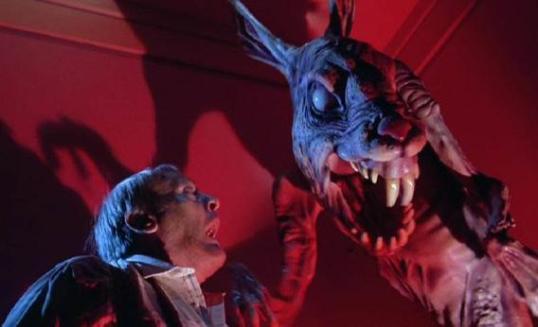
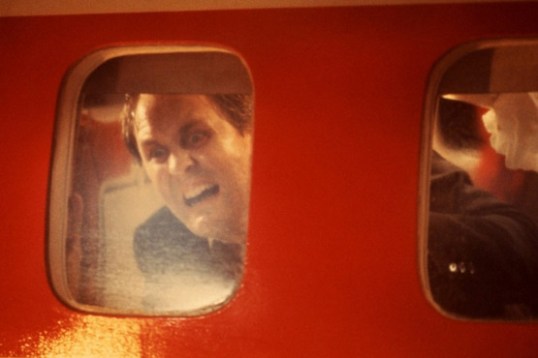
In this remake of Nightmare at 20,000 Feet, John Lithgow steps into the role that was originally played by William Shatner.  He plays a man who, while attempting to conquer his fear of flying, sees a gremlin on the wing of his airplane.  Unfortunately, he can’t get anyone else on the plane to believe him.

Nightmare at 20,000 Feet is the best of the four main segments.  It’s also the one that sticks closest to its source material.  Director George Miller (yes, of Mad Max fame) doesn’t try to improve on the material because he seems to understand that it works perfectly the way it is.  John Lithgow is also perfectly cast in the lead role, perfectly capturing his increasing desperation.  The one change that Miller does make is that, as opposed in the TV show, the gremlin actually seems to be taunting John Lithgow at time and it works wonderfully.  Not only is Lithgow trying to save the plane, he’s also trying to defeat a bully.

Something Scarier (dir by John Landis)

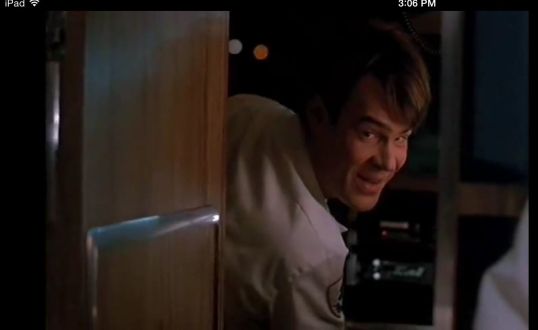
Dan Aykroyd’s back as an ambulance driver, still asking his passenger if he wants to see something really scary.  It’s an okay ending but it does kind of lessen the impact of Nightmare at 20,000 Feet.


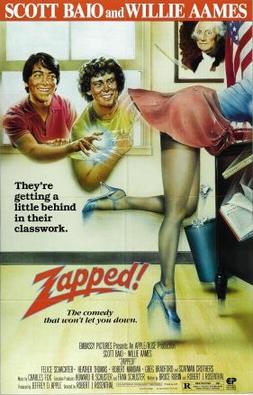
Zapped! (1982, directed by Robert J. Rosenthal)


In this painfully dumb high school comedy, Scott Baio is Barney, a teen scientist who experiments on lab mice and grows specially modified orchids for his high school’s principal, Walter Coolidge (Robert Mandan, who played a lot of high school principals back in the day).  When there’s an accident in the lab, Barney develops telekinetic powers.  Barney then falls in love with the class president, Bernadette (Felice Schachter), while his best friend Peyton (Willie Aames) pursues the beautiful but vain Jane (Heather Thomas).  Barney uses his powers to make a ventriloquist act as if it’s possessed and to help Peyton rig a casino-themed frat party.  Meanwhile, Scatman Crothers plays the school’s baseball coach and has a long scene where he gets high and imagines that he’s riding a bicycle with Albert Einstein.  That’s actually kind of cool.

Zapped! is a movie where Scott Baio magically gains the power to move things with his mind and yet the most implausible part of the movie is the idea of Willie Aames being the most popular student at the high school.  Heather Thomas is believable as a cheerleader and Felice Schachter is perfectly cast as the brainy class president.  Even Scott Baio is not terrible as Barney.  But then Willie Aames shows up and we find out that he’s supposed to be a chick magnet and it becomes impossible for those watching to continue to suspend their disbelief.

Not much really happens in Zapped!  Even after he gets his powers, Barney is frustratingly passive character who just does whatever Peyton tells him to do.  Barney uses his powers to help Peyton show up Jane’s college boyfriend and he uses his powers to help Peyton win games at the school carnival and then Barney uses his powers to help out Peyton when Jane’s boyfriend tries to beat him up.  Maybe Barney needs to get new friends.  The only time Barney uses his powers for himself is when he’s playing baseball and he makes the ball stop in mid-air so that he can hit it.  Somehow, no one watching the game seems to find it strange that the baseball stops in mid-air.  The movie ends with a take on Carrie.  Barney uses his powers to blow off everyone’s clothes at prom.  It’s all to help Peyton, of course.

Zapped! supposedly has a cult following, probably composed of people who were 13 when they first saw it and who only remember the sweater scene with Heather Thomas and the final prom scene.  (Or they’re remembering the famous poster, which is a lot more fun than anything that actually happens in the movie.)  Other than that, this is one of the most boring films ever made.  Perhaps the only interesting thing about the movie is that Heather Thomas sued the production when they failed to acknowledge that a body double was used for Jane’s nude scenes.

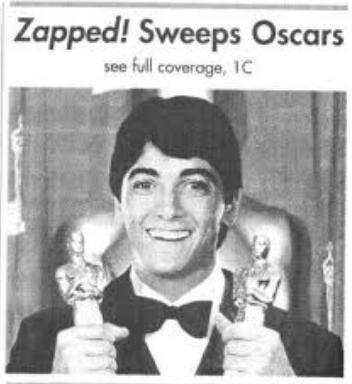
On a positive note, Zapped! did give us this classic Onion headline:


Horror on TV: Kolchak: The Night Stalker 1.2 “The Zombie” (dir by Alexander Grasshoff)


Tonight, on Kolchak: The Night Stalker:

Chicago gangsters are turning up dead!  Is it a mob war or is it something else?  Kolchak suspects the latter and, as you can guess from this episode’s title, he’s right.  This episode features gangsters, numbers runners, and voodoo!

It originally aired on September 20th, 1974!

Enjoy!

http://www.youtube.com/watch?v=aN_GstECzL0

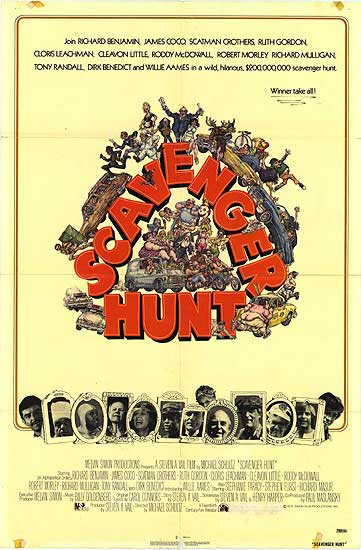
A Movie A Day #114: Scavenger Hunt (1979, directed by Michael Schultz)


When game designer Milton Parker (Vincent Price) dies, all of his greedy relatives and his servants gather for the reading of his will.  Parker’s lawyer, Benstein (Robert Morley), explains that Parker is leaving behind a $200 million dollar estate to whoever can win an elaborate scavenger hunt.  Dividing into five teams, the beneficiaries head out to track down as many items as they can by five o’clock that evening.  Among the items that they have to find: a toilet, a cash register, an ostrich, a microscope, and an obese person.  Hardy har har.
The five teams are made up of a who’s who of sitcom and television actors who had time to kill in 1979.  The Odd Couple‘s Tony Randall is Henry Motely, who is Parker’s son-in-law and who works with his four children.  Soap‘s Richard Mulligan plays a blue-collar taxi driver named Marvin Dummitz (because funny names are funny) who teams up with his friend, Merle (Stephen Furst).  The Mary Tyler Moore Show‘s Cloris Leachman (an Oscar winner, no less) gets stuck with the role of Milton’s greedy sister, Mildred.  She works with her conniving lawyer (Richard Benjamin) and her stupid son (Richard Masur).  Maureen Teefy plays Milton’s niece while his nephews are played by Willie Aames and Dirk Benedict.  Cleavon Little, James Coco, Roddy McDowall, and Stephanie Faracy play the servants.

It doesn’t stop there, though.  Avery Schreiber plays a zookeeper.  Meat Loaf plays a biker who beats up Richard Benjamin.  Ruth Gordon, Stuart Pankin, Pat McCormick, and Scatman Crothers all have cameos.  Even Arnold Schwarzenegger makes an appearance as a gym instructor who knocks Tony Randall out of a second story window.

There are a lot of famous people in Scavenger Hunt.  It’s just too bad that the movie itself is barely watchable and not at all funny.  It tries to go for the zaniness of It’s A Mad, Mad, Mad, Mad World but, unless watching Willie Aames steal a clown head from Jack in the Box is your idea of hilarity, the film never comes close to succeeding.  Michael Schultz directed some classic films (like Car Wash) during the 1970s but, unfortunately, he also directed Sgt. Pepper’s Lonely Hearts Club Band and this.

Scavenger Hunt used to show up on a late night television, where it was always advertised as starring Arnold Schwarzenegger.  (He barely has five minutes of screentime.)  It was released on DVD/Blu-ray earlier this year but watching for the cameos is the only reason to take part in this Scavenger Hunt.

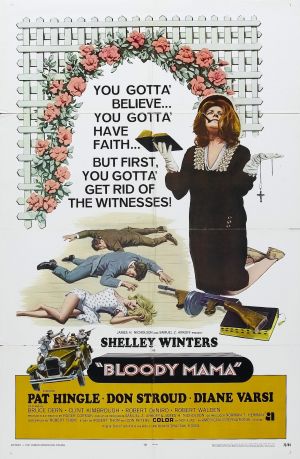
Cleaning Out The DVR, Again #24: Bloody Mama (dir by Roger Corman)


(Lisa is currently in the process of trying to clean out her DVR by watching and reviewing all 40 of the movies that she recorded from the start of March to the end of June.  She’s trying to get it all done by July 11th!  Will she make it!?  Keep visiting the site to find out!)

BloodyMama

The 24th film on my DVR was the 1970 Roger Corman-directed gangster film, Bloody Mama.  I recorded it off of TCM on May 27th.

Bloody Mama opens with a cheerful song that goes, “Maaaaaama…Bloody maaaaama….” and it’s such an unapolegetically over the top song that it perfectly sets the tone for what’s to follow.  Bloody Mama is violent, occasionally perverse, and totally unashamed.  It doesn’t pretend to be anything that it isn’t.  It’s bloody and it’s about a mother and, in the best Corman tradition, it makes no apologies!

The film tells the heavily fictionalized story of the Barkers, a group of brothers who robbed banks and killed people in the 1920s and 30s.  The majority of them were killed in a gunfight with the FBI.  Also killed in the gunfight was their mother, Kate Barker.  Always aware of the danger of bad publicity, the director of the FBI, J. Edgar Hoover, announced that Ma Barker was actually the mastermind of the Barker gang and that she was even more dangerous than her sons.  Ever since, historians have debated whether Ma Barker was the criminal mastermind described by Hoover or if she was just the innocent woman described by … well, by everyone who actually knew her.

Bloody Mama, of course, leaves no doubt.  From the minute that we discover that Shelley Winters will be playing Ma Barker, we know that she’s the most dangerous woman alive.  As played by Winters, Ma Barker is a ruthless bank robber, one who has no fear of gunning down innocent bystanders and who never lets her love for her sons get in the way of ordering them to kill a witness.  As opposed to a lot of gangster films made in the late 60s and early 70s, the film never attempts to portray its title character as being a heroic or particularly sympathetic character.  Instead, what makes the character compelling is just how thoroughly Winters commits to the role.  It doesn’t matter what Ma Barker is doing or saying, Shelley Winters totally sells it.  When the gang is cornered by the police and one associate makes the mistake of yelling that he’s not a Barker, Ma reacts by gunning him down herself and you can’t help but appreciate the lengths that Ma will go to defend her family’s name.

As for her sons, they are an interesting group of perverts and drug addicts and they’re played some of the best character actors of the 1970s.

Herman Barker (Don Stroud) is a sadist but he’s also one of Ma’s favorites.  He travels with a prostitute (played by Diane Varsi), who quickly tires of the Barkers’s violent way of life.

Arthur Barker (Clint Kimbrough) is the most practical of the Barkers and therefore, he’s also the least interesting.

Fred Barker (Robert Walden) is bisexual, which is a fact that the film handles with all the sensitivity that we’ve come to expect from a film made in 1970 (which is to say, not much at all).  Fortunately, Fred’s lover is Kevin and Kevin is played by Bruce Dern and Bruce Dern is always a lot of fun to watch, especially when he’s appearing in a Corman film.

And then there’s Lloyd who sniffs glue and shoots heroin and who is played by an obscure young actor named Robert De Niro and … wait, Robert De Niro!  That’s right!  One of the pleasures of Bloody Mama is getting to see De Niro at the start of his career.  Unfortunately, he doesn’t really get to do much, though he does occasionally flash the same unhinged smile that would later show up in Taxi Driver.

Roger Corman has repeatedly cited Bloody Mama as being one of his favorites of the many movies that he directed over the course of his long career.  I don’t blame him.  It’s a thoroughly shameless and totally entertaining film!

Keep an eye out for Bloody Mama!

Just remember, the real-life Ma Barker was probably innocent.