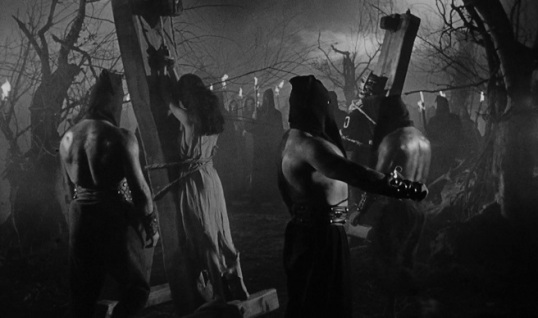
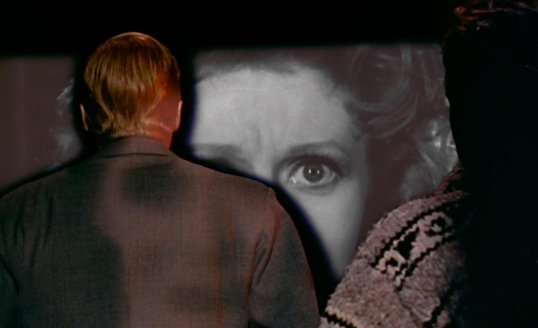
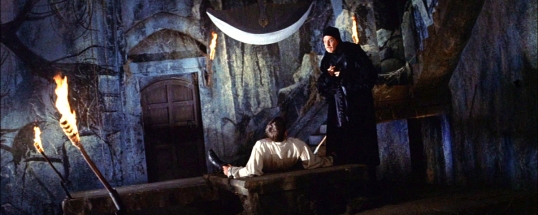
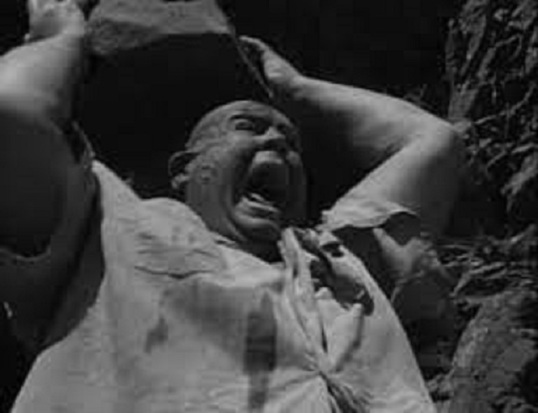
8 Shots From 8 Horror Films: The Late 50s


4 Or More Shots From 4 Or More Films is just what it says it is, 4 shots from 4 of our favorite films. As opposed to the reviews and recaps that we usually post, 4 Shots From 4 Films lets the visuals do the talking!

This October, I’m going to be doing something a little bit different with my contribution to 4 (or more) Shots From 4 (or more) Films.  I’m going to be taking a little chronological tour of the history of horror cinema, moving from decade to decade.

Today, we take a look at the late 50s!

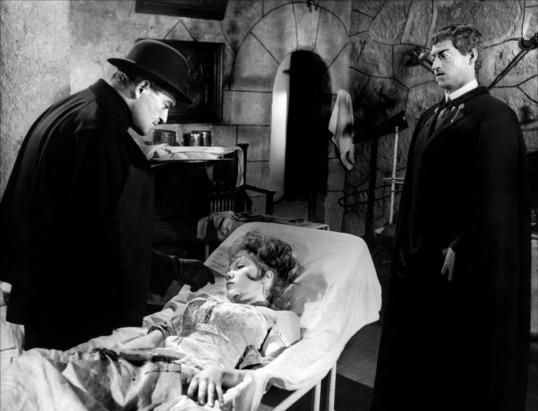
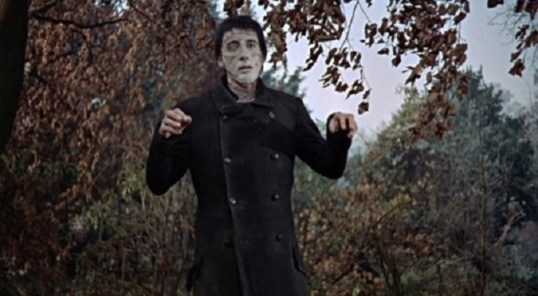
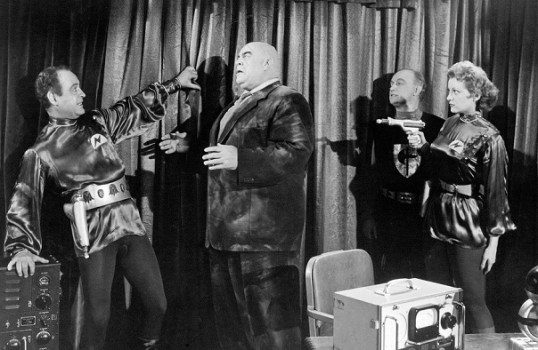
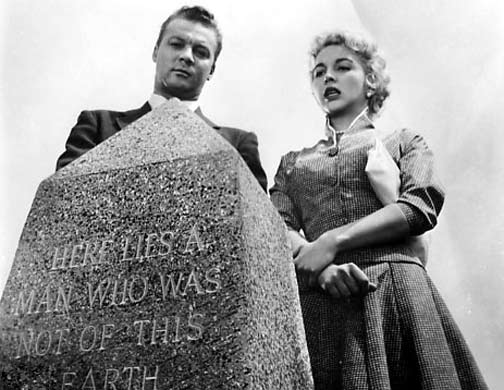
8 Shots From 8 Horror Films: The Late 50s

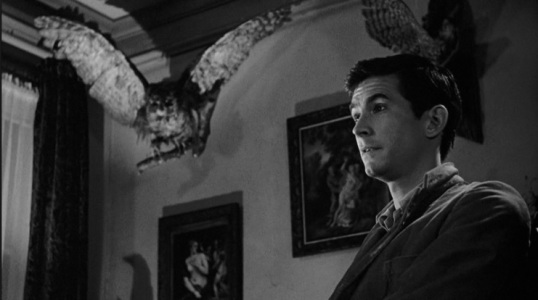
The Curse of Frankenstein (1957, dir by Terence Fisher, DP: Jack Asher)

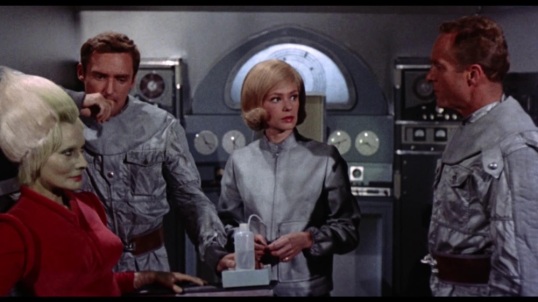
Plan 9 From Outer Space (1957, dir by Edward D. Wood, Jr., DP: William C. Thompson)

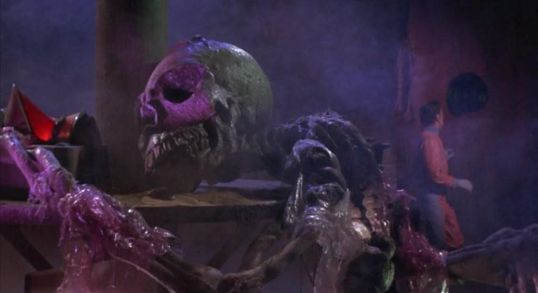
Not Of This Earth (1957, dir by Roger Corman DP: John J. Mescall)

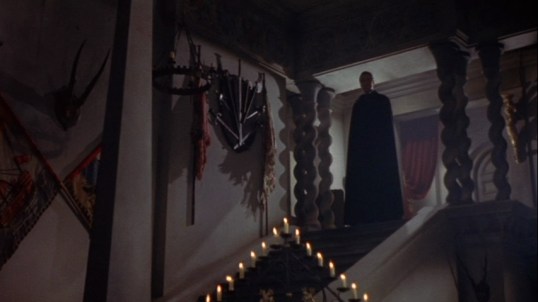
Horror of Dracula (1958, starring Christopher Lee as the Count, Dir by Terence Fisher, DP: Jack Asher)

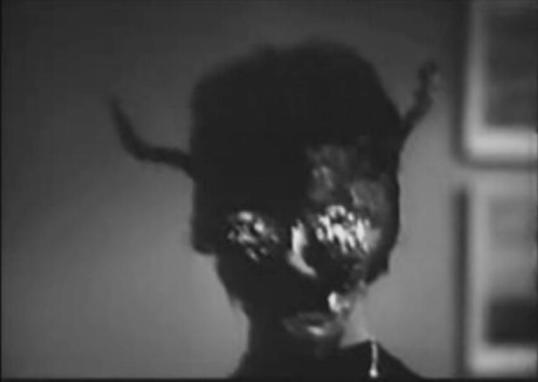
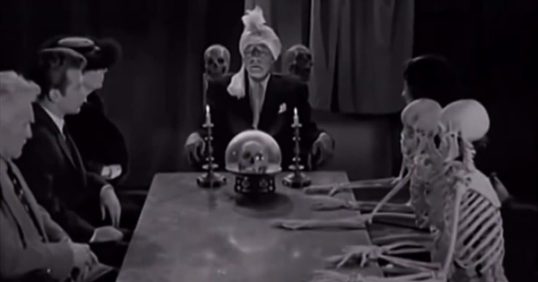
Night of the Ghouls (1959, dir by Edward D Wood, Jr. DP: William C. Thompson)

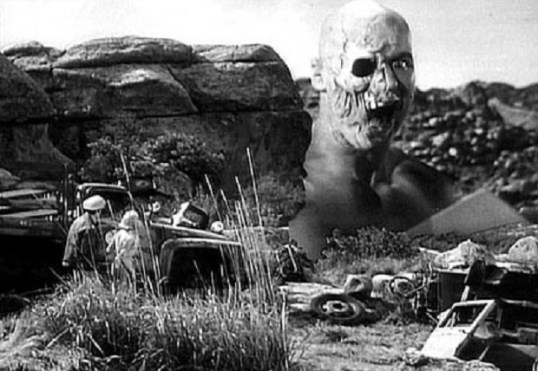
War of the Colossal Beast (1958, dir by Bert I. Gordon, DP: Jack A. Marta)

House on Haunted Hill (1959, dir by William Castle, DP: Carl E. Guthrie)

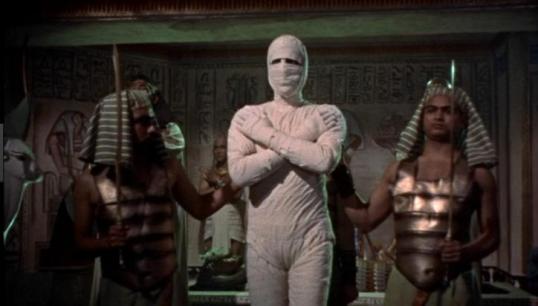
The Mummy (1959, dir by Terence Fisher, DP: Jack Asher)

4 Shots From 4 Horror Films: The Mid 50s


4 Or More Shots From 4 Or More Films is just what it says it is, 4 shots from 4 of our favorite films. As opposed to the reviews and recaps that we usually post, 4 Shots From 4 Films lets the visuals do the talking!

This October, I’m going to be doing something a little bit different with my contribution to 4 (or more) Shots From 4 (or more) Films.  I’m going to be taking a little chronological tour of the history of horror cinema, moving from decade to decade.

Today, we take a look at the mid-50s!

4 Shots From 4 Horror Films: The Mid 50s

Creature From The Black Lagoon (1954, dir by Jack Arnold, DP: William E. Snyder)

Tarantula (1955, dir by Jack Arnold, DP: George Robinson)

Bride of the Monster (1955, dir by Ed Wood, DP: Ted Allan and William C. Thompson)

It Conquered The World (1956, dir by Roger Corman, DP: Fred E. West)

Cocaine Wars (1985, directed by Hector Olivera)


In 1980s Bolivia, the most powerful drug lord is Gonzalo Reyes (Federico Luppi).  Working with General Lujan (Rodolfo Ranni), Reyes runs his own concentration camp, where people are forced to process the cocaine that is then sold in the United States.  Reyes’s pilot is an American named Cliff Adams (John Schneider).  Reyes eventually gives Cliff a very important assignment.  He wants Cliff to assassinate Marcelo Villalba (John Vitali), a crusading journalist who is running for president of the country.

What Reyes and Lugan don’t know but soon learn is that Cliff is actually a Miami-based DEA agent who has been working deep undercover.  Despite his assignment and the fact that even the U.S. government seems to consider Villalba to be expendable, Cliff refuses to carry out the assassination.  Soon, he and his girlfriend (Kathryn Witt) and their friend Bailey (Royal Dano) are being pursued by Reyes and Lujan.  Cliff’s girlfriend is also a reporter and she has compiled a story that, if it is published, will blow the lid off of Reyes and Lujan’s partndership.

Produced by Roger Corman and filmed in Argentina, Cocaine Wars is very much a product of its time.  In the 1980s, America was all about the War on Drugs, especially the War on Cocaine.  However, some of the world’s biggest drug lords were working with the tactic approval of some of America’s most important allies in South and Central America.  For as long as it was convenient and strategically useful, the American government would look the other way.  It was only when the situation became internationally embarrassing, as in the case of Panama’s General Manuel Noriega, that the U.S. would actually step in.  This was certainly the case in Bolivia, where drug lords were so essential to overthrowing the government that the subsequent coup was referred to as being “the cocaine coup.”  General Lujan is a stand-in for a large number of Bolivian military men who continually overthrew the country’s democratically-elected leaders.  By including several Germans among Reyes’s organization, Cocaine Wars also acknowledges the role that Nazi war criminal Klaus Barbie played in not only propping up a series of Bolivian strongmen and drug organizations but also teaching the Bolivian secret police how to torture information out of political prisoners.  While Cocaine Wars is not primarily a political film, it is still notable as an early example of a film that pointed out why the War on Drugs was destined for failure.

As for the film itself, it is a standard low-budget action film.  There aren’t any huge surprises to be found but, at 82 minutes, it moves quickly and it has enough action to satisfy fans of the genre.  John Schneider may not have been Sylvester Stallone, Arnold Schwarzengger, or even Chuck Norris but that works to the movie’s advantage.  Unlike those bigger-than-life heroes, Schneider does not come across as being indestructible and that adds a little more suspense to the inevitable gunfights and torture scenes.  Schneider is a likable and effective action lead, even if you never do forget that you’re essentially watching a TV actor taking a stab at the big screen.

Scenes That I Love: Peter Fonda Explores The City In The Trip


Today’s scene is from Roger Corman’s 1967 film, The Trip. Corman dropped acid himself before filming Peter Fonda doing the same thing in this film. Regardless of how one views Corman’s cinematic recreation of Fonda’s experience with acid, The Trip is considered to be one of the first nuanced drug films. While it doesn’t endorse drug use, it also doesn’t descend into the hysterics of a film like Reefer Madness. Interestingly enough, the script was written by Jack Nicholson.

Here is Peter Fonda, exploring the city on LSD, in The Trip:

4 Shots From 4 Roger Corman Films


4 Or More Shots From 4 Or More Films is just what it says it is, 4 shots from 4 of our favorite films. As opposed to the reviews and recaps that we usually post, 4 Shots From 4 Films lets the visuals do the talking!

Today, we pay tribute to the legendary director and producer, Roger Corman!  It’s time for….

4 Shots From 4 Roger Corman Films

It Conquered The World (1956, dir by Roger Corman, DP: Fred E. West)

Not Of This Earth (1957, dir by Roger Corman, DP: John J. Mescall)

Pit and the Pendulum (1961, dir by Roger Corman, DP: Floyd Crosby)

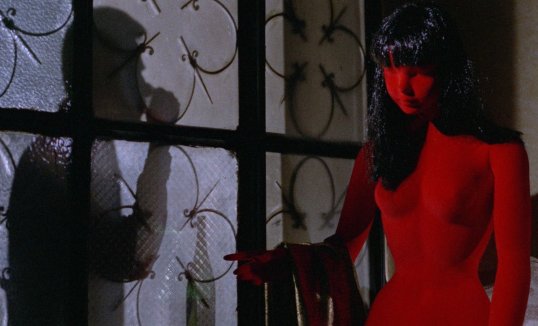
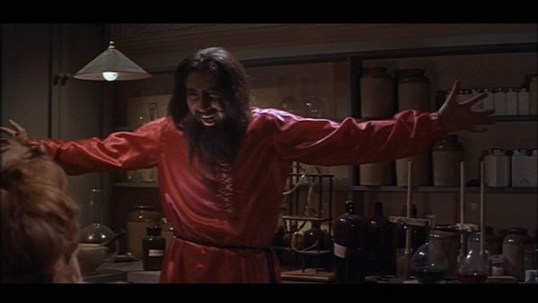
The Masque of the Red Death (1964, dir by Roger Corman, DP: Nicolas Roeg)

Horror Film Review: The Terror (dir by Roger Corman, Monte Hellman, Francis Ford Coppola, Dennis Jakob, Jack Hill, and Jack Nicholson)


Can you follow the plot of the 1963 horror film, The Terror?

If so, congratulations!  You’ve accomplished something that even the people who made the film have admitted to being unable to do.

The film opens in 19th century Europe.  Andre Duvalier is an earnest French soldier who has somehow gotten lost in Germany.  Andre is played by a youngish, pre-stardom Jack Nicholson.  Nicholson, that most contemporary, sarcastic, and American of actors, is thoroughly unconvincing as an idealistic Frenchman from 1806.  Obviously unsure of what do with the character, Nicholson delivers his lines stiffly and does what he can to downplay the naturally sardonic sound of his voice.  This is probably the only film where Jack Nicholson is a “nice young man.”

Andre meets a mysterious woman named Helene (played by Sandra Knight, who was Nicholson’s wife at the time).  Helene appears to live in a castle with the Baron (Boris Karloff) and his servant, Stefan (Dick Miller, who makes no effort to come across as being, in anyway, European).  However, Helene bears a distinct resemblance to the Baron’s long-dead wife, Ilse, who the Baron killed after discovering her with another man.  However, a witch in the village claims that Ilse’s lover was her son so she put a curse on the Baron and the presence of Helene is a part of that curse.  However, Stefan claims that the Baron isn’t actually the Baron and and that Ilse’s husband isn’t actually dead.  However….

Yes, there’s a ton of plot twists in this movie, which is probably the result of the fact that the film was shot without a completed script.  In fact, the only reason the movie was made was because Roger Corman had access to Boris Karloff and a castle set that he used for The Raven.  When he discovered that he could use the set for two extra days, he shot some random footage with Boris Karloff and then he tried to build a movie around it.  As a result, the cast and the directors largely made up the story as the filmed.

Yes, I said directors.  While Corman shot the Karloff scenes, he no longer had enough money to use a union crew to shoot the rest of the film.  Because Corman was a member of the DGA, he couldn’t direct a nonunion film. So, he assigned the rest of the film to one his assistants, an aspiring filmmaker named Francis Ford Coppola.  Coppola shot the beach scenes and, in a sign of things to come, he went overbudget and got behind schedule.  Coppola was meant to shoot for three days but instead went for eleven.

Though Coppola shot the majority of the film, he got a better job offer before he could do any reshoots.  Coppola suggested that a friend of his from film school, Dennis Jakob, take over.  Jakob shot for three days and reportedly used most of the time to shoot footage for his thesis movie.

Still feeling that the movie needed a few extra scenes to try to make sense of the plot, Corman then gave the film to Monte Hellman and, after Hellman got hired for another job, Jack Hill.  Hellman would later go on to direct films like The Shooting and Two-Lane Blacktop.  Jack Hill would later direct Spider Baby and several other exploitation films in the 70s.  Reportedly, on the final day of shooting, even Jack Nicholson took some time behind the camera.  It was Nicholson’s first directing job.  (Nicholson, for his part, has often said that his original ambition in Hollywood was to become a director and not an actor.)

So, yes, the film’s a bit disjointed.  The plot doesn’t make any sense.  Nicholson shows little of his trademark charisma.  But Dick Miller has a lot of fun as the duplicitous Stefan and Boris Karloff brings his weary dignity to the role of the Baron.  Oddly, even though the Baron’s scene were shot before the script had even been written, they’re the ones that make the most sense.  It’s a messy film but it plays out with a certain hallucinatory style.  It’s a piece of Hollywood history and a testament to Roger Corman’s refusal to waste even two days of shooting.  If you’ve got a star and a set for two days, you’ve got enough for a movie!

Horror on the Lens: The Little Shop of Horrors (dir by Roger Corman)


(It’s tradition here at the Lens that, every October, we watch the original Little Shop of Horrors.  And always, I start things off by telling this story…)

Enter singing.

Little Shop…Little Shop of Horrors…Little Shop…Little Shop of Terrors…

Hi!  Good morning and Happy October 29th!  For today’s plunge into the world of public domain horror films, I’d like to present you with a true classic.  From 1960, it’s the original Little Shop of Horrors!

When I was 19 years old, I was in a community theater production of the musical Little Shop of Horrors.  Though I think I would have made the perfect Audrey, everybody always snickered whenever I sang so I ended up as a part of “the ensemble.”  Being in the ensemble basically meant that I spent a lot of time dancing and showing off lots of cleavage.  And you know what?  The girl who did play Audrey was screechy, off-key, and annoying and after every show, all the old people in the audience always came back stage and ignored her and went straight over to me.  So there.

Anyway, during rehearsals, our director thought it would be so funny if we all watched the original film.  Now, I’m sorry to say, much like just about everyone else in the cast, this was my first exposure to the original and I even had to be told that the masochistic dentist patient was being played by Jack Nicholson.  However, I’m also very proud to say that — out of that entire cast — I’m the only one who understood that the zero-budget film I was watching was actually better than the big spectacle we were attempting to perform on stage.  Certainly, I understood the film better than that screechy little thing that was playing Audrey.

The first Little Shop of Horrors certainly isn’t scary and there’s nobody singing about somewhere that’s green (I always tear up when I hear that song, by the way).  However, it is a very, very funny film with the just the right amount of a dark streak to make it perfect Halloween viewing.

So, if you have 72 minutes to kill, check out the original and the best Little Shop of Horrors

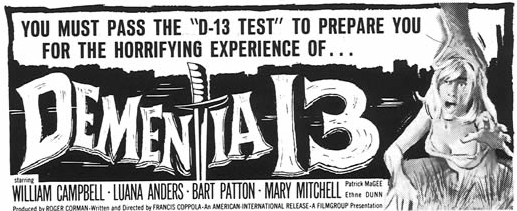
Horror Film Review: Dementia 13 (dir by Francis Ford Coppola)


So, imagine that the year is 1963 and you are the legendary producer/director Roger Corman. You’ve just finished shooting your latest film and it turns out that you didn’t spend all of the money that you had allocated to make it! You’ve got an Irish castle at your disposal and some extra cash. Why not assign your ambitious assistant to make a quick little movie that’s specifically designed to cash-in on the success of Psycho and it’s numerous imitators?

And that, of course, is how Francis Ford Coppola came to direct his first film. Today, of course, Coppola is best known for directing three of the best American films of all time, The Godfather, The Conversation, and The Godfather Part II. (Some people would include Apocalypse Now in that list, as well.) In 1963, he was just another aspiring filmmaker making his debut under the watchful eye of Roger Corman.

Coppola both wrote and directed Dementia 13. The film’s a pretty nifty little horror/mystery. Of course, the plot doesn’t make much sense if you give it too much thought but any fan of the Roger Corman-style of film making should be used to that by now.

Luana Anders plays Louise Haloran, the film’s greedy femme fatale. When we first meet her, she’s calmly watching her husband drop dead of a heart attack. After learning that she’s not going to be receiving any sort of inheritance because her husband died before his mother, Louise decides to invite herself to the Haloran family castle, where her mother-in-law, Lady Haloran (Eithne Dunne), is about to take part in an annual ceremony that is meant to pay tribute to Haloran’s dead daughter, Kathleen. Looking for a way to try to trick Lady Haloran into making Louise her heir, Louise tries to fool Lady Haloran into believing that Kathleen is trying to contact her from beyond the grave.

Got all that? Because I’m not going to try to type it out again.

Anyway, I don’t want to spoil the rest of the plot but let’s just say that it all leads to a midnight swim and a shocking axe murder. Who could be the killer be? Could it be one of Louise’s two brother-in-laws, Richard (William Campell) and Billy (Bart Patton)? Could it be the local doctor, Justin Caleb (Patrick Magee?) Or how about Richard’s fiancee, the oddly named Kane (Mary Mitchell?” Or how about Simon (Karl Schnazer), the local poacher? Or maybe Kathleen really has risen from the dead? Or how about….

Well, look, it could be a lot of people. Dementia 13 has a labyrinth plot and it’s got a few twists that you probably shouldn’t spend too much time thinking about. It’s very much a young director’s film but, at the same time, that’s also the film’s greatest strength. Coppola reportedly got in trouble when the film went overbudget (which is something that had never previously happened on a Corman film) but the end result is a film that features several spooky visuals, an ominous atmosphere, and one very shocking murder. You wouldn’t necessarily watch a film like Dementia 13 and think that the director would go on to make something as great as The Godfather. But Coppola’s talent, even if it’s a bit unformed, is still very much noticeable while watching his directorial debut.

Speaking of watching the film, it’s in the public domain so it’s very easy to watch! Pick up a Mill Creek 50-DVD box set and there’s a good chance you’ll find Dementia 13 included within. Or, you can just go over to YouTube and watch it for free!

Enjoy!

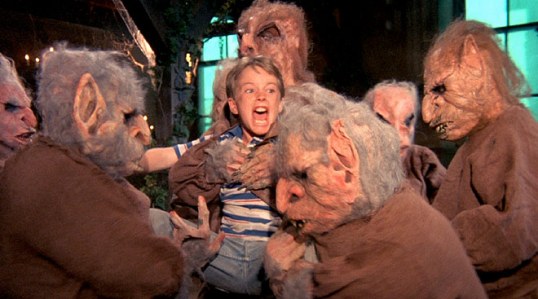
The Terror Within II (1991, directed by Andrew Stevens)


Two years after ripping off Alien with The Terror Within, producer Roger Corman decided to rip it off a second time with The Terror Within II.  This time, star Andrew Stevens hopped into the director’s chair and, along with the sex-crazed monsters, a religious cult was also added.  A year after The Terror Within II was released, Alien 3 was released and it also featured a religious cult.  Was it a coincidence or was Roger Corman predicting the future?

Speaking of the future, The Terror Within II returns us to the crappy future that was predicted by the first film.  As the previous film’s only survivor, scientist Andrew Stevens is walking across Colorado to take a position at yet another lab.  Along the way, he meets a young woman named Ariel (Clare Hoak).  No sooner have they met than they’re doing their bit to repopulate the human race.  Meanwhile, a cult wants to kidnap Ariel and offer her up to the mutants.  (The mutants were called Gargoyles in the first film.  Now, they’re called Lusus.)

Meanwhile, at the other lab, the scientists, including Stella Stevens and R. Lee Ermey, are studying a mutated finger, which appears to be spontaneously regenerating into a Gargoyle or a Lusus or whatever its called now.  Does it occur to anyone at the lab that growing their own monster is a stupid idea?  No.  Humanity is doomed.

The Terror Within II was shot for even less money than the first film but it’s also a marked improvement.  That’s mostly due to Andrew Stevens being a far more competent filmmaker than the director who did the first film.  Stevens know how to shoot an action scene and, when the monsters inevitable do end up storming the lab, it’s more exciting in the second film than it was in the first.  Plus, whereas The Terror Within only had George Kennedy to lend it some class, The Terror Within II has both R. Lee Ermey and Stella Stevens!  It’s an improvement, all around.

Unfortunately, there was never a third film.  The Lusus probably would have won anyways.  There’s only so many underground labs that humanity can hide out in.

4 Shots From 4 Vincent Price Films


4 Shots From 4 Films is just what it says it is, 4 shots from 4 of our favorite films. As opposed to the reviews and recaps that we usually post, 4 Shots From 4 Films lets the visuals do the talking!

I woke up today to discover that Vincent Price was trending on Twitter. He was specifically trending because someone did a thread about Price’s political activism. This was something that I already knew about but most people on Twitter are stunned to discover that people actually did good things before the creation of social media.

Once I got over feeling elitist and superior, I thought to myself that it was actually kind of nice that people still love Vincent Price. He’s definitely one of my favorite actors. He started out as a mainstream studio actor, reading for the role of Ashley Wilkes in Gone With The Window and being considered for Mr. Potter in It’s A Wonderful Life. But he found his true stardom as a horror actor, bringing life to films that often would have been dead without his wonderful presence.

There’s no way that we can do Horrorthon without paying tribute to the great Vincent Price. Here are….

4 Shots From 4 Vincent Price Films!

House on Haunted Hill (1959, dir by William Castle, DP: Carl E. Guthrie)


The Masque of the Red Death (1964, dir by Roger Corman, DP: Nicolas Roeg)


Witchfinder General (1968, dir by Michael Reeves, DP: John Coquillon)


Scream and Scream Again (1969, dir by Gordon Hessler, DP: John Coquillon)