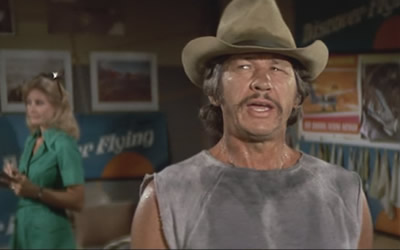
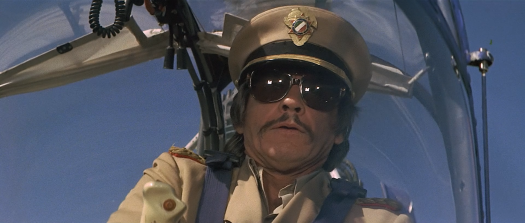
The Greatest opens with 18 year-old Cassius Clay (played by Chip McAllister as a teenager and, as an adult, by Muhammad Ali himself) winning the light heavyweight gold medal at the 1960 Rome Olympics. Returning home to Kentucky, Clay discovers that not even a gold medal can protect him from racism. Angered after a restaurant refuses to serve him and his friend, Clay throws his gold medal into the Ohio River. Under the training of Angelo Dundee (Ernest Borgnine), Clay turns pro and defeats Sonny Liston (Roger E. Mosley) for the heavyweight championship. Inspired by Malcolm X (James Earl Jones), Clay also joins the Nation of Islam and changes his name to Muhammad Ali. As heavyweight champion, Ali battles not only his opponents in the ring but racism outside of it. The Greatest follows Ali as he loses his title for refusing to be drafted and concludes with the famous Rumble in the Jungle, where Ali won the title back from George Foreman.
Sadly, Muhammad Ali has never been the subject of a truly great feature film. Even Michael Mann’s Ali failed to really capture the mystique that made Ali into such an iconic figure. The Greatest is interesting because Ali plays himself. Unfortunately, The Greatest proves that Ali may have been a great showman but he was not a natural actor. You only have to watch the scene where Ali tries to hold his own with Robert Duvall to see just how stiff an actor Muhammad Ali really was. Ali’s best scenes are the ones where he is trash talking his opponents or training. The film opens with Ali jogging while George Benson sings The Greatest Love Of All, a scene that is made all the more poignant when you compare the athletic and confident Muhammad Ali of 1977 with the frail, Parkinson’s stricken Ali of today.
Instead of recreating any of Ali’s legendary fights, The Greatest instead uses actual footage of the matches. The real life footage is the best part of the film. After all these years, Ali’s fights against Sonny Liston, Joe Frazier, Ken Norton, and George Foreman remain exciting to watch. Otherwise, The Greatest is too episodic and low budget to do justice to Muhammad Ali’s story.
If you want to see a truly great film about Ali and his legacy, watch the 1996 documentary When We Were Kings, 2009’s Facing Ali or 2013’s The Trials of Muhammad Ali. Ali is such an iconic figure that it may be impossible for any feature film to properly do justice to his life and legacy. These three documentaries come close.
(Director Tom Gries died during the filming of The Greatest. The movie was completed by Monte Hellman.)
I have always hated those Truth.com commercials. Truth.com is an organization that claims to be dedicated to eradicating smoking. Their smug commercials are essentially the height of hipster douchebaggery, a bunch of self-consciously cool people wandering around and harassing random people about whether or not they smoke. And then, of course, there was the commercial where they all gathered outside a tobacco company and pretended to be dead. Of course, the truth about Truth.com is that they are essentially the same people who, in high school, would get offended whenever anyone wore a short skirt. I really can not stand people like that. (And don’t even get me started on those assholes who appear in the Above The Influence commercials.) Myself, I don’t smoke because I have asthma. But, seriously, whenever I see a Truth.com commercial, I’m tempted to run down to 711 and start.
And so maybe that’s why I like the 2005 comedy Thank You For Smoking.
The hero of Thank You For Smoking is Nick Naylor (Aaron Eckhart), a lobbyist for the tobacco industry, who is first seen appearing on a talk show and winning over a hostile audience by announcing that the tobacco industry is going to be investing millions in researching way to keep young people from smoking and shaking the hand of a teenage honor student who is dying from lung cancer. Over the course of the film, Nick shows us how he does business, everything from defending tobacco companies on talk shows to convincing a former Marlboro Man-turned-cancer-patient to drop his law suit. When Nick isn’t working, he’s hanging out with his best friends (who are lobbyists for both the liquor and the gun industries), trying to bond with his son (Cameron Bright), or having sex with a reporter (Katie Holmes).
Now, in most movies, Nick Naylor would be the villain. However, in Thank You For Smoking, Nick becomes a hero by default, if just because everyone who disagrees with him is even worse than he is. Add to that, Nick has the benefit of being played by Aaron Eckhart while all of his opponents are played by balding actors with ugly beards.
Another reason that I liked Thank You For Smoking was because the main villain was a senator from Vermont and it’s about time somebody stood up to the tyranny of Vermont. Ortolan Finistirre (William H. Macy) has built a career out of campaigning against the tobacco industries and why shouldn’t he? Who, other than Nick Naylor, is willing to defend them? Finistirre’s latest plan is to change the law so that every pack of cigarettes has to be branded with a skull and crossbones warning.
When Nick and Finistirre finally face off, it’s a battle between those who believe in allowing people the freedom to make their own choices and those who hide their totalitarian impulse behind claims that they’re working for the greater good.
Thank You For Smoking was Jason Reitman’s first film. And while it may be a bit too episodic and it frequently struggles to maintain a consistent tone, it’s still a lot better than both Labor Day and Men, Women, & Children.
Believe it or not, The Trial of Billy Jackwas not the only lengthy sequel to be released in 1974. Francis Ford Coppola’s The Godfather Part II was released as well and it went on to become the first sequel to win an Oscar for best picture. (It was also the first, and so far, only sequel to a best picture winner to also win best picture.) Among the films that The Godfather, Part II beat: Chinatown, Coppola’s The Conversation, and The Towering Inferno. 1974 was a good year.
Whenever I think about The Godfather, Part II, I find myself wondering what the film would have been like if Richard Castellano hadn’t demanded too much money and had actually returned in the role of Clemenza, as was originally intended. In the first Godfather, Clemenza and Tessio (Abe Vigoda) were Don Corleone’s two lieutenants. Tessio was the one who betrayed Michael and was killed as a result. Meanwhile, Clemenza was the one who taught Michael how to fire a gun and who got to say, “Leave the gun. Take the cannoli.”
Though Castellano did not return to the role, Clemenza is present in The Godfather, Part II. The Godfather, Part II tells two separate stories: during one half of the film, young Vito Corleone comes to America, grows up to be Robert De Niro and then eventually becomes the Godfather. In the other half of the film, Vito’s successor, Michael (Al Pacino), tries to keep the family strong in the 1950s and ultimately either loses, alienates, or kills everyone that he loves.
During Vito’s half of the film, we learn how Vito first met Clemenza (played by Bruno Kirby) and Tessio (John Aprea). However, during Michael’s half of the story, Clemenza is nowhere to be seen. Instead, we’re told that Clemenza died off-screen and his successor is Frankie Pentangeli (Michael V. Gazzo). All of the characters talk about Frankie as if he’s an old friend but, as a matter of fact, Frankie was nowhere to be seen during the first film. Nor is he present in Vito’s flashbacks. This is because originally, Frankie was going to be Clemenza. But Richard Castellano demanded too much money and, as a result, he was written out of the script.
And really, it doesn’t matter. Gazzo does fine as Frankie and it’s a great film. But, once you know that Frankie was originally meant to be Clemenza, it’s impossible to watch The Godfather Part II without thinking about how perfectly it would have worked out.
If Clemenza had been around for Michael’s scenes, he would have provided a direct link between Vito’s story and Michael’s story. When Clemenza (as opposed to Frankie) betrayed Michael and went into protective custody, it would have reminded us of how much things had changed for the Corleones (and, by extension, America itself). When Tom Hagen (Robert Duvall) talked Clemenza (as opposed to Frankie) into committing suicide, it truly would have shown that the old, “honorable” Mafia no longer existed. It’s also interesting to note that, before Tessio was taken away and killed, the last person he talked to was Tom Hagen. If Castellano had returned, it once again would have fallen to Tom to let another one of his adopted father’s friends know that it was time to go.
Famously, the Godfather, Part II ends with a flashback to the day after Pearl Harbor. We watch as a young and idealistic Michael tells his family that he’s joined the army. With the exception of Michael and Tom Hagen, every character seen in the flashback has been killed over the course of the previous two films. We see Sonny (James Caan), Carlo (Gianni Russo), Fredo (John Cazale), and even Tessio (Abe Vigoda). Not present: Clemenza. (Vito doesn’t appear in the flashback either but everyone’s talking about him so he might as well be there. Poor Clemenza doesn’t even get mentioned.)
If only Richard Castellano had been willing to return.
Clemenza and Vito
But he didn’t and you know what? You really only miss him if you know that he was originally meant to be in the film. With or without Richard Castellano, The Godfather, Part II is a great film, probably one of the greatest of all time. When it comes to reviewing The Godfather, Part II, the only real question is whether it’s better than the first Godfather.
Which Godfather you prefer really depends on what you’re looking for from a movie. Even with that door getting closed in Kay’s face, the first Godfather was and is a crowd pleaser. In the first Godfather, the Corleones may have been bad but everyone else was worse. You couldn’t help but cheer them on.
The Godfather Part II is far different. In the “modern” scenes, we discover that the playful and idealistic Michael of part one is gone. Micheal is now cold and ruthless, a man who willingly orders a hit on his older brother and who has no trouble threatening Tom Hagen. If Michael spent the first film surrounded by family, he spends the second film talking to professional killers, like Al Neri (Richard Bright) and Rocco Lampone (Tom Rosqui). Whereas the first film ended with someone else closing the door on Kay, the second film features Michael doing it himself. By the end of the film, Michael Corleone is alone in his compound, a tyrant isolated in his castle.
Michael’s story provides a sharp contrast to Vito’s story. Vito’s half of the film is vibrant and colorful and fun in a way that Michael’s half is not and could never be. But every time that you’re tempted to cheer a bit too easily for Vito, the film moves forward in time and it reminds you of what the future holds for the Corleones.
So, which of the first two Godfathers do I prefer? I love them both. If I need to be entertained, I’ll watch The Godfather. If I want to watch a movie that will truly make me think and make me question all of my beliefs about morality, I’ll watch Part Two.
Finally, I can’t end this review without talking about G.D. Spradlin, the actor who plays the role of U.S. Sen. Pat Geary. The Godfather Part II is full of great acting. De Niro won an Oscar. Pacino, Gazzo, Lee Strasberg, and Talia Shire were all nominated. Diane Keaton, Robert Duvall, and John Cazale all deserved nominations. Even Joe Spinell shows up and brilliantly delivers the line, “Yeah, we had lots of buffers.” But, with each viewing of Godfather, Part II, I find myself more and more impressed with G.D. Spradlin.
Sen. Pat Geary doesn’t have a lot of time on-screen. He attends a birthday party at the Corleone Family compound, where he praises Michael in public and then condescendingly insults him in private. Later, he shows up in Cuba, where he watches a sex show with obvious interest. And, when Michael is called before a Senate committee, Geary gives a speech defending the honor of all Italian-Americans.
G.D. Spradlin as Sen. Pat Geary
But the scene that we all remember is the one where Tom Hagen meets Sen. Geary in a brothel. As Geary talks about how he passed out earlier, the camera briefly catches the sight of a dead prostitute lying on the bed behind him. What’s especially disturbing about this scene is that neither Hagen nor Geary seem to acknowledge her presence. She’s been reduced to a prop in the Corleone Family’s scheme to blackmail Sen. Geary. His voice shaken, Geary says that he doesn’t know what happened and we see the weakness and the cowardice behind his almost all-American facade.
It’s a disturbing scene that’s well-acted by both Duvall and Spradlin. Of course, what is obvious (even if it’s never explicitly stated) is that Sen. Geary has been set up and that nameless prostitute was killed by the Corleones. It’s a scene that makes us reconsider everything that we previously believed about the heroes of the Godfather.
For forcing us to reconsider and shaking us out of our complacency, The Godfather, Part II is a great film.
(Yes, it’s even better than The Trial of Billy Jack.)
“I got something for your mother and Sonny and a tie for Freddy and Tom Hagen got the Reynolds Pen…” — Kay Adams (Diane Keaton) in The Godfather (1972)
It probably seems strange that when talking about The Godfather, a film that it is generally acknowledged as being one of the best and most influential of all time, I would start with an innocuous quote about getting Tom Hagen a pen.
(And it better have been a hell of a pen because, judging from the scene where Sollozzo stops him in the street, it looked like Tom was going all out as far as gifts were concerned…)
After all, The Godfather is a film that is full of memorable quotes. “Leave the gun. Take the cannoli.” “I’m going to make him an offer he can’t refuse.” “It’s strictly business.” “I believe in America….” “That’s my family, Kay. That’s not me.”
But I went with the quote about the Reynolds pen because, quite frankly, I find an excuse to repeat it every Christmas. Every holiday season, whenever I hear friends or family talking about presents, I remind them that Tom Hagen is getting the Reynolds pen. Doubt me? Check out these tweets from the past!
But all that love also makes The Godfather a difficult film to review. What do you say about a film that everyone already knows is great?
Do you praise it by saying that Al Pacino, Robert Duvall, James Caan, Diane Keaton, Marlon Brando, John Cazale, Richard Castellano, Abe Vigoda, Alex Rocco, and Talia Shire all gave excellent performances? You can do that but everyone already knows that.
Do you talk about how well director Francis Ford Coppola told this operatic, sprawling story of crime, family, and politics? You can do that but everyone already knows that.
Maybe you can talk about how beautiful Gordon Willis’s dark and shadowy cinematography looks, regardless of whether you’re seeing it in a theater or on TV. Because it certainly does but everyone knows that.
Maybe you can mention the haunting beauty of Nina Rota’s score but again…
Well, you get the idea.
Now, if you somehow have never seen the film before, allow me to try to tell you what happens in The Godfather. I say try because The Godfather is a true epic. Because it’s also an intimate family drama and features such a dominating lead performance from Al Pacino, it’s sometimes to easy to forget just how much is actually going on in The Godfather.
The Godfather tells the story of the Corleone Family. Patriarch Vito Corleone (Marlon Brando) has done very well for himself in America, making himself into a rich and influential man. Of course, Vito is also known as both Don Corleone and the Godfather and he’s made his fortune through less-than-legal means. He may be rich and he may be influential but when his daughter gets married, the FBI shows up outside the reception and takes pictures of all the cars in the parking lot. Vito Corleone knows judges and congressmen but none of them are willing to be seen in public with him. Vito is the establishment that nobody wants to acknowledge and sometimes, this very powerful man wonders if there will ever be a “Governor Corleone” or a “Senator Corleone.”
Vito is the proud father of three children and the adopted father of one more. His oldest son, and probable successor, is Sonny (James Caan). Sonny, however, has a temper and absolutely no impulse control. While his wife is bragging about him to the other women at the wedding, Sonny is upstairs screwing a bridesmaid. When the enemies of the Corleone Family declare war, Sonny declares war back and forgets the first rule of organized crime: “It’s not personal. It’s strictly business.”
After Sonny, there’s Fredo (John Cazale). Poor, pathetic Fredo. In many ways, it’s impossible not to feel sorry for Fredo. He’s the one who ends up getting exiled to Vegas, where he lives under the protection of the crude Moe Greene (Alex Rocco). One of the film’s best moments is when a bejeweled Fredo shows up at a Vegas hotel with an entourage of prostitutes and other hangers-on. In these scenes, Fred is trying so hard but when you take one look at his shifty eyes, it’s obvious that he’s still the same guy who we first saw stumbling around drunk at his sister’s wedding.
(And, of course, it’s impossible to watch Fredo in this film without thinking about both what will happen to the character in the Godfather, Part II and how John Cazale, who brought the character to such vibrant life, would die just 6 years later.)
As a female, daughter Connie (Talia Shire) is — for the first film, at least — excluded from the family business. Instead, she marries Sonny’s friend Carlo Rizzi (Gianni Russo). And, to put it gently, it’s not a match made in heaven.
And finally, there’s Michael (Al Pacino). Michael is the son who, at the start of the film, declares that he wants nothing to do with the family business. He’s the one who wants to break with family tradition by marrying Kay Adams (Diane Keaton), who is most definitely not Italian. He’s the one who was decorated in World War II and who comes to his sister’s wedding still dressed in his uniform. (In the second Godfather film, we learn that Vito thought Michael was foolish to join the army, which makes it all the more clear that, by wearing the uniform to the wedding, Michael is attempting to declare his own identity outside of the family.) To paraphrase the third Godfather film, Michael is the one who says he wants to get out but who keeps getting dragged back in.
And finally, the adopted son is Tom Hagen (Robert Duvall). Tom is the Don’s lawyer and one reason why Tom is one of my favorite characters is because, behind his usual stone-faced facade, Tom is actually very snarky. He just hides it well.
Early on, we get a hint that Tom is more amused than he lets on when he has dinner with the crude Jack Woltz (John Marley), a film producer who doesn’t want to use Johnny Fontane (Al Martino) in a movie When Woltz shouts insults at him, Tom calmly finishes his dinner and thanks him for a lovely evening. And he does it with just the hint of a little smirk and you can practically see him thinking, “Somebody’s going to wake up with a horse tomorrow….”
However, my favorite Tom Hagen moment comes when Kay, who is searching for Michael, drops by the family compound. Tom greets her at the gate. When Kay spots a car that’s riddled with bullet holes, she asks what happened. Tom smiles and says, “Oh, that was an accident. But luckily no one was hurt!” Duvall delivers the line with just the right attitude of “That’s my story and I’m sticking to it!” How can you not kind of love Tom after that?
And, of course, the film is full of other memorable characters, all of whom are scheming and plotting. There’s Clemenza (Richard S. Catellano) and Tessio (Abe Vigoda), the two Corleone lieutenants who may or may not be plotting to betray the Don. There’s fearsome Luca Brasi (Lenny Montana), who spends an eternity practicing what he wants to say at Connie’s wedding and yet still manages to screw it up. And, of course, there’s Sollozzo (Al Lettieri, playing a role originally offered to Franco Nero), the drug dealer who reacts angrily to Vito’s refusal to help him out. Meanwhile, Capt. McCluskey (Sterling Hayden) is busy beating up young punks and Al Neri (Richard Bright) is gunning people down in front of the courthouse. And, of course, there’s poor, innocent, ill-fated Appollonia (Simonetta Stefanelli)…
The Godfather is a great Italian-American epic, one that works as both a gangster film and a family drama. Perhaps the genius of the Godfather trilogy is that the Corleone family serves as an ink blot in a cinematic rorschach test. Audiences can look at them and see whatever they want. If you want them and their crimes to serve as a metaphor for capitalism, you need only listen to Tom and Michael repeatedly state that it’s only business. If you want to see them as heroic businessmen, just consider that their enemies essentially want to regulate the Corleones out of existence. If you want the Corleones to serve as symbols of the patriarchy, you need only watch as the door to Michael’s office is shut in Kay’s face. If you want to see the Corleones as heroes, you need only consider that they — and they alone — seem to operate with any sort of honorable criminal code. (This, of course, would change over the course of the two sequels.)
And, if you’re trying to fit a review of The Godfather into a series about political films, you only have to consider that Vito is regularly spoken of as being a man who carries politicians around in his pocket. We may not see any elected officials in the first Godfather film but their presence is felt. Above all else, it’s Vito’s political influence that sets in motion all of the events that unfold over the course of the film.
The Godfather, of course, won the Oscar for best picture of 1972. And while it’s rare that I openly agree with the Academy, I’m proud to say that this one time is a definite exception.
So, I guess I should explain why I’m including the classic 1962 film (and best picture nominee), To Kill A Mockingbird, in this series of reviews of films about politicians. After all, while To Kill A Mockingbird dealt with the issue of racism in Alabama in a surprisingly honest manner, it doesn’t feature any elected officials. Nobody shows up playing Gov. Benjamin J. Miller or President Franklin Roosevelt. Instead, this film is about a wise lawyer named Atticus (Gregory Peck), an innocent man named Tom (Brock Peters), a girl named Scout (Mary Badham) and her older brother Jem (Philip Alford), and a mysterious recluse named Boo (Robert Duvall).
However, if you’ve read Harper Lee’s wonderful novel, then you know that Atticus is not just the smartest man in Maycomb, Alabama. He’s also a member of the Alabama state legislature and his political career is a fairly important subplot in the book, with him occasionally having to leave home so he can go down to Montgomery and help to write the budget. (Incidentally, Harper Lee’s father actually was a member of the Alabama House of Representatives.)
In the film, no mention of Atticus being a member of the state legislature is made but I still choose to believe that he was. Because, as played by Gregory Peck, Atticus Finch is exactly the type of man who you would want to think of as serving in government. He’s wise, compassionate, and firm. For much of To Kill A Mockingbird, he is literally the only sane adult in Maycomb. He’s the only attorney willing to defend Tom Robinson when Tom is accused of raping a white girl. When a mob shows up to lynch Tom, Atticus is the only adult willing to stand up to them. (Fortunately, Jem also runs up and shames the mob by reminding them that she goes to school with their children.) And, in court, it is Atticus who proves that Tom is innocent.
When Tom is still convicted, what makes it all the more devastating is that wise and compassionate Atticus doesn’t seem to be surprised as all. If even Atticus feels that there is no hope for a black man to get a fair trial from an all-white jury, the film seems to be saying, then there truly is no hope.
Of course, the film is not just about Atticus. It’s about Scout and Jem and their friend Dill (John Megna) and how the three of them grow up and learn the truth about their world. Watching them from behind the closed doors of his house is the mysterious and reclusive Boo Radley. When Boo shows up towards the end of the film, I always find tears in my mismatched eyes. Boo is played, in his film debut, by Robert Duvall. Duvall doesn’t say a word but he still makes an incredible impression as the shy and withdrawn Boo.
So, I may be cheating a lot by including To Kill A Mockingbird in this series of reviews. Oh well. Who am I to turn down a chance to rewatch it? To Kill A Mockingbird is just a great film.
The Oscar nominations were announced this morning and, judging from the overdramatic reactions on twitter, some people are apparently taking all of this way too seriously. Listen, I wish The LEGO Movie had been nominated. I wish Jake Gyllenhaal had been nominated. I haven’t seen Selma yet but it does seem strange that it was only nominated for one other Oscar. And, for that matter, how did Foxcatcher get nominated for director, screenplay, actor, and supporting actor without getting a nomination for best picture.
And yes, I do wish that more women had been nominated but, then again, I also wish that more women were being given the opportunity to write and direct films. If the Oscars are male-dominated, that’s because so is the industry.
AND WHERE’S GUARDIANS OF THE GALAXY!?
AND WHAT ABOUT JODOROWSKY’S DUNE!?
*ahem*
But, honestly, I think people are overestimating the importance of the Oscars. Great films will survive, regardless of awards won and lost. Believe me, there were a lot of nominations that I did not agree with but I’m not going to have a Sasha Stone-style freak out over it because, ultimately, the Oscars are what they are and if you think they’re anything more than an event, you really need to calm down and get some perspective.
I’m just happy that it was a good morning for Texas filmmaking. Richard Linklater and Wes Anderson were both nominated for best director. Boyhood, a Texas film if there ever was on, is the front runner for best picture. Texas actor Ethan Hawke was nominated for best supporting actor. Bradley Cooper may not be a Texan but he played one and, judging from the trailer and commercials for American Sniper, he actually got the accent right.
So, I’m happy!
(And, by the way, let’s give this talk about how Laura Dern stole Jessica Chastain’s nomination a rest. If anything, Meryl Streep stole Chastain’s spot.)
Here are the nominees!
BEST PICTURE
“American Sniper”
“Birdman”
“Boyhood”
“The Grand Budapest Hotel”
“The Imitation Game”
“Selma”
“The Theory of Everything”
“Whiplash”
BEST DIRECTOR
Wes Anderson, “The Grand Budapest Hotel”
Alejandro Gonzalez Inarritu, “Birdman”
Richard Linklater, “Boyhood”
Bennett Miller, “Foxcatcher”
Morten Tyldum, “The Imitation Game”
BEST ACTOR
Steve Carell, “Foxcatcher”
Bradley Cooper, “American Sniper”
Benedict Cumberbatch, “The Imitation Game”
Michael Keaton, “Birdman”
Eddie Redmayne, “The Theory of Everything”
BEST ACTRESS
Marion Cotillard, “Two Days One Night”
Felicity Jones, “The Theory of Everything”
Julianne Moore, “Still Alice”
Rosamund Pike, “Gone Girl”
Reese Witherspoon, “Wild”
BEST SUPPORTING ACTOR
Robert Duvall, “The Judge”
Ethan Hawke, “Boyhood”
Edward Norton, “Birdman”
Mark Ruffalo, “Foxcatcher”
J.K. Simmons, “Whiplash”
BEST SUPPORTING ACTRESS
Patricia Arquette, “Boyhood”
Laura Dern, “Wild”
Keira Knightley, “The Imitation Game”
Emma Stone, “Birdman”
Meryl Streep, “Into the Woods”
BEST ORIGINAL SCREENPLAY
“Birdman”
“Boyhood”
“Foxcatcher”
“The Grand Budapest Hotel”
“Nightcrawler”
BEST ADAPTED SCREENPLAY
“American Sniper”
“The Imitation Game”
“Inherent Vice”
“The Theory of Everything”
“Whiplash”
BEST CINEMATOGRAPHY
“Birdman”
“The Grand Budapest Hotel”
“Ida”
“Mr. Turner”
“Unbroken”
BEST COSTUME DESIGN
“The Grand Budapest Hotel”
“Inherent Vice”
“Into the Woods”
“Maleficent”
“Mr. Turner”
BEST EDITING
“American Sniper”
“Boyhood”
“The Grand Budapest Hotel”
“The Imitation Game”
“Whiplash”
BEST MAKEUP & HAIRSTYLING
“Foxcatcher”
“The Grand Budapest Hotel”
“Guardians of the Galaxy”
BEST PRODUCTION DESIGN
“The Grand Budapest Hotel”
“The Imitation Game”
“Interstellar”
“Into the Woods”
“Mr. Turner”
BEST SCORE
“The Grand Budapest Hotel”
“The Imitation Game”
“Interstellar”
“Mr. Turner”
“The Theory of Everything”
BEST SONG
“Everything Is Awesome from “The Lego Movie”
“Glory” from “Selma”
“Grateful” from “Beyond the Lights”
“I’m Not Going to Miss You” from “Glen Campbell: I’ll Be Me”
“Lost Stars” from “Begin Again”
BEST SOUND EDITING
“American Sniper”
“Birdman”
“The Hobbit: The Battle of the Five Armies”
“Interstellar”
“Unbroken”
BEST SOUND MIXING
“American Sniper”
“Birdman”
“Interstellar”
“Unbroken”
“Whiplash”
BEST VISUAL EFFECTS
“Captain America: The Winter Soldier”
“Dawn of the Planet of the Apes”
“Guardians of the Galaxy”
“Interstellar”
“X-Men: Days of Future Past”
BEST ANIMATED FEATURE
“Big Hero 6”
“The Boxtrolls”
“How to Train Your Dragon 2”
“Song of the Sea”
“The Tale of the Princess Kaguya”
BEST DOCUMENTARY FEATURE
“Citizenfour”
“Finding Vivian Maier”
“Last Days in Vietnam”
“The Salt of the Earth”
“Virunga”
BEST FOREIGN LANGUAGE FILM
“Ida”
“Leviathan”
“Tangerines”
“Timbuktu”
“Wild Tales”
BEST ANIMATED SHORT
“The Bigger Picture”
“The Dam Keeper”
“Feast”
“Me and My Moulton”
“A Single Life”
BEST DOCUMENTARY SHORT
“Crisis Hotline: Veterans Press 1”
“Joanna”
“Our Curse”
“The Reaper”
“White Earth”
BEST LIVE ACTION SHORT
“Aya”
“Boogaloo and Graham”
“Butter Lamp”
“Parvaneh”
“The Phone Call”
Hey! It’s that picture from Boyhood that we’ve used a few dozen times since November!
Well, it’s been a long and tortured road since I first started this monthly series of Oscar predictions way back in March. Some contenders have faded. Some have come out of nowhere. And some — like Boyhood and J.K. Simmons in Whiplash — have remained consistently strong for the entire year.
Here are my final 2014 Oscar predictions. The actual Oscar predictions will be announced on Thursday.
(Where’s David Oyelowo? Originally, I did list him but I don’t know. With the guild awards, it seems like Selma is losing momentum and American Sniper is gaining it. I know that a lot of watchers are saying this is due to the Selma screeners being sent out late and that could well be true. Hopefully, I’ll get to see both Selma and American Sniper this weekend but, until then, I can’t offer an opinion on whether either one deserves to be nominated. But it’s hard not to feel as if Selma is not shaping up to be quite the Oscar powerhouse that a lot of us were expecting it to be. We’ll see.)
Best Actress
Jennifer Aniston in Cake
Felicity Jones in The Theory of Everything
Julianne Moore in Still Alice
Rosamund Pike in Gone Girl
Reese Witherspoon in Wild
Best Supporting Actor
Robert Duvall in The Judge
Ethan Hawke in Boyhood
Edward Norton in Birdman
Mark Ruffalo in Foxcatcher
J.K. Simmons in Whiplash
(I still have a hard time believe that Robert Duvall is going to be nominated for The Judge because Duvall was good but not great and the movie kind of sucked. But, honestly, who else are they going to nominate? Josh Brolin deserves the spot for Inherent Vice but the film is probably a little bit too odd for a lot of voters. Maybe if Unbroken‘s Miyavi or Gone Girl‘s Tyler Perry had a little more screen time, they could make a case. But ultimately, that fifth spot does seem to be Duvall’s.)
Best Supporting Actress
Patrica Arquette in Boyhood
Jessica Chastain in A Most Violent Year
Keira Knightley in The Imitation Game
Emma Stone in Birdman
Naomi Watts in St. Vincent
(I’m going to go out on a limb and predict Watts over Meryl Streep. Why not? There always seems to be at least one surprise acting nominee.)
Best Director
Wes Anderson for The Grand Budapest Hotel
Clint Eastwood for American Sniper
Alejandro G. Inarritu for Birdman
Richard Linklater for Boyhood
Morten Tyldum for The Imitation Game
So there they are! My final “for real” predictions. Tomorrow, I’ll be posting my annual “If Lisa Had All The Power” post, which will be my personal nominations, the films and performances that I would nominate if I had all the power. And then, on Thursday, the Oscar nominations will be announced!
Need to kill some time? Look through all the posts since November and count up how many times this picture has appeared on the site!
This morning, the Broadcast Film Critics Association announced their nominations for the best of 2014! No sooner had I started to dismiss Unbroken as a contender then the BFCA nominated not only the film for best picture but Angelina Jolie for best director as well.
As opposed to a lot of critics group, the BFCA is considered to be a pretty strong and influential precursor. So, if anyone should be worried by today’s nominations, it might be those hoping to see Foxcatcher and Steve Carell nominated in January.
The BFCA awards will be broadcast on A&E on January 15th.
Best Picture
“Birdman”
“Boyhood”
“Gone Girl”
“The Grand Budapest Hotel”
“The Imitation Game”
“Nightcrawler”
“Selma”
“The Theory of Everything”
“Unbroken”
“Whiplash”
Best Director
Wes Anderson, “The Grand Budapest Hotel”
Ava DuVernay, “Selma”
David Fincher, “Gone Girl”
Alejandro González Iñárritu, “Birdman”
Angelina Jolie, “Unbroken”
Richard Linklater, “Boyhood”
Best Actor
Benedict Cumberbatch, “The Imitation Game”
Ralph Fiennes, “The Grand Budapest Hotel”
Jake Gyllenhaal, “Nightcrawler”
Michael Keaton, “Birdman”
David Oyelowo, “Selma”
Eddie Redmayne, “The Theory of Everything”
Best Actress
Jennifer Aniston, “Cake”
Marion Cotillard, “Two Days, One Night”
Felicity Jones, “The Theory of Everything”
Julianne Moore, “Still Alice”
Rosamund Pike, “Gone Girl”
Reese Witherspoon, “Wild”
Best Supporting Actor
Josh Brolin, “Inherent Vice”
Robert Duvall, “The Judge”
Ethan Hawke, “Boyhood”
Edward Norton, “Birdman”
Mark Ruffalo, “Foxcatcher”
J.K. Simmons, “Whiplash”
Best Supporting Actress
Patricia Arquette, “Boyhood”
Jessica Chastain, “A Most Violent Year”
Keira Knightley, “The Imitation Game”
Emma Stone, “Birdman”
Meryl Streep, “Into the Woods”
Tilda Swinton, “Snowpiercer”
Best Adapted Screenplay
“Gone Girl”
“The Imitation Game”
“Inherent Vice”
“The Theory of Everything”
“Unbroken”
“Wild”
Best Original Screenplay
“Birdman”
“Boyhood”
“The Grand Budapest Hotel”
“Nightcrawler”
“Whiplash”
Best Art Direction
“Birdman”
“The Grand Budapest Hotel”
“Inherent Vice”
“Interstellar”
“Into the Woods”
“Snowpiercer”
Best Cinematography
“Birdman”
“The Grand Budapest Hotel”
“Interstellar”
“Mr. Turner”
“Unbroken”
Best Editing
“Birdman”
“Boyhood”
“Gone Girl”
“Interstellar”
“Whiplash”
Best Costume Design
“The Grand Budapest Hotel”
“Inherent Vice”
“Into the Woods”
“Maleficent”
“Mr. Turner”
Best Hair & Makeup
“Foxcatcher”
“Guardians of the Galaxy”
“The Hobbit: The Battle of the Five Armies”
“Into the Woods”
“Maleficent”
Best Score
“Birdman”
“Gone Girl”
“The Imitation Game”
“Interstellar”
“The Theory of Everything”
Best Song
“Lost Stars” from “Begin Again”
“Big Eyes” from “Big Eyes”
“Yellow Flicker Beat” from “The Hunger Games: Mockingjay – Part 1″
“Everything is Awesome” from “The LEGO Movie”
“Glory” from “Selma”
Best Visual Effects
“Dawn of the Planet of the Apes”
“Edge of Tomorrow”
“Guardians of the Galaxy”
“The Hobbit: The Battle of the Five Armies”
“Interstellar”
Best Animated Feature
“Big Hero 6″
“The Book of Life”
“The Boxtrolls”
“How to Train Your Dragon 2″
“The LEGO Movie”
Best Foreign Language Film
“Force Majeure”
“Ida”
“Leviathan”
“Two Days, One Night”
“Wild Tales”
Best Documentary Feature
“CITIZENFOUR”
“Glen Campbell: I’ll Be Me”
“Jodorowsky’s Dune”
“Last Days in Vietnam”
“Life Itself”
“The Overnighters”
Best Acting Ensemble
“Birdman”
“Boyhood”
“The Grand Budapest Hotel”
“The Imitation Game”
“Into the Woods”
“Selma”
Best Young Actor/Actress
Ellar Coltrane, “Boyhood”
Ansel Elgort, “The Fault in Our Stars”
Mackenzie Foy, “Interstellar”
Jaeden Lieberher, “St. Vincent”
Tony Revolori, “The Grand Budapest Hotel”
Quvenzhane Wallis, “Annie”
Noah Wiseman, “The Babadook”
Best Action Movie
“American Sniper”
“Captain America: The Winter Soldier”
“Edge of Tomorrow”
“Fury”
“Guardians of the Galaxy”
Best Actor in an Action Movie
Bradley Cooper, “American Sniper”
Tom Cruise, “Edge of Tomorrow”
Chris Evans, “Captain America: The Winter Soldier”
Brad Pitt, “Fury”
Chris Pratt, “Guardians of the Galaxy”
Best Actress in an Action Movie
Emily Blunt, “Edge of Tomorrow”
Scarlett Johansson, “Lucy”
Jennifer Lawrence, “The Hunger Games: Mockingjay – Part 1″
Zoe Saldana, “Guardians of the Galaxy”
Shailene Woodley, “Divergent”
Best Comedy
“Birdman”
“The Grand Budapest Hotel”
“St. Vincent”
“Top Five”
“22 Jump Street”
Best Actor in a Comedy
Jon Favreau, “Chef”
Ralph Fiennes, “The Grand Budapest Hotel”
Michael Keaton, “Birdman”
Bill Murray, “St. Vincent”
Chris Rock, “Top Five”
Channing Tatum, “22 Jump Street”
Best Actress in a Comedy
Rose Byrne, “Neighbors”
Rosario Dawson, “Top Five”
Melissa McCarthy, “St. Vincent”
Jenny Slate, “Obvious Child”
Kristen Wiig, “The Skeleton Twins”
Best Sci-Fi/Horror Movie
“The Babadook”
“Dawn of the Planet of the Apes”
“Interstellar”
“Snowpiercer”
“Under the Skin”
Well, here it is, my next to last attempt to predict who and what will be nominated for an Academy Award in January. With the AFI, SAG, and the Golden Globes all having made their voices heard, this list was definitely a bit easier to make than it was when I first started posting my monthly predictions back in March!
And yet, what’s interesting is that my March predictions aren’t all that different from my December predictions.
It’s true that I’ve recently come to the conclusion that both Foxcatcher and Unbroken will be left out of the best picture race. And, over the past few months, both Selma and The Theory of Everything have developed into major contenders. For that matter, I failed to predict the sudden groundswell of support for Jake Gyllenhaal, Jennifer Aniston, and the Grand Budapest Hotel.
However, from the beginning of the year, both myself and a lot of other award watchers have been predicting that both Boyhood and Birdman would be contenders. J.K. Simmons, as well, has been viewed as a probable nominee since Whiplash premiered at Sundance.
And, of course, everyone always knows that Meryl Streep is going to get nominated for something.
The Golden Globe nominations were announced this morning and the big news is that Angelina Jolie’s Unbroken was totally and completely snubbed. Knowing the Hollywood Foreign Press Association, I figured that they’d nominate Jolie just to get her and Brad Pitt on the show.
(Does anyone remember when they nominated The Tourist for Best Comedy Film of 2010? For that matter, does anyone remember The Tourist?)
Also, it’s interesting to note that David Fincher was nominated for best director for Gone Girl but Gone Girl itself did not receive a nomination for best picture.
(As of this writing, Sasha Stone has yet to post her analysis on Awards Daily but I’m sure when she does, it will be depressing.)
BEST DRAMA FILM
“Boyhood”
“Foxcatcher”
“The Imitation Game”
“Selma”
“The Theory of Everything”
BEST DRAMA ACTOR
Steve Carell, “Foxcatcher”
Benedict Cumberbatch, “The Imitation Game”
Jake Gyllenhaal, “Nightcrawler”
David Oyelowo, “Selma”
Eddie Redmayne, “The Theory of Everything”
BEST DRAMA ACTRESS
Jennifer Aniston, “Cake”
Felicity Jones, “The Theory of Everything”
Julianne Moore, “Still Alice”
Rosamund Pike, “Gone Girl”
Reese Witherspoon, “Wild”
BEST MUSICAL/COMEDY FILM
“Birdman”
“The Grand Budapest Hotel”
“Into the Woods”
“Pride”
“St. Vincent”
BEST MUSICAL/COMEDY ACTOR
Ralph Fiennes, “The Grand Budapest Hotel”
Michael Keaton, “Birdman”
Bill Murray, “St. Vincent”
Joaquin Phoenix, “Inherent Vice”
Christoph Waltz, “Big Eyes”
BEST MUSICAL/COMEDY ACTRESS
Amy Adams, “Big Eyes”
Emily Blunt, “Into the Woods”
Helen Mirren, “The Hundred-Foot Journey”
Julianne Moore, “Maps to the Stars”
Quvenzhane Wallis, “Annie”
BEST FILM SUPPORTING ACTOR
Robert Duvall, “The Judge”
Ethan Hawke, “Boyhood”
Edward Norton, “Birdman”
Mark Ruffalo, “Foxcatcher”
J.K. Simmons, “Whiplash”
BEST FILM SUPPORTING ACTRESS
Patricia Arquette, “Boyhood”
Jessica Chastain, “A Most Violent Year”
Keira Knightley, “The Imitation Game”
Emma Stone, “Birdman”
Meryl Streep, “Into the Woods”
BEST DIRECTOR
Wes Anderson, “The Grand Budapest Hotel”
Ava Duvernay, “Selma”
David Fincher, “Gone Girl”
Alejandro Gonzalez Inarritu, “Birdman”
Richard Linklater, “Boyhood”
BEST SCREENPLAY
“Birdman”
“Boyhood”
“Gone Girl”
“The Grand Budapest Hotel”
“The Imitation Game”
BEST ANIMATED FEATURE
“Big Hero 6”
“The Book of Life”
“The Boxtrolls”
“How to Train Your Dragon 2”
“The Lego Movie”
BEST SCORE
“Birdman”
“Gone Girl”
“The Imitation Game”
“Interstellar”
“The Theory of Everything”
BEST SONG
“Big Eyes” from “Big Eyes” (Lana Del Ray)
“Glory” from “Selma” (John Legend, COmmon)
“Mercy Is” from “Noah” (Patty SMith, Lenny kaye)
“Opportunity” from “Annie”
“Yellow Flicker Beat” from “The Hunger Games, Mockingjay Part 1” (Lorde)