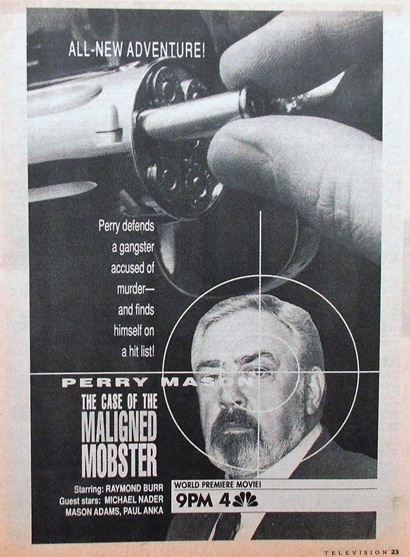
Despite being asked to take the case by an old friend (Mason Adams), Perry Mason (Raymond Burr) is reluctant to defend Johnny Sorrento (Michael Nader) in court. Johnny is a former gangster who has been credibly accused of murder in the past. Now, he’s on trial for killing his wife and not even Perry is totally convinced that he’s innocent.
Of the 18 Perry Mason films that I’ve watched so far, this was definitely the best. This is the first time that I’ve seen Perry defend someone who he both dislikes and, even more importantly, distrusts and Raymond Burr was really convincing whenever he got angry at Johnny. For once, the case wasn’t wrapped up as neatly as usual. Solving the murder of Johnny’s wife meant delving into a past murder and it uncovered a lot of dark secrets. The identity of the killer was a real surprise but there was a lot more going on than just solving the mystery of who killed Johnny’s wife. At the end of this movie, Perry looked like he was about to cry, no matter how much Della (Barbara Hale) tried to comfort him.
Sharing much more would be the same as spoiling all of the movie’s twists and turns so I’ll just repeat that this is the best of the Perry Mason movies that I’ve seen so far. The guest cast is great, especially Mason Adams and Paul Anka. The Perry Mason films always follow the same plot and sometimes, they can blend together but this one made a real impression and really took me by surprise.
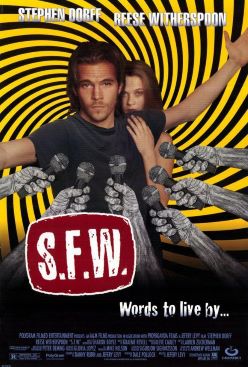
Cliff Spab (Stehpen Dorff), his friend Joe Dice (Jack Noseworthy), and teenager Wendy Pfister (Reese Witherspoon) are in the wrong convenience store at the wrong time and end up being taken hostage by a group of masked terrorists who have guns and video cameras. For 36 days straight, their ordeal is broadcast live on television. They become the number one show in the country and Cliff’s nihilistic attitude makes him a star. When the terrorists threaten to kill him, he spits back, “So fucking what!?” Alienated young people take up S.F.W. as a personal chant and credo. When Joe finally fights back, both he and the terrorists are killed in the shoot-out. Wendy and Cliff are now celebrities, even though they don’t want to be. Released into the real world, Cliff has to deal with everyone wanting to make money off of him. His alienation has been turned into a product. He just wants to be reunited with Wendy but his fans want him to tell them how to live their lives. Fandom turns out be a fickle beast.
Earlier this morning, I came across a news item that Jefery Levy, the director of S.F.W., had died at the age of 67. S.F.W. used to show up frequently on cable in the 90s but I hadn’t thought about it in years. When I first saw S.F.W., I didn’t care much for it. Cliff came across as being a poseur and Stephen Dorff came across like he was way too impressed with himself. With John Roarke playing everyone from Phil Donahue to Sam Donaldson and Gary Coleman appearing as himself, the movie seemed like it was trying too hard to be outrageous. Looking back on it now, though, I realize S.F.W. may not have been a good movie but it was still a very prophetic movie. What seemed implausible in the 90s — like the 36-day live stream from inside the convenience store hostage situation and Cliff Spab’s fans switching their allegiance to a self-righteous virgin who yells that everything matters while trying to assassinate him — feels far too plausible today.
In 1994, S.F.W. and Jefery Levy predicted the 2020s. The only thing it got wrong was having Cliff Spab not wanting to be a famous. Today, Cliff Spab would probably be presenting the Best Podcast award at the Golden Globes.
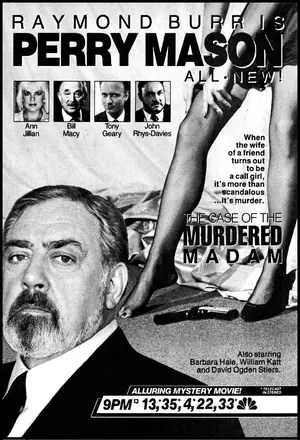
Former madam Suzanne Domenico (Ann Jillian) attempts to blackmail four rich men who are planning on embezzling money from a bank and is found dead by her husband, Tony, shortly afterwards. Tony (Vincent Baggetta) is arrested and charged with murdering his wife. Tony’s older brother used to run around with Della Street (Barbara Hale) and Della is able to get Perry Mason (Raymond Burr) to defend him in court. Paul Drake, Jr. (William Katt) is brought in to do the investigative legwork. Once again, Paul falls for a younger woman (Daphne Ashbrook) who will probably never be mentioned again in any of the other movies.
This movie was a little sad because it was obvious that Raymond Burr was not in good health. He spends most of the movie sitting or moving with crutches. In the movie, they say that Perry is using crutches because of a skiing accident but looking at Raymond Burr, there’s no way to imagine him skiing. Burr is still as sharp as ever when asking questions in the courtroom but it’s still clear that he was in pain when he did this movie. Perry being sidelined does mean that Barbara Hale and William Katt get to do more than usual. After spending the last few movies constantly getting outrun and smacked around, Katt finally gets to beat someone up in the movie.
The mystery isn’t bad, even though I guessed who the murderer was long before the trial started. The entire embezzlement scheme comes down to embezzling a few cents a day so that no one will notice. That’s the same thing they tried to do in Office Space! Luckily, no one got murdered that time.
Overall, this was a good entry in the Parry Mason movies, especially for those of us who like watching Paul Drake, Jr. I’m starting to wonder if all of Perry and Della’s friends are going to end up getting accused of murder at some point. My aunt and I always used to joke about how often Jessica Fletcher’s nephew was accused of murdering someone. It might be just as dangerous to be a friend of Perry Mason’s!
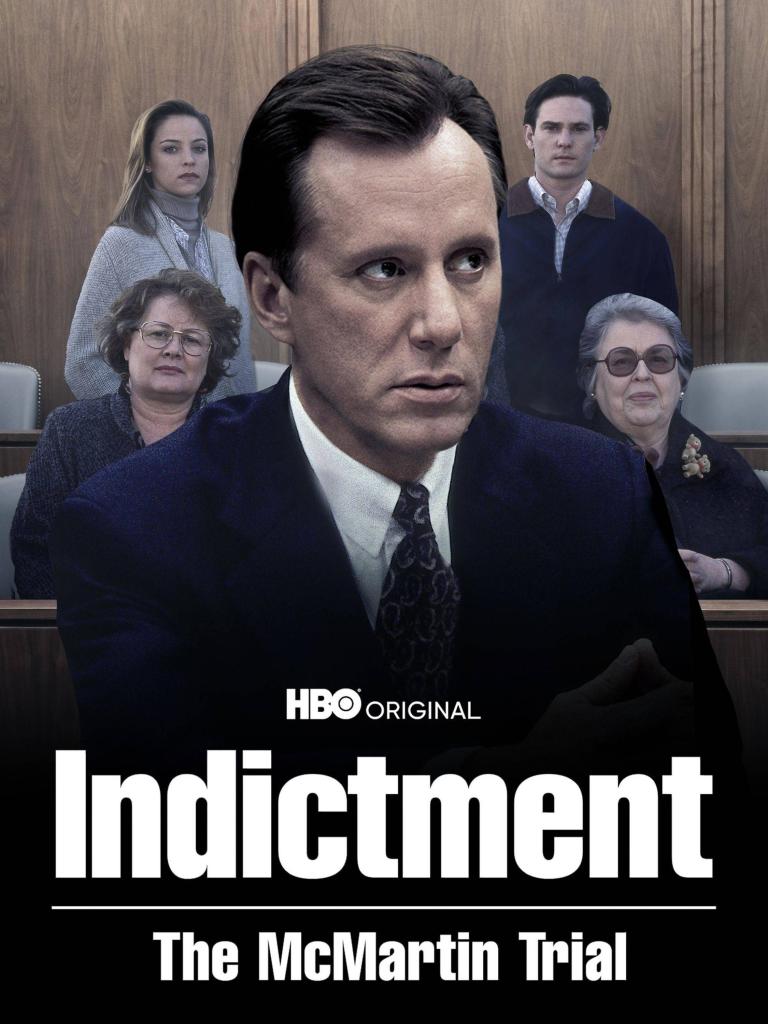
Actor James Woods is great at portraying attorneys. Whether it be as the real life Assistant D.A. Bob Tanenbaum in the excellent T.V. Movie BADGE OF THE ASSASSIN (1985), the crusading hippie Eddie Dodd in TRUE BELIEVER (1989) or the namesake of the excellent TV series SHARK (2006-2008), Woods knows how to play that unique combination of intelligence, shrewdness, and sneakiness to perfection. In 1995, he further applied those skills when he portrayed real life attorney Danny Davis in the HBO movie INDICTMENT: THE MCMARTIN TRIAL. This movie is based on the McMartin day care sexual abuse case that began with horrific allegations in 1983 and ended in 1990 with zero convictions and all charges dropped. During that time, the McMartin Trial became the longest and most expensive series of criminal trials in American history.
I’ll just go ahead and challenge any person to watch INDICTMENT: THE MCMARTIN TRIAL and not get filled with righteous anger about the complete failure of our judicial system. Add to that failure the complete breakdown of our media to cover events in a fair and impartial fashion with even the smallest shred of objectivity. Does any of this sound familiar? As good as James Woods is in the central role, the star of this film is the true story itself. We watch as various people in positions of authority and power act completely out of self interest, including Davis himself at first, with the pursuit of the truth or justice not even the slightest consideration no matter what the evidence suggests. In actuality, the truth was hidden by the prosecution in pursuit of convictions that never came. The shit that this family was put through with coerced evidence that had no chance of standing up to the slightest bit of scrutiny is disgraceful. It’s one of the most infuriating films I’ve ever seen and it’s just as relevant in 2025 as it was in 1995. The performances are spot on, beginning with Woods’ central performance as Danny Davis and moving on to Shirley Knight in a Golden Globe winning portrayal of Peggy McMartin Buckey, Mercedes Ruehl as prosecutor Lael Rubin, Lolita Davidovich as child therapist Kee MacFarlane, Sada Thompson as matriarch Virginia McMartin, and Henry Thomas as the odd but innocent Ray Buckey. Produced by Oliver Stone and directed by Mick Jackson (THE BODYGUARD, VOLCANO), this button pushing, thought provoking film would win both the Primetime Emmy and Golden Globe awards for best Made for Television Movie in 1995. It’s truly an excellent film and should be seen by any person interested in a fair judicial system or unbiased media.
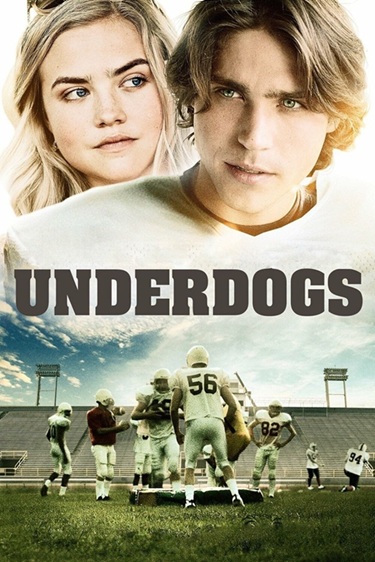
In a rural Ohio, a working class high school football teams plays an exhibition game against the rich school on the other side of town. The working class team is coached by Vince DeAntonio (D.B. Sweeney), a former NFL offensive coordination and the son of a coach. Vince is a tough taskmaster who tells his players that winning is not going to easy and it’s not going to be fun but he also has the connections necessary to get Joe Namath to stumble into the locker room and give a speech to his team. The quarterback (Charlie Carver) of the rich high school is the son of the businessman (Richard Portnow) who is planning on moving his factory down to Mexico and putting the entire town out of work. The quarterback (Logan Huffman) of the working class high school team is the son of an inventor (Willlam Mapother) who is being sued by a corporation that wants to steal his invention. Both of the quarterbacks like the same cheerleader (Maddie Hasson). This game is about more than just who scores the winning touchdown. It’s about town pride.
I love a good underdog story but Underdogs didn’t seem to know what story it wanted to tell. It spent as much time with the inventor and his court case as it did with the football team and the whole thing ended up becoming a commercial for his product. (The movie is based on a true story.) When it actually did get around to the football scenes, it was all too predictable. The team was bad and then the team was good and the entire game came down to one final throw of the football with the clock counting down. One weird thing about the movie is that it put a lot of emphasis on Vince recruiting unlikely players to his team but once he had them on the team, we hardly ever saw them again.
At least the movie’s heart was in the right place and it didn’t turn the cheerleaders into stereotypes, like so many high school football movies do. D.B. Sweeney was okay as the coach but I don’t know if William Mapother’s character was supposed to come across as being as strange as he did. I’m glad the underdogs proved themselves but the movie could have been better.
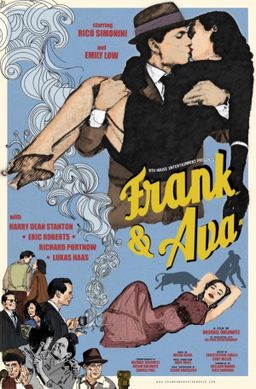
2018’s Frank & Ava tells the story of the tempestuous love affair and marriage of Frank Sinatra (Rico Simonini) and Ava Gardner (Emily Elicia Low).
The film opens with Sinatra at his lowest point. His records are no longer selling. His marriage to Nancy is in trouble. The government is now investigating him for supposed communist sympathies (say it ain’t so, Frank!) and also his connections to the Mafia. Hedda Hopper (Joanne Baron), Louella Parsons (Joanna Sanchez), and Walter Winchell (Richard Portnow) all pop up throughout the film, breathlessly reading the latest gossip into radio microphones. Frank’s voice is weakening and it looks like he’s about to lose his fanbase to Eddie Fisher and Perry Como. As for his acting career, everyone knows that he can’t act. (At one point, even Frank’s friends laugh at the idea of Siantra ever winning an Oscar.) Frank knows that he would be perfect for the role of Maggio in From Here To Eternity but the film’s director wants to cast someone like Harvey Lembeck or Eli Wallach.
As for Ava Gardner, she’s just gotten out of a relationship with Howard Hughes. More famous for her then-scandalous personal life than her film roles, Gardner drinks too much, curses too much, and is too open about her affairs for the sensibilities of much of 1950 America.
When Frank and Ava meet, it’s love at first sight. They drive around while drinking champagne straight from the bottle. They crash cars. When they’re arrested, they charm a local sheriff (Harry Dean Stanton, in his final film role). They fight. They make love. They fight more. They make love more. Frank obsesses on the possibility of Ava being unfaithful to him while continually cheating on her with everyone from Lana Turner to Marilyn Maxwell.
The first thing that you notice about Frank & Ava is that it is full of references to real Hollywood gossip. Names are dropped. Real celebrities are depicted and the portrayals are not always positive. The second thing that you notice is that, with the exception of Emily Elicia Low, no one is particularly convincing. The actress who plays Marilyn Monroe not only looks nothing like Marilyn but her attempt to imitate Marilyn’s trademark voice made me laugh out loud. Actors appear as Lana Turner, Montgomery Clift, Howard Hughes, and a host of mafiosos and none of them are the least bit convincing. Much of the film is like attending a costume party where no one could spend more than five bucks on their costume. Rico Simonini, who was so charming in My Dinner With Eric, is not particularly convincing as Frank Sinatra. That said, Emily Elicia Low is well-cast as Ava Gardner and Eric Roberts shows up for two scenes as producer Harry Cohn. In real life, Cohn was a notorious bully. The old anecdote about everyone showing up at an unpopular man’s funeral to make sure that he’s actually dead is often said to have been inspired by Cohn. In the film, Roberts plays Cohn as being a surprisingly reasonable guy. If Fred Zinnemann wants Sinatra, he can have Sinatra. If he wants Eli Wallach, he can have Eli Wallach. Just make sure they aren’t communists!
Probably the most interesting thing about this film is its attempt to recreate the 50s without spending a good deal of money. This is a low-budget movie and there’s an obvious artificiality to many of the sets and costumes that gives the entire film an oddly dream-like feel. It’s less a recreation of the past and more a look at how the past might look in our fantasies. All the men wear suits. Ava dresses and talk as if she just stepped out of a parody of a film noir. Famous scenes from Goodfellas and La Dolce Vita are awkwardly recreated by Santini and the cast. The film, which was made by people who obviously loved the legend of Frank and Ava, ultimately transcends the conventional definition of good and bad and instead becomes a work of outsider art, a look into the hazier regions of the American cultural psyche.
Previous Eric Roberts Films That We Have Reviewed:
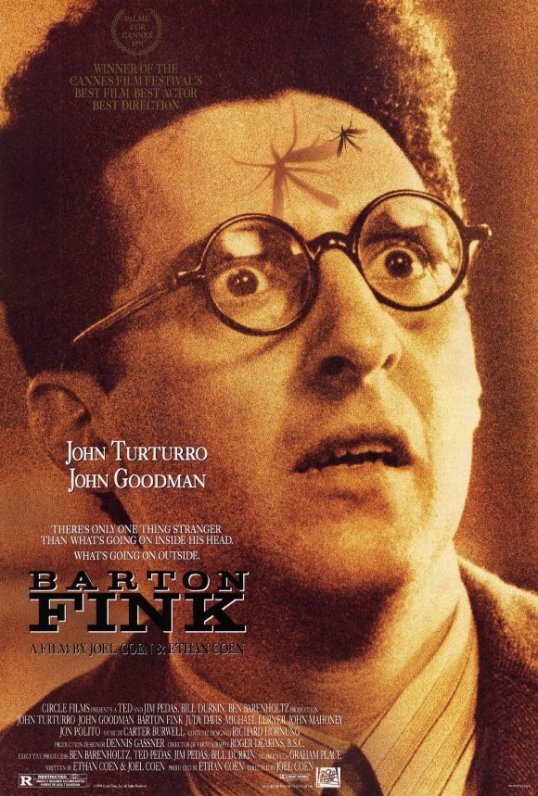
With the Cannes Film Festival underway in France, I decided that I would spend the next few days watching and reviewing some of the previous winners of the Palme d’Or. Today, I got things started with the 1991 winner, Barton Fink.
Directed by the Coen Brothers and taking place in the mythological Hollywood of 1941, Barton Fink tells the story of a writer. Played by John Turturro, Barton Fink is a playwright who has just had a big hit on Broadway. We don’t see much of the play. In fact, we only hear the final few lines. “No,” one the actors says, in exaggerated “common man” accent, “it’s early.” From what we hear of the reviews and from Barton himself, it seems obvious that the play is one of those dreary, social realist plays that were apparently all the rage in the late 30s. Think Waiting for Lefty. Think Hand That Rocks The Cradle. Think of the Group Theater and all of the people that Elia Kazan would later name as having been communists. These plays claimed to tell the stories of the people who couldn’t afford to see a Broadway production.
Barton considers himself to be the voice of the common man, an advocate for the working class. He grandly brags that he doesn’t write for the money or the adulation. He writes to give a voice to the voiceless. When his agent tells him that Capitol Pictures wants to put Barton under contract, Barton resists. His agent assures Barton that the common man will still be around when Barton returns from Hollywood. There might even be a few common people in California! “That’s a rationalization,” Barton argues. “Barton,” his agent replies with very real concern, “it was a joke.” Barton, we quickly realize, does not have a sense of humor and that’s always a huge problem for anyone who finds themselves in a Coen Brothers film.
In Hollywood, Barton meets the hilariously crass Jack Lipnik (Oscar-nominated Michael Lerner). Lipnik is the head of Capitol Pictures and he is sure that Barton can bring that “Barton Fink feeling” to a Wallace Beery wrestling picture. Barton has never wrestled. He’s never even seen a film. The great toast of Broadway finds himself sitting in a decrepit hotel room with peeling wallpaper. He stares at his typewriter. He writes three or four lines and then …. nothing. He meets his idol, Faulknerish writer W.P. Mayhew (John Mahoney), and discovers that Mayhew is a violent drunk and that most his recent work was actually written by his “secretary,” Audrey (Judy Davis). He seeks help from producer Ben Geisler (Tony Shalhoub), who cannot understand why Barton is having such a difficult time writing what should be a very simple movie. Barton sits in his hotel room and waits for inspiration that refuses to come.
He also gets to know Charlie Meadow (John Goodman). Charlie is Barton’s neighbor. Charlie explains that he’s an insurance agent but he really sells is “peace of mind.” At first, Barton seems to be annoyed with Charlie but soon, Barton finds himself looking forward to Charlie’s visits. Charlie always brings a little bottle of whiskey and a lot of encouragement. Charlie assures Barton that he’ll get the script written. Barton tells Charlie that he wants to write movies and plays about “people like you.” Charlie shows Barton a wrestling move. Barton tells Charlie to visit his family if he’s ever in New York. Charlie tells Barton, “I could tell you some stories” but he never really gets the chance because Barton is usually too busy talking about his ambitions to listen. Charlie tells Barton, “Where there’s a head, there’s hope,” a phrase that takes on a disturbing double meaning as the film progresses. Just as Barton isn’t quite the class warrior that he believes himself to be, Charlie isn’t quite what he presents himself to be either. Still, in the end, Charlie is far more honest about who he is than Barton could ever hope to be.
When it comes to what Barton Fink is actually about, it’s easy to read too much into it. The Coens themselves have said as much, saying that some of the film’s most debated elements don’t actually have any deeper meaning beyond the fact that they found them to be amusing at the time. At its simplest, Barton Fink is a film about writer’s block. Anyone who has ever found themselves struggling to come up with an opening line will be able to relate to Barton staring at that nearly blank page and they will also understand why Barton comes to look forward to Charlie visiting and giving him an excuse not to write. It’s a film about the search for inspiration and the fear of what that inspiration could lead to. Towards the end of the film, Barton finds himself entrusted with a box that could contain his worst fears or which could cpntain nothing at all. There’s nothing to stop Barton from opening the box but he doesn’t and it’s easy to understand why. To quote another Coen Brothers film, “Embrace the mystery.”
There’s plenty of other theories about what exactly is going on in Barton Fink but, as I said before, I think it’s easy to overthink things. The Coens have always been stylists and sometimes, the style is the point. That said, I do think that it can be argued that Barton Fink’s mistake was that he allowed himself to think that he was important than he actually was. Self-importance is perhaps the one unforgivable sin in the world of the Coen Brothers. Like most Coen films, Barton Fink takes place in a universe that is ruled by chaos and the random whims of fate. Barton’s mistake was thinking that he could understand or tame that chaos through his art or his politics. Barton’s mistake is that he tries to rationalize and understand a universe that is irrational and incapable of being explained. He’s a self-declared storyteller who refuses to listen to the stories around him because those stories might challenge what he considers to be the “life of the mind.”
Barton Fink is a film that people either seem to love or they seem to hate. Barton, himself, is not always a particularly likable character and the Coens seem to take a very definite joy in finding ways to humiliate him. Fortunately, Barton is played by John Turturro, an actor who has the ability to find humanity in even the most obnoxious of characters. (As obnoxious as Barton can be, it’s hard not to want to embrace him when he awkwardly but energetically dances at a USO club.) Turturro has great chemistry with John Goodman, who gives one of his best performances as Charlie. It’s putting it lightly to say that most viewers will have mixed feelings about Charlie but the film makes such great use of Goodman’s natural likability that it’s only on a second or third viewing that you realize that all of Charlie’s secrets were pretty much out in the open from the start. Michael Lerner deserved his Oscar nomination but certainly Goodman deserved one as well. The rest of the cast is full of Coen Brothers regulars, including Jon Polito as Lerner’s obsequies assistant and Steve Buscemi as Chet, the very friendly front deskman. And finally, I have to mention Christopher Murney and Richard Portnow, who play two of the worst cops ever and who deliver their hardboiled dialogue with just the right mix of menace and parody.
Barton Fink won the Palme d’Or at Cannes, defeating such films as Spike Lee’s Jungle Fever and Lars Von Trier’s Europa. It also won awards for the Coens and for John Turturro. It’s perhaps not a film for everyone but it’s one that holds up well and which continues to intiruge. Don’t just watch it once. This isn’t a film that can fully appreciated by just one viewing. This isn’t a Wallace Beery wrestling picture. This is Barton Fink!
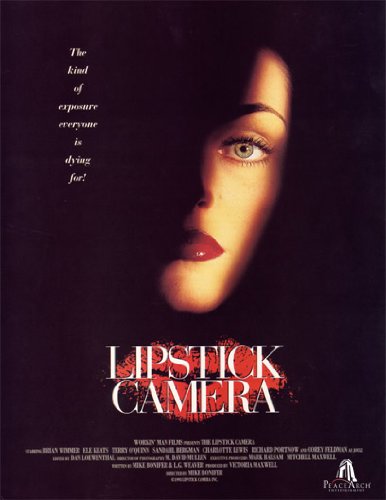
Omy Clark (Ele Keats) is an aspiring journalist who wants to work with the world famous videographer, Flynn Dailey (Brian Wimmer). When she shows up at Flynn’s studio and marvels at how much power the filmed image can wield, Flynn blows her off. While Flynn is busy ignoring Omy, Lily Miller (Sandahl Bergman) drops by and tries to hire Flynn to film her and her husband, Raymond (Terry O’Quinn), making love. When Flynn heads out to the Miller residence, Omy tags along as an uninvited guest. She happens to have a tiny camera that she stole from her best friend, Joule (Corey Feldman, sporting a beard and a beret). Omy plants the camera in Lily’s bedroom. Later, when Flynn, Omy, and Joule all return to the Miller house to retrieve the tiny camera, they discover that Lily has been murdered and that Raymond is a communist war criminal who fled East Germany following the collapse of the Berlin Wall.
Lipstick Camera has an intriguing premise and, even in 1994, it was trying to say something about media manipulation and what is today referred to as being “fake news.” You could say that it was a film that was ahead of its time. You could also say that it’s a complete mess or that it’s an erotic thriller that is neither erotic nor thrilling and you would be just as correct. The main problem with the film is that almost every plot development is set in motion by Omy being either extremely self-absorbed or extremely stupid. When she’s not manipulating Joule (who is not too secretly in love with her), she’s stalking Flynn and carelessly losing an expensive camera that didn’t even belong to her in the first place. And she, of course, is meant to be our hero!
In the 90s, former teen idol Corey Feldman was one of the mainstays of late night Cinemax. Even during his Cinemax years, Feldman would occasionally give a good performance. Lipstick Camera was not one of those occasions. In Lipstick Camera, Feldman wears a beard and a beret and spends a lot of time in a room that’s full of computer monitors and TV screens and that’s the extent of his characterization. He does get a dramatic death scene, in which Joule appears to be determined to stave off the grim reaper by giving a monologue of Shakespearean proportions but otherwise, this is Corey Feldman at his worst. Faring slightly better is Terry O’Quinn, who, at least, gets to deliver his lines in a light German accent.
With its focus on the media and communist war criminals, Lipstick Camera is an example of a direct-to-video film that tried to be about something more than just sex and murder. (Though, this being a DTV film, there is one brief sex scene that takes place in front of a TV that’s showing a video of a fireplace.) Unfortunately, nobody involved seems to know what that something was supposed to be.
Andrew Morenski (Jon Cryer) is a stockbroker in the 1980s. What could be better than handling large amount of money during the decade of excess, right? The only problem is that Andrew and two of his colleagues have gotten involved with Mafia. And now, the Mafia wants them all dead. On the run from both the FBI and the Mob, Andrew tries to change his appearance. He shaves off his beard. He gives himself a bad dye job. No sooner has Andrew traded clothes with a homeless person than he is mistaken for a high school student.
What better place could there be for Andrew to hide than a high school? Despite being 29 years old, Andrew fits right in and soon becomes one of the most popular students at the school. Andrew not only gets a girlfriend (Annabeth Gish) but he is even nominated to run for student body president. As Andrew discovers, the mob may be ruthless but they’re nothing compared to the student council.
Hiding Out may begin like a violent action thriller but it quickly reveals itself to be yet another John Hughes-influenced high school movie. Andrew starts out as a sleazy stockbroker but, by the end of the movie, he has transformed himself into Ferris Bueller. After spending his teenage years as a self-described “short, horny, hopeless dork,” Andrew is finally getting his chance to be cool. (“Well, I’m not short,” Andrew says.) The best scenes are the ones where Andrew occasionally forgets that he’s just supposed to be an apathetic teenager, like when he gets into a fierce argument with his history teacher over whether Richard Nixon should have been forced out of office or when he meets his girlfriend’s father and ends up giving him stock advice. There’s no denying that the plot is frequently dumb and features some massive plot holes but, largely due to Jon Cryer’s likable and energetic performance, Hiding Out is also a breezy and enjoyable movie.
Today saw the release of the red band trailer for the remake of Park Chan-wook’s classic neo-noir Oldboy. This remake by Spike Lee already looks to pay homage (or imitate) the look and feel of Park’s adaptation of the Japanese manga of the same name by Garon Tsuchiya and Nobuaki Mineshigi. We see quick glimpses of the hallway fight scene and a montage of the main character’s 20 years spent locked up in an unknown hotel room.
There’s a great chance for Spike Lee to make this remake his very own by using the Park film as a template but not as gospel. The Park adaptation itself took some liberties with the story told in the manga. Lee and the screenplay by Protosevich could do same to allow this Oldboy a chance to stand on its own instead of becoming another Gus Van Sant Psycho.
Though I wouldn’t mind to see what Lee has in mind as Josh Brolin’s character’s first choice of a meal once getting out.
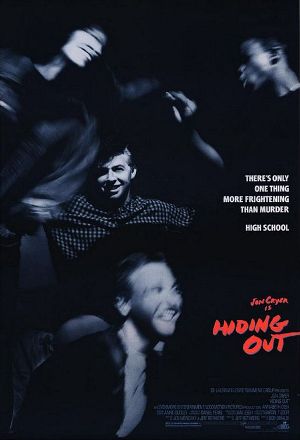 Andrew Morenski (Jon Cryer) is a stockbroker in the 1980s. What could be better than handling large amount of money during the decade of excess, right? The only problem is that Andrew and two of his colleagues have gotten involved with Mafia. And now, the Mafia wants them all dead. On the run from both the FBI and the Mob, Andrew tries to change his appearance. He shaves off his beard. He gives himself a bad dye job. No sooner has Andrew traded clothes with a homeless person than he is mistaken for a high school student.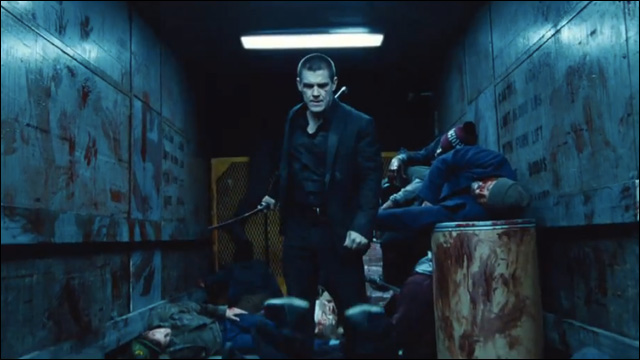
 Through the Shattered Lens