The TSL’s Horror Grindhouse: Bits and Pieces (dir by Leland Thomas)


You’re sitting down and you’re watching the 1985 slasher film Bits and Pieces on YouTube.

“The Bits and Pieces Murderer has struck again!” a television news reporter solemnly intones after a homeless woman finds a dismembered body in a trash bag.

Meanwhile, in a dark bedroom, a phone rings and wakes up Lt. Carter (Brian Burt), a balding man with a mustache.  He answers it and is told that the murderer has struck again.  “SHIT!” he yells….

A few blocks away, a sweaty man named Arthur (S.E. Zygmont) sits in a filthy basement, surrounded by plastic mannequin heads, half-eaten breakfasts, and flies.  He hears a voice telling him to kill and he says, “Yes, mommy…”

Down the street, in a club that appears to be populated largely by elderly woman, the world’s greasiest male strippers perform while a deathless song plays in the background.  Do you want/want my body/do you like it like that....

The next morning, college student Rosie Talbot (Suzanne Snyder) tells her mother about the strip club.  “I was surprised by the wide variety of the routines,” she says as her mom nods along.  Rosie says she never would have had the courage to go to the club if not for her best friend, Tanya (Sheila Lussier).  However, for some reason, Tanya is not answering her phone….

That night, Arthur has flashbacks to being abused by his mother so he kills again.  When the latest body is found, Lt. Carter receives that call.  “SHIT!” Lt. Carter yells….

The next morning, Rosie looks at the newspaper and sees a drawing of the girl who was found in the trash bag and she immediately screams because it looks just like Tanya!  She meets Lt. Carter who asks her if Tanya had any strange sexual proclivities.  “What type of sexist question is that!?” Rosie shouts….

Later, Rosie walks through a strip mall and runs into her friend Jennifer (Tally Chanel).  Rosie tells Jennifer about Tanya but then mentions that she did meet a really handsome policeman and that’s been the only good thing about her day.  “That sounds promising!” Jennifer says….

Meanwhile, Arthur lurks behind them, unnoticed despite his unwashed hair, his skinny black tie, and the look on his face that practically screams, “I am a psychopathic murderer and I’m stalking you.”  A random man bumps into Arthur and Arthur falls to the ground.  “Watch it, apple ass,” the man snaps….

A few hours later and Lt. Carter calls Rosie at home.  Carter tells her that this is a social call.  Would she like to spend the day at the beach with him?  That seems like a great way to forget about all the dead people who are piling up around the city.  “I’m really looking forward to it!” Rosie says….

Meanwhile, Arthur flashes back to his mother’s boyfriend forcing him to put on lipstick….

And so it goes.

There’s actually a pretty charming little story about this film.  It was told by a student who had just completed a film class.  On the last day of class, the professor announced that he was going to show the class an example of how “not to make a good movie.”  The movie that he showed was Bits and Pieces and the professor was the also the film’s director.  (For the record, the director also appears in the film, as the guy who calls Arthur an apple ass.)

Bits and Pieces may be a bad movie but it’s so amazingly inept that it becomes oddly fascinating.  The night scenes were clearly filmed at night, meaning that it’s often next to impossible to see what anyone’s actually doing for at least 10% of the movie.  In the role of Arthur, S.E. Zygmont gives a performance that’s so over-the-top that it bring to mind the “Egyptian feast” scene in Herschell Gordon Lewis’s Blood Feast.  (“You waaaaaaant to plaaaaaay….” Arthur hisses, at one point.)  As well, I don’t know if there’s many other movies out there that mix scenes of brutal murder with scenes of a middle-aged police detective and a young college student happily frolicking on the beach.  I guess brutal murder and intense emotional pain brings out the romantic side in some people.  The fact that the blood and gore looks real while everything else feels fake gives the film a strangely surreal feel.

Bits and Pieces is currently on YouTube, proving that even inept movies will live forever.

Book Review: Night of the Ripper by Robert Bloch


As you might guess from the title, Night of the Ripper is set in London in 1888.  A shadowy figure is haunting the foggy alleyways of Whitechapel, savagely murdering prostitutes, terrifying the public, and leaving the police baffled.  In the taunting letters that he writes to the authorities, he says that his name is Jack.

Jack the Ripper, to be exact.

With both high and low society demanding an end to the murders, can the respected and determined Inspector Abberline discover the true identity of Jack the Ripper and bring his reign of terror to an end?  Helping him out will be an American doctor named Mark Robinson.  Robinson is an expert in a developing science called psychology but will that be enough?

*sigh*

This 1984 novel from Robert Bloch is an unfortunate misfire.  I say that as someone who has spent a countless amount of time reading about the murders and all of the identified suspects.  (Back in March, when Jeff and I were in London, we went on one of those Jack the Ripper walking tours.  It was wonderfully creepy!)  A century after his crimes, Jack the Ripper continues to fascinate us because, not only was he the first widely identified serial killer, but it also appears that he got away with it.  The police may have speculated that Jack was a disgraced lawyer who committed suicide after the murder of Mary Kelly but they never actually presented any evidence to back that up.  Over the last 130 years, countless people have been accused of being Jack the Ripper, everyone from an anonymous Russian doctor to Lewis Carroll to the son of Queen Victoria.  Solely based on the fact that she didn’t care much for his paintings, Patricia Cornwell wrote an entire book arguing that the artist Walter Sickert was the murderer.  In all probability, Jack the Ripper was an anonymous nobody but he’s become such a huge figure in the popular imagination that it’s difficult for many to accept that he was probably just a sexually dysfunctional loser who hated women.  Instead, elaborate conspiracy theories are pursued and films like Murder by Decree and From Hell are produced.

Bloch’s novel features plenty of prominent Victorians, though none of them are identified as suspects.  Oscar Wilde, Joseph Merrick, Conan Doyle, and Robert Lees all show up and then quickly disappear from the story.  When Bloch does eventually reveal the identity of Jack the Ripper, he turns out to be a minor character who was first introduced just a few chapters previously.  It’s a bit of a letdown.

Actually, the whole book is a letdown.  It comes across as if it was written in haste and Bloch’s attempt to give the story some gravitas by opening the final few chapters be describing ancient torture methods doesn’t really have the effect that I presume he was going for.  It’s a disappointment because, after all, this is Robert Bloch that we’re talking about.  Bloch not only wrote Psycho but he also wrote Yours Truly, Jack the Ripper, one of the best short stories ever written about Jack.

Read the short story but avoid the novel.  And if you ever get a chance to take a Jack the Ripper walking tour, do it!

Italian Horror Showcase: Who Saw Her Die (dir by Aldo Lado)


Did you know that today is World James Bond Day?

It certainly is!  Today is the 55th anniversary of Dr. No and therefore, it’s the day when we celebrate all things Bond!

Now, it may seem strange to start a review of a classic giallo like 1972’s Who Saw Her Die? by talking about the James Bond franchise but the two do have something in common.

George Lazenby.

George Lazenby was the Australian model who was selected to replace Sean Connery in the role of 007.  It was Lazenby’s first big break and it also nearly destroyed his career.  Lazenby played the role only once, in On Her Majesty’s Secret Service.  Though many modern critics have come to recognize that film as one of the best installments in the franchise, contemporary critics were far less impressed.  After the disappointing reception of OHMSS, it was announced that Lazenby would be leaving the role and, in Diamonds Are Forever, Connery returned to the role.

What happened?  Why did George Lazenby exit one of the biggest film franchises in the world?  In my research, I’ve come across several different theories.  Some say that Lazenby voluntarily quit because he either wasn’t happy with the direction of the franchise or he didn’t get want to get typecast.  Others say that Lazenby was fired from the role because he was difficult to work with and was viewed as being a diva.  Others have said that Lazenby was viewed as being too stiff of an actor to continue in the role of James Bond.

Obviously, I can’t say whether Lazaneby was difficult to work with or not.  Nor can I even begin to speculate on what he thought of the franchise’s direction.  But, as far as this idea that Lazenby wasn’t a good actor goes … well, all I can say is have you even seen Who Saw Her Die?

As you can probably tell from the trailer, Who Saw Her Die? might as well take place on a totally different planet from the Bond films.  Who Saw Her Die? is an atmospheric and, at times, nightmarish giallo.  A murderer of children — complete with black gloves and a black veil, because this is a giallo film, after all — is stalking Venice.  When the daughter of architect Franco Serpieri (George Lazenby) is murdered, Franco and his ex-wife (Anita Strinberg) search for the murderer and discover a connection to a previous murder that occurred, years before, at a French ski resort.

It’s a dark and disturbing film, perhaps the most emotionally intense giallo film that I’ve ever seen.  A year before Nicolas Roeg did the same thing with Don’t Look Now, director Aldo Lado captures Venice as a city of both great beauty and great decay.  Every scene features the ominous shadow of death hanging over it and, after the murder of Roberta Serpieri (Nicolette Elmi), the viewer is painfully aware that everyone that we see is a potential child murderer.  Is it the artist?  Is it the priest?  Or is it some random passerby?  This film keeps you guessing.

And holding the entire film together is George Lazenby.  At the time, I’m sure that some said it was a step down to go from playing James Bond to appearing in a low-budget Italian thriller but Lazenby gives such an emotional and empathetic performance that it should silence anyone who has ever said that Lazenby was a stiff actor.  It’s not just that Franco wants justice for his daughter.  It’s also that he’s haunted by his own guilt.  Franco abandoned his daughter, leaving her on the streets of Venice, so that he could get laid.  If he had been with there, the killer never would have targeted her.  As played by Lazenby, Franco is motivated not just by rage but also by a need to redeem himself.  He is equally matched by Anita Strindberg, who perfectly captures the raw pain and rage of a mother who has lost her child.  Perhaps the film’s strongest moment features Franco and his ex-wife making love after their daughter’s funeral.  The scenes of their love-making  are intercut with scenes of them crying in bed afterwards, a technique that, a year later, Nicolas Roeg would also use for Don’t Look Now‘s famous sex scene.  Together, Stindberg and Lazenby make Who Saw Her Die? into the rare whodunit where you care as much about the future of the characters as you do the solution to the mystery.

Who Saw Her Die? is an excellent and powerful giallo and proof that George Lazenby was more than just someone who once played James Bond.

George Lazenby (center) in Who Saw Her Die?

Horror Film Review: Unsane (dir by Steven Soderbergh)


Oh, Steven Soderbergh.

Seriously, I know that everyone in the world is always going on about how brilliant he is but I have to admit that I always approach his film with a bit of trepidation.

I mean, yes, Soderbergh can be brilliant.  He’s made some legitimately great films, some of the best that I’ve seen.  The Informer! holds up brilliantly.  So does Traffic and The Girlfriend Experience.  Even a film like Logan Lucky remains amusing on a second viewing.

And yet, at the same time, he can be one of the most annoyingly pretentious directors around.  Contagion was a raging bore and, with Haywire, Soderbergh squandered the potential of Gina Carano.  Che started out strong before turning into a dull Marxist tract.  With the exception of Out of Sight, his friendship with George Clooney always seems to bring out the worst instincts in both men.  And don’t even start with me about the Ocean’s films.  Have you tried to rewatch any of them lately?

Whenever I start a new Soderbergh film, I find myself wondering which Stephen Soderbergh am I going to get.  Am I going to get the Soderbergh who is a crafty storyteller and a good director of actors?  Or am I going to get the pretentious Soderbergh who always seems to think that he’s doing all of us favor by lowering himself to make a genre film?

With Unsane, which was released way back in March, I got both.

Claire Foy plays Sawyer Valentini.  A year ago, Sawyer was working at a hospice when the son of one of her patients became obsessed with and started stalking her.  Fearing for her life and realizing that the police weren’t going to be much help, Sawyer moved away from home and tried to restart her life.

Seeking help for dealing with her trauma, Sawyer makes an appointment with a counselor at the Highland Creek Behavioral Center.  What she doesn’t realize is that Highland Creek is a scam.  The papers that she signed at her appointment allow her therapist to hold her for a 24-hour evaluation.  When Sawyer resists and attempts to call the police, her stay is extended by seven more days.  Every time that Sawyer demands to be released, she’s judged to be a threat to herself and others and more days are added to her stay.  As another patient explains it, Highland Creek basically holds onto its patients until their insurance runs out.

If that wasn’t bad enough, things get worse when Sawyer meets the new orderly (Joshua Leonard).  He says that his name is George Shaw but Sawyer swears that he’s David, the man who has been stalking her.  Of course, no one listens to her when she tries to tell them.  After all, she voluntarily committed herself to Highland Creek….

Unsane received a lot of attention because Soderbergh shot the film in secret with an iPhone.  The end results of Soderbergh’s experiment were mixed.  At its best, this technique gives the film a gritty look and it visually captures the shaky state of Sawyer’s sanity.  At its worse, it’s a distraction that leaves you feeling that you’re supposed to be more impressed by how Soderbergh made the film than by the story being told.

Fortunately, Soderbergh gets two wonderful performances from Claire Foy and the reliably creepy Joshua Leonard.  Foy brings just the right combination of fragility and strength to the role of Sawyer and she gives such an empathetic performance that you get involved in her story even if Soderbergh’s style is often distracting.  As for Leonard, you’ll recognize him as soon as you see him.  He’s a character actor who specializes in playing off-balance people and he’s memorably menacing in this film.

I probably would have liked Unsane more if I didn’t always have the feeling that the movie was mostly made so that Soderbergh could show off.  Whenever I see one of Soderbergh’s “genre” films, I get the feeling that he’s looking down on the material and that my reaction is supposed to be one of, “Soderbergh’s such a genius that he can even make crap like this entertaining!”  (You get the feeling that Soderbergh might be willing to make a B-movie but he’d never be caught dead actually watching one.)  That said, regardless of the motives behind it, Unsane was actually an effective and twisty psychological thriller.

If nothing else, it was better than Haywire….

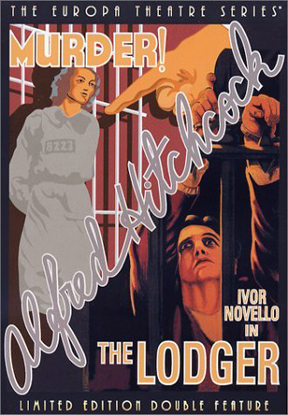
Horror on the Lens: The Lodger (dir by Alfred Hitchcock)


A serial killer known as “The Avenger” is murdering blonde women in London (which, once again, proves that its better to be a redhead).  And while nobody knows the identity of the Avenger, they do know that the enigmatic stranger  (Ivor Novello), who has just recently rented a room at boarding house, happens to fit his description.  They also know that the lodger’s landlord’s daughter happens to be a blonde…

Released in 1927, the silent The Lodger was Alfred Hitchcock’s third film but, according to the director, this was the first true “Hitchcock film.”  Certainly it shows that even at the start of his career, Hitchcock’s famous obsessions were already present — the stranger accused of a crime, the blonde victims, and the link between sex and violence.

Also of note, the credited assistant director — Alma Reville — would become Alma Hitchcock shortly before The Lodger was released.

Book Review: The Killer Inside Me by Jim Thompson


Lou Ford is 29 years-old, the deputy sheriff of a town in Texas that’s so small that Fort Worth is viewed as being the “big city.”  Lou is friendly.  Lou appears to be popular among the citizenry.  Lou has a sweet and wholesome girlfriend named Amy.  Lou speaks in a cheerful clichés and seems to be content with his reputation for being a dependable but slightly slow-witted good ol’ boy.

Of course, we know the truth about Lou.  We know the truth because Lou tells us.  In Jim Thompson’s 1952 novel, The Killer Inside Me, Lou narrates his story to us.  Underneath his friendly exterior, Lou is an ice-cold sociopath who is proud of the fact that he could literally beat someone to death if he wanted to.  He speaks in clichés only because he’s mocking his listeners and even Amy is ultimately expendable to his plans.  Most disturbing of all, Lou knows that he’s a sociopath.  He even reads a book on the subject.  He knows but he doesn’t care.

Lou has plans, most of which involve blackmailing a local construction magnate.  His partner in his blackmail scheme is the local prostitute, Joyce Lakeland.  Lou’s been having an affair with Joyce and, as far as Lou knows, she’s the only person who is aware of his true nature.  Lou’s solution to that problem is to not only frame Joyce for murder but to also beat her into a coma.  While Lou waits for Joyce to die, he’s busy covering his own tracks and committing additional murders.  Through it all, Lou struggles to keep everyone else in the world from catching a glance of the killer inside of him.

The Killer Inside Me may be over 60 years old but it’s still one of the most intense and disturbing portraits of a sociopath ever written.  Secure that he will be forever protected by his status as a member of law enforcement, Lou Ford feels free to pursue every sadistic whim that pops into his head.  Jim Thompson traps us in Ford’s mind but interestingly, the best parts of the book are the parts that suggest that Ford may not be correctly interpreting what’s happening around him.  Towards the end of the book, it starts to become evident that Ford may not have been as clever as he insists that he is and we’re force to consider that we just spent several chapters taking the word of a sociopath.

You may be tempted to watch the 2010 film version instead of reading the book.  Don’t do it!  The book is a hundred times better and the movie totally screwed up the ending.

Italian Horror Spotlight: Cannibal Apocalypse (dir by Antonio Margheriti)


The 1980 film Cannibal Apocalypse begins in Vietnam.

Sgt. Norman Hopper (John Saxon) leads his troops into a Vietnamese village.  A dog approaches.  One of the soldiers starts to pet it.

“Watch it, asshole!” Hopper shouts.

Too late.  The dog explodes and takes the soldier with him.  That’s just the first of many explosive events in the film.  Minutes after the dog blows up, Hopper discovers two American soldiers being held prisoner in an underground cage.  One of them is named Charles Bukowski (yes, I know) and he’s played by the great Italian actor, Giovanni Lombardo Radice.  The other one is named Tommy (Tony King).

“Hey,” Hopper says, “I know these guys!  They’re from my hometown!”  He reaches down to help them out of the cage.  Charlie and Tommy promptly take a bite out of his arm….

Suddenly, Norman Hopper wakes up in bed, next to his wife.  He’s been having another nightmare.  In the years since returning from Vietnam, Hopper has married, started a family, and bought a nice house in Atlanta.  He seems to have his life together but he’s still haunted by what happened that day in Vietnam.

Charlie and Tommy are also still haunted.  Unlike Hopper, they haven’t been able to get their lives together.  Charlie’s a drifter and, when he shows up in Atlanta and calls Hopper at his home, Hopper isn’t particularly happy to hear from him.  After talking to Hopper, Charlie goes to a movie where he watches a couple make out in front of him.  Soon, Charlie is trying to eat the couple while panicked movie lovers flee the theater.  (“What type of cinema is this!?” one man cries out.)

Forced to eat human flesh while being held prisoner, Charlie and Tommy are both cannibals today.  However, as the film makes clear, cannibalism travels like a virus.  Anyone who gets bitten by Charlie and Tommy becomes a cannibal themselves.  That includes Hopper.  For years, Hopper has managed to resist the craving but, as soon as he gets that call from Bukowski, he finds himself tempted to take a bite out of his flirtatious neighbor.

With the authorities determined to eradicate not only the cannibalism plague but also those infected, Hopper finds himself forced to go on the run with Charlie, Tommy, and an infected doctor (Elizabeth Turner).  Eventually, everyone ends up in the sewers of Atlanta where people are set on fire, one unfortunate is literally chopped in half by a shotgun blast, and the rats turn out to be just as hungry as the humans….

And here’s the thing.  You’re probably thinking that this sounds like a really bad movie but it’s actually kind of brilliant.  I may love Italian horror but, for the most part, I’m not a fan of cannibal movies.  But, thanks to the performances and the energetic direction of Antonio Margheriti, Cannibal Apocalypse transcends the limits of the cannibal genre.   Obviously, gorehounds will find what they’re looking for with this movie but far more interesting is Cannibal Apocalypse‘s suggestion that war (represented by the cannibalism that Hopper, Tommy, and Bukowski bring back from Vietnam) is an infectious virus.  Once someone gets bitten, it doesn’t matter who they are or what type of life that they’ve led.  The infection cannot be escaped.

In an interview that John Saxon gave for the film’s DVD release, Saxon said that making this film actually left him feeling suicidal.  It wasn’t just the fact that the film itself presents a rather dark view of humanity.  It’s because it upset him to know that there was an audience that was as rabid for violence as Norman Hopper is for human flesh.  Saxon said that he had never seen the film and, in the interview, he had to be reminded what happened to Norman Hopper at the end of the film.  It’s a bit of a shame because Saxon gives a brilliant performance as Norman Hopper.  Saxon plays Hopper as being a sad man, a man who knows that he can’t escape his fate as much as he wants to.  There’s a tragic dignity to Saxon’s performance, one that gives this cannibal film unexpected depth.

Also giving great performances are Giovanni Lombardo Radice and Tony King.  As played by Radice, Charlie is a living casualty of war, a man who served his country and came home to be forgotten.  You understand Charlie’s anger and his resentment.  (When Bukowski finds himself in a stand-off with the police, one the cops explains away Bukowski’s actions by dismissively saying, “He’s a Vietnam vet,” a line of dialogue that not only explains Charlie’s anger at America but also calls out America for not taking care of its veterans,)  Meanwhile, Tony King gets one of the best scenes in the film when, seeing Hopper for the first time in years, he grins at him and yells, “Remember these choppers!?”

As strange as it may seem to say about a film called Cannibal Apocalypse, this is a film that will bring tears to your eyes.  It’s one of the classics of Italian horror.

Horror Film Review: A Quiet Place (dir by John Krasinski)


As a film viewer, I am sometimes guilty of taking sound for granted.

That was the first thought that I had while watching A Quiet Place, a horror film that came out earlier this year.  The film takes place in the near future, after the Earth has been invaded by aliens who track their prey by sound.  Lee Abbott (John Krasinski, who also directed), his wife Evelyn (Emily Blunt), and their children (including Millicent Simmonds) have learned that the only way to survive is to do everything in silence.  They communicate with sign lanague.  They walk carefully, knowing that even the sound of a footstep could lead to doom.

If ever the old cliché about echoing silence was true, it’s true while watching A Quiet Place.  Because Krasinski starts the film by showing us what happens when one forgets to be silent around the aliens, we know what will happen if Lee or his children make the slightest amount of noise and what’s interesting is that those of us watching find ourselves not making any noise as well.  Krasinski, Blunt, and Simmonds give such effective performances that you’re drawn into their story.  You don’t want them to get killed by the invaders so you make sure to remain quiet yourself.

That doesn’t mean that A Quiet Place is a silent film, of course.  Since Lee spends the majority of the film in the woods with his children, there’s the occasional sounds of nature.  And towards the end of the film, when someone finally speaks, it’s jarring both because we’ve gotten used to the silence and because we know what’s going to happen next.

My second thought while watching A Quiet Place was “Who knew John Krasinski was capable of this?”  I’ve always liked Krasinski as an actor but his previous films as a director leaned a bit towards the pretentious side.  There was nothing about his previous films that suggested Krasinski had it in him to direct one of the most creative and tension-filled horror movies of the year.  Krasinski proves himself to be an unexpected master of suspense.

But it’s more than horror that makes A Quiet Place effective.  A Quiet Place is a film about family.  Despite the circumstances, Lee and Evelyn have managed to create a safe household for their children.  It may be a silent household but it’s also a loving household and, with Evelyn being pregnant, it’s about to get bigger.  Blunt and Krasinski are married in real life and their chemistry is evident every time that they exchange a glance.  The film celebrates not only the love of family but the sacrifices that parents make for their children.  It’s probably the most pro-family of the year.

A Quiet Place is a short and efficient film.  At a time when the average film usually clocks over two hours, A Quiet Place is only 90 minutes long but it achieves so much in those 90 minutes!  A Quiet Place is a powerful movie, one that will make you appreciate both families and the noise that they make.

Horror on the Lens: Cast a Deadly Spell (dir by Martin Campbell)


For today’s horror on the lens, we have a real treat!

Produced for HBO in 1991, Cast a Deadly Spell takes place in an alternate 1948, where magic is used regularly and zombies are used as slave labor but the streets of Los Angeles are just as mean as they’ve ever been.  Fred Ward gives a fantastic performance as Harry Phillip Lovecraft, a hard-boiled P.I. who refuses to use magic on general principle.  Lovecraft, however, may have no choice when he finds himself embroiled in a case involving a magic book, Julianne Moore, and Clancy Brown!

Enjoy!

(If you want to know more about the film, check out this review that I wrote for Horror Critic.)

Horror On TV: One Step Beyond 2.1 “Delusion” (dir by John Newland)


On tonight’s episode of One Step Beyond.

A young woman (Suzanne Pleshette) desperately needs a blood transfusion.  Fortunately, the police have managed to track down one of the only people to share her blood type, an accountant named Harold Stern (Norman Lloyd).  Harold seems like a nice, rather mild-mannered guy and he has a long history of donating blood.  However, when the police approach him, Harold refuses to donate.

“What type of crumb are you!?” the police demand.

Harold explains that, whenever he gives someone blood, he develops a psychic connection with that person.  He can see their future.  And that’s simply a burden that he can no longer shoulder….

This episode of One Step Beyond originally aired on September 15th, 1959.  Norman Lloyd, who plays Harold, got his start as a member of Orson Welles’s Mercury Theater and he also played the villain in Alfred Hitchcock’s Saboteur.  (Speaking of Hitchcock, Suzanne Pleshette played the doomed school teacher in The Birds.)  When Lloyd appeared in this episode of One Step Beyond, he was 44 years old.

Today, Norman Lloyd is 103 years old and guess what?  He’s still acting!  He had a role in Trainwreck and still occasionally appears on television.

Enjoy!