For today’s horror on the lens, we have a 1974 made-for-TV movie about what happens when a family comes down from the mountains and discovers that everyone’s disappeared.
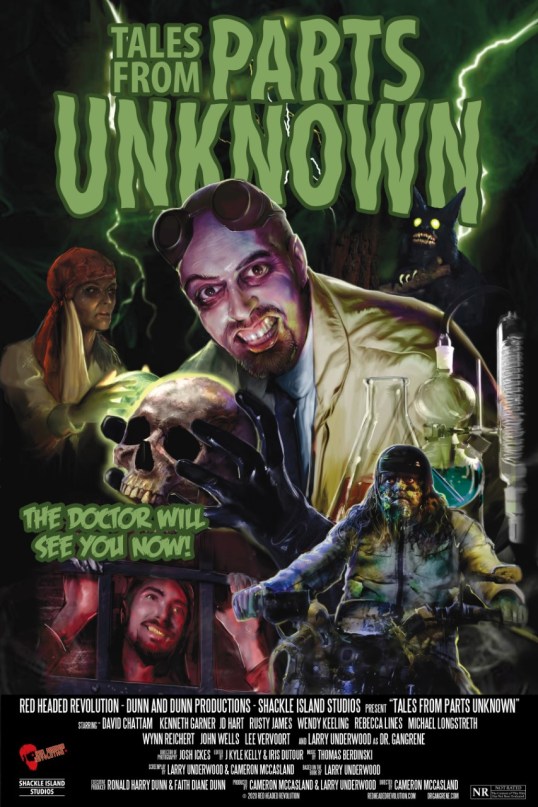
On Shackle Island, there’s a somewhat dilapidated-looking mansion. And inside that mansion, there’s a friendly and talkative scientist by the name of Dr. Gangrene (played by Larry Underwood). If you need shelter from the rain, Dr. Gangrene will be more than happy to accommodate you. Of course, if you do accept Dr. Gangrene’s hospitality, you’ll have to visit the lab and take a look at the doctor’s truly impressive collection of brains. For every brain, there’s a different story. In the new horror anthology film, Tales From Parts Unknown, Dr. Gangrene introduces four of those stories.
The first brain, Tailypo, tells the story of a hunter and his dog and what happens when their prey escapes from them but loses its tail in the process. Let’s just say that some creatures don’t take well to losing their tails and that, if you ever do happen to come across a tail out in the middle of the wilderness, it’s probably best to just leave it where you found it. I originally reviewed Tailypo back in 2015 and it was interesting to get a chance to rewatch it. (From my review:Tailypo is the first in a series of short films that McCasland is planning to put together for an anthology film that I hope I will someday get a chance to review.) Tailypo holds up well to a second viewing. Not only does David Chattam give a good and sympathetic performance as the Hunter but Tailypo really does capture the feel of being the type of story that someone would tell while sitting in front of a campfire.
The second story was Retrieval Service, which told the tale of two gravediggers who eventually make the mistake of trying to rob the dead. Retrieval Service had a nice Southern gothic feel to it. It was set (and filmed) in Tennessee and it really captured the unique feel of the region. The two grave diggers (played by Kenneth Garner and J.D. Hart) got some good lines and had some enjoyably surreal nightmares on their way to digging up graves in search of treasure. Don’t disturb the dead, the story tells us, no matter how much jewelry they’re wearing.
For The Prisoner of Perdition, we take a trip back to the old west. In the small town of Perdition, an outlaw named Thorne (John Wells) waits in jail. An angry mob wants to play jury and executioner but Marshal Tom Clanton (Rusty James) is determined to keep him safe. However, Thorne has plans of his own and, as becomes apparent throughout the night, he’s also very good at manipulating people. In fact, he’s a little too good at it. It’s almost as if he’s not quite human….
The Prisoner of Perdition may not be the most historically accurate western ever made but that’s actually accounts for a good deal of the segment’s charm. It’s not taking place in the real old west as much as it’s take place in the public’s popular imagination of what the old west was like. As a result, you’ve got panicky townspeople, women posing on the saloon’s balcony, a tough-talking marshal, and a coldly manipulative prisoner. The Prisoner of Perdition looks like it was an enjoyable segment to film, which makes it an enjoyable segment to watch. John Wells does a good job as the charming but evil Thorne.
The Prisoner of Perdition is followed by my favorite story, The Rider. The Rider is about a greedy writer (Wendy Keeling), her henpecked husband (Wynn Reichert), and the Biker (Lee Vervoort) that the writer accidentally runs over while she’s trying to drive and yell at her husband at the same time. In its way, The Rider provides a nice tail-end to Tailypo, though the greedy writer is a far less sympathetic character than the unfortunate hunter. Like Tailypo, The Rider has a lot of atmosphere and an appropriately dark conclusion.
Tales From Parts Unknown is a horror anthology that has an enjoyably retro feel to it. Larry Underwood (a.k.a. Dr Gangrene) is a veteran horror host and he’s a lot of fun to watch as he holds up each brain to the camera and as he explains why the viewer can’t leave the laboratory just yet. Tales From Parts Unknown is an entertaining film, perfect for the Halloween season.
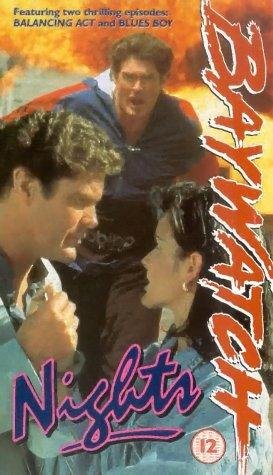
In tonight’s episode of televised horror, it’s David Hasselhoff vs. a mermaid. Basically, the mermaid wants to procreate but it also wants to kill and that leads to all sorts of conflicts and….
Well, listen, this episode is pretty silly. To be honest, they’re all pretty silly. But that’s kind of the fun of it all, isn’t it?
This episode of Baywatch Nights originally aired on October 6th, 1996.
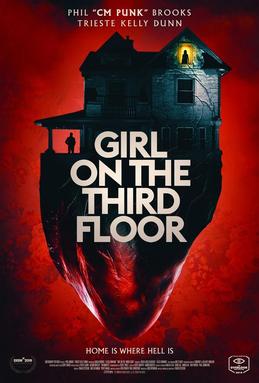
The 2019 film, Girl on the Third Floor, tells the story of Dan Koch (Phil Brooks), a former criminal who says that he’s trying to turn his life around. Phil is married to Liz (Trieste Kelly Dunn) and they’ve not only got a baby on the way, they’ve also got a new house! It’s a surprisingly big house and you have to kind of wonder why no one else has bought it. Maybe it’s because there’s an Episcopalian church right across the street. That definitely would have kept me from moving in.
Still, despite the presence of Anglicans in the neighborhood, Phil moves into the house. He wants to get the house ready before his pregnant wife comes out to join him. Helping Phil out are his dog Cooper and his best friend, Milo (Travis Delgado). Ellie (Karen Woditsch), the rather judgmental pastor who lives in the church, also comes by and visits.
Of course, any old house is going to have its issues. There’s the mysterious sludge that pours out of the walls. There’s the mysterious marbles that keep rolling through the house. There’s the mysterious bumps in the nights and the fact that Cooper seems to be weary of the new home. Dogs can always pick up on evil. Of course, along with being a bit of an idiot, Don is too busy banging his new neighbor, Sarah (Sarah Brooks), to notice.
Don, if you haven’t guessed, is a bit of a jerk. Even though he swears that he feels guilty for cheating on his wife, he still does it. When his friends mysteriously disappear while helping out around the house, Don doesn’t make much of an effort to find them. When Don thinks that there’s a chance his wife might find out what’s been going on at the house, he goes to extreme methods to try to cover everything up. Don thinks that he can control every situation but Sarah and the House both appear to be intent to prove him wrong.
Girl on the Third Floor is a deliberately-paced …. well, I guess you’d call it a haunted house story. I was tempted to call it a ghost story but the film is frequently ambiguous as to whether or not the house is haunted by ghosts or by something far worse. Eventually, we do learn a bit about the house’s past but Girl on the Third Floor is at its best when it leaves you wondering what exactly is going on. Not all questions have to be answered, especially not in a horror movie. In fact, the key to most successful horror tales is the knowledge that some questions will never be answered, no matter how effort we put in to searching for a solution.
Phil Brooks, who wrestled under the name CM Punk, is well-cast as the frequently brutish Don. Brooks convinces us that he does want to be a better person while also showing that he doesn’t really have the inner strength necessary to do so. Trieste Kelly Dunn also does a good job as Don’s wife, who seems like she really does deserve better. Not surprisingly, the film is stolen by Sarah Brooks as the mysterious neighbor. Not only does she get to wear all the best clothes but she also gets all of the best lines and her confidence that Don will fail whatever test she puts before him is both chilling and understandable.
Despite being a little bit slow-paced (especially early on in the film), Girl on the Third Floor has enough atmosphere to hold one’s attention and the final third of the film is enjoyably surreal. Girl on the Third Floor is currently on Netflix. Watch it the next time you’re wondering whether or not to start a home improvement project.
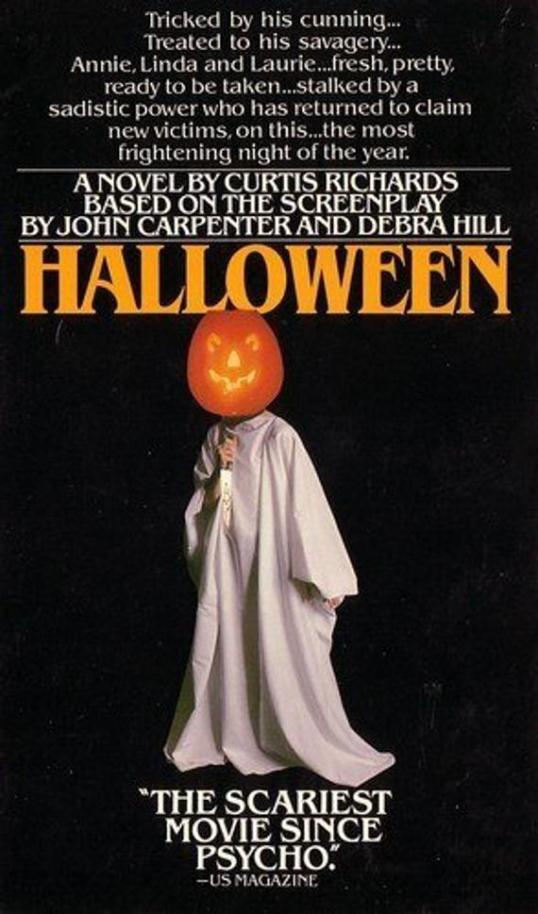
Based on John Carpenter and Debra Hill’s original script for Halloween (which is a fancy of saying that it features scenes that were either not shot or left on the cutting room floor), Curtis Richards’s novelization of Halloween was published in 1979 and it went out of print in the 80s. It’s subsequently become popular with both horror fans and paperback collectors. On Amazon, you can order it used for $123.
Of course, if you’re lucky like me, your cousin might have a copy and he might be willing to loan it to you for the weekend. Boom!
The novelization of Halloween tells the same basic story as the film, just with a few important differences. For instance, the novelization doesn’t open in Haddonfield, Illinois. Instead, it opens in Northern Ireland, at the “dawn of the Celtic race.” It tells about how a disfigured young man named Enda went mad and killed the king’s daughter on the eve of Samhain. Enda’s murderous spirit was cursed to wander the Earth.
Jump forward several centuries and we’re in Haddonfield! However, instead of opening with Michael murdering his sister, the novel spends a bit of time telling us about Michael’s family. Much like Rob Zombie’s version of the story, the novelization of Halloween spends almost as much time detailing Michael’s background as it does “the night he came home.” His grandmother fears that little Michael Myers might be dangerous. Michael says that he hears voices, telling him to hurt people. Could that be the voice of Edna? It’s also revealed that Michael’s grandfather was a murderer who also heard voices, suggesting that the entire family is cursed.
Along with more information about Michael’s background, we find out more about Michael’s time at Smith’s Grove Sanitarium. We learn more about Dr. Loomis, as well. We discover that Loomis is married and that his son thinks that Loomis is kind of lame. (Reportedly, during filming, Donald Pleasence specifically objected to a scene that would have established Loomis as a family man because he felt that Michael should be Loomis’s sole obsession.) Michael, who actually does a talk a bit in the early part of the book, comes to control his wing of the sanitarium, largely because everyone is scared to death of him. The book does a good job of showing how Loomis came to be convinced that not only was there no way to get through to Michael but that he was also pure evil. Basically, if you’re a Sam Loomis fan, this is the book to read.
Once Michael escapes, the film pretty much settles into the story that we all know from the original film. Laurie Strode and her friends are stalked by Michael on Halloween night while Loomis desperately searches for him. The book does a good job of getting into Laurie’s mind while she’s being pursued by Michael. If you’ve ever wondered why Laurie kept doing illogical things while being pursued by Michael, this book makes clear that she was in a state of shock. Trust me — if you were being chased by Michael, you’d probably be so scared that you would make a lot of the same mistakes. I know I would.
The Halloween novelization is surprisingly well-written. Curtis Richards does a good job of bringing the characters to life, beyond just transcribing their dialogue. He gets into the heads of Michael, Loomis, and Laurie and forces us to see the story through their eyes. That said, the most interesting thing about the book is the chance to see what Carpenter’s original vision of the film would have looked like. Whereas the finished film is a masterpiece of editing that keeps the focus almost entirely on Laurie being stalked, the book is just as concerned with what makes Michael tick.
It’s interesting to contrast why both the film and the book work. The film works because Michael is largely motiveless. He’s a force of malevolence and you can understand why Carpenter cut the scenes that went into Michael’s time at Smith’s Grove. Those scenes aren’t necessary because all of that information is supplied to as visually and, by cutting the store down to only its absolute essentials, the film duplicated Michael’s relentless pace. In the book, of course, you don’t have the benefit of Carpenter’s visuals. The book would be pretty boring if it was just Michael showing up and killing people. Instead, the book works because Richards takes the time to get into the heads of his characters and make them more than just killer and victim. What wouldn’t have worked for the film works wonderfully for the book. And vice versa.
Anyway, this novelization of Halloween is not easy to find but if you’re a horror fan, it’s worth the effort.
As a reviewer, I think it’s important for me to be open about my biases. Especially in October, I think it’s important for you to know that I love horror movies in general and that I especially tend to like low-budget horror films. You should also know that I tend to value positivity over negativity and, as a result, I’m always going to spend more time on what I like about a movie than on what I don’t like. I have no interest in joining in with the parade of bitterness that’s consumed so many otherwise intelligent people.
You should also know that I take a lot of pride in my Irish heritage. Whenever I get stressed out here in America, I remember visiting Argdlass two years ago. It calms me down. It makes me happy. I hope to be able to visit again soon. As a result, I’m naturally biased towards Irish films. That’s particularly true now, when I find myself often thinking about what life was like before the start of this year.
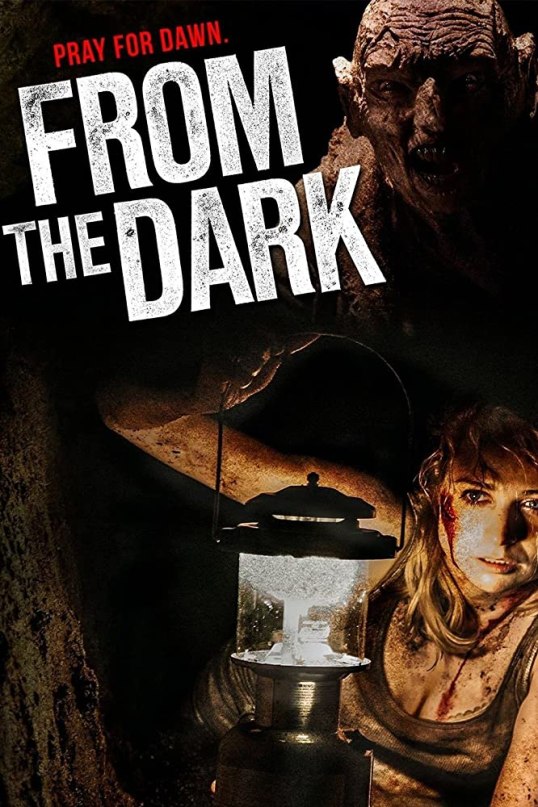
Needless to say, with those biases in mind, I was probably the ideal audience from From The Dark.
From The Dark open with a man named Mark (Stephen Cromwell) and a woman named Sarah (Niamh Algar) in a car. As I watched them drive across Ireland, I shouted, “I’ve done that!” When Mark and Sarah got lost while trying to navigate the Irish roads, I said, “I’ve done that.” When the car ends up getting stuck in mud, I said, “Yep, I’ve done that.” Finally, when Mark and Sarah approached a scary-looking farmhouse in the middle of the night while looking for help, I said, “Oh, Hell no!”
Once you’ve seen enough horror movies, you know that it’s always a mistake to approach a farmhouse in the middle of the night. Farmhouses are always full of either zombies or inbred rednecks or blood farmers. Stay away from the farmhouses! That’s what Sarah and Mark should have done because they soon find themselves being chased and attacked by a monster who seems to thrive on the darkness of the night….
Albeit uneven, From The Dark has its moments. The low-budget is obvious in almost every shot but the film makes good use of that farmhouse location and, even more importantly, it keeps us guessing about the monster that’s living there. Wisely, the film keeps the monster off-camera for as much as possible, leaving both the audience and Mark and Sarah to wonder where in the darkness it could be hiding. I’ve always felt that horror is more effective on a low-budget than a big budget and From The Dark shows why. The more expensive a monster is, the more obligated the filmmaker is going to be to show it off. Low-budget monsters, though, are usually kept off-camera for the majority of the film and therefore, they’re much more intimidating. There’s nothing scarier than what the human imagination can come up with and nothing sparks one’s imagination quicker than trying to figure out what might be hiding in the dark.
From the Dark does have some pacing issues. As much as I enjoyed the footage of the Irish countryside, the scenes of Sarah and Mark driving dragged a bit. As well, Sarah and Mark aren’t always the most sympathetic of protagonists. Usually, I don’t mind it when characters in horror films do stupid things because, quite frankly, we all do stupid things. But when there’s only two humans in the entire film, it’s a lot easier to dwell on the dumb things that they did that led to them getting in their dire situation in the first place.
Taking all of that into consideration, From the Dark may be imperfect but, when it works, it’s effectively creepy. Plus, it’s Irish!
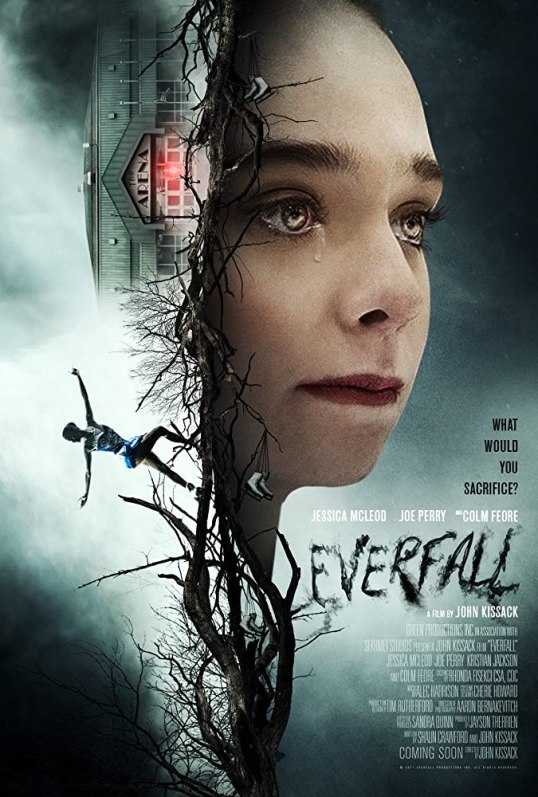
The 2018 horror film, Everfall, tells the story of Eva and Daniel.
Eva Saint (Jessica McLeod) is a figure skater who, at one time, had a bright future.
Daniel (Joe Perry) is the world’s worst boyfriend.
Daniel is also the reason why Eva’s skating career get derailed. Daniel hosts his own “extreme sports YouTube channel,” which he calls “The Daniel Show.” Daniel is the type who tends to say things like, “This is going to be a totally new direction for the Daniel Show!” One of Daniel’s new directions was to convince his girlfriend to stand on a ledge. Unfortunately, while Daniel was showing off for the camera, Eva fell off that ledge and broke her leg.
A year later, Eva’s leg is scarred but healed. She wants to get back into the world of competitive figure skating but she’s struggling. She’s no longer as confident in herself as she once was. None of her old partners want to work with her anymore. Even worse, she’s still going out with Daniel. I’m not sure why. If I was dating a guy who was responsible for me falling off a roof, I’d probably break up with him as soon as I regained consciousness.
Eva’s coach gives her one last option. She can go to an obscure little town called Everfall, where they have an annual skating competition. Eva’s never heard of it before but she knows that she has to do something so she agrees. And again, for some reason, she takes Daniel and Daniel’s cameraman, Jordan (Kristian Wang), with her.
The competition at Everfall turns out to be even worse than Eva was expecting. First off, the ice skating rink appears to be on the verge of collapse. Secondly, there don’t seem to be another other skaters around. The mysterious Mrs. Redgrave (Catherine Gell) sends Eva to Dressing Room #5. Dressing Room #5 turns out to be a not very pleasant place to be….
Everfall is an effectively creepy film, one that makes good use of its eerie location and which features an excellent performance from Jessica McLeod. Everfall is also a film that never really makes much sense but, in this case, that’s acceptable. When you’re dealing with a skating rink that may or may not be haunted by several ghosts, you can get away with a little incoherence. The film is full of surreal moments and disturbing imagery. Characters appear to die and then, just as quickly, they show back up again. It’s a film that was obviously influenced by Kubrick’s The Shining — particularly the final few scenes — but it also manages to carve out its own rather odd identity.
While Eva, Daniel, and Jordan are wandering around the skating rink from Hell, there’s also wildfire raging around the town of Everfall. Amazingly enough, Eva’s father is a fireman but he refuses to acknowledge that Eva’s in any sort of danger. Eva’s parents are played by Jayson Therrien and Julie Orton. They bicker through the entire film and, to be honest, I could have done without the majority of their scenes. The scenes between Therrien and Orton wreck havoc on the film’s narrative momentum. Whenever you’re really starting to get into whatever’s happening to Daniel, Eva, and Jordan, Eva’s parents pop up and start arguing with each other. The main theme of these scenes is that Eva’s dad isn’t willing to rescue her from a fire despite the fact that he is a fireman and that’s literally his job. You really can’t help but feel sorry for Eva. She never had a chance.
Everfall has its flaws. This is one of those films where the camera is always moving, even when it should be sitting still. That said, there’s enough strange details and out-there plot twists to make it an effective head trip and it ends on a nicely surreal note. That’s always a good thing.
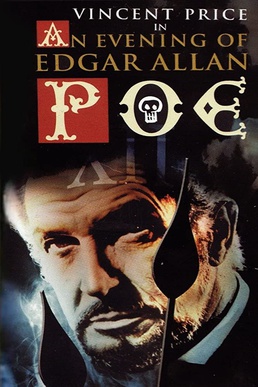
What better way to get ready for Halloween than spending a little time with Vincent Price?
In this 1970 film, Price recites four of Poe’s works in front of a live studio audience. Price performs as only Price could, proving once again that he was not only an iconic figure in the history of horror but an iconic actor as well.
For today’s music video of the day, we have a cover (by Kevin Bias) of the main title theme from Stanley Kubrick’s The Shining. As I’ve often said on this site, The Shining is one of my favorite horror movies and I think it has one of the best scores to be found in a non-Italian horror film.
This is taken from Bias’s own description of the video on YouTube:
Written by Wendy Carlos & Rachel Elkind Cover of the original from the opening credits of Stanley Kubrick’s 1980 film ‘The Shining’. Equipment: Alesis Ion, Ensoniq Sq2, OP-X PRO II emulation software
I pre-recorded my own sound effects and ambience which are not reflected in the visuals in the video. All of the visual takes seen in the video are the takes heard in the audio and mixed using Sonar X2.
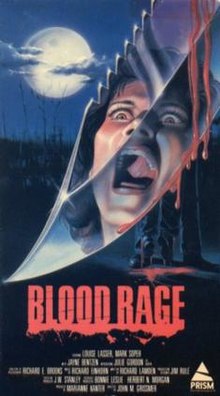
Filmed in 1983 but not released until 1987, Blood Rage tells the heart-warming story of two twin brothers, Todd and Terry Simmons (both played by Mark Soper).
In 1974, young Todd and Terry go to a drive-in movie with their mother, Maddy (Louise Lasser) and Maddy’s boyfriend. (It’s suggested that Maddy has had many boyfriends over the years.) The twins fall asleep in the back of the station wagon but, when they wake up, they discover that Maddy is making out with her date. This inspires Terry to sneak out of the car, grab a nearby hatchet, and walk from car to car. When he comes across another couple making love, he hacks the man to death and then watches as the man’s naked date runs into the night. Realizing that he’s about to get in a lot of trouble, Terry hands the hatchet to Todd and then rubs blood on his brother’s face. As a result, everyone assumes that Todd is the murderer.
Nine years later, Terry is living with Maddy at a secluded apartment complex called Shadow Woods. Todd, on the other hand, is stuck in an asylum and not very happy about it. On Thanksgiving, Todd escapes from the asylum and heads off to Shadow Woods.
Here’s where things get strange. Everyone assumes that Todd is heading to Shadow Woods to get revenge. That’s certainly what I assumed when he first escaped. But it turns out that Todd, despite all he’s been through, is still a gentle soul. He just wants to be free and to see his family. However, when Terry learns that Todd has escaped, he sees it as a perfect excuse to go on another killing spree.
So, while Todd is sneaking around the complex, Terry is killing Maddy’s latest boyfriend and all of their neighbors. Everyone who sees Todd asumes that he’s Terry and almost everyone who sees Terry assumes that he’s Todd. It’s an intriguing premise that has a lot of potential. Unfortunately, Blood Rage never gets as much mileage out of the idea as it should. It’s not until the last few minutes of the film that it really digs into just how messed up Maddy and her sons really are.
Every by the standards of an 80s slasher film, Blood Rage is brutal. Hands are hacked off. Heads are separated from necks. One unfortunate victim is chopped in half and spends what seems like several minutes feeling around for the lower half of her body. As opposed to emotionless killing machines like Jason Voorhees and Michael Myers, Terry Simmons seems to get real kick out of what he’s doing, which makes him all the more disturbing. Interestingly, it’s not just the killing that Terry enjoys. Terry also seems to enjoy knowing that he’s specifically going to get Todd in even more trouble. He’s the ultimate bad sibling.
Mark Soper plays both Todd and Terry and he does a good enough job in the role that you can tell the two twins apart. Occasionally, Soper does occasionally go a bit overboard as Terry but then again, most murderers aren’t known for their subtle personalities. The film is pretty much stolen by Louise Lasser, who gives a memorably eccentric performance as Maddy who is, in her own way, just as unstable as her sons. Some of the performances from the surprisingly large number of victims are inconsistent but, in the end, everyone dies convincingly and that’s what really matters in a film like this.
As I mentioned at the start of this review, Blood Rage was filmed in 1983 and sat on the shelf for four years. Apparently, several different versions of the film have been released. There’s a version called Nightmare at Shadow Woods that has almost all of the gore cut out. The version that’s on Shudder is apparently uncut but it also opens with a title card that reads Slasher. Blood Rage is a bit of a generic title but it is appropriate. There is a lot of blood and there’s a lot of rage.
In the end, Blood Rage is an effective, if uneven, slasher movie. Though the budget was undeniably low, the gore effects are convincing and the whole twin subplot allows from some unexpected moments. The low-budget look of the film actually works to Blood Rage‘s advantage. The grainy images occasionally give the film a rather dream-like feel. At its best, it looks like a filmed nightmare. At its worst, it just looks like another low-budget slasher flick from Florida.
Blood Rage may not be a masterpiece but it is a good film for the Halloween (and, given the film’s set-up, Thanksgiving) seasons.