International Horror Review: Robo Vampire (dir by Godfrey Ho)


Oh, hey, Robo Vampire!

Yeah, Robo Vampire.

Robo.  Vampire.

It gets less exciting every time you say or think it.  The first time you see a title like Robo Vampire, you’re all excited but then you think about it and you realize that there’s no reason for a robot to turn into a vampire because robots don’t need blood.  And the idea of a vampire becoming a robot …. I mean, how the Hell would that even work?

I watched Robo Vampire and I’m still not really sure how it all worked.  This film came out in 1988 and it was directed by Godfrey Ho, who is apparently known in some circles as being the Ed Wood of Hong Kong action cinema.  The film …. listen, I watched this thing and I don’t have the slightest idea what was actually happening for the majority of it.  The friends with whom I watched the film explained to me that Robo Vampire was actually a compilation film, compiled of scenes that were shot for several different Godfrey Ho movies.  That would explain why there was next to no continuity for scene to scene and why the plot was the most random hodgepodge of concepts that I’ve ever some across.

What little plot that there was in this mess dealt with Tom Wilde, a narcotics cop who gets blown away in the line of duty.  However, Tom’s superiors decided that they can salvage him by turning him into a robot with no memories of his past.  Before you can say “Wait a minute, what about Robocop?,” that’s exactly what they do.  Tom is now a cyborg.  For his first mission, he’s sent to the Golden Triangle to take down a drug lord who is holding another agent hostage.  

So far, we’ve got a robot.  But where are the vampires?

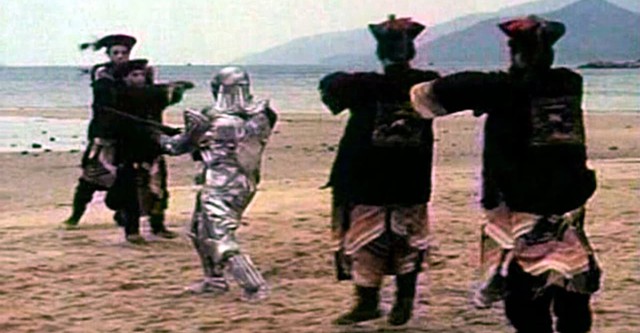
The vampires show up once the drug lord realizes that he’s going to need some help defeating a robot.  So, he has his people cast come magic and soon, there’s a bunch of zombie/vampires hopping around.  And when I say hopping, I mean that they literally hop around.  I noticed the same thing about the zombies in Kung Fu Zombie.  In the defense of that film, though, Kung Fu Zombie was kind of meant to be a comedy.  Robo Vampire seems to take itself pretty seriously.  (Watching the film, I thought I recognized a few shots that had apparently been lifted from Kung Fu Zombie but I haven’t been able to independently verify whether that’s really the case.  Some day, when I think I can handle the punishment, I’ll sit down and watch Kung Fu Zombie and then Robo Vampire and compare the two for myself.)

Eventually, Tom gets around to launching his rescue operation.  There’s a lot of shooting.  There’s a lot of scenes of Robot Tom wandering around robotically.  There’s a lot of hopping vampires or zombies or whatever they’re supposed to be.  But, as far as I can tell, there were no robot vampires.  Now, I say as far as I can tell because the film was edited so haphazardly that it wouldn’t surprise me to discover that there was like a hundred different versions of Robo Vampire floating around.  Who knows what have happened in the director’s cut?

Anyway, Robo Vampire is petty much impossible to follow and the film does itself no favors by inviting you to compare it to the original Robocop.  That said, the hopping vampires were kind of cute and this is truly a one of a kind movie.  You should watch it just so you can say that you did.
Horror Film Review: Mr. Sardonicus (dir by William Castle)


The next time that someone gives me a hard time for not being compassionate enough (and believe it or not, it does occasionally happen now that 90% of twitter has gone down the woke rabbit hole), I’m going to point out that I voted to show mercy to Mr. Sardonicus.

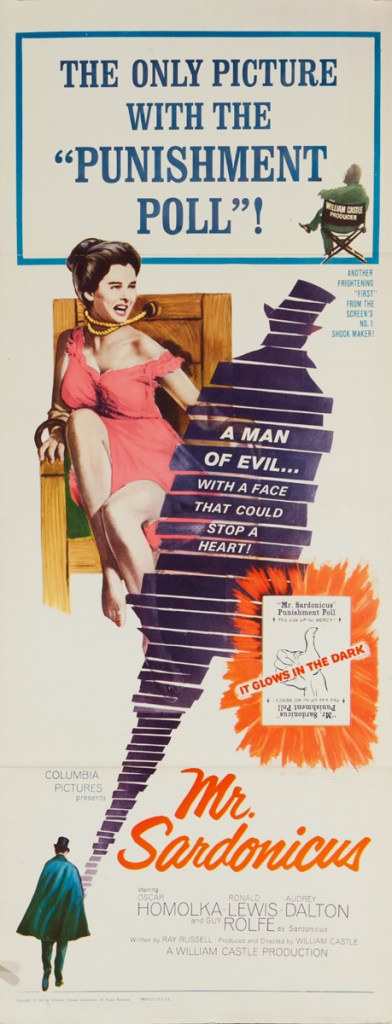
Played in villainous fashion by Guy Rolfe, Mr. Sardonicus was the title character of a 1961 film that was produced and directed by William Castle.  Castle was known for being the king of the gimmick.  His gimmick for Mr. Sardonicus was that, upon entering the theater, members of the audience were given two cards.  One card had a thumbs up.  One card had a thumbs down.  Towards the end of the film, the avuncular Mr. Castle appeared onscreen and announced that it was time for the audience to vote.  Should Mr. Sardonicus be punished for his sins or should he be shown mercy?  Thumbs up for mercy.  Thumbs down for punishment.  After taking the vote, Castle said, “Projectionist, play the reel.”

Now, of course, Castle only shot one ending and that was the ending where Mr. Sardonicus was punished.  To make sure the audience would vote the right way, Castle made Sardonicus into one of the most loathsome villains around.  Mr. Sardonicus — or Baron Sardonicus, as he preferred to be called — lived in a castle in the 1880s.  Not only did he torture his servants with leeches but he was also responsible for death of several dogs, all of which were killed as a part of his dastardly experiments.  To make it even worse, he wasn’t even a member of the nobility!  He stole his title!  It turned out that Mr. Sardonicus has once been a simple farmer who allowed his greed to get the better of him.  When his father was buried with a lottery ticket, Mr. Sardonicus dug up the old man to retrieve the ticket.  The shock of seeing his father’s skull caused Mr. Sardonicus’s face to freeze into a twisted grimace.  When the film begins, Mr. Sardonicus wears a mask and desperately wants to be cured of his affliction.

To try to convince Sir Robert Cargrave (Ronald Lewis) to cure his condition, Mr. Sardonicus is holding the woman that Sir Robert loves, Maude (Audrey Dalton), prisoner in a loveless marriage.  With the help of his evil servant, Krull (Oskar Homolka), Mr. Sardonicus torments the villagers and anyone else unlucky enough to come near the castle.

And yet, when I watched this movie last night with the Late Night Movie Gang, I voted to show compassion to Mr. Sardonicus because I’m a firm believer both in criminal justice reform and that almost anyone can be rehabilitated.  Perhaps Mr. Sardonicus just needed someone to say that they believed he could be a better man.  I was willing to do that.  However, the rest of the Late Night Movie Gang voted to punish him.  I think it was the dead dogs that sealed the deal.  So, sorry, Mr. Sardonicus.  I tried.

Even before William Castle tells everyone to vote, Mr. Sardonicus is enjoyably over-the-top and silly horror film.  It plays out like an extended episode of Twilight Zone, with every action that Mr. Sardonicus takes bringing him closer to karma’s judgment.  Guy Rolfe is properly evil and arrogant Sardonicus and Oskar Homolka gets many of the best lines as the servant who may not be as loyal as he seems.

Mr. Sardonicus is currently on YouTube.  Watch and vote for yourself!

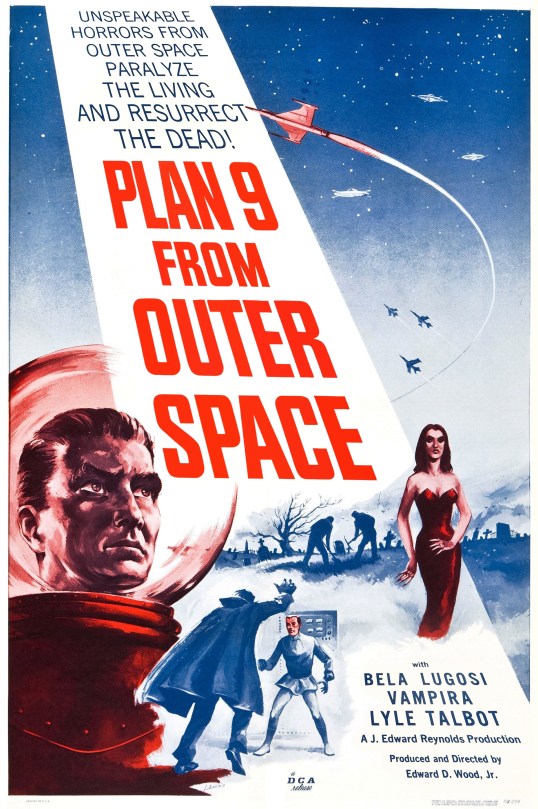
Horror on the Lens: Plan 9 From Outer Space (dir by Edward D. Wood, Jr.)


Viewing Plan 9 From Outer Space during October is a bit of a tradition around these parts and here at the Shattered Lens, we’re all about tradition.  And since today is the 97th anniversary of the birth of Ed Wood, Jr., it just seems appropriate to watch his best-known film.

Speaking of tradition, this 1959 sci-fi/horror flick is traditionally cited as the worst film ever made but I don’t quite agree.  For one thing, the film is way too low-budget to be fairly judged against other big budget fiascoes.  If I have to watch a bad movie, I’ll always go for the low budget, independent feature as opposed to the big studio production.  To attack Ed Wood for making a bad film is to let every other bad filmmaker off the hook.  Ed Wood had his problems but he also had a lot of ambition and a lot of determination and, eventually, a lot of addictions.  One thing that is often forgotten by those who mock Ed Wood is that he drank himself to death and died living in squalor.  The least we can do is cut the tragic figure some slack.

Plan 9 From Outer Space is a ludicrous film but it’s also a surprisingly ambitious one and it’s got an anti-war, anti-military message so all of you folks who have hopped down the progressive rabbit hole over the past few years should have a new appreciation for this film.  I mean, do you want the government to blow up a Solarnite bomb?  DO YOU!?

Also, Gregory Walcott actually did a pretty good job in the lead role.  He was one of the few members of the cast to have a mainstream film career after Plan 9.

Finally, Plan 9 is a tribute to one man’s determination to bring his vision to life.  Ed Wood tried and refused to surrender and made a film with a message that he believed in and, for that, he deserves to be remembered.

Now, sit back, and enjoy a little Halloween tradition.  Take it away, Criswell!

Can you prove it didn’t happen?

WELL, CAN YOU!?

Lisa Marie’s Week In Television: 10/3/21 — 10/9/21


This has been a busy week.  Along with dealing with the Hole of Death, I also took my Dad to and from the chiropractor on Tuesday.  I’ve always been trying to keep up with my horrorthon commitments so I didn’t watch much TV.  That’s probably a good thing.

(“Girl, you watch too much TV!” as my friend Marty would say.)

Here’s a few thoughts on what I did watch:

Allo Allo (Sunday Night, PBS)

Rene had to take pictures of the secret meeting.  Luckily, Michelle of the Resistance supplied him with a totally obvious hidden camera.  He had to hide it under his apron.  How would he operate the bulky camera without anyone noticing, you may be asking.  Michelle also supplied Rene with a fake arm.  Rene went through with it because, as Michelle and others often point out, Rene is the bravest man in France.

Bachelor in Paradise (Tuesday Night, ABC)

It’s now safe to return to the beach.  Bachelor in Paradise is over …. for now!  Three couples got engaged so I guess we won’t see any of them next season.  I’m joking, of course.  They’ll all probably be back next season, even more bitter than ever.

Baywatch (Weekday Evenings, H&I)

While I was cleaning around the house on Sunday, I turned the TV on and had Baywatch going in the background.  It was the pilot film, Panic at Malibu Pier.  The Hoff tried to get used to being in charge while Madchen Amick stalked a lifeguard.

Columbo (YouTube)

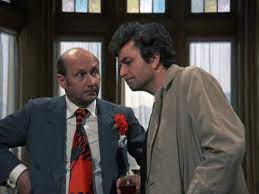
Peter Falk vs. Donald Pleasence!  My friend Mark suggested this episode to me after I shared a scene of Pleasence from Wake in Fight.  It’s a terrifically entertaining episode and guess what?  You can watch it here on the Shattered Lens!

Dancing With The Stars (Monday Night, ABC)

It was Britney night!  I was too busy dancing myself to pay too much attention to the dancers on the show.

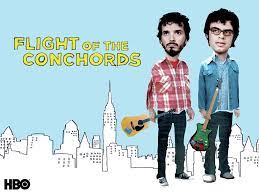
Flight of the Conchords (Friday Night, HBOMax)

After “dissing” several rappers, Bret formed a gang for his own protection.  Stay cool, Murray!

Friday the 13th: The Series (YouTube)

This is an entertaining show and I’ve been having fun highlighting here on the Shattered Lens.  Yes, I totally relate to Micki.  We both have red hair and a desire to collect cursed antiques.

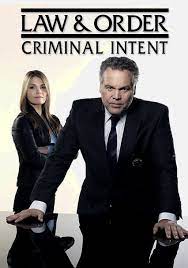
Law & Order: Criminal Intent (Tuesday Afternoon, Sundance Channel)

I took my Dad to and from the chiropractor on Tuesday.  The television in the waiting room was tuned to the Sundance Channel and while I waited for my Dad to return, I watched two episodes of Law & Order: CI.  They were obviously very early episodes, as Vincent D’Onofrio was still slightly restrained in his performance as Goren.  One of the episodes featured a killer doctor and was kind of disturbing to watch in a doctor’s office.  Choosing what to show in the waiting room of an office is an underrated skill.  I usually go with one of the retro stations.  The shows may not be challenging but they’re also designed not to cause any undue worry.

Open All Hours (Sunday Night, PBS)

Arkwright, that old perv, finally got to go away with nurse Gladys Emmanuel for the weekend.  Nothing happened, though.  The nurse really seems to be leading Arkwright on, perhaps hoping that someone who isn’t a sociopathic shopkeeper will show an interest in her.  Meanwhile, Granville continued to listen to the voices in his head, undoubtedly imploring him to burn everything to the ground.

Parking Wars (Weekday Mornings, A&E)

Apparently, A&E shows episodes of Parking Wars of every morning.  I watched two episodes while I was working from home on Monday morning.  In the first episode, the people at the impound lot had to deal with an irate “customer.”  Apparently, we were supposed to feel bad for the poor little government quislings who were having to deal with the citizens whose lives they make miserable.

Survivor (Wednesday Night, CBS)

I wrote about this week’s episode of Survivor here!

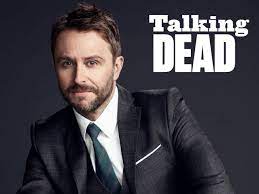
Talking Dead (Sunday Night, AMC)

Chris Hardwicke, who has gone back to being clean-shaven, spent some time talking about Walking Dead, which was cool.  But then he spent even more time trying to get the audience hyped up for Walking Dead: World Beyond and that just felt awkward.

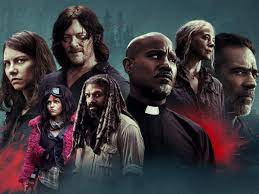
The Walking Dead (Sunday Night, AMC)

I wrote about this week’s episode here!

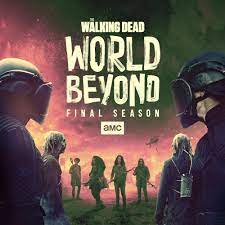
Walking Dead: World Beyond (Sunday Night, AMC)

I hate to be rude but what the Hell is this?  I guess this show started during my temporary hiatus from all things related to The Walking Dead.  According to Wikipedia, World Beyond is in its seconds season.  AMC advertises the show by saying, “And now, the final season Walking Dead: World Beyond,” as if this show is some sort of landmark event as opposed to just a rather cynical spin-off from one mighty work of pop culture.

Anyway, as far as i can tell, Walking Dead: World Beyond is like a YA version of The Walking Dead.  Instead of adults killing each other and having endless discussions about the ethics of it all, it’s teenagers.  But, from what I saw of the show, it seems like a pretty pale imitation of The Walking Dead and, unlike Fear The Walking Dead, it doesn’t really add anything new to the story.  So, I don’t know if I’ll bother to set the DVR for any more episodes of Walking Dead: World Beyond.  I imagine I will but I probably won’t be very happy about it.

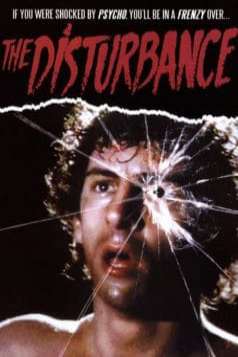
The TSL’s Grindhouse: The Disturbance (dir by Cliff Guest)


One of my pet peeves, as someone who has watched her share of movies about disturbed men driven by madness to kill, is that serial killers are often presented as being far more interesting than they actually are.  Whereas the typical serial killer is someone who has never been able to maintain a relationship and who can’t hold down a job and who, in many cases, barely even graduated high school, movie serial killers always tend to be portrayed as being handsome, charming, witty, and diabolically clever.  Blame it on Ted Bundy.  Blame it on the popularity of Hannibal Lecter.  Blame it on the film industry’s embrace of clichés.  Blame it on whoever. or whatever  It’s annoying and it encourages the tendency of the media to focus more on the killers than on their victims.

One good thing that you can say about the 1990 film The Disturbance is that it’s killer is no winner.  Clay Moyer (Timothy Greeson) is a schizophrenic who has just been released from a mental hospital and seems to be destined to soon return.  He’s someone who is haunted by hallucinations and violent fantasies.  At the same time, he’s also learned how to project enough superficial charm that he can actually interact with people.  When he meets Susan (Lisa Geoffrion) on the beach, he’s able to get a date and later, he’s even able to get a relationship.  But, as the film graphically shows, even when he’s making love to Susan, he’s fantasizing about killing her.  Even during the best moments of their relationship, he’s fantasizing about doing terrible things to the neighbor.  Because he’s extremely possessive while obviously hiding a huge part of his life from her, Susan eventually starts to pull away from him.  When he gets too pushy in his efforts to keep her around, she breaks it off.  Since the relationship was the only positive thing that Clay had in his life, he sinks further into madness and he eventually does some very bad things.  But, seeing as how Clay was having violent fantasies even while he was still dating Susan, it’s totally probable that his collapse was predestined.  If he hadn’t been triggered by the end of the relationship, he would have been triggered by something else.  There’s no hope for Clay, who was pretty much doomed from the minute he was born.

The budget of this Florida-shot indie is low and it’s obvious that most of the actors weren’t professionals.  And yet, the fact that the actors are occasionally stiff and awkward actually adds to the film’s authenticity.  If the film had been too slick, it wouldn’t have been as effective.  It would have felt like another overproduced Hollywood serial killer film.  Instead, The Disturbance feels like a journey into the mind of someone who actually is a ticking time bomb, reaching the end of his countdown.  It’s not a fun journey but then again, it shouldn’t be fun.  The mind of a sexual sadist is not going to be a pleasant place to visit.

The film works largely due to the lead performance of Timothy Greeson, who plays Clay as someone who desperately wants to be normal but who is very much aware that he never will be.  He’s a prisoner to his fantasies and, as much as he tries, he knows that he’s never going to escape his demons.  As an actor, Greeson is appealing enough that you can buy that Susan might go on a date with him while he also believably portrays the instability that leads to her dumping him.

It’s a well-done film, though a bit too disturbing to really be an entertaining viewing experience.  (On a personal level, there were several scenes involving a cat that I simply could not handle.)  I appreciated the film’s integrity far more than I enjoyed actually watching it but at least the movie refused to idealize its killer.

Horror Novel Review: The Dead Lifeguard by R.L. Stine


Some people stand in the darkness

Afraid to come into the light

Some people need to help somebody

When the edge of surrender’s in sight

Yes, dear readers, I will admit that I did start singing the Baywatch theme song as I read R.L. Stine’s 1994 YA novel, The Dead Lifeguard. Some of that is because that’s my natural response to anything involving lifeguards or the beach. But a lot of that is also because this novel has a plot that could have come straight from Baywatch Nights. We just needed David Hasselhoff to show up and start investigating stuff.

Basically, it’s the summer! Yay! Lindsay is looking forward to working as a lifeguard! Yay! The other lifeguards are a collection of typical lifeguard and R.L. Stine types. You got the sensitive, athletic boy. You’ve got the girls who alternate between being supportive and jealous. You’ve even got a dumb jock type who is named Pug. Would you want your life saved by someone named Pug?

Unfortunately, someone is killing the lifeguards! This doesn’t lead to summer being canceled or anything like that, of course. People in R.L. Stine books are surprisingly nonchalant about teenagers dying under mysterious circumstances. But it does lead to the mystery of who the killer is. Because some of the chapters are written from the killer’s point of view, we know that the killer calls themselves Mouse. And they’re committing their murders to get revenge for the passing of someone named Terry.

Meanwhile, Lindsay tries to figure out who is killing the lifeguards and what mystery is hiding in the past. (Of course, there’s a mystery in the past. It’s a Stine book, after all.) However, Lindsay’s investigation leads to the discovery that she died a year ago! OH MY GOD! IS LINDSAY A GHOST!? Or is there something else happening?

This was a fun Stine book. There were a lot of twists and turns, not to mention weird scenes of Mouse talking to Terry. One of my favorite parts of the book involves Mouse explaining that they are running behind on killing everyone because working as a lifeguard just takes up so much time. That was a clever moment of Stine humor. I also enjoyed the mystery of whether or not Lindsay was a ghost. I kind of guessed how things were going to turn out because …. well, it’s an R.L. Stine book. But still, The Dead Lifeguard was definitely an entertaining read.

Don’t your worry

It’s gonna be alright….

Book Review: Brat: An 80s Story by Andrew McCarthy


On Tuesday, I read Brat, the new memoir from actor Andrew McCarthy.

Though McCarthy is, today, a busy travel writer, he was a movie star in the 80s, staring in a handful of film that are still popular and being discovered by new audiences today. He starred opposite Molly Ringwald in Pretty In Pink and anyone who says that Molly should have ended up with Jon Cryer instead of Andrew McCarthy is a liar. He was a part of the ensemble of St. Elmo’s Fire. He starred in the film adaptation of Less than Zero. He spent a Weekend at Bernie’s. And, of course, he was labeled as being a member of the Brat Pack.

Brat pretty much centers on McCarthy’s life in the 80s, going from his time in acting school to his first starring role in Class to his decision to star in the critically-derided but still surprisingly popular Weekend at Bernie’s. It’s a quick but honest read and McCarthy emerges as someone who was somehow cocky enough to know that he could be star but also so insecure that, once he became a star, he wasn’t really capable of enjoying it. Reading the book, one gets the feeling that McCarthy spent the 80s feeling as if things had come too easily for him. He landed the starring role in the first film for which he ever auditioned. He starred opposite Molly Ringwald at a time when she was a superstar. And, yet, he was miserable for much of the time, a victim of his own nagging anxiety. He dealt with his insecurity by drinking and eventually, though the book doesn’t go into too much detail about it, using cocaine. He mentions that he never worked while on coke until he ended up on the miserable set of Less than Zero, which is one of the most heavy-handed anti-drug films ever made.

Brat is a good read. McCarthy is an engaging writer and he writes about the past with a refreshing lack of bitterness. In fact, the only thing he seems to be truly upset about is the fact that he got tarred with the Brat Pack label and he has every right to be upset that. As McCarthy points out, the Brat Pack label came about as the result of an article that detailed a night out with Rob Lowe, Judd Nelson, and Emilio Estevez. McCarthy wasn’t even present that night. He was only mentioned once in the article, when one of the three said that they felt McCarthy wasn’t going to make it because he always played his roles with “the same intensity.” McCarthy’s feelings were hurt, especially since the article didn’t specify which of the three said it. (One gets the feeling that Emilio Estevez — who, in every chronicle of the Brat Pack era, comes across as being the most judgmental, entitled, and pompous member of the group — was probably the guilty party.) But yet, because McCarthy appeared in St. Elmo’s Fire and in Pretty in Pink, he was tarred with the label and it was pretty much the beginning of the end of his stardom. He mentions that, years later, Emilio Estevez refused to do a movie if McCarthy was cast, specifically because he didn’t want the movie to be a “brat pack” film. Again, Emilio comes across as being a bit of a prick.

With a few exceptions, McCarthy is generous when discussing most of his co-stars. He liked working with Rob Lowe, Ally Sheedy, and Jacqueline Bissett. He writes that he and Molly Ringwald were never quite as close as those of us who love Pretty in Pink like to think. He says that he and Jon Cryer did not get along in the 80s but that they’ve since become friends. That was nice to read. He writes about watching Robert Downey, Jr. go crazy one night. (In Downey’s defense, he was ordered to do so by the director of Less than Zero as an exercise to help McCarthy get into character. Unfortunately, no one bothered to let McCarthy know what was going on.) He writes ruefully about a date with Elisabeth Shue. Judging from his memoir, McCarthy met and impressed a lot of people but he rarely felt like he was good enough to be a part of their lives. It’s kind of sad. Sometimes, Andrew McCarthy comes across as being so vulnerable that you just want to reach out and hug him.

Fortunately, this is a survivor’s memoir. McCarthy survived the 80s and he’s still around, working and continuing to touch the heart of anyone who comes across Pretty in Pink. He sounds like he’s in a better place now than he was at the time of his biggest film successes. Brat is a good and honest memoir and a must-read for anyone who loves the films of the 80s.

International Horror Review: All the Colors of the Dark (dir by Sergio Martino)


It’s giallo time!

In this 1972 Italian film, Edwidge Fenech plays Jane Harrison.  Jane is haunted by both the murder of her mother and a more recent car accident, one that caused her to miscarry.  Jane has nightmares, featuring violent murders and lots of spilt blood.  Whenever Jane leaves her apartment, a mysterious man with piercing blue and perfect hair (played, of course, by the owner of the best head of hair in Italian cinema, Ivan Rassimov) follows her and threatens her.  Is the man real or is he just a figment of her imagination?  Her sister, Barbara (Susan Scott) insists that Jane see a psychiatrist.  Meanwhile, Jane’s boyfriend, Richard (the ruggedly handsome George Hilton) insists that the two of them can work through it.

However, Jane’s new neighbor, Mary (Marina Malfatti) has a suggestion that involves neither therapy nor love.  Mary suggests that Jane attend a black mass.  Jane agrees and …. wait, what?  A black mass?  Out of all the solutions that have been suggested, Jane decides to go with Satanism?  That seems like a bit of an extreme solution but then again, it was the 70s and it was Italy and maybe things were just different back then.  I’m just saying that I, personally, would not join a cult but obviously, some people do.  Maybe that’s how the Silent Hill cult got started.  Someone tried to be helpful by saying, “Let’s go to a black mass,” everyone said, “Sure!”  Who knows?

Anyway, Jane attends a few rituals, all of which will seem familiar to anyone who has seen Rosemary’s Baby.  She drinks the blood of a dog.  She takes part in an orgy.  Or does she?  The scenes are shot in such a fashion that we’re left to wonder whether they’re real or if they’re just taking place inside of Jane’s mind.  With her paranoia growing, Jane herself isn’t sure what’s really happening either.  All she knows is that it seems as if the members of the cult are everywhere and that the mysterious man still appears to be following her.  When people start dying in various gruesome ways, who is responsible?  Jane or the cult or someone else entirely?

All The Colors of the Dark is a favorite of mine, a stylish giallo with an insane plot, lots of sex and death, and killer performances from giallo regulars like Fenech, Hilton, and Rassimov.  The solution to this film’s mystery is actually pretty clever and — in a rarity for the giallo genre — it actually hold together when you think about it after the movie ends.  Visually, director Sergio Martino does a great job of creating an atmosphere of unease and suspicion and Jane’s dreams and visions are wonderfully executed.  My favorite moment is when Jane suddenly realizes that everyone around her is a member of the cult.  Are they really or is Jane just hallucinating?  Watch the movie to find out!

In October, it’s always nice to make some time for a good giallo, especially ones that feature George Hilton looking handsome and Ivan Rassimov looking dangerously intriguing.  All the Colors of the Dark is definitely one of the better ones.

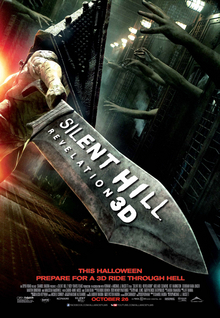
Horror Film Review: Silent Hill: Revelation (dir by M. J. Bassett)


The 2012 video game adaptation, Silent Hill: Revelation, is gloriously silly.

It’s also a sequel to the first Silent Hill. While many members of the original cast do return and while the sequel’s plot does directly follow up on the first film, Silent Hill: Revelation still feels like an all-together different film. Whereas the first Silent Hill was atmospheric and, with its 2 hour plus running time, a bit ponderous, the sequel is short, direct, and …. well, I hate to use that word again, a bit silly. It’s also undeniably entertaining.

Sharon (Adelaide Clemens) is now 18 and is currently using the name Heather. With her father, Harry (Sean Bean), Sharon/Heather has spent the last several years of her life moving from place to place and trying to keep one step ahead of the Order, the Silent Hill cult. Heather — let’s just use that name — tries to make the best of her situation but she is 18 and she would like a chance to do normal teenager stuff as opposed to just spending her life on the run.

Good luck with that! When Harry mysteriously vanishes, Heather finds a message telling her to go to Silent Hill. Teaming up with her classmate, the enigmatic Vincent (Kit Harrington), Heather heads back to Silent Hill. She hopes to find both Harry and Rose (Radha Mitchell) but the Order has other plans. Soon, Heather and Vincent are back in the alternate dimension, dealing with monsters and stabby blind nurses.

As is typical of horror films about cults, there’s a lot of talk about sacrifices and using blood to bring about a new age and everyone worships some mysterious God who doesn’t sound all that pleasant. Whenever I watch a movie like this, I find myself wondering how the cult got started in the first place. Who woke up one day and said, “I’m going to follow the demon that regularly kills all of his followers. Now, let’s go alter some adoption records!” I also can’t help but notice that cults can never do anything the simple way. Instead, there’s always some alternate dimension or some extremely complex ritual that has to be performed and it all has to be done at a certain time of the year. Maybe if they just simplified things, they wouldn’t have so much trouble getting stuff done. Maybe instead of always trying to steal new souls, they could just be happy with the ones they have. I mean, it’s just common sense.

But anyway, back to Silent Hill: Revelation. Silent Hill: Revelation usually gets dismissed as an inadequate sequel but I was entertained. The plot moves quickly and the film features some memorably gory scenes. The scene where Heather suddenly hallucinates about Silent Hill while walking through a mall was enjoyably gruesome. At the same time, I couldn’t help but regret that Revelation never quite succeeded in duplicating that ominous atmosphere of the first film. If the first film felt like a nightmare-come-to-life, Revelation feels more like the season finale of a long-running, supernatural-themed television show. It’s fun to watch but it’s not particularly challenging. That said, Adelaide Clemens gave a sympathetic performance as Heather, Sean Bean’s natural gravitas was put to good use, and Malcolm McDowell made a brief appearance. The film kept me entertained.

Horror on the Lens: Bride of the Monster (dir by Edward D. Wood, Jr.)


Bride of The Monster (1955, dir by Ed Wood)

Since tomorrow’s the great man’s birthday, it seems appropriate that today’s horror film on the lens is Edward D. Wood’s 1955 epic, Bride of the Monster.

(Much like Plan 9 From Outer Space, around here, it is a tradition to watch Bride of the Monster in October.)

The film itself doesn’t feature a bride but it does feature a monster, a giant octopus who guards the mansion of the mysterious Dr. Vornoff (Bela Lugosi).  Vornoff and his hulking henchman Lobo (Tor Johnson) have been kidnapping men and using nuclear power to try to create a race of super soldiers.  Or something like that.  The plot has a make-it-up-as-you-go-along feel to it.  That’s actually a huge part of the film’s appeal.

Bride of the Monster is regularly described as being one of the worst films ever made but I think that’s rather unfair.   Appearing in his last speaking role, Lugosi actually gives a pretty good performance, bringing a wounded dignity to the role of Vornoff.  If judged solely against other movies directed by Ed Wood, this is actually one of the best films ever made.

(For a longer review, click here!)