Guilty Pleasure No. 64: Karate Warrior (dir by Fabrizio De Angelis)


“Oh, come on,” I said last week, “this is a perfectly fine film.”

I was saying that because I was watching the 1987 film, Karate Warriors, with a group of friends.  They felt that it was a largely pointless film that didn’t really have much of a plot.  I felt that it was an interesting piece of history, seeing as how it was an Italian rip-off of The Karate Kid that was made by several associates of Lucio Fulci.  And while Fulci himself wasn’t involved with the film, the scene where the lead character, young Anthony Scott (Kim Rossi Stuart), is savagely beaten up with the bad guys is so unnecessarily bloody that it feels like an homage to Fulci if nothing else.  The scene, which makes this rip-off of The Karate Kid too graphic for the film’s target audience, really does epitomize everything that made the Italian exploitation industry so memorable.

Teenager Anthony Scott is in the Philippines so he can visit his father (Jared Martin, who starred in Fulci’s Warriors of the Year 2072), a journalist who is apparently in semi-hiding because of a series of articles that he wrote that exposed government corruption.  (Don’t worry too much about the father’s backstory because it doesn’t really play any sort of role in the film.)  Anthony runs afoul of the local teenage crime lord, Quino (Enrico Torralba).  Quino is not only running a protection racket but he’s also the local karate champion.  When Anthony stands up to Quino, he gets beaten up and Anthony’s girlfriend, Maria (Janelle Barretto), nearly loses her home when Quino’s gang sets it on fire.  The half-dead Anthony is discovered by Master Kimura (Ken Watanabe — no, not that Ken Watanabe).  Master Kimura takes Anthony into the forest and teaches him the “Stroke of the Dragon.”  One montage later, Anthony is ready to enter the local karate tournament and take on Quino.  For some reason, it never occurs to Anthony to let his father know that he’s now living with Master Kimura so, while Anthony is training, his father and his mother (Janet Agren, who co-starred in Fulci’s City of the Living Dead) are desperately searching for him in Manila.

Karate Warrior is only 84 minutes long and, for reasons that are not quite clear, Anthony’s training and the final tournament are all crammed into the film’s final 20 minutes.  Before that, the film is a travelogue of Anthony wandering around Manila, getting conned by nearly everyone that he meets, and trying to flirt with Maria.  So yes, the film is a bit plotless but I found the film’s meandering spirit to be a bit charming.  It’s rare to see a film that’s so honest about only having 20 minutes worth of plot.  The English language version also has the extra treat of some really bad dubbing.  At one point, it sounds as if a totally different actor took over dubbing Anthony.  The cheerful of ineptness of it all was rather likable.

The film was directed by Fabrizio De Angelis, who produced Fulci’s Beyond trilogy.  My friends may have disliked it but the film was a big enough of a success in Italy that it led to 6 sequels.  I can’t wait to watch every one of them!

Previous Guilty Pleasures

  1. Half-Baked
  2. Save The Last Dance
  3. Every Rose Has Its Thorns
  4. The Jeremy Kyle Show
  5. Invasion USA
  6. The Golden Child
  7. Final Destination 2
  8. Paparazzi
  9. The Principal
  10. The Substitute
  11. Terror In The Family
  12. Pandorum
  13. Lambada
  14. Fear
  15. Cocktail
  16. Keep Off The Grass
  17. Girls, Girls, Girls
  18. Class
  19. Tart
  20. King Kong vs. Godzilla
  21. Hawk the Slayer
  22. Battle Beyond the Stars
  23. Meridian
  24. Walk of Shame
  25. From Justin To Kelly
  26. Project Greenlight
  27. Sex Decoy: Love Stings
  28. Swimfan
  29. On the Line
  30. Wolfen
  31. Hail Caesar!
  32. It’s So Cold In The D
  33. In the Mix
  34. Healed By Grace
  35. Valley of the Dolls
  36. The Legend of Billie Jean
  37. Death Wish
  38. Shipping Wars
  39. Ghost Whisperer
  40. Parking Wars
  41. The Dead Are After Me
  42. Harper’s Island
  43. The Resurrection of Gavin Stone
  44. Paranormal State
  45. Utopia
  46. Bar Rescue
  47. The Powers of Matthew Star
  48. Spiker
  49. Heavenly Bodies
  50. Maid in Manhattan
  51. Rage and Honor
  52. Saved By The Bell 3. 21 “No Hope With Dope”
  53. Happy Gilmore
  54. Solarbabies
  55. The Dawn of Correction
  56. Once You Understand
  57. The Voyeurs 
  58. Robot Jox
  59. Teen Wolf
  60. The Running Man
  61. Double Dragon
  62. Backtrack
  63. Julie and Jack

A Blast From The Past: The Day My Kid Went Punk (dir by Fern Field)


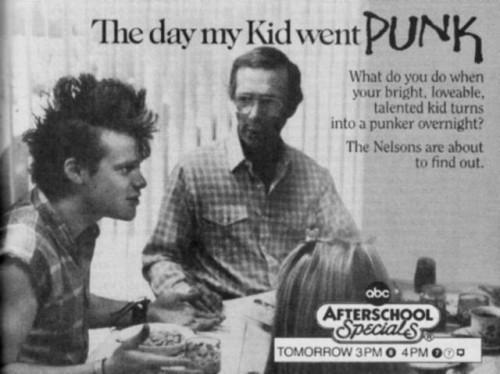
First produced in 1987, the short film The Day My Kid Went Punk tells the story of Terry Warner (Jay Underwood), a clean-cut teenager and aspiring violinist who lands a summer job working as a daycare counselor at a luxury hotel.

Feeling that he’s been neglected in favor of his high achieving older brother and his younger sister, Terry acts like a typical middle child and decides to change his image right after leaving home for his job.  (It worked for Jan Brady!)  He decides to become a punk.  (Jan Brady never went that far.)  Could this have something to do with his mother (Christine Belford) being the nation’s leading expert on the “Punk Syndrome,” that is terrifying parents everywhere?  Or could it just be because Terry knows that he’ll never be as cool as his father (Bernie Kopell), who might claim to be named Tom Warner but who is obviously just Adam Bricker living in the suburbs?  Every time Tom looks at his “punk” son, you can just see him dreading the thought of word of this getting back to Captain Stubing.

(Incidentally, the family in film is clearly named Warner but, in all of the advertisements that I’ve seen for this special, including the one at the top of the post, they’re identified as being the Nelson family.)

Needless to say, Terry Warner is, in no way, a convincing punk and judging from the film’s dialogue and plot, it would appear that the film doesn’t really know the difference between punk, goth, and heavy metal.  Everyone at the hotel is a bit taken aback by Terry’s appearance but he proves himself to be a good worker and the kids absolutely love riding horses with him.  I guess the message is that you shouldn’t judge someone based solely on how he looks.  That’s a good message except that it’s ultimately undercut by Terry himself and his decision abandon his punk look as soon as it inconveniences him at school.  So, I guess the message is that teens should dress the way they want unless it keeps them from winning first chair in the school band and parents shouldn’t worry because teenagers are so shallow that they’ll abandon anything after a month or two.  The film suggests that Punk is less of a syndrome and more of a fad that whiny middle children go through during the summer.

(Myself, I’m not a middle child.  I’m the youngest of four and I’ve never felt particularly ignored, even if there were times when it seemed like being left alone would be a nice change of pace.  That said, I definitely went through some phases while I was growing up.  During my junior and senior years of high school, I always made sure that I was wearing at least one black garment and I wrote emo poetry under the name Pandora DeSaad.)

Anyway, Halloween’s approaching and this very (and I do mean very) campy short film feels like a good way to welcome a month that encourages everyone, young and old, to think about putting on costumes.  Here is The Day My Kid Went Punk!

Retro Television Reviews: T. and T. 1.15 “Sophie a La Modem” and 1.16 “Black and White”


Welcome to Retro Television Reviews, a new feature where we review some of our favorite and least favorite shows of the past! On Fridays, I will be reviewing T. and T., a Canadian show which ran in syndication from 1987 to 1990.  The show can be found on Tubi!

This week, Amy’s psycho nephew shows up!

Episode 1.15 “Sophie a La Modem”

(Dir by Stan Olsen, originally aired on April 18th, 1988)

“In this episode,” Mr. T tells us, “Sophie goes AWOL with Amy’s nephew and no one is safe from him …. NO ONE!”

This episode focuses on Sophie (Catherine Disher), who is Amy and T.S.’s administrative assistant.  Since my first job out of college was working as an administrative assistant to an attorney, I appreciated that Sophie finally got to be the focus of an episode.  Seriously, you can’t have an office without an office manager.

Amy’s nephew (Sunny Besen Thrasher) — who T.S. refers to as being “that little bad kid, Donald!” — is at the courthouse, firing a water gun at the security guard.  Amy and T.S. take him to the office, where Sophie is extremely happy because she’s purchased — 80s alert! — a new modem!  Donald, who is way too obsessed with guns, fires a rubber dart at Sophie’s computer screen.  How big of a brat is Donald?  He ever wears a bow-tie, just like the problem child kid.  (Remember him?)

T.S. and Amy have to go to court so they’re not at the office when Mrs. Williams (Ruth Springfield) shows up and says that the people to whom she’s rented a house appear to be building something in the basement.  Donald tells the woman that Sophie is Amy and somehow, this leads to Sophie and that little bad kid Donald going to investigate on their own.

Back at the office, T.S. and Amy return and discover that Sophie and Donald are gone but they don’t seem to be too worried about it.  Instead of wondering where their administrative assistant and the little kid have gone, they talk about the time that Donald put a mouse in T.S.’s cookie jar.  “He’s a bad kid,” T.S. growls.

At the house, Amy and Donald meet the two tenants, Gord (Ron Gabriel) and his slow-witted associate, Benny (Richard Donat).  They also sneak into the basement and discover, as Sophie puts it, “a computer and a modem!”  It turns out that Gord and Benny are using the magic powers of the modem to hack into bank databases.  Unfortunately, Gord and Benny catch Sophie and that bad kid in the basement.  Uh-oh!

Back at the office, T.S. speculates that Donald probably abandoned Sophie somewhere in Toronto and then stole her car.  Instead of heading out to try to find the missing child and the administrative assistant, T.S. heads to the gym.  I guess T.S. really does not like Donald!

Gord and Benny attempt to lock Sophie, Donald, and their landlady up in a crude cell they’ve constructed in the basement.  Fortunately, Donald still has his toy dart gun and, by attaching a string to the dart, Sophie is able to snag the key to the cell.  After unlocking and opening the cell door, Sophie turns on the computer and uses the magic powers of the modem to send a message to Amy, letting her know that they are being held prisoner in the basement.

T.S. shows up at the house and bangs on the door.  “LET ME IN!” he shouts.  When Gord and Benny fail to do so, T.S. kicks the door open.  “I SAID LET ME IN!”  While Gord begs T.S. not to kill him, Sophie uses the dart gun to shoot a rubber dart at Benny.  Gord passes out and T.S. throws Benny through a wall.

Yay!  This was an incredibly silly episode but I enjoyed it because Sophie got to live every administrative assistant’s dream.  She did a good job and so did this episode.  It was fun.

Episode 1.16 “Black and White”

(Dir by Don McCutcheon, originally aired on April 25th, 1988)

“In this episode,” Mr. T. tells us, “Amy and I are caught in the middle when Detective Jones takes the law into his own hands.”

If the previous episode gave Sophie her chance in the spotlight, this episode spotlights Detective Jones (played by Ken James).  Since the second episode, Detective Jones has been the detective with whom Amy and Turner always seem to end up interacting.  He’s also the detective who arrested for T.S. for the crime that T.S. didn’t commit.  Needless to say, their relationship is occasionally awkward but, all things considered, surprisingly friendly.

This episode opens with Detective Jones’s wife (Meredith McRae) coming across two teenage boys breaking into her house and getting knocked unconscious as result.  Jones, who is out for revenge, thinks that one of the boys was Tom (Nicholas Shields), who is later arrested for another burglary and whose attorney is — you guessed it! — Amy Taler.  It turns out that Tom was one of the two teens that broke into Jones’s house but he was not the one who hit Mrs. Jones.  This is all something that Jones finds out after he follows Tom to the surprisingly large warehouse that is owned by Tom’s accomplice, the psychotic Len.  Fortunately, T.S. also follows Jones to the warehouse and helps him to subdue Len.  Tom is given a suspended sentence and Jones and his wife leave for a Miami vacation.

This is a good example of an episode that suffered due to T. and T. having to cram an hour’s worth of story into a 30-minute time slot.  This episode certainly had the potential to be interesting, with Detective Jones turning into a vigilante and T.S. Turner sympathizing with Tom because of their shared background as foster children but, with the shortened running time, the whole thing was juts a bit too rushed to be effective.

Next week: T.S. Turner faces off against two rich kids who think that ruining someone else’s life is just a game!

The TSL Grindhouse: Trucker’s Woman (dir by Will Zens)


The 1975 drive-in film, Trucker’s Woman, opens with the tragic (and rather horrifying) death of Jim Kelly, a trucker who meets his demise when the breaks on his truck fail.  We watch as Jim is tossed back and forth inside the cab of his truck and, in fact, the film’s opening credits play out over freeze frames of Jim’s gruesome end.  Jim was a beloved member of the trucking community and his funeral is about as well-attended as a funeral taking place in a low-budget film can be.  Everyone is going to be miss Jim but fortunately, his son Mike (Michael Hawkins) is going to carry on the family business!

As Mike explains to his father’s permanently soused friend, Ben Turner (Doodles Weaver), he’s giving up a lot to take over for his father.  Mike is dropping out of college and sacrificing his dream of becoming a philosophy professor.  Of course, Mike appears to be nearly 50 so, if he still hasn’t gotten that degree, it’s probably for the best that he went ahead of gave up on that dream.  From what little we saw of Jim, he appeared to be 50 as well so you have to kind of wonder if Mike is actually his son.  My theory is that Mike was just a drifter who happened to see a funeral occurring off the side of the road and decided to cash in.

Anyway, Mike is soon driving a truck and discovering that his boss, Fontaine (Jack Canon), is a bit of a jerk who favors certain truckers more than others.  Mike also meets Fontaine’s daughter, Karen (Mary Cannon), at a roadside bar and ends up following her back to her motel, pounding on her door until she gets out of the shower and answers it while wearing a towel, and then announcing that he’s going to be accepting her offer to spend the night with her….

So, you can probably already guess what the main problem with this film is.  At best, Mike is a jerk.  At worst, he’s an alcoholic misogynist who breaks into a woman’s motel room, demands sex, and is then offended when she leaves the next morning without telling him where she’s going.  The film tries to portray Mike as being a strong, independent man who works hard and refuses to be ordered around.  However, he comes across less like Burt Reynolds in Smokey and the Bandit or Kris Kristofferson in Convoy and more like one of those truckers who eventually gets caught with a dead body in the back of his cab.  Everything about Mike just screams homicidal drifter.  Not even the title character from Henry: Portrait of a Serial Killer would have accepted a ride from this guy.

Anyway, Mike and Ben attempt to discover who sabotaged the brakes on old Jim Kelly’s rig and since only a mechanic could have done it, suspicion immediately falls on Diesel Joe (Larry Drake) because he’s the only mechanic in the film!  And who paid Diesel Joe to sabotage the brakes?  Well, there’s only person in the film who has any money so it looks like it’s time for Ben to rally the other truckers and Mike to toss a bunch of people into Fontaine’s pool.

Trucker’s Woman does not work as a thriller or a mystery or a comedy.  It does work as a time capsule of the 70s.  Seriously, look at all of those wood-paneled rooms!  Look at all of those plaid jackets!  Seriously, there’s enough plaid in this film it could have just as easily been called Forever Plaid.  Filmed on the highways of South Carolina, Trucker’s Woman is a film the epitomizes an era but there’s plenty of other films that do the exact same thing and don’t feature an alcoholic misogynist as the lead character.  (Seriously, Rubber Duck would have tossed Mike Kelly out of a moving truck.)

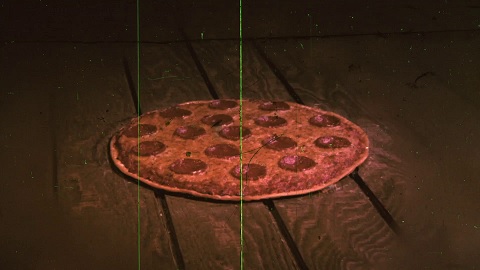
Finally, Trucker’s Woman is infamous in some circles for featuring a random shot of a pepperoni pizza sitting on a wooden deck.  It’s a shot that pops up out of nowhere and has nothing to do with the rest of the film.  It’s thought that the shot was included as an experiment in subliminal advertising and I will admit that my sister and I did order a pizza after this film ended.

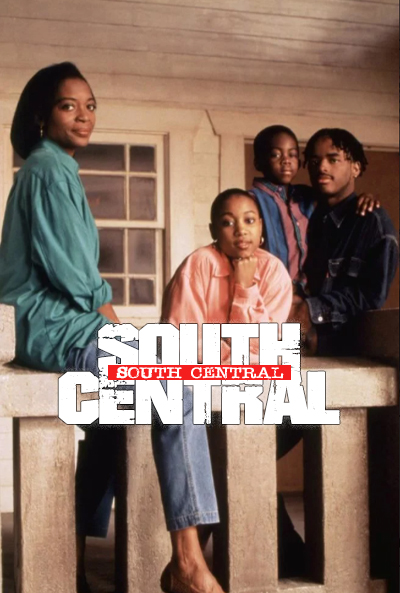
Retro Television Reviews: South Central 1.9 “Dog” and 1.10 “Date”


Welcome to Retro Television Reviews, a feature where we review some of our favorite and least favorite shows of the past!  On Thursdays, I will be reviewing South Central, which aired, for 10 episodes, on Fox in 1994.  The entire show is currently streaming on YouTube!

This week, South Central comes to an end.

Episode 1.9 “Dog”

(Directed by Stan Lathan, originally aired on May 31st, 1994)

Deion finally gets to be the focus of an episode and it’s seriously, the most depressing 30 minutes ever.

After eight episode of never speaking and never smiling, Deion is briefly happy when a stray dog follows him and Andre home.  Deion loves playing with the dog and he even starts to bark just like the dog.  Joan, however, is not happy about the idea of having the dog in the house.  As she sensibly points out, they don’t know if the dog is sick and dog’s are expensive to keep.  Still, when she sees how Deion loves the dog, she says that the dog can stay as long as he doesn’t make a mess in the house.  Andre agrees to watch over the dog.

Joan leaves for the Co-op, where Bobby has declared the day to be “Black Dollar Day.”  Of course, as soon as Joan does leaves the house, the dog makes a mess on the floor.  Neither Andre nor his friend Rashad are willing to clean it up, with Andre is more concerned with calling Nicole and begging her to take him back.  Finally, Tasha’s friend Shanelle (Shar Jackson) cleans up the mess because she wants to get together with Andre.  However, Andre rejects Shanelle, telling her that she needs to have more respect for herself.  (Andre wasn’t too concerned about Shanelle’s self-esteem when she was cleaning up after the dog for him.)  Later, Andre and Tasha catch Shanelle and Rashad fooling around in Joan’s bedroom.  This leads to multiple fights and the dog getting so agitated that it bites Shanelle.

The end result is Shanelle goes to the hospital, animal control takes away the dog, and Deion is left without his only friend.  The next morning, Deion steps out of the house and stands on the sidewalk, barking like a dog.

My God, what a depressing show!  But I should also add that it was a remarkable well-acted episode, especially the scene in which Joan explained to Deion that the dog wouldn’t be coming back but that the dog was okay and still cared about him.  Seriously, I’m tearing up just writing that and I’m not even dog person.

Let’s move on to the series finale.

Episode 1.10 “Date”

(Directed by W.E. Baker, originally aired on June 7th, 1994)

Joan orders Andre and Rashad to take Tasha to the Ujamaa Hi-Life and pushes Deion onto Sweets so that she can have the house to herself for a night.  However, almost as soon as the kids leave, Ray (Ken Page) shows up.  (Yay!  Ray’s back!)  Ray sweetly asks Joan if she would like to have dinner with him.  They head out to the local catfish place but they discover that there is a 45-minute waiting time for a table.  Except …. OH MY GOD, IT’S ISAIAH!  Isaiah (Michael Beach) explains that he is friends with the owner of the restaurant and he always has a table.  Isaiah invites Joan (and, by extension, Ray) to have dinner with him.

Needless to say, dinner is a bit awkward, with Ray and Isaiah each mentioning that they own multiple homes and tying to impress Joan.  Isaiah is as much of a charming jerk as he was the last time he went out with Joan.  Ray, once again, promises to always be there for Joan and Andre despite the fact that Joan is obviously not interested in him.  As bad as I do feel for Ray, he should realize by this point that Joan doesn’t share his feelings.  You can’t create chemistry where there isn’t any.

Meanwhile, at the Co-Op, Rashad and Andre look for dates (which I guess means that Andre is over Nicole) and Tasha eventually cheers up when she gets to perform on stage.

To be honest, it’s a bit of an underwhelming ending for a show that featured so many powerful episodes.  The finale feels far more conventional in its humor than the previous episodes and that probably has something to do with the fact that this was the only episode of South Central to not be directed by Stan Lathan.  The finale feels more than a bit off when compared to what came before but, at the same time, it’s nice that the show ended with Tasha finally getting a moment to be the center of attention.

South Central only ran for ten episodes and it’s easy to see why it struggled in the ratings.  For a comedy, South Central could be a very dark show.  There weren’t a lot of standard happy endings to be found in South Central and even the upbeat finale left viewers feeling that things were only going to get more difficult for the Mosely family.  Joan is still going to be working herself to death at Ujamaa.  Andre is still going to often be his own worse enemy.  And, even after performing in front of the entire community, Tasha is still going to be the one who is always expected to sacrifice to help out around the house.  This show was all about the small moments of happiness that can be found even in the most difficult of circumstances.  Ultimately, though, those moments can only take you so far.

Next week, just in time for October, we start a new Thursday show and it features a ghost!  Are you ready for …. Jennifer Slept Here!?

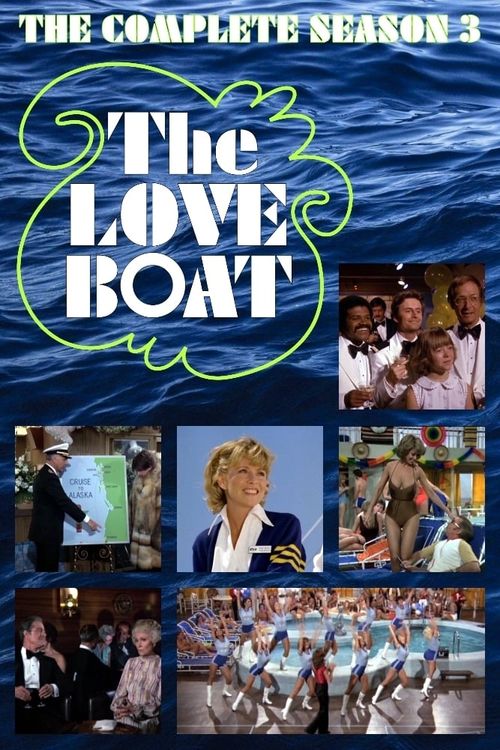
Retro Television Reviews: The Love Boat 3.8 “Play By Play/Cindy/What’s A Brother For?”


Welcome to Retro Television Reviews, a feature where we review some of our favorite and least favorite shows of the past!  On Wednesdays, I will be reviewing the original Love Boat, which aired on ABC from 1977 to 1986!  The series can be streamed on Paramount Plus!

It’s time for a Halloween cruise!

Episode 3.8 “Play by Play/Cindy/What’s A Brother For?”

(Dir by James Sheldon and George Tyne, originally aired on October 27th, 1979)

Yes, this episode does feature the Love Boat’s annual Halloween cruise but sadly, it doesn’t do much with the theme.  Last season’s Halloween cruise featured Vincent Price as an illusionist.  This season, there is a costume ball but it’s mostly just there so that the show can do a take off on Cinderella.

Cindy (Melissa Sue Anderson) is a shy girl who boards the ship with her wicked stepmother (Carolyn Jones) and her two less-than appealing step-sisters (Ronda Bates and Lila Kent).  While the stepmother tries to find an eligible bachelor for either one of her biological daughters, Cindy is expected to stay in the cabin and do the laundry.  However, Gopher hears Cindy singing Witchcraft and decides that Cindy simply has to sing for “the prince of pop,” Preston Maddox (Frank Sinatra, Jr., who looks like a cross between his father and Jerry Lewis).  However, how can Cindy escape from the cabin?  Gopher arranges for her to go to the costume ball and he even steals Julia’s Cinderella costume so Cindy can go incognito.  Cindy impresses Preston but, when Julie sees that Cindy is wearing her costume, Cindy makes a run for it.  She leaves behind one glass slipper and …. well, you know where this is going, right?  As everyone disembarks in Los Angeles, Preston has them try to on the slipper.  Cindy, however, doesn’t have to try on the slipper to prove her identity.  She just has to start singing Witchcraft.  By the end of the episode, you’ll wonder if Cindy knows any other songs.

While all that is going on, Bud Pomeroy (Christopher George) and Peggy Rossmore (Lynda Day George) are two sportscasters who work together but actually dislike each other.  Peggy thinks Bud is a chauvinist and Bud thinks that Peggy was only hired for her looks.  They decide to compete in a series of athletic events to determine who will stay at their station and who will quit.  Bud wins at arm wrestling.  Peggy wins a 5-mile race around the ship.  To determine their third event, Peggy randomly draws a piece of paper from Captain Stubing’s hat and discovers that the next competition will be weight-lifting!  When Bud throws his back out, it looks like Cindy is going to win but then Cindy asks Bud to stay and they discover that they actually love each other.  Yay!  Neither the story nor the characters were that interesting but Christopher George and Lynda Day George were married in real life and they made an attractive couple.

Finally, Tom Benton (Tom Hallick) has devoted his entire life to looking after his brother, Matt (Patrick Wayne), who uses crutches.  When Tom meets and falls in love with Kris (Joan Van Ark), Matt realizes that it is time for Tom to move on and find some happiness of his own.

For the most part, this was a typically pleasant episode of The Love Boat but, as a Halloween episode, it was a major disappointment.  They should have had some fun with season but, unfortunately, they didn’t.  This was like going on a Christmas cruise and not getting any presents.

Retro Television Reviews: Fantasy Island 3.16 “Rogues and Riches/Stark Terror”


Welcome to Retro Television Reviews, a feature where we review some of our favorite and least favorite shows of the past!  On Tuesdays, I will be reviewing the original Fantasy Island, which ran on ABC from 1977 to 1986.  Almost entire show is currently streaming is on Youtube!

Smiles, everyone!  Smiles!

Episode 3.16 “Rogues and Riches/Stark Terror”

(Dir by Cliff Bole, originally aired on January 19th, 1980)

Our latest weekend on Fantasy Island is both strange and entertaining!

Attorney Mark Hendicks (John Schuck) comes to the Island with a briefcase full of papers.  He’s searching for his former law partner, Pete Gilbert (singer Robert Goulet).  Years ago, Pete came to Fantasy Island with a simple fantasy.  He wanted to be an 18th century British outlaw.  However, Pete had so much fun in the past that he decided that he never wanted to leave.  Mark needs to get Pete’s signature on some official forms so that Mark can sell some land that he and Pete bought before Pete’s fateful trip to the Island.

Mr. Roarke explains to Mark what’s going on with Pete and Mark is surprisingly accepting of Roarke’s explanation.  Roarke drives Mark out to a bridge.  He tells Mark that crossing the bridge will transport Mark to Pete’s fantasy.  Mark crosses the bridge and immediately sees Pete being chased by a bunch of British soldiers.  Pete is having a grand ol’ time in the 18th century but he’s more than willing to take some time out from plundering so that he can sign the papers so that will allow Mark to become a millionaire once he returns to the present.  However, after a dinner scene that is basically lifted shot-for-shot from Tom Jones, Mark falls in love with Margaret Winston (Dolly Read), the wife of sword-wielding Judge Winston (Alan Hale, Jr).  Mark is tempted to remain in the past but, in the end, he decides that his place is in the present.  Fortunately, it turns out that Margaret was having a fantasy of her own and she and Mark leave the Island together.

While that silly but enjoyable fantasy plays out out, Amy Marson (Melissa Sue Anderson) searches for the solution to a mystery that was so traumatic that it caused her to lose her ability to speak.  Amy’s mother (Elinor Donahue) died in front of her and Amy hopes to discover not only who killed her mother but also to recover her ability to speak.  This leads to Amy visiting the lighthouse where she grew up and having a reunion with the kindly lighthouse keeper, Joshua Templar (Michael Constantine).  Amy’s flashbacks lead her to the solution to the mystery of her mom’s death and also to Joshua’s secret son (David Drucker).

This storyline, much like last week’s battle against Elizabeth Bathory, was enjoyably creepy and it featured good performances from Anderson, Constantine, Donahue, and Drucker.  In the best tradition of Fantasy Island, the storyline was both macabre and also rather life-affirming.  Fantasy Island was always at its best when it revealed the hidden humanity at the heart of each fantasy.  Amy learns the truth of her mother’s death and she regains her ability to speak.  Tattoo tells her that she has a beautiful voice.  Awwwwww!

This was a great weekend on Fantasy Island!

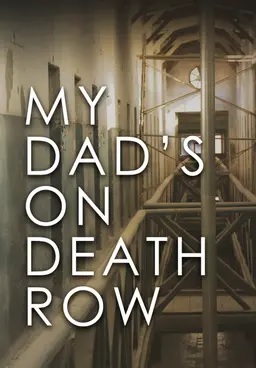
Documentary Review: My Dad’s On Death Row (dir by Thomas Leader)


A British documentary from 2016, My Dad’s On Death Row tells the story of two men who sat on Texas’s death row.

John Battaglia was a handsome man with a charming smile who, despite having a violent criminal record, had established himself as a respected accountant who had friends who lived in Highland Park (the richest part of Dallas) and who lived in a hip apartment in Deep Ellum.  In 1999, his wife filed for divorce and Battaglia was given probation after pleading guilty to a misdemeanor charge of spousal abuse.  When he continued to call his ex-wife in violation of a restraining order, she threatened to inform his probation office.  Battaglia reacted by taking his two youngest daughters to his apartment, calling his ex-wife, and then forcing her to listen as he murdered them.  After killing his daughters, Battaglia went to a nearby tattoo parlor and got two roses tattooed on his bicep.  The cops who saw the crime scene described it as the most horrific thing that they had ever seen.  Battaglia was arrested and convicted of the crime.  When Battaglia was sentenced to death, he turned to his ex-wife in the courtroom and told her to “Burn in Hell.”

Coy Wayne Westbrook murdered five people, including his ex-wife, at a party in Channelview, Texas.  Westbrook said that, after his ex-wife and the other party guests made fun of him and his attempts to reconcile with her, Westbrook went out to his truck, grabbed a rifle, and opened fire when he returned.  Despite Westbrook’s claim that he didn’t originally mean to kill anyone and the defense’s claim that Westbrook’s low IQ made his incapable of understanding his actions, a jury still sentenced him to death.

Both Coy Westbrook and John Battaglia are dead now, executed by the state of Texas.  My Dad’s On Death Row documents their final days and features interviews with them, the surviving members of their families, and people who both support and oppose the death penalty.  While this British-made documentary is critical of the death penalty, it never makes the mistake of idealizing or excusing either Coy Westbrook or John Battaglia.  As someone who is personally opposed to the death penalty, nothing annoys me more than the counter-productive tendency of certain anti-capital punishment activists to insist that everyone on Death Row was either wrongly convicted or is a saint in disguise.  This documentary leaves no doubt that both Westbrook and Battaglia were guilty of the crimes for which they were convicted.  When John Battaglia smirks while he discusses abusing his wife and murdering his children, even the most liberal of viewers will want to reach through the screen and wring his neck.

The film focuses on two daughters.  Westbrook’s daughter fought to save her father’s life.  Battaglia’s surviving daughter supported his execution.  Both of them carry the psychological scars of their father’s crimes.  In its nonjudgmental way, the documentary examines what it’s like to be the child of a parent who has committed the worst crime imaginable.  Even more than being about how people die in prison, it’s about how those left behind struggle to continue their lives.  It’s a moving and thought-provoking documentary and it can currently be viewed on Tubi.

Guilty Pleasure No. 63: Julie and Jack (dir by James Nguyen)


“Sex isn’t the only thing I care about. It’s just that I’ve always imagined myself falling in love with someone …. who’s alive. I know that may sound strange to you, but it’s just the way I was brought up.”

Sometimes, it just takes one line to transform a mere bad movie into a masterpiece of weirdness and that’s certainly what happens in 2003’s Julie and Jack when Jack Livingston (Justin Kunkle) attempts to explain why he’s having trouble with the idea of committing to Julie Romanov (Jenn Gotzon).  Jack is a computer chip salesman who has been unlucky in love until he joins CupidMatchmaker.Com and meets Julie Romanov.  He quickly falls in love with Julie, despite the fact that she refuses to tell him anything about her past and he never meets her in person.  Instead, they spend their time walking around a virtual reality recreation of San Francisco.

Why is Julie so sensitive?  Well, Julie is not exactly alive.  When she was among the living, she was a brilliant computer programmer but, when she found out she was dying of a brain tumor, she managed to transfer her mind into the Internet.  Her body may be dead but her mind and her personality live on, haunting dating websites.  When Jack discovers the truth about his new girlfriend, he has to decide if he can be in love with someone with whom he can never have sex.

(It never seems to occur to either Jack or Julie that there also might be issues involved with someone having a relationship in which one person who is no longer among the living and will never age while her partner gets older and closer to his own death.)

It’s pretty dumb but it’s also so earnest and stupidly sincere that it’s kind of hard not to like it.  Julie and Jack was the directorial debut of James Nguyen, who went on achieve a certain cinematic infamy with the Birdemic films.  Just as the Birdemic films seemed to sincerely believe that they had something important to say about environmentalism, Julie and Jack has similar delusions of grandeur, with the main difference being that the message of Julie and Jack is a bit more heartfelt than Birdemic’s Al Gore-inspired preachiness.

The film has all of the things that we normally associate with James Nguyen’s work.  The pointless driving scenes, the meandering travelogue shots of San Francisco, the scenes were everyone in a boardroom applauds, they’re all here with Nguyen’s other trademark obsessions.  Because it’s not a Nguyen film without a reference to Hitchcock,  Tippi Hedren has a cameo appearance as Julie’s mother and, of course, Nguyen includes a scene in which she talks about how much she loves birds.  Do you think Hedren ever got tired of directors telling her to react to birds?  I mean, she did make other films.  Of course, other than Marnie and Roar, I can’t really think of any of them right now….

Anyway, Julie and Jack is silly and dumb and visually, it looks like a community college student film.  At the same time, it’s so sincere and so cheerfully clueless about its inability to be the thought-provoking and mind-bending love story that it wants to be that I can’t help but like it a little.  It’s a film that tries very, very hard and it’s difficult not to appreciate, on at least some level, the effort.

Previous Guilty Pleasures

  1. Half-Baked
  2. Save The Last Dance
  3. Every Rose Has Its Thorns
  4. The Jeremy Kyle Show
  5. Invasion USA
  6. The Golden Child
  7. Final Destination 2
  8. Paparazzi
  9. The Principal
  10. The Substitute
  11. Terror In The Family
  12. Pandorum
  13. Lambada
  14. Fear
  15. Cocktail
  16. Keep Off The Grass
  17. Girls, Girls, Girls
  18. Class
  19. Tart
  20. King Kong vs. Godzilla
  21. Hawk the Slayer
  22. Battle Beyond the Stars
  23. Meridian
  24. Walk of Shame
  25. From Justin To Kelly
  26. Project Greenlight
  27. Sex Decoy: Love Stings
  28. Swimfan
  29. On the Line
  30. Wolfen
  31. Hail Caesar!
  32. It’s So Cold In The D
  33. In the Mix
  34. Healed By Grace
  35. Valley of the Dolls
  36. The Legend of Billie Jean
  37. Death Wish
  38. Shipping Wars
  39. Ghost Whisperer
  40. Parking Wars
  41. The Dead Are After Me
  42. Harper’s Island
  43. The Resurrection of Gavin Stone
  44. Paranormal State
  45. Utopia
  46. Bar Rescue
  47. The Powers of Matthew Star
  48. Spiker
  49. Heavenly Bodies
  50. Maid in Manhattan
  51. Rage and Honor
  52. Saved By The Bell 3. 21 “No Hope With Dope”
  53. Happy Gilmore
  54. Solarbabies
  55. The Dawn of Correction
  56. Once You Understand
  57. The Voyeurs 
  58. Robot Jox
  59. Teen Wolf
  60. The Running Man
  61. Double Dragon
  62. Backtrack

Retro Television Reviews: Miami Vice 1.3 “Heart of Darkness”


Welcome to Retro Television Reviews, a feature where we review some of our favorite and least favorite shows of the past!  On Mondays, I will be reviewing Miami Vice, which ran on NBC from 1984 to 1989.  The entire show is currently streaming on Tubi!

This week, Crockett and Tubbs drive into the abyss and discover what happens when you lose yourself in vice.

Episode 1.3 “Heart of Darkness”

(Dir by John Llewellyn Moxey, originally aired on September 28th, 1984)

The third episode of Miami Vice appears to be take place at least a month or two after the end of the pilot.  Tubbs is not only now a member of the Miami Vice Squad but he and Crockett are now best friends.  Gone is all the animosity and mistrust that characterized their initial relationship.  Now, Crockett is willing to open up to Tubbs and Tubbs is willing to defend Crockett’s pet alligator, Elvis, when Sonny briefly flies into rage mode and threatens to throw away its favorite blanket.

(Sonny is upset because Elvis, who doesn’t like being left on the boat alone, ate one of Sonny’s records.)

Though Tubbs has been accepted by the Vice Squad, he’s still struggling to adjust to Miami, which is a bit more laid back than New York.  Early on, he complains to Lt. Rodriguez about his apartment.  Rodriguez just rolls his eyes.  Sorry, Tubbs.  Only one Miami cop gets to live with an alligator on a houseboat.  Everyone else is stuck with a one-bedroom.

Crockett and Tubbs’s current assignment is to penetrate the world of Southern Florida porn kingpin, Walter Kovics (Paul Hecht).  Kovics is involved with the Mafia and is suspected of having ordered several murders.  When one of his actresses (played by Suzy Amis, making her television debut) is not only murdered but also turns out to be an underage runaway from Kansas, the case becomes personal.  Crockett and Tubbs want to take down Kovics but the only way to get to Kovics is through his second-in-command, Artie Rollins.  At first glance, Artie seems to be a typical coked up criminal but, upon further investigation, Crockett and Tubbs learn that Artie Rollins is actually Arthur Lawson, an FBI agent who has spent the last few years of his life working undercover.  Now, no one is sure if Artie is still working undercover or if he’s truly gone over to the other side.  Artie claims that he’s still working to bring down Kovics but when Kovics discovers that Crockett and Tubbs are undercover cops, Artie is the one who is ordered to shoot them.  Which side is Artie on?  Not even he seems to know for sure.

Artie is played by Ed O’Neill.  The future star of Married With Children and Modern Family star was in his mid-thirties when he appeared in Miami Vice and this was one of his earliest television roles.  O’Neill gives an unpredictable performance, one that is often frightening and sometimes even a bit poignant.  As played by O’Neill, Arthur is a man who has truly lost himself and the character is compelling because Arthur himself doesn’t seem to know what he’s going to do from minute-to-minute.  He may want to take down Kovics but he’s also spent so many years in Kovics’s world that he knows he won’t ever be able to adjust to anything else.  In the end, Arthur does the right thing but he sacrifices his soul as he does it and his joy at gunning down Kovics is almost as disturbing as the look he had in his eyes when he was previously considering whether to execute Crockett and Tubbs.  The show’s final moments find Crockett and Tubbs sitting in a cop bar.  Crockett confesses that he saw a lot of himself in Arthur Lawson.  Rodriguez approaches them and informs them that, while being debriefed at FBI headquarters, Arthur committed suicide.

This was an interesting episode.  The plot was a bit conventional but it was elevated by Ed O’Neill’s performance as the unstable Arthur.  (O’Neill kept the viewer guessing, along with Crockett and Tubbs, as to who Arthur really was.)  And, of course, just when it seems like everyone’s gotten their happy ending, Rodriguez reminded us that happy endings are never guaranteed.  Everything comes with a price.  Indeed, that’s one of the major themes of Miami Vice.  Arthur sacrificed his identity, his soul, and ultimately his life to see that justice was done but, in the end, someone will quickly replace Kovics and the business of vice will continue with little interruption.  Arthur will be largely forgotten and only mentioned as a cautionary tale.  Can anyone blame Sonny for wanting to spend all of his time on a boat with an alligator?