What Lisa and the Snarkalecs Watched Last Night #105: Zodiac: Signs of the Apocalypse (dir by W.D. Hogan)


Last night, my friends, the Snarkalecs, and I watched the latest SyFy original film, Zodiac: Signs of the Apocalypse!  So, was Zodiac as good as Sharknado 2, as underrated as End of the World, as overrated as Invasion Roswell, or as bad as Heebie Jeebies?  Or was it just somewhere in between?  Let’s find out!
Zodiac

Why Was I Watching It?

Why were we watching it?  Because I’m a snarkalec and that’s what we do!  We watch original films on SyFy, we tweet along, and we do our best to try to get things to trend.  My hope was that Zodiac would eventually become a trending topic on California and end up freaking out a lot of people who would naturally assume that the legendary Zodiac Killer had finally been caught.  Unfortunately, last night, we were competing with football and this is America.  Nothing beats football.

What Was It About?

Good question.  It was a SyFy movie so naturally, the world was on the verge of ending.  And somehow, the upcoming apocalypse involved the signs of the zodiac and an ancient stone that was found in a deserted mine.  There was a bad business guy named Woodward (Aaron Douglas) or maybe he was a government guy.  But, for some reason, he wanted to get the stone so he could do evil things with it.  Luckily, there were three scientists (Joel Gretsch, Andrea Brooks, and Emily Holmes) and one scientist’s son (Reilly Dolman) who were attempting to save the world.  And Christopher Lloyd was in it, playing yet another scientist who had apparently invented holograms or something like that.  There was also a guy named Marty (Ben Cotton) who was a survivalist and lived in a really spacious bunker.

And let’s see, what else happened?  Fire rained from the sky.  Raging floods soaked the Earth.  Woodward flew around in a helicopter.  The scientists spent a lot of time driving around in an SUV.  A lot of stuff happened.  How it was all related was not always easy to follow but, then again, we all know that if you’re tying to make logical sense out of a SyFy film, you’re doing it wrong.

What Worked?

You know what?  I always think that when people criticize SyFy films, they’re missing the point.  SyFy films are supposed to be silly, the special effects are supposed to be cheap, and the performances are supposed to be melodramatic.  Occasionally — like with Sharknado 2 for instance — these elements come together perfectly.  And then other times, like with Zodiac, the end results are fun for two hours and quickly forgotten about afterward.  Zodiac was no Sharknado 2 but it gave us everything that we typically want from our SyFy films, it was a fun movie to tweet along with, and it gave the viewers a few laughs.

Perhaps not surprisingly, Zodiac was a Canadian film and Canada certainly looked pretty.

What Did Not Work?

For a film that was sold as being about the signs of the apocalypse destroying the world, the greatest sign of all — Scorpio — was sadly underused.  I kept expecting a scorpion-shaped cloud to form in the sky but it never happened!  Speaking as a Scorpio, I was very let down.

“Oh my God!  Just like me!” Moments

My favorite character was Sophie (Andrea Brooks), the kickass scientist who survived being buried alive in a mine, not to mention Aquarius, Capricorn, and Sagittarius!  And she did it all while rocking the traditional SyFy scientist outfit of tank top and tight jeans.  She also had great hair!  If I wasn’t already planning on being the Black Widow, I’d be Sophie for Halloween.  She was the best!

WDH-ZODIAC-2014-Andrea-Brooks-2-compressor

Lessons Learned

Don’t mess with the Zodiac.
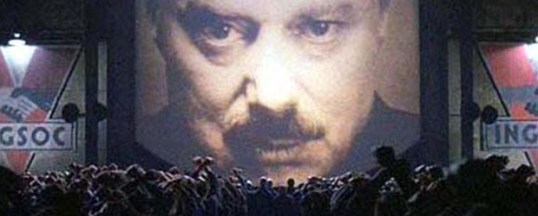
Film Review: Nineteen Eighty-Four (dir by Michael Radford)


Nineteen-Eighty-Four

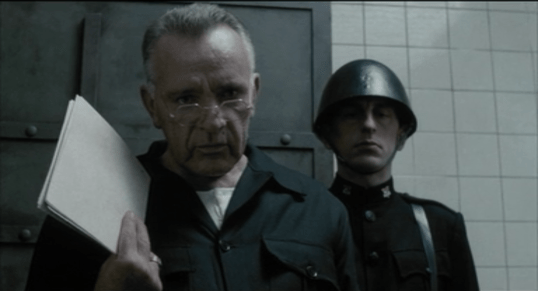
Yesterday, as I was flipping through the channels, I came across a documentary that was being shown on This TV.  The documentary was called Nineteen Eighty-Four and it told the story of a low-level British bureaucrat named Winston Smith (who bore a strong resemblance to a youngish John Hurt)  who, after having a secret affair with a free-spirited woman, was charged with committing “thought crimes” against the state.  As a result, he was tortured by a man named O’Brien (who looked a lot like Richard Burton) until Winston finally came to love the government above all else…

What’s that?

Okay, you caught me.

This movie was not a documentary.  Instead, it was an adaptation of George Orwell’s famous novel about a dystopian future Britain (quite cleverly renamed Airstrip One in both the book and the film) where the citizens spend their time giving thanks to Big Brother, a leader who may or may not actually be a fictional creation of the ruling party.  It’s a world where everyone knows that “Big Brother is watching you” and every day is scheduled around the “two-minute hates” that are directed towards Big Brother’s enemy, Emmanuel Goldstein (who, much like Big Brother, may or may not actually exist).  It’s a world dominated by three separate superstates that are in a state of perpetual war, though we’re also given reason to suspect that the war is just as fictional as Big Brother and Goldstein might be.  It’s a world where order is kept by the Thought Police and history is regularly changed for the benefit of the ruling party.  It’s a world where people can become unpersons and cease to exist and where all good citizens understand that one plus one equals three if the government says that it does.

So, no, it’s not a documentary.

It just feels like one.

Richard Burton 1984

As I watched Nineteen Eight-Four, it was impossible for me not to compare Orwell’s vision of the future (which is faithfully visualized in the film) with our present world.  Even though the book was written in 1948 and this film was shot and released in 1984, it was hard not to feel as if Nineteen Eighty-Four could have just as easily been made yesterday.  Beyond the obvious NSA-as-Big-Brother comparisons that everyone makes, it was hard not to compare the brainwashed citizens waiting to hear from Big Brother with the people today who slavishly repeat whatever talking points they hear on MSNBC or Fox News.  How different, I wondered, was Big Brother railing against Goldstein from our President continually telling us that we’re at war with the “forces of cynicism” and that anyone who disagrees with him is not just expressing an opinion but instead is being unpatriotic?  When O’Brien explained how the Party stayed in power by keeping the people perpetually angry at unseen enemies, he might as well have been talking about our own elected officials.  And, when the Thought Police finally arrested Winston and Julia, it brought to mind the images of the militarized police force of Ferguson, Missouri.

And that, I think, is why Nineteen Eighty-Four remains so powerful as both a book and a film.  We live in a world where we are told more and more often that, regardless of what it does, the government is in charge and must be obeyed.  We live in a world where we are currently told that good citizens must obey the law simply because it is the law.  We’re told not to question why a police force needs to resemble an invading army.  We’re told not to question why a member of the police force might happen to shoot an unarmed black teenager multiple times.  We’re told not to question the official history.  Instead, we’re just supposed to live in a state of blind obedience and accept, on faith alone, that those in charge are always right.  We’re supposed to “respect authority” and not think about the specifics.

Thought Police or the Ferguson PD?

Thought Police or the Ferguson PD?

In short, we’re living in the world of Nineteen Eight-Four whether we realize it or not.

As for the film itself, it’s a powerful and surprisingly faithful adaptation of Orwell’s novel.  John Hurt is perfectly cast as Winston Smith and Suzanna Hamilton is sympathetic as Julia.  The two of them have a very real chemistry in this film and it makes the inevitable final scenes all the more disturbing and tragic.  This was also Richard Burton’s final film.  After years of alcoholism, Burton died shortly after filming ended and he looks ill throughout Nineteen Eighty-Four.  But his obvious ill-health actually works to the role’s advantage.  As played by Burton, O’Brien becomes the perfect embodiment of the morally corrupt ruling Party.  The scenes where O’Brien tortures Hurt as difficult to watch, as they should be.  But both Hurt and Burton give such committed performances that you can’t look away even when you want to.  Finally, Nineteen Eighty-Four was an early job for the great cinematographer Roger Deakins and the film has a memorably bleak look to it.  The drabness of Air Strip One perfectly mirrors the empty life of its citizens and it serves as a perfect contrast to the lushness of Winston’s fantasies.

Nineteen Eighty-Four is not an easy film to watch but it’s one that everyone should track down and see.  Watch it and ask yourself how different 1984 is from 2014.

1984-john-hurt

Now Showing On The Shattered Lens: Flight to Mars (dir by Lesley Selander)


Flight_to_mars

Are you lucky enough to have an extra 70 minutes free today?  Why not spend them watching an entertaining little B-movie called Flight to Mars?

First released in 1951, Flight to Mars is reportedly the first American film to ever be made about traveling to the red planet.  At the start of the film, a rather phallic spaceship is launched into space.  Aboard the ship are cynical reporter Steve (Cameron Mitchell), brilliant scientist Jim (Arthur Franz), token female scientist Carol (Virginia Huston), and a few other scientists who all kind of blend together.  Steve is attracted to Carol but Carol is more interested in Jim.  However, Jim isn’t interested in anything other than his work.  When the spaceship does reach Mars, it turns out that Mars is a lot like Earth and the Martians are a lot like us.  The main difference between humans and Martians appears to be that Martian women wear miniskirts.  Among those Martian women is Alita (Marguerite Chapman), who falls in love with Jim.  The rest of Mars, however, is not quite as infatuated with their intergalactic visitors…

Flight to Mars is definitely a product of its time.  This is one of those films where the men are all blatantly sexist and the women are usually just happy to be noticed.  Carol, for instance, is overjoyed to discover that they have kitchens on Mars and, while the men spend all of their time making plans, Carol usually just stands in the background, eating Martian snacks and pining for Jim.  Of course, Jim only has eyes for Alita, who, upon meeting the virile males of Earth, has absolutely no problem betraying her entire planet.  Beyond the sexist attitudes, Flight to Mars is also distinguished by presenting space travel as being the equivalent of a long flight on a small airplane.  This is definitely a low-budget B-movie that has absolutely no relation to science fact (or, for that matter, any other type of fact).

And, to be honest, that’s why I like the film.  It truly is such a time capsule that just watching it will make you wonder if Eisenhower is still in the White House.  I’ve always felt that the best way to learn about history is to experience it personally and one of the best ways to do that is to watch a movie that could only have been made during a certain period of time.  And trust me, Flight to Mars is pure 1951.  As for the film’s low budget — well, this film proves that you don’t need CGI to create an alien world.  Sometimes, cardboard and colorful costumes work just as well.  And, as for the film’s science — well, facts are boring.  That’s one reason why good people have often turned to science fiction.

So, if you’ve got 70 minutes to kill, why not experience Flight to Mars?

Enjoy!

Film Review: Into the Storm (dir by Steve Quale)


Forgettable.

If I had to sum up Into the Storm in just one word, that’s how I would do it.  It’s only been a few hours since Jeff and I sat through Into the Storm and, as I sit here now trying to write this review, I am surprised by just how little of an impression this film made on me.  Even the special effects, which did impress me while I was watching the film, are good without exactly being memorable.   There is only one scene that I can remember almost perfectly, in which a veteran storm chaser (Matt Walsh, who is wonderful on Veep) takes advantage of a small moment of calm to look at nature and allows himself one quick smile before Oklahoma gets hit by another tornado.  It’s probably the only genuinely human moment in the entire movie.  Unfortunately, it’s only a few seconds in an 89-minute film.

Into the Storm is a found footage film, in which the small town of Silverton, Oklahoma is struck by a few dozen tornadoes, which all eventually merge into one big tornado.  Fortunately, everyone in the film has an excuse to justify continually running towards the tornadoes while holding up their cell phones and shouting, “Are you getting this!?”

For instance, there’s Pete the storm chaser who needs to get some amazing footage of tornado mayhem, otherwise the whole storm  “season” will have been a waste for him.  Accompanying Pete are the usual gang of doomed cameramen and a meteorologist (Sarah Wayne Callies) who has left behind her five year-old daughter so she can chase wall clouds across the southwest.  And then there’s two dumbass rednecks (Jon Reep and Kyle Davis), who desperately want to be YouTube sensations.  And, of course, let’s not forget the graduating class of Silverton High School.  SHS’s principal (Scott Lawrence) is a dead ringer for Barack Obama, which is perhaps why he proves to be totally ineffectual when it comes to dealing with natural disasters in Oklahoma and Texas.  The vice-principal (Richard Armitage) is the father of two sullen teenagers (Jeremy Sumpter and Nathan Kress) and you better believe that the whole experience makes them into a stronger family unit…

None of the characters are particularly interesting or even likable but that’s really not supposed to matter, is it?  This is the type of film where you’re supposed to be so pleased with the special effects that you’re willing to overlook the bad dialogue and predictable plot, right?  Well, if that’s the case, then why does it take so long for the tornadoes to actually show up?  Why do we spend so much time getting to know these thoroughly vapid and uninteresting characters?  And why, oh why, does this film have to end with the survivors looking over the ruins of their city and talking about how this whole experience has inspired them to embrace life?  It seems like they could have just as easily learned the same thing from reading a greeting card.  Was it really necessary for a tornado to come down and probably kill 60% of the town just so they could be taught such an obvious lesson?

Trust me, I grew up and I live in Tornado Alley.  Not a year has passed that I haven’t had to spend at least one day stuck inside and waiting for word as to whether or not a tornado is going to dip down into my part of the world and potentially kill me and everyone I love.  (Just a few months ago, I literally spent an hour and a half huddled underneath a desk while listening to the mournful wail of the tornado sirens going off outside.)  I’ve also seen firsthand the unbelievable damage that tornadoes can do.  Walk up to real tornado survivors and tell them, preferably while they’re standing in front of the rubble that used to be their home, that their misfortune has inspired you to enjoy every day of your life.  Just see how they react.

The film is directed by Steve Quale, who first came to prominence working under James Cameron.  Perhaps we shouldn’t be surprised, therefore, that he seems to be more comfortable with CGI than with actual human beings.  But still, Quale’s debut as a director — Final Destination 5 — was actually a pretty effective little horror film that featured some surprisingly witty and clever moments.  Little of the skill that Quale displayed in Final Destination 5 is on display here in Into The Storm.  I’m not a huge fan of the whole found footage thing to begin with (occasionally you get a Devil’s Due but most found footage films are more like Paranormal Activity The Marked Ones) but if you are going to make a film in that style, at least play by the rules.  As directed by Quale, the majority of the film is directed to look like found footage and, hence, it suffers from all of the problems that we tend to associate with found footage.  But, jarringly and almost at random, Quale occasionally abandons the whole found footage conceit and suddenly, we’re just watching an ordinary film.  For found footage to work as a genre, you can’t remind the audience that it’s essentially a gimmick that’s often used to make excuses for sloppy filmmaking.  And, for too often, that’s exactly what this film does.

Now, don’t get me wrong.  I guess Into The Storm is okay for what it is.  After all, the film wasn’t advertised as being a great film.  It hasn’t been mentioned as a potential Oscar nominee or anything.  The commercials promised footage of tornadoes destroying a town and that’s what this film eventually gets around to showing.  Plus,  it didn’t feature any talking turtles and that’s definitely a plus.  But, at the same time, I think those of us in the audience are justified in occasionally asking for something more than merely okay.

hr_Into_the_Storm_5

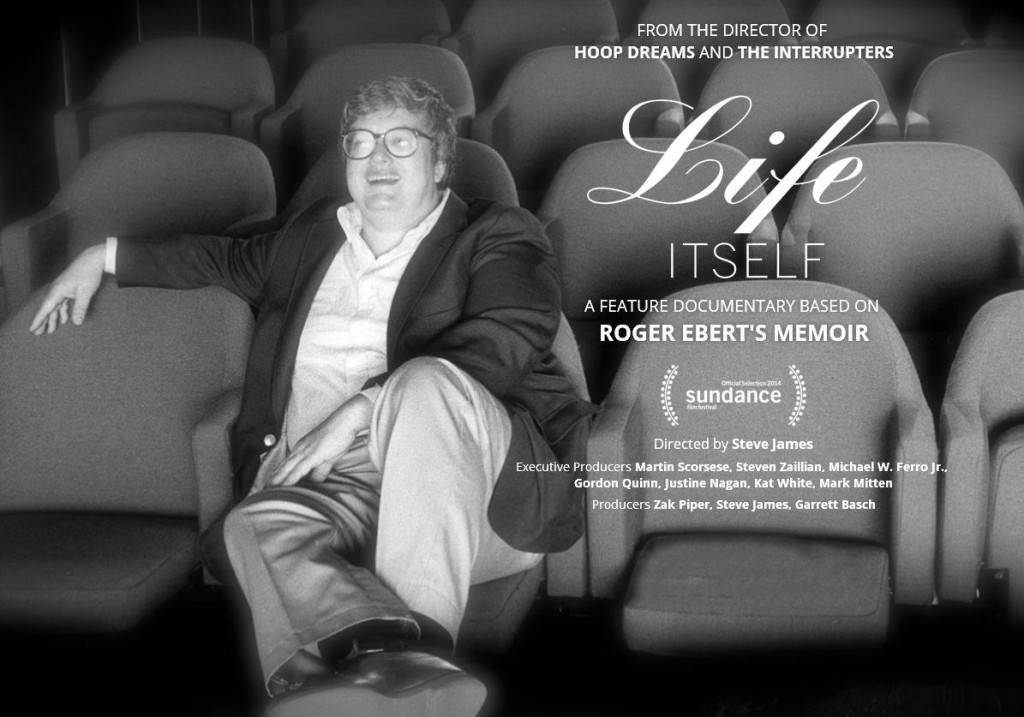
‘Life Itself’ Review (dir. Steve James)


Life-Itself-poster-1024x7171

“We all are born with a certain package. We are who we are: where we were born, who we were born as, how we were raised. We’re kind of stuck inside that person, and the purpose of civilization and growth is to be able to reach out and empathize a little bit with other people. And for me, the movies are like a machine that generates empathy. It lets you understand a little bit more about different hopes, aspirations, dreams and fears. It helps us to identify with the people who are sharing this journey with us.” – Roger Ebert

I’ve enjoyed film for pretty much all my life, but I didn’t truly come to appreciate and love it as an art form – as something more than simply entertainment – until my first year of college (I know, how cliché). I didn’t just come to love watching film, but (as you can obviously see as I write this) I came to love reviewing and discussing the medium with others as well. The first critic who introduced me to film criticism was Roger Ebert. His reviews were the first to really click with me. It wasn’t because I always agreed with him (because I definitely didn’t); but it was because I truly, truly admired his love of film. It was a contagious sort of love, a passion I never knew could be had for motion pictures. Following his example I too began writing about films and discussing them on forums and blogs. These discussions opened up the door really, and I charged head first, exploring the medium more deeply than I ever imagined I could.

It became a journey that I can honestly say made me the person I am today. Film was, and always will be, what I turn too when I am happy, bored and most importantly when I am sad. The best example I have of this was when my grandfather passed away years ago. It was a special sort of hurt, and no discussions with family or friends could do much to quell that pain. I remember sitting down the night it happened, alone in my dark room, and deciding to watch ‘Amelie’. It is a film I adored, one of the few films that truly moved me with every viewing. When it ended, as it had done many times before, I had a huge smile on my face. It did it again. Film did it again; it was once again one of the few things in my life that could heal, or overshadow, any hurt I happened to be feeling. I don’t think I would have known about or adored ‘Amelie’ if not for the journey my love for film had created – a love that wouldn’t have blossomed without the analysis and discussions I had about them – discussions I would never have started if I hadn’t read Roger’s reviews religiously and decided to start writing some myself.

That is why I was deeply saddened when Roger Ebert passed away. He is one of those rare people for me who although I never actually met or spoke with him, he still managed to have a profound effect on my life. An effect that still moves me, as I learned today as I finally watched ‘Life Itself’. I shamefully had put it off for far too long, partly because I think I knew the sort of emotional response I would have towards it. But as the quote I began this posts says, film helps us “identify with the people who are sharing this journey with us”, and it was about time I took a look at the journey that was the life of Roger Ebert.

And boy, was it rough. It did bring me to the verge of tears, as I expected, but I loved every minute of it. ‘Life Itself’ is an honest and in depth portrait of a man who wasn’t without his faults. But no matter what battles he encountered – either with alcohol, his colleagues, or cancer – he still faced everyday ready for what came next. He had a passion for life that was reflected in his passion for film – or maybe the other way around. This for me is what shined through the documentary, handled with such care and attention by Steve James. It is an affectionate tribute to a man who moved so many, generating the very same empathy that Ebert himself loved about film, and for that I think it deserves two big thumbs up.

———–

More of my nonsense on Twitter.

10 Reasons Why Sharknado 2 Was Sharktastic!


sharknado-2-poster

Unless you’ve been living in total and complete isolation, you know that Sharknado 2 premiered on SyFy last night.  And of course, I watched and live tweeted it.  Now, when it comes Sharknado 2, it seems like everyone has one question: Was it better than Sharknado?

The answer?

Yes.  Yes, it was.

Here are 10 reasons why Sharknado 2 was sharktastic!

1) Action!  Action!  Action!

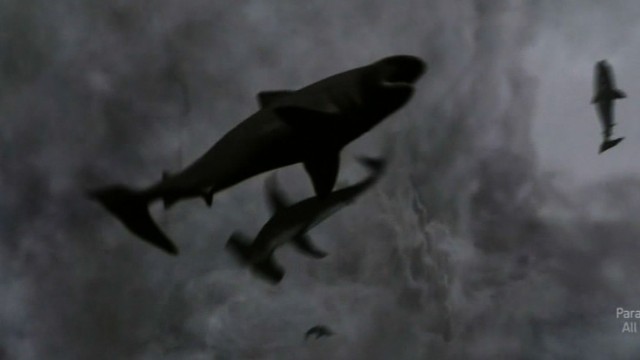
Sharknado 2 didn’t waste any time getting to the point.  From the minute the film started with Ian Ziering and Tara Reid sitting in an airplane that’s hit some sharknado-related turbulence, Sharknado 2 was all about sharks falling from the sky.  The film didn’t waste any time revisiting the events of the previous film or trying to explain, for a second time, how a bunch of sharks ended up in a tornado.  And you know what?  If you were worry about the logic of the situation then you really weren’t the right audience for this film.  Sharknado 2 was a movie for those of us seeking nonstop shark mayhem and it delivered!

2) Plenty of New York Attitude

When the first sharknado hit Los Angeles, we were presented with a portrait of a town that deserved to be destroyed.  I mean — really, Los Angeles?  A little bad weather and a few sharks and your entire population is screaming and fleeing?  New York, however, knows how to handle a sharknado.  It didn’t matter how many sharks fell from the sky — the citizens of New York refused to allow it to stop them from enjoying baseball games, visiting the Statue of Liberty, and seeking out a good slice of pizza.  New York, you’re the tops!

3) Tara Reid Showed Us How To Handle Losing A Hand

I don’t know about you but if a shark fell out of the sky and bit off my hand, I would probably freak out.  Having watched Sharknado 2, I can say that I am definitely not as strong as Tara Reid.  Though she may have lost her hand early on in this movie, she never let it slow her down.  Not only did she defiantly walk out of the hospital but she also managed to drive a fire truck with only one hand!  I’ve got two hands and I don’t think I could do that.  Finally, as a perfect example of how to make lemonade out of lemons, she even replaced her missing hand with a radial saw that, as it turns out, was perfect for fighting sharks.  You go, girl!

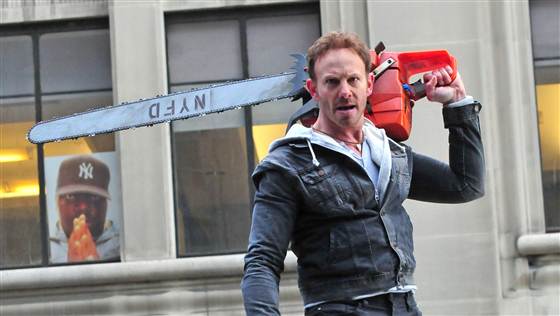
4) Ian Ziering Gave It All He Could

In the first Sharknado, Ian seemed almost annoyed to be there.  You got the feeling that he felt that somehow, by appearing in a movie about flying sharks, he was somehow damaging his career.  In Sharknado 2, however, Ian brought a lot of conviction to his role.  Though it may be hard to understand if you haven’t seen the actual film, I’ll just say that you looked at and listened to Ian and you believed that this man had indeed been inside of a shark.

IZ in Sharknado 2


5) The Statue Of Liberty Lost Her Head

And you better believe that head went rolling down the streets of New York.  I am a little bit disappointed that Ian never found a moment to stare up at headless Lady Liberty and shout, “You blew it up!  Damn you to Hell!” but oh well.

6) Cameos Galore!

Seeing as how the first Sharknado became a bit of a pop cultural phenomena, we should probably not be surprised that a lot of celebrities agreed to do cameos in the sequel.  What should surprise, however, is just how well the cameos were integrated into the film.  Whether it was Kelly Osbourne getting eaten by a shark or Matt Lauer and Al Roker arguing over the proper name for the storm (eventually, Matt did call it a sharknado and you can see just how happy Al was; it was a touching moment), all of the cameos worked brilliantly and, even more importantly, they didn’t distract from all of the shark mayhem.

7) The Live Tweeters Were On Fire Last Night!

Especially me!  Seriously, Sharknado 2 brought out the best in me.

8) Ian Wasn’t The Only Actor Giving It His All

To be honest, the entire cast brought their A game to Sharknado 2.  Everyone from Vivica A. Fox to Mark McGrath to Kari Wuhrer to Tara Reid to Judd Hirsch to well, everyone seemed to understand that for this material to work, they had to be willing to say some of the most ludicrous lines imaginable with a straight face.  If a single member of the cast had tried to wink at the audience or play up the film’s inherent campiness, the entire film would have fallen apart.  Instead, everyone brought a lot of conviction to their roles.  Instead of mocking the film and their dialogue, you could tell that they were instead having fun with it and, as a result, the audience had a lot of fun as well.

9) Kelly Ripa Stamped On The Head Of A Hammerhead Shark

Proof positive that high heels can be a girl’s best friend.

10) Everyone Watched it!

And you know what that means:  SHARKNADO 3!

Sharknado 2

‘Lucy’ Review (dir. Luc Besson)


650_1000_lucy-poster

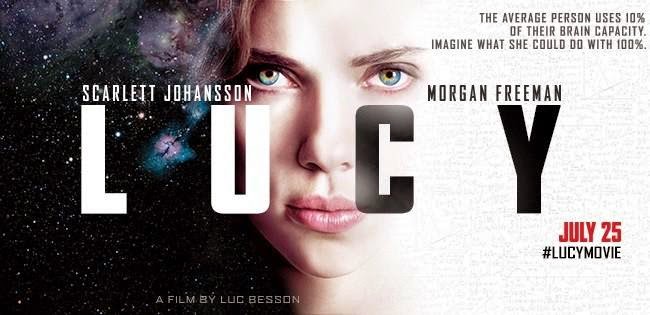
You should probably be forewarned – ‘Lucy’ is nothing like the film the marketing would make you believe. It requires one to go in with an open mind…just also be prepared for that mind to be set of fire and stomped into a mush…for better or worse.

The film stars Scarlett Johansson as Lucy, a young American student in Taiwan, who is kidnapped and forced to be a drug mule. The drug she must transport is a new one named CPH4, derived from the chemicals that a mother’s body sends its developing baby, which is surgically placed into her lower abdomen. During the transport she is beaten, causing the bag holding it to puncture, and the drug to be released into her system. The drug begins to change her at a cellular level giving her access to more of her brains potential.

I think it needs to be said that the film is not trying to say we only use 10% of the physical brain (which is the debunked myth) but rather that we only utilize 10% of its potential. Think of it not as an engine only using 10% of its parts, but rather an engine that uses 100% of its parts but only outputs 10% of the power it should and can produce. Then think of the drug, like a more powerful engine fuel, allowing the brain to generate 100% power.

As her knowledge and cerebral capacity grows the film takes some really weird turns as it plays around with the idea of what exactly the human mind could achieve once its full potential is unlocked. Could we control all the cells in our body? Could we control others? Could we feel and manipulate matter and energy? Once you can control both, can you then control time? She begins to be able to see through people, enter their memories, see the energy output of cells, change her hair color, control radio waves…and a whole lot of other crazy stuff. To better understand what is happening to her, and to help pass on the knowledge she is beginning to learn, she sets out to meet a professor who studied and theorized the very changes she is undergoing.

Lucy 1

During all this Lucy is also being hunted by the gangsters who want their drug back. This is where the film is arguably at its worst. It leads to some ridiculous shoot outs – and one somewhat out of the blue car chase – which don’t really add much to the overall film. They do create a slight feeling of suspense, but once you get into the scientific and philosophical areas that ‘Lucy’ ventures into, then all the cliché action movie stuff just seems to get in the way.

Luckily none of that really matters as the film’s end approaches and it goes straight past ludicrous speed right into plaid as Lucy, now able to control time, cycles through the history of the earth, right past its creation all the way up to the big bang and beyond. To what end? Perhaps it is to better understand the universe or maybe it is just because she (and Luc Besson) can…there is a lot here that will make you scratch your head. The film definitely tries to be a lot smarter than it is and is built on theories based on theories based on pipe dreams. Still, it never gets any more ridiculous than most superhero-esque films.

Lucy 2

The thing that drives it all ( and really keeps it all together) is Scarlet Johansson’s performance. She once again proves to me that she is one of the most interesting actors working right now. She has chosen so many diverse roles in recent years; and as weird as it may sound there are few actors working right now who can express so much through being so completely expressionless in the way she can. She brought more life and emotion to a computer A.I. than most actors did in live action roles last year; and here, as in ‘Under the Skin’, there is quite a lot going on behind her seemingly blank stare.

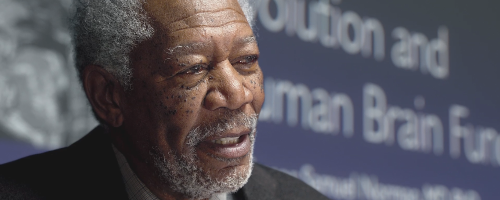
Her co-star Morgan Freeman sadly does little more than offer exposition. He plays a professor who studies neuroscience and evolution and spends most of the film explaining how and why particular things are happening to Lucy. Freeman seems to be the go to for this sort of role. But that voice really is the only thing that can make this sort of pseudoscience seem convincing.

lucy 3

I have to say it truly is amazing that the film works at all. ‘Lucy’ manages to be just as dumb at times as it is smart. But I was able to overlook the silliness of much of it simply for the fact that the film does attempt to ask some interesting questions, even if they don’t make much sense. From start to finish the film travels down such a fun and exciting tongue in cheek rabbit hole of explosions and trippy visuals and I loved every minute of it. It gets so crazy that at one point Benjamin Franklin’s head literally explodes. It is a mishmash of so many ideas and themes, done with such excitement and ambition, that it is hard to hate any of it. As some critics have mentioned, it really is a Besson action film smashed together with ‘2001: A Space Odyssey’ and parts of ‘The Tree of Life’. Even better is that ‘Lucy’ has a fast enough pace and short enough running time to never leave you bored. It is entertainment, definitely not at its best, but surely at its purest and I highly recommend it.

———

More of my nonsense on Twitter.

Film Review: Deliver Us From Evil (dir by Scott Derrickson)


Deliver_Us_from_Evil_(2014_film)_posterI had high hopes for Deliver Us From Evil, largely because it was directed by Scott Derrickson who, in 2012, gave us the wonderfully atmospheric and disturbing Sinister.  Unfortunately, having now seen Deliver Us From Evil, I can only call it the anti-Sinister.  Whereas Sinister took the viewers by surprise, Deliver Us From Evil is predictable.  Whereas Sinister was full of genuinely disturbing moments, Deliver Us From Evil is full of jump scenes that are scary for a few seconds but then swiftly vanish from the memory.  Whereas Sinister was fascinating for featuring a morally ambiguous hero, Deliver Us From Evil features a hero who is so mundanely heroic that you find yourself hoping that he’ll fail just as punishment for his smug hubris.

Perhaps the only way that Deliver Us From Evil tops Sinisteris that it features none other than the King of Television Snark, Joel McHale.  As someone who loves both The Soup and Community, I’m always happy to see Joel but he’s oddly cast here, playing a muscle-bound, adrenaline junkie cop.  It’s not that Joel does a bad job.  In fact, he’s probably the most likable and compelling character in the entire film.  It’s just that you can’t look at him on screen without asking, “Joel, why are you here!?”

Anyway, Deliver Us From Evil is pretty much your standard demonic possession/cop thriller hybrid.  Mysterious murders are being committed.  The murderers speak in a weird language and, it soon turns out, all of them are linked both to the discovery of ancient tomb in Iraq and to a painting company that was started by a group of returning veterans.  It’s up to cops Ralph Sarchie (Eric Bana) and Parker (Joel McHale – why, Joel, why!?) to solve the crime.  Helping them along the way is a former drug addict priest named Mendoza (Edgar Ramirez).  If you’re guessing that the whole thing leads to a violent exorcism on a stormy night – well, you’re definitely on the right track.

Scott Derrickson does the best that he can with the material but he’s hampered by the fact that the film is based on a book that was written by the real-life Ralph Sarchie.  Perhaps as a result, the film’s Ralph is such an upright and moral hero (though he does yell at his daughter in one unpleasant moment but even that is excused as simply being evidence of how personally Ralph takes his job) that he’s also not that interesting of a character.  Eric Bana, who is actually a pretty good comedic actor, struggles to find some sort of depth to Ralph but ultimately, it’s just not there.  And since 90% of horror is psychological, Deliver Us From Evil cannot recover from revolving around such a flat protagonist.

As a result, Derrickson has little option but to fill the film with standard horror movie scenes.  The scenes, as themselves, work well enough but the story is so predictable that they don’t make much of an impact.  The end result is a film that you’ve seen a hundred times before.

The only difference, of course, is that this version features Joel McHale dancing around with a knife.

Embracing the Melodrama #60: Blue Ruin (dir by Jeremy Saulnier)


Blue Ruin

Well, all good things must come to an end and here it is.  This is the final entry in a little series that I like to call Embracing the Melodrama.  For the past two weeks, I’ve been reviewing, in chronological order, 60 of the most and least memorable melodramas ever filmed.  We’ve looked at everything from films that were nominated for (and occasionally won) Oscars to films that played in a few grindhouses and drive-ins before disappearing into obscurity.  We’ve reviewed big budget spectaculars and movies that were apparently filmed for less money than I typically spend during a weekend shopping spree.  I hope that you’ve enjoyed reading these reviews as much as I’ve enjoyed writing them.  If I’ve introduced you to a film you previously did not know or if I’ve inspired you to track down and watch an old classic, then I’ve accomplished what I set out to do and I’m happy.  We started this series by looking at a film from 1916 and now, we end it with a movie that was released into theaters just a few months ago.

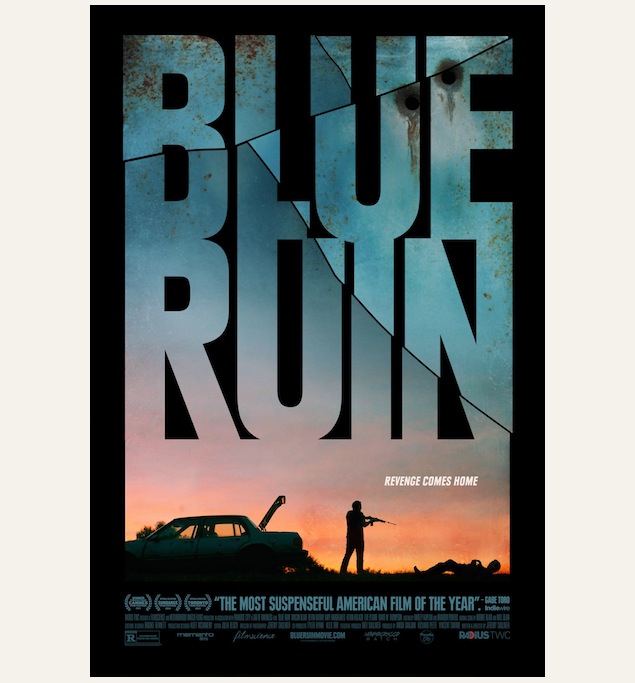
That film is Blue Ruin and, if you haven’t seen it yet, you really should.

Now, I want to be careful just how much I tell you about Blue Ruin‘s story because, much like the thematically similar Cold In July, Blue Ruin may start out like a standard thriller but it soon moves in unexpected and surprising directions.  It’s not so much that the film’s plot is unpredictable (in fact, one of the film’s strengths is that the story told is essentially a simple one) as much as it’s the fact that the film adds an element of ambiguity to that plot that forces you to reconsider all of your preconceived notions.  Blue Ruin is a revenge film for people who like to think.

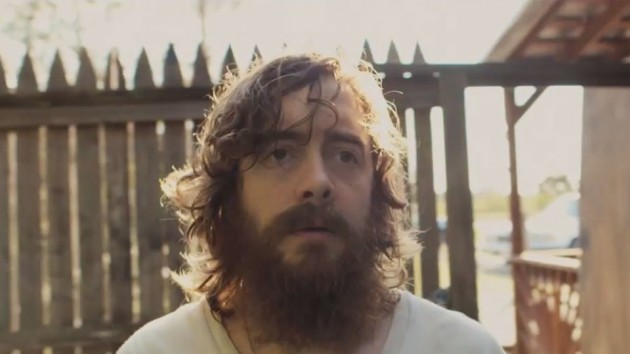
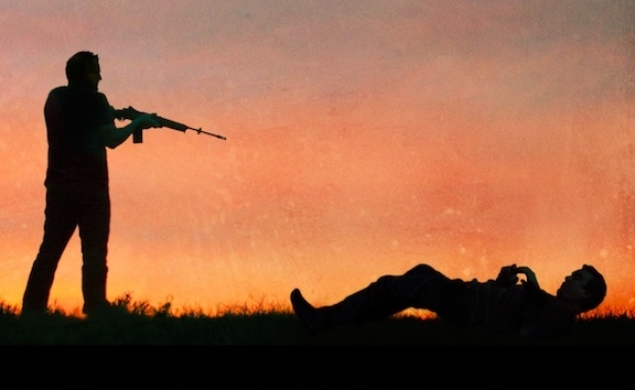
Blue Ruin opens with the bearded and clearly unstable Dwight (Macon Blair) going through trash cans and dumpsters in search of food.  Dwight lives in his filthy car and it quickly becomes obvious that, despite Dwight’s disheveled appearance, he’s not really much of a threat to anyone.  Instead, he simply wants to be left alone.  However, one day, Dwight is approached by a friendly police officer who tells him that a man named Wade Cleland has been replaced from prison.  The suddenly motivated Dwight responds by driving his car to the prison and watching as Wade is released.  Dwight than manages to get a knife (after first trying to steal a gun and failing so completely that you can’t help but feel sorry for him) and goes to the small country bar where Wade and his family are celebrating his freedom.  Dwight manages to get into the club and, after a brutal fight, fatally stabs Wade in the temple.

Macon Blair in Blue Ruin

Macon Blair in Blue Ruin

The rest of the film deals with both the reasons behind and the consequences of Dwight’s actions and it would not be right for me to spoil the film any more than I already have.  Let’s just say that neither Dwight nor the Clelands turn out to be quite who we believed them to be.  The crimes of the past aren’t quite as clear-cut as either Dwight or the Clelands initially assumed.  All that is clear is that now that Dwight has taken his revenge, the Clelands now feel the need to take their own revenge.  It’s an endless cycle that’s made all the more complicated by the fact that neither Dwight nor the Clelands are as good at this whole revenge thing as they think.

Chances are that you’ve never heard of Macon Blair.  I hadn’t heard of him until I saw him in this movie.  But, obscure or not, that doesn’t change the fact that, in the role of Dwight, Macon Blair gives one of the best performances of the year so far.  He turns Dwight into a sort of mentally unstable everyman and, as a result, Dwight is a truly memorable and unexpectedly poignant lead character.

It’s interesting that 2014 has seen the release of several films that feature unlikely and morally ambiguous protagonists dealing with violence, revenge, and secrets in the South.  Blue Ruin joins Cold In July and Joe as one of the best films of 2014.  And it also provides a high note for which to close out Embracing the Melodrama.

Blue Ruin 2

Embracing the Melodrama #59: At Any Price (dir by Ramin Bahrani)


at-any-price-poster-big

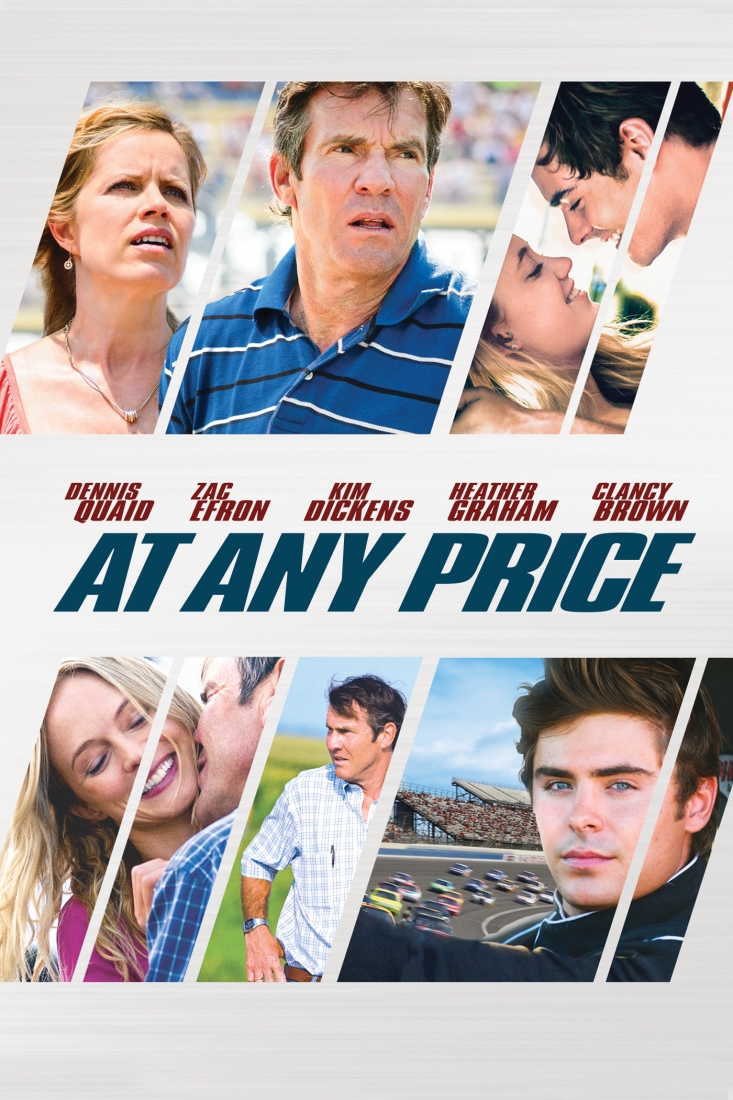
With Embracing the Melodrama coming to a close (only two more reviews to go, including this one!), I want to take this opportunity to tell you about a good film from last year that didn’t get quite as much attention as it may have deserved.  The Iowa-set At Any Price is a look at greed, family secrets, and even murder in rural America.  It’s not a perfect film but it features a perfect lead performance from Dennis Quaid and it’s worth taking a chance on.

Dennis Quaid plays Henry Whipple, an Iowa farmer who also works as a sales representative for the Liberty Seed Company.  Henry sells genetically modified seeds and one thing that this film gets absolutely right is just how cut-throat the seed business truly is in the heartland.  Henry is very proud to be the top seed salesman in the county, with only Jim Johnson (Clancy Brown) coming close to matching him.  The film’s best scenes are the ones that follow Henry as he travels along his route, selling seeds, giving away candy bars, and always flashing his wide grin.  It’s only as the film progresses that we start to notice how desperate that grin really is.  Henry, we soon realize, is motivated mainly by greed and fear.  He’s the type of farmer who will go to a stranger’s funeral just to try to buy the deceased’s land.  Henry is also the type of guy who is willing to cut ethical corners to sell seeds as well.  As far as Henry is concerned, he’s only doing what he has to do to make sure that he has a successful business to pass on to his family.

Henry is all about his family and, while that may be his redemption, it’s also his family’s curse because Henry is something of a control freak.  Henry’s loyal wife (Kim Dickens) turns a blind eye to Henry’s mistress (Heather Graham).  Meanwhile, his oldest son has fled Iowa and moved down to South America.  Henry’s remaining son, Dean (Zac Efron), is more interested in pursuing a career in NASCAR than on the family farm.  Eventually, as the result of a shocking and almost random act of violence, Dean is forced to pick his future.

With both Neighbors and That Awkward Moment, Zac Efron has been reinventing himself as a skilled comedic actor.  Before that, however, he appeared in a series of movies that were meant to show his dramatic range, films like The Paperboy, Parkland, and this one.  These films ranged in quality from terrible to good but, in all of them, Zac Efron felt miscast.  Efron is the weak link in At Any Price.  Dean is supposed to be a character driven by both anger and a need to win (at any price — we have a title!) but when we look at Efron’s pretty blue eyes, we’re left with the impression that there’s not much going on behind them.

Far more effective is Dennis Quaid.  Quaid is so likable in the role that it takes a while to realize that Henry is essentially a monster.  And yet, you never totally lose your sympathy for him.  He has his own demons, demons that he’s passing down to his son.  The power of Quaid’s performance is that you can tell he knows he’s wrong but he just can’t stop himself.

At Any Price is a good farmland melodrama, full of beautiful landscapes and carefully observed details.  It’s not a perfect film but it is one worth watching for anyone who is wondering whatever happened to the American dream.

at-any-price-father-son