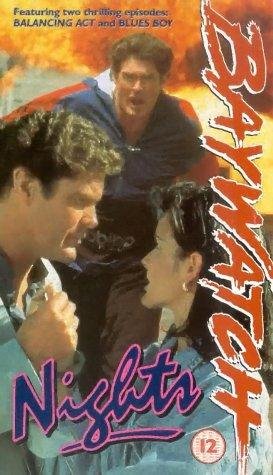
Welcome to Late Night Retro Television Reviews, a feature where we review some of our favorite and least favorite shows of the past! On Tuesdays, I will be reviewing Baywatch Nights, a detective show that ran in Syndication from 1995 to 1997. The entire show is currently streaming on YouTube!
This week, Baywatch Nights tries to open an X-File.
Episode 2.18 “Symbol of Death”
(Dir by Richard Friedman, originally aired on April 19th, 1997)
After he’s found wandering around the city and babbling incoherently, Daimont Teague is taken to the hospital. Mitch and Ryan are called to come get him but, by the time they show up, Teague has already wandered off. Teague’s doctor hands Ryan a blue rock that Teague wanted her to have. Suddenly, there’s an explosion in the hospital. Mitch falls to the floor, holding his knee. A wild-eyed man wearing a beret (Terry Kiser) grabs Ryan’s purse. Ryan chases after him and beats him up in the parking lot. Ryan is more upset over her purse nearly being stolen than she is over an apparent terrorist bombing at a hospital. And I don’t blame her! I’d kill to protect any of my purses.
The purse thief turns out to be George Wilson. Wilson explains that he’s a writer and an expert on UFOs. He believes that aliens are already on the Earth and that there’s a huge interstellar conspiracy that controls everything that happens on this planet. (Of course, this show has already established that it’s actually the Knights Templar who control everything.) The blue rock contains some sort of alien presence that apparently possessed Teague and is currently causing him to stumble around the city. Wilson and Ryan team up to track down Teague and protect him from the aliens. It doesn’t make any damn sense but let’s just go with it.
Due to Mitch injuring his knee when that bomb went off, the Hoff is barely in this episode. For that matter, neither Griff nor Donna are in this episode, either. I’m going to guess that this was a cost-cutting measure on the part of the producers because, if there’s any episode in which it would have made sense to call in Griff and Donna, it’s this episode. They could have helped in the search for Teague. As it is, it falls to Ryan and Wilson to do most of the searching. Terry Kiser, who is best known for playing the titular Bernie in Weekend at Bernie’s, is always an amusing presence and he seems to be having a ball playing such a paranoid character. That said, it’s hard not to be a little bit amazed at how quickly Ryan is willing to forgive him for trying to steal her purse.
This episode owed a lot to the X-Files, with its aliens and its murky talk of conspiracies. Unfortunately, it lacks all of the atmosphere necessary to really make its conspiracy-fueled plotline compelling. Despite all of the Dutch angles that are used in this episode, this is still basically a sunny and rather corny Baywatch spin-off. Rather than leaving me feeling paranoid, this episode just let me thinking about silly this whole series truly is. Don’t get me wrong, of course. It’s fun. But it’s also definitely very, very silly.
There’s only four more episodes of Baywatch Nights left to review. I’m going to miss this show after I finish.
Welcome to Retro Television Reviews, a feature where we review some of our favorite and least favorite shows of the past! On Tuesdays, I will be reviewing the original Fantasy Island, which ran on ABC from 1977 to 1984. Unfortunately, the show has been removed from most streaming sites. Fortunately, I’ve got nearly every episode on my DVR.
Smiles, everyone! Smiles!
Episode 5.17 “Funny Man/Tattoo, The Matchmaker”
(Dir by George W. Brooks, originally aired on February 20th, 1982)
For the second week in a row, Julie only appears in the stock footage at the start of the episode. And again, for the second week in a row, no mention is made of her. Mr. Roarke doesn’t say anything about why she’s not greeting the guests at the docks. Tattoo doesn’t seem to care.
This is actually a big episode for Tattoo. It turns out that Tattoo has a side hustle going. He’s running a computer dating service! (This isn’t surprising. During the early seasons of the show, Tattoo always had some sort of extra money-making scheme going on.) He’s invited both Harriet Wilson (Laurie Walters) and Claudette Mills (Misty Rowe) to the Island so that they can be set up with the perfect future husband. Usually, Roarke isn’t happy when Tattoo invites people to the Island on his own but this time, he doesn’t seem to be too upset about it. He tells Tattoo that the two women and their fantasies will be his responsibility. At one point, Roarke even mentions that Tattoo is in charge of overseeing all of the weddings that occur on Fantasy Island. Does that include Mr. Roarke’s wedding from a few seasons ago?
However, there’s a problem. Tattoo’s big computer has decided that both Harriet and Claudette should marry Mr. Roarke. Tattoo and his business partner, Ambrose Tuttle (Skip Stephenson), think that the computer must be malfunctioning but Tattoo did promise the women that he would set them up with the most charming man on the Island and what better description is there for Mr. Roarke?
Mr. Roarke is not particularly amused to discover that he is now expected to marry two women who he doesn’t even know. Considering the tragic ending of Mr. Roarke’s previous marriage, this isn’t a huge shock. Roarke tells Tattoo that he has to find other husbands for both Harriet and Claudia. Fortunately, Amrbose Tuttle is single and a former football player (Russ Francis) has also come to the Island. Can Tattoo pull it off and help all four of these people fall in love? To quote Mr. Roarke, “Indeed, he can.” This is Fantasy Island!
Along with learning about Tattoo’s computer dating operation, we also learn about Tattoo’s favorite comedian. Beau Gillette (Jimmy Dean) has built a successful career telling jokes about his redneck family. What he’s never told anyone, including his fiancée (Vicki Lawrence), is that his family is imaginary. Beau grew up in an orphanage and created his family in his head so he wouldn’t be lonely. Beau’s fantasy is for his family to exist, just so he can introduce them to his fiancée. Mr. Roarke suggests that it might be a better idea for Beau to just tell the truth but Beau’s like, “Nah, let’s just bring imaginary people to life.”
While Beau’s performing his act, Uncle Jack (Morgan Woodward), grandma (Jeanette Nolan), and cousin Lindy (Linda Thompson Jenner) all come to life. The only problem is that they all know that they’re really imaginary and they’re not happy that Beau’s been thinking less about them and more about his fiancée. They decide that Lindy should break up Beau’s engagement by seducing him. And if they doesn’t work, they can just kill Beau’s fiancée….
Wow, that got dark!
Actually, this isn’t a very dark fantasy at all. Both fantasies are played largely for laughs. Beau, realizing that his imaginary family has been a crutch that he’s been using for too long, confesses that they don’t really exist and, as a result, they all fade away. Beau’s free to get married and I guess come up with new act. Yay!
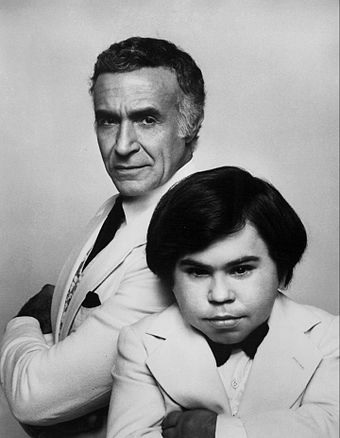
Much like last week, this episode felt like a throwback to the early seasons of Fantasy Island. Tattoo got a storyline and Mr. Roarke was heavily involved in the fantasies, as opposed to just being a bystander. Both Herve Villechaize and Ricardo Montalban appeared to be having fun in this episode and, as a result, it was fun to watch, even if it was hard to buy into the idea the Beau Gillette’s rather anodyne jokes about his redneck family would have made him into a star. Largely due to Tattoo and his computer dating service, this was an enjoyable trip to the Island.
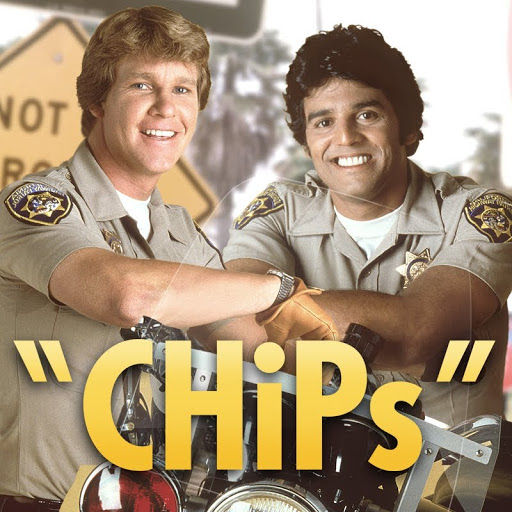
Welcome to Late Night Retro Television Reviews, a feature where we review some of our favorite and least favorite shows of the past! On Mondays, I will be reviewing CHiPs, which ran on NBC from 1977 to 1983. The entire show is currently streaming on Freevee!
This week, things get a little dull.
Episode 2.20 “Quarantine”
(Dir by Harvey S. Laidman, originally aired on February 24th, 1979)
When a Korean teenager tries to stow away in the backseat of a car being driven by two women who freak out when they discover that he’s back there, it’s Ponch and Baker to the rescue. They take the teenager back to the station. Unfortunately, the teen, who does not appear to speak English, turns out to be extremely ill. He’s rushed to a hospital and the station is put under quarantine.
That means that Baker, Sindy, Grossman, and Getraer are all stuck with each other. (Ponch was lucky enough to get out of the station before the quarantine was declared.) There are also two prisoners at the station, a man (Tom Poston) with multiple personalities and a young but witty criminal (Jody St. Michael) who wears a leather jacket and who is always looking for an excuse to crawl around in the air ducts. Eventually, Harlan enters the station and ends up getting quarantined as well. Oddly enough, the doctor who tells them that they’re quarantined is allow to enter and leave the station, despite not wearing any sort of protective gear. For that matter, the two women who were in the car with the teenager are also allowed to leave. This really isn’t much of a quarantine!
It’s also not much of an episode of CHiPs. I know that I’ve spent a lot of time complaining about how, during its second season, CHiPs essentially became the Ponch show but I may have to stop doing that. Ponch is barely in this episode and the end result is definitely the most boring episode of this show so far. This is an episode that could have actually used Erik Estrada’s tendency to overact every single minute that he’s onscreen. Larry Wilcox was definitely a better actor than Estrada but he’s so low-key that Baker’s just not that interesting when he’s left to his own devices. One gets the feeling that Estrada would have totally gone totally overboard in portraying Ponch’s desire to leave the station but that would still have been more interesting than what we ended up with.
CHiPs is ultimately a show that’s about the joy of the California scenery and the excitement of driving a motorcycle down the highway. It’s a show that works best when everyone is outside and on or in some sort of of vehicle. With the exception of the opening scenes, this episode takes place almost entirely inside the station. (And the station, it must be said, it not a particularly intriguing location.) This episode fails because it goes against everything that makes CHiPs an entertaining show. Fortunately, in the end, it turns out that the kid only had the flu and quarantine comes to an end. Baker and everyone else is set free so that they can ride again.
Welcome to Retro Television Reviews, a feature where we review some of our favorite and least favorite shows of the past! On Mondays, I will be reviewing Miami Vice, which ran on NBC from 1984 to 1989. The entire show can be purchased on Prime!
This week, Willie Nelson and Steve Buscemi guest star!
Episode 3.7 “El Viejo”
(Dir by Aaron Lipstadt, originally aired on November 7th, 1986)
Using their undercover identities of Burnett and Cooper, Crockett and Tubbs are attempting to take down a Bolivian drug lord named Mendez (Anwar Zayden). Unfortunately, Crockett’s first attempt to bust Mendez does not go so well. Their meeting, which is being held at a museum for some reason, is interrupted by a security guard. In the resulting shootout, the security guard is killed and a green briefcase that’s full of cocaine is stolen by an old man named Jake Pierson (Willie Nelson). Soon, Jake is attempting to contact Mendez himself, offering to bring him the briefcase. Jake’s actions also bring him to the attention of Crockett and Tubbs, who both wonder why a 66 year-old Texan with no criminal record is suddenly trying to get involved in their drug deal.
Jake, it turns out, is a former Texas Ranger. When he was younger, he was a legend. He and his partner took down criminals like Bonnie and Clyde and protected Texas from Mexican revolutionaries who were preying on the border towns. It’s been a while since Jack retired. Now, he lives in a tiny apartment and spends most of his time thinking about the past. He’s still a killer shot with a gun and knows how to handle himself in a fight. But he also has a heart condition and, in fact, he would have died early on in the episode if Tubbs hadn’t given him his pills. Crockett, for his part, idolizes the Texas Rangers, to an extent that almost seems out-of-character when you consider how cynical Crockett is usually portrayed as being. Crockett is stunned that a former Ranger would be involved with running drugs. Even though he’s pretending to be career criminal Sonny Burnett, Crockett still asks Jake about all of his adventures as a Ranger and does little to hide how impressed he is.
So, why has Jake gone over to the bad side? Well, he really hasn’t. It turns out that the son of his former partner was murdered by Mendez and Jake is looking to get revenge. It all leads to a number of shoot-outs, including an exciting one that occurs on a Miami highway and an explosive finale at a cemetery. Jake kills Mendez and his men but, in typical Miami Vice fashion, he takes a bullet himself and dies right after he reveals that he knew Crockett was a cop all along.
This episode features two notable guest stars. Along with Willie Nelson, Steve Buscemi shows up in a small but memorable role as Rickles, who serves as a go-between for Crockett and Mendez. Buscemi is as wonderfully weaselly as ever and, even though he’s a bit stiff as an actor, Nelson still brings a lot of Texas authenticity to the character of Jake Pierson. Of course, in real life, Vice would have stopped Willie and searched his tour bus as soon as he entered the Miami city limits. This is a pretty dark episode but it’s still amusing to watch iconic hippie stoner Willie Nelson play a cop, even if Jake is retired.
This was a good episode. That Don Johnson and Willie Nelson were friends in real life is easy to deduce from witnessing how easily they play off of each other in this episode. This is another episode where the bad guys are defeated but at the cost of a good guy. Mendez will soon be replaced by another drug lord but no one will ever replace Jake Pierson.
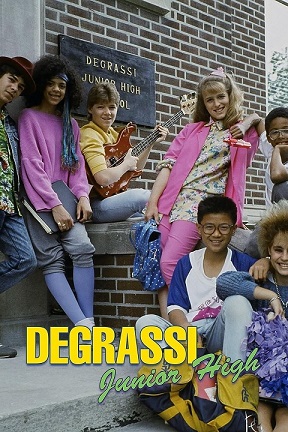
Welcome to Late Night Retro Television Reviews, a feature where we review some of our favorite and least favorite shows of the past! On Sunday, I will be reviewing the Canadian series, Degrassi Junior High, which aired on CBC and PBS from 1987 to 1989! The series can be streamed on YouTube!
This week, Degrassi Junior High comes to an end!
Episode 3.16 “Bye-Bye, Junior High”
(Dir by Kit Hood, originally aired on February 27th, 1989)
The school year is ending and things are looking fairly positive for the majority of the students at Degrassi Junior High.
The ninth graders are looking forward to finally getting to enroll at the local high school next year. The eighth graders are looking forward to finally being at the top of DJHS’s social hierarchy. The teachers are happy because they’ve given their final exams and almost every student has done well.
Even Wheels! Even though he skipped most of the year and spent a lot of time in detention due to his behavioral issues, Wheels manages to get passing grades. Of course, his grades still aren’t that impressive. Wheels just scrapes by. However, his homeroom teacher says that everyone knows that Wheels has had a difficult year and the important thing is that Wheels showed improvement when he finally did come back to school. In other words, Wheels will be moving on to the 10th Grade.
Spike, who has not been allowed to attend school in person, struggles on her final exams. But Ms. Avery (Michelle Goodeve) talks Spike into taking some correspondence courses over the summer so that Spike can move on to the 10th Grade and take part in Canada’s version of the gifted program.
As for Joey, he gets two A’s and several B’s. Unfortunately, he gets one C, in French. (Seriously, how do you live in Canada and not know French?) Joey’s parents told him that, if he got a single C, he would not be allowed to go to the last dance of the year, the all-important Graduation Dance. Fortunately, Joey’s parents reconsider this rather harsh deal and they allow Joey to go to the dance with Caitlin. Caitlin gets to wear a really pretty dress and Joey finally attends a dance without bringing his keyboard.
Even Shane shows up for the Graduation Dance! Of course, he’s using a walker and has obviously suffered severe brain damage from falling off that bridge but hey, at least he’s not dead.
It’s the most positive episode of Degrassi ever …. until the school burns down.
Yep, you read that correctly. This episode ends with Degrassi Junior High burning down. Throughout the episode, the fire alarm keeps accidentally going off and we hear the principal making announcements about how there’s some sort of electrical short in the boiler room. Well, during the school dance, a fire breaks out in the boiler room and this time, the fire alarm has a good reason for going off!
Degrassi Junior High ends with the students and teachers standing outside and watching as their beloved school goes up in flames. Never has the cheerful Degrassi Junior High theme music felt more awkward than when it plays over images of flames exploding out of a school.
Why did Degrassi Junior High end like this? As longtime fans of this franchise know, schools are always burning down in Toronto. In this episode, we watch as Degrassi Junior High burns down in 1989. We watch this with the knowledge that, 20 years later, Lakehurst High School is going to burn down and send all of its students to Degrassi Community School. Though Degrassi Community School never actually burned down, it did see its share of fires. Whenever this show needed an excuse to bring in a bunch of new transfer students, a school would burn down.
(In this case, DJHS burned down so that all of the incoming ninth graders, like Joey and Caitlin, would be able to attend the high school with Wheels, Lucy, Snake, and the rest of DJHS’s final graduating class, therefore keeping the cast together for Degrassi High.)
This was a good finale for Degrassi Junior High. It was nice to see everyone happy and this episode certainly did capture the way that I always felt at the end of any school year. Even the school burning down brought a nice bit of finality to everything.
Welcome to Retro Television Reviews, a feature where we review some of our favorite and least favorite shows of the past! On Sundays, I will be reviewing Homicide: Life On The Street, which aired from 1993 to 1999, on NBC! It can be viewed on Peacock.
This week, we finally meet the arraber.
Episode 1.6 “Three Men and Adena”
(Dir by Martin Campbell, originally aired on March 3rd, 1995)
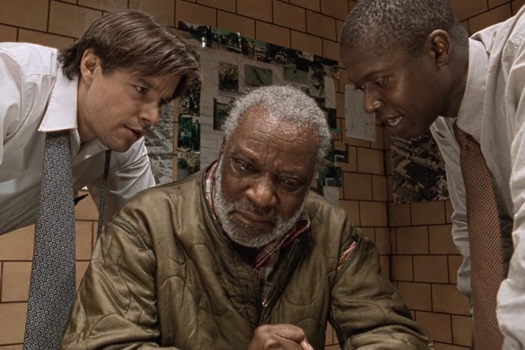
This week’s episode opens with Tim Bayliss and Frank Pembleton preparing to interrogate Risley Tucker (Moses Gunn). Tucker is the arraber who Bayliss believes is responsible for murdering Adena Watson. Adena used to work for Tucker, helping him take care of his horse before her mother told Adena that she didn’t want her spending so much time with Tucker. As Tucker himself puts it, people tend to view arrabers (men who sell fruits and vegetables from a horse-drawn carriage) as being nomads. As Tucker himself is a recovering alcoholic who was previously charged with (but not convicted of) statutory rape, it’s understandable why Adena’s mother didn’t want her spending time alone with him. It’s also easy to understand why Bayliss is convinced that Tucker is guilty. Pembleton, meanwhile, is not as convinced.
Bayliss and Pembleton have already brought Tucker down to the station three times and interrogated him. Giardello also points out that Tucker has been interviewed a total of 10 times about the case and, if he’s not charged after his latest interrogation, he’ll have grounds for a harassment suit. Bayliss and Pembleton have fourteen hours to interrogate Tucker one final time and try to get a confession out of him. After fourteen hours, they have to either arrest Tucker or send him home. Giardello says that regardless of what happens, Bayliss has to go back into the regular rotation after this interrogation. Bayliss’s time of exclusively investigating the Watson case is coming to an end.
Tucker arrives at the station and Bayliss and Pembleton get to work, trying to manipulate him into slipping up and confessing.
Considering how much they initially disliked each other, it’s interesting to watch how smoothly Bayliss and Pembleton work together in this episode. Bayliss takes on the role of the “bad cop,” flat out accusing Tucker of killing Adena and shoving what little evidence they have in Tucker’s face. At first, Pembleton plays the “good cop,” asking Tucker about what it’s like to be an arraber before moving on to discussing Tucker’s alcoholism. Tucker says that he hasn’t had a drink in sixteen months. Even when Pembleton asks if it’s possible that he slipped up and had a drink and blacked out on the night that Adena died, Tucker insists that he hasn’t touched a drop in sixteen months.
Bayliss and Pembleton work well together but Tucker remains adamant that he did not kill Adena. Even when Bayliss threatens to press Tucker’s face against a hot pipe, Tucker swears he didn’t kill Adena. Even when Pembleton gets Tucker to admit that he had feelings for Adena, Tucker says he didn’t kill Adena. Tucker defiantly demands to take a polygraph and he passes it. Bayliss, knowing that polygraphs are inadmissible in court and are hardly reliable arbiters of the truth, tells him that he failed. At one point, the emotionally exhausted Tucker says that he’s not even sure if he’s innocent or not anymore. That’s as close as Tucker comes to confessing.
As the interrogation wears on, Tucker starts to fight back and it’s somewhat jolting to realize that he’s been aware of how Bayliss and Pembleton have been manipulating him from the start. He accuses Pembleton of thinking that he’s better than other black people. He accuses Bayliss of having a dark side, pointing out that Bayliss was prepared to torture him to get a confession to a crime that Tucker insists he didn’t do. It’s obvious that, in both cases, Tucker has correctly read both men. Pembleton and Bayliss react by ganging up on Tucker, bombarding him with questions. Tucker breaks down and starts to cry but, as time runs out, he continues to insist that he didn’t kill Adena Watson.
In the end, Tucker ends up sitting in the break room, watching television and waiting for someone to take him home. Bayliss packs up all of the evidence in the Watson case, knowing that he failed to get the confession that he needed. Despite not getting the confession, Bayliss has finally won Pembleton’s respect. Pembleton tells Bayliss that he now believes Tucker is guilty. Bayliss admits that he’s no longer as sure as he once was.
It says something about the strength of this episode that I’m not fully convinced of Tucker’s guilt as well. When the episode started, I was sure that the arraber was guilty. By the time it ended, my feelings were a bit more mixed. For all of the emotional turmoil that Tucker went through over the course of the interrogation, he remained adamant that he didn’t kill Adena Watson. Tucker confessed to being an alcoholic. He confessed to having gotten into fights in the past. He confessed to having pedophiliac feelings towards Adena. But the only time he even slightley wavered in his claim that he didn’t kill Adena was when he was so exhausted that he barely knew what he was saying. As well, the evidence against him was almost entirely circumstantial. Evidence was found that Adena had been in Tucker’s barn but there was no way to prove that she was there the night she died. Tucker’s barn did mysteriously burn down after Adena’s murder but there was no way to prove that Tucker burned it down to hide evidence. I suspect Risley Tucker probably was guilty. But if I was on a jury, I’d probably have to say that, without a confession, there was too much reasonable doubt.
By the end of the interrogation, all three men are exhausted. The viewer is exhausted too! This is an intense episode, one that plays out like a particularly kinetic, three-person play. Kyle Secor and Andre Braugher continue to prove themselves to be a brilliant team but, in this episode, they’re equally matched by Moses Gunn, who keeps you guessing as far as Risley Tucker’s guilt or innocence is concerned. Gunn, who died a few months after this episode aired, gives a performance that leaves you feeling as conflicted about Tucker as the two detectives. If Tucker is guilty, then he’s a soulless monster who has gotten away with murder. If Tucker is innocent, then we’ve just spent 50 minutes watching an elderly, recovering alcoholic go through a truly Hellish experience. As the episode ends, the viewer is aware that all three of the men will be changed forever as a result of the 14 hours they spent in the box.
This was an outstanding episode, one that ended on a note of sadness. Adena Watson’s killer will never be caught. If Tucker did it, he got away with it. If Tucker didn’t do it, Bayliss and Pembleton’s obsessive pursuit of him means that the real killer is probably already far away from Baltimore. Not every case gets solved and not everyone gets justice. To quote Casino’s Ace Rothstein, “And that’s that.”
Welcome to Late Night Retro Television Reviews, a feature where we review some of our favorite and least favorite shows of the past! On Saturdays, I will be reviewingthe Canadian sitcom, Check it Out, which ran in syndication from 1985 to 1988. The entire show is currently streaming on Tubi!
This week, Howard goes to jail!
Episode 2.19 “Only God Can Make A Tree”
(Dir by Alan Erlich, originally aired on March 1st, 1987)
Old George is coming down!
Who is Old George? Actually, it’s more a question of what is Old George? Old George is a tree that stands a few feet away from Cobb’s. Apparently, Howard spent a good deal of his youth hanging out around Old George. He and his father used to have picnics under Old George. He and his friends use to climb Old George. Howard decides that Old George must be saved so he organizes a protest. He forces Christian, Leslie, and Viker to join him in trying to keep the city contactors from chopping down the tree. As a result, Howard and his three employees are arrested and sent to jail.
(Can you sue if your boss forces you to do something that gets you arrested? It seems like you should be able to. Of course, I’m not really sure how the law works in Canada.)
In court, the four men decide that, instead of getting a lawyer to defend them, they’ll just let Howard be in charge of their defense. I guess they all want to go to jail. Edna brings Howard several law books but she brings them to the trial so Howard has to skim them while the arresting police officer (Bob Bainborough) gives his testimony. That seems counter-productive but whatever. The law books aren’t necessary because, instead of arguing the law, Howard just tells the judge how much the tree meant to him. Howard and his employees are set free by the judge (Jack Mather). Then Old George is promptly chopped down because it has Dutch Elm disease. So, it was all for nothing!
Because Howard’s Aunt Lil (Kay Tremblay) was visiting, we did learn a bit about Howard’s background. After his father died, Howard was raised by his aunt. He grew up in the same neighborhood where he works. All of his friends grew up to be doctors and lawyers and scientists while Howard grew up to manage a grocery store. He’s been living with Edna for seven years but doesn’t have any plans to marry her. Edna desperately wants to have grandchildren but again, Howard’s in no huray to get married …. you know, when you combine all of this with the tree ultimately dying, this is probably the most depressing episode of Check It Out ever shot.
This was a weird episode. While I can respect Howard’s desire to protect Old George, I can’t respect him requiring his employees to join with him in the protest. It’s also strange to me that they protested while they were still on the clock. Did the store just shut down while they were all sitting in jail? All of this seems like bad boss behavior to me. Jeff Pustil, Aaron Schwartz, Kathleen Laskey, and Gordon Clapp all managed to get in a few good lines but Don Adams himself seemed confused as to whether he should play Howard as being an earnest tree-lover or as just a pompous ass. That’s not really Adams’s fault. This show has never been particularly consistent in the way that Howard is portrayed.
That said, I would have tried to save Old George as well. From what I saw of him, he was an impressive tree.
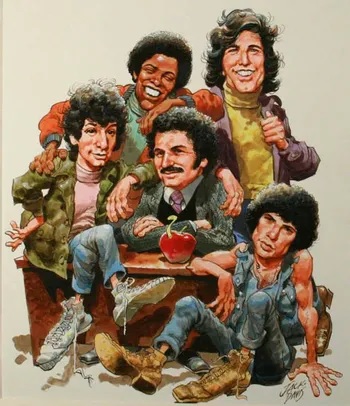
Welcome to Retro Television Reviews, a feature where we review some of our favorite and least favorite shows of the past! On Saturdays, I will be reviewing Welcome Back Kotter, which ran on ABC from 1975 to 1979. The entire show can be purchased on Prime.
The Welcome Back Kotter death march continues.
Things have really been going downhill since Howard Golden replaced Sebastian Leone.
Episode 4.7 “Barbarino’s Boo-Boo”
(Dir by Norman Abbott, originally aired on October 21st, 1978)
Mr. Woodman’s going into the hospital to have a bunion removed. Unfortunately, it’s the same hospital the employs Vinnie Barbarino. The head nurses gives Barbarino a lot of instructions. “I’m so confused!” Barbarino says. The audiences goes wild. Barbarino wheels Mr. Woodman into an elevator but then get distracted by a Spanish woman (played by Jeannie Linero, who also played Lucy Mancini in The Godfather) looking for the maternity ward. “Do you speak Italian?” Barbarino asks. The elevator doors close. Woodman is missing! For some reason, the other Sweathogs — including Beau — show up at the hospital and start wandering around, helping Barbarino look for Woodman. Eventually, Gabe and Julie show up. Gabe Kaplan and Marcia Strassman stand next to each other but refuse to look at each other. The hatred is palpable.
I watched this episode and I said to myself, “I paid two bucks for this?”
Seriously, I am really annoyed that Tubi took Welcome Back, Kotter off of its service. Admittedly, it’s not a big deal, having to pay two bucks for the few remaining episodes that are left to review. I can more than afford it. It’s not so much cost as much as it’s just the idea of spending any amount of money to watch something this bad. I had read that Welcome Back, Kotter really declined during the fourth season. Apparently, Gabe Kaplan was no longer getting along with the show’s producers. The Sweathogs were all being played by actors who were way too old to pass for high school students. (In this episode, even Travolta looked way too old to be playing a teenager.) Marcia Strassman was reportedly miserable and didn’t even want to be in the same room as Kaplan. The ratings were going downhill. The show’s biggest draw, John Travolta, only agreed to appear in a handful of episodes. It’s understandable the Season 4 would see a decline in quality but nothing could have prepared for me for just how bad this episode was.
John Travolta is usually the show’s saving grace but even in this episode, he seems bored and more than a little annoyed with having to take a break from Hollywood stardom to play Vinnie Barbarino. The studio audience goes crazy when Travolta enters a room and they love his “I’m so confused!” but Travolta himself seems like he’d rather be anywhere but there. The same is true of the other Sweathogs, all of whom clearly seem to be ready to move on to other projects. Out of the cast, only John Sylvester White really seems to be trying to give a good performance in this episode but Woodman disappears fairly early on. The other big problem is that the hospital setting just isn’t that funny. The Sweathogs wandering through the hospital and making life difficult for the patients is not funny. Beau accidentally breaking a man’s nose (and yes, that does happen) is not funny. Perhaps during the show’s first two seasons, when everyone was really into it, this episode could have been funny. But, with everyone just going through the motions, it’s just annoying.
Oh well, this show will be over soon. Only 16 more episodes to go!
Welcome to Late Night Retro Television Reviews, a new feature where we review some of our favorite and least favorite shows of the past! On Fridays, I will be reviewing Friday the 13th: The Series, a show which ran in syndication from 1987 to 1990. The show can be found on YouTube!
This week, Micki and Ryan search for a cursed World Series ring.
Episode 2.17 “The Mephisto Ring”
(Dir by Bruce Pittman, originally aired on April 10th, 1989)
In 1982, a gambler is shot and killed by an unknown assailant.
Seven years later, that gambler’s son, Donald Wren (Denis Forest), has developed a problem of his own. Despite his mother (Doris Petrie) begging him not to follow in his father’s footsteps, Donald has become a compulsive gambler. Unfortunately, Donald is not particularly talented at picking winners and, as a result, he’s deep in debt with the mob. Donald has dangerous men after him who want to know where their money is. However, when Donald discovers his father’s ring, things start to change for him.
The ring is a 1919 World Series ring and, as you probably already guessed, it’s cursed. All Donald has to do is put the ring on someone else’s finger and, after the ring kills that person, Donald will receive a vision of how a sporting event is going to end. Donald discovers who is going to win a basketball game, a horserace, and a UFC match. As Donald continues to use the ring, he starts to lose his mind. Friday the 13th has always felt like a show that’s actually about drug addiction, with the cursed objects not only killing people but also corrupting the minds of the people who own them. Donald goes from being a wimp to being someone who laughs maniacally while watching gangsters violently die.
With Jack away, it falls to Micki and Ryan to retrieve the ring. Donald’s mother wants him to give up the ring because she saw what it did to his father. But Donald refuses to surrender the ring, even when his use of it eventually leads to evil gangster Anthony Macklin (James Purcell) abducting his mother. Donald is able to convince Macklin to wear the ring. Macklin is promptly killed but, when Donald still refuses to give up the ring, his mother ends up shooting Donald in the head. As she explains to Micki and Ryan, she had to do the same thing to Donald’s father. After putting the ring in the vault, Micki and Ryan agree to keep the mother’s history of murder a secret.
This was an okay episode. The most interesting thing about it was that Micki and Ryan, even while they were searching for the ring, were pretty much bystanders to the drama involving Donald, his mother, and the gangsters. Other than a scene where Micki pretended to be flirt with Donald in order to get him to leave a bar with her, neither Micki and Ryan really did much in this episode. Denis Forest, making his second appearance on Friday the 13th, gave a good performance as Donald and even managed to generate some sympathy for the character. The gangsters felt like they were left over from an episode of T and T. As I said, it was an okay episode but not one that made a huge impression.
Welcome to Retro Television Reviews, a new feature where we review some of our favorite and least favorite shows of the past! On Fridays, I will be reviewing St. Elsewhere, a medical show which ran on NBC from 1982 to 1988. The show can be found on Hulu!
When I started reviewing Homicide, Jeff suggested that I should also review St. Elsewhere because the two shows shared a similar sensibility and a lot of behind-the-scenes personnel. (Homicide showrunner Tom Fontana started out as a writer on St. Elsewhere.) Apparently. a few characters from St. Elsewhere would eventually cross-over to Homicide. Since I’m planning on soon reviewing two shows that were descended from Homicide — Oz and The Wire — it only seemed right to also review a show that was Homicide’s ancestor.
Though the show aired largely before my time, St. Elsewhere is definitely a show that I have heard about. Everyone who follows American pop culture has either read about or seen the show’s infamous final episode and knows about the Tommy Westphall Universe Hypothesis. Obviously, I can’t get into it now because that would be a spoiler but we’ll discuss it when the time comes!
For now, let’s start at the beginning, with the pilot!
Episode 1.1 “Pilot”
(Dir by Thomas Carter, originally aired on October 26th, 1982)
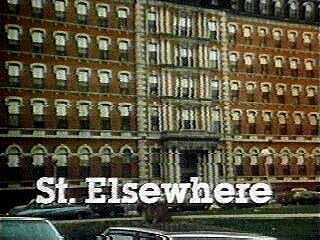
St. Eligius is a hospital in Boston that has obviously seen better days. From the outside, it looks old. On the inside, the hallways have the dim and dull look of a building that hasn’t been renovated in over ten years. As Dr. Mark Craig (William Daniels, long before he played Mr. Feeney on Boy Meets World) angrily puts it, the hospital gets no respect in Boston. It’s seen as being a “dumping ground” for patients who can’t afford anything better. Dr. Craig is world-renowned heart surgeon whose wealthy patients have donated what few improvements the hospital has seen over the past few years. (“All of our clocks now read the same time!” Dr. Craig brags at one point.) But not even Dr. Craig can change the hospital’s reputation as being secondary to Boston General.
There are actually a few good things about St. Eligius. For one thing, a young Denzel Washington is on staff, playing resident Phillip Chandler. Denzel doesn’t get to do much in the pilot but still, his presence fills the viewer with confidence. St. Eligius is also home to a world-renowned liver specialist, Dr. Daniel Auschlander (played by Norman Lloyd, who also worked with Hitchcock and Orson Welles). Auschlander has liver cancer but the hospital chief-of-staff, Dr. Donald Westphall (Ed Flanders), assures everyone that Auschlander will probably “out live us all.” (And he was right, to an extent. Norman Lloyd lived to be 106 years old before passing away in 2021. Ed Flanders died, tragically by suicide, in 1995.) St. Eligius is a teaching hospital and the residents want to make a good impression by keeping their patients alive. That’s always a good thing.
At the same time, how secure can you feel when Howie Mandel is one of the residents? Mandel plays Dr. Wayne Fiscus, who wears a baseball cap and acts …. well, he acts a lot like Howie Mandel. Like Washington, Mandel doesn’t do a lot in the pilot. He does get a subplot where he apparently has sex in the morgue with goth pathologist Cathy Martin (Barbara Whinnery) but otherwise, we don’t see him treating a patient or anything like that. Still, it’s a bit jarring to see Howie Mandel as a doctor. I would not necessarily want him for my doctor because he’s to be easily distracted. Maybe he’ll change my mind as the series progresses.
Speaking of sex, Dr. Ben Samuels (David Birney) has gonorrhea and spends most of the pilot approaching doctors and nurses and informing them of his conditions and suggesting that they might want to get tested themselves. That’s not exactly the best way to be introduced to a character but it also lets us know that this show is not just going to be about dedicated doctors who spend all of their time worrying about their patients and making amazing medical discoveries. Instead, this show is also about doctors who get venereal diseases. Has anyone checked on Fiscus in the morgue?
(That said, Dr. Samuels does get a scene where he saves the life of a woman who was injured in a terrorist bombing, as if the show does want to make sure that we know that he can do his job, even if he is spreading VD through the hospital.)
The majority of the episode follows Dr. Jack Morrison (David Morse), a first-year resident who has been working several 24-hour shifts and who complains, at one point, that he hasn’t seen his wife for days. Dr. Morrison gets upset when a surgeon wants to operate on one of his patients, a 15 year-old girl named Sandy (Heather McAdams). Morrison believes that surgeons always want to cut into somebody. Morrison gets even more upset when Sandy’s mother requests that Sandy be transferred to Boston General, which has a reputation for being a better, more modern hospital. In fact, Morrison is so upset and exhausted that he forgets to file a death certificate for a patient who dies during the night. As a result, it’s believed that the patient, who has a reputation for being violent, has gone missing and is stalking the hospital. Dr. Annie Cavanero (Cynthia Sikes) spends the entire episode looking for a dead man, which at least gives her an excuse to visit every ward and introduce the viewers to the members of the show’s ensemble cast.
Having lost my mom to cancer and now my Dad to Parkinson’s, I was hesitant about reviewing St. Elsewhere. (Actually, I was hesitant about reviewing any medical show.) When my Dad was in the hospital, I felt like I couldn’t get anyone to give me a straight answer about his condition and I often felt the doctors were talking down to me. To be honest, my worst conflicts were with the nurses, one of whom told me that I would have to “lose the attitude” before she would explain why my father had been moved to the Delirium Ward. (It didn’t help that, at the same time my Dad was in the hospital, there was a huge storm that left us without power for a week.) At the same time, there were other doctors who were helpful. The staff at the rehab center that my dad was sent to were also wonderful. I have my regrets about agreeing to hospice care but the nurse who was assigned to my Dad was very empathetic and totally understanding whenever I asked her for a cigarette. (Under normal circumstances, I don’t smoke because I have asthma but seriously, the stress was killing me.) I’m bitter and angry about a lot of what happened but I’m also thankful for the small moments of kindness.
Watching a show set in a hospital was not easy for me but the pilot of St. Elsewhere appealed to me with its mix of melodrama and humor. There was a quirkiness to it that I appreciated. William Daniels made me laugh with his annoyed rant about how little respect the hospital received. Most of all, I cared about whether or not Dr. Morrison would still be alive at the end of his shift. David Morse’s performance won me over. He’s the type of doctor that I would want to have. Well, actually, I’d probably want Denzel to my doctor but Dr, Morrison could assist. Just keep Dr. Howie Mandel away from me. Nothing against him but he seemed to be having way too much fun at the hospital….



 Through the Shattered Lens