Brad reviews NEXT DOOR (1994), a “neighbor from Hell” film starring James Woods and Randy Quaid!


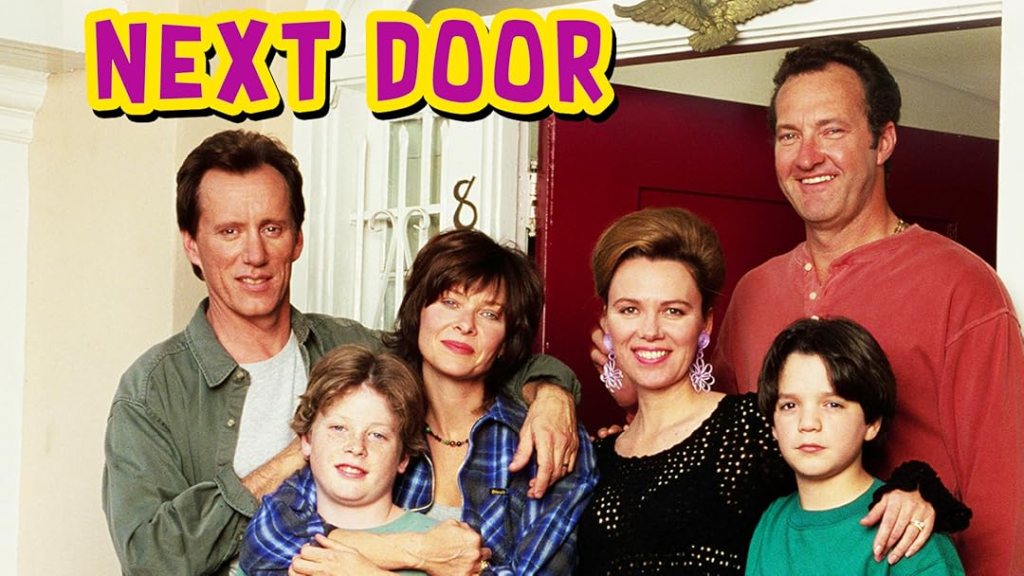
This sitcom looking picture is not a good indicator of the dark places this movie will go!

NEXT DOOR (1994) is a dark suburban satire that introduces us to college professor Matt Coler (James Woods), his lovely wife Karen (Kate Capshaw), and their son Bucky, who have recently moved out to the suburbs. As the movie begins, Matt, Karen and even Bucky seem to be slightly obsessing over their next-door neighbors, Lenny and Marci Benedetti (Randy Quaid and Lucinda Jenney). For one, Lenny and Marci enjoy engaging in sexual intercourse on their backyard lawn furniture within view of each of the Coler family members. That’s quite awkward, but more irritatingly, Lenny insists on constantly watering his front yard near Matt’s property, which is having an extremely damaging effect on Matt and Karen’s beloved azaleas. Invited over to the Benedetti’s house for a cookout, Matt and Karen hope to get to know their neighbors a little better, as well as make a polite request of Lenny to not water the area near the boundary of their yards quite so much. We soon find out that Lenny, who works at the local meat packing plant, is loud, obnoxious, smarter than he looks, and seems to have a really big chip on his shoulder towards Matt, who he doesn’t see as being much of a man. He even tells Karen that her husband is a child, and that’s why he went into teaching rather than getting “a real job.” This upsets Karen so she tells Matt it’s time to leave, but before going, they ask Lenny not to water the part of his yard near their flowers so much. That night, Lenny moves the sprinkler even closer to Matt’s yard, which puts the final death knell in the azaleas. Very annoyed, but not wanting to go too far, Matt gets even by spraying Lenny’s outdoor patio furniture with a lot of water as a prank. Lenny doesn’t handle Matt’s prank very well, and this is where things begin getting out of hand, igniting a full-blown feud between the two men. Soon the annoyances of wet furniture and dead flowers give way to outright horror involving poisoned family pets, police investigations, attempted sexual assault, and even attempted murder!

NEXT DOOR, which is a made for Showtime original, starts out as an amusing and entertaining film involving innocent pranks between James Woods’ meek teacher and Randy Quaid’s boorish butcher. As the intensity of the feud picks up between the men, and the retaliations become more and more sinister, I had to pick my jaw up off the floor as it goes to places that aren’t funny at all. The story seems to be trying to make a statement about the class divide, the survival of the fittest, and the danger that lurks behind the picket fences and in the backyards of the innocent looking neighborhoods around us. It does that job well, as I certainly sensed the real danger that the more “civilized” man found himself in when he came up against a man who didn’t really concern himself with societal norms. I have to give a lot of credit to Randy Quaid’s performance as Lenny for making me feel that way. He is simply a force of nature, and his portrayal of the beer guzzling, opinionated, blue collar bully is excellent in its unhingement! Sadly, I’ve known quite a few people who acted way too much like Lenny for my comfort. James Woods is also excellent as the somewhat timid, intelligent college professor who keeps thinking he can talk his way out of this predicament. We know how intense James Woods can be in his best roles, but he’s quite different here as the man who tries to remain reasonable until the very end of the film when he’s finally forced to take a stand for his family’s safety. He doesn’t have the showy role here, but I can definitely identify with his character, as that would be me in this situation. Kate Capshaw and Lucinda Jenney are both appealing as the suffering wives, providing some good support and wit to the proceedings, but this show belongs to the men.

NEXT DOOR is a true horror film as far as I’m concerned, because if I found myself in this kind of situation with my own neighbor, I would consider it a nightmare. There have been a couple of times in my own life where I have found myself in situations with a neighbor that made me uncomfortable. One of those times involved our next-door neighbor driving across the boundary between their yard and ours and then taking our driveway out to the main road instead of using their own, less maintained driveway. This really bothered my wife as they had never asked if they could do it, and it had practically made a “path” that looked like a road at the boundary. Since it bothered my wife, we ended up having a polite conversation with our neighbors, they understood our concerns, and we worked out a plan that worked for all of us. A different time, however, one of our neighbors across the road left their pitbull out and it attacked our small dog in our own yard. It almost killed our dog, requiring her to have emergency surgery from our veterinarian to save her leg, and it also led to high vet bills. Our neighbors refused to discuss the situation with us, and being from West Virginia, my wife wanted us to take the situation to more extreme levels, including getting local law enforcement involved. In a situation like this, you have to truly consider how far you want to take a situation and then be prepared for the whatever events could follow. There’s a lot of unknown, and it’s pretty scary to be honest with you.

Ultimately, I would have to admit that I didn’t really enjoy NEXT DOOR very much, but I did find it fascinating. I appreciated the great performances of Woods and Quaid, but the movie made me very uncomfortable. If my discomfort was director Tony Bill’s (MY BODYGUARD, FIVE CORNERS, FLYBOYS) goal, it certainly worked. I just think that the farcical nature of the black humor at the beginning didn’t quite mesh with the dark and disturbing elements at the end. Or maybe it just took me places I wasn’t really prepared to go. Either way, it’s still an interesting relic of the 90’s made-for-premium-cable-TV movie. You never knew where those movies were headed! If you’re interested, as of this writing, it’s available for streaming on Tubi.
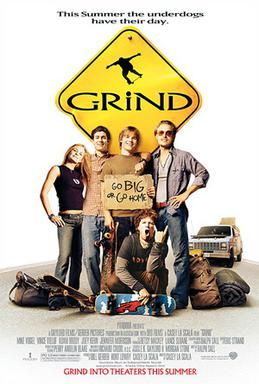
So, I Watched Grind (2003, Dir. by Casey La Scala)


Grind is about four annoying skaters who are obsessed with bodily functions and who want to get sponsored so they travel across the country and try to con their way into competing in events.  Adam Brody plays the skater who lets them use his college fund to pay for their road trip, which was really stupid of him to do.  They got sponsored but not because they’re any good.  They just happen to meet a skater named Jamie (Jennifer Morrison) who knows their hero (Jason London) and helps them out because she’s nice.  I’m nice too but I wouldn’t have helped out those chuckleheads.  I guess the lesson here is that you should just stand around and eventually, someone will give you some money.

When I started Grind, I thought it seemed familiar but I could have sworn that I have never seen it before.  Then Matt (Vince Vieluf), one of the most disgusting character to ever appear in a movie, told a woman that he was a representative of the “Release Them Twins Foundation,” and I remembered that, when this movie came out, MTV used to show the commercial for it a hundred times a day. I remembered thinking, at the time, that it looked like the dumbest movie ever made and it turns out I was right.

If I had to choose between rewatching Grind or watching two hours of projectile vomit, it wouldn’t be a choice because they’re pretty much the same thing.

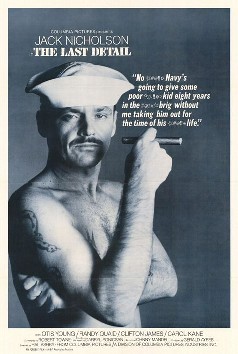
The Last Detail (1973, directed by Hal Ashby)


Billy “Badass” Buddusky (Jack Nicholson) and Richard Mulhall (Otis Young) are two Navy lifers stationed in Virginia.  On shore patrol, they’ve been assigned to transport a 18 year-old seaman to a Naval prison in Maine.  The kid has been dishonorably discharged and sentenced to eight years in the brig for trying to steal $40 from a charity box.  (The charity was a favorite of the wife of his commanding officer.)  Buddusky and Mulhall are expecting to find a hardened punk but instead, they end up escorting Larry Meadows (Randy Quaid), a timid teenager who suffers from kleptomania and who doesn’t seem to understand just how bad things are going to be for him for the rest of his life.  Not only is he going to do eight years in the brig, surrounded by hardened criminals, but his dishonorable discharge is going to follow him for the rest of his life.

Resenting having to take Meadows to prison and also feeling that he’s getting a raw deal, Buddusky and Mulhall decide to make a few stops on their way to Maine, so that Larry can enjoy what little time he has left and hopefully lose his virginity before being locked up.  In between brawling with Marines, visiting a brothel (where a young Carol Kane plays one of the prostitutes), and hanging out with a group of hippies (one of whom is played by Gilda Radner), Meadows comes to think of Buddusky and Mulhall as being his best friends.  Unfortunately, for Meadows, both Buddusky and Mulhall have their job to do.

Hal Ashby’s road picture is a character study of three men who are all lifers, even if they don’t realize that.  Both Buddusky and Mulhall hate the Navy but they also can’t relate to anyone who isn’t a member of the service.  Meadows’s entire future has been pre-determined because he tried to steal $40 but he doesn’t realize it until its too late.  When the film came out, it was controversial due to its “colorful” language.  In an interview, screenwriter Robert Towne defended the frequent profanity because, as he put it, when you’re in a situation you hate, “that’s what you do.  You bitch.”  Hal Ashby’s loose direction captures the road trip feel as the three leads reluctantly head to their ultimate destination.

The Last Detail features one of Jack Nicholson’s best performances.  Buddusky is cynical and doesn’t trust anyone other than Mulhall but even he knows that Larry Meadows deserves better than to spend eight years in the brig.  Along with lending his star power to the film and standing by director Hal Ashby when Ashby was arrested for marijuana possession, Nicholson also played a big role in the casting of Randy Quaid as Larry Meadows.  (The other final contender for the role was John Travolta but Nicholson insisted on Quaid).  The 6’5 Quaid towers of Nicholson and Young, making him look as if he could escape any time that he wants.  But Larry is so naive that he doesn’t want to make any trouble for his “friends.”  Though this wasn’t his first film, The Last Detail is the film that made Quaid one of the busiest character actors of the 70s and 80s and it also, at least temporarily, made him a part of the Jack Nicholson stock company.

Both sad and funny, The Last Detail is one of the best films of the 70s and features Jack Nicholson at his most unforgettable.

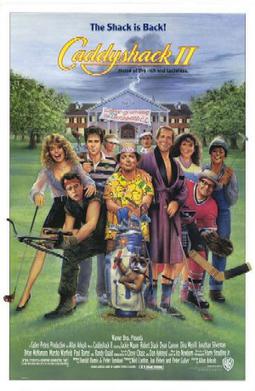
Caddyshack II (1988, directed by Allan Arkush)


Welcome back to Bushwood Country Club!  The Gopher is still stealing balls and burrowing through the course.  Ty Webb (Chevy Chase) is still the majority shareholder of the club, even though he now only plays golf inside of his mansion.  And that’s it!

Only the Gopher and Chevy Chase returned for Caddyshack II.  Ted Knight died before the movie went into production.  Bill Murray didn’t want to recreate his role from the first movie.  Rodney Dangerfield was involved in developing the movie but then dropped out after two million had already been spent in pre-production.  Chevy Chase was paid seven figures to return and he later called it one of the biggest mistakes of his career.  Only the Gopher didn’t complain.

With hardly anyone from the first film willing to come back for a second round, Caddyshack II features comedian Jackie Mason as Jack Hartounian, a real estate developer whose daughter, Kate (Jessica Lundy), wants to be a part of the WASPy Bushwood social set.  When Chandler Young (Robert Stack) keeps the plain-spoken Jack from being given a membership, Jack teams up with his old friend Ty and buys Bushwood.  He turns Bushwood into an amusement park called Jackie’s Wacky Golf.  Kate tells Jack that he’s ruined everything and turned Bushwood into Coney Island.  Chandler hires survivalist Tom Everett (Dan Aykroyd) to kill Jack and then agrees to play Jack in a round of golf.  The winner wins Bushwood.

A bust with both audiences and critics, Caddyshack II is one of the worst sequels ever made.  Why would you do a sequel to Caddyshack that features almost nothing that made the first film so entertaining?  Jackie Mason was a great comedian and writer but he wasn’t much of an actor and he makes a poor replacement for Rodney Dangerfield.  The film really loses me when Chandler Young literally pays money to have Jackie murdered.  It’s just a step too far.  Not even Ted Knight tried to kill Rodney Dangerfield and Dangerfield was a lot more obnoxious than Jackie Mason ever was.  Not even the dancing Gopher can generate much laughs and Kate’s right.  Jackie’s Wacky Golf really is a terrible place.

There are some interesting actors and actresses in the supporting cast.  The lovely Dyan Cannon plays Jack’s love interest and is one of the few good things about the movie, despite having no chemistry with Mason.  Randy Quaid gives a manic performance as Jack’s lawyer, a role that was originally meant for Sam Kinison.  Jonathan Silverman is the good caddy who falls for Jack’s daughter while Chynna Phillips is Chandler’s snobby daughter who befriends Kate and tells her she should change her last name to Hart.  Dan Aykroyd delivers all of his lines in a high-pitched voice that isn’t funny but which becomes very annoying.

The slobs win again.  The snobs are defeated and the Gopher dances with noticeably less enthusiasm.  There has never been a Caddyshack 3.

Film Review: Quick Change (dir by Bill Murray and Howard Franklin)


“Leave the Bronx …. it is time to leave the Bronx….”

Escape from New York….

“Someday, a real rain will come and watch all this scum off of the streets….”

“Kill, Berkowitz!” the Dog with John Turturro’s voice commands, “Kill!  KILL!”

And then there’s 1990’s Quick Change:

Of the many films that have been made about people desperately trying to get the Hell out of New York City, Quick Change is one of the funniest.  The appropriately-named Grimm (Bill Murray) works in the city planning office and has had all that he can take of New York’s crime and rudeness.  His solution is to dress up like a clown and rob a bank.  His girlfriend Phyllis (Geena Davis) and best friend Loomis (Randy Quaid) are already inside the bank, disguised as customers.  When Grimm, who claims to be a “crying on the inside” type of clown, takes everyone in the bank hostage and forces them into the vault, Phyllis and Loomis grab as much of the money as they can.  Talking on the phone to police chief Rotzinger (Jason Robards), Grimm makes a series of pointless demands.  Each demand that is met leads to Grimm releasing a group of hostages.  By removing his clown makeup, Grimm is able to join Phyllis and Loomis when they are “released.”  Rotzinger, who has even managed to procure a monster truck, thinks that the robber is still in the bank while Grimm, Phyllis, and Logan head for the airport.

Of course, things don’t go as planned.  What starts out as a energetic and good-natured Dog Day Afternoon parody quickly becomes an increasingly surreal journey through New York.  The streets are in terrible condition.  The signs that would have provided directions to the airport have been taken down by a road construction crew.  (They explain that they’re only taking down the signs today and it will be a few days before they get around to putting them back up.)  One of the few polite people they meet turns out to be a thief who steals four dollars from Grimm’s wallet but fails to notice that he’s got a million dollars taped around his waist.  Stanley Tucci shows up as a mobster.  Tony Shalhoub plays a well-meaning taxi driver who speaks his own indecipherable language.  Grimm keeps running into rude cops who, despite being on the hunt for the bank robbers, are frequently too busy being rude to notice what’s happening in front of them.

Best of all, Grimm, Phyllis, and the increasingly addled Loomis board a bus being driven by the film’s greatest character.  Played by Philip Bosco, the bus driver is a wonderful comedic creation.  “That’s not exact change,” the driver says when Loomis attempts to pay him with a hundred dollar bill.  “Behind the white line,” he says before starting the bus.  When Loomis, who has a habit of running into things and appears to be suffering from a concussion, tries to sit down, the bus driver informs him that he’s not allowed to sit until he receives exact change.  The driver has a schedule to keep and, to his credit, he largely manages to do so.  Bosco plays him with such deadpan determination that it’s hard not to admire his dedication to following every single regulation to his job.  As opposed to Grimm, the driver has learned to deal with living in New York by obsessively making every scheduled stop.

Quick Change struggles sometimes to balance its moments of humor and drama.  Scenes of Loomis running like a cartoon character are mixed with scenes of Phyllis worrying that Grimm might actually be a hardened criminal and struggling with whether or not to tell him that she’s pregnant.  This was Bill Murray’s first and only film as a director and sometimes, he does struggle to maintain a consistent tone.  But, in the end, what’s important is that it’s a funny film.  Bill Murray is one of those actors who can make you laugh just by existing and, as a director, he’s smart enough to give Jason Robards enough room to make Rotzinger into something more than just a standard comedic foil.

Quick Change is a comedic nightmare, one that made me laugh even as it also made me glad that I don’t have to drive in New York.  I get lost just driving around the suburbs of Dallas.  There’s no way I’d ever be able to find my way out of New York.

Guilty Pleasure No. 73: Days of Thunder (dir by Tony Scott)


In 1990’s Days of Thunder, Tom Cruise plays Cole Trickle, a talented but headstrong racecar driver who is recruited by businessman Tim Daland (Randy Quaid) to become a NASCAR champion and to also provide some publicity for Daland’s Chevrolet dealership.  Tim convinces Harry Hogge (Robert Duvall) to come out of retirement and serve as Cole’s crew chief.  Harry builds cars in his barn and then he talks to them, whispering sweet nothings into their side mirrors.  (This happens quite a bit.)  Both Cole and Harry have something to prove.  Cole has to prove that he’s the best.  Harry has to prove, to himself, that an accident that killed one of his driver was not his fault.  Harry also has to prove that he’s not insane.  That’s not an easy thing to do when you’re always in the barn, talking to a car.

At first, Cole’s rival is Rowdy Burns (Michael Rooker) but, after Rowdy is seriously injured in a crash and told that he will never race again, Rowdy becomes Cole’s closest friend and supporter.  With Rowdy off the circuit, Russ Wheeler (Cary Elwes) becomes Cole’s main rival.  We know that Russ is a bad guy because he never has a hair out of place and he’s played by Cary Elwes, who for some reason was always cast as the smug bad guy in films like this despite having a rather charming screen presence.

Cole’s love interest is Dr. Claire Lewicki (Nicole Kidman), who is there to help Cole deal with his anger issues and who is surprisingly forgiving of all the times that Cole acts like a complete and total jerk.  That happens quite a bit.  Cole is a bit of brat but eventually, with the help of everyone around him, he learns how to be a great driver.

The first time I ever saw Days of Thunder, I was pretty dismissive of it.  The film was producer and directed by the same people who were behind Top Gun and it pretty much tells the same story, except the jets are replaced with cars and the stakes are a bit less than saving democracy.  Like Top Gun, it was a film where Tom Cruise played a character who wants to be the best but who has to learn how to set aside his own ego and take control of his impulsive nature.  The first time I saw the film, I shrugged and said that, while Nicole Kidman and Tom Cruise had a lot more chemistry than Cruise and Kelly McGillis, it was still nothing that I hadn’t seen before.

But I have to admit that, since then, I’ve rewatched the film a few times.  It’s one of those movies that I never specifically seek out but if I see it playing somewhere on cable, I’ll usually watch a bit of it.  Some of it is because the race scenes actually are exciting, even if they do get a bit repetitive after a while.  Tony Scott was a director who knew how to film action.  The other major reason why I often find myself watching Days of Thunder is for the totally over-the-top performances of Robert Duvall and Randy Quaid.

“We looked like a monkey fucking a football out there!” Quaid exclaims, not once but twice.  It’s a phrase that doesn’t make the least bit of sense and it’s one of those lines of dialogue that reminds us that Days of Thunder went into production with a script that was being written and rewritten on a daily basis.  But Randy Quaid’s delivery is so emphatic that line works despite being totally stupid.

As for Robert Duvall, his performance here is a perfect example of how much fun it can be to watch a legitimately great actor overact.  There’s nothing subtle about his performance and I doubt Days of Thunder will ever be a film that shows up when people are talking about the highlights of his legendary career.  But when Duvall talks to his car, you believe every minute of it.  It’s such a silly scene but Duvall pulls it off like the pro that he is.

Finally, if you’re going to watch a movie about two cocky race car drivers who are constantly taunting each other, wouldn’t you want them to look like Tom Cruise and Cary Elwes?  Good lookin’ guys in fast cars, drivin’ around Southern racetracks, what’s not to love?

Previous Guilty Pleasures

  1. Half-Baked
  2. Save The Last Dance
  3. Every Rose Has Its Thorns
  4. The Jeremy Kyle Show
  5. Invasion USA
  6. The Golden Child
  7. Final Destination 2
  8. Paparazzi
  9. The Principal
  10. The Substitute
  11. Terror In The Family
  12. Pandorum
  13. Lambada
  14. Fear
  15. Cocktail
  16. Keep Off The Grass
  17. Girls, Girls, Girls
  18. Class
  19. Tart
  20. King Kong vs. Godzilla
  21. Hawk the Slayer
  22. Battle Beyond the Stars
  23. Meridian
  24. Walk of Shame
  25. From Justin To Kelly
  26. Project Greenlight
  27. Sex Decoy: Love Stings
  28. Swimfan
  29. On the Line
  30. Wolfen
  31. Hail Caesar!
  32. It’s So Cold In The D
  33. In the Mix
  34. Healed By Grace
  35. Valley of the Dolls
  36. The Legend of Billie Jean
  37. Death Wish
  38. Shipping Wars
  39. Ghost Whisperer
  40. Parking Wars
  41. The Dead Are After Me
  42. Harper’s Island
  43. The Resurrection of Gavin Stone
  44. Paranormal State
  45. Utopia
  46. Bar Rescue
  47. The Powers of Matthew Star
  48. Spiker
  49. Heavenly Bodies
  50. Maid in Manhattan
  51. Rage and Honor
  52. Saved By The Bell 3. 21 “No Hope With Dope”
  53. Happy Gilmore
  54. Solarbabies
  55. The Dawn of Correction
  56. Once You Understand
  57. The Voyeurs 
  58. Robot Jox
  59. Teen Wolf
  60. The Running Man
  61. Double Dragon
  62. Backtrack
  63. Julie and Jack
  64. Karate Warrior
  65. Invaders From Mars
  66. Cloverfield
  67. Aerobicide 
  68. Blood Harvest
  69. Shocking Dark
  70. Face The Truth
  71. Submerged
  72. The Canyons

Black Cadillac (2003, directed by John Murlowski)


On a snowy night, Scott (Shane Johnson), CJ (Josh Hammond), and Robbie (Jason Dohring) cross into Wisconsin so that they can have a good time at a notorious roadhouse.  After CJ starts a fight that gets them kicked out, the three of them start to drive back to Minnesota.  They stop to pick up a deputy sheriff, Charlie (Randy Quaid), whose squad car has broken down.  Charlie assures the young men that he’s off-duty and asks them a lot of questions about what they’ve been doing during the night.  When a mysterious 1957 black Cadillac pulls up and challenges the Scott to a drag race, Charlie tells Scott to “go for it!”

It turns out that the Cadillac is interested in more than just a race.  It tries to force Scott into crashing his car and, even after Scott seems to escape from the car, it keeps showing up wherever the friends are driving.  Why is the other driver after them and how is Charlie involved?

Not a bad film.  The black Cadillac and its driver are great villains that seems to be able to transport anywhere.  No matter what the three young men do, they can’t escape from or even slow down the Cadillac’s pursuit.  The three friends are all likable, even if the movie does get bogged down with all of their secrets.  Randy Quaid shows  why, before he apparently lost his mind and started talking about star whackers, he was one of the busiest character actors around.  Black Cadillac is a good mix of horror and car chases.

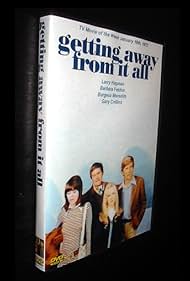
Retro Television Review: Getting Away From It All (dir by Lee Philips)


Welcome to Retro Television Reviews, a feature where we review some of our favorite and least favorite shows of the past!  On Sundays, I will be reviewing the made-for-television movies that used to be a primetime mainstay.  Today’s film is 1972’s Getting Away From It All!  It  can be viewed on YouTube.

For Fred Clark (Larry Hagman) and Mark Selby (Gary Collins), life is New York City just isn’t that much fun anymore.  The weather is terrible.  The traffic cannot be navigated.  The only people ruder than the cabbies are the doormen.  Fred and Mark have come up with the perfect plan.  They’ve decided to move to a small country town and purchase a house on a small island.  In fact, they’re going to buy the entire island!  It’s surprisingly cheap.  Fred and Mark don’t ever really stop to wonder why the island is available for so little money.  Seriously, if you’re buying an island, you should probably ask yourself those questions.

Mark’s wife, Alice (E.J. Peaker), is enthusiastic about the idea.  Less excited is Fred’s wife, Helen (Barbara Feldon).  Helen enjoys living in the city and having a nice job in an office building.  She gets along with her boss (played by Jim Backus, one of many veteran actors to show up in a small role in this film).  Perhaps hoping that Fred will change his mind once he’s confronted with the reality of actually living in the country, Helen finally gives in.

It does turn out that the island is not quite the paradise that Fred and Mark were expecting.  The only way to get out to the island is in a leaky rowboat.  The house is falling apart and, as Helen is disgusted to learn, it also doesn’t have indoor plumbing.  There’s no electricity either but fortunately, the local handyman is working on it.  His name is Herbie and he’s played by a very young and thin Randy Quaid.  If you’ve ever wanted to hear Randy Quaid speak with an exaggerated New England accent, this is the film for you.  There’s nothing convincing about Quaid’s accent but it still seems only fair, considering all of the Yankee actors who have butchered the Southern accent over the years.

Just when it looks like Fred and Mark have managed to make the Island livable, they get a disturbing letter.  As the new owners of the Island, they owe 20 years worth of back taxes.  As Fred puts it, the tax bill is more than either of them can afford.  If they can’t raise the money, the town will take back the Island.   Fred and Mark consider trying to get jobs but it turns out that neither one of them knows much about being fisherman.  They then decide to charm the town into nullifying the tax bill.  That turns out to be more difficult than either man imagines.

Getting Away From It All is a comedy that deals with a universal theme, the desire to escape from the harshness of everyday life and find a perfect place to which to escape.  That said, the film’s main reason for existing is a parade of comedic cameos.  Jim Backus, Vivian Vance, Joe E. Ross, Burgess Meredith, Paul Hartman, and J. Pat O’Malley all appear in small roles, appearing just long enough for 1972 viewers to say, “Hey, I recognize that person!”  The end result is a rather shallow film that has a few chuckle-worthy moments.  (Again, Randy Quaid pretending to be from Maine has to be worth something.)

In the end, for all of the film’s celebration of getting away from it all, it’s hard not to feel that Gary, Mark, Alice, and Helen will all end up back in Manhattan sooner than later.  Some people are just city folks.

The Unnominated: The Long Riders (Dir by Walter Hill)


Though the Academy of Motion Picture Arts and Sciences claim that the Oscars honor the best of the year, we all know that there are always worthy films and performances that end up getting overlooked.  Sometimes, it’s because the competition too fierce.  Sometimes, it’s because the film itself was too controversial.  Often, it’s just a case of a film’s quality not being fully recognized until years after its initial released.  This series of reviews takes a look at the films and performances that should have been nominated but were, for whatever reason, overlooked.  These are the Unnominated.

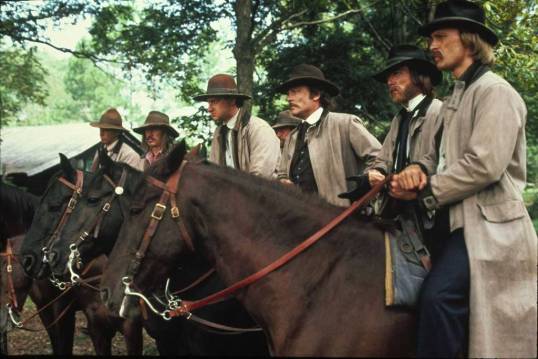
First released in 1980, The Long Riders is one of the many films to tell the story of the James/Younger Gang.

A group of former Confederate guerillas who became some of the most notorious bank robbers to roam post-Civil War America and who were based in Missouri, the brothers who made up the James/Younger Gang were hunted by the Pinkertons and beloved by the citizens who viewed them as being 19th Century Robin Hoods.  Following a disastrous attempt to rob a bank in Northfield, Minnesota, the Younger brothers were captured by the government while Jesse and Frank James made it back to Missouri.  Jesse was shot in the back by Bob Ford while Frank subsequently surrendered to authorities and made a good living on the lecture circuit.

The Long Riders tells the story of the gang, from their first encounter with the heavy-handed Pinkertons to the Northfield raid to Frank’s eventual surrender.  Director Walter Hill both celebrates the legend of the James/Younger Gang while also emphasizing that all the members of the gang were also individual humans who had their strengths and their flaws.  Hill emphasizes the idea of the gang being a group of post-war rebels, still fighting a war against a government that is more interested in protecting banks than looking after people.  The Long Riders deconstructs the legend while also celebrating it.

The main thing that sets The Long Riders apart from other films about the James/Younger Gang is the fact that the brothers are played by actual brothers.  David, Keith, and Robert Carradine plays the Youngers.  Randy Quaid plays Clell Miller while Dennis Quaid assumes the role of the cowardly Ed Miller.  Nicholas and Christopher Guest make a memorably creepy impression as Charley and Bob Ford.  And finally, Jesse and Frank James are played by James and Stacy Keach.  (The Keaches also worked on the film’s script).  And while Stacy is definitely the more charismatic of the Keach brothers, the film makes good use of James’s rather stoic screen presence.  While the rest of the gang enjoys the outlaw life, James Keach’s Jesse is rigid, serious, and ultimately too stubborn and obsessive for his own good.

Now, the casting might sound like a gimmick but it works wonderfully.  When Clell chooses the gang over Ed, it carries an emotional weight because we’re watching real brothers reject each other.  The comradery between the Carradines carries over to the comradery between the Youngers and it also informs their occasional rivalry with the better known James brothers.  While it is Stacy Keach and David Carradine who ultimately dominate the film, every brother in the cast makes a strong impression.  Also giving a memorable performance is Pamela Reed as a defiantly independent Belle Starr, who loves David Carradine’s Cole Younger but marries Sam Starr (James Remar).  The knife fight between Carradine and Remar is one of the film’s highlights, as is the violent and disastrous attempt to rob the bank in Northfield.

The Long Riders is an exciting and ultimately poignant western but sadly, it received not a single Oscar nomination, not even for the stunning cinematography or Ry Cooder’s elegiac score.  Fortunately, just like the legend of the James/Younger Gang, The Long Riders lives on.

Previous entries in The Unnominated:

  1. Auto Focus 
  2. Star 80
  3. Monty Python and The Holy Grail
  4. Johnny Got His Gun
  5. Saint Jack
  6. Office Space
  7. Play Misty For Me

Late Night Retro Television Reviews: Gun 1.4 “All The President’s Women”


Welcome to Late Night Retro Television Reviews, a feature where we review some of our favorite and least favorite shows of the past!  On Tuesdays, I will be reviewing Gun, an anthology series that ran on ABC for six week in 1997.  The entire show is currently streaming on Tubi!

This week, Robert Altman!  This will be good …. right?

Episode 1.4 “All The President’s Women”

(Dir by Robert Altman, originally aired on May 10th, 1997)

When it comes to the fourth episode of Gun, I have to admit that my expectation were high because this episode was the only one in the series to be directed by Gun’s producer, Robert Altman.  The story, about the womanizing president of a golf club, sound like it would be right up Altman’s alley and allow him to engage in the social satire for which he was best-known.

Unfortunately, the episode itself just isn’t that good.  In fact, it’s the worst episode of Gun that I’ve seen so far.  Watching the show, it’s easy to see that Altman directed it.  There’s several very Altman-like moments.  The show’s plot and its characters all tend to mirror Altman’s trademark obsessions.  That said, for all of Altman’s strengths as a filmmaker and a satirist, he was also a bit self-indulgent and this episode is basically 50 minutes of Altman patting himself on the back and bragging about how clever he is.

The film takes place at a golf club in Texas.  After the club’s president is bitten by a rattlesnake and then accidentally shoots himself in the foot while trying to kill the snake, Bill Johnson (Randy Quaid) is elected as his replacement.  Bill is friendly but shallow, a businessman who is all about prestige and showing off his wealth.  While his wife (Daryl Hannah) spends her time researching real-life presidents, Bill is having an affair with the former’s president’s widow (Jennifer Tilly) while also flirting with his new secretary (Dina Spybey).  Meanwhile, another former lover (Sean Young) is now his attorney while Sally Kellerman plays Jennifer Tilly’s mother and continually warns Bill to stay away from her daughter.

Bill is shocked to discover that someone is sending packages to the women in his life.  Jennifer Tilly receives the gun that was used to shoot the rattlesnake.  Darryl Hannah receives the magazine.  Sean Young receives the bullets.  If you can’t already guess that this is going to end up with Bill in his underwear on the 18th hole, being menaced by a woman carrying a gun, I don’t know what to tell you.

This episode just falls flat and it’s largely the fault of the cast.  Randy Quaid, at the very least, has a Texas accent but he’s not a convincing lothario.  The women all butcher their accents, with the majority of them sounding more like they’re from Georgia than Texas.  Most the cast goes overboard with their quirkiness while Altman directs in a meandering fashion that robs the episode of whatever satirical impact that it might have had.  It’s just a boring episode, regardless on the nails-on-a-chalkboard accents and all the overacting.  Watching this episode, I was reminded of why I usually can’t stand anthology shows.  They just seem to bring out the worst in everyone.

Next week, Kirsten Dunst guest stars.  Did Gun bring out the worst in her?  We’ll find out!