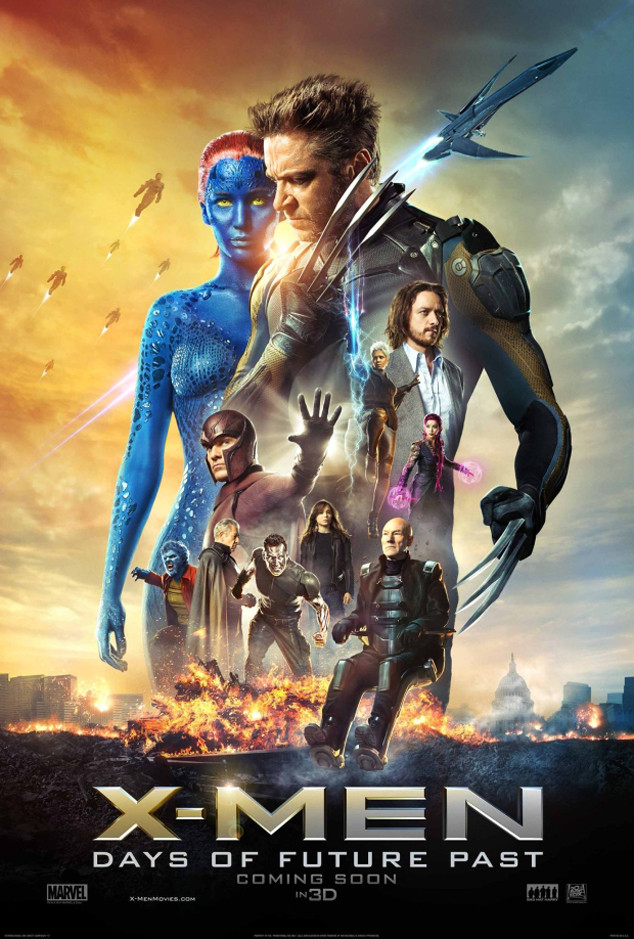
At this point, I freely admit to being a little bit confused : X-Men : Days Of Future Past opens to a somewhat lower box office take than The Amazing Spider-Man 2 did, which was only slightly behind the opening-frame receipts generated for Captain America : The Winter Soldier, and yet Cap and the X-Men are both considered “successes,” while Spidey’s considered a “disappointment” — even though, last I checked, its’ total gross ticket sales were only about $50 million behind Cap’s despite the fact that it opened a full month later? Chances are probably good that it will even end up closing the gap here at some point, but no matter — the die appears to have already been cast. The stench of that rat I mentioned smelling in my Spider-Man review a couple weeks back? It’s getting a lot stronger now.
Needless to say, I’ve got a theory as to what’s going on here, and it builds upon my theory already expounded upon in that just-mentioned prior review : Disney/Marvel actively wants the Spider-Man franchise back, but the X-Men? Not so much. At least not yet.
How else to explain this clearly-orchestrated PR campaign? Look, internet movie critics are an easy bunch to buy off : for a free ticket, or even the promise of some kind of other free swag in the future, you can get thousands of people to say whatever you want them to. And from there, you can get thousands of others to mimic the already-established meme of whether a given flick is “successful” or not, because gosh, who would dare contradict the well-established critics and box-office analysts who have already passed judgment on the merits of a particular work? For the price of probably less than $10,000 in either payments or promises, DisMar has the movie-going public right where they want us, echoing their nonsensical party line and unsupported-by-the-facts pronouncements.
Needless to say, I don’t feel like playing along — for the most part. But there’s one area where I do agree with the general consensus, even if the fix is in : X-Men : Days Of Future Past is a really good superhero flick. And that might just throw a wrench in Marvel’s “this one’s dying on the vine, let’s just wait it out and see what happens” game plan.
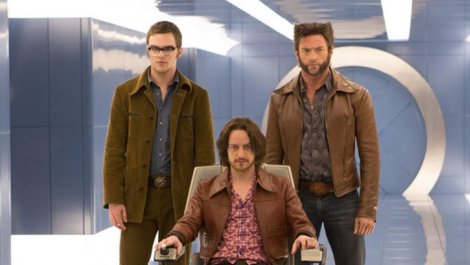
Seriously, friends, this one has everything and the kitchen sink going on, but somehow returning director Bryan Singer (more on him in a minute) juggles every ball thrown in the air and makes it work : the “divergent timelines” conceit that forms the core of the plot never gets confusing even though it easily could; the action sequences are brisk and spectacular; the characters are uniformly believable and compelling; and the performances, from perhaps the most star-studded cast ever assembled for a comic-book film, are all first rate. When you’ve got Hugh Jackman, James McAvoy, Patrick Stewart, Ian McKellen, Ellen Page, Jennifer Lawrence, Michael Fassbender, Nicholas Hoult, Peter Dinklage, Shawn Ashmore, Halle Berry, Michael Lerner, Booboo Stewart, Omar Sy, Kelsey Grammer, Anna Paquin, James Marsden and Famke Janssen all punching the same time clock, it goes without saying that some are going to have more to do than others, but nobody seems intent on stealing the show for themselves, which is no mean feat considering the sheer number of sizable egos that must be involved here. Sure, the script puts most of the onus of Wolverine, the young Professor Xavier, the young Magneto, the young Beast, the young Mystique, and the villainous Dr. Bolivar Trask, but that doesn’t mean everybody else doesn’t give their admittedly smaller parts at least a reasonable effort. Shit, I’m not sure how you even get stars of the stature of Page, Berry and Paquin to even accept what are essentially tertiary-at-best roles (does Paquin even have a line of dialogue?), but somehow they keep showing up for X-Men flicks, and in this case the place doesn’t even seem that crowded. Shit, Singer even manages to sneak in quick cameo for Wolverine co-creator Len Wein.
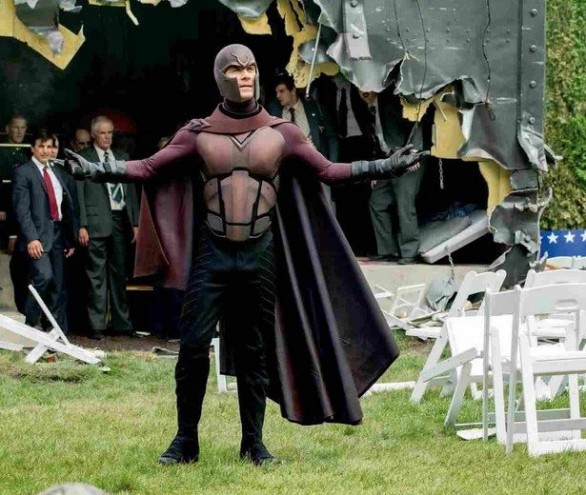
In many ways what makes Days Of Future Past so successful is that fact that it’s actually more a direct sequel to First Class (which I also thoroughly enjoyed) than it is the initial X-trilogy, and some of the continuity changes that the end results of this film apparently seal into place even seem to undo how those first three films “wound up,” but whatever — the end result here is a franchise that feels like it’s been given a new lease on life after treading water for a good half-decade or so. I mentioned just a moment ago that I really dug First Class, but you can’t get by on prequels forever. At some point a movie needed to come along that propelled the X-Men franchise forward, and this does so with plenty of style and flair.
Plus, the whole thing’s a lot of fun — sure, some of the dialogue is overly- verbose and clunky and painfully expository, but those instances are rare, and actually stand out in contrast to the general ease and flow of the rest of the film. And while the premise itself requires a heavy dose of suspension of disbelief, let’s be honest here — what super-hero movie doesn’t? At least this one rewards your willingness to go with the flow in ways that even highly-touted fare like Joss Whedon’s The Avengers (a favorite target of my ire, I admit, but only because it really does suck, no matter what anyone else thinks) could never hope to manage. Plus, audiences get a chance so see Dinklage prove that he can” bring it” in each and every role he takes on, not just on Game Of Thrones — something those of us who have been fans of his work ever since The Station Agent have long maintained.
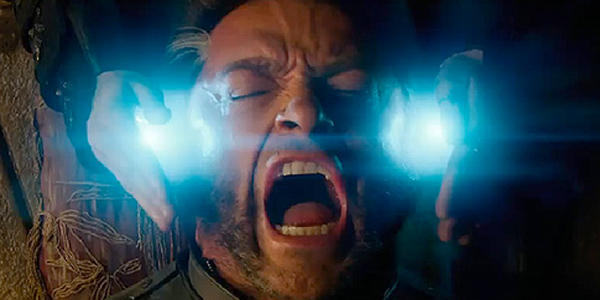
In case it weren’t painfully obvious already, I thoroughly enjoyed X-Men : Days Of Future Past, and after appearing to flounder in the wake of the risible Valkyrie, my faith in Bryan Singer as a director has probably never been higher — unfortunately (here’s where that “more on him in a minute” comes in), I can’t say the same in regards to my faith in Bryan Singer as a human being. I won’t kid you — the sexual abuse allegations that have been leveled against him really bother the shit out of me. And no, it has nothing to do with Singer’s sexual orientation : I don’t care if a person is straight, gay, or somewhere in between, any and all relationships — whether serious, casual, or less than casual — between consenting adults are fine by me. Everybody likes to get laid, have at it. But age of consent laws are there for a reason, and kids and teens are, and should be, off limits to grown adults. The fact that the “fan” community seems so eager to point out that Singer’s accuser has filed civil rather than criminal charges and that he’s apparently done so in the past is both irrelevant to the reality of what may or may not have occurred, and represents a clear case of reprehensible victim-shaming of the highest order. Sure, everyone’s innocent until proven guilty, but assuming, or even implying, that somebody who’s been brave enough to come forward with claims this serious just has to be a liar because they’re choosing to address this issue in ways that others either don’t understand or approve of is beneath contempt. Maybe we’ll never know the whole truth of this matter, but if Singer did what’s he’s been accused of, then he’s got some serious issues and needs some serious help and sure, I feel some amount if sympathy for whatever turmoil is boiling away inside his mind — but not half as much as I do for the teen boy (s) that he’s victimized (if he has). I don’t want to see him condemned in the court of public opinion if he’s completely innocent, but I don’t want to see his accuser condemned, either, and that’s what’s been happening. Sex between adults and those not legally deemed to be adults (in most states that’s 18, in some 16) is against the law, period, and if Singer did, in fact, engage in the sort of behavior that’s been alleged, then I’m done with him from here on out. End of rant.
Regardless of what’s he’s done in his off-hours, though, the perhaps-tragic fact (depending on how legal proceedings play out) remains that what he’s done while on company time just can’t be denied in this case. I wish I could love X-Men : Days Of Future Past with a totally clean conscience, sure, but I can’t deny that I loved it just because it may have been directed by a guy whose personal behavior is both sleazy and illegal. It’s a complex set of circumstances to weigh in one’s mind, to be sure, but so goes life. I wish its murky waters were easier to navigate, but they never have been, and they’re never going to be.
As for the future of all things X-Men, I’ll make one easy prediction right now : when this thing hits home viewing “platforms” in a few months’ time, look for a bevy of reviews along the lines of “ya know, maybe this this isn’t quite as good as we thought at first” and “on second viewing, the flaws in this one are obvious” — not because such sentiments will be true, but because Days Of Future Past is so well-done, and opens up so many possible avenues for the franchise going forward, that Marvel’s gonna want to start one of their infamous “whisper campaigns” to try to undermine the public’s confidence in having it in “other hands” and get it back in their own grubby, greedy paws.