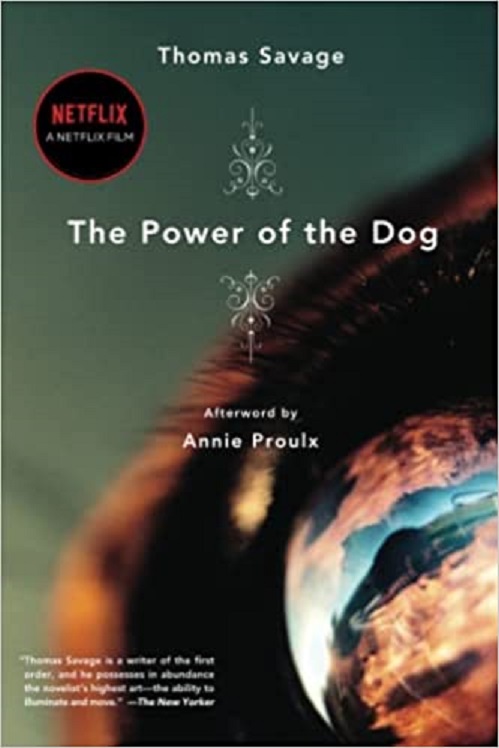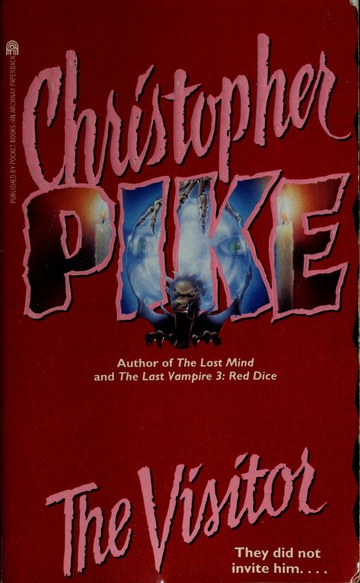
Horror Book Review: The Visitor by Christopher Pike


The 1995 Christopher Pike novel, The Visitor, is a strange one, even by the very strange standards of Christopher Pike.

Mary is a high school student who has taken up smoking and general cynicism in response to the tragic death of her boyfriend Jerry.  Jerry was shot and killed by a school security guard who, it is believed, then shot himself out of guilt for having accidentally killed Jerry.  The truth of the matter is that the security guard came across Mary and Jerry while they were breaking into the school so that they could count the votes for homecoming queen to see whether or not Mary won.  (And, of course, Mary totally won.)  A struggle with the guard led to the guard shooting Jerry and then Mary shooting the guard!  No wonder Mary is struggling with guilt and now spends her time lying, half-undressed, on Jerry’s grave.

An attempt to contact Jerry via a séance goes terribly wrong after a spirit says that Mary has “lived before” and that she used to claim to have God-like powers.  Things get even stranger when Mary meets Tom, the new kid at school who has white-blonde hair and who has secrets of his own, all linking back to Mary’s past.  What are those secrets?  Well, let’s just say that it all links back to aliens and secret powers and there’s some “ancient astronauts as Gods” silliness and eventually, Jerry is brought back to life but he’s kind of whiny and leaking embalming fluid all over the place and Mary has to make a decision about how to deal with all of these weird complications.  But it also turns out that there’s more to Mary’s situation than even Mary originally realized and the entire book ends with a mind-screw that leaves you wondering who killed who and who might be an alien and who might be human….

Seriously, this is one weird book!  There’s a tendency among some to file Christopher Pike and R.L. Stine together but Pike’s books were always a hundred times darker and more macabre than Stine’s.  Whereas Stine’s books usually involved good kids in bad situations, Christopher Pike specialized in writing about bad kids dealing with uniquely Hellish problems.  If Stine’s books usually only featured one or two murders and a lot of misunderstandings, Pike specialized in books in which entire communities were destroyed and people really had absolutely no control over their fates.  In The Visitor, no one escapes unscathed.

The world of Christopher Pike was a dark one and that’s certainly the case with The Visitor.  Does the book always make sense?  Not really.  With its combination of aliens and zombies and ghosts and mysterious white-haired teenagers, the plot plays out like a uniquely demented dream.  It makes for an entertaining read.  And, in the end, the book provides an important lesson.  There’s nothing wrong with waiting a day to find out how the homecoming election went.  Don’t break into the school to count the votes yourself.  Nothing good ever comes from that!
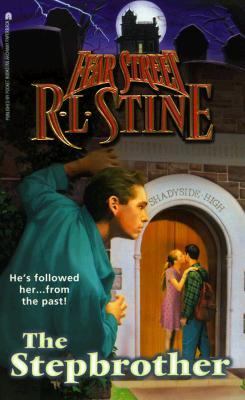
Horror Novel Review: The Stepbrother by R.L. Stine


The 1998 novel, The Stepbrother, tells the story of Sondra.

Sondra is a teenager living in Shadyside.  Like many of the town’s teenagers she comes from a broken home but she also has a cute boyfriend named Zach and three close girlfriends, the main one of whom is named Mallory and who somehow is an expert in hypnotism.  Seriously, how does one become an expert in hypnotism before even graduating from high school?  I would think that hypnotism would be one of those things where you would have to spend years in training before you were allowed to even try it out on anyone.  But Mallory is just casually hypnotizing everyone!  I wouldn’t even know where to begin when it comes to hypnotizing people, though I’ve been told that I do know how to cast a spell whenever I enter a room.  I said that with a wink and a smile, by the way.

Sondra also has a new stepfather and a stepbrother named Eric.  Zach is totally jealous of Eric and everyone does keep commenting on the fact that Sondra and Eric do kind of look like they belong together.  Seriously, it’s not like they’re blood-related so why not?  I mean, he is right there!  (I never had a stepbrother in high school but if I did, I can only imagine what would have happened.)  Still, Zach shouldn’t worry because Sondra is too busy freaking out over the possibility of dying in a fire to seriously consider cheating on him.  Sondra keeps having feelings of deja vu.  Mallory suggests that maybe Sondra is the reincarnation of a girl who died in a fire back in the 50s.  And maybe Eric is the reincarnation of the person who was responsible for the fire!

Yeah, okay.  Whatever.  If I’m not very enthusiastic about this book, it’s because I don’t believe in reincarnation and I always find reincarnation stories to be pretty boring.  This one features Sondra flashing back-and-forth from the 80 to the 50s and trying to avoid dying in a second fire but it all felt way too predictable to be effective.  If you’ve seen one movie or read one book about reincarnation, you’ve pretty much seen and read them all.

(That said, if I did believe in reincarnation, I would assume that I was probably Edie Sedgwick in a past life.  Or maybe Alice Roosevelt.  Or perhaps Victoria Woodhull or Evelyn Nesbit.  I once had a dream where I was Mary Kelly, Jack the Ripper’s final victim, in a past life.  One thing I find interesting about reincarnation is that everyone’s past life was always so exciting and melodramatic.  Nobody was ever just some slop in a past life.  Instead, they were a wealthy celebrity who died under the most tragic of circumstances.)

Finally, the whole hypnotism subplot was silly even by the standards of R.L. Stine.  Of course, I have to admit that I’m also not a big believer in hypnotism.  I went to a hypnotism demonstration in college and I’m proud to say that I could not be hypnotized, largely because my ADD and my own stubbornness made it impossible for me to clear my mind.  Everyone else at the demonstration was rather easily hypnotized but not me!  I’ve always taken a good deal of pride in that.

Horror Book Review: Haunted by R.L. Stine


First published in 1990, Haunted tells the story of Melissa, a teenager who would seem to have the perfect life.

No only does she come from a wealthy family and live in a nice, big house that is located right in the middle of Fear Street but Melissa is also a popular student at Shadyside High and she has a boyfriend named Buddy.  Plus, she’s just celebrated her birthday and, as a present, she got a brand new car!  The only thing that Melissa really has to worry about is the possibility of her house being broken into by the elusive Fear Street Prowler and the fact that a bitter ghost named Paul keeps materializing in front of her and claiming that she killed him and he’s come back from the dead to get revenge.  Paul is not only a revenge-seeking ghost but he also taunts Melissa for being rich.  Perhaps the only thing worse than being haunted is by being haunted by a ghost from the lower classes.  I mean, seriously, I don’t even want to think about it….

(Usual disclaimer: I do NOT believe in ghosts.)

Melissa is not only annoyed by Paul’s bad manners but also by the fact that he claims that she killed him when she has absolutely no memory of who he is.  In fact, when she does some simple research to see if anyone recently killed Paul, she discovers that no one named Paul has been murdered recently.  Paul himself admits that his memory is a little bit fuzzy, as well.  Accusing someone of murdering you when you’re really not sure isn’t a cool thing to do, Paul.  Stupid ghost.

Then, one night, Melissa sees Paul hanging out with his other less-than-wealthy friends.  Only, this Paul is alive and he’s even more of a jerk than his ghost!  Melissa realizes that Paul’s ghost is from the future and  that therefore, Paul has not died yet but will and apparently, she’s going to be the one responsible!  But how can that be when Ghost Paul is turning out to be not that bad and actually kind of sweet?

(Myself, I’m more concerned with how Living Paul and Ghost Paul both existing at the same time seems like one of those things that would cause the universe to split open or something.  I mean, it just doesn’t seem right.)

This is one of R.L. Stine’s stranger books.  The plot doesn’t really make much sense but you have to kind of admire the fact that Stine just went with it and didn’t even bother to try to make any of it seem plausible.  Sometimes, it’s best just to embrace the silliness of it all and that’s what Stine does here.  The book’s attempts to deal with class differences were fairly shallow but then again, when you’re a teenager, you’re always at you’re most shallow when talking about who is rich and who is poor so, on that level, Stine did a good job writing for his target audience.  The important thing is that Melissa was a relatable and sympathetic character and she definitely deserved a less petulant ghost.

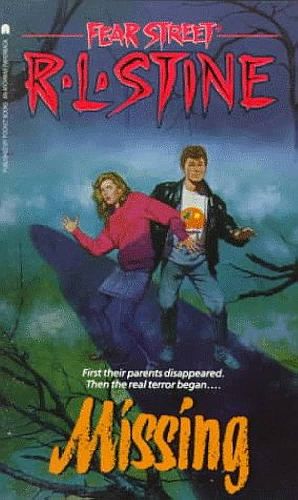
Horror Book Review: Missing by R.L. Stine


First published in 1990, Missing tells the story of Mark and Cara Burroughs.  They’re siblings who have just moved to the town of Shadyside.  Along with their parents and their cousin Roger, they live in a house located on Fear Street.  Even though they are new students, they’re already popular enough that Mark is dating Gena and everyone from school shows up to party at their house while their parents are gone for the night.

Now, there’s a lot of negative things that you can say about the town of Shadyside and Fear Street in general.  I mean, it’s kind of a violent town.  How many homicidal maniacs have lived in Shadyside?  Over the years, how many students at Shadyside High have either been murdered or seriously injured?  But, it should be noted that Shadyside High is notably welcoming to new students.  I know that, when I was in high school, the new transfer students were always initially viewed with suspicion.  That was especially true if they were from any other place than Texas.  (Since my family moved around a lot when I was a kid, I knew far too well what it was like to be the new kid at school so I always tried to be nice to everyone, even if they were from up north.)  At Shadyside High, though, new students can go from moving into new home to throwing a huge party in just a matter of weeks.

Anyway, this party comes to an end when a cop shows up, not to complain about the noise but just to ask if Mark and Cara know anything about a nearby burglary.  After all of their guests leave, Mark and Cara realize that their parents have yet to come home.  What has happened to their parents and how is it connected to Roger, Gena, and a strange monkey statue?  And why is a mysterious van parked outside the house?  And what’s happening in Fear Street Woods!?  That’s a lot of questions and fortunately, Mark and Cara decide to solve the case themselves as opposed to going to the police.  (It should be noted that the phones at the house are all dead and, since this book was published in 1990, Mark and Cara are dependent on their landline.  The 90s were a difficult time.)

Missing was the fourth of R.L. Stine’s Fear Street novels and it’s fast-paced with a lot of enjoyably silly melodrama.  This is one of those books where no one is who they originally claim to be, including the parents.  One could argue that all of the plot contrivances don’t hold together under close scrutiny but Stine keeps the plot moving so quickly and fills the book with so many weird moments that it really doesn’t matter.  The book is full of cliffhangers and Stine wisely doesn’t let things like realism get in the way of resolving those cliffhangers.  By the time a major supporting character shows up, from out of nowhere, with a gun in order to save the heroic siblings, I was giggling with joy.  Seriously, does every resident of Shadyside just happen to have a weapon just casually lying around the house?

Horror Book Review: Into the Dark by R.L. Stine


First published in 1997, Into the Dark tells the story of Paulette Fox.  Paulette has been blind since birth but she hasn’t let that stand in her away.  She’s one of the most popular students at Shadyside High.  She has two best friends, Jonathan and Cindy, who are devoted to her.  She enjoys eating the pizza at Pete’s Pizza, watching silly slasher films with her friends, and taking piano lessons at the Music Academy.  And, assuming that she can get her overprotective parents to sign off on it, she’s looking forward to taking self-defense classes.

Best of all, she’s got a boyfriend!  Brad has just moved to Shadyside.  Like Paulette, Brad loves music and wants to make it his life.  Unfortunately, Brad does not come from a rich family so he has to work as a janitor at the Music Academy.  Brad seems to be sweet and considerate and he treats Paulette like an adult.  Paulette touches his face and discovers that not only is he very handsome but he also a scar on his eyebrow.  Scars are sexy!

However, no sooner has Paulette started hanging out with Brad than strange things start to happen to her.  Twice, she is nearly run over by a car despite the fact that Paulette is always careful while crossing the street.  (The second time, Paulette is convinced that someone pushed her, even though everyone tells her that they didn’t see it happen.)  She starts to get weird phone calls.  According to Cindy, someone has broken into Paulette’s bedroom and painted all sorts of threatening messages on the wall.  Even worse, Brad starts to act strange.  Sometimes, he’s the considerate and nice Brad that she wants to date.  Other times, he acts possessive and creepy.  Her friends tell her that she needs to stay away from Brad, especially after he’s accused of robbing Pete’s Pizza!  But Paulette remains convinced that only she can figure out what is truly happening with Brad….

This is an R.L Stine novel so there’s really no way that you won’t guess what the big twist is.  In fact, if I remember correctly, it’s a twist that Stine has used in quite a few of his other books.  Because I’m a nice reviewer, I will not spoil what the twist is but …. I mean, seriously, you figured it out while reading the previous paragraph, right?

Obviously, Into The Dark won’t win any points for originality but still, as far as the Fear Street books are concerned, Into the Dark is an entertaining and quick read and Paulette is a likable and relatable heroine.  Indeed, Stine actually appears to have done some research for this book and the passages where he describes how Paulette navigates every-day life without being able to see ring true.  Paulette may be blind but she’s also a typical teenager.  It’s easy to roll your eyes when she repeatedly refuses to call the police despite the number of weird things that happen to her but seriously, what teenager wants to call the police for anything?  When I was 17, I was woken up by what I thought was the sound of someone breaking into my house and, even though I had a phone and could have easily called the police, I instead grabbed a golf club and walked around the house in my t-shirt and underwear, searching for the thieves.  When you’re 17, you think you’re immortal and, even more importantly, you don’t want to have to deal with any authority figures.

(Incidentally, there were no thieves and it was all just my imagination.  Yay!)

Finally, who couldn’t relate to Paulette’s confusion about Brad?  Sometimes, Brad is extremely nice and caring.  Sometimes, Brad is cold and kind of a jerk.  That sounds like every guy I knew when I was in high school.  Like the best of Stine’s book, Into the Dark works because the reader can relate to it, even if they’ve never lived on Fear Street or been threatened by …. well, I won’t spoil it.  But you already figured it out, right?

Novel Review: The Bonfire of the Vanities by Tom Wolfe


When it comes to The Bonfire of Vanities, after watching the movie and then reading the book about the making of the movie, you might as well order a copy of the original 1987 novel by Tom Wolfe and see where it all started.

At nearly 700 pages, The Bonfire of the Vanities is a big book about New York City in the mid-80s.  It’s a book about economics, racism, municipal politics, high society, and what happens when one very privileged person loses everything that he felt defined him.  As a writer and a satirist, Wolfe’s described the foibles and the mistakes of the book’s large cast of characters with a definite delight.  The reader may end up feeling sorry for stockbroker Sherman McCoy after he is arrested and put on trial for the hit-and-run of a young black teenager but, at no point, does Sherman ever become a truly sympathetic character.  As a character, Sherman never has the self-awareness necessary to truly confront his own mistakes and attitudes.  Reading the original novel, one realizes just how miscast Tom Hanks was when he was cast in the lead role for the film adaptation.  There are many ways to describe the aristocratic, arrogant, and ultimately hapless Sherman McCoy, but he is definitely not Tom Hanks.

Of course, Sherman is not the only character to lack self-awareness.  There’s really not a shred of self-awareness to found amongst any of the characters.  Both Sherman’s mistress and his wife are more concerned with how the trial is going to effect their social lives.  District Attorney Abe Weiss sees the prosecution of McCoy as a way to further his own political career.  Assistant District Attorney Jed Kramer finds himself obsessed with one the jurors.  Sleazy British journalist Peter Fallow amplifies the more sordid aspects of the story and blithely turns Sherman McCoy into the epitome of everything that everyone hates about the wealthy, with the great irony being that Sherman and his social set have patterned their own social style after their idealized view of the British.  The Mayor of New York obsesses over every little slight while a collection of detectives and attorneys do their job with blue collar efficiency and a cast of activists and grifters go out of their way to make headlines and to keep New York on the verge of exploding.  In the end, there’s only one truly heroic character in the novel and that’s Judge Myron Kovitsky, a loud and profane New Yorker who rules his courtroom like a benign tyrant but who is the only character who truly cares about seeing justice done.  In the end, the book suggests that the price of Kovitsky’s honorable stand will be the loss of his career.

(Kovitsky, the most vividly characterized of the many characters in the novel, was also one of the many characters to be changed for the film, becoming Judge Leonard White, the voice-of-God judge played by Morgan Freeman.)

In the end, the main character of the book really is New York City and Wolfe’s mix of love and disdain for the city comes through in every passage, from the detectives casually cursing around the station house to the waiters who efficiently handle the sudden death of a diner in restaurant to the politicians who hate and fear their own constituents.  Reportedly, Wolfe said that the novel was about capturing what New York City was like in the 80s and it’s definitely a novel of that era.  At the same time, when I read it in 2021, the story still felt relevant.  If anything, it was easy for me to picture Sherman McCoy as one of those people who brags about how they would have voted for Obama a third time while, at the same time, protesting the idea of any sort of affordable housing units being built in his neighborhood.  It was easy to imagine Fox and MSNBC and CNN all covering every moment of Sherman McCoy’s trial.  It was easy to imagine Peter Fallow showing up on TMZ and it was just as easy to imagine all of Fallow’s articles being breathlessly shared on social media.  Reading the novel, it was easy to see that the bonfire is still burning.

2022 In Review: Lisa Marie’s Favorite Novels


Again, as with my non-fiction list, I just wish I had read more last year.  Fortunately, this year, I plan to do just that!

  1. The It Girl by Ruth Ware
  2. The Paris Apartment by Lucy Foley
  3. Tracy Flick Can’t Win by Tom Perotta
  4. The Maid by Nita Prose
  5. The Hacienda by Isabel Canas
  6. Heat 2 by Meg Gardiner and Michael Mann
  7. A Flicker in the Dark by Stacy Willingham
  8. House of Hunger by Alexis Henderson
  9. Electric Idol by Katee Robert
  10. It Starts With Us by Colleen Hoover

Be sure to check out my picks for 2021, 202020192018201720162015201420132012, and 2011!

Lisa Marie’s 2022 In Review:

  1. 16 Worst Movies
  2. 10 Favorite Songs
  3. 10 Top Non-Fiction Books

Novel Review: Oath of Office by Steven J. Kirsch


Last week, I returned to exploring my aunt’s old collection of paperback books and I read Oath of Office, a political thriller that was originally published way back in 1988.

U.S. Sen. Jonathan Starr has just been elected to the presidency of the United States of America.  As the first Jewish person to win the presidency, Starr is set to make history as soon as he’s sworn in.  However, there’s a problem.  Starr’s been kidnapped!  The morning after his upset victory, Starr finds himself in the trunk of a car and later confined to a cell.  With no knowledge of who has kidnapped him or what his ultimate fate is going to be, Starr can only wait and have numerous flashbacks to the events that led to him winning the presidency.

Meanwhile, the man that Starr defeated, President Sutherland, is trying to figure out who is behind the kidnapping.  Was Starr abducted by the Russians?  Or perhaps the kidnapping is the work of one of the Middle Eastern terrorist groups who is trying to thwart Sutherland’s efforts to bring peace to region?  Maybe it’s the senator from Texas whose dialogue consists of stuff like, “Ah’ve been workin’ on this deal …. we’ll git it through befo’ the election.”  (That’s an actual quote from the book, by the way.  It seems like it would have been simpler just to say that the man had an accent but some writers just have to be cute about things.)  There’s a lot of possibilities but we know that Starr’s kidnapping was masterminded by an imprisoned mobster, largely because the book tells us early on.  I personally would have dragged out the suspense but no matter!

While secret service agent Andy Reynolds is trying to track Starr down, the Speaker of the House is plotting to take power for himself.  He and his people have come across what they believe to be a loophole in the Constitution, which will keep the electoral college from being able to vote for either Starr or his running mate.  In which case, the Speaker will automatically become president as soon as the incumbent’s term expires.  So, yes, this is another political thriller where the plot largely hinges on a reading of the Constitution that any halfway experienced attorney would easily be able to shoot down.

As you can probably guess, this book has its flaws.  According to the blurb on the back, this was the author’s first novel and I have no idea if he ever wrote a second one.  There are a lot of points in the story that don’t ring true, especially in the flashbacks to Starr’s early political career and the author has a bad habit of telling us things as opposed to showing them.  And, of course, there’s that terrible attempt to capture the Texas accent.  Don’t even get me started on that. 

That said, the idea behind the book is an interesting one.  Only two people of Jewish descent have ever been nominated by a major political party.  Barry Goldwater was an Episcopalian while Joseph Liebermann found himself being opposed by the anti-Semites in his own party.  Of course, neither one of those men made it to the White House.  Oath of Office does make an attempt to seriously consider the challenges that would face the first Jewish president and it’s also honest about how anti-Semitism is a prejudice that is often overlooked by even those who brag about their progressive credentials.  As I said, the book has an interesting idea but the plot just keeps getting in the way.

Novel Review: The Power of the Dog by Thomas Savage


If I may be allowed to open with a cliché: “You’ve seen the movie, now read the book!”

I ordered a copy of and read Thomas Savage’s 1967 novel, The Power of the Dog, before the release of Jane Campion’s film adaptation.  Hence, when I watched Campion’s film, I already knew about the Burbank Brothers, Bronco Henry, Rose, and Peter Gordon.  Neither the film’s big twist nor the diabolically clever ending were quite as much of a shock to me as they apparently were for others, though both were still undeniably effective in both the book and the movie.  Campion’s film sticks close to the plot of the book and visually, it captures Thomas Savage’s simple but effective prose.

In case you’ve yet to see the film or read the book, The Power of the Dog takes place in Montana in the 1920s.  Phil and George Burbank are brothers.  Ever since their parents retired, Phil and George have owned and managed the family ranch.  The gentle and kind-natured George has spent almost his entire life allowing himself to be led around by Phil.  Phil, meanwhile, has fully embraced the identity of being a tough cowboy and all of the myths that go along with it.  He rarely bathes.  He makes it a point to castrate all of the cattle personally.  He seldom wears gloves, believing the all work should be done bare-handed.  He’s dismissive of anyone who he believes has shown any sign of weakness.  He’s a bully and a sadist but he’s also an Ivy League graduate who takes pride in his ability to quote Ovid in the original Latin.  Phil is brutally dismissive of almost everyone.  He only seems to truly care about his brother and the memory of his mentor, the mysterious Bronco Henry.  When George meets and marries a widow named Rose, Phil can’t handle it.  George is breaking free of Phil’s influence and Phil seeks revenge against Rose, psychologically tormenting her and driving her to drink.  When Rose’s son, Peter, arrives at the ranch, Phil initially dismisses Peter as being weak.  But, to Rose’s horror, Phil soon starts to take an interest in Peter….

Author Thomas Savage was born in Montana and grew up on his stepfather’s ranch.  Savage later said that, much like Peter, he always felt like a misfit on the ranch.  His stepfather was a man who was much like Phil Burbank while Savage felt a lot like Peter Gordon.  Despite never feeling like he belonged, Savage was still able to use his early experiences as a ranch hand as the inspiration for his first published short stories.  Savage went on to write several western novels, many of which dealt with dysfunctional ranch families.  Though well-reviewed, The Power of the Dog was not a best seller when it was originally published and even the positive reviews often seemed to wilfully miss the subtext behind Phil’s homophobia and his devotion to the memory of Bronco Henry.  In 1967, The Power of the Dog was ahead of its time.

Hopefully, with the release of Campion’s adaptation, the original novel will be read by an entirely new audience.  As I mentioned earlier, Campion remains faithful to the book’s plot but there are a few elements in the original novel that will add to one’s understanding of the film.  For instance, the book goes into more detail about the history and the culture of the town and it also goes into more details about  the ranch’s dealings with the local Native tribes.  Whereas both the film and the book present Phil as being a wilfully malicious agent of chaos, the book makes clear that Phil is also a creation of the culture in which he was raised.  The book makes clear that, for all of his overt macho energy, Phil still feels like an outsider among even the ranch hands who worship him and that adds an element to his relationship with Peter that is only suggested at in the film.

Perhaps most importantly, the book devotes a chapter to the life of Rose’s first husband and the circumstances that led to his suicide.  Rose’s first husband is a doctor who comes to Montana to try to help people but who is slowly destroyed by the town’s apathy.  We learn of the argument that led to his suicide and, again, it adds an entirely new element to Phil and Peter’s relationship.

So, if you’ve seen the movie, read the book.  Or read the book and then see the movie.  They’re both excellent deconstructions of the mythology of the American west.

Lisa Marie’s Top 8 Novels of 2020


As I said earlier today when I posted my top 8 non-fiction books of the year, I’m disappointed in myself.  Considering how much time that I spent at home in 2020, I should have read more books.  I should have read every book that I have in the house.  That was certainly what I was expecting to happen but, as the lockdown went on and on, a combination of frustration and depressing kicked in and I basically totally lost focus.

So, I didn’t read as much as I should have.  But, at least I can say that I did read.  To be honest, I imagine that’s more than a lot of other people did.  Language is a wonderful thing and it’s dying.  Though I may not have read as much as I wanted to, I still read some very good novels over the course of 2020.  Listed below are eight of my favorites.

  1. Mexican Gothic by Silvia Moreno-Garcia — This was a wonderfully atmospheric book, one that took all of the traditional gothic elements and imagined them through the prism of Mexican culture and history.  This was a wonderful read, both entertaining and thought-provoking.  Apparently, it’s being turned into a miniseries for Hulu and I’ll definitely be watching.
  2. The Swap by Robyn Harding — Swapping partners leads to chaos!  (Well, yeah.)  This is an enjoyable thriller about a drunken night and the drama that follows. The characters are all sharply etched, especially Low, a the manipulative teenager who you’ll kind of sympathize with even when you know you shouldn’t.
  3. The House on Fripp Island by Rebecca Kauffman — Two families share a vacation house on Fripp Island.  One family is rich and one family is poor and both families are full of secrets and lies.  The House on Fripp Island is the literary equivalent of a good Lifetime film and, if you know how I feel about Lifetime films, then you know that’s a huge compliment.  I will also admit that I another reason why I liked this book was because it featured a character named Lisa.
  4. The Sister-in-Law by Sue Watson — Speaking of books that would make a good Lifetime film, The Sister-in-Law is another book about a family at a vacation home.  Once again, it’s all about secrets and lies and melodrama and it’s an incredibly fun read.
  5. Regretting You by Colleen Hoover — This book is an examination of the relationship between a overprotective mom and a rebellious daughter.  It rang true in all the best ways.  I could relate.
  6. The Midnight Library by Matt Haig — Nora is given a chance to see how her life would have turned out if she had made a few different choices.  This book made me laugh, it made me cry, and it made me think.  This is a perfect read for anyone struggling with regret.
  7. Wild Child by Audrey Carlan — What happens when you combine a serial killer thriller with a romance?  You get this well-written and fast-paced book about how Simone goes from nearly being a victim to falling in love with a handsome FBI agent.
  8. Plain Bad Heroines by Emily M. Danforth — Though this book may be a bit overlong at 640 pages, this epic and sprawling novel about love, history, and yellow jackets still held my interest.  It’s a challenging and well-written book by the author of The Miseducation of Cameron Post.

TSL Looks Back at 2020:

  1. Lisa Marie’s Top 8 Non-Fiction Books of 2020 (Lisa Marie Bowman)
  2. Lisa Marie’s 20 Favorite Songs of 2020 (Lisa Marie Bowman)
  3. Lisa Marie’s 16 Worst Films of 2020 (Lisa Marie Bowman)
  4. My Top 20 Albums of 2020 (Necromoonyeti)
  5. 25 Best, Worst, and Gems That I Saw In 2020 (Valerie Troutman)
  6. Top 10 Vintage Collections (Ryan C)
  7. Top 10 Contemporary Collections (Ryan C)
  8. Top 10 Original Graphic Novels (Ryan C)
  9. Top 10 Ongoing Series (Ryan C.)
  10. Top 10 Special Mentions (Ryan C.)
  11. Top Ten Single Issues (Ryan C)