4 (or more) Shots From 4 (or more) Films is just what it says it is, 4 (or more) shots from 4 (or more) of our favorite films. As opposed to the reviews and recaps that we usually post, 4 (or more) Shots From 4 (or more) Films lets the visuals do the talking.
101 years ago today, Eric Rohmer was born in Tulle, France. He would go on to become one of the most popular and prolific directors of the French New Wave, continuing to make successful films even after many of his colleagues either retired or, like Godard, rejected the idea of traditional cinema.
In honor of Eric Rohmer’s legacy, here are….
4 Shots From 4 Eric Rohmer Films
The Collector (1967, dir by Eric Rohmer, DP: Nestor Almedros)
The Marquise of O (1976, dir by Eric Rohmer, DP: Nestor Almendros)
A Tale of Winter (1992, dir by Eric Rohmer, DP: Luc Pages)
The Lady and the Duke (2001, dir by Eric Rohmer, DP: Diane Baratier)
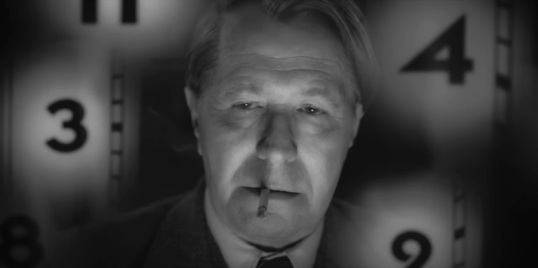
Yesterday, the Set Decorator Society of America (SDSA) announced their picks for the best set designs of 2020! The winners were Promising Young Woman, Mank, Tenet, and The Prom. Out of those four, only Mank and Tenet were also nominated for the Best Production Design Oscar.
As far as the Oscar goes, I think Mank probably has the edge over Tenet, if just because the Academy seems to really, really like Mank.
Here are the SDSA nominees and winners:
Best Achievement in Décor/Design of a Contemporary Feature Film
Da 5 Bloods
Set Decoration by Jeanette Scott
with Production Design by Wynn Thomas
Hillbilly Elegy
Set Decoration by Merissa Lombardo SDSA
with Production Design by Molly Hughes
I’m Thinking of Ending Things
Set Decoration by Mattie Siegal
with Production Design by Molly Hughes Promising Young Woman
Set Decoration by Rae Deslich SDSA
with Production Design by Michael T. Perry
Sound of Metal
Set Decoration by Tara Pavoni
with Production Design by Jeremy Woodward
Best Achievement in Décor/Design of a Period Feature Film
Emma.
Set Decoration by Stella Fox
with Production Design by Kave Quinn Mank
Set Decoration by Jan Pascale SDSA
with Production Design by Donald Graham Burt
Ma Rainey’s Black Bottom
Set Decoration by Karen O’Hara SDSA, Diana Stoughton
with Production Design by Mark Ricker
News of the World
Set Decoration by Elizabeth Keenan SDSA
with Production Design by David Crank
The Trial of the Chicago 7
Set Decoration by Andrew Baseman SDSA
with Production Design by Shane Valentino
Best Achievement in Décor/Design of a Science Fiction or Fantasy Feature Film
The Midnight Sky
Set Decoration by John Bush
with Production Design by Jim Bissell
Palm Springs
Set Decoration by Kelsi Ephraim
with Production Design byJason Kisvarday
Roald Dahl’s The Witches
Set Decoration by Rafaella Giovannetti SDSA
with Production Design by Gary Freeman Tenet
Set Decoration by Kathy Lucas
with Production Design by Nathan Crowley
Wonder Woman 1984
Set Decoration by Anna Lynch-Robinson SDSA
with Production Design by Aline Bonetto
Best Achievement in Décor/Design of a Comedy or Musical Feature Film
Borat Subsequent Moviefilm: Delivery of Prodigious Bribe to American Regime For Make Benefit Once Glorious Nation of Kazakhstan
Set Decoration by Alina Pentac (Romania Unit)
with Production Design by David Saenz de Maturana
Dolittle
Set Decoration by Lee Sandales
with Production Design by Dominic Watkins
Eurovision Song Contest: The Story of Fire Saga
Set Decoration by Naomi Moore
with Production Design by Paul Inglis
The King of Staten Island
Set Decoration by David Schlesinger SDSA
with Production Design by Kevin Thompson The Prom
Set Decoration by Gene Serdena SDSA
with Production Design by Jamie Walker McCal
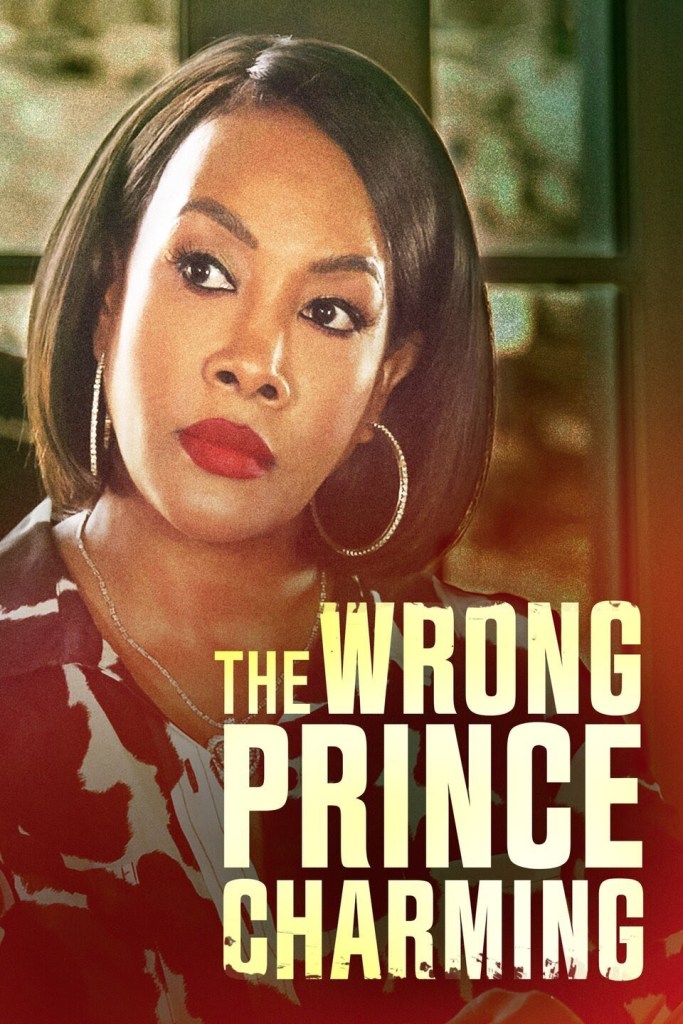
“It looks like you found the wrong prince charming!” Vivica A. Fox says towards the end of The Wrong Prince Charming.
I’ll admit that I cheered a little when Vivica said the line. If you know anything about Lifetime’s “Wrong” franchise, you know that Vivica A. Fox always plays a sympathetic authority figure who, at some point, says something along the lines of “Looks like he was the Wrong Poolboy” or “He messed with The Wrong Administrative Assistant.” One of the main reasons why people like me look forward to seeing the latest “Wrong” films is to see just how exactly the title is going to be worked into Vivica’s dialogue.
Make no doubt about it, there’s been a lot of “Wrong” films. We’ve had wrong blind dates, wrong tutors, wrong cheerleader coaches, wrong teachers, wrong real estate agents, wrong motel owners, wrong boyfriends, wrong girlfriends, and wrong houseguests. It only makes sense that we would eventually have a wrong Prince Charming.
The title character would be Prince Edward (James Nitti), who claims to be royalty but who, we learn fairly early on, is actually just a con artist who works with his assistant Liam (Jonathan Stoddard) to defraud people and corporations out of their money. Edward may be a charmer but he’s also a charlatan who is not above murdering anyone who he feels might be getting too close to the truth. That’s what greed does to people. That’s bad news for Anna (Cristine Prosperi), who is Edward’s latest target. Anna is an attorney. Among her clients is Bridget (Vivica A. Fox). After watching enough of the “Wrong” films, you really do find yourself wondering if maybe Vivica A. Fox is supposed to be playing the same character in every one of them. Maybe she just changes her name frequently as she travels across Canada and gets involved in thwarting the schemes of the wrong people. It would certainly explain a lot about the Wrong Cinematic Universe.
The thing with Lifetime’s “Wrong” films is that you either get them or you don’t. On the one hand, they’re pure melodrama. On the other hand, they’re also self-aware enough to poke fun at themselves. They’re not meant to be taken seriously, Instead, they’re diverting treats that are designed to keep the audience amused while they wait to hear Vivica pronounce someone to be “the wrong whatever.” They’re designed to be fun and usually, they are. The Wrong Prince Charming, for instance, has fun with the fact that everyone in the audience knows that anyone who claims to be a member of a royal family is probably lying to you. I’ve seen enough emails from enough financially burdened royals to know better than to trust anyone who claims to be a prince. When it comes to The Wrong Prince Charming, a good deal of the fun is to be found in catching all of Edward’s mistakes, all of the little moments when he accidentally lets his cover slip and reveals that he’s just some random commoner with a nice smile.
This is Cristine Prosperi’s 3rd wrong film She was also in The Wrong Cheerleader(“He messed with the wrong cheerleader!”) and The Wrong Neighbor. She’s also appeared in a handful of other recent Lifetime films, including Killer Competition and Murdered At 17. Before that, she played Imogen, the quirky stalker, on the final few seasons of Degrassi. Prosperi always does a good job in these films and the same is true here. She’s a sympathetic lead, even though it’s obvious from the start that she’s picked the wrong prince charming.
The Wrong Prince Charming is silly and fun, the type of movie that’s pretty much made to be watched with a snarky friend. I’m definitely looking forward to the next wrong film!
If there’s anything I’ve learned from watching Lifetime films, it’s that anyone can afford a gigantic, three-story house with a basement, an attic, an Olympic-size swimming pool, and a guesthouse. Seriously, I don’t know why everyone always says it’s so difficult to get that first house because there are unemployed people in Lifetime films who live in mansions.
The other thing that I’ve learned from watching Lifetime films is that you’re screwed if you’ve got a twin. Seriously, your twin is always going to be evil. Your twin is always going to pretend to be you so that she can sleep with your boyfriend and murder your coworkers. Your twin is going to use her own DNA to frame you and then, once you’re imprisoned, she’s going to sell your identity to the Russian mob and then you’ll never get it back. Twins are bad news, or at least that’s the way it goes in the Lifetime Cinematic Universe. I’ve lost track of how many psycho twin films I’ve seen on Lifetime.
The most recent psycho twin film is named, appropriately enough, Evil Twin. Emily Piggford plays Emily, who flees from an abusive relationship and returns to her small hometown. She’s staying with her friend Lenah (Cory Lee, who also played Miss Oh on Degrassi) and she’s trying to get her life back together. Unfortunately, this prove difficult because random people keep walking up to Emily and yelling at her before telling her to stay out of their lives. Emily doesn’t know any of these people and is left to wonder why so many strangers suddenly hate her.
Emily also discovers that she has a twin sister named Charlotte! Charlotte, who lives in a beautiful house and who has longer hair than Emily, at first seems to be thrilled to have found her twin. She even asks Emily to turn her head so that Charlotte can see what the back of their earlobes look like. (That may sound like a strange request but I’d probably ask the same thing if I ever met my twin. Ears are fascinating things.) However, it soon turns out that …. well, you can probably guess. I mean, the movie is called Evil Twin, after all. Soon, Charlotte is pretending to be Emily and she’s attacking people left and right. You know how these things go.
Evil Twin is a bit more moody than the average Lifetime film. The fact that Emily is escaping from abuse and still dealing with the emotional trauma of her previous relationship gives the film a few more layers than the average Lifetime film and Emily Piggford does a good job playing both Emily and her twin sister. The film actually does manage to keep you guessing as to which twin is onscreen at any particular moment and, with Charlotte being considerably more clever and ruthless than the average Lifetime villain, the film manages to generate some suspense as Charlotte kills and maims her way through the people in Emily’s life. Evil Twin may not be the first Lifetime psycho twin movie and it definitely won’t be the last but it is one of the better ones.
Amazingly enough, on the exact same day that I reviewed all three of the original Robocop films, Netflix has dropped a trailer for its upcoming animated film, The Mitchells vs. the Machines! This is a film about a family on a road trip who find themselves in the middle of the …. ROBOT APOCALYPSE!
Seriously, I’m hoping for more Robot Apocalypse films. I think the Zombie Apocalypse has been played out while there’s still plenty left to do with the Robot Apocalypse. I mean, I know that The Terminator franchise is all about a robot apocalypse but that’s just one franchise. There’s hundreds of zombie apocalypse films released every month so I think there’s definitely room for at least a few more films about people trying to survive being stalked by robots.
For that reason, I’m hoping that The Mitchells vs. The Machines is a big success!
This film drops on April 30th on Netflix! Here’s the trailer:
Christopher Walken vs. Zach Braff? Gee, who’s going to win that fight?
Actually, we’ll never know because, in this upcoming film Percy vs Goliath, Walken and Braff are actually allies. Walken plays an aging farmer who gets sued by a gigantic corporation and who appeals the case all the way to the Supreme Court. Braff plays his attorney. Christina Ricci plays an environmental activist. This is based on a true story and it sounds like the type of film that’s usually promoted for the Oscars. That said, that April 30th release date indicates that this is not being set up as an Oscar film.
Myself, I’m just interested in seeing Christopher Walken in a lead role for once. As of late, he’s mostly done quirky supporting turns. I’m also glad to see Christina Ricci in another movie because she doesn’t really seem to get as much work as her talent warrants. As for Zach Braff …. to be honest, I actually thought he was Ray Romano when the trailer began. That said, I will let you in on a little secret. I actually kind of liked Garden State.
An odd film, Robocop 3. Released in 1993, this was the third and final film in the original Robocop franchise. While the action is still set in Detroit and Robocop is back (albeit now played by Robert John Burke) and Nancy Allen shows up long enough to get killed off, Robocop 3 feels strangely separate from the previous two Robocop films. If the first two Robocop films were dark, satirical, and over-the-top in their violence, the third film is a family friendly adventure film that reimagines Robocop as being some sort of fair housing activist.
And, on top of all that, Robocop can fly now. Admittedly, that’s because Robocop gets fitted for a jetpack that he didn’t have in the previous films but he still looks incredibly ludicrous flying through the streets of Detroit. Since the Robocop armor has always looked very bulky and very heavy, it’s hard to believe that he could fly as quickly and as smoothly as he does in this film.
There’s a new set of villains too. Rip Torn has replaced Dan O’Herilhy as the CEO. And listen, I like Rip Torn. He will always be a hero to me because he bit Norman Mailer’s ear off. But Torn is far too obviously evil in the role of the CEO. O’Herlihy smartly played the Old Man as being avuncular and amoral. You could look at him and understand how he rose to his position of prominence. Torn’s performance is a bit more cartoonish but then again, Robocop 3 is the most cartoonish of the series.
The CEO wants to tear down Old Detroit so the residents of Old Detroit are fighting back. Leading the CEO’s forces — called the Rehabbers — is Paul McDagget (John Castle), who is a complete and total madman but who, at the same time, is never quite as memorable as Kurtwood Smith or Tom Noonan. He’s really just another generic militaristic bad guy. Normally, you would expect Robocop to be on the side of the company and the police but he’s been reprogrammed by an 8 year-old hacker named Nikko (Remy Ryan). Robocop is now working with the rebels. One of the rebels is played by Stephen Root, proving once again that you never know where Stephen Root might pop up.
Robocop 3 has none of the satiric bite of the first two movies. Instead of being a symbol of authoritarianism gone beserk, Robocop becomes a generic do-gooder. The violence is toned down and, with the addition of a kid sidekick, it’s obvious that this Robocop was meant to be a safer version of the character. Unfortunately, a safe Robocop equals a boring Robocop. You watch this movie and you wonder what happened to the Robocop who shot Ronny Cox out of a window.
“My friend’s call me Murphy,” he says towards the end of the film, “You can call me Robocop.” That seemed to indicate that Robocop had quite a future ahead of him of doing the right thing and standing up to big evil corporations but Robocop 3 was such a bomb at the box office that Robocop’s further adventures would only be seen on TV. The franchise was rebooted back in 2014, in a film that my friend Mark called “Rubber Cop.” After Rubber Cop fell flat, it was announced that Robocop would be rebooted for a second time, this time with a movie that would serve as a direct sequel to the first Robocop and which would ignore the sequels and the first reboot. Personally, I think it might be time to let Robocop retire. He had a good run.
Robocop 2, the 1990 sequel to Robocop, finds Detroit on the verge of getting nuked.
No, not nuked like that! Instead, there’s a new designer drug called Nuke and it’s tearing the city apart. Of course, Detroit has problems that go beyond just the new drug. The city is almost bankrupt. OCP, under the leadership of The Old Man (Dan O’Herlihy), is still running things behind the scenes. There’s still all sorts of petty crime to deal with. To be honest, it seems like the city has gotten even more out-of-control now that Clarence Boddiker is no longer around to oversee things.
Fortunately, Robocop (Peter Weller) is still patrolling the streets! But, for how long? There are lawyers who claim that Robocop is a huge potential liability and when you consider some of the stuff that went on during the first film, it’s hard not to see their point. His ex-wife is also suing the police department, claiming that Robocop has been harassing her. Despite being a robocop, our hero is still Murphy and he’s still haunted by memories of the family he once had. Or, at least, he is for the first few minutes of the film. That storyline kind of gets abandoned, along with a lot of other storylines.
While OCP is trying to develop a second robocop, one that can be mass produced and used to replace the human police force (the majority of whom have gone out on strike), a cult leader named Cain (Tom Noonan) is attempting to take over the city’s Nuke trade. Working with Cain is the usual gang of flamboyant malcontents. His second-in-command is a sociopathic child named Hob (Gabriel Damon). Hob may be a kid but he’ll kill anyone and he’ll enjoy himself while he’s doing it.
Robocop 2 is a bit of a mess. It apparently was rushed into production after the surprise success of the first film and filming started before there was even a completed script. As a result, there are a lot of storylines and themes that are brought up and then seem to mysteriously disappear. The film duplicates Paul Verhoeven’s satirical approach to the first film’s ultra-violence but, unfortunately, it does so in the most superficial way possible. Once again, we get the cheerful and vapid news reports about impending doom and once again, the violence is completely and totally over-the-top. But none of it carries any of the bite that was present in the first film. The first film worked because director Verhoeven actually was trying to make a larger point with all of the violence and the hints of growing fascism. He was attempting to challenge the audience and to get them wonder why they found all of the terrible thing happening in Robocop to be so entertaining. The sequel was directed by Hollywood veteran Irvin Kershner who was a good, workmanlike director but who also didn’t possess Verhoeven’s subversive sensibility. Far too often, Robocop 2 just feels like it’s going through the motions.
That’s not say that Robocop 2 isn’t occasionally an effective film. Dan O’Herlihy is wonderfully amoral as the Old Man and Tom Noonan is a worthwhile villain. Though Peter Weller has said that he wasn’t happy with how the overall film turned out, he still make for a sympathetic hero and he still manages to capture Robocop’s anguish without letting us forget that the character is still essentially a machine. I’m not really a big fan of films that use evil children for cheap shocks but Gabriel Damon is frequently chilling as Hob. Detroit is such a terrible place in the Robocop films that it’s not really a surprise when an evil child pops up and start shooting people. When compared to the first film, Robocop 2 may be a disappointment but it’s hardly a disaster.
Last week, I watched the original Robocop (along with Robocop 2 and Robocop 3) and I have to say that the first film holds up far better than I was expecting. Made and released way back in 1987, Robocop may be one of the most prophetic films ever made.
Consider the plot:
America is torn apart by crime and a growing gap between the rich and the poor. That was probably true in 1987 and it’s certainly true in 2021.
Throughout the film, we see news reports about what’s happening in the world. The news is always grim but the reporters are always cheerful and the main message is that, no matter what’s happening, the government is not to blame and anyone who questions the wisdom of the establishment is a fool. If that’s not a perfect description of cable news and our current state-run media, I don’t know what is.
The populace is often too busy watching stupid game shows to really pay attention to what’s happening all around them. I’m writing these words on a Wednesday, which means that Game of Talents will be on Fox tonight, immediately after The Masked Singer.
Detroit, a once proud center of industry, has now turned into a dystopian Hellhole where no one feels that they’re safe. Now, I don’t live in Detroit so I don’t know how true that is but I do know that most of the recent news that I’ve heard about the city has not exactly been positive. Also, this seems like a good time to point out that, even though the film is set in Detroit, it was shot in Dallas. Though the Dallas skyline has undoubtedly changed a bit since 1987, I still recognized several buildings while watching Robocop. Seeing Reunion Tower in the background of a movie that’s supposed to be set in Detroit was interesting, though perhaps not as interesting as seeing our City Hall transformed into the headquarters of Detroit’s beleaguered police force.
OCP, a multi-national conglomerate that’s run by the amoral but occasionally charming Old Man (played by the brilliant Dan O’Herlihy), has a contract with city of Detroit to run their police department. This certainly doesn’t seem far-fetched in 2021. Considering that we now have prisons that are run by private companies and that the government has shown a willingness to work with private mercenaries overseas, it’s not a stretch to imagine a city — especially one on the verge of bankruptcy — handing over the police department to a private company.
Two OCP executives — Dick Jones (Ronny Cox) and Bob Morton (Miguel Ferrer) — are competing to see who can be the first to create and develop a peace-keeping robot, a machine that will replace the need to employ (and pay) human police officers. Dick Jones goes with an actual robot, which malfunctions during a boardroom demonstration and guns down another executive. (The scene where the poor exec is targeted is both terrifying and darkly humorous at the same time. Particularly disturbing is how everyone in the boardroom keeps shoving him back towards the robot in order to ensure that they won’t accidentally be in the line of fire.) Bob Morton, however, takes a mortally wounded cop named Murphy (Peter Weller) and turns him into Robocop!
Robocop turns out to be a huge success and is very popular with the media. (Anyone who doubts this would really happen has obviously never watched news coverage of a drone attack.) As you can guess, Dick is not particularly happy about getting shown up by Morton and his robocop. Dick also happens to be secretly in league with Clarence Boddicker (Kurtwood Smith), the crimelord who blew Murphy apart in the first place.
(A gangster and a businessman working together!? I doubt that was shocking even in 1987.)
Robocop claims that he’s just a machine, without a past or emotions, but he’s still haunted by random flashes of his life as Murphy. Working with Lewis (Nancy Allen), Murphy’s former partner, Robocop tracks down Boddicker and his gang. A lot of people die in outrageously violent ways. (The scene where Boddicker and his gang use a shotgun to torture Murphy is still shocking, even after all these years.) The violence is so over-the-top that it soon becomes obvious that director Paul Verhoeven is deliberately trying to get those of us watching to ask ourselves why we find films like this to be so entertaining. On the one hand, Robocop is an exciting action film with a sense of humor. On the other hand, it’s the type of subversive satire of pop and trash culture to which Verhoeven would return with Basic Instinct, Starship Troopers, and Showgirls. This is the type of film that asks the audience, “What are you doing here?”
34 years after it was first made, Robocop remains a triumph. Peter Weller’s performance holds up well, as he does a great job of capturing Robocop’s anguish while, at the same time, never forgetting that the character is ultimately a machine, one that’s trapped in a sort of permanent limbo. I also really liked the performance of Miguel Ferrer, who takes a character who should be unlikable and instead makes him into a surprisingly sympathetic figure.
Of course, a film like this lives and dies on the strength of its villains and both Ronny Cox and Kurtwood Smith are ideally cast as Dick Jones and Clarence Boddicker. Kurtwood Smith especially took me by surprise by how believably evil and frightening he was. As a I watched the film, I realized that it was his glasses that made him so intimidating. Wearing his glasses, he looked like some sort of rogue poet, a sociopathic intellectual who had chosen to use his talents to specifically make the world into a terrible place. Boddicker’s crew was full of familiar actors like Paul McCrane, Ray Wise, and, as the always laughing Joe Cox, Jesse Goins. Interestingly enough, all of the bad guys seemed to genuinely be friends. Even though they were all willing to betray each other (“Can you fly Bobby?”), they also seemed to really enjoy each other’s company. That somehow made them even more disturbing than a group of bad guys who were only in it for the money. The villains in Robocop really do seem to savor the chance to show off just how evil they can be.
(Incidentally, for all of the Twin Peaks fans out there, this film features three members of the show’s ensemble: Miguel Ferrer, Ray Wise, and Dan O’Herlihy.)
Robocop holds up well as entertainment, prophecy, and satire. Though not much was expected from it when it was first released, it became a surprise hit at the box office. Needless to say, this led to a sequel. I’ll deal with that film in about an hour.
Today, we wish a happy birthday to the one and only Christopher Walken! And what better way to do that than with a little song and dance?
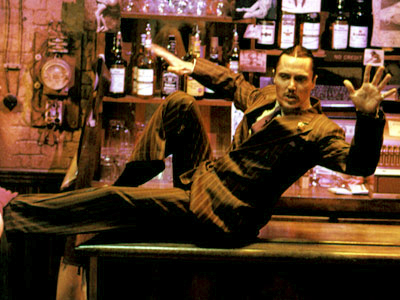
Walken only has one big scene in the 1981 film, Pennies From Heaven, but it’s a showstopper. In this satirical and downbeat musical, he plays Tom, a stylish pimp who seduces a school teacher named Eileen (Bernadette Peters) by singing, tap dancing, and stripping on a bar. Director Herbert Ross did five takes of the scene and, each time, Walken performed the entire dance without stopping once. This is a scene that, in my opinion, shows that Christopher Walken is more than just a character actor with a unique way of speaking. At his best, he’s a force of nature.