Today, the Shattered Lens wishes a happy birthday to director Amy Heckerling!
Today’s scene that I love comes from Amy Heckerling’s feature debut, 1982’s Fast Times At Ridgemont High. In just two minutes, Heckerling introduces us to almost all of the major characters, establishes the mall as the center of Ridgemont High culture, and leaves us with little doubt that we’ve entered a time machine and found ourselves in the 80s. Judge Reinhold looks like he’s on top of the world. Jennifer Jason Leigh bravely faces the pizza oven. Sean Penn makes us wish he had never lost his laid back stoner vibe. And the underrated Robert Romanus struts through the mall like a king overlooking his kingdom. With this scene, Heckerling announces that she has made the ultimate 80s high school film.
(And just a decade later, she would make the ultimate 90s high school film with Clueless.)
4 Shots From 4 Films is just what it says it is, 4 shots from 4 of our favorite films. As opposed to the reviews and recaps that we usually post, 4 Shots From 4 Films lets the visuals do the talking!
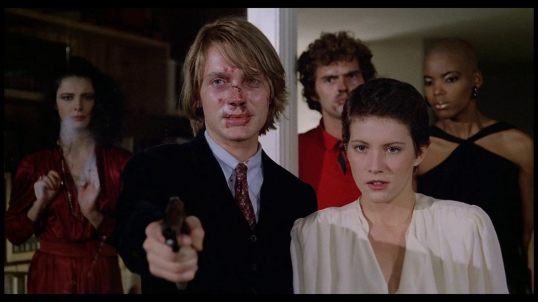
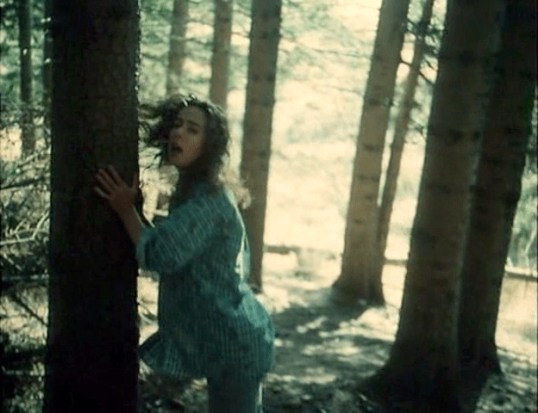
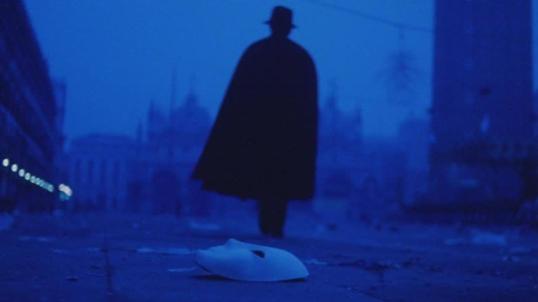
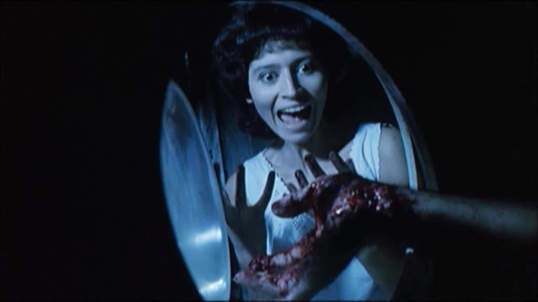
Today would have been the 85th birthday of the great Italian director, Ruggero Deodato! And that, of course, means that it’s time for….
4 Shots From 4 Films
The House on The Edge of The Park (1980, dir by Ruggero Deodato, DP: Sergio D’Offizi)
Body Count (1986, dir by Ruggero Deodato, DP: Emilio Loffredo)
Phantom of Death (1988, dir by Ruggero Deodato, DP: Giorgio Di Battista)
The Washing Machine (1993, dir by Ruggero Deodato, DP: Sergop D’Offizi)
Late Night With The Devil is a truly frightening film.
Jack Deloy (David Dastmalchian) is the host of Night Owls, a late-night talk show. Deloy has spent his entire television career competing against The Tonight Show With Johnny Carson. Deloy has a loyal audience. He has several Emmy awards. But he has never been able to beat The Tonight Show in the ratings. Even when he interviewed his dying wife (Georgina Haig) and got the biggest ratings of his career, he still finished second to Johnny Carson. After his wife died, Deloy went into seclusion before eventually returning to his show.
It’s Halloween night in 1977 and Deloy is hosting a live broadcast of Night Owls. He and his producer (John Quong Tart) are convinced that they’re finally going to achieve their goal of winning the ratings race. On the show, they have the medium Christou (Faysal Bazzi). They have Carmichael Haig (Ian Bliss), a pompous former magician who now makes his living by exposing charlatans. They have parapsychologist June Ross-Mitchell (Laura Gordon) and Lilly (Ingrid Torelli), a young woman who claims to be possessed by a demon that she calls Mr. Wiggles. Deloy’s sidekick Gus McConnell (Rhys Auteri) fears that it’s not a good idea to mess with the occult on Halloween night but Deloy is determined to get those ratings. In fact, Deloy is willing to do just about anything for the ratings.
Opening with narration from Michael Ironside and introduced as being a documentary about what happened that mysterious night, Late Night With The Devil is a found footage horror film but, unlike a lot of films of the genre, it doesn’t get bogged down with people saying stuff like, “Are we recording?” or “Are you getting this?” Instead, the film’s directors actually make good use of the format, suggesting that there might still be a spark of inspiration to be found in the found footage genre. The contrast between the grainy color of the show and the stark black-and-white footage of what went on whenever the show went to commercial is one of the things that makes Late Night With The Devil so memorable. It keeps the audience from getting too comfortable with what they’re watching and it’s a reminder that what one sees in a controlled environment (like a talk show) is often meant to hide the chaos lurking under the surface. Towards the end of the episode, when the color footage goes from being grainy to suddenly being very bright and vivid, it’s truly unsettling. (The film does such a good job of keeping the audience off-balance that the directors can even get away with abandoning the found footage format at a key moment.) Late Night With The Devil does a wonderful job recreating the look and feel of an old late night talk show. One look at the Night Owls set and you can literally smell the combination of stale cigarettes and outright desperation. Looking at the ugly set and the tacky clothes, it’s easy to buy that we actually are watching some long-buried archival footage from 1977. One reason why the film is frightening is because it feels authentic.
(And yes, it feels authentic despite the inclusion of some AI-images. AI was used to create the intertitles that appear whenever Night Owls goes to commercial. They appear for less than a minute and, if not for the online controversy, I never would have noticed them.)
David Dastmalchian plays Jack Deloy as being a showman who is an expert at manipulating the audience and who will do anything to get people to watch. Still, even the most jaded horror fan will be shocked to see how far Jack Deloy is willing to go to win the ratings race. (For all the supernatural elements of the film, nothing is more disturbing than its portrayal of human avarice.) A major subplot deals with Jack’s membership in the Grove, a society of the wealthy and powerful that is based on the very real Bohemian Grove. Bohemian Grove is, of course, a favorite of conspiracy theorists who assume that the rich and famous are up to all sorts of nefarious deeds whenever they gather for their annual meeting. Those conspiracy theorists will find much to appreciate about Late Night With The Devil and Dastmalchian’s performance. (Of course, one can also read Jon Ronson’s Them, which features an entire chapter about Ronson traveling to Bohemian Grove and discovering that what was advertised as being a day of dorky fun for the rich and powerful actually was just that.)
Obviously, many films did influence Late Night With The Devil. The end credits begin with a land acknowledgment but it could have just as easily contained a film acknowledgment. “The filmmakers acknowledge the influence of The Exorcist, Cannibal Holocaust, The Last Exorcism, the careers of James Randi, Uri Geller, and Sylvia Browne, Michelle Remembers, The Conjuring franchise, The Larry Sanders Show, the films of David Cronenberg, and Ghostwatch.” It’s a testament to the skill of the directors and the cast that, despite all the obvious influence, Late Night With The Devil stands as an original and genuinely unsettling work of art.
As some of our regular readers undoubtedly know, I am involved in hosting a few weekly live tweets on twitter and occasion ally Mastodon. I host #FridayNightFlix every Friday, I co-host #ScarySocial on Saturday, and I am one of the five hosts of Mastodon’s #MondayActionMovie! Every week, we get together. We watch a movie. We snark our way through it.
It should make for a night of fun viewing and I invite all of you to join in. If you want to join the live tweets, just hop onto Mastodon, pull up Mission of Justice on YouTube, start the movie at 8 pm et, and use the #MondayActionMovie hashtag! Then switch over to twitter, pull King of New York up on Prime, and use the #MondayMuggers hashtag!
As some of our regular readers undoubtedly know, I am involved in hosting a few weekly live tweets on twitter and occasionally Mastodon. I host #FridayNightFlix every Friday, I co-host #ScarySocial on Saturday, and I am one of the five hosts of Mastodon’s #MondayActionMovie! Every week, we get together. We watch a movie. We snark our way through it.
Tonight, for #MondayActionMovie, the film will be 1992’s Mission of Justice, selected and hosted by Sweet Emmy Cat!
It should make for a night of fun viewing and I invite all of you to join in. If you want to join the live tweets, just hop onto Mastodon, pull up Mission of Justice on YouTube, start the movie at 8 pm et, and use the #MondayActionMovie hashtag! The live tweet community is a friendly group and welcoming of newcomers so don’t be shy.
Orson Welles was fond of telling the story of how Franklin D. Roosevelt, shortly before his death, encouraged Welles to enter politics and run for Wisconsin’s U.S. Senate seat in 1946. Welles gave it some consideration but ultimately, he decided not to run. He was, after all, a movie star and, in the mid-40s, he had yet to be exiled from Hollywood.
Welles later said that a part of him regretted not running because, if he had, his opponent would have been Joseph McCarthy. Welles assumed that he would have easily beaten McCarthy and therefore, the McCarthy era never would have happened. Of course, the truth of the matter is that there’s no guarantee that Welles, as someone who had spent most of his life in New York and California, would have even won the Democratic primary, that Welles would have defeated McCarthy in the general, or that some other Senator wouldn’t have launched an anti-communist crusade in McCarthy’s place. But Orson Welles was never one for false modesty. That’s one thing that made him such an important and exciting filmmaker.
Welles also said that, despite his regrets, he was ultimately happy that he didn’t run because he would have felt the need to then run for President. President Welles! Imagine that. (Actually, it probably would have been a disaster but still …. President Orson Welles! If nothing else, a Welles presidential campaign would have spared America from having to look at Adlai Stevenson for two straight elections.)
Today’s scene that I love provides a glimpse of what an Orson Welles political campaign might have been like. In this scene, from 1941’s Citizen Kane, Charles Foster Kane runs for governor and gives the political speech of his life. Sadly, as we all know, Kane would never be governor and he would never again be as beloved by the masses as he was in this scene. Instead, he would die isolated, alone, and wishing for his childhood.
4 Or More Shots From 4 Or More Films is just what it says it is, 4 shots from 4 of our favorite films. As opposed to the reviews and recaps that we usually post, 4 Shots From 4 Films lets the visuals do the talking!
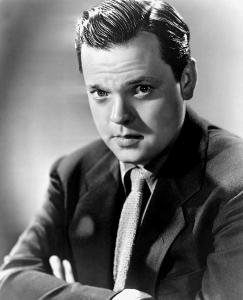
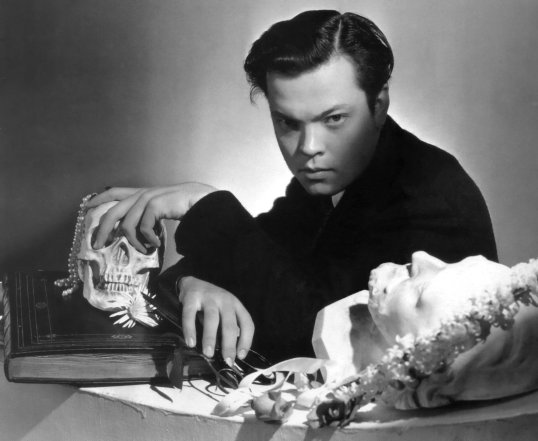
Today we celebrate what would have been the 109th birthday of the great Orson Welles! It’s time for….
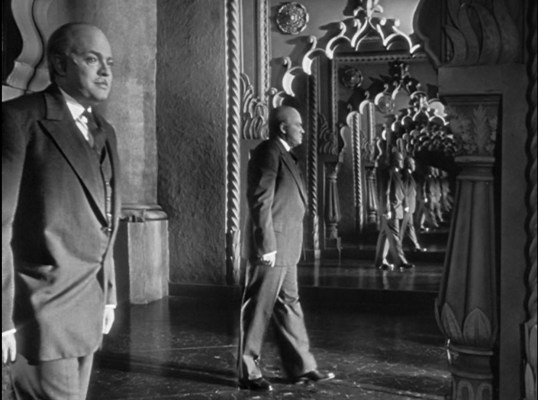
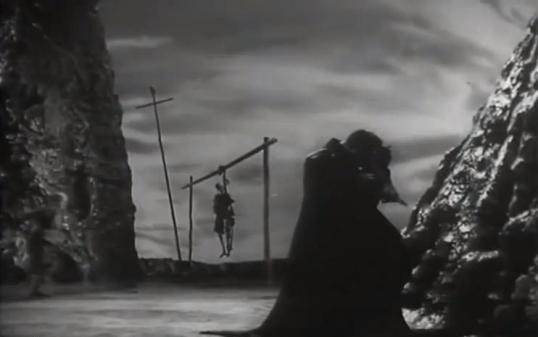
4 Shots from 4 Orson Welles Films
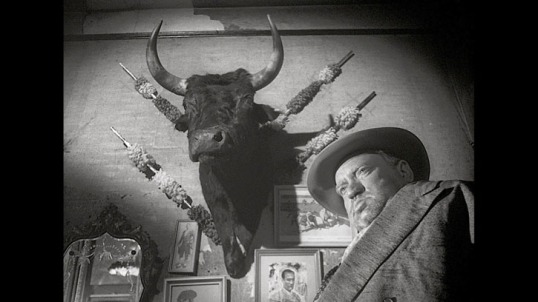
Citizen Kane (1941, dir by Orson Welles, DP: Gregg Toland)
MacBeth (1948, dir by Orson Welles, DP: John L. Russell)
Touch of Evil (1958, dir by Orson Welles, DP: Russell Metty)
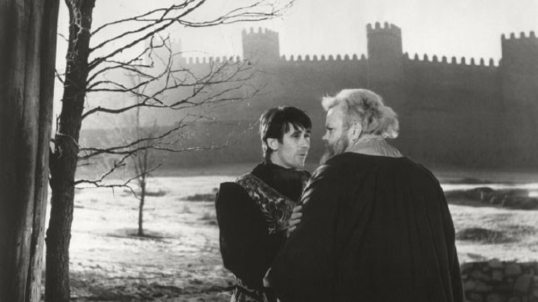
Chimes at Midnight (1965, dir by Orson Welles, DP: Edmond Richard)
Unfrosted is a thoroughly amiable and goofy comedy about the invention of the Pop Tart.
Taking place in an imaginary 1963, Unfrosted tells the story of the Cereal Wars. Kellog’s and Post are competing for dominance in the kids breakfast food market, dominating the scene while the dour folks at Quaker can only shake their heads in holier-than-thou shame. Bob Cabana (played by the film’s director, Jerry Seinfeld) is a Kellog’s exec who spends his day dealing with pompous cereal mascots (led by a hilarious Hugh Grant) and the somewhat random whims of his boss, Edsel Kellog III (Jim Gaffigan). He dreams of someday having a lawn made out of sod and also having enough money to send his kids to a good college. “Those colleges can cost $200 a year!” he says, at one point.
Life is good until he discovers that Post — headed up by Marjorie Post (Amy Schumer) — is developing a type of new breakfast food that could revolutionize the industry and dethrone Kellog’s as America’s top cereal company. Bob gets Edsel’s permission to try to create something that will beat Post’s new product to the shelves. But first, Bob has to go to NASA and convince brilliant engineer Donna “Stan” Stankowski (Melissa McCarthy) to abandon the moon project and return to Kellog’s. “You know we’re never going to land on the moon,” Bob tells her.
Soon, the entire nation is riveted by the competition between Post and Kellog’s. Walter Cronkite (Kyle Dunnigan) reports on every development, in between complaining about his wife and playing with silly putty. The Russians decide to help Post, leading the world to the brink of nuclear war while President Kennedy (Bill Burr) spends his time with the Doublemint Twins. Harry Friendly (Peter Dinklage), head of the milk syndicate, warns that kids better not stop eating cereal while Bob finds himself being menaced by a sinister milkman (Christian Slater). A German scientist (Thomas Lennon) and Chef Boyardee (Bobby Moynihan) combine a sea monkey with a square of ravioli, leading to a new life form that lives in the Kellog’s ventilation system. Steve Schwinn (Jack McBrayer), the bicycle guy, risks his life to test a prototype while a super computer is shipped to Vietnam and turns into Colonel Kurtz and….
Okay, you’re getting the idea. This is a silly, joke-a-minute film that is in no way meant to be taken seriously. It’s obvious that Seinfeld and his co-writers greatly amused themselves while writing the script and your amusement will depend on whether or not you’re on the same wavelength. I enjoyed the film, because I love history and I love pop culture and I like random homages to other films. Not all of the jokes landed. There’s a lengthy Mad Men parody that, while funny, still feels several years too late. But, for the most part, I enjoyed the amiable goofiness of it all.
Unfrosted is currently getting some savagely negative reviews but that has more to do with Seinfeld’s recent comment that the “extreme left” was ruining comedy. Though most people would probably consider Seinfeld’s comment to be common sense (and would also realize that Seinfeld was condemning the “extreme” as opposed to liberalism in general), the online folks, many of whom were already angry over Seinfeld’s outspoken support of Israel, were scandalized and most mainstream film reviewers today never want to get on the bad side of an online mob, regardless of how annoying that mob may be. (Even a positive review in TheHollywood Reporter contained an odd passage in which the reviewer seemed to beg forgiveness for giving a non-condemnatory review to a film made by someone on the other side.) Of course, there are also some reviewers who are currently overpraising this film as a way to “own the libs.” The fact that a film as silly and inoffensive as this one could suddenly find itself at the center of the culture war tends to prove Seinfeld’s point.
The important thing is that Unfrosted is amusing and, in the end, rather likable. I enjoyed it.
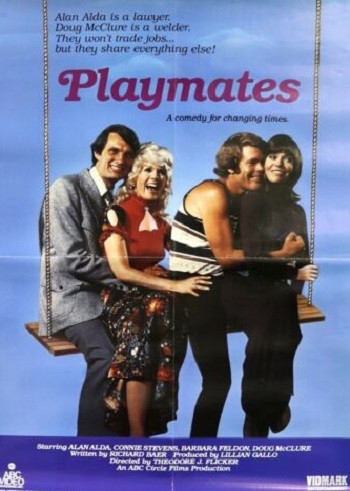
Welcome to Retro Television Reviews, a feature where we review some of our favorite and least favorite shows of the past! On Sundays, I will be reviewing the made-for-television movies that used to be a primetime mainstay. Today’s film is 1972’s Playmates! It can be viewed on YouTube.
Playmates tells the story of two divorces.
Marshall Barnett (Alan Alda) is an attorney. He went to Yale and Harvard. He has a successful career. He has rich and educated friends. He has a nice bachelor pad. He also pays hundreds of dollars in alimony. He and Lois (Barbara Feldon) got divorced 3 years ago and Marshall is still bitter. He’s bitter that he has to pay her so much money. He’s bitter that he only gets to see his son on the weekends. He’s bitter that he can’t seem to start a new, meaningful relationship with anyone. He’s bitter that his wife still asks him to critique her modernist paintings.
Kermit Holvey (Doug McClure) is a blue collar welder. He has only been divorced for a few months and his relationship with ex-wife Patti (Connie Stevens) is nowhere near as contentious as Marshall’s relationship with Lois. Still, Kermit is struggling to adjust to being single and to only seeing his son on the weekends.
Marshall and Kermit meet one weekend while they are both taking their sons to the Kiddieland Amusement Park. Marshall is so overjoyed to meet someone else who is dealing with divorce that he comes on a bit strong in trying to get to know Kermit. Kermit, however, does eventually get over his initial weariness and soon, he and Marshall are best friends. It doesn’t matter that Marshall has a tendency to be a little bit condescending and that Kermit often can’t follow what Marshall is talking about. They spend most of their time talking about their ex-wives.
But then Kermit meets Lois and he discovers that her paintings really aren’t as bad as Marshall made them out to be. And Marshall meets Patti and he discovers that she’s not as dumb as Kermit made her out to be. Soon, Kermit is secretly dating Lois and Marshall is secretly dating Patti and anyone who has ever watched a comedy before knows that there is a big mess waiting in the future.
Playmates was one of those films that pretended to be a lot naughtier than it actually was. For all the winking and the occasional sly smiles, all that happens is that Kermit and Marshall both end up going out with women with whom they really don’t have much in common. And while it’s tempting to read a lot into how quickly Kermit and Marshall become friends and how they both end up dating the other’s female equivalent, I think that might be giving this film too much credit. (If it were made today, things might be different.) In the end, the film really has more to say about class than it does marriage, as both Marshall and Lois obviously view spending time with Kermit and Patti as being a way of slumming and building up some working class bona fides without actually having to be working class. Patti, to her credit, calls Marshall out on this. Marshall admits that she has a point but he still come across as if he’s talking down to her, largely because he’s played by Alan Alda, an actor who is a master at being somehow both likable and condescending at the same time.
Playmates is a well-acted film and there are some funny lines. The four main characters are all ultimately likable, even if they all have their moments where you can tell why they would be difficult to live with. It deserves some credit for following its story through to its natural conclusion, with one couple realizing that they still love each other while the other realize that they are better off divorced. The film may not be as radical as it pretends to be but it still doesn’t cop out on the ending. In the end, Playmates is probably best watched as a time capsule. It’s here if you ever want to experience 1972 firsthand.
What’s an Insomnia File? You know how some times you just can’t get any sleep and, at about three in the morning, you’ll find yourself watching whatever you can find on cable or streaming? This feature is all about those insomnia-inspired discoveries!
If you were having trouble getting to sleep last night, you could have jumped over to Tubi or Prime and watched 2016’s Girl Lost.
Girl Lost tells the story of Shara (Jessica Taylor Haid), who we first see being abused by her mother’s boyfriend and then retreating outside to a pool so that she can run a razor blade over her thigh in peace. Shara is only 15 but she’s had to deal with things that no one should ever have to experience in a lifetime. Her mother, Kim (played by Robin Bain, who also directed the film), is a sex worker who expects her daughter to follow in her footsteps and who encourages Shara to pose for risqué photos that Kim then posts online.
Shara spends almost the entire film fleeing. At first, she and Kim flee Kim’s boyfriend. Eventually, Shara and her boyfriend, the well-meaning but not particularly bright Jamie (Felix Ryan), end up running away from Kim. They live on the streets and discover just how difficult it can be to survive on your own. In the end, no one can survive without money and Shara, just like her mother before her, comes to realize that there’s one guaranteed way to make that money, whether it’s waiting for a creepy guy in a back alley or getting a job talking on the phone to some pervy loser living in his mother’s basement. Eventually, Shara runs away from even Jamie and ends up working at a Russian-owned brothel. Throughout it all, her life continues to unravel. It’s a harsh world that Shara has been born into and it’s one where you either do what you have to do to survive or you end up imprisoned or worse. The film’s ends on a dark note. At first, I thought the ending was perhaps a bit too dark. After all that had happened, I wondered, what it have killed the film to end on a note of hope? But, the more I thought about it, the more I realized that the film ended in the the only way that the story could have ended. From the minute she was born, poor Shara never really had a chance.
It’s a deeply unsettling film. In fact, if you are trying to find something to help lull you into sleep, this is probably not the best film to go with unless you’re prepared to have some fairly upsetting dreams. Though shot on a low budget, the film captures the harshness of life on the fringes of society and both Jessica Taylor Haid and Robin Bain deserve a lot of credit for their performances as two characters who are not always likable but who are very recognizable. It’s a sad film that also serves as a tribute to every lost and forgotten soul out there.

 Through the Shattered Lens