Late Night Retro Television Review: 1st & Ten 1.13 “Super Bull Sunday”


Welcome to Late Night Retro Television Reviews, a feature where we review some of our favorite and least favorite shows of the past! On Wednesdays, I will be reviewing 1st and Ten, which aired in syndication from 1984 to 1991. The entire series is streaming on Tubi.
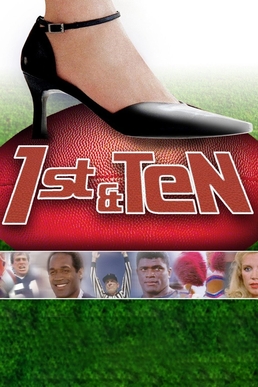
This week, season one comes to an end with the Championship Game!

Episode 1.13 “Super Bull Sunday”

(Dir by Bruce Seth Green, originally aired on February 17th, 1985)

The Bulls make it to the Championship Game!

And lose!

In fact, they lose in spectacular fashion.  We don’t actually see much of the game but we do see the aftermath.  We learn that star running back Carl Witherspoon set a record for fumbles.  Star quarterback Bob Dorsey set a record for interceptions.  The offensive line set a record for letting their quarterback get sacked.  Coach Denardo blames himself but Diana announces to the press that the Bull will be back next year so …. “LOOK OUT!”

Admittedly, the big game only took up about 5 and a half minutes of screentime.  Most of this episode centered around a dumb plot to trick Diana into selling the Bulls to the Japanese so that her ex-husband (remember him?) could swoop in and buy back his team.  It was a pretty dumb plan that fell apart easily but, at the very least, it appears that it finally led to Diana firing her duplicitous general manager, Roger Barrow (Clayton Landey), something she should have done at the start of the season.

But let’s give the show some credit.  It would have been really easy to just have the Bulls pull off another last-minute victory.  Instead, season one ended with the agony of defeat and the actors actually did a really good job of playing up their depression.  It can’t be easy make it to the Championship Game and fail.

So, that’s it for season one.  It wasn’t really that good of a season but maybe I would feel differently if I was a football fan or if I was a dude.  This is very much a guy-centered show.  Next week, we’ll start season 2!
Late Night Retro Television Review: Highway to Heaven 4.16 “Back to Oakland”


Welcome to Late Night Retro Television Reviews, a feature where we review some of our favorite and least favorite shows of the past!  On Thursdays, I will be reviewing Highway to Heaven, which aired on NBC from 1984 to 1989.  The entire show is currently streaming on Tubi and several other services!

This week, Mark rejoins the police force and discovers that things have changed since he last wore the blue.

Episode 4.16 “Back to Oakland”

(Dir by Michael Landon, originally aired on February 3rd, 1988)

Jonathan and Mark return to Mark’s old hometown of Oakland, California.  When Mark stops by his old precinct, he discovers that most of the police force is home with “blue flu,” protesting budget cuts.  Mark volunteers to return to active duty for a few days.  He’s paired up with his former partner, Frank Lawler (Kenneth Kimmins).

Mark, however, discovers that things have changed in his absence.  Cops are viewed with suspicion by the people that they are supposed to be serving.  And Frank is an unrepentant racist who expects Mark to have his back no matter what.

Jonathan, meanwhile, gets a job as a security guard at an all-black apartment complex.  “You’re the first white man to ever work here,” he’s told by the landlady (Fran Bennett).  The landlady’s son, Albert (Guy Killum), doesn’t trust white people and resists Jonathan’s attempts to reach out to him.

When Albert is caught shoplifting by Mark and Frank, Frank takes him into a back alley.  Frank removes his handcuffs and dares Albert to take a swing at him.  Mark steps out of the store just in time to see Frank shoot and kill Albert.

“He attacked me!” Frank says.

“I put cuffs on him,” Mark says.

In the end, Mark refuses to cover for Frank.  Jonathan arranges for Albert’s younger brother (Kenny Ford, Jr.) to meet with Frank’s son (Mark Sussman).  The episode ends with the two of them introducing each other.

This episode was Highway to Heaven at its most earnest and heartfelt.  I imagine there are some that would complain that this episode attempts to “both sides” the issue of racism.  Both Albert and Frank are portrayed as being obsessed their hatred of another race.  That said, only one of the two men is portrayed as being in a position to kill the other and potentially get away with it.  The scene of Mark, who has spent the entire series bragging about his time as an Oakland cop, taking a stand and telling the truth about what happened in the alley is surprisingly powerful.  Mark does the right thing and he does it without hesitation.  Is the ending of the episode a bit naive?  Perhaps.  But it’s so sincerely done that it’s hard not to appreciate the show’s intentions.

In other words, this episode was an example of what Highway to Heaven did well.  It’s not subtle but it’s so heartfelt that the viewer can’t help but be moved.

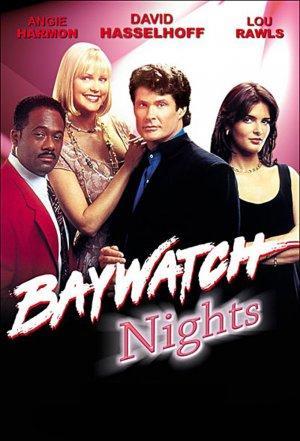
Late Night Retro Television Reviews: Baywatch Nights 1.6 “976 Ways To Say I Love You”


Welcome to Late Night Retro Television Reviews, a feature where we review some of our favorite and least favorite shows of the past!  On Tuesdays, I will be reviewing Baywatch Nights, an detective show that ran in Syndication from 1995 to 1997.  The entire show is currently streaming on Youtube!

This week, Ryan goes undercover!

Episode 1.6 “976 Ways To Say I Love You”

(Dir by Charles Bail, originally aired on November 4th, 1995)

The sixth episode of Baywatch Nights opens with Mitch and Garner doing a surveillance job on someone.  They are sitting out in their car and watching their target and talking about how much they hate having to work surveillance.

One thing that I’ve noticed about the first few episodes of Baywatch Nights is that Mitch and Garner both seem to spend a lot of time complaining about their job.  It’s a bit odd because it’s not like there’s any reason why they have to work as private detectives.  Garner could rejoin the police department if he wanted to.  Mitch actually has another full-time job as one of the top lifeguards in California.  There’s nothing that says they have to spend their nights doing surveillance.  (In fact, I’m not even sure how Mitch is balancing being a lifeguard with being a private eye.)  I mean, if it’s such a bother being a private eye, just don’t do it anymore!

The surveillance subplot doesn’t really have anything to do with the rest of the episode.  (It’s mostly just there so the episode can feature a joke about Garner and Mitch getting dusted by a crop duster that happens to fly over their convertible.)  Instead, the majority of this episode deals with Mitch, Garner, and Ryan helping Addy (Heather Campbell), a former phone sex operator who was scammed by her boss and who is now apparently being stalked by someone who is trying to murder everyone who was involved with Addy’s former career.  This is one of those cases that doesn’t really add up to much but it does provide Garner with a chance to do some real detective work and abandon his idea to abandon crime fighting and open a chicken franchise.

(Seriously, that’s what Garner was planning on doing.)

The investigation also leads to Ryan putting on a blonde wig and going undercover as a phone sex operator.  Watching this episode, I got the feeling that the entire pitch was, “Angie Harmon says sexy things on the phone,” and the plot was basically developed around that one idea.  It should be said that Angie Harmon actually does a pretty good job playing up Ryan’s irritation with having to go undercover.  The way she rolled her eyes whenever some mouth-breather started to talk to her told us everything we needed to know about the experience.  Unlike her whiny partner, Ryan did what she had to do to solve the case and good for her!  Really, this entire series should have just been Ryan kicking ass and solving crimes.  Garner and Mitch are just taking up space.

Along with Angie Harmon’s work as Ryan, this episode was also distinguished by the performance of Robert Ginty as the owner of the phone sex company.  Ginty was wonderfully sleazy as a businessman who made no apologies for how he made his money.  As well, Police Academy fans will probably be happy to see Michael Winslow, as a surveillance technician who imitates static.

The episode was not bad, even if it wasn’t particularly memorable.  Ryan did a good job and again proved herself to be the best private eye in California.  Seriously, though, Mitch and Garner need to stop crying so much.  If you don’t want to do detective stuff, don’t become a detective!

Late Night Retro Television Reviews: Highway to Heaven 1.6 and 1.7 “One Fresh Batch of Lemonade”


Welcome to Late Night Retro Television Reviews, a feature where we review some of our favorite and least favorite shows of the past!  On Thursdays, I will be reviewing Highway to Heaven, which aired on NBC from 1984 to 1989.  The entire show is currently streaming on Tubi and several other services!

This week’s episode finds Jonathan and Mark working as physical therapists!

Episodes 1.6 and 1.7 “One Fresh Batch of Lemonade”

(Dir by Michael Landon, aired on October 24th, 1984 and October 31st, 1984)

Deke Larson, Jr. (Ken Olandt) is a high school baseball star who is being watched by the scouts, much to the joy of his father, Deke, Sr. (Jim Haynie).  The elder Deke was quite an athlete in his day and his house is still full of the trophies that he won through the years.  Deke, Sr. was recruited to play professional baseball but he never made it out of the minor leagues.  As a result, Deke, Jr. has spent his entire life being prepared to do what his father never accomplished.

However, that dream comes to an end when Deke, Jr. has a motorcycle accident and is hit by a truck that is being driven by Richie Halbertson (Bart Conner), a gymnast who attends a rival high school.  As a result of the accident, Deke, Jr. loses both his legs.  Now, he spends his time at a rehab clinic, consumed by his own bitterness.

Jonathan and Mark are the clinic’s newest physical therapists.  While Jonathan tries to get Deke, Jr. to accept his condition and forgive Richie, Mark tries to talk to Deke, Sr.  With the help of a quadriplegic law student named Scotty (James Troesh), Deke, Jr. starts to realize that it’s better to focus on what he has instead of obsessing on what he’s lost.  Deke, Jr. starts to recover from his bitterness and soon, he’s even being nice to the classmate (Samatha Paris) who has a crush on him.  But when Jonathan suggests that Deke, Jr. could still compete as gymnast, will Deke, Jr. be able to accept being trained by Richie Halbertson?  And will Deke’s parents be able to set aside their own anger to support their son?

If you answered no to any of those questions, you’ve obviously never seen this show before.

This two-parter is pretty much the epitome of a typical Highway to Heaven episode.  It’s earnest, heartfelt, well-intentioned, and there’s isn’t a moment of cynicism to be found.  It’s the type of episode where Jonathan tells two snotty teenage boys that they shouldn’t park in a handicapped spot and, when the boys ignore him and go into a nearby bookstore, God turns their car upside down.  (Plus, they get a ticket!)  Even the episode’s title, which refers to the old-saying about making lemonade whenever life gives you lemons, pretty sums up Highway to Heaven‘s unapologetically positive outlook.   At the same time, it’s also an episode that, because it is so earnest, won’t take anyone by surprise.  If you can’t guess how this episode is going to end, I can only assume that you’ve never watched television or a movie before.

Predictable as it may be, it’s still an effective episode, largely because it is so unashamed of being sentimental and heartfelt.  You do have to wonder just how exactly Deke, Jr. managed to become a competition-worthy gymnast in what appears to have just been a matter of weeks but still, this is a case where the good intentions make up for the rough spots.

Next week, Jonathan and Mark help an industrialist who thinks that he is King Arthur.  Who does the grail serve?

Guilty Pleasure No. 62: Backtrack (dir by Dennis Hopper)


Sometimes, you see a film that is just so weird and incoherent that you can’t help but love it.

Of course, it also helps if the film has a once-in-a-lifetime cast of actors who you would never expect to see acting opposite each other.

For me, that’s certainly the case with 1990’s Backtrack.  Directed by Dennis Hopper, Backtrack is a film about an artist (Jodie Foster, channeling Jenny Holzer) who witnesses a mob murder committed by Joe Pesci, Dean Stockwell, Tony Sirico, and John Turturro.  An FBI agent played by Fred Ward suggests that the artist should go into the witness protection program but she doesn’t want to give up her life as a New York sophisticate who creates challenging LED displays and who can eat Sno Balls whenever she gets the craving for one.  (Yes, this is a plot point.)  Turturro and Sirico break into the artist’s apartment and kill her boyfriend, who is played by a wide-eyed Charlie Sheen.  The artist puts on a blonde wig and goes on the run, eventually getting a job in advertising.

Realizing that his men can’t get the job done, mob boss Vincent Price decides to hire a legendary hitman played by Dennis Hopper (who also directed this film) to track down the artist.  However, the hitman becomes fascinating with the artist’s work, finds pictures of her posing in black lingerie, and immediately falls in love with her.  Not only does he wants to save her life but he wants her to wear the same lingerie exclusively for him.  (Yes, this is a pretty big plot point.)  At first, the artist refuses and views the hitman as being some sort of pathetic perv.  But then she discovers that he’s covered her bed with Sno Balls….

Meanwhile, a young Catherine Keener shows up as the girlfriend of a trucker who briefly considers giving the artist a ride to Canada.

And then Bob Dylan shows up, handling a chainsaw.

And there’s Helena Kallianiotes, the outspoken hitch-hiker from Five Easy Pieces, yelling at Joe Pesci!

And there’s Dennis Hopper’s The Last Movie co-star, Julie Adams!  And there’s Toni Basil!  And there’s director Alex Cox!

Dennis Hopper not only starred in Backtrack but he also directed and it’s obvious that he placed a call into just about everyone he knew.  In fact, one could argue that the only thing more shocking than Vincent Price showing up as a mob boss is that Peter Fonda, Karen Black, Elliott Gould, Robert Walker Jr., and Kris Kristofferson are nowhere to be found in the film.  Hopper’s first cut of Backtrack was reportedly 3 hours long but the studio cut it down to 90 minutes, renamed it Catchfire, and Hopper insisted on being credited as Alan Smithee.  Later, Hopper released a two-hour version with the Backtrack title and his directorial credit restored.

Regardless of which version you see, Backtrack is an odd film.  It’s hardly the first film to be made about a hit man falling for his target.  What distinguishes this film is just how bizarre a performance Dennis Hopper gives in the role of the hitman.  It’s as if Hopper gave into every method instinct that he had and the end result was a mix of Blue Velvet‘s Frank Booth and the crazed photojournalist from Apocalypse Now.  Jodie Foster’s cool intelligence makes her the ideal choice for a conceptual artist but it also makes it hard to believe that she would fall for a jittery hitman and, in her romantic scenes with Hopper, Foster often seems to be struggling to resist the temptation to roll her eyes.  Somehow, their total lack of romantic chemistry becomes rather fascinating to work.  They are two talented performers but each appears to be acting in a different movie.  What’s interesting is that I think a movie just about Hopper’s spacey hitman would be interesting (and, if you’ve ever seen The American Friend, it’s hard not to feel that such a movie already exists) but I think a movie about just about Foster’s artist and her life in New York would be just as fascinating.  Taken as individuals, the artist and the hitman are both compelling characters.  Taken as a couple, they don’t belong anywhere near each other.

But let’s be honest.  This is a film that most people will watch for the parade of character actors delivering quirky dialogue.  Even if one takes Hopper and Foster out of this mix, this is an amazingly talented cast.  One need only consider that John Turturro did Do The Right Thing before appearing in this film while Joe Pesci and Tony Sirico did Goodfellas immediately afterwards.  This film features a once-in-a-lifetime cast, made up of actors who were apparently told to do whatever they felt like doing.  Turturro plays up the comedy.  Sirico plays his role with cool menace.  Stockwell barely speaks above a whisper.  Fred Ward plays the one sane man in a world of lunatics. Vincent Price delivers his line as if he’s appearing in one of Roger Corman’s Poe films and somehow, it makes sense that, in the world of Backfire, an Italian gangster would have a snarky, mid-Atlantic accent.

It’s an odd little film, an example of 80s filmmaking with a 70s sensibility.  While it’s not touched with the lunatic genius that distinguished Hopper’s The Last Movie, Backtrack is still something that should be experienced at least once.

Previous Guilty Pleasures

  1. Half-Baked
  2. Save The Last Dance
  3. Every Rose Has Its Thorns
  4. The Jeremy Kyle Show
  5. Invasion USA
  6. The Golden Child
  7. Final Destination 2
  8. Paparazzi
  9. The Principal
  10. The Substitute
  11. Terror In The Family
  12. Pandorum
  13. Lambada
  14. Fear
  15. Cocktail
  16. Keep Off The Grass
  17. Girls, Girls, Girls
  18. Class
  19. Tart
  20. King Kong vs. Godzilla
  21. Hawk the Slayer
  22. Battle Beyond the Stars
  23. Meridian
  24. Walk of Shame
  25. From Justin To Kelly
  26. Project Greenlight
  27. Sex Decoy: Love Stings
  28. Swimfan
  29. On the Line
  30. Wolfen
  31. Hail Caesar!
  32. It’s So Cold In The D
  33. In the Mix
  34. Healed By Grace
  35. Valley of the Dolls
  36. The Legend of Billie Jean
  37. Death Wish
  38. Shipping Wars
  39. Ghost Whisperer
  40. Parking Wars
  41. The Dead Are After Me
  42. Harper’s Island
  43. The Resurrection of Gavin Stone
  44. Paranormal State
  45. Utopia
  46. Bar Rescue
  47. The Powers of Matthew Star
  48. Spiker
  49. Heavenly Bodies
  50. Maid in Manhattan
  51. Rage and Honor
  52. Saved By The Bell 3. 21 “No Hope With Dope”
  53. Happy Gilmore
  54. Solarbabies
  55. The Dawn of Correction
  56. Once You Understand
  57. The Voyeurs 
  58. Robot Jox
  59. Teen Wolf
  60. The Running Man
  61. Double Dragon