Review: Predator: Killer of Killers (dir. by Dan Trachtenberg)


“A fight to the death… only one will live… and the survivor… will face me!” — Grendel King

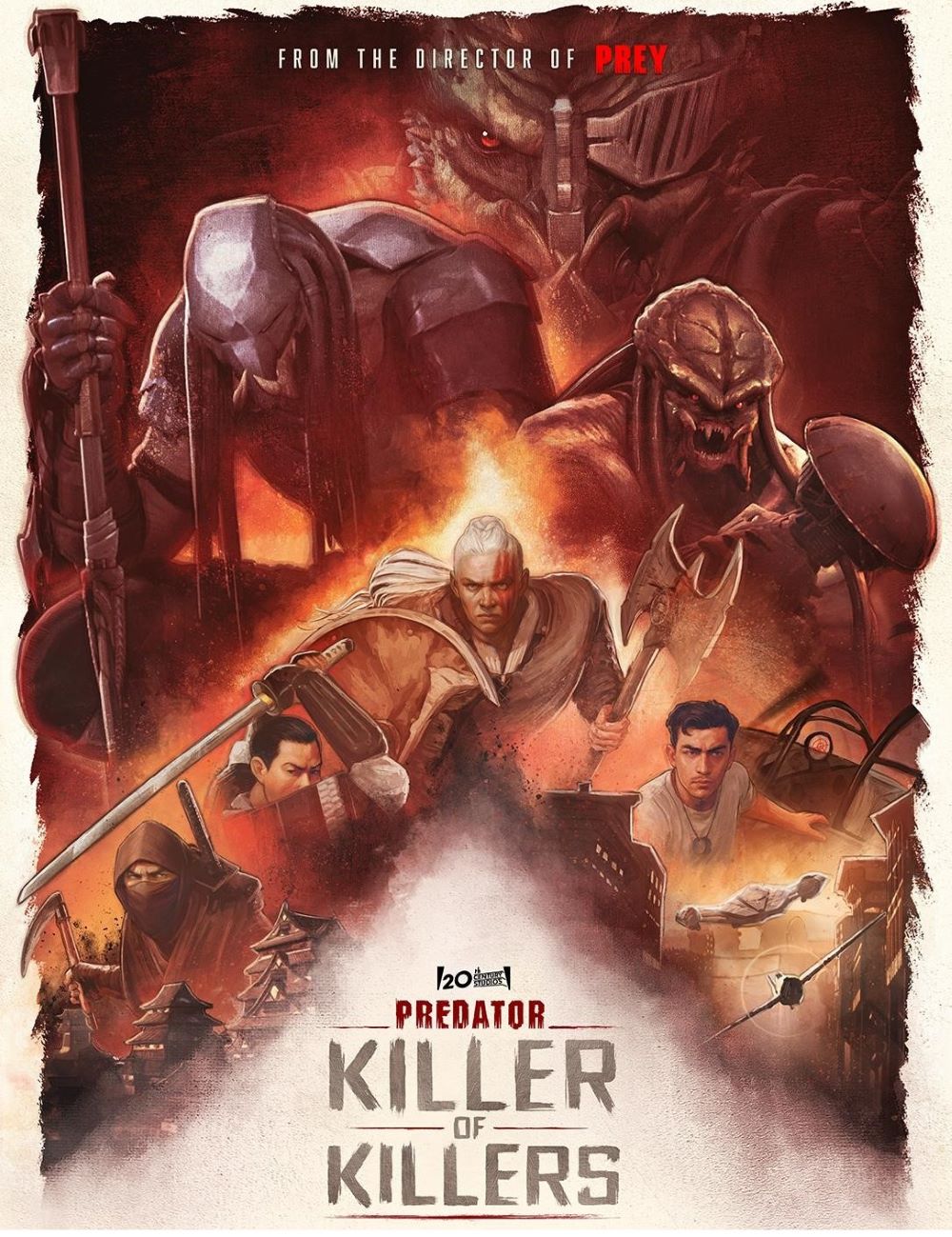
Hulu’s Predator: Killer of Killers signifies an ambitious and stylistically bold evolution of the Predator franchise, once again directed by Dan Trachtenberg following his excellent 2022 film Prey. Trachtenberg has clearly become the new creative caretaker of this series, bringing fresh vision and depth to the franchise. This animated anthology spans three distinct historical periods—Viking-era Scandinavia, feudal Japan, and World War II Europe—and tells the story of humanity’s ongoing, brutal clash with the alien hunters. By setting the predator mythos across such different cultures and eras, Trachtenberg presents a compelling exploration of survival, legacy, and adaptation.

The film unfolds in three chapters, each focusing on a different protagonist. The first segment introduces Ursa, a Viking mother consumed by grief and vengeance, who soon encounters a Predator in a primal battle that tests her strength and will to survive. The second segment is largely silent, centering on estranged brothers—a samurai and a ninja—in feudal Japan, who must unite against the alien menace. The final chapter shifts to World War II, following Torres, a Latino mechanic who seizes a chance to become a pilot amid chaotic battles against the Predators. Each story is steeped in its cultural milieu, aiming for depth and texture despite the limited runtime.

Visually, the film leverages a painterly animated style reminiscent of acclaimed adult animations like Arcane and Spider-Verse, yet it carries a darker, grittier tone suitable for the Predator universe. This style allows for intense, stylized violence—gore, blood, and brutal combat—which the anthology format showcases spectacularly. The distinct visual aesthetics of each era—from the somber shadows of Viking times, the flowing elegance of Japanese landscapes, to the metallic intensity of WWII dogfights—remarkably serve the film’s atmospheric ambitions. Notably, the Predators themselves are designed to reflect the atmosphere of each segment: the hulking, brute force Predator in the Viking-era matches the raw, physical brutality of that time; the lithe, agile Predator in feudal Japan suits the stealthy, precise combat of the samurai and ninja; and the grizzled, veteran pilot Predator in the WWII segment complements the aerial warfare and war-hardened theme. While some viewers may find the animation style unconventional compared to live-action, it delivers a fresh and inventive energy, allowing for spectacle and mood impossible in a traditional film.

Trachtenberg and screenwriter Micho Robert Rutare invest effort in creating emotionally grounded characters despite the anthology’s compressed storytelling. Ursa’s portrayal as a grieving mother brings weight to her arc, the Japanese chapter uses sibling rivalry and silence to evoke tension and tradition, while Torres embodies hope, determination, and cultural representation in a largely unexplored protagonist archetype for the series. The Predator itself remains a fearsome, vigilant hunter. Yet this film adds layers by examining how violence and survival shape human experience across eras, giving thematic weight beyond simple action thrills.

The film delivers relentless and varied action, ranging from poetic, skillful duels in Japan to brutal, visceral fights in the Viking and WWII chapters. Its anthology structure allows exploration of different combat styles and settings. However, this rapid pace sometimes sacrifices emotional depth and character development, making the stories feel like glimpses rather than fully realized narratives. Regarding the WWII segment, I found Torres’s character problematic; he often seems to succeed less through skill or ingenuity and more through luck or circumstance, embodying a “failing upwards” trope that weakens the audience’s emotional investment in his narrative. His frequent self-dialogue also disrupts the tone established by the near-silent Japanese chapter, creating a jarring shift that detracts from the overall cohesion.

Another notable aspect is the anthology format itself: while it enables a rich diversity of storytelling across periods and styles, the film’s roughly two-hour runtime limits how deeply each segment can develop. This leaves viewers craving more time to fully explore the characters and settings. In this respect, Predator: Killer of Killers might have been better served as a four-episode limited series rather than a single anthology film. Such a format would have allowed each segment to breathe, providing more room for nuanced storytelling and emotional engagement without making the runtime feel excessive. Stretching this anthology into a feature film already pushes its length near two hours, and adding more time to fully flesh out each story could have pushed it close to three hours, which might have been challenging for a theatrical or streaming movie. A limited series would have accommodated this expansiveness, letting each era’s story flourish while maintaining pacing and cohesion across episodes.

Though the film culminates in a grand finale combining the protagonists, the climax is somewhat chaotic and lacks coherence, which diminishes its impact. Notably, the movie ends on an unresolved note that doesn’t fully tie up the main storyline but instead clearly hints at a future sequel. While this open-ended conclusion may frustrate viewers seeking closure, it sets up anticipation for what lies ahead under Trachtenberg’s continued direction.

A fun piece of trivia is Michael Biehn’s inclusion as one of the voice actors in the film. With his role as Vandy in the WWII segment, Biehn has joined a very exclusive club: he is just the second actor to be part of all three iconic 1980s sci-fi franchises—AlienPredator, and Terminator. Known for his roles as Kyle Reese in The Terminator and Corporal Dwayne Hicks in Aliens, Biehn’s presence in Killer of Killers cements his unique legacy alongside fellow actors Lance Henriksen and the late Bill Paxton, who both previously held this sci-fi trifecta distinction. Director Dan Trachtenberg deliberately cast Biehn as a nod to this legacy, making his involvement a meaningful Easter egg for longtime fans.

While Predator: Killer of Killers marks a striking artistic and narrative effort within the franchise, it is not without flaws. The anthology format, while innovative, sometimes feels like a drawback—it limits how much the film can dig into each character or setting fully. The weakest link remains the WWII chapter and its protagonist Torres, whose arc doesn’t quite deliver the same resonance and often feels contrived. The finale’s lack of narrative closure may leave some feeling unsatisfied, though it promises more to come.

Despite these negatives, this film confirms Dan Trachtenberg’s role as a visionary leader for the Predator franchise, blending genre thrills with cultural specificity and psychological insight. For fans and newcomers alike, it offers a unique, stylized, and intense take on the alien hunters—the best the franchise has offered in many years. The film’s ambition and creativity outweigh its shortcomings, setting a foundation for a promising future for Predator under Trachtenberg’s direction.
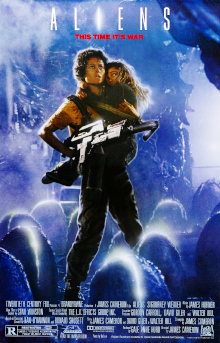
Aliens (1986, directed by James Cameron)


When I learned that today was Sigourney Weaver’s birthday, I flashed back to the first time I saw Aliens.

I was just a kid, probably too young for the movie.  My father rented Aliens from the local Blockbuster.  It had been years since the movie had first come out but my father, who went to every Star Trek movie premiere and who still knows the lore of Star Wars better than I do, had never seen it and he was planning on correcting that oversight.  My family gathered in the living room.  We turned out all the lights.  The tape was slipped into the VCR.  Play was hit.  Our boxy television turned into a movie screen and Aliens began.

And it scared the Hell out of me.

Today, I think people forget just how scary both Alien and Aliens are the first time that you watch them.  After the first time, you at least know when the aliens are going to jump out at people and you also know who is going to survive.  Today, if I rewatch Aliens, I know not to get to attached to the any of the Colonial Marines.  I also know not to trust Carter Burke, even if he is played by Paul Reiser.  I watch the movie in anticipation of Bill Paxton’s “Game over, man,” instead of dreading it.  When I first watched it, all I knew is that the screen suddenly went dark, the soundtrack was full of screeches and the deaths of the Marines, and that the only thing scarier then being confronted with one alien was being confronted with a hundred of them at once.  When I watch today, I know Bishop (Lance Henriksen) is going to prove to be a good android.  I didn’t have the assurance when I first watched the movie.  For all I knew, he was going to just abandon Ripley (Weave), Newt (Carrie Henn),and Hicks (Michael Biehn) on the planet.

Sigourney Weaver was the heart of that film.  She went from being angry and bitter over what happened during then first Alien to still being angry and bitter but willing to risk her life to save Newt.  From the start, she alone understood the Xenomorph threat and she was ultimately victorious because she was not only as determined and ruthless as the Queen but she actually had the heart that her opponent lacked.  Ripley won because she was actually fighting for something more than just conquest.  She was fighting to save Newt from becoming an incubator.

I usually think of Aliens as being the last Ripley film.  I don’t acknowledge the third film because I find the idea of killing Newt and Hicks to be a betrayal of what made the first Aliens more than just a scary action movie.  The fourth film, I don’t acknowledge because it asks me to believe that Winona Ryder would still be acting like Winona Ryder in the 23rd century.  Aliens is a scary movie but it’s also a movie that ends with the promise of hope.  After all that she’s been through, Ripley finally has a chance to start again with Newt, Hicks, and Bishop.   That hope is something that is too often missing from the follow-ups.

Happy birthday, Sigourney Weaver!  I’m going to go watch Aliens.

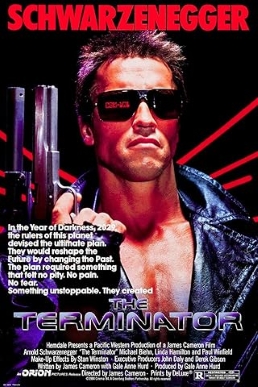
The Unnominated #19: The Terminator (dir by James Cameron)


Though the Academy of Motion Picture Arts and Sciences claim that the Oscars honor the best of the year, we all know that there are always worthy films and performances that end up getting overlooked.  Sometimes, it’s because the competition too fierce.  Sometimes, it’s because the film itself was too controversial.  Often, it’s just a case of a film’s quality not being fully recognized until years after its initial released.  This series of reviews takes a look at the films and performances that should have been nominated but were, for whatever reason, overlooked.  These are the Unnominated.

First released in 1984, The Terminator was the one of the top box office hits of the year.  It’s the film that established James Cameron as a filmmaker.  It’s the film that made a bona-fide star out of Arnold Schwarzenegger.  It’s a film that was imitated a thousand times before it even got its first official sequel.  It’s a film that’s still celebrated today.  41 years later, people are still saying, “I’ll be back.”  Would Arnold Schwarzenegger ever have become governor of California if he hadn’t first played a killing machine?  There’s a reason why his political nickname was the Governator.

And yet, The Terminator was not nominated for a single Oscar.  For all of the explosions and the gunfire and the screaming, it wasn’t even nominated for Best Sound.  Some of the special effects may now seem a bit hokey in this age of rampant CGI but it’s still a surprise that The Terminator was not nominated for Best Visual Effects.  The breath-taking action scenes did not result in a nomination for Best Editing.  Linda Hamilton was not nominated for her fantastic performance as Sarah Connor, a young woman who finds herself being pursued by a killer cyborg from the future.  Arnold Schwarzenegger was not nominated for playing one of the most memorable villains of the past 40 years.  Those who claim that Schwarzenegger was just playing himself are being overly glib.  Anyone could have said, “I’ll be back.”  It took Schwarzenegger’s delivery to make it a great line.

The lack of nominations aren’t really not a surprise, of course.  The Academy has only recently started to show an openness to nominating genre films for major awards and, even now, a genre film has to be considered a “cultural event” to even get a nomination.  Black Panther, Get Out, and even Mad Max: Fury Road and Dune were all nominated because it was felt that they had transcended their genre origins.  The Terminator is a sci-fi action movie and it’s proud to be a sci-fi action movie.  (Terminator 2: Judgment Day, it could be argued, transcended its genre origins but it was released in 1991 and Silence of the Lambs was destined to be the genre nominee that year.)  It’s also so relentlessly paced and intelligently written and directed that it’s a film that, even after all these years, it can still leave you breathless.  Nominated or not, The Terminator is a film that grabs your attention and holds it for a full 107 minutes.  There’s not many films that can make that claim.

The Terminator is a film that has held up surprisingly well.  (It’s certainly held up better than some of its more recent sequels.)  The performances of Linda Hamilton, Michael Biehn, and Arnold Schwarzenegger still work.  It’s still terrifying to watch as The Terminator relentlessly kills everyone that he comes into contact with.  (One thing that always gets me about the Terminator is that, even though he’s huge and superstrong and could probably physically rip anyone he wanted to apart, he still carries and uses a gun.  This makes him seem like even more of a bully.)  The Terminator is a machine and what makes him especially intimidating is that he doesn’t care if people see him coming or if they witness his crimes.  He has one function and that’s all he worries about.  When Michael Biehn first shows up, you can’t help but wonder why this guy, with his slight build and his somewhat nervous mannerisms, would be sent to try to stop the Terminator.  Of course, by the end of the movie, you understand.

(And what an ending!  The sight of those clouds, Linda Hamilton’s delivery of her final line, and the feeling that the future has already been determined, it all definitely makes an impression that has managed to survive every sequel after Judgment Day.  There’s a reason why Skynet — much like “I’ll be back” — has taken on a cultural life of its own.)

There were a lot of very good films that were nominated for Oscars in 1984.  The Terminator, much like Once Upon A Time In America, was not one of them but it will still never be forgotten.

Previous Entries In The Unnominated:

  1. Auto Focus 
  2. Star 80
  3. Monty Python and The Holy Grail
  4. Johnny Got His Gun
  5. Saint Jack
  6. Office Space
  7. Play Misty For Me
  8. The Long Riders
  9. Mean Streets
  10. The Long Goodbye
  11. The General
  12. Tombstone
  13. Heat
  14. Kansas City Bomber
  15. Touch of Evil
  16. The Mortal Storm
  17. Honky Tonk Man
  18. Two-Lane Blacktop

Double Feature Trailers for Predator: Badlands and Predator: Killer of Killers


When Prey was released straight to streaming on Hulu in 2022, there were many who thought that the film was going to be another Predator franchise entry that would lead to major disappointment. I mean, if it was good, it would’ve had a theatrical release. So, it was a pleasant surprise when it was well-received by most critics and audiences, alike.

Director Dan Trachtenberg had earned much goodwill from those same people as with the executives who ran 20th Century for Disney. That goodwill has allowed Trachtenberg to work on two projects for the House of Mouse both of which are two different ideas to expand the Predator franchise.

The two projects in question are the 3-part animated series for Hulu, Predator: Killer of Killers and the one set for a full theatrical release this November, Predator: Badlands.

The animated series will be about following the stories of the titular hunter set in three different eras (Viking era, Feudal Japan and World War 2). Predator: Killer of Killers may be animated but from the trailer it doesn’t skimp on the gore and violence. The series is set to premiere on Hulu on June 6, 2025.

The feature film Predator: Badlands is set for a November 7, 2025 release and will take a coming-of-age route but from the point of view of a young Predator seen as an outcast from his clan and teaming up with an unlikely ally played by Elle Fanning.

Predator: Killer of Killers Trailer

Predator: Badlands Trailer

The Unnominated #12: Tombstone (dir by George Pan Cosmatos)


Though the Academy of Motion Picture Arts and Sciences claim that the Oscars honor the best of the year, we all know that there are always worthy films and performances that end up getting overlooked.  Sometimes, it’s because the competition too fierce.  Sometimes, it’s because the film itself was too controversial.  Often, it’s just a case of a film’s quality not being fully recognized until years after its initial released.  This series of reviews takes a look at the films and performances that should have been nominated but were, for whatever reason, overlooked.  These are the Unnominated.

I have come around on Tombstone.

The first time I watched this 1993 film, I was a bit confused as to why so many of my friends (especially my male friends) worshipped the film.  To me, it was a bit too messy for its own good, an overlong film that told a familiar story and which featured so many characters that it was difficult for me to keep track of them all.  Perhaps because everyone I knew loved the film so much, I felt the need to play contrarian and pick out every flaw I could find.

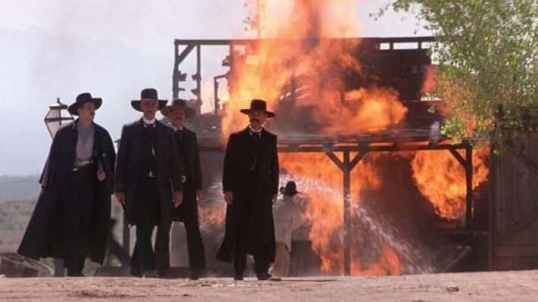
And I still think those flaws are there.  The film had a troubled production, with original director Kevin Jarre falling behind in shooting and getting replaced by George Pan Cosmatos, a director who didn’t have any real interest in the material and whose all-business approach rubbed many members of the cast the wrong way.  Kurt Russell took over production of the film, directing the actors and reportedly paring down the sprawling script to emphasize the relationship between Russell’s Wyatt Earp and Val Kilmer’s Doc Holliday.  On the one hand, this led to a lot of characters who really didn’t seem to have much to do in the finished film.  Jason Priestley’s bookish deputy comes to mind.  On the other hand, Russell was right.

The film’s heart really is found in the friendship between Wyatt and Doc.  It doesn’t matter that, in real life, Wyatt Earp was hardly as upstanding as portrayed by Kurt Russell.  It also doesn’t matter that the real-life Doc Holliday was perhaps not as poetic as portrayed by Val Kilmer.  Today, if you ask someone to picture Wyatt Earp, they’re probably going to picture Kurt Russell with a mustache, a cowboy hat, and a rifle.  And if you ask them to picture Doc Holliday, they’re going to picture Val Kilmer, sweating due to tuberculosis but still managing to enjoy life.  Did Doc Holliday every say, “I’ll be your huckleberry,” before gunning someone down?  He might as well have.  That’s how he’s remembered in the popular imagination.  And it’s due to the performances of Russell and Kilmer that I’ve come around to eventually liking this big and flawed western. With each subsequent viewing, I’ve come to appreciate how Russell and Kilmer managed to create fully realized characters while still remaining true to the Western genre.  If Wyatt Earp initially fought for the law, Doc Holliday fought for friendship.  Kilmer is not only believable as a confident gunslinger who has no fear of walking into a dangerous situation.  He’s also believable as someone who puts his personal loyalty above all else.  He’s the type of friend that everyone would want to have.

That said, I do have to mention that there are a lot of talented people in the cast, many of whom are no longer with us but who will live forever as a result their appearance here.  When Powers Boothe delivered the line, “Well …. bye,” he had no way of knowing that he would eventually become a meme.  Boothe is no longer with us, I’m sad to say.  But he’ll live forever as long as people need a pithy way to respond to someone announcing that they’re leaving social media forever.  Charlton Heston appears briefly as a rancher and he links this 90s western with the westerns of the past.  Robert Mitchum provides the narration and it just feels right.  The large ensemble cast can be difficult to keep track of and even a little distracting but there’s no way I can’t appreciate a film that manages to bring together not just Russell, Kilmer, Boothe, Heston, and Mitchum but also Sam Elliott, Bill Paxton, Michael Biehn, Michael Rooker, Billy Bob Thornton, Frank Stallone, Terry O’Quinn, and even Billy Zane!  The female roles are a bit underwritten.  Dana Delaney is miscast but Joanna Pacula feels exactly right as Doc Holliday’s lover.

But ultimately, this film really does belong to Val Kilmer.  When I heard the sad news that he had passed away last night, I thought of two films.  I thought of Top Gun and then I thought of Tombstone.  Iceman probably wouldn’t have had much use for Doc Holliday.  And Doc Holliday would have resented Iceman’s attitude.  But Val Kilmer — that brilliant actor who was so underappreciated until he fell ill — brought both of them to brilliant life.  In the documentary Val, Kilmer attends a showing of Tombstone and you can say he much he loves the sound of audience cheering whenever Doc Holliday showed up onscreen.

Tombstone was a flawed film and 1993 was a strong year.  But it’s a shame that Val Kilmer was never once nominated for an Oscar.  Tombstone may not have been a Best Picture contender but, in a year when Tommy Lee Jones won the Oscar for Best Supporting Actor for his role in the similarly flawed The Fugitive, it seems a shame that Kilmer’s Doc Holliday was overlooked.

Tombstone (1993, dir by George Pan Cosmatos (and Kurt Russell), DP: William Fraker)

Previous entries in The Unnominated:

  1. Auto Focus 
  2. Star 80
  3. Monty Python and The Holy Grail
  4. Johnny Got His Gun
  5. Saint Jack
  6. Office Space
  7. Play Misty For Me
  8. The Long Riders
  9. Mean Streets
  10. The Long Goodbye
  11. The General

The Art Of War (2000, directed by Christian Duguay)


In The Art of War, Wesley Snipes plays Neil Shaw, an UN operative who is framed for the assassination of a Chinese diplomat and who must uncover the real conspiracy while also proving his innocence.  Proving his innocence means engaging in a lot of conflict while using investigation techniques that were cribbed from the Mission Impossible films.

Featuring a lot of war but not much art, The Art of War has a few good action scenes and an overly convoluted storyline that sometimes makes the film feel like a retread of another film in which Snipes was framed for a crime he did not commit, U.S. Marshals.  It’s hard to take seriously any action hero who works for the United Nations but Wesley Snipes is credible in the action scenes and he could deliver a one-liner with the best of them.  (Of all the bad things you can say about the IRS, the worst is that it put one of our best action stars in prison.  Unforgivable!)  The supporting cast is good, featuring Donald Sutherland, Maury Chaykin, Anne Archer, and Michael Biehn.  The final battle between Snipes and the person who is revealed to be the main villain is exciting but, overall, The Art of War is overlong and overcomplicated.  Neil Shaw is cool but he’s no Blade.

Quick Review – Grindhouse (dir. by Robert Rodriguez & Quentin Tarantino)


The following was posted on 4/6/2007 from my LiveJournal on Grindhouse (which is celebrating it’s 15th Anniversary). I’ll admit I respect Death Proof a bit more now than I did back then:

Gotta write fast. Have to jump into shower and head for work.

I got into the movie theatre at about 8pm, and spent the hour talking with a pair of film students from the School of Visual Arts. At 9 (an hour before the movie), the rest of the sold out crowd appeared. I was officially 3rd in line. Sweet. 🙂 I didn’t my preferred seat (the single one on the right reserved for patrons coming in with someone in a wheelchair), but did get a seat in the empty row (meaning I could stretch my legs, even better).

The short of it: Grindhouse is paying one low price for 2 bad movies, on purpose. You get 3 great built in trailers, and two mini movies. Between the two mini movies, I loved “Planet Terror” (the Rodriguez one) more than “Death Proof” (The Tarantino film), simply because Death Proof had too much of Tarantino’s conversational style that all of his films have. It’s like you’re listening to a conversation that absolutely doesn’t tie itself to any of the storyline’s major points. It’s just “cool” stuff, but I literally almost fell asleep until Kurt Russell showed up on screen. I think that if one knows to expect this from Tarantino, it comes across better. It’s like watching both Kill Bill volumes back to back. The first one’s cool and action packed, and the second one has some action (the chase scene alone in Death Proof had me wondering how they did that), but is so slow before getting there, you want to sigh.

Being a Charmed Fan, it was great to see Rose McGowan again, and there were so many cameos to laugh at. Fergie has a cameo, and Michael Biehn’s (“Hicks” from Aliens, Navy Seals) even in this. Where did they dig up these guys?

Grindhouse is easily a party film. I’d go see it again in the theatre, but I don’t see myself getting the DVD. It takes you back about a good 30 years, and does that really well. There are missing reels, serious jump cuts in the film and the sound sometimes cuts out. 🙂 In that sense, it’s really beautiful. The audience laughed and applauded, though there were some that at the end were like “Man, that sucked.” In the 60’s and 70’s, Grindhouse movies were pretty bad. I guess it’s like watching one of those old Hammer films, mixed in with a cheap horror flick. You have to walk into this movie not expecting “The Departed” for it to work. Just have fun with what you’re seeing and remember, this is what your parents sometimes saw in the movies (it should be noted that my parents went to something of a Grindhouse once – the movie they went to see was Night of the Living Dead. The other movie that was in the show was John Carpenter’s “Halloween”, which freaked my Dad out).

The music in particular is really great. Robert Rodriguez, Chingon, and a few friends come up with a sound for Planet Terror that’s in essence a John Carpenter like sound. If you have access to the Itunes Music Store, give it a listen (I bought it). Plus, if you’re a fan of some of the older movies out there, you’ll find references to some of Carpenter’s films in there (for example, one of the songs from “Escape from New York” is actually used in the film). The same occurs with the soundtrack from “Creepshow” – The story with the drowned couple. There are also tons of older Tarantino/Rodriguez references in there. One fellow actually yelled out a line, word for word, from what was on screen. It took me a second to realize the line came from “From Dusk Till Dawn”. Sweet.

The in betwen trailers are absolutely fantastic. If I were to get the DVD, it would probably be for this reason alone. You can tell that Rob Zombie, Edgar Wright (Shaun of the Dead) and Eli Roth (Hostel) really had fun with their pieces.

So, Grindhouse is worth seeing in theatre at least once with a bunch of friends, but know what you’re walking into. The movie can get gross at times and no young kid should even be brought near to this (we got carded to actually get into the theatre, and a Weinstein Rep. was on hand after the film to let us take surveys). Also before the movies, one of the teaser trailers is for Rob Zombie’s “Halloween”. I haven’t been so excited for a horror film like this since Zack Snyder’s version of “Dawn of the Dead”. This looks really good, and I’m wondering what Michael Myers is going to look like when someone like Tyler Mane (Sabretooth from the first X-Men movie) is playing him. That’s going to be creepy.

TV Review: The Walking Dead 11.13 “Warlords” (dir by Loren Yaconelli)


This week, The Walking Dead introduced yet another community and also show us the darker side of the way that the Commonwealth does things.

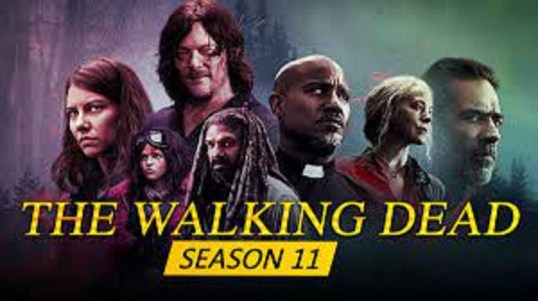
Aaron and, for some reason, Father Gabriel were recruited to accompany the Commonwealth’s Toby Carlson (played by Jason Butler Harner) to a community that was based in an old apartment complex.  Toby told Aaron and Gabriel that their mission was one of recruitment.  They wanted to check out the Apartment People, learn about their customs and way of doing things, and then bring them into the Commonwealth.  Of course, it actually turned out that Toby just wanted to kill everyone in the apartment building because Lance Hornsby believed that the Apartment People were responsible for attacking a Commonwealth caravan.

Normally, I would be opposed to such wanton death and destruction but, in all honesty, the Apartment People were really annoying.  They were so annoying that I’m not even bothering to refer to them by the name of their community.  Oceanside deserves a name.  Hilltop deserves a name.  Alexandria and the Commonwealth deserve a name.  There’s been a lot of different groups that have wandered through The Walking Dead and they all earned the right to be known by the name that they selected for their community.  But the Apartment People were just jerks and, as such, I don’t care what they call their big, ugly home.  To me, they’re just the Apartment People.  From the minute that Aaron and Carlson showed up, the Apartment People were acting like jerks.  Are there any communities in the world of The Walking Dead that aren’t run by some overly loquacious Negan wannabe?

In this case, the Apartment People were ruled by Ian, the Warlord.  The Warlord was played by Michael Biehn, so at least he had that going for him.  The Warlord had a nice, dark office and a cool display case of skulls.  He claimed that all of the skulls came from the enemies of the Apartment People.  I’m not sure if I believed him but I guess it’s always good to have a display of some sort.  A good leader always used their decorating skills to make their office their own.  (Seriously, that’s on page 19 of Somehow I Manage by Michael Scott.)

I appreciated the fact that The Warlord was immediately suspicious of Father Gabriel because I’ve never really felt that Gabriel adds much to the show.  Gabriel started out this season as a newly confirmed atheist but now, suddenly, he’s back to being a fire-and-brimstone holy warrior.  Pick a persona and stick with it, Gabriel!  And, seriously — if you survived the zombie apocalypse, would you really feel like spending all of your Sundays sitting in church?  The fact that Gabriel even has a congregation is just weird to me.

As for the Apartment People, it turned out that Negan is living with them!  That’s probably good news for the Apartment People because the Warlord was dead by the end of the episode and someone is going to have to step in and be the new guy who gives long monologues while standing in front of a display case of skulls.

The episode ended with Maggie and her crew showing up, set to do battle with the Commonwealth.  I guess this is how the war gets started, over a shabby apartment complex that’s populated by some of the most unlikable people to ever appear on the show.  If Negan does’t want to take the Warlord’s place, I guess Maggie can take over the Apartment People and make them as miserable as she’s made everyone at Hilltop.

Anyway, this episode probably would have had more impact if we didn’t already know about the darkness at the heart of the Commonwealth.  Still, Michael Biehn was an effective Warlord and Jason Butler Harner was effectively fanatical as Toby Carlson.  At least now, we know just why exactly Hilltop and the Commonwealth are going to go to war.

Next week is the mid-season finale!

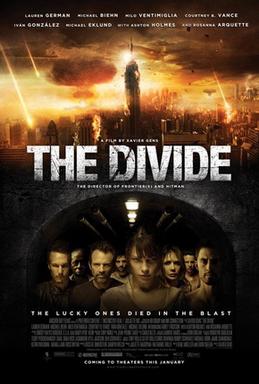
Film Review: The Divide (dir by Xavier Gens)


It seems like whenever there’s any sort of disaster, people are advised to seek shelter.  Often, if the disaster is national news, people are told to take shelter in their basement, as if everyone in the world has a basement.  This is a bit of a pet peeve of mine because I live in North Texas, where the land is completely flat and no one has a basement, a cellar, or any other sort of underground shelter.  (We also don’t have mud rooms and, in fact, I’m not even sure what a mud room is.)

That said, there’s a part of me that’s glad that it would be impossible for me to take shelter because, from what I’ve seen in the movies, it appears that spending months in a shelter can actually be worse than dying in a disaster.

Take the 2011 film, The Divide, for instance.

The Divide opens with several people watching while a mushroom cloud blooms over New York City.  Eight of those people all end up taking shelter in the same basement.  While that means that they don’t get incinerated by the nuclear blast, it also means that they now have to figure out how to live together.  That’s not going to be easy because it doesn’t take long to realize that none of these people should be anywhere near each other.

For instance, there’s Mickey (Michael Biehn).  Mickey’s the one who built the shelter.  He says that he specifically built it so that, in case of a nuclear war or a terrorist attack, he could safely sit underground and laugh at everyone dying above him.  That’s not a nice sentiment but Mickey is played by Michael Biehn so he’s still one of the more likable characters in the film.

There’s Josh (Milo Ventimiglia) and his brother Adrien (Ashton Holmes) and their friend Bobby (Michael Eklund), three idiots who are clearly destined to end up going crazy before the ordeal is over.

There’s Eva (Lauren German) and her boyfriend, Sam (Ivan Gonzalez), who are both obviously destined to be the voices of reason to which no one is going to listen.

And then there’s Marilyn (Rosanna Arquette) and her daughter (Abby Thickson), who are there because it’s not a shelter-movie without a child being put in jeopardy.

Lastly, there’s Devlin (Courtney B. Vance), who is there to be the older authority figure who ultimately fails to exercise much authority.

After an effectively chilling scene where the basement is briefly invaded by some mysterious men in Hazmat suits, The Divide settles down to be a fairly predictable and, to be honest, rather unpleasant examination of a group people going crazy from the stress of being trapped together.  It may seem odd to complain that a film about the aftermath of a nuclear apocalypse was unpleasant and I guess it is.  But The Divide runs a little over two hours and it’s so relentlessly bleak and everyone is ultimately so nasty that it becomes a bit of a chore to sit through.  By the time the torture scenes begin, The Divide has slipped into Hostel territory and it’s hard not to feel that the film is being grotesque simply for the sake of being grotesque.

That said, the film does have its strength.  The shelter is an effectively claustrophobic location and Michael Biehn does what he can with the role of Mickey.  When some of the characters end up getting radiation sickness, it creates some effectively scary visuals.  I mean, if you ever thought it would be cool to poison yourself with radiation, this film will change your mind.  That’s a good thing, I suppose.

The Divide is a very long movie about some very unpleasant people in an even more unpleasant situation.  It’s well-made but not particularly entertaining to watch.  In the end, it’s easy to feel that everyone would have been better off just staying above ground and getting it over with.

Film Review: The Ride (dir by Michael O. Sajbel)


“Do you own a horse?”

Because I was born and live in Texas, a friend of mine used to ask me that constantly.  His assumption was that everyone in Texas wore a cowboy hat and rode a horse to work.  That, of course, is not true.  I imagine that you’re more likely to see people on horseback in Central Park than you are in downtown Dallas.  As well, for the most part, if you see anyone wandering around Dallas wearing a cowboy hat and cowboy boots, chances are that they’re from up north.  Northerners love to come down to Dallas and see where Kennedy was shot and ask if everything really is bigger in Texas.  It gets annoying after a while.  Of course, I’d by lying if I said that there weren’t any cowboys in Texas.  And yes, there are people down here who own horses.  We’ve got our ranchers and our oilmen and our farmers.  We just don’t have as many as people up in Minnesota seem to assume that we do.

And, to be honest, I’ve known a few cowboys.  If you dig around my family tree, you’ll find a few people who have worked the rodeo circuit.  For the most part, the cowboys I’ve known have been a proud group of people.  They’re not really emotional and they might not spend much time on twitter but you can depend on them to get the job done without a lot of crying and that’s always kind of a nice thing.

As an actor, Michael Biehn has always seemed uniquely right for cowboy roles.  He’s a low-key actor who doesn’t feel the need to always be the center of attention and who does his job with a minimum amount of fuss.  What he does, he does well.  Much like the best cowboys, an actor like Michael Biehn often gets taken for granted.  Viewers just always assume that he’ll always be there, delivering laconic one-liners and viewing the world through weary but never defeated eyes.

Michael Biehn plays a cowboy in the 1997 film, The Ride.  His name is Smokey Banks and he’s the type of character who, if you’ve ever spent any time at a rodeo, you’ll recognize immediately.  He used to be one of the world’s greatest bull riders but now, he’s getting older.  He still walks like a cowboy but he’s definitely moving a bit slower than he used to.  He drinks too much.  He spends too much time with the buckle bunnies.  He’s like a downbeat country song come to life.

But fear not …. redemption is coming for Smokey.  And, like all good redemption arcs, it all starts with being sentenced to community service.  Smokey can either go to jail or he can go to a ranch and teach a bunch of boys how to be a cowboy.  Along the way, he befriends a terminally ill, religious young man (Brock Pierce) who wants to learn how to ride a bull and he also ends up spending some time at a tent revival.  Yes, it’s a religious film but, fortunately, it was made before the whole God’s Not Dead phenomenon so it never gets as preachy or apocalyptic as some other faith-based films.  One gets the feeling that Smokey would find Kirk Cameron to be as annoying as the rest of us do.

It’s a sweet film.  I mean, it’s not a movie that’s going to surprise you.  It’s unapologetic about being sentimental but, at the same time, it’s such a good-natured film that it’s hard to really dislike it.  Michael Biehn grounds the film with his typically low-key charm.  Biehn turns Smokey into a real person and, as much as you might try to resist, it’s hard not to get swept up in his emotional journey.  Considering that the film’s audience was probably limited to kids and church groups, Biehn easily could have gotten away with just phoning in his performance.  That’s the sign of a good actor, though.  Like the best cowboys, they’re good even when they don’t have to be.