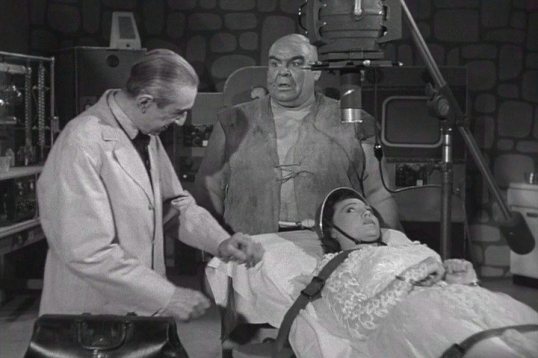
Since yesterday was the great man’s birthday, it seems appropriate that today’s horror film on the lens is Edward D. Wood’s 1955 epic, Bride of the Monster.
(Much like Plan 9 From Outer Space, around here, it is a tradition to watch Bride of the Monster in October.)
The film itself doesn’t feature a bride but it does feature a monster, a giant octopus who guards the mansion of the mysterious Dr. Vornoff (Bela Lugosi). Vornoff and his hulking henchman Lobo (Tor Johnson) have been kidnapping men and using nuclear power to try to create a race of super soldiers. Or something like that. The plot has a make-it-up-as-you-go-along feel to it. That’s actually a huge part of the film’s appeal.
Bride of the Monster is regularly described as being one of the worst films ever made but I think that’s rather unfair. Appearing in his last speaking role, Lugosi actually gives a pretty good performance, bringing a wounded dignity to the role of Vornoff. If judged solely against other movies directed by Ed Wood, this is actually one of the best films ever made.
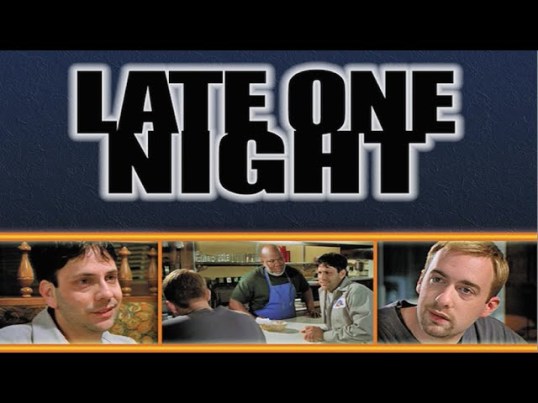
The 2001 film, Late One Night, takes place in a diner. As you can probably guess from the title, it also takes place late one night. It’s so late that there are only five people in the diner. There’s a cook. There’s three men who work at a local factory, the main one of which is named Larry (Brad Heller). And then, there’s a quiet guy (John Gaffga) sitting at the counter. Though the guy never introduces himself, Larry decides to call him Jesus.
To say that Larry is a bit of an obnoxious character really doesn’t do justice to just how grating a human being Larry is. At work, Larry sexually harasses the only woman working at the factory. In the diner, he sexually harasses a waitress as her shift ends. When he sees the quiet man sitting at the counter, Larry starts to harass him. Larry is angry. Larry, as we learn, was abandoned by his father, raised by an unstable mother, and he spent several years in jail before ending up at a go-nowhere job at a bottling factory. Larry has his reasons but that doesn’t make him any more likable.
In fact, Larry is such a jerk that you kind of wonder why the cook even allows him to hang out in the diner. From the dialogue, it becomes clear that Larry has a long history of harassing people. At one point, Larry does point out that he spends a lot of money at the diner but you have to consider how many people probably avoid the place whenever they see Larry and his co-workers sitting in their booth. No matter how much money Larry spends, it seems likely that he keeps even more money out. Really, the cook should call the cops whenever he sees Larry and maybe slap with him a trespassing charge. I imagine Larry probably isn’t even a good tipper.
Anyway, on this night, Larry is obsessed with the quiet stranger. When the stranger briefly goes into the restroom, Larry searches the stranger’s jacket and finds a pamphlet about Christianity. When the stranger returns, he’s been given the nickname “Jesus” and he now has to deal with Larry mocking him by asking, “Am I going to Hell when I die?” “Jesus” controls his temper, no matter how much he is taunted.
If you’ve seen any other films from director Dave Christiano, you might be excused for expecting “Jesus” to reveal himself to actually be Jesus. In this case, though, I think he’s simply meant to be a believer who simply wants to eat in peace. For that matter, you might also expect the film to end with Larry converting but instead, he’s as confused and angry at the end of this short film as he was at the beginning. Particularly when compared to the films that he was making in the 80s and the 90s, Late One Night shows a certain dramatic restraint on the part of Christiano. The main theme, of course, still seems to be that non-believers are going to suffer forever but, for once, Christiano doesn’t seem to be asking the viewer to take any pleasure out of that.
That said, I do have to say that, in college, I spent a lot of time in a lot of late night diners and I never once saw anyone get into the type of random verbal altercation that Larry gets into in this film. I kind of suspect that might not happen in the real world as often as it happens in the movies.
On tonight’s episode of Ghost Story, college co-eds are being drained of their blood! Who could the culprit be? Oddly, some say that they saw a recently deceased college professor near the scene of the crime. What was that professor studying when he died? Vampirism!
This one is kind of silly but I always enjoy a vampire story. This episode aired on December 1st, 1972.
In Studio 666, the members of Foo Fighters play themselves. Struggling with writer’s block and hoping to remain musically relevant in a world where the culture belongs to the young, the band heads to an Encino mansion so that they can work on their latest album. The mansion is infamous because years ago, another band was murdered while attempting to record there. (Oddly enough, Jenna Ortega plays the drummer of the murdered band. Ortega had quite a year as far as the horror genre is concerned.)
The band arrives at the mansion and things quickly go downhill. The band isn’t getting along. Lead singer Dave Grohl is revealed to be a bit of megalomaniac. One of the band’s electricians is killed in what appears to be a freak accident. Most people would move out of a house after someone dies under mysterious circumstances but not this band! Instead, the band decides to dedicate the album to the memory of the dead guy.
Soon, however, there are a lot more dead people at the mansion. Why are there so many dead people there? This is going to sound like a spoiler but it’s not….
DAVE GROHL IS KILLING THEM!
Yes, Dave Grohl has been possessed by the evil spirit of mansion. On the one hand, it’s given him the inspiration necessary to get over his writer’s block. On the other hand, it also leads to him killing the other members of the band in various grotesque ways. Studio 666 is a horror comedy that doesn’t shy away from the gore. If you’ve ever wanted to see a member of Foo Fighters get cut in half with a chainsaw while having sex with Whitney Cummings, I guess this is the film to track down. (Cummings, I should note, does not play herself. This film stars the band as themselves but it’s also filled with recognizable actors who are not playing themselves.)
Studio 666 is a bit of a lark, a horror film starring a band that most people don’t really associate with the horror genre. Indeed, a good deal of the film’s humor comes from the fact that it’s Dave Grohl doing all of the killing. In real life, a good deal of Dave Grohl’s appeal is that he comes across as being as close to a regular guy as a rock star can be. He’s one those famous guys who most people could imagine having a beer with. Studio 666 gets a lot of mileage out of presenting Dave Grohl as being a pretentious taskmaster who would happily sell his soul for the chance to have a successful solo career. It helps that Dave Grohl seems to be having a blast playing such an exaggerated version of himself. It’s hard not to be happy for him because he really does appear to having the time of his life.
That said, once Grohl is revealed to be the killer (and that happens very early in the film so, again, this is not a spoiler), the film really has nowhere else to go. The whole thing simply becomes Grohl tracking down various members of the band and killing them in grotesque ways and it gets to be a little boring. There’s little suspense and, since the Foo Fighters are playing themselves, there really aren’t any stakes because we know the band wasn’t actually murdered while recording a new album. With a 106-minute running time, Studio 666 really grinds its one joke into the ground.
I will say that longtime fans of Foo Fighters will probably enjoy the film, if just because there’s several jokes and comments that are obviously meant to be inside jokes that only a select few will get. Personally, I think it’s nice that the band did something for the fans, even if the movie itself doesn’t really work.
Welcome to Retro Television Reviews, a feature where we review some of our favorite and least favorite shows of the past! On Mondays, I will be reviewing Hang Time, which ran on NBC from 1995 to 2000. The entire show is currently streaming on YouTube!
We are reaching the conclusion of the first season of Hang Time and it’s time for us to ask where we’re all going with this show. What will be the ultimate conclusion of Deering’s season? Let’s get in the mood to find out with the Hang Time theme song!
Get out on that court and put it in the basket!
Episode 1.11 “The Bachelor Pad”
(Directed by Howard Murray, originally aired on November 18th, 1995)
“Great game, everyone!” Coach Fuller announces at the start of this episode, letting us know that Deering is finally having a good season. I wonder if they’ll make it to the state championship? (Of course, they will! A show would never be made about a merely adequate team. That seems a bit unfair, though. Most high school teams are merely adequate and surely, they deserve some representation as well!)
There’s trouble in paradise! Danny’s parents are out of town and, for some reason, this leads to Danny staying at Coach Fuller’s penthouse for three days. A student staying with his teacher and coach for the weekend? I remember when this happened on Degrassi. The end result was the coach getting fired and the student being traumatized for life. Seriously, Danny staying with Fuller seems massively inappropriate but I guess the 90s were a different time. Meanwhile, Sam is worried that no one takes her seriously because she’s just the equipment manager.
Anyway, you can guess what happens, can’t you? Coach Fuller goes out for the evening. Danny does the Risky Business dance in Fuller’s penthouse and then everyone from school shows up. The wild party leads to Fuller’s $3,000 chair getting damaged. The next day, during the game, Fuller learns about the party and the damage to his chair and he chases Danny out onto the court. Fuller is kicked out of the game and Sam has to take over. Sam coaches the team to victory and the team apologizes to the coach. Yay!
Oh — and due to winning that game, the team is going to the league championship! Take that, merely adequate teams!
As for the episode itself, this is another one of those episodes that drives me crazy because every problem that the characters run into is due to their own stupidity. Still, it was nice that Hillary Tuck finally got a chance to shine. The team owes their victory to a redhead. Yay, Sam!
Episode 1.12 “Poetic Justice”
(Directed by Howard Murray, originally aired on November 25th, 1995)
“Chris and I are a couple!” Julie announces at the end of this episode.
“A couple of what?” Mary Beth responds and I’ll admit right now that I laughed. Megan Parlen’s delivery was perfect on that line.
Mary Beth has reason to be upset because, just before Julie made her announcement, she was telling Chris that she wanted to get back together with him. Mary Beth may have thought that she was over Chris but Earl encouraged her to write a poem about her feelings and that led to Mary Beth realizing that she was still in love with her ex.
Earl’s a poet now? Yep.
Julie is finally ready to public with her relationship with Chris? Yep.
The championship is coming up with all of this drama going on? Yep.
Yes, it’s all kind of silly but it was worth it for that one line. “A couple of what?” It made me laugh and that really is kind of the point of the show.
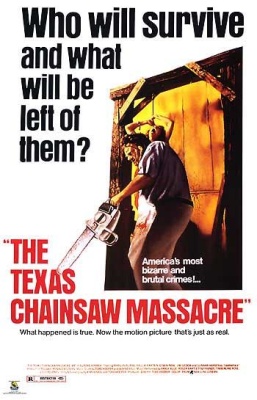
This scene, from 1974’s The Texas Chainsaw Massacre, only last 52 seconds but that’s all the time that it needs. Leatherface makes his first appearance and, sadly, Kirk exits the film.
What makes this scene so effective is that, even though it’s obvious that something bad is going to happen, Leatherface still seems to pop up out of nowhere. When he does kill Kirk, he does it so efficiently and without hesitation that there’s little doubt that this is just an ordinary day for him. When Leatherface slams that door, what he’s truly saying is that he’s very busy and he’d appreciate it if people just stopped bothering him for an hour or two.
For his part, Kirk really shouldn’t have just gone into someone’s house uninvited. That’s really not Texas manners. That said, I do think Leatherface did overreact just a bit. Killing a guest isn’t really an example of good manners either.
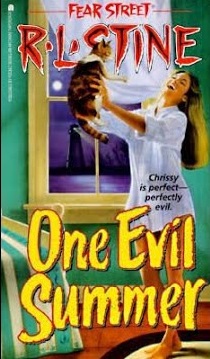
It’s summer! That means that it’s time for the Conklin Family to take a vacation to the lovely resort town of Seahvaen. Unfortunately, Mr. Conklin and Mrs. Conklin are both bringing their work with them and oldest daughter Amanda is having to take summer school classes because she failed Algebra. (How do you go on a vacation and so summer school at the same time?) Despite the fact that I never had to do a day of summer school, I could still relate to Amanda because Algebra was always my worse subject. Fortunately, my sister kept all of her tests from the previous year so I was able to cheat my way to a passing grade. I still suck at Algebra and, as Case can tell you, I still throw a fit whenever I have to discuss anything that has to do with math but the important thing is that my summers were mine.
(To be honest, I probably could have done just fine if not for the “show your work” requirement, which always struck me as being fairly nonsensical. If I got the right answer, why did it matter how I got it? Usually, I do most of my work in my head and the notes that I jot down are usually written in such a way that only I can understand what they actually mean. That works just fine for me.)
Anyway, someone has to look after the youngest two Conklin kids during the day so Mrs. Conklin hires Chrissy, despite the fact that Chrissy has absolutely no references and is obviously batshit insane. Amanda keeps trying to get her parents to understand that Chrissy is crazy and planning on killing everyone but her parents are just like, “That’s what you get for failing Algebra.” Bleh!
The book has an intriguing premise and the first few chapters were so silly that I thought I was going to really enjoy One Evil Summer. But then all three of the Conklin family pets died, including a cat named Mr. Jinx and two parakeets that got their throats slit and ended up bleeding all over the place. That pretty much turned me off of the book, as it all just felt gratuitous and cheap. I pretty much lost all interest in the story when Mr. Jinx died and the death of the two parakeets pretty much guaranteed that I wouldn’t get that interest back any time soon. I did skim the rest of the book, just so I could be honest when I wrote this review. Chrissy turns out to be a witch with a secret! I figured out the secret pretty quickly.
To be honest, things get pretty silly towards the end of the book. It would actually have been enjoyably over-the-top if not for all the dead animals. But the death of Jinx and the birds just kind of made the rest of the book too depressing to really enjoy. To Stine’s credit, Amanda to get a new kitten and the kitten got a bit of revenge for its predecessor but still, the whole book just left a sour aftertaste.
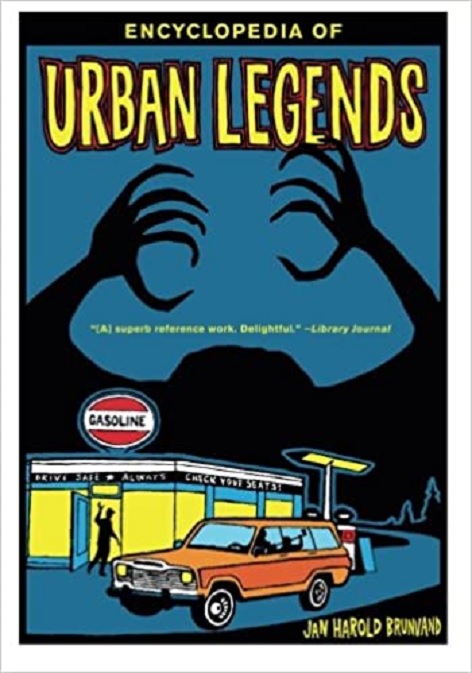
The cover is based on the urban legend about the driver who stops at a gas station. Usually, the driver is already nervous due to having heard a report about an escaped murderer or a missing mental patient. When a frantic stranger approaches the car, the driver panics and drives off. What the driver didn’t realize was that the stranger was trying to warn her that the killer was in the back seat of her car.
How about the one about the girl and the boy making out in the car when they hear a report that a killer with a hook for a hand is in the area? I’ve heard several variations of that one but the thing they all have in common is that they never end well for the couple. The underlying message, of course, is that the couple was punished for giving into temptation but, in all honesty, most people who hear the story are going to care more about the hook than the subtext.
It’s kind of like the story of the girl who thinks that a killer is trying to enter her dorm room so she locks the door, just to discover, in the safety of the morning hours, that the person pounding on the door was actually her now dead roommate. Aren’t you glad you didn’t answer the door? is written in blood on the outside of the door. That story gave me nightmares the first time that I heard it, even if memories of it didn’t exactly keep me from going out at night. Actually, being scared made me even more determined to go out. I wasn’t going to let an imaginary killer tell me what to do!
All of those stories and many more are included in Jan Harold Brunvand’s Encyclopedia of Urban Legends. Many of the urban legends included in here are frightening. A few of them are a little bit ridiculous, especially the ones that were obviously dreamt up as a way to scare kids straight in the 60s. (We’ve all heard about the stoned babysitter and the microwave, right?) Some of them are funny. Some of them are embarrassing. Some, I’ve actually heard repeated as fact by many different people. The book not only details various urban legends but it also has entries about the cultural and historical roots of those legends. (Satanic Panic, for instance, gets an entry all of its own.) It also takes a look at the urban legends of various nations, examining how several different cultures can adopt the same story and make it uniquely their own. Jan Harold Brunvand is one of the world’s leading authorities on folklore and urban legends. His encyclopedia is both entertaining to read and rather thought-provoking as it examines the roots of some of the oldest urban legends around. As well, in the introduction, he takes some time to write about how much he disliked the film Urban Legend. You have to respect that.
Encyclopedia of Urban Legends is a great reference book. It’s one of my favorites. For the aspiring horror writer, it’s treasure trove of research and inspiration. And did I mention how much I love the cover?
Sometimes, as with the films of David Lynch, it’s because the films themselves are so surreal and visually stunning that there’s no way to actually describe them. They have to be experienced. The same can be said of films that are so experimental and unique that they simply have to be watched. For instance, if I told you that Derek Jarman’s final film Blue, was 70 minutes of people talking over a blue screen, you’d probably think it was pretty boring. But if you’ve actually seen the film, you know that the opposite is true.
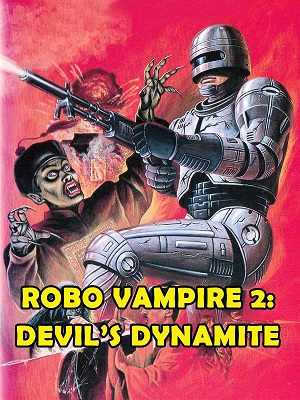
And then there are films that are impossible to describe because they don’t make any damn sense. These are films where the storyline is so nonsensical and the direction is so random and the editing is so ragged that it is essentially impossible to understand what’s going on from one scene to the next. That brings us to 1987’s Robo Vampire 2: Devil’s Dynamite.
And really, it shouldn’t be a surprise that Robo Vampire 2 is impossible to follow. It was directed by Godfrey Ho, the Hong Kong director who built a career out of his ability to build a brand new film out of stock footage and unused takes from other movies. If Robo Vampire 2 feels like it’s a dozen different films rolled into one, that’s probably because it actually is a dozen different films rolled into one.
As you can tell from the title (one of the many titles that the film was released under), this film was sold in a few territories as being a sequel to Robo Vampire. Robo Vampire 2: Devil’s Dynamite does feature a cop who wears a uniform that makes him look like a knock-off Robocop and it does feature vampires but otherwise, it has little in common with the first Robo Vampire. (Indeed the cop is actually referred to as being the Shadow Warrior, instead of a cyborg as was the hero of Robo Vampire.) Robo Vampire 2 deals with the plans of Madame Mary (Angela Mao), who is concerned that her criminal empire will be taken down by a combination of the cops and a rival gangster named Steve (Tsung Hua). Madame Mary employs a monk who creates an army of vampires. When the vampires go on a rampage, killing cops and threatening random children, Alex (Lin Yun) turns into Shadow Warrior and fights them off.
Interestingly, no one is surprised to see the Shadow Warrior, so I guess he’s a pretty well-known figure. But it’s never really clear whether everyone also knows that Alex is the Shadow Warrior nor is it ever that clear just how exactly Alex became the Shadow Warrior in the first place. (The film’s title would seem to suggest that Alex is the meant to be the same hero from the first Robo Vampire but the hero from the first Robo Vampire was a cyborg whereas Alex is not.) Even more surprisingly, no one is shocked by the sudden appearance of the vampires so I guess vampire attacks are a common thing in the world of Robo Vampire 2. Why would Hong Kong’s biggest crime lord need to create any army of vampires in the first place? The film never quite says.
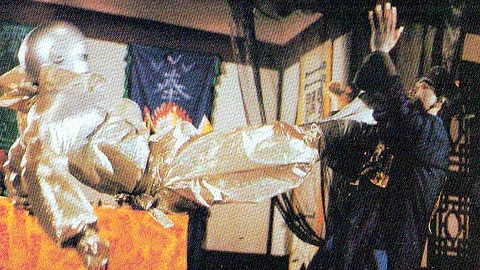
That said, there are a few entertaining fights. Even better, the vampires hop from place to place and they usually have their arms extended in front of them, like kids pretending to be zombies. That’s actually kind of fun to watch. If you’re going to unleash any army of vampires on a town, at least make sure they hop.
The Texas Chainsaw Massacre (1974, dir by Tobe Hooper, DP: Daniel Pearl)
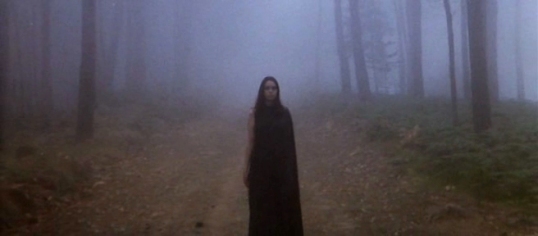
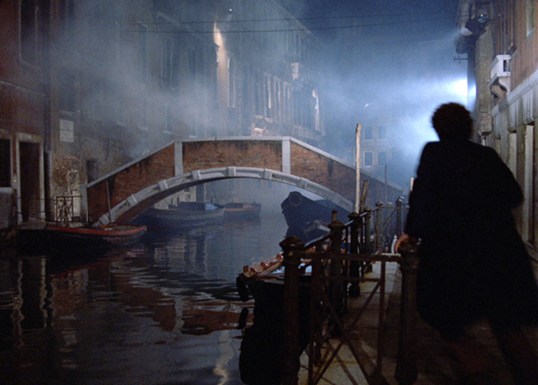
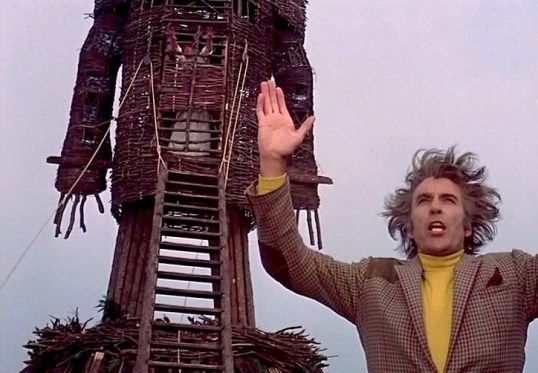
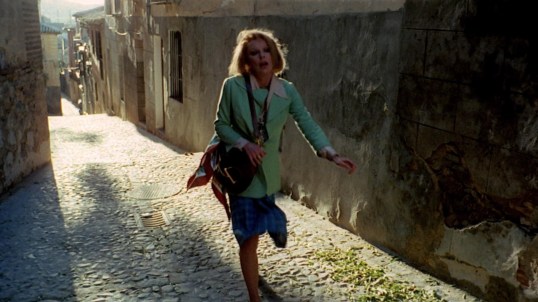
4 Or More Shots From 4 Or More Films is just what it says it is, 4 shots from 4 of our favorite films. As opposed to the reviews and recaps that we usually post, 4 Shots From 4 Films lets the visuals do the talking!
This October, I’m going to be doing something a little bit different with my contribution to 4 (or more) Shots From 4 (or more) Films. I’m going to be taking a little chronological tour of the history of horror cinema, moving from decade to decade.
Today, we take a look at two very important years: 1973 and 1974!
10 Shots From 10 Horror Films: 1973 and 1974
Female Vampire (1973, dir by Jess Franco, DP: Jess Franco)
Don’t Look Now (1973, dir by Nicolas Roeg, DP: Anthony Richmond)
The Wicker Man (1973, dir by Robin Hardy. DP: Harry Waxman)
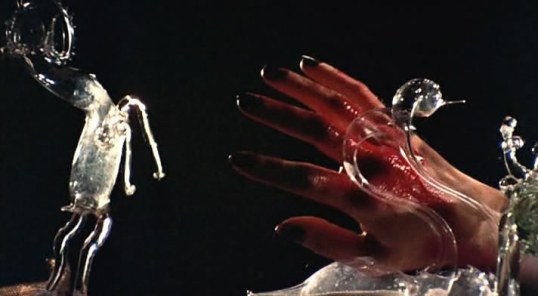
Lisa and the Devil (1973, dir by Mario Bava, DP: Cecilio Paniagua)
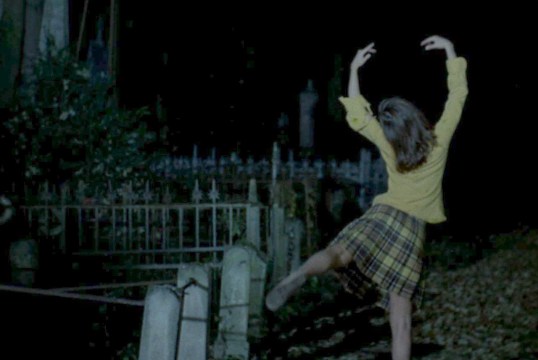
The Iron Rose (1973, dir by Jean Rollin)
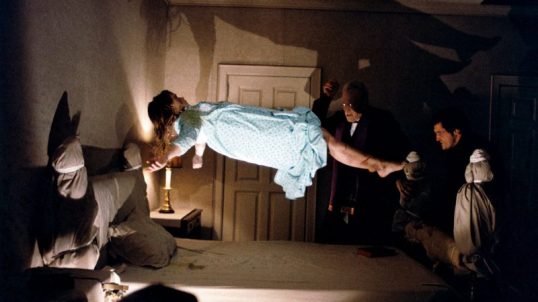
The Exorcist (1973, dir by William Friedkin, DP: Owen Roizman)
Black Christmas (1974, dir by Bob Clark, DP: Reginald H. Morris)
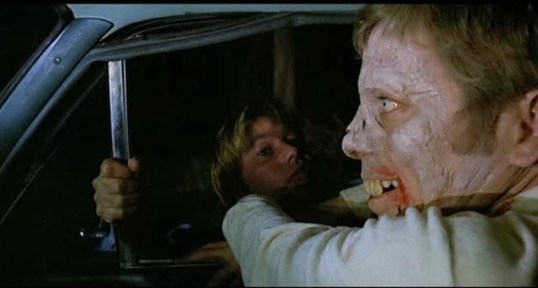
Deathdream (1974, dir by Bob Clark, DP: Jack McGowan)
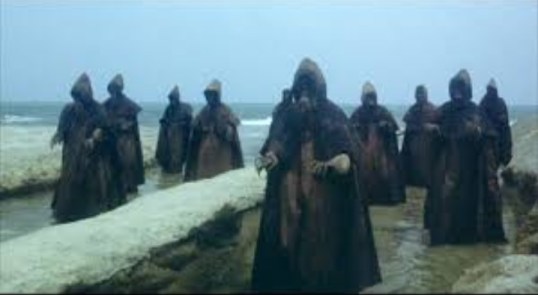
The Ghost Galleon (1974, dir by Armando de Ossorio, DP: Raul Artigut)
The Texas Chainsaw Massacre (dir by Tobe Hooper, DP: Daniel Pearl)



 Through the Shattered Lens