4 Shots From 4 Horror Films: Special Curtis Harrington Edition


4 (or more) Shots From 4 (or more) Films is just what it says it is, 4 (or more) shots from 4 (or more) of our favorite films. As opposed to the reviews and recaps that we usually post, 4 (or more) Shots From 4 (or more) Films lets the visuals do the talking

Today, we pay tribute to experimental surrealist and horror director, Curtis Harrington!  It’s time for….

4 Shots from 4 Curtis Harrington Films

Night Tide (1961, dir by Curtis Harrington, DP: Vilis Lapenieks)

Queen of Blood (1966, dir by Curtis Harrington, DP: Vilis Lapenieks)

The Killing Kind (1973, dir by Curtis Harrington, DP: Mario Tosi)

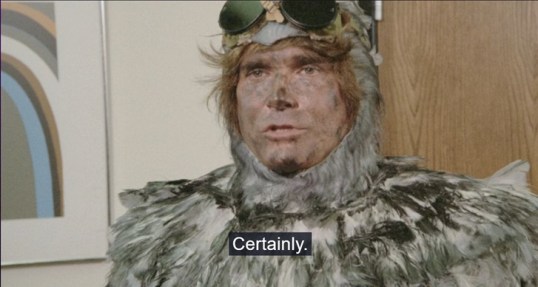
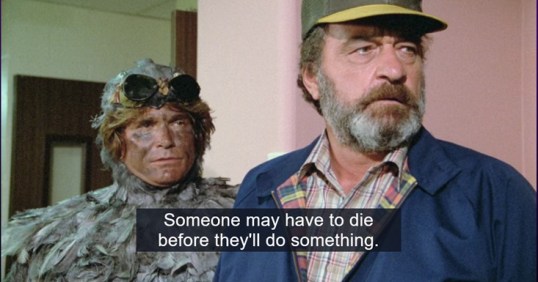
The Dead Don’t Die (1975, dir by Curtis Harrington DP: James Crabe)

Horror Movie Review: When A Stranger Calls Back (dir by Fred Walton)


The 1993 film, When A Stranger Calls Back, opens with the recreation of an urban legend.

A teenager babysitter named Julia Jenz (Jill Schoelen) arrives at a big suburban house for a routine baby-sitting gig.  The two children are already asleep in bed.  All Julia has to do is sent in the living room and do her homework until the parents return from their party.  Julia settles in.  She gets one mysterious phone call but hangs up.

Then, someone knocks on the door.

The man on the other side of the door explains that his car has broken down and he asks if he can come inside to call his auto club.  (This is one of those films that could have only worked in the age of landline phones.)  Julia doesn’t want to let the man into the house but the man is insistent that he needs Julia’s help.  Finally, Julia says that she’ll call the auto club for him but, when she goes to the phone, she finds that the line is dead.  Rather than tell the man the truth, Julia lies to him and says that she called the auto club.  The man thanks Julia and says that he’s returning to his car.

(What is an auto club?)

Eventually, the man returns, knocking on the door and asking if Julia really called the auto club.  Julia continues to lie, even as the man becomes increasingly belligerent.  What Julia doesn’t know but soon discovers is that the man is not outside talking to her but he’s actually inside of the house.  And he’s abducted the children!

The opening scene, which of course harkens back to the original When A Stranger Calls, is a genuinely well-done and suspenseful sequence.  Again, much like as if with the first film, the opening of When A Stranger Calls Back is so strong that the rest of the film can’t really keep up.

When A Stranger Calls Back is indeed a sequel to When A Stranger Calls, which means that, after Julia’s terrifying night of babysitting, the film jumps forward five years.  The children are never found and the man who knocked on the door is never identified.  Julia is now a college student but she’s still traumatized by the night and has a difficult time trusting anyone.  When she starts to suspect that someone has been in her apartment, she turns to Jill Johnson (Carol Kane), who is a counselor at the college and also the protagonist from When A Stranger Calls.  Jill helps Julie out, teaching her how to shoot a gun and also calling in the man who killed her stalker, John Clifford (Charles Durning).  Clifford figures out that Julia’s stalker is probably a ventriloquist.  Personally, I think the film made a huge mistake by making the stalker a ventriloquist instead of the ventriloquist’s dummy.

Despite strong performances from Carol Kane, Charles Durning, and Jill Schoelen, When A Stranger Calls Back suffers from the same problem as When A Stranger Calls.  After a scary and effective opening sequence, the rest of the film just feels like a letdown.  The killer in When A Stranger Calls Back is not quite as wimpy as the phlegmatic British guy from the first When A Stranger Calls but still, how intimidated can you be by a ventriloquist?  An even bigger problem is that When A Stranger Calls Back cheats at the end, suddenly revealing that a character who we had every reason to believe to be dead is actually alive.  It feels a bit as cop out on the part of the film, an attempt to slap an improbable happy ending on a film that would otherwise be pretty dark.

These films make me happy that I was never responsible enough to be a babysitter.

Horror Film Review: Monster From The Ocean Floor (dir by Wyott Ordung)


Are you ready to go in the water?

That’s the question asked by the 1954 film, Monster From The Ocean Floor.  Taking place in a Mexican fishing village and artist’s colony, Monster From The Ocean Floor features a lot of underwater action.  It also features a monster who lives on the ocean floor and who has been terrorizing fisherman, swimmers, and divers.  Unfortunately, despite being featured in the title, there’s not really much of the Monster in this film.  It takes a while for the Monster to even be acknowledged and, when the Monster finally does show up, it’s over all too quickly.  I guess we shouldn’t be too surprised by any of that, seeing as how this is a 1950s Roger Corman production that was apparently made on a budget of $20,000.  Producer Corman and director Wyott Ordung had to choose between devoting screen time to a potentially expensive monster or to a one-man submarine that they could use for free as long as they listed the submarine’s manufacturer in the opening and end credits.  They went with the submarine.

In fact, the submarine was apparently the main reason that Corman decided to make this film, his first as a producer.  He read an article about it in the Los Angeles Times and decided that it sounded like the perfect thing to feature in a movie.  In what would become typical Corman fashion, Corman got the submarine first and then built a movie around it.

As for the movie, it features Stuart Wade as Steve Dunning, the hunky Marine biologist who loves the ocean and frequently pilots the submarine.  When Steve and his submarine first emerge from the ocean, they briefly frighten Julie Blair (Anne Kimbell), an artist who is at the village in search for inspiration.  Later, when Julie actually does briefly see the monster rising from the ocean, Steve and Dr. Baldwin (Dick Pinner) theorize that the Monster From The Ocean Floor is actually a prehistoric creature that was in a Cthulhu-like slumber until it was reawakened by atomic bomb testing on the nearby Bikini Islands.

The people at the village don’t really care where the Monster came from or what the Monster might mean for the cause of science.  They just want the Monster go away so that they continue their lives in peace.  Pablo (played by the film’s director, Wyott Ordung) and Tula (Inez Palange) think that the solution might be a human sacrifice and they make plans to summon a shark to eat the diving Julie.  Agck!

As I mentioned earlier, this film was Roger Corman’s debut as a producer.  Corman was only 25 at the time and he didn’t direct the film but still, everything about Monster From The Ocean Floor — from the low budget to the casting of Jonathan Haze (and Corman himself!) in a small role — easily identifies this as being a Corman film.  It has its fun moments and, for a 1954 film, Anne Kimbell’s Julie Blair is a refreshingly independent and liberated character.  Unfortunately, the overall film is a bit slow and it does seem to take forever for the monster to actually show up.

Ultimately, Monster From The Ocean Floor‘s main importance is as a piece of B-movie history.  With this movie, the glorious filmmaking career of Roger Corman began.

Live Tweet Alert: Watch The Torture Chamber of Dr. Sadism With #ScarySocial!


As some of our regular readers undoubtedly know, I am involved in a few weekly live tweets on twitter.  I host #FridayNightFlix every Friday, I co-host #ScarySocial on Saturday, and I am one of the five hosts of #MondayActionMovie!  Every week, we get together.  We watch a movie.  We tweet our way through it.

Tonight, for #ScarySocial, I will be hosting 1969’s The Torture Chamber of Dr. Sadism!  I can’t wait to watch Christopher Lee in this film with everyone!

If you want to join us on Saturday night, just hop onto twitter, start the film at 9 pm et, and use the #ScarySocial hashtag!  The film is available on Prime and Tubi.  I’ll be there co-hosting and I imagine some other members of the TSL Crew will be there as well.  It’s a friendly group and welcoming of newcomers so don’t be shy.

Horror on the Lens: The Terror (dir by Roger Corman, Francis Ford Coppola, Jack Hill, Monte Hellman, Dennis Jakob, and Jack Nicholson)


Have you ever woken up and thought to yourself, “I’d love to see a movie where a youngish Jack Nicholson played a French soldier who, while searching for a mysterious woman, comes across a castle that’s inhabited by both Dick Miller and Boris Karloff?”

Of course you have!  Who hasn’t?

Well, fortunately, it’s YouTube to the rescue.  In Roger Corman’s 1963 film The Terror, Jack Nicholson is the least believable 19th century French soldier ever.  However, it’s still interesting to watch him before he became a cinematic icon.  (Judging from his performance here and in Cry Baby Killer, Jack was not a natural-born actor.)  Boris Karloff is, as usual, great and familiar Corman actor Dick Miller gets a much larger role than usual.  Pay attention to the actress playing the mysterious woman.  That’s Sandra Knight who, at the time of filming, was married to Jack Nicholson.

Reportedly, The Terror was one of those films that Corman made because he still had the sets from his much more acclaimed film version of The Raven.  The script was never finished, the story was made up as filming moved alone, and no less than five directors shot different parts of this 81 minute movie.  Among the directors: Roger Corman, Jack Hill, Monte Hellman, Francis Ford Coppola, and even Jack Nicholson himself!  Perhaps not surprisingly, the final film is a total mess but it does have some historical value.

(In typical Corman fashion, scenes from The Terror were later used in the 1968 film, Targets.)

Check out The Terror below!

October Positivity: The 3 (dir by Chip Rossetti)


You don’t have to be a gun control fanatic to be horrified by the school shootings that seem to be a regular occurrence nowadays.

I mean, the thing with school is that, at a certain age, you’re pretty much forced to be there.  If you skip school, you could potentially get into a lot of trouble and, depending on where you live, your parents could get in a lot of trouble as well.  You’re not really given a choice about going to school so it’s not unreasonable to feel that you should at least be able to go to school without feeling like you’re going to die as a result.  Instead, children are now regularly subjected to active shooter drills and encouraged to snitch on any classmates who seem to be troubled.  Many are expected to start each day stepping through metal detectors while being eyeballed by security guards.  While I support the second amendment, I’m not particularly a huge fan of the idea of teachers being told to come to school armed so they can gun down any potential threats.  (Then again, when we have cops like the cowards in Uvalde, what choice do people have than to arm themselves?)  School shootings are a terrifying thing but what is even more terrifying is that people are starting to get used to type this violence.  It’s no longer an automatic shock to hear that there’s been a shooting at a school.  Often times, the incidents are in and out of the news within days.

2019’s The 3 is a film that deals with the aftermath of a school shooting.  One day, divorced dad Jimmy Collins (Jeff Armstrong) sends his daughter, Brittany (Kate Kilcoyne), out of the house and to school.  He barely even says goodbye to her.  A few hours later, Jimmy gets a call from ex-wife, Susan (Jessica Bell).  Jimmy thinks that Susan is calling to yell at him about a late alimony check but instead, she tells him to turn on the news.  There’s been a shooting at the school and, as we soon learn, Brittany is dead.

After the funeral, Jimmy wants to lock himself away from the world and basically drink himself into unconsciousness.  (He refuses the comfort of the local pastor, despite the fact that the pastor’s wife is played by Tina Wesson, the winner of the second season of Survivor.)  Instead, Jimmy is visited by three spirits.  The first spirit is Jimmy’s Dad (Darryl Worley), who talks about the events that led to him committing suicide and who essentially dares Jimmy to follow the same path.  The third spirit is …. well, he doesn’t give his name but the fact that he’s played by Jefferson Moore, the star of the Perfect Stranger series, should give the audience a clue as to who he is.  And, appearing in between these two, is Brittany.  Brittany talks about her short life and shares memories, both good and bad, with her father.  She also tells her father that he has to let go of her but, of course, neither Jimmy nor Susan can bring themselves to do that.

It’s a well-acted and effective film.  It’s certainly far more sensitive than you might expect from a film directed by the same guy who did Right to Believe.  It’s a film that explores the horror of everyday violence and which makes its theological case without coming across as being overly preachy.  That said, the film cheats a bit at the end, giving Jimmy an opportunity that doesn’t quite seem to go along with the film’s theme.  It allows the film to have a happy ending but it still feels a bit like a cop out.  That said, though, The 3 turned out to be far better than I was expecting.

Late Night Retro Television Reviews: Friday the 13th 1.3 “Cupid’s Quiver”


Welcome to Late Night Retro Television Reviews, a new feature where we review some of our favorite and least favorite shows of the past! On Fridays, I will be reviewing Friday the 13th, a show which ran in syndication from 1988 to 1990.  The show can be found on YouTube!

Tonight’s episode is directed by a future Oscar nominee and a multiple Genie winner!

Episode 1.3 “Cupid’s Quiver”

(Dir by Atom Egoyan, originally aired on October 12th, 1987)

This week’s cursed antique is a statue of Cupid that shoots neon arrows at women and causes those targeted to fall madly in love with the statue’s owner.  Unfortunately, the curse kicks in when the owner of the statue is then forced to murder the woman who is now in love with him.  Yikes!  What a mean statue.

When we first see the statue, it belongs to a frat boy who uses the statue at a club.  After the frat boy is arrested for murder, possession of the statue falls to a total loser named Eddie Monroe (Denis Forest).  Eddie is a janitor and groundskeeper at a local college.  He’s the type of guy who hardly anyone ever notices and even those who do notice him think that he is a complete creep.  Eddie is obsessed with a student named Laurie Warren (Carolyn Dunn), following her around campus and taking pictures of her.  He’s even built an elaborate shrine to her in his apartment, one where he’s cut the heads off of the people that Carolyn was with and replaced them with his own head.  (Double yikes!)  Laurie, of course, wants nothing to do with Eddie.

Could Eddie’s new statue help him out?  He hopes so and he even takes it to the club to test it on someone else beforehand.  Eddie is determined to force Carolyn to love him, even if he’ll be required to kill her almost immediately afterwards.  Fortunately, Ryan, Jack, and Micki are on campus, searching for the statue.

This episode is often cited as one of the best of the show’s run, largely because it was directed by a future Oscar nominee, Atom Egoyan.  (Amongst Egoyan’s films: Exotica, The Sweet Hereafter, Felicia’s Journey and Where The Truth Lies.)  It’s certainly not a bad episode, as Egoyan approaches the storyline with a sense of humor.  The scenes of the frat boy and then Eddie wandering around with their cupid statue are more than a little silly and Egoyan seems to understand that.  He does a good job contrasting the ludicrousness of the statue with the seriousness of the consequences of using it.  The ultimate message is that both the statue and the men who carry it with them are more dangerous than they look.

I also enjoyed the scenes in which Ryan and a far more reluctant Micki went to a frat house to search for the statue.  The frat house is a stereotypical den of debauchery, full of empty beers can and a black bra hanging from a ceiling fan.  Ryan, not surprisingly, is right at home.  Micki cannot wait to escape and I have to say that, as often happens when I watched episodes of this show, I definitely related to Micki.  Watching Ryan and Micki wander through various frat parties in search of Eddie and his statue, I had to ask myself which is worse, a cursed antique or a fraternity?

Horror on TV: The Hitchhiker 5.23 “Dying Generation” (dir by Timothy Bond)


Tonight’s episode of The Hitchhiker features Roberta Maxwell as a fortune teller who, for five bucks, gives her clients a vision of the future and, as we all know, no one gets a happy ending.  Maybe that’s why so many of her teenage clients end up committing suicide.  Greg Spottiswood and Cynthia Preston play the two teens who decide to investigate how the fortune teller is involved in their friends death.  This is an intriguing episode, featuring a good performance from Roberta Maxwell.

This episode originally aired on November 24th, 1989.

October Hacks: Intruder (dir by Scott Spiegel)


The 1989 film, Intruder, is often advertised as being a Bruce Campbell film but Bruce only appears in the final few minutes.  I’m pointing this out because Bruce himself has criticized, in the past, the way that some distributors have used his name to promote Intruder and to fool potential viewers into thinking that Intruder features Ash or takes place S-Mart.  Bruce Campbell’s chin-tastic profile is put to good use as a police officer who shows up at the scene of a very bloody crime but Intruder is hardly a Bruce Campbell movie.

What is Bruce doing in Intruder?  It probably has something to do with the fact that Intruder was the directorial debut of Scott Spiegel, who co-wrote the script for Evil Dead II and who was a good friend of Sam Raimi’s.  (That probably also explains the presence of Ted Raimi in a tiny role and Sam Raimi himself in a bigger role.)

That said, if you’re looking for a good and suspenseful slasher film to watch as Halloween approaches, you could certainly do worse than Intruder.  Bruce Campbell may only appear in a cameo but the film itself is good enough that you’ll enjoy it while waiting for Bruce to make his appearance.

The film takes over the course of the night shift at a large but financially struggling grocery store.  When cashier Jennifer Ross (Elizabeth Cox) is harassed by her ex-con boyfriend, Craig (David Byrnes), the entire night crew comes together to protect her and to chase Craig out of the store.  The police are called but, when they finally do arrive at the store, they reveal that there’s not much they can do.  With Craig still making angry phone calls to the store, the crew prepares for the next day of business.  The store’s owners hold a store meeting and, after announcing how proud they are of the way the night crew handled the Craig situation, they announce that the store will be closing and soon, everyone will be out of a job.

No one is happy about that, with co-owner Bill (Dan Hicks) rather pathetically saying that the store was his entire life.  That said, it doesn’t seem like anyone at the store is going to have much of a life left because someone is determined to kill the entire night crew before the sun comes up.  Soon, the employees are dying in various bloody ways (and I do mean bloody!) and the storeroom is full of body parts.  Has Craig returned?  Could it be the butcher, played by Sam Raimi?  Could it be one the owners?  Or could it be some random intruder?  Watch the film to find out.

Intruder is an effective slasher film, one that is fortunate to have an above average cast (with Elizabeth Cox especially giving a good performance), memorable characters who have a bit more depth than the jocks and cheerleaders who usually populate films like this, and an interesting location in the form of the dark and shadow-filled grocery store.  Intruder also had a lot of very graphic horror.  The gore effects were provided by the same people who would later work on The Walking Dead and I have to say that even I, being the Italian horror fan that I am, was a bit shocked by just how much blood ended up flowing down the aisles.  If you’re scared of trash compactors, this film isn’t going to do anything to make you feel better about them.

Intruder is a superior slasher film.  And hey …. Bruce Campbell’s in it for a minute!

The TSL Horror Grindhouse: Indecent Desires (dir by Doris Wishman)


An odd film, 1968’s Indecent Desires.

Directed by Doris Wishman, Indecent Desires tells the story of two people and a doll.  Zeb (Michael Alaimo) is a pervy loser who is obsessed with Ann (Sharon Kent), the young secretary that he often sees while she’s on the way too work.  Ann is a painfully normal (some might say boring) person, with an office job, a super dull boyfriend named Tom (Trom Little), and a wild best friend named Babs (Jackie Richards).  Babs is the type who comes into the office and announces that she met a superfab guy the previous night, a guy named Monty who is “so continental.”  Ann is the type who replies that she doesn’t trust anyone named Monty nor anyone who is continental.

(Like what the heck does that even mean?)

One day, pervy Zeb discovers a doll in a trash can and he takes it home with him.  The doll bears a superficial resemblance to Ann, in that they’re both blonde.  Whenever Zeb caresses the doll, Ann feels it.  Whenever Zeb gets upset and slaps the doll, Ann feels it.  When Zeb undresses the doll, Ann undresses.  When Zeb discovers that Ann has a boyfriend, Ann feels Zeb’s anger.

YIKES!

It’s kept ambiguous as to whether or not Zeb knows that Ann can feel what he’s doing with the doll.  There’s an odd scene where Zeb sees Ann on the street and she briefly turns into a giant version of the doll.  It’s totally possible that Zeb is using the doll as his way to pretend to possess someone who he knows that he’ll never have the courage to actually approach.  That adds a haunting ambiguity to the film’s final scene, as we’re left to wonder whether Zeb truly understands the consequences of his actions.

It’s tempting — perhaps a bit too tempting — to find a subversive subtext to the film’s exploitive story.  Zeb may be obsessed with Ann but she barely notices him in the film.  She doesn’t know that he exists but it’s not because she’s self-absorbed.  She just has a life of her own with a career of her own and a boyfriend of her own and Zeb is not a part of her life.  For Zeb, though, obsessing on Ann is his entire life and he is outraged that she doesn’t even know him.  Fueled by misogyny and a sense of entitlement, Zeb uses the doll to exert his control over Ann and to finally keep her from being with anyone but him.  Zeb can’t talk to a real woman but he can totally have a relationship with a plastic doll that has no opinions and, even more importantly, never changes or develops in any way.  Of course, it’s debatable whether this subtext was deliberate or accidental.  Sometimes, the rushed nature of the exploitation film basis led to some of the most subversive statements of all.

This film was directed Doris Wishman, who was the busiest female director of the sound era and, as a woman who made sexploitation films, a true groundbreaker.  Clocking in at barely 75 minutes, Indecent Desires is definitely a Wishman film, from the stark black-and-white cinematography to the often skewed camera angles.  There’s very little dialogue and what there is was obviously dubbed.  There’s no ambient noise to be heard, giving the film a surreal and dream-like feel even before Zeb grabs the doll.

Indecent Desires is effective, low-budget paranoia fuel.  It’s a film that will leave you to wonder who has been watching you and how many “dolls” they’ve collected.