Lisa Marie Reviews An Oscar Winner: Platoon (dir by Oliver Stone)


One of my favorite scenes from TV’s King of the Hill occurs in an episode in which Hank and Peggy are celebrating their wedding anniversary.  They’ve sent Bobby and Luanne away for the weekend.  They have the house to themselves but, after their anniversary party, Peggy is feeling depressed.  She tells Hank that, for the first time ever, she feels old and she regrets all the dreams that she had that have yet to come true, like inventing and selling her own barbecue sauce.

Trying to cheer her up, Hank says, “C’mon, Peg.  We got the house to ourselves for weekend …. and I rented an R-rated movie!”

Peggy looks up, briefly hopeful that Hank did something romantic.  “What movie?” she asks.

Hank hesitates, glances down at the floor, and says, “Uhmm …. Platoon.”

It’s funny because it’s true.  Just about every man that I know loves Platoon.  First released in 1986 and reportedly based on Oliver Stone’s own experiences as an infantryman in Vietnam, Platoon is often cited as being one of the greatest war films ever made.  Oddly enough, the film has an anti-war and anti-military message but, in my experience, those who love it talk more about the battle scenes than any message that Stone may have been trying to impart about the futility of war.  Pauline Kael once wrote that Oliver Stone had left-wing politics but a right-wing sensibility and I think you can definitely see that in Platoon.  Despite all of the characters talking about how pointless the war is and how much they resent being forced to risk their lives for no apparent purpose, the film’s energy comes from the scenes of Chris Taylor (Charlie Sheen) stalking through the jungle and, towards the end, losing his mind and giving himself completely over to the adrenaline that comes from being trapped in the middle of a battle.  Throughout the film, we hear Taylor’s rather pedantic thoughts on the military and his fellow soldiers but it’s hard not to notice that his actions and his dialogue are usually far less eloquent.  Taylor may be a rich intellectual (and wow, is Charlie Sheen ever unconvincing when it comes to portraying that part of Taylor’s personality) but when he’s in the jungle, he’s just fighting for survival.

The film’s plot centers around the conflict between two sergeants, the peace-loving Elias (Willem DaFoe) and the war-loving Barnes (Tom Berenger).  Taylor has to decide which one of the two to follow.  The pot-smoking Elias loves his men and goes out of his way to protect them.  The beer-drinking Barnes has a much harsher view of the world but, at the same time, he’s the type of scarred warrior who seems immortal.  One gets the feeling that he’ll never be defeated.  The rest of the platoon is full of familiar faces, with everyone from John C. McGinley to Francesco Quinn to Tony Todd to Forest Whitaker to Johnny Depp to a baby-faced Kevin Dillon showing up.  (Dillon is especially frightening as a psycho who has, for some reason, been nicknamed Bunny.)  The majority of the platoon is dead by the end of the film.  Even with the leadership of Elias and Barnes, the soldiers are stuck in a winless situation.  As Taylor points out, the Americans aren’t just fighting the enemy.  They’re also fighting each other.

Platoon is certainly not my favorite of the film nominated in 1986.  I would have gone with A Room With A View.  (Blue Velvet, which is as influential a film as Platoon, was not even nominated.)  That said, I can’t deny the power of Platoon‘s combat scenes.  Though Stone’s script is didactic and Taylor’s narration is awkwardly deployed throughout the film, Stone’s direction definitely captures the fear and dread of being in a strange place with no idea of whether or not you’re going to survive.  Stone is critical of the military (at one point, an officer calls an air strike on his own men) but seems to love the soldiers, even the ones who have pushed over to the dark side.

Platoon was not the first Best Picture nominee to be made about the Vietnam War.  The Deer Hunter, Coming Home, and Apocalypse Now were all released first.  But both The Deer Hunter and Apocalypse Now are surreal epics that seem to take place in a dream world.  Coming Home, which has a script that somehow manages to be even more didactic than Platoon‘s, focuses on the war back home.  Platoon is far more gritty and personal film.  Watching Platoon, you can smell the gunpowder and the napalm and feel the humidity of the jungle.  I can understand why it won, even if I prefer to watch Helena Bonham Carter and Julian Sands fall in love.
Retro Television Review: St. Elsewhere 1.9 “Rain”


Welcome to Retro Television Reviews, a feature where we review some of our favorite and least favorite shows of the past! On Fridays, I will be reviewing St. Elsewhere, a medical show which ran on NBC from 1982 to 1988.  The show can be found on Hulu and, for purchase, on Prime!

This week, a famous face shows up in the ER!

Episode 1.9 “Rain”

(Dir by Victor Hsu, originally aired on January 3rd, 1983)

Last night, after writing my review of Goodfellas, I watched the ninth episode of St. Elsewhere and there was Ray Liotta!

Liotta played Murray, a young man who came into the ER with a deep cut on his back.  Orderly Luther took one look at him and decided that he was a member of the same gang who mugged Fiscus a few episodes ago.  Luther then told Fiscus right before Fiscus was due to stitch Murray up.  Murray was indeed rude but Fiscus wasn’t particularly polite to him.  Fiscus didn’t stich up Murray’s wound but he did pull his gun on him.  Murray fled the ER and, after knocking over several doctors who were in his way, he jumped out of a window and escaped from St. Eligius.

As for Fiscus, he got a stern talking to from Dr. Westphall.  Westphall ordered Fiscus to get rid of the gun and told him that if he ever brought a weapon to work again, his residency would come to an end.  Fiscus agreed to not bring the gun to the ER anymore but he later told Dr. Chandler that he was terrified for his life.  I’ve been critical of Howie Mandel’s performance on this show but he actually did a pretty good job in this episode.  He was able to hold his own while sharing the screen with Denzel Washington.  That’s quite an accomplishment.

While Dr. Westphall yelled at Fiscus, Dr. Craig yelled at Ehrlich for spraining his pinkie while playing handball.  Dr. Craig demands to know how Ehrlich will ever make it as a surgeon if he doesn’t protect his hands.  Ehrlich spends the entire day trying to protect his hands and he continually fails.  (Ehrlich’s a bit of a klutz.)  Finally, Ehrlich storms into Craig’s office and interrupts a meeting to announce that he’s going to continue to play handball.  Craig shrugs and dismissively says, “He’s from California.”

As for the rest of this episode, it took place over one very long and rainy day.  Peter is still struggling as both a doctor and a husband.  When his daughter (a very young Candace Cameron Bure) was rushed to the hospital after eating mothballs, Peter blamed his wife and his wife blamed Peter.  Returning home from the hospital, Peter nearly hit his wife after she tossed his dinner on the floor.  It was scary to watch.  I’m getting a bad feeling about what’s going to happen with this marriage.

Dr. Morrison made the mistake of making a house call and soon, he discovered himself constantly being called by Mr. Lukovic (George Morfogen) whenever any of Lukovic’s neighbors were taken ill.  Morrison kept telling Lukovic to take his friends to the hospital but Lukovic talked about how, in the past, doctors would always make house calls.  When Morrison finally refused to go to Lukovic’s building, Lukovic brought his neighbor to the hospital.  The neighbor was in cardiac arrest but Morrison managed to get his heart beating again.  Rather than be thankful, Lukovic blamed Morrison for not responding to his call.  Morrison lost his temper and told Lukovic that he couldn’t keep living in the past.  “I will not call you again,” Lukovic replied.  Roll the end credits!

This was a pretty good episode, one that not only answered the question of why doctors don’t make housecalls but also which featured Ray Liotta being tough and dangerous.  There were a few annoying scenes involving the guy who thinks that he’s a bird but otherwise, this was a well-done and rainy hour.

The Films of 2024: Hit Man (dir by Richard Linklater)


Like Woman of the Hour, Hit Man is a Netflix film that was critically acclaimed when it was released but which didn’t get much of an Oscar push during Awards Season.

The majority of the film’s acclaim was for Glen Powell, who plays Gary Johnson.  Gary is a psychology professor at the University of New Orleans.  When we first see him, he’s not exactly the most dynamic professor on campus.  In fact, he’s so mild-mannered that most of his students would probably be stunned to learn that he has a side job working for the New Orleans Police Department.  He helps them set up sting operations, advising a cop named Jasper (Austin Amelio) on how to pretend to be a hit man.  Jasper, being kind of a douchebag, doesn’t really appreciate the advice.  However, when Jasper gets suspended for beating a suspect, Gary is quickly recruited to take Jasper’s place as the department’s fake killer.

To his surprise, Gary turns out to be very good at pretending to be a professional killer.  Using his academic skills, he gets a read on the person who wants to hire him and then he shapes his persona to appeal to that person’s needs.  The best part of the film are the montages where we see Gary taking on identity after identity.  Soon, Gary is the NPD’s best undercover cop, even if he’s technically not even a part of the force.  He even becomes a better psychology professor as pretending to be someone else allows him to loosen up in his real life as well.  But then he meets a woman (Adria Arjona) who wants to have her abusive husband killed.  For the first time, Gary tries to talk someone out of committing a murder.

And through it all, Glen Powell gives an excellent and charismatic performance as not only Gary but also all the different killers that he pretends to be.  If nothing else, this film proves that Glen Powell is not just a likable actor.  He’s a legitimate film star, capable of creating a believable character and getting the audience to care about what happens to him.  Powell gets good support from both Arjona and Austin Amelio and the various actors who pop up as people who want to hire a hit man all make a strong impression as well.  But, make no mistake about it, Hit Man is a showcase for Glen Powell.  Just as he did with Matthew McConaughey in Dazed and Confused, Richard Linklater introduces audiences to a film star in Hit Man.

That said, I have to admit that, outside of Powell’s performance, I was a little bit dissatisfied with the direction that Hit Man took its story.  There are eventually two actual murders in Hit Man.  One of the murders occurs offscreen and can at least be justified by what we know about the victim.  The other murder takes place onscreen and, even though the victim isn’t particularly likable, it still feels a bit drawn out and out-of-place in what had otherwise been a fairly breezy comedy.

Narrative flaws aside, Hit Man is worth seeing for Powell’s movie star performance.


Live Tweet Alert: Join #FridayNightFlix For Shattered Glass!


As some of our regular readers undoubtedly know, I am involved in a few weekly live tweets on Twitter and Mastodon.  I host #FridayNightFlix every Friday, I co-host #ScarySocial on Saturday, and I am one of the five hosts of #MondayActionMovie!  Every week, we get together.  We watch a movie.  We tweet our way through it.

Tonight, at 10 pm et, #FridayNightFlix presents one of my favorite movies, Shattered Glass!

If you want to join us this Friday, just hop onto twitter, start the movie at 10 pm et, and use the #FridayNightFlix hashtag!  It’s a friendly group and welcoming of newcomers so don’t be shy.

Shattered Glass is available on Prime and Pluto!  See you there!

Song of the Day: Animal House by Stephen Bishop


Since today is John Belushi’s birthday and I already shared a scene from Animal House, it only feels appropriate that today’s song of the day should come from the film as well.  From Stephen Bishop, here is …. ANIMAL HOUSE!

Let me t-t-tell you ’bout some friends I know
They’re kinda crazy but you’ll dig the show
They can party ’till the break of dawn
at Delta Chi you can’t go wrong

Otter, he’s the ladies man
Every girl falls into his hands
Boon and Katy playing “Cat and Mouse”
and Mrs. Wormer, she’s the queen of the

ANIMAL HOUSE

ANIMAL HOUSE

ANIMAL HOUSE

That Pinto he’s a real swell guy
Clorette was jailbait but he gave her a try
Chip, Doug, and Greg, they’re second to none
They studied under Attila the Hun

Mr. Jennings has got his wig on tight
Flounder’s left shoe’s always on his right
Babs and Mandy are having a pillow fight
With D-Day, Hoover, Otis Day and the Knights

DO THE BLUTO

Come on baby, dance with me
Maybe if we do the Bluto
We will get an “A” in lobotomy

DO THE BLUTO
DO THE BLUTO

DO THE BLUTO
DO THE BLUTO

Aw, come on!
Let me tell ya
Dean Wormer tried to shut us down
But he fell and he broke his crown
He didn’t know about the Delta spunk
He came in handy when we were short a skunk

At the

ANIMAL HOUSE

Songwriters: Stephen Bishop

4 Shots From 4 Films: Special Henry King Edition


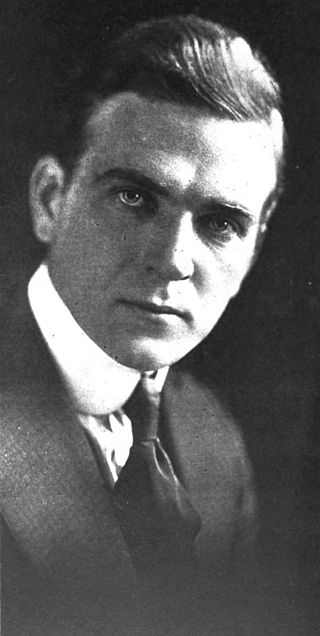
Henry King (1886 — 1982)

4 (or more) Shots From 4 (or more) Films is just what it says it is, 4 (or more) shots from 4 (or more) of our favorite films. As opposed to the reviews and recaps that we usually post, 4 (or more) Shots From 4 (or more) Films lets the visuals do the talking.

Henry King was born 139 years ago today.  He was born in Virginia and, though he may no longer be a household name, he was one of the busiest and most versatile directors of Hollywood’s Golden Age.  He began his career during the silent era, directing his first film in 1918.  He continued to work all the way through 1962, working in every genre and directing at least 8 Oscar-nominated performances.  He was also one of the founders of the Academy.  In short, Henry King was an important figure in the early years of Hollywood.  If you’ve ever studied classic film or just spent a weekend or two watching TCM, there’s a good chance that you’ve seen at least one Henry King film.

Like many of the top directors from Hollywood’s Golden Age, Henry King was prized for being a professional.  In the years when the studios ruled Hollywood and before directors became known as auteurs, King was someone who could be trusted to make an effective film with the minimum amount of behind-the-scene drama.  He was someone who could move from genre to genre and from theme to theme.  He was skilled at getting the best performances from his actors and he knew how to visually tell a story and keep the action moving.  He knew how to engage the audience and his best films hold up surprisingly well.

In honor of Henry King and his career and legacy, here are…

4 Shots From 4 Henry King Films

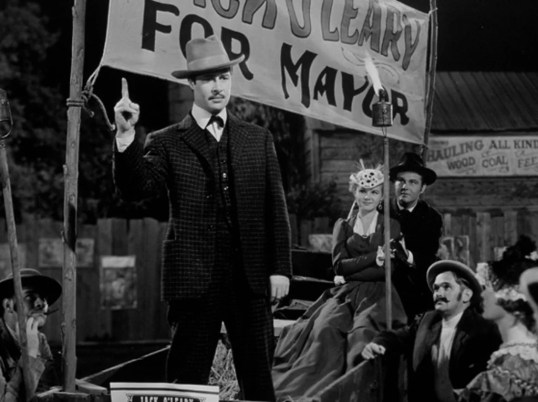
In Old Chicago (1938, dir by Henry King, DP: J. Peverell Marley)

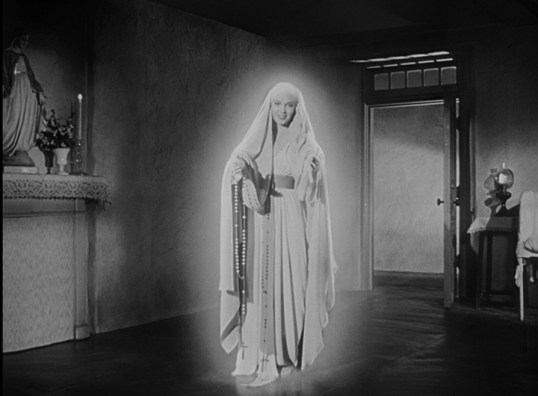
The Song of Bernadette (1943, dir by Henry King, DP: Arthur C. Miller)

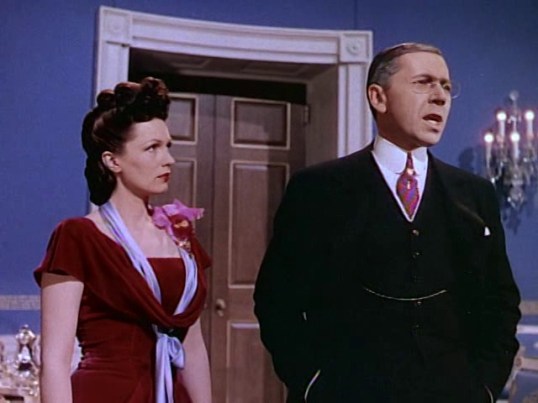
Wilson (1944, dir by Henry King, DP: Leon Shamroy)

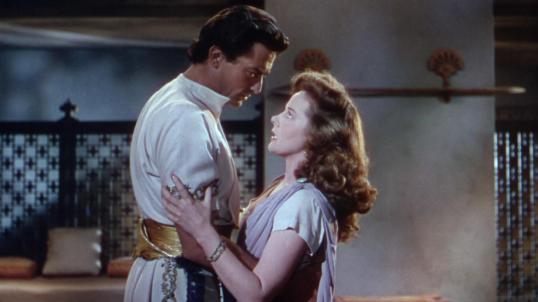
David and Bathsheba (1951, dir by Henry King. DP: Leon Shamroy)

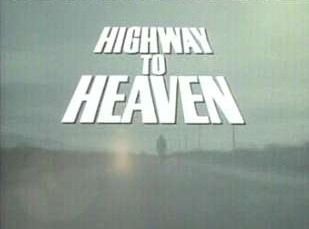
Late Night Retro Television Review: Highway to Heaven 3.10 “Man to Man”


Welcome to Late Night Retro Television Reviews, a feature where we review some of our favorite and least favorite shows of the past!  On Thursdays, I will be reviewing Highway to Heaven, which aired on NBC from 1984 to 1989.  The entire show is currently streaming on Tubi and several other services!

This week’s episode made me cry.

Episode 3.10 “Man to Man”

(Dir by Michael Landon, originally aired on November 26th, 1986)

As so often happens on this show, the episode begins with Mark visiting an old friend.  Luke Morgan (Joe Dorsey) grew up with Mark but, while Mark became a blue collar policeman, Luke went on to become a fabulously wealthy tycoon.  That actually seems a bit odd to me.  I mean, why has Mark never mentioned having a millionaire friend before?  All of the times that Jonathan and Mark have had to deal with other millionaires, Mark has always acted like he’s had no experience being around wealthy people.  Now, suddenly, we discover that Mark just happens to have a millionaire friend?

Anyway, Luke invites Jonathan and Mark to stay at his mansion and that’s a good thing because Luke is their mission for the week.  Luke devoted so much time to building up his business that he often wasn’t around when his son, Gary (Lee Montgomery, the kid who got crushed by the chimney in Burnt Offerings), was growing up.  Now Gary is in his twenties and his relationship with his father is strained.  Gary spends all of time lifting weights and working with his computers.  Luke wants to take a road trip with Gary but Gary refuses.  Mark makes a bet with Gary.  If Mark can lift more weight than Gary, Gary will go on the trip.  Jonathan temporarily gives Mark “the stuff.”  Mark wins the bet.  Gary goes on the trip!

Luke, it turns out, is dying.  He has Leukemia and he doesn’t have much time left.  He wants to patch things up with his son before he dies but he doesn’t want Gary to know that he’s dying.  Mark, realizing that Gary needs to know, tells Gary anyway.  Gary accuses Mark of lying but then he realizes that his father actually is dying.  Gary stops being a brat and he and his father enjoy their last road trip together.  Eventually, Gary reveals that he knows the truth.  He knows that Luke is dying.  Gary finally says that he loves his father and Luke says the loves his child.

And that’s pretty much the episode!  This was a pretty simple episode but it still made me cry.  It makes me think about all the people in my life who have passed on.  Every moment that you have with someone is precious and I think that people tend to take those moments for granted.  You never know when someone could get into a wreck while trying to drive home from the store.  I know when my Dad was in his car accident last May, I never expected him to die in August.  I’d give anything to have those final moments back.

This episode is sentimental and earnest and heavy-handed but it is also an example of what Highway to Heaven does so well.


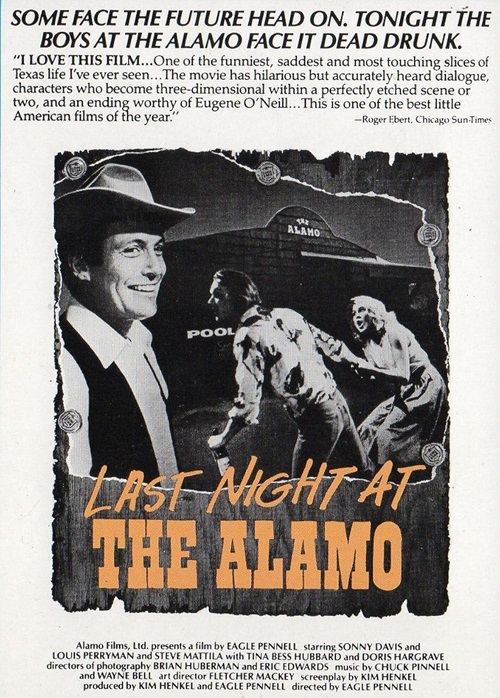
Ghosts of Sundance Past: Last Night At The Alamo (dir by Eagle Pennell)


The Sundance Film Festival is currently underway in Utah.  For the next few days, I’ll be taking a look at some of the films that have previously won awards at Sundance.

1983’s Last Night At The Alamo is the epitome of an indie film.  Filmed in black-and-white and populated with performers who possess a raw authenticity, Last Night of the Alamo takes place over the course of one long day and night.

A seedy Houston bar known as The Alamo is set to close down and the regulars come by for their final drinks.  It’s definitely a blue collar bar, a place where the conversations are loud and it seems like there’s always a possibility that a fight could break out at any minute.  Claude (Lou Perryman) shows up after getting kicked out by his wife and spends a good deal of the movie yelling and cursing into a telephone.  Ichabod (Steve Mattila), a young exterminator, spends almost the entire movie arguing with his girlfriend, Mary (Tina-Bess Hubbard).  Steve (J. Michael Hammond) is an adult who still has the personality of a high school bully.  For all the arguing and the taunting and the cursing that one hears over the course of the film, it’s also obvious that the regulars at the Alamo have formed a community of sorts.  No one is surprised when Claude starts yelling into the telephone.  That’s just Claude being Claude and he’s allowed to have his breakdown in peace.  As long as he doesn’t interrupt anyone else’s drinking, he’ll be tolerated.  It’s a very Texas attitude but then again, Last Night At The Alamo is a very Texas film.

It was written by Kim Henkel, who is probably best-known for writing the screenplay for the original Texas Chainsaw Massacre.  (Henkel also appears in the film.)  Director Eagle Pennell was one of the pioneers of the Texas film scene, making independent films about life in his home state.  (Robert Redford has said that one of the main reasons he started the Sundance Film Festival was because he was impressed with Pennell’s films and wanted to create something that would bring attention to indie filmmakers like Pennell.)  Much like many of the characters in Last Night At The Alamo, Pennell struggled with alcoholism and his promising career fizzled out as a result.  He died at the age of 49.  Legend has it that, shortly before his death, he was seen standing on a Houston streetcorner with a sign asking for either “a rich woman or a warm beer.”  Again, it’s a very Texas story.

The majority of the characters in Last Night At The Alamo look up to the bar’s best-known regular, Cowboy Regan (Sonny Carl Davis).  Cowboy is handsome and friendly, with a quick smile and a confident manner that makes him stand-out amongst the regulars at the Alamo.  He presents himself as being successful and connected and he claims that he has a friend in Austin who is going to save The Alamo from demolition.  Deep down, Cowboy is just as desperate as everyone else at the bar but he does a far better job of hiding it.  The others look up to him not so much because they believe his stories but because they want to believe them.

It’s an almost plotless film but it does a great job of capturing my home state, with its blue collar culture and its frequent embrace of hucksters like Cowboy.  Watching the film, one can see why it’s a favorite of Richard Linklater’s.  It’s a melancholy film in many regards.  Most of the characters don’t have much going for themselves.  But they do have their bar and they have the community that they bult for themselves.  The Alamo may be closing but life will continue just as surely as Ichabod and Mary will start and end every day yelling at each other.

Last Night At The Alamo was a prize winner at the 1984 Sundance Film Festival, winning the Dramatic Jury Prize.  It can be found, in all of its grainy black-and-white glory, on YouTube.

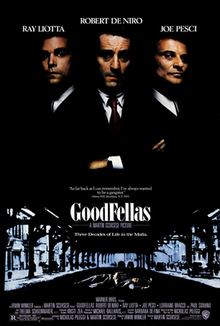
Lisa Marie Reviews An Oscar Nominee: Goodfellas (dir by Martin Scorsese)


First released in 1990 and continuously acclaimed ever since, Goodfellas did not win the Oscar for Best Picture.

I’m always a bit surprised whenever I remember that.  Goodfellas didn’t win Best Picture?  That just doesn’t seem right.  It’s not the other films nominated that year were bad but Goodfellas was so brilliant that it’s hard to imagine someone actually voting for something else.  Seriously, it’s hard to think of a film that has been more influential than Goodfellas.  Every gangster film with a soundtrack of kitschy tunes from the 6os and 70s owes huge debt to Goodfellas.  Every actor who has ever been cast as a wild and out-of-control psycho gangster owes a debt to Joe Pesci’s performance as Tommy DeVito.  When Ray Liotta passed away two years ago, we all immediately heard him saying, “I always wanted to be a gangster.”  Robert De Niro’s Jimmy Conway remains the epitome of the ruthless gangster.  For many, Paul Sorvino’s neighborhood godfather redefined what it meant to be a crime boss.  Lorraine Bracco made such an impression as Karen Hill that it somehow seemed appropriate that she was one of the first people cast in The Sopranos, a show that itself would probably have not existed if not for Goodfellas.  Frank Sivero, Samuel L. Jackson, Tobin Bell, Debi Mazer, Vincent Gallo, Ileana Douglas, Frank Vincent, Tony Sirico, Michael Imperioli, Tony Darrow, Mike Starr, Chuck Low, all of them can be seen in Goodfellas.  It’s a film that many still consider to be the best of Martin Scorsese’s legendary career.  Who can forget Robert De Niro smoking that cigarette while Sunshine of Your Love blared on the soundtrack?  Who can forget “Maury’s wigs don’t come off!” or “Rossi, you are nothing but whore!?”  Who can forget the cheery Christmas music playing in the background while De Niro’s Jimmy Conway grows more and more paranoid after pulling off the biggest heist of his career?

Plus, it’s a Christmas movie!

And yet, it did not win Best Picture.

Myself, whenever I’m sitting behind a garbage truck in traffic, I immediately start to hear the piano coda from Layla.  For that matter, whenever I see a helicopter in the sky, I flash back to a coke-addled Henry Hill getting paranoid as he tries to pick up his brother from the hospital.  Whenever I see someone walking across the street in the suburbs, I remember the scene where Henry coolly pistol-whips the country club guy and then tells Karen to hide his gun.  I always remember Karen saying that she knows that many of her best friends would have run off as soon as their boyfriend gave them a gun to hide but “it turned me on.”  It would have turned me on as well.  Henry might be a gangster and his friends might be murderers but he doesn’t make any apologies for who he is, unlike everyone else in the world.

But it did not win Best Picture.

How many people have imitated Joe Pesci saying, “How am I funny?”  How many times did Pesci and Frank Vincent have to listen to people telling them to “go home and get your fucking shinebox?”  A lot of people remember the brutality of the scene where Pesci and De Niro team up to attack Vincent’s crude gangster but I always remember the sound of Donavon’s Atlantis playing on the soundtrack.

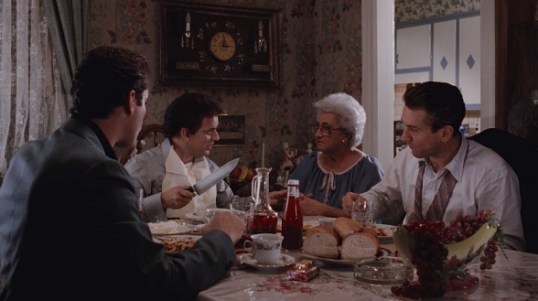
And then there’s Catherine Scorsese, showing up as Tommy’s mom and cooking for everyone while Vincent struggles to escape from the trunk of a car.  “He is content to be a jerk,” Tommy says about Henry Hill.  Just a few hours earlier, Tommy was apologizing to Henry for getting blood on his floor.

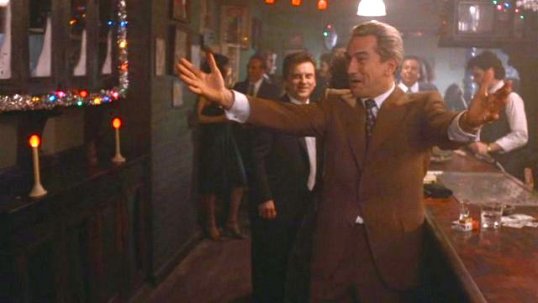
Goodfellas is a fast-paced look at organized crime, spanning from the 50s to the early 80s.  Ray Liotta plays Henry Hill, who goes from idolizing gangsters to being a gangster to ultimately fearing his associates after he gets busted for dealing drugs.  It’s a dizzying film, full of so many classic scenes and lines that it feels almost pointless to try to list them all here or to pretend like whoever is reading this review doesn’t remember the scene where the camera pans through the club and we meet the members of the crew.  (“And then there was Pete The Killer….”)  Goodfellas is a film that spend two hours showing us how much fun being a gangster can be and then thirty minutes showing us just how bad it can get when you’re high on coke, the police are after you, and you’ve recently learned that your associates are willing to kill even their oldest friends.  No matter how many times I watch Goodfellas, I always get very anxious towards the end of the film.  With the music pounding and the camera spinning, with Henry looking for helicopters, and with all of his plans going wrong over the course of one day, it’s almost a relief when Bo Dietl points that gun at Henry’s head and yells at him, revealing that Henry has been captured by the cops and not the Gambinos.  Karen desperately running through the house, flushing drugs and hiding a gun in her underwear, always leaves me unsettled.  It’s such a nice house but now, everything is crashing down.

There’s a tendency to compare Goodfellas to The Godfather, as their both films that re-imagine American history and culture through the lens of the gangster genre.  I think they’re both great but I also think that they are ultimately two very different films.  If The Godfather is sweeping and operatic, Goodfellas is the film that reminds us that gangsters also live in the suburbs and go to cookouts and that their wives take care of the kids and watch movies while the FBI searches their home.  If The Godfather is about the bosses, Goodfellas is about the blue collar soldiers.  The Godfather represents what we wish the Mafia was like while Goodfellas represents the reality.

Goodfellas is one of the greatest films ever made but it lost the Best Picture Oscar to Dances With Wolves, a film that left audiences feeling good as opposed to anxious.  To be honest, Martin Scorsese losing Best Director to Kevin Costner feels like an even bigger injustice than Goodfellas losing Best Picture.  One can understand the desire to reward Dances With Wolves, a film that attempts to correct a decades worth of negative stereotypes about Native Americans.  But Scorsese’s direction was so brilliant that it’s truly a shame that he didn’t win and that Lorraine Bracco didn’t win Best Supporting Actress.  It’s also a shame that Ray Liotta wasn’t nominated for playing Henry Hill.  At least Joe Pesci won an Oscar for redefining what it meant to be a gangster.

Goodfellas is proof that the best film doesn’t always win at the Oscars.  But it’s also proof that a great film doesn’t need an Oscar to be remembered.