Music Video of the Day: You Ain’t Getting Nothin’ (2020, dir by Juan M. Urbina)


I’ve got this song stuck in my head now.  I’m not complaining there.  This is a lot better than that old Suzy Snowflake song that was stuck in my head.

Personally, I’m on Santa’s side here.  That brat doesn’t deserve any presents this year.  Or any other year, as far as I’m concerned.  If that leads to him embarking on a life of crime that’s fueled by holiday bitterness, so be it.

Don’t mess with Santa.

Enjoy!

Lisa’s Week In Review: 11/30/20 — 12/6/20


Happy December, everyone!

Well, things are coming to a close as far as this year is concerned.  For the rest of this month, along with celebrating the holidays, I’ll be trying to get caught up on the 2020 films that I need to see.  I’m looking forward to it.

Here’s what I did this week:

Films I Watched:

  1. After We Collided (2020)
  2. The Angel Doll (2002)
  3. Ava (2020)
  4. Beyond Tomorrow (1940)
  5. Christmas Lodge (2011)
  6. Citizen Kane (1941)
  7. Collateral Beauty (2016)
  8. Deep Red (1975)
  9. Flap (1970)
  10. The Mystery of D.B. Cooper (2020)
  11. Red, White and Blue (2020)
  12. A Song for the Season (1999)
  13. Split Image (1982)
  14. The Warriors (1979)
  15. Yes, Virginia, There Is A Santa Claus (1991)

Television Shows I Watched:

  1. A Teacher
  2. The Amazing Race 32
  3. Archie Bunker’s Place
  4. The Bachelorette
  5. Bar Rescue
  6. The Bold and the Beautiful
  7. Community
  8. Days of Our Lives
  9. Diff’rent Strokes
  10. Euphoria
  11. General Hospital
  12. Ghost Whisperer
  13. Growing Pains
  14. King of the Hill
  15. Major Crimes
  16. The Office
  17. Rudolph the Red-Nosed Reindeer
  18. Saved By The Bell: The College Years
  19. Seinfeld
  20. Parking Wars
  21. Shipping Wars
  22. Three’s Company
  23. The Voice
  24. Who’s The Boss
  25. The Young and the Restless

Books I Read:

  1. Alright, Alright, Alright: The Oral History of Richard Linklater’s Dazed And Confused (2020) by Melissa Maerz
  2. Right Time, Right Place (2009) by Richard Brookhiser

Music To Which I Listened:

  1. Above & Beyond
  2. Armin Van Buuren
  3. Avicii
  4. Blondie
  5. Britney Spears
  6. Carly Rae Jepsen
  7. The Chemical Brothers
  8. Coldplay
  9. deadmua5
  10. Dillon Francis
  11. DJ Snake
  12. Dry Cleaning
  13. Eva Hurychova
  14. Goo Goo Dolls
  15. Haim
  16. HANA
  17. Hrdza
  18. Icona Pop
  19. Jakalope
  20. Krakow Loves Adana
  21. Lindsey Stirling
  22. Murder on Middle Beach
  23. Muse
  24. New Order
  25. Nilufer Yanya
  26. Nine Inch Nails
  27. Paul Oakenfeld
  28. Pentatonix
  29. Phantogram
  30. Saint Motel
  31. Sleigh Bells
  32. Taylor Swift
  33. Trentemøller
  34. Universal Honey

Awards Season Links:

  1. Lisa’s Oscar Predictions for October
  2. The Sunset Film Circle Awards

Links From The Site:

  1. I paid tribute to Terrence Malick and Ridley Scott! I shared music videos from Blondie, Pentatonix, Dry Cleaning, HANA, Carly Rae Jepsen, Hrdza, and Lindsey Stirling!  I reviewed Collateral Beauty, Red, White, and Blue, After We Collided, Yes Virginia There Is A Santa Claus, Beyond Tomorrow, and Christmas Lodge!
  2. Erin shared the covers of Beauty Parade and Naked Fury, December, The Passionate Season, Good Hardware, Too Many Loves, Queen of Tarts, and Film Fun!
  3. Jeff reviewed Frontier Uprising and Star in the Dust!
  4. Ryan reviewed Pussycats, Paperbacks, Pennants, And Penance, Mix Yourself A Dead End, Theater of Cruelty, and Rodeo Comics!

More From Us:

  1. For Reality TV Chat Blog, I reviewed the latest episode of The Amazing Race!
  2. Ryan has a patreon!  You should consider subscribing!
  3. On her photography site, Erin shared: Dallas 4, Christmas Trees Behind Plastic, Christmas Carriage, Light in the Dark, Christmas Tree, Path, and December!
  4. On my music site, I shared songs from Trentemøller, Paul Oakenfold, New Order, Britney Spears, Nilufer Yanya, Eva Hurychova, and Jakalope!

Want to see what I did last week? Click here!

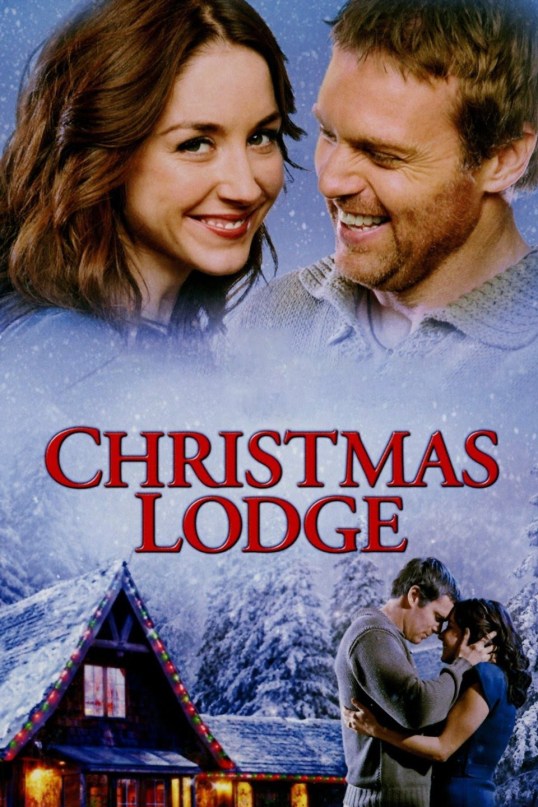
Holiday Film Review: Christmas Lodge (dir by Terry Ingram)


So, here you are.  You’re hiking in the wilderness with your boyfriend and you can’t help but notice that he doesn’t seem to be much of an outdoorsman.  He’s a city boy and you’re a mountain girl and who knows if those two cultures can come together.

Well, it turns out that they can’t but don’t worry!  No sooner has your boyfriend dumped you than you’ve found a new purpose in life!  You’re helping to restore and rebuild the old Christmas lodge where you and your family used to spend the holidays.  The important thing is to get it done quickly enough so that grandpa can see the lodge for one last time before he dies.  Fortunately, the lodge is owned by a handsome man who needs someone to be a mother for his daughter.  Perfect, right?

There’s really not a lot of conflict to be found in this film.  Erin Karpluk plays Mary, who decides to save the lodge and, at no point, does she really suffer from the type of self-doubts that you would expect someone to suffer in a film like this.  Instead, she decides to do it and then she does it.  There’s a few people who think that Mary is wasting her time but they quickly change their minds.  Even her break-up with her boyfriend has to be one of the nicest, most polite break-ups that I’ve ever seen.

Make no doubt about it, 2011’s Christmas Lodge is a holiday movie.  It’s continually positive and upbeat and unabashedly sentimental and, if you’re into that sort of thing, you’ll enjoy it.  And, to be honest, the holidays is a good time to give up cynicism and be optimistic for at least a few days.  Me, I get cheerfully sentimental when it comes to the holidays.  I smile at every Christmas tree.  I love every gift that I get.  And I usually shed a few tears while sharing memories with the family.  That’s what the holidays are for.  Christmas Lodge does a good job of tapping into that spirit.

That said, Christmas Lodge is perhaps a bit more religious that some people are going to like.  The film may seem like a typical romantic Hallmark holiday film but ultimately, there’s a lot of talk about God wanting the lodge to be built and the family to come together.  At one point, Mary’s grandfather even asks a hesitant carpenter what Jesus would do if he was told that the lodge needed to be repaired.  Personally, I suspect that he would open up the lodge to the poor and the homeless but, in Christmas Lodge, apparently he would just give up whatever other projects he had going on and lend a helping hand so the family could gather there while snow gently fell outside.

That said, I’m a sucker for any film that has people celebrating the holidays while snow gently falls from the sky.  Christmas Lodge is a sweet-natured movie.  It’s not the type of film that you’re going to watch in the harsh heat of the summer but, for the sentimental holidays, it gets the job done.

Holiday Film Review: Beyond Tomorrow (dir by A. Edward Sutherland)


I’m standing at the edge of tomorrow
And its all up to me how far I go
I’m standing at the edge of tomorrow

I’ve never seen such a view before
A new world before my eyes
So much for me to explore
It’s where my future lies

Today I’m standing at the edge of tomorrow
From here the future looks bright for me
And it’s all up to me how far I go
It’s my time to break away
I’m standing at the edge of tomorrow
Today

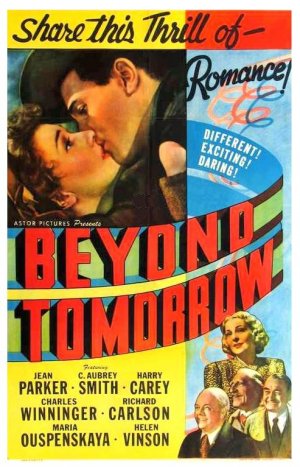
Beyond Tomorrow is a strange film from 1940.  Technically, it is a holiday film.  It takes place during the Christmas season and there’s a lot of very peppy scenes featuring people celebrating the holidays.  I watched the movie with my friends in the Late Night Movie Gang.  We’re a pretty sentimental group but even we felt that some of the characters went a bit overboard with the holiday cheer.  The film is also comedy and a romance and a musical and a ghost story and a melodrama and finally an oddly sincere meditation on life and death.  That’s a lot of weight for one film to carry and there were more than a few times that Beyond Tomorrow seemed like it might collapse in a heap of Christmas ambition.  Fortunately, the film always righted itself and, in the end, it actually managed to be …. well, definitely more interesting than what any of us were expecting!

The film opens with three businessmen (Harry Carey, C. Aubrey Smith, and Charles Winninger) living in a mansion with their Russian housekeeper (played by Maria Ouspenskaya, who was also the old gypsy lady in The Wolf Man).  As almost something of a lark, the three men arrange for James (Richard Carlson) to meet Jean (Jean Parker).  Jean is a teacher.  James is a singing cowboy from Texas.  Together, with the encouragement of the three businessmen, Jean and James get together.  Awwwww!

Unfortunately, the three businessmen are then all killed in a plane crash.  However, their ghosts remain on Earth and watch over the growing love between James and Jean.  Unfortunately, James become a singing sensation on the radio and soon, he’s being tempted to cheat.  Meanwhile, Jean’s ex-husband is running around with murder in his heart and a gun in his hand!  This romantic comedy has suddenly taken a very dark turn!

While the three ghosts look after James and Jean, they consider why they’re still on Earth and not in the afterlife.  One ghost is eventually greeted by his son, who died during the Great War.  Another one of the businessmen is haunted by vaguely defined sins and, even in death, he refuses to repent because he feels that he doesn’t deserve to go to Heaven.  Instead, he continually walks off into the darkness.  The last businessman continually tries to push James and Jean on the right path but it turns out that it’s not easy for the dead to talk sense to the living.

You can probably give yourself whiplash trying to keep up with the film’s tonal changes.  It starts out with romance and comedy and then suddenly, it’s turns into an existential rumination of love, forgiveness, and guilt.  Once the three businessmen die, it becomes a totally different story.  Suddenly, soldiers are returning from the dead and the gates of Hell are beckoning.  And, on top of that, James keeps breaking out into song every few minutes!

It’s a very strange film.  Unfortunately, from the start, the pacing feels off.  By today’s standards, Beyond Tomorrow gets bogged down in all of the songs and the scenes of holiday mirth-making.  That may not have been as much of a problem for audiences in 1940 but I have to say that, speaking as someone trying to watch this film in 2020, Beyond Tomorrow made my ADD go crazy.  If not for my friends and their patient willingness to inform me what was going on in the film, I probably wouldn’t have been able to follow the film’s storyline.

That said, the film was fairly well-acted and the final scenes, with the heavenly gates in the sky, are undeniably effective.  Speaking as a history nerd, I found it interesting to see how the shadow of World War I still hung over a film that was made 21 years after that war ended.  As the scenes in which one of the ghosts is a reunited with son showed, America was still dealing with trauma and horror of the first modern war.  (One year after the release of Beyond Tomorrow, Japan would bomb Pearl Harbor and America entered World War II, a conflict that many hoped to avoid precisely because they remembered the all of the men who didn’t make it home during the previous war in Europe.)  Messy though the film may be, Beyond Tomorrow functions well as both a historical document and a bit of sentimental wish fulfillment.

Compared to holiday classics like the original Miracle on 34th Street and It’s A Wonderful Life, Beyond Tomorrow is relatively unknown.  Certainly, it’s no classic.  But, for fans of both Christmas and old movies, it’s still an interesting trip into the past.

Film Review: Small Axe: Red White and Blue (dir by Steve McQueen)


Red, White, and Blue opens with a very young Leroy Logan (Nathan Vidal) standing on a London street corner.  Behind him is the school that he attends.  He’s wearing a school uniform.  As the other students walk past him, they say hi and acknowledge the very obvious fact that Leroy is a student who is waiting to be picked up by his parents.

That, however, doesn’t matter to the two white police officers who walk up to Leroy and start to interrogate him as to why he’s standing on the street corner.  They inform Leroy that there have bee several burglaries in the area and that the burglar is a young, black male.  They start to search Leroy.  The only thing that stops them is the arrival of Leroy’s father, Ken (Steve Toussaint).  Ken reprimands the police for harassing his son.  While driving Leroy home, Ken tells Leroy that he expects his son to do two things for him.  Leroy is never to become “a roughneck” and he’s never to bring the police to his front door.

Jump forward several years and Leroy Logan (now played by John Boyega) is now grown up and working as a forensic scientist.  When his father is beaten by two police officers who claim that Ken was blocking traffic and that he was resisting arrest (neither is true), Leroy decides to channel his anger into something productive.  He applies to join the police force, hoping to bring about change from within.

Needless to say, that turns out to be more difficult than even Leroy was expecting.  At first, Leroy finds himself being used as a prop.  Knowing that they’ve got to fix their public image, the police uses Leroy as a part of their latest public relations campaign, featuring him in advertisements and news stories.  But on the streets, Leroy finds himself an outsider.  His fellow cops, the majority of whom are white, refuse to have his back and welcome him to the force by writing racist graffiti on his locker.  Meanwhile, the members of his community now distrust Leroy, accusing him of selling out and calling him a traitor.  Leroy became a police officer believing that he could be an agent of change but he soon discovers that no one is interested in changing.

At the heart of the film is Leroy’s relationship with his father.  Though Leroy joined the force to try to make life better for men like his father, he didn’t tell Ken about his decision.  In fact, Ken doesn’t find out until two police officers show up at this doorstep, checking to make sure that Leroy put the correct address on his application.  Ken believes that the system cannot be changed.  Leroy disagrees.  The film leaves it to us to decide which man is correct.

Red, White, and Blue is based on a true story.  Leroy Logan was one of the first blacks to join the London Metropolitan Police and he joined for the same reasons that are shown in the film.  Eventually, Leroy would work his way up to being a superintendent and he would help to found and later chair the Black Police Association.  Interestingly enough, the details of Leroy’s eventual success are left out of Red, White, and Blue.  Instead, the film ends with Leroy and his father at the kitchen table, still wondering if things can change.  It’s an ambiguous ending, one that’s hopeful because, even though he’s disillusioned, Leroy hasn’t given up but, at the same time, it’s also one that accepts that it’s going to take more than just one man to change the culture of the police.  It’s an ending that suggests that racism is so ingrained in society that the only way to vanquish it might be to just start all over again from the beginning.  It’s an ending that manages to be both low-key and revolutionary at the same time.

Red, White, and Blue is the third film in Steve McQueen’s Small Axe anthology.  It’s a deceptively simple film, one that kind of sneaks up on you and takes you by surprise.  The minute that you start to think the film is going to be just another well-intentioned liberal plea for tolerance, McQueen will throw in an unexpectedly honest scene that will shake your expectations.  For instance, when Leroy tries to help a prisoner who has been brutalized by a bunch of racist cops, his help is rejected and Leroy discovers that the prisoner hates him even more than he hates the cops who were beating on him.  The prisoner takes it for granted that the white cops are going to be brutal but he saves his most vicious scorn for someone whom he consider to be a traitor to his race.  McQueen directs in a matter-of-fact but enthralling style, emphasizing the bleak coldness of the London landscape.

John Boyega and Steve Toussaint both anchor the film with ferocious performances.  Leroy spends the majority of the film having to hold back his anger and, sometimes, his despair and Boyega does a wonderful job suggesting what’s going on behind Leroy’s outward calmness.  Boyega does get to do some yelling, of course.  When he confronts his follow police officers for refusing to respond to his calls for backup, Boyega doesn’t hold back.  But his best moments are the quiet ones, where Boyega subtly but powerfully suggests that anger and the pain that Leroy has to deal with every day.

Red, White, and Blue is a short but powerful film.  Check it out on Prime.

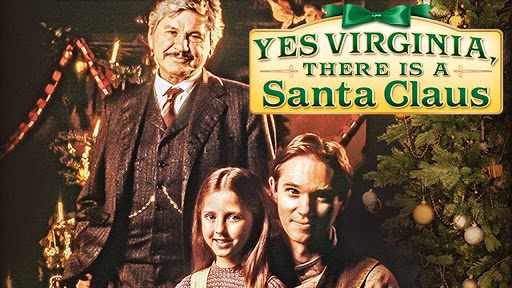
Holiday Film Review: Yes, Virginia, There Is A Santa Claus (dir by Charles Jarrott)


The year is 1897 and eight year-old Virginia O’Hanlan (Katharine Isabelle — yes, that Katharine Isabelle) has a problem.  All of her “little friends” say that there is no Santa Claus!  When she asks her father (Richard Thomas) about whether or not there’s a Santa Claus, he suggests that she write a letter to the New York Sun.  “If you see it in the Sun,” he says, “it must be true!”  The letter ends up on the desk of a gruff editor (Edward Asner) who assigns Virginia’s question to Frank Church (Charles Bronson), an alcoholic who is still mourning the deaths of his wife and child. Conquering his own cynicism and depression, Church writes an editorial reply that goes on to become not just a holiday classic but also the most frequently reprinted editorial in history.  Yes, Virginia, Church begins, there is a Santa Claus….

This 1991 film is a sweet-natured retelling of the famous story of Frank Church’s editorial.  Of course, it takes considerable liberties with the actual story.  Here’s just a few examples.

In real life, the editorial was published in September.  In the movie, it’s published on Christmas Eve.

In real life, Virginia’s father was a doctor and she came from a middle class family.  In the movie, Virginia’s father is an Irish immigrant and laborer who is so poor that the O’Hanlan’s might not be able to afford a Christmas!  They live in a tenement and Virginia’s father is frequently harassed by not only the cops but also corrupt labor officials.

In real life, Frank Church was a notoriously cynical atheist who reportedly had little use for Christmas and specifically didn’t sign his name to his famous editorial because he didn’t think much of it.  At the time that he wrote the editorial, he was also a bachelor.  He did marry shortly after the editorial was published but he never had any children.  In the film, Frank is a widower who rediscovers his zest for life and who smiles broadly while listening to Virginia’s father read it aloud.

And, of course, in real life, it’s very probable that the letter was written by Virginia’s parents because how many eight year olds would actually write something like, “Some of my little friends say there is no Santa Claus.”  In the movie, however, Virginia writes the letter herself.

In other words, this is a nice movie that just happens to be terrible history.  The film does end with a disclaimer that clarifies that “certain events have been fictionalized.”  Actually, the entire story has been fictionalized, with the exception of the content of Church’s editorial.  That said, this is a sweet-natured and generally likable movie.  If nothing else, it’s a film that means well and, as tempting as it may be to roll your eyes at the film’s unabashed sentimentality, it’s sincerity feels right for the holiday season.  It’s a made-for-TV movie from the early 90s so don’t expect any surprises but it’s nicely acted and even Charles Bronson seems to be in a good mood by the end of it.

As far as movies about journalists lying to children are concerned, this is a good one.  Just don’t watch it for a history lesson.

Music Video of the Day: Scratched Lanyard by Dry Cleaning (2020, dir by Rottingdean Bazaar)


At first, I thought this is was a Christmas video, just because of all the flashing lights.  Then I actually watched the video and discovered that it’s actually taking place in a miniature disco bar.

But really, when it comes to disco, isn’t every day Christmas?  I’ve always felt so.  Most Christmas celebrations would probably be improved by platform shoes and a disco ball.  Some people might toss a coke spoon in there but I don’t think you need cocaine to have a merry Christmas.  If anything, President’s Day is your cocaine holiday.  Christmas, on the other hand, is a opening presents sober holiday.  At least, it is for me.

Rottingdean Bazaar are James Theseus Buck and Luke Brooks.  They’re a British duo, specializing in surrealistic designs and fashions.  This video, let’s just say, is very Rottingdean Bazaar.

This video is a nice throwback to the days when artists actually tried to do something interesting when it came to music videos.  So many music videos now are just boring performance clips and, yes, they’re easy to write about.  When you wake up at two in the morning and realize that you forgot to schedule a music video of the day before you fell asleep, it can sometimes be a relief to find a performance clip that you can just toss onto the site with only one word to go along with it.  But sometimes, you want something more and that’s what this video delivers.

Enjoy!