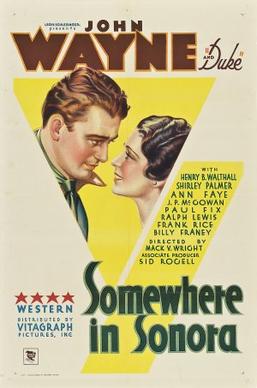
Somewhere In Sonora (1933, directed by Mack V. Wright)


After stagecoach rodeo racer John Bishop is framed for causing a competitor to have an accident, he’s hauled off to jail.  Fortunately, Bishop’s boss, Bob Leadly (Henry B. Walthall), comes through for Bishop and helps him escape from the jail.  To thank Bob, Bishop heads down to Mexico to search for Bob’s son, Bart (Paul Fix).  The last that Bob heard, Bart was running with an outlaw gang called “The Brotherhood of Death.”  The only way get out of the Brotherhood of Death is to die.

By an amazing coincidence both Bart and Bishop’s girlfriend, Mary (Shirley Palmer), are in the Mexican town of Sonora.  To try to get Bart to return home, Bishop goes undercover and infiltrates the gang.  Once inside, Bishop discovers that gang leader Monte Black (J.P. McGowan) is planning on robbing the silver mine that belongs to Mary’s father.

This is a John Wayne B-western, typical of the poverty row productions that he was making before John Ford cast him as the Ringo Kid in Stagecoach and made him into a star.  This one features the usual horse chases and bar fights and John Wayne gives a solid-enough performance in the lead role.  The most interesting thing about it is that, even though it’s a western, it’s set in modern times.  I guess frontier days lasted longer in some parts of the county than in others.

John Wayne’s horse, Duke, appears in this picture and shows again that he was the most talented of all the horse actors in the 30s.  He earned his co-starring credit.

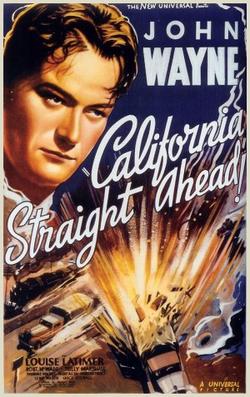
California Straight Ahead! (1937, directed by Arthur Lubin)


Biff Smith (John Wayne), fired from his job as a school bus driver, becomes a partner in a trucking company.  In order to show-up the railroads that are determined to put any potential competitors out of business, Biff and his fleet race a train to the Pacific Coast, where a boat needs to be unloaded before a labor strike begins.  Making this personal for Biff is that he’s in love with Mary Porter (Louise Latimer), the sister of Biff’s late business partner.  Embittered by her brother’s death in a trucking accident, Mary is now working for the head of the railroad, James Gifford (Theodore van Eltz).  Biff not only wants to prove that his small trucking firm can compete with the big boys but also wants to show Mary that her new boss is nothing but a smooth-talking weasel.

This film is from John Wayne’s B-movie star period, before John Ford cast him in Stagecoach and made him one of the biggest stars in the world.  California Straight Ahead! features Wayne in a contemporary role, though the movie still has a western sensibility.  There’s not much difference between a wagon train and Wayne’s fleet of trucks and, as in so many westerns, the greedy railroad baron is the villain.  This is one of Wayne’s better B-movie performances.  He was clearly comfortable in front of the camera by the time he made this movie and was no longer as stiff as he was in his earlier films.  California Straight Ahead! is a crowd-pleasing film that finds Wayne standing up for small businesses and their workers.  Though this may just be a 61-minute B flick, California Straight Ahead! reveals the movie star that Wayne would soon become.

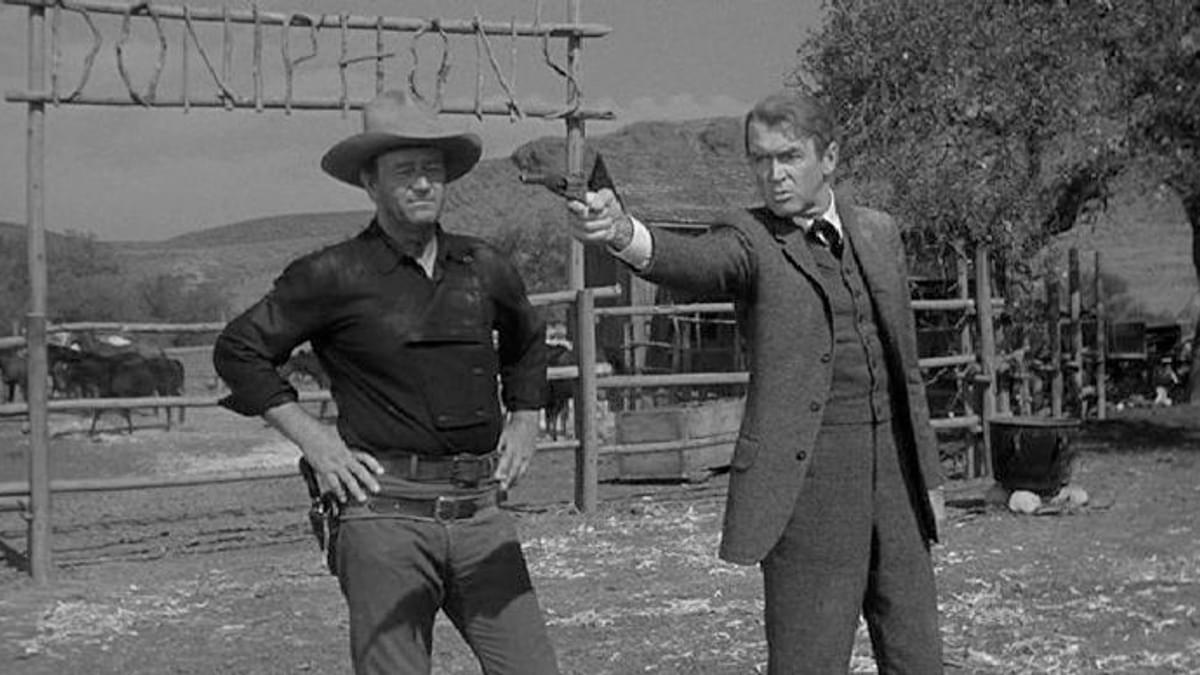
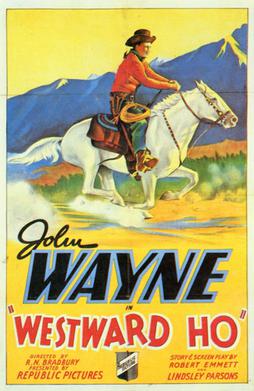
Westward Ho (1935, directed by Robert N. Bradbury)


As a young man, John Wyatt (John Wayne) witnessed an attack on a wagon train by the evil outlaw Wick Ballard (Jack Curtis).  John’s parents were killed and his younger brother Jim was abducted.  Years later, the grown John Wyatt realizes that the law cannot be depended upon in the wild west so he raises his own band of vigilantes and delivers justice to the frontier.  (Wayne’s second-in-command is played by the legendary Glenn Strange.)  Wyatt remains committed to taking down Ballard.  Going undercover as John Allen, Wyatt joins a cattle drive that he thinks will be attacked by Ballard.  Also working undercover as a member of the cattle drive is Jim Wyatt (Frank McGlynn Jr), John’s long-lost brother, who is now working for Ballard!  Both the Wyatt bothers end up falling for Mary Gordon (Sheila Bromley), the daughter of rancher Lafe Gordon (Jim Farley).

This was a good example of the the type of B-movies that John Wayne made in the years before John Ford cast him in Stagecoach.  The story is simple but Wayne gives a commanding performance as Wyatt.  Unlike many of the B-movies that featured Wayne as a callow singing cowboy or a fun-loving rogue, Westward Ho features Wayne playing the type of character that he would often play after he became a star.  Wyatt is determined to get justice for his family and to protect the innocents who are attacked by men like Ballard.  The presence of his brother in the enemy camp adds an extra dimension to Westward Ho.  Wyatt learns that vengeance isn’t everything.

It’s only 61 minutes long but it tells a good story and it has all the gunfights and horse chases that Western fans expect from their movies.  Of Wayne’s poverty row westerns, Westward Ho is one of the better ones.

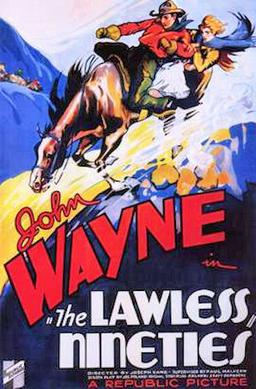
The Lawless Nineties (1936, directed by Joseph Kane)


The year is 1890 and Wyoming is on the verge of voting for statehood.  Newspaperman Major Carter (George “Gabby” Hayes) believes that it’s time for Wyoming to become a state and most of the locals agree with him.  Businessman Charles Plummer (Harry Woods) does not want Wyoming to become a state and he’s willing to send out his main henchman, Steele (Al Bridge), to intimidate the voters and to silence Carter.  Plummer has a profitable racket going and the last thing he wants is for the U.S. government to get involved in his activities.  It falls to two federal agents, John Tipton (John Wayne) and Bridger (Lane Chandler), to supervise the voting and protect the citizen.  When Major Carter is shot by a drunk anti-statehood activist, the mission to make Wyoming a part of the Union becomes personal.

The Lawless Nineties is typical of the B-movies that John Wayne made for Republic Pictures before John Ford resurrected his struggling career by casting him as The Ringo Kid in Stagecoach.  There are plenty of gunfights and horse chases and explosions as the bad guys try to keep the townspeople from voting and the federal agents set up their own sting operation to expose Plummer’s gang.  Wayne seems more relaxed here than he did in some of his other B-movies.  He was obviously getting more comfortable with being on camera and playing the hero.  Probably the most interesting thing about this film is that Gabby Hayes (credited as George Hayes, without his famous nickname) plays the renowned and intelligent Major Carter.  Hayes was just a year away from establishing himself as a perennial B-movie sidekick and supplier comedy relief.  He would soon be best-known for playing characters who had little in common with the intelligent and well-spoken Major Carter.  In The Lawless Nineties, Hayes gets a chance to play something other than the comedic relief and turns out to be petty good at it.

This is another one of those westerns that will be enjoyed by fans of the genre.  It’s nothing special but it does allow Wayne to show hints of his future stardom and it also gives Gabby Hayes a chance to show what he was actually capable of.

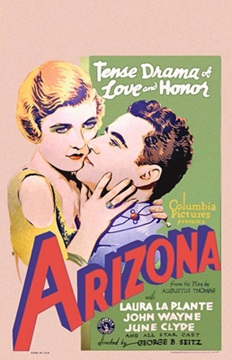
Arizona (1931, directed by George B. Seitz)


In one of his earliest starring roles, John Wayne plays Lt. Bob Denton, a West Point football star who gets assigned to a post in Arizona where he’ll be under the command of his mentor, Colonel Frank Bonham (Forrest Stanley).  Bonham is married to Evelyn (Laura La Plante), who is Bob’s former girlfriend and who only married Bonham after Denton told her that he didn’t even intend to marry anyone.  In Arizona, Denton meets Bonnie (June Clyde), who is the younger sister of Evelyn.  Bonnie and Denton fall for each other so the jealous Evelyn rips her dress and accuses Denton of trying to force himself on her.  Bonham is ready to drum Denton out of the service but then Evelyn learns that Denton and Bonnie are secretly married and destroying Denton’s life will also mean destroying Bonnie’s happiness.

Arizona is a simplistic melodrama and probably one that wouldn’t be made today.  Denton is undeniably a cad, telling Evelyn that he didn’t want to make a commitment to her after dating her for two years and then turning right around and deciding to pursue Evelyn’s sister.  But Evelyn’s reaction goes overboard.  She marries an older man just to get back at Denton (even though Denton didn’t want to marry her so why would he care?) and then she accuses Denton of trying to force himself on her.  Evelyn needs to move on and Bonham needs to get a divorce.  Instead, Evelyn tries to destroy one man’s life and Col. Bonham is very understanding.  What’s a false accusation of rape between friends?

This was one of John Wayne’s first starring roles in a major studio production.  The film was produced by Columbia, where Harry Cohn did seven films with Wayne before exiling him back to Poverty Row, where Wayne did B-pictures before John Ford finally cast him in Stagecoach.  Wayne seems awkward and uncomfortable in much of Arizona.  Top-billed Laura La Plante does a better job as Evelyn but the way the film ultimately shrugs off her false accusations just doesn’t feel right.

Arizona is a misfire in the Duke’s early filmography.

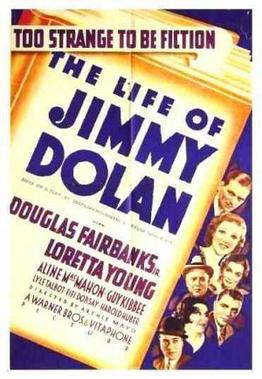
The Life of Jimmy Dolan (1933, directed by Archie Mayo)


Jimmy Dolan (Douglas Fairbanks Jr.), the light heavyweight champion of the world, goes out of his way to present himself as being a wholesome boxer who loves his mom and is as saintly outside the ring as he’s fearsome inside.  Instead, in private, Jimmy is a hard-drinking cynic with a corrupt manager (Lyle Talbot) and a wild girlfriend (Shirley Grey).  When a reporter (George Meeker) threatens to reveal the truth, Jimmy’s manager punches him and accidentally kill him.  The manager frames Jimmy for the crime and then flees with Jimmy’s girlfriend, just to suffer a fiery end in a car accident.

Everyone except for weary Inspector Phalanxer (Guy Kibbee) thinks that Jimmy is dead.  Jimmy goes on the run, hitching rides on freight trains and nearly starving to death before he stumbles over a home for orphans.  Peggy (Loretta Young) takes Jimmy in and gives him food and a place to live.  Jimmy helps with the kids (including Mickey Rooney).  When Jimmy learns that the orphanage might be shut down, he agrees to fight in a charity boxing match against the fearsome King Cobra (Sammy Stein).  King Cobra is so tough that even John Wayne (playing a boxer named Smith) is scared to get in the ring with him.  Jimmy risks his life and his freedom for the orphanage.

This is a good pre-code melodrama.  Because this was a pre-code film, it doesn’t have to shy away from portraying Jimmy’s decadent lifestyle outside of the ring.  Douglas Fairbanks, Jr. was a likable actor and easy to root for.  He was athletic enough to be convincing as someone who could handle himself in a fight.  When he finds himself down-and-out, he’s standing in for everyone who was struggling during the Depression.  The great character actor Guy Kibbee also has some great moments as the inspector, especially towards the end of the film.  Fans of John Wayne won’t see much of him here but it’s still interesting to see Wayne play a character who is frightened of something.

All in all, The Life of Jimmy Dolan is a good, pre-code boxing movie.

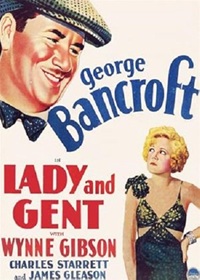
Lady and Gent (1932, directed by Stephen Roberts)


When veteran prize fighter Stag Bailey (George Bancroft) gets cocky and doesn’t bother to properly train for the big fight, he is knocked out by a young up-and-comer named Buzz Kinney (John Wayne).  Stag’s manager, Pin (James Gleason), had all of his money riding on Stag winning.  Now broke and with the mob after him, Pin tries to steal the cash from the boxing arena and ends up getting shot by a security guard.  Stag and his girlfriend, Puff (Wynne Gibson), take in Pin’s young son, Ted, and they devote themselves to raising him.  Years later, Ted (Charles Starrett) wants to become a prizefighter but Stag and Puff, who know what years of getting punched in the head can do to someone, try to convince him to go to college instead.

This boxing film is of interest to western fans because of some of the faces in the cast.  This was an early John Wayne role and he’s only seen in the ring and then in one brief scene where he confronts Stag and Puff in a bar.  Wayne still plays an important role, though, because Buzz’s transformation from being a fresh-faced boxer to being a bitter, punch-drunk bully serves as a warning for what waits for Ted if his adoptive parents can’t keep him out of the fight game.  Charles Starrett, of course, would go on to find greater fame as the Durango Kid.

Otherwise, Lady and Gent is a standard pre-code melodrama.  It’s a little more realistic than some of the other boxing films that came out in the 30s.  Boxing is portrayed as a dirty business that leaves its participants with struggles that all of the prize money in the world can’t make up for.  Puff sacrifices her carefree life to raise Ted but it’s worth it in the end.  You can tell this was a pre-code film because Stag and Puff are a couple but they only decide to get married so they can adopt Ted.

George Bancroft was a star in the late 20s and early 30s but eventually, he transitioned to character parts.  He retired from acting 1942 and became a full-time rancher.  One of his final films was 1939’s Stagecoach, starring his Lady and Gent co-star, John Wayne.
 

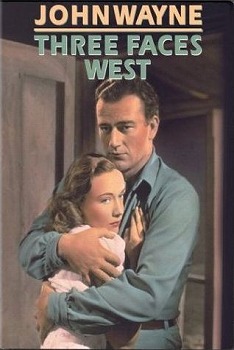
Three Faces West (1940, directed by Bernard Vorhaus)


When a small farming community in the Dakotas gets hit by an outbreak of the flu, farmer and community leader John Phillips (John Wayne) invites a Dr. Karl Braun (Charles Coburn) to come and be the town’s doctor.  A refugee from Austria, Dr. Braun arrives with his daughter, Leni (Sigrid Gurie).  At first, Leni is not happy living in the heart of the Dust Bowl but then she falls for John Phillips. However, Leni is still mourning his ex-fiancé (Roland Varno), who Leni and Braun believe sacrificed his life to help them reach America.

Eventually realizing that the town cannot prospers in the heart of the Dust Bowl, John suggests that everyone pack up and move to Oregon.  Almost everyone agrees and the one person who wants to go to California gets his van driven off the side of the road.  But Leni and Dr. Braun still take a detour to San Francisco because it turns out that Leni’s ex is not dead after all.  She and her father meet up with him and discover, to their horror, that he has become a fully committed Nazi.

This is an interesting change-of-pace for John Wayne.  Though the film is a western (and even features its own version of wagon train), it’s set in what was then contemporary times and it deals with issues like the Great Depression and the rise of Nazism in Germany.  The times may be hard but John Wayne isn’t going to let his community fall apart and, even more importantly, he’s not going to give up his beliefs or his ideals.  Even though the movie was made at a time when the United States was still officially neutral, the film is strongly anti-Nazi.  John Wayne, giving a strong performance, stands in for America while those who would collaborate with or make excuses for the Nazis represented by the weaselly Roland Varno.  Leni’s ex-fiancé had no problem selling out his beliefs and embracing Nazism.  Naturally, Leni and her father have no problem telling him off and then rejoining John Wayne in Oregon.  The United States may have officially been neutral but this movie had no problem letting everyone know where it stood.

The Trail Beyond (1934, directed by Robert N. Bradbury)


Falsely accused of murder, Rod Drew (John Wayne) and his buddy Wabi (Noah Beery, Jr.) jump off a train and end up in the Canadian wilderness, where they eventually find a deserted cabin, a map to a gold mine, and plenty of trouble when French-Canadian outlaw Jules LaRocque (Robert Frazer) decides that he wants the map and kidnaps Wabi’s girlfriend, Felice (Verna Hillie), to get it.

This was one of the many B-westerns that John Wayne made in between 1930’s The Big Trail and 1939’s Stagecoach.  The film finds the youngish Wayne playing a slightly less upright character than usual.  He’s still the hero but he’s also wanted by the police and spends much of the film fleeing from them.  The movie is only 55 minutes long and the action moves quickly.  The film’s Canadian locations and Robert Frazer’s over-the-top villain gives The Trail Beyond a slightly different and quirkier flavor than most the Duke’s 1930s output.  I think this might be the only film to feature Wayne working with the Mounties.  Even in this low-budget production, John Wayne is a strong hero who just looks like he belongs on a horse and traveling across the frontier.  For someone who was the president of his high school’s Latin Club., Wayne had an automatic authenticity when it came to playing cowboys, even in the years before Stagecoach made him one of the biggest stars in the world.  This is also one of the few films to feature both Noah Beery Sr. and Noah Beery Jr.  While Beery Jr. plays Wayne’s sidekick and is in the film almost as much as John, Berry Sr.’s role is much smaller.  He’s the store owner who is also Felice’s father.

Obviously, this is a film for fans of the genre only but it’s a good example of how John Wayne could make even his Poverty Row productions entertaining and watchable.

His Private Secretary (1933, directed by Phil Whitman)


Business tycoon Mr. Wallace (Reginald Barlow) is sick and tired of his hard-drinking, hardy-partying son refusing to act in a responsible manner.  Hoping to teach Dick Wallace about the value of hard work, Mr. Wallace sends Dick to a small town with instructions to collect a debt from the local preacher (Alec B. Francis).  Dick, however, is more interested in the preacher’s daughter, Marion (Evelyn Knapp).  After Dick finally convinces Marion that he’s not as bad his reputation, they got married.  Mr. Wallace is disgusted and refuses to meet his new daughter-in-law, convinced that she’s a golddigger.  Without revealing his true identity, Marion gets a job as Mr. Wallace’s private secretary and attempts to repair the relationship between father and son.

This is a creaky romantic comedy from the early days of sound film and it would probably be forgotten if not for the fact that Dick Wallace is played by John Wayne.  Wayne was 26 when he played Dick Wallace and already a screen veteran, though most of his roles had been in B-westerns and had featured Wayne riding a horse and carrying a gun.  Wayne actually gives a pretty good performance as Dick.  He’s better and more natural here than he was in many of the singing cowboy films that he was making at the time and this film suggests an alternate timeline where Wayne become known as a romantic comedy star instead of a screen cowboy.  Wayne is especially good in the early scenes, when he’s still a no-good, hard-drinking, no-account lout.  I get the feeling he enjoyed not having to be the upright hero for once.

His Private Secretary definitely shows its age but it’s worth watching for a chance to see a young John Wayne in an unexpected role.