Holiday Film Review: Jingle All The Way (dir by Brian Levant)


Whatever else one may want to say about it, 1996’s Jingle All The Way is a cute film.

It’s necessary to point that out because Jingle All The Way has a terrible reputation and, if we’re going to be honest, it deserves a lot of the criticism that it has gotten over the years.  In many ways, it epitomizes the way a Hollywood studio can take an interesting idea and then produce a film that seems to have no understanding of what made that idea so interesting in the first place.  Arnold Schwarzenegger plays Howard Langston, an overworked mattress store manager who waits until Christmas Eve to try to buy his son a Turbo Man action figure.  (In the film, they call it a “doll,” which is one of the film’s false moments.)  The only problem is that the Turbo Man action figure is the most popular gift of the year and everyone is looking for one.  What starts out at as a satire of commercialism ultimately becomes a celebration of the same thing as Howard ends up dressed up as Turbo Man and taking part in his town’s Christmas parade.   The film becomes a comedy without any sharp edges.

That said, it’s a cute film.  It’s not cute enough to really be good but it is cute enough that it won’t leave you filled with rage.  Arnold Schwarzenegger is in True Lies mode here, playing a seemingly boring and suburban guy who is secretly a badass.  (In True Lies, Schwarzenegger was secretly a spy who had killed man people, though all of them were bad.  In Jingle All The Way, he’s just a parent who has waited too long to go Christmas shopping.)  Schwarzenegger’s main strength as an action star — even beyond his physique — was that he always seemed to have a genuine sense of humor and he’s the best thing about Jingle All The Way.  This film finds him acting opposite actual comedic actors like Jim Belushi and Phil Hartman and holding his own.  (The film also features Sinbad as another dad trying to get the Turbo Man action figure but Sinbad comes across as being more of a stand-up comedian doing bits from his routine than an actual character.)  The film’s set pieces grow increasingly bizarre and surreal as Howard searches for his Turbo Man and the film actually becomes less effective the stranger that it gets.  A scene of Howard fighting a crowd in a toy store works far better than a later scene where Howard battles a bunch of men dressed as Santa Claus and his elves.  (It doesn’t help that, after an intelligent and well-edited opening thirty minutes, the film seems to lose all concept of comedic timing.)  But there’s a sincerity to Schwarzenegger’s performance that keeps you watching.

Of course, today, Jingle All The Way feels like a relic from a different age.  All the kids want a Turbo Man and you’re so busy at work that the stores are closed by the time you get home?  Fine.  Hop on Amazon at three in the morning and order one.  Christmas shopping is a lot easier nowadays.

It’s just not as much fun.

Brad reviews RETURN TO ME (2000), starring David Duchovny and Minnie Driver!


I’m a sucker for a good romance. Every year during tax season, I like to stream romantic films while I prepare my clients’ tax returns late into the evening. They make me feel good and help my mood as I work the necessary 80 to 90 hours every week leading up to April 15th. My list of favorites includes movies like HITCH (2005) with Will Smith, NOTTING HILL (1999) with Julia Roberts and Hugh Grant, and YOU’VE GOT MAIL (1998) with Tom Hanks and Meg Ryan. I also really enjoy the period romance movies based on the novels of Jane Austen, films like Ang Lee’s SENSE AND SENSIBILITY (1995) and the five-hour mini-series version of PRIDE AND PREJUDICE (1995) starring Colin Firth and Jennifer Ehle. There’s a decent chance that if you walk into my office at the end of one of these films you might even catch me wiping a tear from my eye as the obstacles finally clear, and we’re left with two people in love embarking on their specific “happily-ever-after” together. One such movie, that I don’t hear mentioned very often, but that I personally love, is the 2000 romantic film RETURN TO ME.

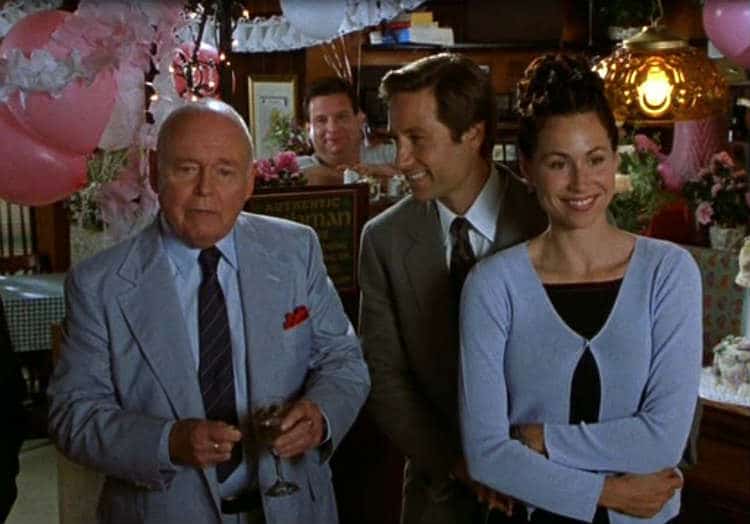
RETURN TO ME opens by introducing us to two families. First, we meet Bob Rueland (David Duchovny), a successful architect, and his wife Elizabeth (Joely Richardson), a kind-hearted zoologist, who are clearly very much in love. We follow the couple as they attend a fund-raising dinner that’s been organized to help expand the zoo’s gorilla habitat, a cause that’s very dear to Elizabeth’s heart, with Bob volunteering his own time and talents to design the new facility. The evening includes many sweet words and some quality slow dancing. Next, we meet Grace Briggs (Minnie Driver), who is very sick and in need of a heart transplant in the worst possible way. Her Catholic family and her friends, which includes her loving grandpa Marty O’Reilly (Carroll O’Connor) and her best friend Megan Dayton (Bonnie Hunt), are a wonderful support system, but without the new heart, she won’t be able to live much longer. On the same night that unspeakable tragedy strikes the Rueland’s on their way home from the fundraiser, Grace and her Grandpa’s prayers are answered when they get the call that a healthy heart is now available. A year later, Bob and Grace meet by chance at Marty’s business, O’Reilly’s Italian Restaurant. Bob has been a shell of the man he once was as he’s been unable to deal with his wife’s passing, while Grace has attempted to figure out life with her new heart. There’s just something about Grace though, so Bob asks her out and, after a series of sweet dates, it seems the two may be falling in love. But when Grace accidentally discovers that the heart that Bob is falling in love with was once beating inside the chest of his deceased wife Elizabeth, Grace doesn’t know how to tell him. Feeling guilty, as well as fearful of how Bob may respond to the shocking information, Grace decides she has no choice but to tell him. Will their blossoming love survive this unexpected and tragic revelation?

I love RETURN TO ME, and the main reason is that I love the characters, and especially the world that director Bonnie Hunt creates inside the film. The love story at the center is played well by Duchovny and Driver, but the greater love of family and friends is what sets this movie apart for me. In a way, Hunt creates a world that contains the kind of friends and family that we’d all love to have in real life. She does this by spending a lot of time with the entertaining supporting characters, showing them to be kind and decent people, the kind who make our lives valuable. As an example, O’Connor’s performance as the doting grandpa to Grace is wonderful, but we also get to see the interplay between Grace, Marty and their “family” at the restaurant, played by such great character actors as Robert Loggia, Eddie Jones, William Bronder and Marianne Muellerleile. Hunt herself is excellent in the role as Grace’s best friend Megan, but the time we spend with her blue-collar husband, played perfectly by James Belushi, and their kids are some of the best and funniest of the film. Based on the time and attention to these characters, as well as the time spent at “O’Reilly’s Italian Restaurant,” Hunt has created a scenario that feels like we’re watching real family and friends, in the best possible way. I never watch this film that I don’t want to go eat a big plate of spaghetti afterwards. The relationship between Bob and his best friend Charlie (David Alan Grier) isn’t quite as successful, but it has its moments as well.

RETURN TO ME is the kind of romantic film that we don’t get to see very often these days. A snarky, cynic would probably have a field day with this film, with its outrageous set-up, its old-fashioned values, and even older-fashioned characters. But that’s what I love about this film. As an example, this is the kind of movie where characters ask each other to pray, they do it, and the only purpose of it being shown is so we know how much these people care about each other. That feels very old-fashioned for 2025, but based on my own experiences in life, it’s something I can completely identify with.

Ultimately, RETURN TO ME is not a perfect film. Clocking in at almost 2 hours, there are definitely some scenes that could have been shortened or eliminated all-together. And it may seem like a criticism that I find the central love story of the film less appealing than the love shown by the main characters’ family and friends, but it’s really not. RETURN TO ME is a movie I return to every year because, at the end of the day, it’s an entertaining film that helps me appreciate the love of a family and the possibility that sometimes love is just meant to be.

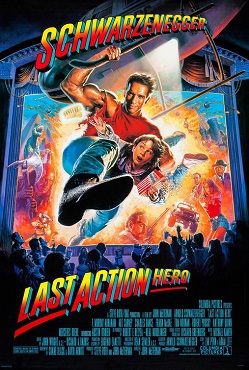
Guilty Pleasure No. 84: Last Action Hero (dir by John McTiernan)


Oh, Last Action Hero.

Ever since this film was first released in 1993, it’s usually held up as an example of a Hollywood fiasco.  The script was originally written to be a modest satire of action films.  The screenwriters wrote the character of Jack Slater, an movie action hero who comes into the real world, for Dolph Lundgren.  Instead, the film became an Arnold Schwarzenegger extravaganza and the studio ended up tossing a ton of money at it.  When the film was originally released, the reviews were mixed and the box office was considered to be disappointing.  (That it went up against the first Jurassic Park was definitely an underrated issue when it came to the box office.)  Ever since then, The Last Action Hero has had a reputation for being a bad film.

Well, I don’t care.  I like The Last Action Hero.  Yes, it’s a bit overproduced for a comedy.  (It breaks my own rule about how no comedy should run longer than two hours.)  Yes, it gets a bit sentimental with ten year-old Danny Madigan (Austin O’Brien) using a magic, golden ticket to enter the film world of his hero, Jack Slater.  If you want to argue that the film should have devoted more time to and gone a bit deeper into contrasting the film world with the real world, I won’t disagree with you.  But I will also say that Sylvester Stallone starring as The Terminator in Jack’s world was actually a pretty funny sight gag.  Danny knowing better than to trust a character played by F. Murray Abraham made me laugh.  Danny’s fantasy in which Arnold Schwarzenegger played Hamlet was made all the better by the fact that his teacher was played by Laurence Olivier’s wife, Joan Plowright.   Danny DeVito as Whiskers the Cartoon Cat makes me laugh as well, even if it is perhaps a bit too bizarre of a joke for this particular film.  (There’s nothing else about the Jack Slater films that would explain the presence of a cartoon cat.)

When you set aside the idea of the Last Action Hero being a symbol of Hollywood bloat and just watch it as a film, it emerges as an enjoyably goofy action movie, one that captures the joy of watching movies (because who hasn’t wanted to enter a movie’s world at some point in their life), and also one that features a rather charming performance from Arnold Schwarzenegger.  (Schwarzenegger, I should add, plays both himself and Jack Slater.  One of my favorite jokes is when the real Schwarzenegger is at a premiere and he mistakes the evil Ripper for Tom Noonan, the actor who played him in the previous Jack Slater film.)  Yeah, the golden ticket is a little bit hokey but who cares?  Underneath all of the special effects and action and money spent on star salaries, Last Action Hero is an action movie and comedy with a heart.  Danny meets his hero but also gets to become a hero himself.  And Jack Slater turns out to be everything you would hope your movie hero would be.  In the end, it’s obvious that a lot of the criticism of this film has more to do with the appeal of riding the bandwagon as opposed to what actually happens on screen.

Last Action Hero is a movie that I’ll happily defend.

Previous Guilty Pleasures

  1. Half-Baked
  2. Save The Last Dance
  3. Every Rose Has Its Thorns
  4. The Jeremy Kyle Show
  5. Invasion USA
  6. The Golden Child
  7. Final Destination 2
  8. Paparazzi
  9. The Principal
  10. The Substitute
  11. Terror In The Family
  12. Pandorum
  13. Lambada
  14. Fear
  15. Cocktail
  16. Keep Off The Grass
  17. Girls, Girls, Girls
  18. Class
  19. Tart
  20. King Kong vs. Godzilla
  21. Hawk the Slayer
  22. Battle Beyond the Stars
  23. Meridian
  24. Walk of Shame
  25. From Justin To Kelly
  26. Project Greenlight
  27. Sex Decoy: Love Stings
  28. Swimfan
  29. On the Line
  30. Wolfen
  31. Hail Caesar!
  32. It’s So Cold In The D
  33. In the Mix
  34. Healed By Grace
  35. Valley of the Dolls
  36. The Legend of Billie Jean
  37. Death Wish
  38. Shipping Wars
  39. Ghost Whisperer
  40. Parking Wars
  41. The Dead Are After Me
  42. Harper’s Island
  43. The Resurrection of Gavin Stone
  44. Paranormal State
  45. Utopia
  46. Bar Rescue
  47. The Powers of Matthew Star
  48. Spiker
  49. Heavenly Bodies
  50. Maid in Manhattan
  51. Rage and Honor
  52. Saved By The Bell 3. 21 “No Hope With Dope”
  53. Happy Gilmore
  54. Solarbabies
  55. The Dawn of Correction
  56. Once You Understand
  57. The Voyeurs 
  58. Robot Jox
  59. Teen Wolf
  60. The Running Man
  61. Double Dragon
  62. Backtrack
  63. Julie and Jack
  64. Karate Warrior
  65. Invaders From Mars
  66. Cloverfield
  67. Aerobicide 
  68. Blood Harvest
  69. Shocking Dark
  70. Face The Truth
  71. Submerged
  72. The Canyons
  73. Days of Thunder
  74. Van Helsing
  75. The Night Comes for Us
  76. Code of Silence
  77. Captain Ron
  78. Armageddon
  79. Kate’s Secret
  80. Point Break
  81. The Replacements
  82. The Shadow
  83. Meteor

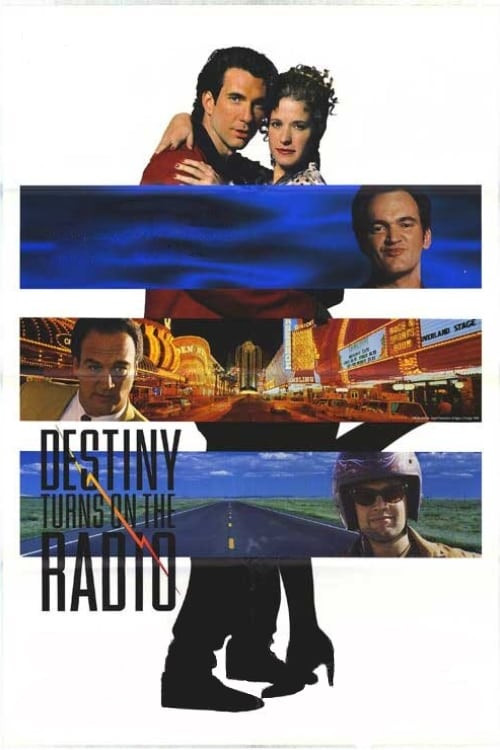
Destiny Turns On The Radio (1995, directed by Jack Baran)


Today, it can be easy to forget what an impact Quentin Tarantino had on pop culture in the 90s.  The one-two punch of Reservoir Dogs and Pulp Fiction inspired a generation of young and aspiring filmmakers to believe that anyone could make their own film.  Suddenly, you didn’t have to be a film school graduate to call yourself a filmmaker.  You could just be someone who loved movies and who was willing to keep hustling until you had something you could slip into Sundance.  That was the feeling, anyway.  The 90s were full of films about eccentric criminals who talked a lot and who loved pop culture, only three of which were directed by Quentin Tarantino.  Some of them were good.  Most of them were not.

Destiny Turns On The Radio was one of the first films to rip-off Pulp Fiction and it felt more cynical than most because it was directed by Jack Baran, who wasn’t even a video store clerk.  He was a producer of films like The Big Easy and Barfly, an industry veteran ripping off two films directed by someone who was, at that time, still an outsider.  The film tells a story that had plenty of Tarantino elements, including Quentin Tarantino himself.  Tarantino signed to play Johnny Destiny right after Pulp Fiction won the Palme d’Or at Cannes.

Johnny Destiny is a gambler who is apparently also a God.  He emerges from a lightning-filled pool and his dialogue is full of pseudo-philosophy.  He is driving through the desert when he picks up Julian (Dylan McDermott) and gives Julian a lift to Las Vegas.  Johnny Destiny is taking prison escapee Julian on a ride so that Julian can face his destiny.  Julian wants to recover some money from a bank job that he pulled off with Thoreau (James Le Gros) but it turns out that, when Johnny Destiny emerged from that pool, he also stole all the money.  (There’s no specific reason for Thoreau to be named after the famous philosopher, beyond the film trying to make itself seem deep by drawing in everyone who read Walden in AP English.)  Julian wants to get back together with Lucille (Nancy Travis), a singer who performs songs more appropriate for a 20s speakeasy than a Las Vegas lounge.  Lucille is involved with a gangster (Jim Belushi).  Belushi sings Vivia Las Vegas but otherwise, this is one of his more boring performances.

Like so many of the Pulp Fiction rip-offs of the 90s, Destiny Turns On The Radio is all self-conscious attitude and cool style, full of references to pop culture that fall flat because there’s no real thought behind them.  Reservoir Dogs and Pulp Fiction were full of style but they also told compelling stories.  Destiny Turns On The Radio is all style and little else and the cast never comes together the way that the actors in Tarantino’s first two movies did.  Watching this film, I realized why Dylan McDermott and Nancy Travis both found more success on television than in feature films.  The film posits Tarantino (as Johnny Destiny) as the epitome of cool but it then burdens him with the type of dialogue that he would have cut by the time he started a second draft.

Coming hot on the heels of the success of Pulp Fiction, Destiny Turns On The Radio actually led to a few years where many critics assumed Tarantino would be a two-trick wonder.  It was thought lightning struck twice but it would never strike a third time and Tarantino would spend the rest of his career as almost a parody of his earlier success.  Luckily, Tarantino proved them wrong and Destiny Turned On The Radio turned out to be not his career’s destination but instead just a detour.

Trading Places (1983, directed by John Landis)


It all starts with a bet.

As Christmas approaches, Mortimer (Don Ameche) and Randolph Duke (Ralph Bellamy) make a bet to determine whether it’s nature or nurture that shapes someone’s future.  The fabulously wealthy owners of Duke & Duke Commodity Brokers, the brothers casually frame their director, Louis Winthrope III (Dan Aykroyd), for everything from dealing drugs to sealing money to cheating on his girlfriend (Kirstin Holby).  After Louis is kicked out of both his job and his mansion, the Dukes hire a street hustler named Billy Ray Valentine (Eddie Murphy) to take his place.  Earlier Winthrope tried to get Valentine arrested for approaching him in the street.  Now, Valentine is living in Winthrope’s mansion, with Winthrope’s butler and Winthrope’s job.

While Winthrope tries to survive on the streets with the help of a outwardly cynical but secretly kind-hearted prostitute named Ophelia (Jamie Lee Curtis, in her first non-horror starring role), Billy Ray surprises everyone by using his street smarts to become a successful, suit-wearing businessman.  The Dukes, of course, have no intention of keep Billy Ray Valentine on as their director.  Not only are the Dukes snobs but they’re racists as well.  Once their one dollar bet has been settled, they start planning to put Billy Ray back out on the streets with Winthrope.

Trading Places was Eddie Murphy’s follow-up to 48 Hrs and he again showed himself to be a natural star while playing the type of role that could have been played by Dan Ayrkroyd’s partner, John Belushi, if not for Belushi’s early death.  (Jim Belushi has a cameo as a party guest.)  Murphy gets to show off a talent for physical comedy and Trading Places is one of the few films to really take advantage of Dan Aykryod’s talents as both a comedian and actor.  Winthrope goes from being a coddled executive to being as streetwise as Valentine.  This is probably Aykroyd’s best performance and he and Eddie Murphy make for a good team.

But the real stars of the film are four actors who weren’t really thought of as being comedic actors, Denholm Elliott, Don Ameche, Ralph Bellamy, and especially Jamie Lee Curtis.  Ophelia is a much edgier character than the “final girls” that Curtis was playing in horror films and Curtis steals almost every scene that she’s in.  Ameche and Bellamy are great villains and it’s fun to watch them get their comeuppance.  What screwball comedy would be complete without a sarcastic butler?  Denholm Elliot fills the role of Coleman perfectly.

Trading Places was a box office success when it was released and it’s now seen as being one of the new Christmas classics, a film for the adults to enjoy while the kids watch Rudolph and Frosty.  I think the movie ends up going overboard towards the end with the gorilla and Dan Aykroyd wearing blackface but, for the most part part, it’s still a very funny and clever movie.

Real Men (1987, directed by Dennis Feldman)


Due to a chemical spill that is spreading through the ocean, life on Earth is going to end in five years unless something is done.  A group of friendly alien offer to give Earth either the “Good Package” or the “Big Gun.”  The Good Package can clean up the ocean.  The Big Gun is a big gun.  They both sound good to me!  The aliens only want a glass of water in return and they want that glass to be delivered by CIA Agent Pillbox.

Unfortunately, Pillbox has been killed in the field so the government tracks down a meek office worker named Bob Wilson (John Ritter) who looks just like Pillbox.  Tough and streetwise Nick Pirandello (Jim Belushi) is sent to recruit Bob and take him to the aliens.  Trying to stop Nick and Bob are a group of rogue CIA agents who would rather get the Big Gun than the Good Package.  Nick teaches Bob how to be a “real man” and Bob teaches Nick how to be a real friend.  They also beat up clowns.

A box office failure that did even worse with the critics, Real Men is a movie that was saved by cable.  When I was a kid, Real Men used to show up on HBO all the time.  Whatever flaws the film may have had, the mix of John Ritter’s physical comedy, Jim Belushi’s wiseguy attitude, and the action scenes made it the type of movie that was ideal for home viewing, especially if you had just gotten out of school and wanted to watch something before your parents came home and asked if you had done your homework.  Real Men was fun enough to hold up to repeat viewings but it was also slight enough that it wasn’t a huge tragedy if the channel got changed before the movie ended.

When I rewatched Real Men, I thought the film’s storytelling could have been tighter but it still turned out to be better than I was expecting.  There were a lot of classic buddy movies released in the 80s and while Real Men may not be the equivalent of a 48 Hours or a Midnight Run, John Ritter and Jim Belushi are still an entertainingly mismatched team.  Ritter again shows that he was a master at physical comedy while Belushi provides sarcastic commentary from the side.  A lot of the odd couple-style banter is predictable (Bob doesn’t smoke but Nick does) but Ritter and Belushi deliver their lines with enough conviction to still make it work.  Nick teaches Bob to believe in himself and Bob is able to both save the world and tell off the neighborhood bullies.  The film’s mix of action, science fiction, and broad comedy confounded critics in 1987 but it holds up today.

Live Tweet Alert: Join #FridayNightFlix for The Principal!


As some of our regular readers undoubtedly know, I am involved in a few weekly live tweets on twitter.  I host #FridayNightFlix every Friday, I co-host #ScarySocial on Saturday, and I am one of the five hosts of #MondayActionMovie!  Every week, we get together.  We watch a movie.  We tweet our way through it.

Tonight, at 10 pm et, I will be hosting #FridayNightFlix!  The movie?  1987’s The Principal!

This film features Jim Belushi in his greatest role, high school school principal Rick Lattimore!  Rick rides a motorcycle, introduces his students to the concept of “No more!,” and teaches a kid to read!  He extends a hand to drug dealer Victor Duncan.  When Victor threatens to cut Rick’s hand off, Rick replies that he’s got another!  “He’s the principal, man!”  Of course, it all leads to a big afterschool fight.  You don’t become the principal if you don’t know how to throw a punch or two!

If you want to join us this Friday, just hop onto twitter, start the movie at 10 pm et, and use the #FridayNightFlix hashtag!  I’ll be there tweeting and I imagine some other members of the TSL Crew will be there as well.  It’s a friendly group and welcoming of newcomers so don’t be shy.

See you there!

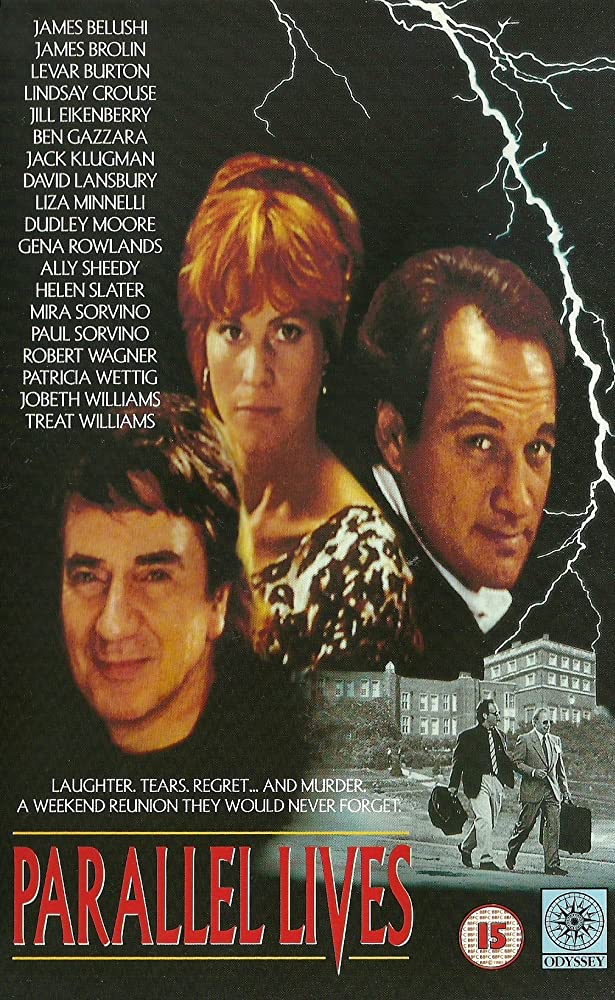
Parallel Lives (1994, directed by Linda Yellen)


A large group of people gather together one weekend for a fraternity/sorority reunion.  Since college, some of them have become rich and powerful.  Some of them are now famous.  Some of them are now seedy and disreputable.  They all have college memories, though there’s such a wide variety of age groups represented that it’s hard to believe that any of them actually went to college together.  After the men spend the day playing practical jokes and touch football and the women spend the night talking about their hopes and dreams, they wake up the next morning to discover the someone has murdered Treat Williams.  A pony-tailed sheriff (Robert Wagner) shows up to question everyone.

Parallel Lives was made for Showtime with the help of the Sundance Institute.  Today, it’s a forgotten film but, for some reason, it was very popular with American Airlines during the summer of 1997.  That summer, when I flew to the UK, Parallel Lives was one of the movies that we were shown.  (It was the second feature.  The first feature was Down Periscope, a submarine comedy starring Kelsey Grammar.  Fourteen year-old me enjoyed Down Periscope but, in retrospect, it wasn’t much of a flight.)  A month and a half later, when I flew back to the U.S., Parallel Lives was again one of the films shown on the flight!  For that reason, I may be the only person on the planet who has not forgotten that a film called Parallel Lives exists.

Parallel Lives, I later learned, was an entirely improvised film.  The huge cast were all given their characters and a brief outline of the film’s story and they were then allowed to come up with their own dialogue.  Unfortunately, no one did a very good job of it and the men were reduced to bro-ing it up while the women spent most of the movie having extended group therapy.  The story doesn’t add up too much and, even when I rewatched it from an adult’s perspective, I wasn’t sure what I was supposed to get out of everyone talking about how different the real world was from college.  Technically, the film’s a murder mystery but you can’t improvise a successful murder mystery.  This film proves that point.

Of course, it doesn’t help that there are 26 characters, all trying to get a word in at the same time.  Some of the roles don’t make much sense.  Dudley Moore shows up, playing an imaginary friend.  (How do you improvise being a figment of someone’s imagination?)  James Brolin introduces himself to everyone as being, “Professor Doctor Spencer Jones” and that appears to be as far as he got with his improv.  Ben Gazzara is a gambler and Mira Sorvino is the prostitute that he brings to the reunion while Mira’s father, Paul Sorvino, moons the camera several times.  Jack Klugman is a senator with Alzheimer’s and Patricia Wettig is his daughter.  The majority of the movie centers around Jim Belushi, playing a reporter and falling in love with JoBeth Williams.  Liza Minnelli, Helen Slater, Levar Burton, Lindsay Crouse, Matthew Perry, Ally Sheedy, and Gena Rowlands all have small roles.  How did so many talented people come together to make such a forgettable movie and why did American Airlines decide it was the movie to show people on their way to another country?  That’s the true mystery of Parallel Lives.

Gang Related (1997, directed by Jim Kouf)


LAPD vice detectives DiVinci (Jim Belushi) and Rodriguez (Tupac Shakur) have a pretty good racket going.  They sell cocaine to drug dealers and then, once they get their money, they murder the dealers and take their drugs back so that the cocaine can be resold.  The murders are written up as being “gang-related” and because no one cares about dead drug dealers, Divinci and Rodriguez don’t have to worry about anyone actually investigating their crimes.

This all changes when they kill the wrong dealer.  It turns out Lionel Hudd (Kool Mo Dee) was actually an undercover DEA agent and now that he’s been murdered, his partner (played by Gary Cole) is investigating the murder.  Needing a patsy to take the fall, they arrest a homeless man who is known as Joe Doe (Dennis Quaid).  Joe can’t even remember what his real name is and, because he’s intoxicated when he’s arrested and interrogated, it’s easy for DiVinci and Rodriguez to talk him into believing that he killed Hudd.

At first, it seems like a perfect plan because the only people that the citizens of Los Angeles care about less than gang members and drug dealers are the homeless.  But then it turns out that Joe Doe is actually a wealthy surgeon and his family hires a prominent attorney (played by James Earl Jones, so you know he’s good) to defend him.  Meanwhile, the stripper (Lela Rochon) who DiVinci and Rodriguez coerced into identifying Doe as the murderer is having second thoughts.  And so is Rodriguez.

The plot of Gang Related may be convoluted and sometimes difficult to follow but that works to the film’s advantage as Divinci and Rodriguez find themselves plunging further and further down the rabbit hole of their own lies.  The audience may be confused but so are they so everyone’s the same page.  It seems like no matter what scheme DiVinci comes up with to try to cover for his own crimes, there’s always an unforeseen complication and most of the film’s narrative momentum comes from watching two corrupt cops go from being cocky to being desperate to save their own lives as their maze of deception becomes increasingly difficult to navigate.  Neither DiVinci nor Rodriguez is a likable character (though Rodriguez is, at least, troubled by what he’s become) so there’s a lot of pleasure to be had by watching these two finally face justice.

Gang Related was Tupac Shakur’s final film and it was released over a year after his death.  It’s a B-movie but it’s a well-made B-movie and Shakur gives a good and complex performance.  So does Jim Belushi, whose mounting desperation is really something to see.  Gang Related may be a B-movie but it’s portrayal of two criminal cops being empowered by a corrupt system is still relevant today.