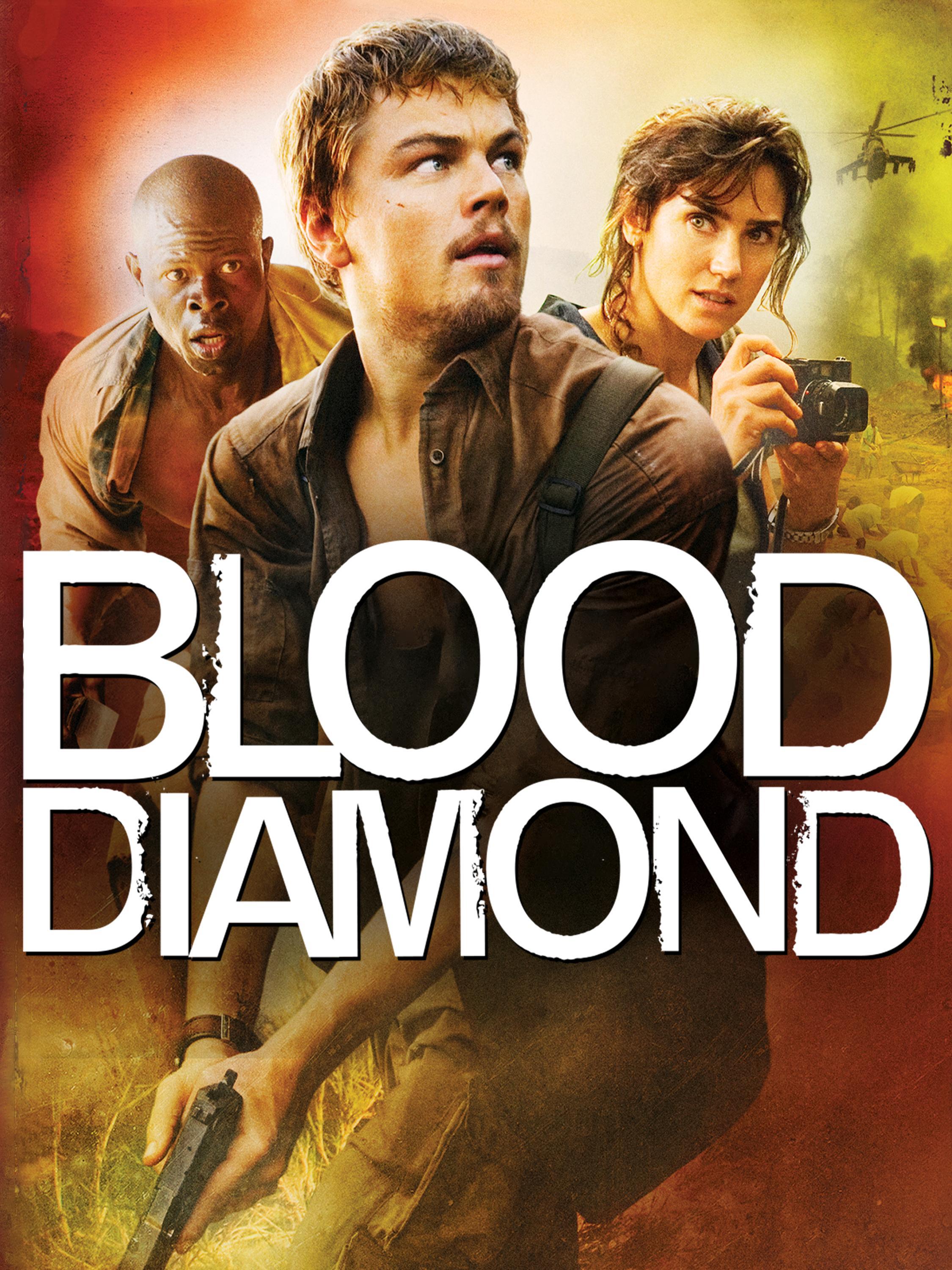
Review: Blood Diamond (dir. by Ed Zwick)


“Sometimes I wonder… will God ever forgive us for what we’ve done to each other? Then I look around and I realize, God left this place a long time ago.” — Danny Archer

Edward Zwick’s 2006 film Blood Diamond is one of those big Hollywood productions that tries to be both a gritty, globe-trotting thriller and a politically conscious indictment of the diamond trade’s role in African civil wars. Set in Sierra Leone during the 1990s, it stars Leonardo DiCaprio as Danny Archer, a Rhodesian mercenary and diamond smuggler, and Djimon Hounsou as Solomon Vandy, a fisherman torn from his family by rebels and forced into brutal diamond mining. Rounding out the leads is Jennifer Connelly as Maddy Bowen, a tenacious reporter determined to expose the atrocities fueling the global supply of conflict diamonds. The film is ambitious, harrowing, and, at times, as slickly entertaining as it is bluntly didactic. But like many socially minded blockbusters, it walks a tightrope between genuine drama and Hollywood sensationalism.

The story kicks off with a bang—literally—as Solomon’s village is raided by Revolutionary United Front militants, a moment that quickly plunges the viewer into Sierra Leone’s chaotic civil war. Solomon’s family is fragmented: he ends up a slave at a rebel-run mining camp, his son is eventually brainwashed into a child soldier, and his wife flees for safety. Meanwhile, DiCaprio’s Archer lands in jail after a failed smuggling run—which sets the two men on a collision course. Archer learns of Solomon’s discovery of an enormous, rare pink diamond—a stone that could mean escape or redemption for both men but is a magnet for greed, violence, and compromise. Their uneasy partnership with Maddy Bowen, who’s chasing a story, adds layers as their individual motives collide and evolve.

The movie doesn’t shy away from illustrating the devastating effects of the diamond trade—child soldiers, forced labor, mass displacement, and political corruption. While most of the on-screen violence is handled to maximize emotional punch, it never lets the viewer forget the real-world stakes of the Blood Diamond narrative. The film ultimately points viewers toward the establishment of the Kimberley Process—a set of international regulations designed to combat the illicit diamond trade.

A lot of the film’s emotional weight lands on DiCaprio and Hounsou, and for good reason. Leonardo DiCaprio nabs the complex role of Danny Archer with a layered performance and goes the extra mile by working hard on the Zimbabwean (Rhodesian) accent. While accents in film can be divisive, DiCaprio immersed himself deeply, working with dialect coaches and spending time with people from the region to best capture the regional nuances. Although some viewers and critics felt the accent was uneven or shifted at points, many others praised him for nailing this challenging and rare dialect. For an American actor to convincingly embody a mercenary with roots in that part of the world is no small feat. DiCaprio’s commitment brings credibility to Archer’s character, who is morally ambiguous but immensely human.

Djimon Hounsou, playing Solomon Vandy, serves as the emotional core and grounding presence of the film. His portrayal of a man torn apart by civil war, who fights desperately to reclaim his family, is heartbreaking and physically compelling. Their scenes together create genuine tension, as trust is both scarce and necessary for survival. Jennifer Connelly’s Maddy Bowen, while less fleshed out, brings determination and serves as the moral compass driving the film’s exposé of conflict diamonds.

Director Edward Zwick has a way of blending spectacle with raw storytelling. The action sequences, especially the firefights and escapes, feel intense and immersive. The cinematography captures the lush, dangerous landscape of Sierra Leone vividly, contrasting beauty with brutality. Some technical aspects do show their age—like certain digital effects that can feel artificial—but these don’t significantly dampen the overall experience. The soundtrack by James Newton Howard underscores the drama without veering into heavy-handed territory.

Blood Diamond scores high on several fronts. The performances by DiCaprio and Hounsou are standout elements, their evolving relationship carrying the film’s emotional heft. The pulse-pounding action sequences inject thrills while highlighting the chaos of civil war. Perhaps most importantly, the movie exposes the grim realities behind the glittering allure of diamonds, educating audiences about child soldiers, forced labor, and the complicity of international markets in perpetuating violence. Though it sometimes leans into melodrama and moralizing dialogue, the film’s commitment to its message is fairly unambiguous and impactful.

That said, the film sometimes succumbs to the trappings of big-budget Hollywood storytelling. The plot can feel overly convenient, with coincidences and resolutions that stretch credibility. Supporting characters, aside from the leads, are underdeveloped, mainly functioning as plot devices. Dialogue can at times be heavy-handed, particularly in the final act where scenes verge on preachy. Some narrative contrivances—like the recovery and passing of the pink diamond—can feel forced even in a tense, action-driven context. On the technical side, a few CGI moments fail to hold up under scrutiny, but these are minor irritants in an otherwise immersive film.

An important and unavoidable observation about Blood Diamond is how, like many of Edward Zwick’s previous action-dramas, it leans heavily into the “white savior” trope, if not outright embodying it. This trope centers a white protagonist—in this case, Danny Archer—who becomes the crucial figure in the salvation or redemption of non-white characters and communities. While the film sheds light on the horrors and complexity of Sierra Leone’s civil war and the conflict diamond trade, the narrative perspective and moral center overwhelmingly revolve around Archer’s personal journey from cynical mercenary to reluctant hero. The African characters, though vital and powerful especially through Hounsou’s Solomon, are often cast in more reactive roles, with Archer positioned as the key agent for change. The film also features a white journalist, Maddy Bowen, reinforcing this pattern.

Zwick’s leanings toward this trope are not new or isolated. His earlier films Glory (1989) and The Last Samurai (2003) also engage with the white savior narrative. Glory, a Civil War epic about the 54th Massachusetts Infantry Regiment, tells a historically significant story but largely centers on Colonel Robert Gould Shaw, a white officer played by Matthew Broderick, as the story’s main emotional and narrative anchor. The film has been noted for respectfully addressing racism and heroism but still revolves around Shaw’s perspective and sacrifice as a key redemptive figure for the African American soldiers. The Last Samurai similarly places Tom Cruise’s character, an American military advisor, at the heart of a narrative about Japanese samurai culture and resistance, blending cultural appreciation with the problematic trope of the white outsider who becomes indispensable to a non-white community’s fate.

This approach, familiar in Hollywood, walks the line between broad audience engagement and ethical storytelling. Zwick’s films often balance studio and audience expectations with a desire to tell compelling stories about marginalized communities. Yet inevitably, this framing simplifies complex histories and contributes to critiques that such films center whiteness and diminish the agency of non-white characters.

Casually speaking, Blood Diamond is not subtle, but that directness is part of its appeal. For viewers looking for a gripping action drama with strong performances and an ethical core, it delivers. It entertains while providing a sobering look at the high cost of luxury goods. DiCaprio’s portrayal of Danny Archer, complete with an authentically worked-on accent from the region, puts to rest doubts about his action lead capabilities. Hounsou’s performance lingers emotionally, especially in scenes grappling with the trauma of child soldiering. The violence depicted is raw and unvarnished, contributing to a visceral sense of the film’s urgent themes.

Running for about two hours and 23 minutes, the film has plenty of time to develop its complex story and deliver tense action sequences without feeling rushed or padded. Ultimately, Blood Diamond is an effective historical thriller that balances high stakes and moral urgency. While it’s not nuanced in every aspect and occasionally tips into cliché and convenience, it makes a strong case for itself beyond mere entertainment. Whether you’re interested in history, action, or the human stories behind the diamond trade, this film offers a thought-provoking, emotionally resonant experience. Leonardo DiCaprio’s dedication to portraying a Rhodesian mercenary authentically, especially through his accent work, is a highlight that complements the film’s broader narrative ambitions.
Music Video of the Day: The Valley by Bill Wyman and Terry Taylor (1985, dir by Michele Soavi)


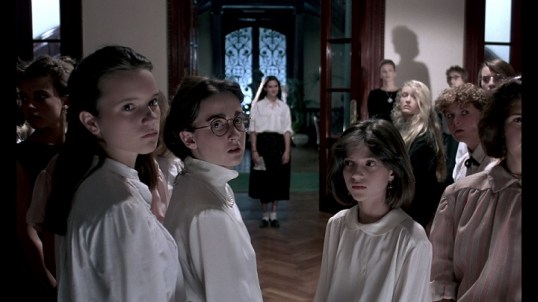
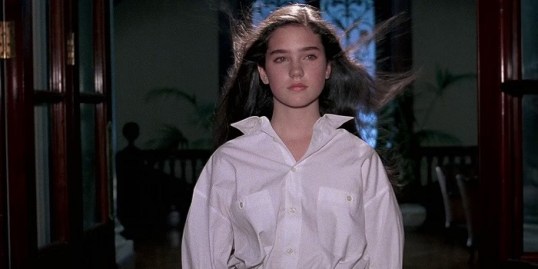
Today’s music video of the day is for an instrumental piece that was composed by Bill Wyman and Terry Taylor for Dario Argento’s 1985 film, Phenomena.

Put together by Michele Soavi, this music video features not only scenes from the film but also clips of Dario Argento directing both Jennifer Connelly and Fiore Argento.  Soavi, of course, went on to have a directorial career of his own, directing four classic horror films before stepping away from feature films to take care of his ailing son.  Soavi has since returned to directing, though most of his subsequent work has been for Italian television.

Enjoy!

Music Video of the Day: The Valley by Bill Wyman and Terry Taylor (1985, dir by Michele Soavi)


Today’s music video of the day is for an instrumental piece that was composed by Bill Wyman and Terry Taylor for Dario Argento’s 1985 film, Phenomena.

Put together by Michele Soavi, this music video features not only scenes from the film but also clips of Dario Argento directing both Jennifer Connelly and Fiore Argento.  Soavi, of course, went on to have a directorial career of his own, directing four classic horror films before stepping away from feature films to take care of his ailing son.  Soavi has since returned to directing, though most of his subsequent work has been for Italian television.

Enjoy!

Live Tweet Alert: Join #FridayNightFlix For Labyrinth


As some of our regular readers undoubtedly know, I am involved in a few weekly live tweets on Twitter and Mastodon.  I host #FridayNightFlix every Friday, I co-host #ScarySocial on Saturday, and I am one of the five hosts of #MondayActionMovie!  Every week, we get together.  We watch a movie.  We tweet our way through it.

Tonight, at 10 pm et, #FridayNightFlix presents 1986’s Labyrinth, starring Jennifer Connelly and David Bowie!

If you want to join us this Friday, just hop onto twitter, start the movie at 10 pm et, and use the #FridayNightFlix hashtag!  It’s a friendly group and welcoming of newcomers so don’t be shy.

Labyrinth is available on Prime and Tubi!  See you there!

The Films of Dario Argento: Phenomena


First released in 1985, Phenomena is the Dario Argento film with all the insects.

Phenomena is one of the most divisive of Argento’s film.  Throughout the years, many critics have cited Phenomena as being the first Argento film to not really work.  Some have called it Argento’s worst and most self-indulgent film and the first sign that he had lost his way.  At the same time, I know quite a few people who consider Phenomena to be among Argento’s best films.  The one thing that both camps seem to have in common is that their takes are all inspired by the film’s use of insects.

That said, Argento has always claimed that Phenomena is less about the insects and more about a world in which the Nazis conquered Europe.  Much as with Argento’s claim that Tenebrae is actually a science fiction film, the idea that Phenomena takes place in a Europe controlled by Nazis can be found but only if you specifically look for it.  For instance, the film is set in the Swiss countryside, with a similar emphasis on the mountains and the forests that were present in the German propaganda pictures that were taken of Hitler and his inner circle “relaxing” at his mountain residence.  Much of the film takes place at a private school that is named after Richard Wagner, where the privileged students — with their always crisp uniforms and their haughty attitude — feel as if they could be descendants of the kid who sang Tomorrow Belongs To Me in Cabaret.  One of the chaperones at the school is a German woman named Frau Bruckner (Daria Nicolodi).  Again, much as with Tenebrae, Argento has said the Phenomena takes place in a world where terrible things have happened but the population has collectively decided to forget about them.  Willfully forgotten seems to have been a major theme for Argento in the years following his unhappy experience with Inferno.

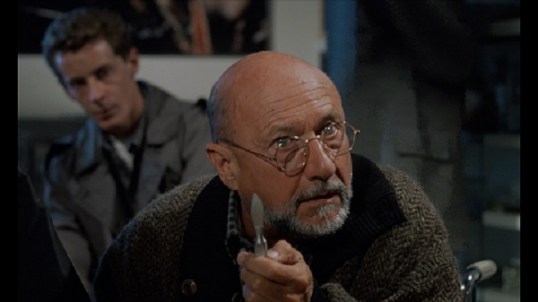
The film opens with the murder of 14 year-old Danish girl named Vera Brandt (played by Fiore Argento, the director’s daughter) who is a part of a tour group but who misses her bus.  When she walks through the Swiss countryside in search of help, she comes across a house that’s not as abandoned as it originally.  She is attacked and beheaded by the house’s resident.  Eight months later, Vera’s decaying and maggot-covered heard is discovered and taken to forensic entomologist John McGregor (Donald Pleasence).  Though McGregor uses a wheelchair, he has a monkey named Inga who takes care of him.  Inga is quite capable with a straight-razor.

Meanwhile, chaperoned by Frau Bruckner, Jennifer Corvino (Jennifer Connelly) has just enrolled in the Richard Wagner Academy For Girls.  Jennifer is the daughter of a Hollywood star.  (Argento originally wanted Jennifer to be Al Pacino’s daughter, with Pacino playing himself.  Pacino reportedly turned Argento down.)  Jennifer is also a sleepwalker who has an intense mental connection with insects.  Insects do her bidding and, in return, Jennifer protects them.  When Frau Brucker and her chauffeur attempt to kill a bee, Jennifer is able to calm down the bee and set it free from the limo.

Jennifer struggles to fit in at the Academy.  Much like Jessica Harper’s Suzy Banyon in Suspiria, she discovers that the other students are an idiosyncratic and not particularly friendly group.  Whereas poor Suzy Banyon just had to accept her situation, Jennifer has an army of insects on her side and she’s willing to call them down on her snooty classmates.  Of course, when Jennifer isn’t communing with the insects, she’s having to deal with the fact that she witnessed a murder while she was out sleepwalking.  Haunted by images of the murder and being stalked by the murderer, Jennifer also learns that Frau Bruckner wants to send her to a mental hospital for being “diabolic.”

Jennifer’s only real friend in Switzerland is John McGregor and it must be said that Donald Pleasence, who was so misused in so many horror films in the 80s and 90s, is perfectly cast as the eccentric but kindly entomologist.  Pleasence was one of those actors who could deliver even the strangest of lines with enough gravity to make them memorable and McGregor’s easy acceptance of the idea that Jennifer has a psychic connection with insects make it much easier for the viewer to accept it as well.  As well, McGregor’s friendship with the monkey is far more touching than it has any right to be.

Phenomena is an odd mix of giallo and fantasy, with the brutal and violent murders uneasily playing out with more lyrical scenes featuring the beauty of Switzerland and the loyalty of the animal kingdom.  Perhaps the best way to view Phenomena is as being an extremely bloody fairy tale, with Jennifer as a Cinderella-figure who depends on nature to stay safe from the adults and the students who stand in for the wicked stepmother and the ugly stepsisters.  Visually, there are moments of haunting beauty in the film.  There are other moments in which Argento seems to be determined to test how long the audience would be willing to accept the idea Jennifer and her insect army.  Because of the whimsical insects, the film is often described as being an oddity in Argento’s filmography but actually, psychic insects and animals would pop up in future Argento films, so it seems that this was something that had obsessed him for a long time.  Either that or the negative reaction afforded to Phenomena inspired Argento to continue to use the insects as his way of letting the critics know his true opinion of their worth.

I have to admit that I am amongst those who like Phenomena.  It’s such a strange film that it’s hard for me not to admire it and, much as with Suspiria, the film benefitted from having a strong female protagonist in Jennifer Calvino.  (For her part, Jennifer Connelly has said that she’s not particularly a fan of Phenomena.)  Finally, this is a film that gave Donald Pleasence a chance to show what an engaging actor he could be when he had the right role.  Critics be damned, I like this movie!

The (Reviewed) Films of Dario Argento:

  1. The Bird With The Crystal Plumage
  2. Cat O’Nine Tales
  3. Four Flies on Grey Velvet
  4. Deep Red
  5. Suspiria
  6. Inferno
  7. Tenebrae

Film Review: Top Gun: Maverick (dir. by Joseph Kosinski)


From the moment it was announced, I had low expectations for Top Gun: Maverick. I figured it was just Tom Cruise milking his other franchise for what it’s worth. I mean, I adore the Mission: Impossible movies, but was there ever really a need to return to the Top Gun Universe? I didn’t believe so, particularly with Joseph Kosinski being involved. I enjoyed Oblivion and I’ll die on the hill that is Tron: Legacy, but also recognize that Tron: Legacy could have been a better film if the writers just didn’t paste the original film and wipe it down with a new coat of paint. I think I may have incorrectly put that on Kosinski, rather than the writers.

Top Gun: Maverick does pretty much the same thing here. If you’ve seen the original Top Gun, you already have the blueprint for the sequel in your head. You could play both films side by side, and not counting for the pacing between them, align each scene with the sequel’s counterpart. Does that even make for a sequel? Did we learn nothing from Star Wars: The Force Awakens?

I don’t know. I didn’t hate Top Gun: Maverick at all. It’s just that odd feeling at having seen it all before and almost completely guessing what’s going to happen next. If you can get past that, it’s a good film. By the end of the movie, I wanted to buy a computer, a Thrustmaster HOTAS set and a copy of DCS to fly with.

Top Gun: Maverick continues the story of ace fighter pilot Pete “Maverick” Mitchell, once the 2nd Best at Top Gun. Now testing special aircraft, he lands himself into trouble again with the Navy, only to be sent back to Top Gun. Yes, he was an instructor there and this new film references this. However, Maverick’s return has him training a team of elite pilots on a special bombing mission requiring some unorthodox maneuvers. In training the pilots, the best will be declared the mission leader. When Maverick discovers that one of pilots is Brad Bradshaw (Miles Teller, Whiplash), son of his deceased Radar Intercept Officer (RIO) Goose, tensions erupt. Can Maverick get the team to improve and be ready for the mission?

Writing wise, Top Gun: Maverick isn’t bad. It gets in, does the job and gets right back out. No scene is drawn out too far, no storyline angle seems to be mulled on. With two main writers and three screenplay writers (including Mission: Impossible‘s Christopher McQuarrie), it’s pretty tight. Again, there’s the problem of using the same story map as the original. There doesn’t appear to be many obstacles for them to hurdle, storywise. Like Underwater, having so many familiar sites and scenes helps. What I did like was that it didn’t point many fingers at any one place. The opposing fighters are “5th Gen” craft, but you don’t really get any kind of feeling of where they’re from. Were they Russian? Serbian? Chinese? Canadian? Unless I missed something in the watch, I didn’t catch who the enemy was. They were just men in planes with missiles and guns.

I liked the cast here. Jon Hamm (Tag)makes for a good opponent to Cruise, and they have good scenes together. There’s also something of a love story to the film, though it’s light. While it would have been cool to have Kelly McGinnis back, Jennifer Connelly (Alita: Battle Angel) made for a good replacement and her character’s okay. For the young pilots, I particularly liked Lewis Pullman’s (Bad Times at the El Royale) Bob and Monica Barbero (NBCs Chicago Justice) Phoenix, along with Glen Powell’s (Everybody Wants Some!) Hangman. Each one brought some style and attitude to the mix.

By far the best entry here is Val Kilmer’s return as Tom “Iceman” Kazansky. The story was written in a way to include his issues with speech, given his cancer diagnosis. He honestly has one of most memorable moments in the film, and I loved how they tied his character back to Maverick’s. I have to give some kudos to Cruise, Kilmer and company for that. If there’s any other reason to see the film other than the planes, that was it.

Oh, the flight and fight scenes! Goodness, what a treat! I usually sit in the front row, where no one ever sits. Since the Regal RPX screen is huge (but not Lincoln Center IMAX beastly), that first row is some distance away. The sense of speed was cool and there were some fantastic shots both in cockpit and out, which had me leaning in my seat with the action with every hard left and right. While I’ve always been more of a fan of the F-14 Tomcat used in the original, there is a legitimate reason for the team to have to use the F-18 Hornet. While the main mission feels a lot like the trench run from Star Wars: A New Hope, it’s a great sequence overall. Watching Maverick make a plane dance is a sight to behold, and there is at least one scene in the film that contained an awesome thrust vectoring moment. Think of thrust vectoring like drifting a plane in midair the way you would drift a car in a turn. It’s hard to describe, but beautiful when seen.

Musically, I don’t have much to say. While Lorne Balfe (Mission: Impossible – Fallout), Hans Zimmer (Dune), Harold Faltermeyer (Top Gun) and Lady Gaga (House of Gucci) all worked on this, I can’t say that any tune other than the original Top Gun Anthem really stood out for me. Not a terrible thing at all, just not extremely memorable. At least with Fallout, I was humming the 2nd half of “Stairs and Rooftops” until I bought the album. Gaga’s “Hold My Hand” is a great piece and ties in pretty well to where it’s used.

Overall, Top Gun: Maverick is a treat, and was better than I expected. It gets a little heavy handed at following the same path of the original, the but the new story is enjoyable enough to have it stand out on it own.

The 2nd Top Gun: Maverick Trailer


Paramount Pictures released the 2nd trailer for Top Gun: Maverick, starring Tom Cruise and Miles Teller. In this trailer, we get not only F-18 Hornets, but the classic F-14 Tomcats, and what also looks to be perhaps a stealth plane, perhaps. This film has Maverick training some new aviators with some classic moves.

Top Gun: Maverick, directed by Oblivion and Tron Legacy’s Joseph Kosinski, opens in cinemas on June 26, 2020.

Film Review: The Hot Spot (dir by Dennis Hopper)


As befits the title, the 1990 film, The Hot Spot, is all about heat.

There’s the figurative heat that comes from a cast of characters who are obsessed with sex, lies, and murder.  There’s the literal heat that comes from a fire that the film’s “hero” sets in order to distract everyone long enough so that he can get away with robbing a bank.  And, of course, there’s the fact that the film is set in a small Texas town that appears to be the hottest place on Earth.  Every scene in the film appears to be drenched by the sun and, if the characters often seem to take their time from getting from one point to another, that’s because everyone knows better than to rush around when it’s over a hundred degrees in the shade.  As someone who has spent most of her life in Texas, I can tell you that, if nothing else, The Hot Spot captures the feel of what summer is usually like down here.   I’ve often felt that stepping outside during a Texas summer is like stepping into a wall of pure heat.  The Hot Spot takes place on the other side of that wall.

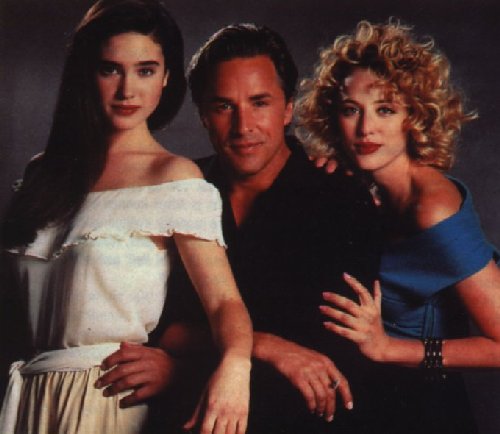
The Hot Spot is a heavily stylized film noir, one in which the the traditional fog and shadows have been replaced by clouds of dust and blinding sunlight.  Harry (Don Johnson) is a drifter who has just rolled into a small Texas town.  Harry’s not too bright but he’s handsome and cocky and who needs to be smart when you’ve got charm?  Harry gets a job selling used cars, though he actually aspires to be a bank robber.  Harry finds himself falling in love with Gloria (Jennifer Connelly), a seemingly innocent accountant who is being blackmailed by the brutish Frank Sutton (William Sadler).  Meanwhile, Harry is also being pursued by his boss’s wife, Dolly (Virginia Madsen), an over-the-top femme fatale who is just as amoral as Harry but who might be a little bit smarter.  Complicating matters is that, while Harry’s trying to rob a bank, he also ends up saving a man’s life.  Only Dolly knows that Harry isn’t the hero that the rest of the town thinks he is.  She tells him that she’ll keep his secret if he does her just one little favor….

The Hot Spot was directed by Dennis Hopper (yes, that Dennis Hopper) and, from the start, it quickly becomes apparent that he’s not really that interested in the film’s story.  Instead, he’s more interested in exploring the increasingly surreal world in which Harry has found himself.  The Hot Spot plays out at a languid pace, which allows Hopper to focus on his cast of small-town eccentrics.  (My particular favorite was Jack Nance as the alcoholic bank president who also doubles as the town’s volunteer fire marshal.)  The film is so hyper stylized that it’s hard not to suspect that every character — with the possible exception of Harry — understands that they’re only characters in a film noir.  For instance, is Dolly really the over-the-top femme fatale that she presents herself as being or is she just a frustrated housewife playing a role?  Is Gloria really an innocent caught up in a blackmail scheme or is she just smart enough to realize that the rules of noir requires her to appear to be Dolly’s opposite?  And is Harry being manipulated or is he allowing himself to be manipulated because, deep down, he understands that’s his destiny as a handsome but dumb drifter in a small town?  Do any of the characters really have any control over their choices and their actions or has everyone’s fate been predetermined by virtue of them being characters in a film noir?  In the end, The Hot Spot is more than just a traditional noir.  It’s also a study of why the genre has endured.

It’s a long and, at times, slow movie, one that plays out at its own peculiar pace.  As a result, some people will be bored out of their mind.  But if you can tap into the film surreal worldview and adjust to the languid style, The Hot Spot is a frequently entertaining and, at times, rather sardonic slice of Texas noir.

Trailer – Top Gun: Maverick


Maverick is back in the skies in Top Gun: Maverick. In the newly released trailer, it looks like Pete Mitchell (Tom Cruise) is still flying after all these years, which explains why he isn’t an Admiral by now. He still has that old motorcycle, though it looks like he rides a newer one and we’re seeing F-18 Hornets in combat, which should be cool. Tomcats are also still in flight, bless the angels.

Not much is known about Top Gun: Maverick save that Christopher McQuarrie (Mission Impossible: Rogue Nation and Mission Impossible: Fallout) has the writing duties here along with a few others. The directing duties are tied to Joseph Kosinski (Tron: Legacy). Kosinski and Cruise also worked together on Oblivion.

Top Gun: Maverick also stars Academy Award Winner Jennifer Connelly, Jon Hamm, Lewis Pullman, Ed Harris and Val Kilmer.

The movie will be released in theatres next Summer.

Enjoy.

Shattered Politics #50: Once Upon A Time In America (dir by Sergio Leone)


once-upon-a-time-in-america-5207d6cf9d3ac

Before I start this review of Sergio Leone’s 1984 gangster epic, Once Upon A Time In America, I want to issue two warnings.

First off, this review is going to have spoilers.  I’ve thought long and hard about it.  Usually, I try to avoid giving out spoilers but, in this case, there’s no way I can write about this movie without giving away a few very important plot points.  So, for those of you who don’t want to deal with spoilers, I’ll just say now that Once Upon A Time In America is a great film and it’s one that anyone who is serious about film must see.

Secondly, I’m not going to be able to do justice to this film.  There’s too much to praise and too much going on in the film for one simple blog post to tell you everything that you need to know.  Once Upon A Time In America is the type of film that books should be written about, not just mere blog posts.  Any words that I type are not going to be able to match the experience of watching this film.

For instance, I can tell you that, much as he did with his classic Spaghetti westerns, Sergio Leone uses the conventions of a familiar genre to tell an epic story about what it means to be poor and to be rich in America.  But you’ll never truly understand just how good a job Leone does until you actually see the film, with its haunting images of the poverty-stricken Jewish ghetto in 1920s New York and it’s surreal climax outside the mansion of a very rich and very corrupt man.

I can tell you that Ennio Morricone’s score is one of his best but you won’t truly know that until you hear it while gazing at Robert De Niro’s blissfully stoned face while the final credits roll up the screen.

I can tell you that the film’s cast is amazing but you probably already guessed that when you saw that it featured Robert De Niro, James Woods, Treat Williams, Danny Aiello, Joe Pesci, Burt Young, Tuesday Weld, Elizabeth McGovern, and Jennifer Connelly.  But, again, it’s only after you’ve seen the film that you truly understand just how perfectly cast it actually is.  Given the politics of Hollywood and the fact that he’s unapologetically critical of Barack Obama, it’s entirely possible that James Woods might never appear in another major motion picture.  A film like Once Upon A Time in America makes you realize what a loss that truly is.

So, if you haven’t seen it yet, I encourage you to see it.  Order it off of Amazon.  Do the one day shipping thing.  Pay the extra money, the film is worth it.

Much like The Godfather, Part II (and Cloud Atlas, for that matter), Once Upon A Time In America tells several different stories at once, jumping back and forth from the past to the present and onto to the future.

The film’s “past” is 1920.  Noodles (Scott Tiler) is a street kid who lives in New York’s ghetto.  He makes a living by doing small jobs for a local gangster and occasionally mugging a drunk.  He’s also the head of his own gang, made up of Patsy (Brian Bloom), Cockeye (Adrian Curry), and Dominic (Noah Moazezi).  Despite his rough edges, Noodles has a crush on Deborah (Jennifer Connelly), a refined girl who practices ballet in the back of her family’s store.  When Nooldes meets Max (Rusty Jacobs), the two of them become quick friends.  However, their criminal activities are noticed by the demonic Bugsy (James Russo), who demands any money that they make.

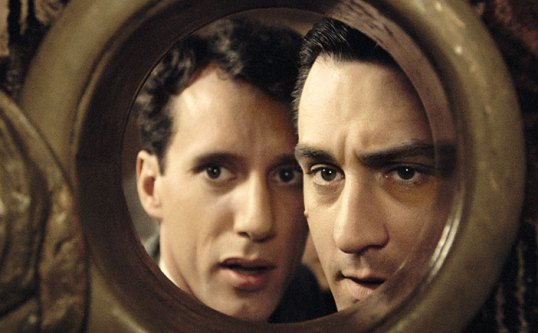
The film’s “present” is 1932.  Noodles (Robert De Niro) has spent twelve years in prison and, when he’s released, he discovers that some things have changed but some have remained the same.  Max (James Woods), Cockeye (William Forsythe), and Patsy (James Hayden) are still criminals but they’ve prospered as bootleggers.  Occasionally, they do jobs for a local gangster named Frankie (Joe Pesci) and sometimes, they just rob banks on their own.  During one such robbery, they meet a sado-masochistic woman named Carol (Tuesday Weld), who quickly becomes Max’s girlfriend.

As for Noodles, he continues to love Deborah (Elizabeth McGovern). But, when he discovers that she’s leaving New York to pursue a career as an actress, he reveals his true nature and rapes her.  It’s a devastating scene — both because all rape scenes are (or, at the very least, should be) devastating but also because it forces us to ask why we expected Noodles to somehow be better than the men who surround him.  After spending nearly two hours telling ourselves that Noodles is somehow better than his friends and his activities, the movie shows us that he’s even worse.  And, when we look back, we see that there was no reason for us to believe that Noodles was a good man.  It’s just what we, as an audience, wanted to believe.  After all, we all love the idea of the romanticized gangster, the dangerous man with a good heart who has been forced into a life of crime by his circumstances and who can be saved by love.  In that scene, Once Upon A Time In America asks us why audiences continue to romanticize men like Noodles and Max.

As for the gang, they’re hired to serve as unofficial bodyguards for labor leader Jimmy O’Donnell (Treat Williams) and, in their way, help to found the modern American labor movement.  (“I shed some blood for the cause,” Patsy says while showing off a huge bandage on his neck.) When fascistic police chief Aiello (Danny Aiello) needs to be taken down a notch, they kidnap his newborn son and hold him for ransom.  (While pulling off this crime, they also manages to switch around all the babies and, as a result, poor babies go home with rich families and vice versa, neatly highlighting both the power of class and the randomness of fate.)  However, the good times can’t last forever and, when prohibition is repealed, the increasingly unstable Max has to find a new way to make some money.

Finally, the film’s third storyline (the “future” storyline) takes place in 1967.  Noodles has spent decades living under a false identity in Buffalo.  When he gets a letter addressed to his real name, Noodles realizes that someone knows who he is.  He returns to a much changed New York.  Carol now lives in a retirement home.  Deborah is an acclaimed Broadway actress.  Jimmy O’Donnell is the most powerful union boss in America.  Fat Moe’s Speakeasy is now Fat Moe’s Restaurant.

Once Noodles is back in town, he receives a briefcase full of money and a note that tells him that it’s an advanced payment for his next job.  He also receives an invitation to a party that’s being held at the home of Christopher Bailey, the U.S. Secretary of Commerce.

Who is Secretary Bailey?  He’s a shadowy and powerful figure and he’s also a man who is at the center of a political scandal that has turned violent.  And, when Noodles eventually arrives at the party, he also discovers that Secretary Bailey is none other than his old friend Max.

How did a very Jewish gangster named Max transform himself into being the very WASPy U.S. Secretary of Commerce?  That’s a story that the film declines to answer and it’s all the better for it.  What doesn’t matter is how Max became Bailey.  All that matters is that he did.  And now, he has one final favor to ask Noodles.

(There’s a very popular theory that all of the 1967 scenes are actually meant to be a hallucination on Noodles’s part.  And the 1967 scenes are surreal enough that they very well could be.  Though you do have to wonder how Noodles in 1932 could hallucinate the Beatles song that is heard when he returns to New York in 1967.)

Once Upon A Time In America is an amazing film, an epic look at crime, business, and politics in America.  It’s a film that left me with tears in my eyes and questions in my mind.  The greatness of the film can not necessarily be put into words.  Instead, it’s a film that everyone needs to see.

onceuponatimeinamerica1