Embracing the Melodrama Part II #71: Cocaine: One Man’s Seduction (dir by Paul Wendkos)


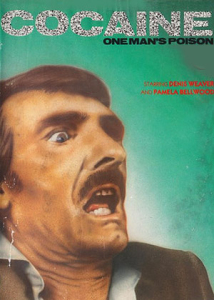
CocaineNow, I originally saw the 1983 made-for-TV movie Cocaine: One Man’s Seduction on Netflix so I have absolutely no first hand knowledge of how this film was advertised.  However, I have it on very good authority (i.e., I read it on another blog) that the image above is from the film’s VHS packaging.

Just looking at this image, you would be justified in thinking that Cocaine: One Man’s Seduction was an early David Cronenberg film.  Seriously, it looks like a deleted scene from Scanners and Dennis Weaver’s head is about to explode.

But no!  There are no scanners in Cocaine: One Man’s Seduction.  David Cronenberg did not direct this film.  As far as I can tell, it wasn’t even filmed in Canada.  Instead, Cocaine: One Man’s Seduction is about one man who gets seduced cocaine.

You may have noticed that I enjoy reminding you that this film is called Cocaine: One Man’s Seduction.  That’s because that’s a great title.  If the film had just been called Cocaine, you might watch the film expecting it to be set on a 1970s film set.  And if the film had just been called One Man’s Seduction, viewers may have watched the film expecting a Double Indemnitystyle film noir.  But Cocaine: One Man’s Seduction leaves no doubt about what we’re about to see.

Add to that, it’s a very melodramatic title and the name of this series of reviews is, after all, Embracing the Melodrama Part 2!

Anyway, Cocaine: One Man’s Seduction is about a real estate agent named Eddie Grant (Dennis Weaver).  He’s the type of semi-successful white-collar suburban guy who you just know is going to have a really over-the-top midlife crisis.  He has a wife (Karen Grassle) who loves him.  He has a son (James Spader — yes, that James Spader!) who wants to put off going to college for a year.  Eddie also has a job where he’s viewed as being an over-the-hill relic.  People looking to buy a new home simply are not impressed with Eddie’s cheap suits, mild manner, and old-fashioned scotch-after-work style.

What Eddie needs is a new wardrobe and aviator sunglasses.  And, as we all know from watching movies set in the 70s and 80s, nothing gets you into aviator sunglasses faster than snorting a line of coke.

Soon, Eddie is driving a fast car, he’s wearing nicer suits, and he’s keeping a lot of secrets.  Then, one day, his son — JAMES SPADER! — happens to look inside Eddie’s shave kit and discovers where dad has been hiding his cocaine.

Now, this is where I was expecting Jeff VanVondern to show up and say, ” I see a bunch of people that love you like crazy and they feel like they are losing you. And they wanna fight to get you back.”  But apparently, people in the 80s did not need an intervention to get them to go to rehab.  Instead, they just needed to have a dramatic nose bleed at work and nearly overdose on someone else’s kitchen floor.  They also needed to be called out by James Spader.

Of course, it also helps that Eddie is friends with a recovering cocaine addict who is played by a very thin-but-already-bald Jeffrey Tambor.  Jeffrey Tambor is already something of a hyperactive actor (and that’s why we love him!) so when you combine that natural tendency with a character who is supposed to be coked up, it’s something that simply has to be seen.

Anyway, Cocaine: One Man’s Seduction is a fairly good example of the-worst-that-can-happen-will-happen cinema.  If nothing else, it has some worth as a time capsule and it’s undeniably interesting to see James Spader play a role that one would normally never associate with James Spader.

Cocaine: One Man’s Seduction is currently seducing viewers on Netflix.

Film Review: The Avengers: Age of Ultron (dir by Joss Whedon)


AGU

In some ways, I think I may be both the worst and the best possible person to review the latest installment of the Marvel Cinematic Universe, largely because I’ve seen all the films but I don’t know much about the comics on which they are based. As a result, I can judge each film solely by what is on screen but, at the same time, I know that there are a lot of references that go straight over my head. For instance, when we saw Avengers: Age of Ultron earlier tonight, I had to get my boyfriend to explain to me why certain members of the audience got so excited when Iron Man mentioned an African country called Wakanda. But what’s important is that I would have still enjoyed Age of Ultron even if I had never known why Wakanda was important. The MCU has, so far, managed to maintain a balance between keeping the Marvel fans happy while also remaining accessible to viewers like me. The MCU has created its own separate reality, one that even someone like me can feel comfortable exploring and reviewing.

However, before I get around to giving you my feelings on Age of Ultron, let’s be honest about something.

There are a lot of critics out there who have been waiting for a chance to attack the latest installment of the Marvel Cinematic Universe. Some of them have disliked the MCU since the very first Iron Man film. They have been lone voices in the wilderness, arguing that the entire franchise is overrated and, in some cases, creatively destructive. Much like the Old Testament prophets, they continue to warn of the future while other filmgoers ignore the pillar of fire forming over the nearest theater. And then there are other critics who have praised previous MCU efforts but have never really been comfortable about it. These are the critics who resent having to write positively about a mere genre film. These are the critics who still haven’t gotten over just how good Guardians of the Galaxy truly was. They have been waiting for an MCU misfire so that they can do their penance for suggesting that Robert Downey, Jr. deserved Oscar consideration for Iron Man 3.

avengers-age-of-ultron-trailer-hulkbuster

These critics are going to watch The Avengers: Age of Ultron and they are going to pounce. They are going to point out that Age of Ultron puts too much emphasis on action over nuance and, as impressive as the CGI may be, it’s impossible to deny that Age of Ultron almost robotically follows the classic action movie formula. They’ll point out that none of The Avengers really develop as characters over the course of the film. Depending on how they’ve felt about the MCU up to this point, some of them will point out that Age of Ultron feels a bit like a step backwards. It doesn’t have the political subtext of Iron Man 3 or Captain America: The Winter Soldier. It lacks the satiric edge of Guardians of the Galaxy. And, ultimately, it’s just not as much fun as the first Avengers film.

And they won’t necessarily be wrong. I mean, let’s be honest. I write this as someone who has enjoyed (and, in some cases, loved) the previous MCU films. Avengers: Age of Ultron is not going to be remembered as one of the best of the MCU films. This is a flawed film that never reaches the heights of the original Avengers. All of the criticisms listed above are perfectly valid.

But, with all that in mind, I still enjoyed Avengers: Age of Ultron and I happily recommend it without a bit of hesitation.
film-review-avengers-age-of-ultron

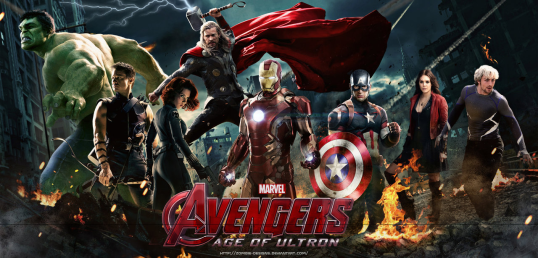
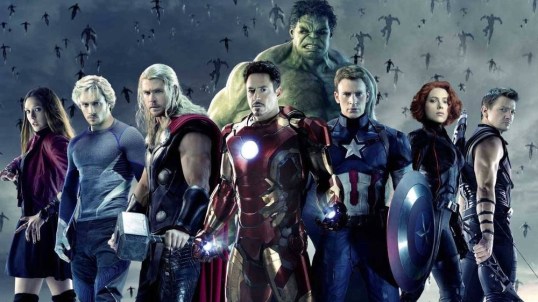
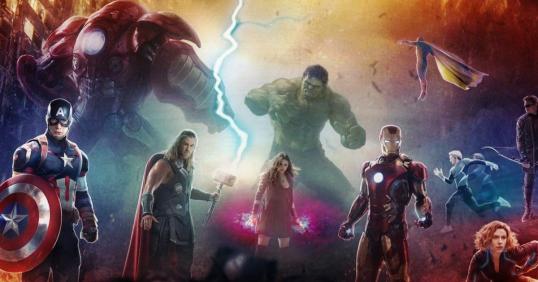
Age of Ultron opens with the Avengers attacking a HYDRA base and we quickly discover that the Avengers are exactly the same as we remembered them. Iron Man (Robert Downey, Jr.) is cocky, self-destructive, and torn by guilt over his past as a weapons manufacturer. Captain America (Chris Evans) is earnest and idealistic. Thor (Chris Hemsworth) is … well, he’s a God. Bruce Banner (Mark Ruffalo) is scared of what he becomes when he transforms into the Hulk. Clint Barton (Jeremy Renner) is still shooting arrows and feeling out-of-place. Natasha (Scarlett Johansson) is still flirty, enigmatic, and apparently in love with Bruce Banner.

ultron

One of the reoccurring themes of the MCU is that whenever Iron Man tries to make the world a better place, he instead ends up nearly destroying it. His latest attempt leads him to create Ultron (voiced quite chillingly by James Spader), a robot who has Tony’s personality and who has decided that the only way to bring about “peace in our time” is to destroy all of humanity. Ultron’s motives are as close as this film gets to any sort of thematic subtext. Ultron stands in for every ideology that would take away a person’s individual freedom in the name of the greater good. Age of Ultron doesn’t explore this subtext as much as I would have liked it to but, at the same time, I appreciated that it was at least there. That’s more than you can say for a film like Man of Steel.

Ultron is not the only new character to show up. Andy Serkis has a small role as a character that will undoubtedly be a villain in a future MCU film. After voicing JARVIS in several films, Paul Bettany finally gets to actually appear onscreen. I can’t talk too much about his character without spoiling the film but Bettany makes good use of his limited screen time.

And then there’s Aaron Taylor-Johnson and Elizabeth Olsen. Previously, they played lovers in Godzilla. In Age of Ultron, they play siblings who just seem like lovers. Taylor-Johnson is Pietro, who can move at super speeds. Elizabeth Olsen is Wanda, whose powers are a bit less defined but mostly seem to consist of being able to do whatever the script needs her to do at the time. (As the film explains it, “He’s fast, she’s strange.”) In the past, I’ve had mixed feeling about Taylor-Johnson. I thought he was brilliant in Nowhere Boy and Anna Karenina but, in other films, I found him to be excessively mannered and a little dull. But, in the role of Pietro, Taylor-Johnson really shines, achieving a good balance of arrogance and vulnerability. As for Elizabeth Olsen, she is perfectly cast as the angry but sensitive Wanda. At the very least, Age of Ultron better serves both of them than they were served by Godzilla.

avengers-ultron-trailer2

(Add to that, Wanda and I share similar tastes in fashion, which will make it easy for me to dress up as her for Halloween.)

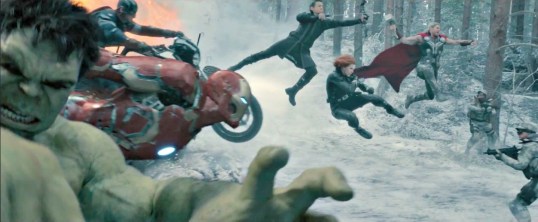
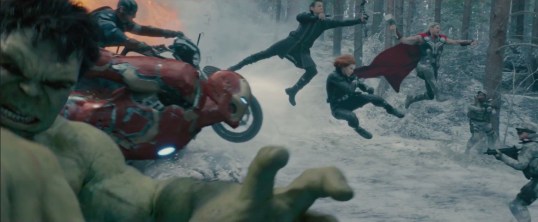
Director Joss Whedon does a good job with the film’s many battle scenes, especially the final one. And, as someone who hated the mindless destruction of Man of Steel, I appreciated that, as characters, the Avengers spent as much time trying to protect innocent bystanders as they did battling Ultron and his henchrobots. At the same time, it was hard not to feel that the film’s emphasis on action did sacrifice some of the character moments that have made other MCU films so memorable. Early on in the film, there’s a great scene where the Avengers simply hang out at a party. They dance, they dink, they laugh, and eventually, they all take turns attempting to pick up Thor’s hammer. It’s a fun scene because it brings these heroes back down to Earth and, for a few minutes, we get to relate to them in the way that we would relate to our best friends. Age of Ultron could have used more scenes like that.
lots-of-new-avengers-age-of-ultron-character-details

That said, the cast of Age of Ultron provides enough old fashioned movie star charisma that they overcome the script’s shallow characterization. In many ways, it’s like one of the old Frank Sinatra rat pack movies, where you forgive a lot because you enjoy hanging out with the cast. They’re just fun to watch. Robert Downey, Jr., Chris Evans, Chris Hemsworth, Scarlett Johansson, Jeremy Renner, and Mark Ruffalo; at this point they are so identified with these characters that the actors and their roles might as well be interchangeable.

(And, at this point, if it were revealed the Robert Downey, Jr. owned a suit of armor, would you really be surprised?)

Ultimately, Age of Ultron feels a lot like one of the less acclaimed James Bond films. It’s flawed, it’s imperfect, but fans of the franchise will find a lot to enjoy. Much as you wouldn’t introduce someone to James Bond by showing him Moonraker, you probably wouldn’t want to introduce someone to the MCU by showing him or her Age of Ultron. If, somehow, you’ve managed to exist without ever seeing any other MCU films, then Age of Ultron will leave you confused and wondering what the big deal is. But, if you’re already a fan of the franchise, you’ll find a lot to enjoy here.

And, flaws and all, you’ll walk out of the theater looking forward to the next installment.
the-avengers-2-age-of-ultron-cast-photos

A Vision of the Avengers: Age of Ultron for the Third Time


AgeofUltron

The third and, hopefully, final trailer for Avengers: Age of Ultron was unlocked today after a Twitter event which had millions of people tweeting the hashtag #AvengersAssemble. One has to give it up to the Marvel marketing machine. They know how to get the public clamoring for more when it comes to their films.

All that could be said has been said about this film. Just sit back and enjoy (or critique) one of the most highly-anticipated films of the year.

Avengers: Age of Ultron (2nd Trailer)


AVENGERS-ULTRON-POSTER

“Everyone creates the thing they dread.” — Ultron

New Avengers: Age of Ultron trailer has dropped during the inaugural College Football Playoff Championship game between Oregon and Ohio State.

For all the underwhelming reaction that the Ant-Man teaser trailer got after it premiered last week it looks like this latest trailer for Avengers: Age of Ultron just builds on the immense buzz and hype created by the leaked trailer from November 2014.

No need to say more. Just watch the new hotness as we wait for May 1, 2015 when Avengers: Age of Ultron shows us something beautiful.

Trailer: Avengers: Age of Ultron (Extended)


AVENGERS-ULTRON-POSTER

“I know you mean well. You want to protect the world, but you don’t want it to change. There’s only one path to peace…your extinction.” — Ultron

Marvel has released a new extended version of the teaser trailer they released a couple weeks ago. While it’s pretty much similar to the first teaser trailer this extended version has a new intro with Ultron in his initial form confronting the partying Avengers in Avengers Tower. The voice-over by James Spader as Ultron also sounds much different in this trailer than the first. We also get more lingering shots of all the Avengers from Iron Man all the way to Hawkeye rather than the rapid-fire cuts we saw in the first teaser.

May 2015 cannot come soon enough.

Avengers: Age of Ultron is set for a May 1, 2015 release date in North America.

Back to School #41: Pretty In Pink (dir by Howard Deutch)


pretty_in_pink-2

“Blane!  That’s not a name, that’s a major appliance!” — Duckie (Jon Cryer) in Pretty In Pink (1986)

(SPOILERS!)

Blane or Duckie?  Duckie or Blane?  Which one should Andi have gone to the prom with?

That’s the question at the heart of the 1986 film Pretty In Pink.  In Susannah Gora’s excellent book You Couldn’t Ignore Me If You Tried (which, incidentally, has been an important source of information for this entire Back to School series of reviews), a good deal of space and debate is devoted to whether or not Andi (played by Molly Ringwald) should have ended up going to the prom with either Duckie (Jon Cryer) or Blane (Andrew McCarthy).  What’s interesting is just how passionate the arguments on both side of the debate get.  Those in the pro-Duckie camp, like producer Lauren Shuler Donner and director Howard Deutch, frame the debate as almost being a moral one.  Those on the pro-Blane side — people like John Hughes (who wrote the film’s script) and Andrew McCarthy — make a convincing argument that the audience wanted to see Andie with Blane.

Perhaps most importantly, Molly Ringwald — who not only played Andie but upon whom the character was largely based — makes little secret of which suitor she preferred.  Molly Ringwald is pro-Blane all the way.

Myself — well, I’m going to hold off on saying which side I come down on.

pinkdvd5

Both Blane and Duckie have their flaws and their strengths.  Blane, for instance, comes from a wealthy family and spends too much time worrying about what his loathsome friend Steff (James Spader, who gives a wonderfully evil performance that justifies why he is quoted in Gora’s book as saying, “I figure I got a lock on this whole teen asshole thing,”) thinks.  But, at the same time, Blane is obviously more sensitive than the rest of his rich friends.  There’s a soulful sincerity to McCarthy’s performance and, until he breaks Andi’s heart by giving into peer pressure, he truly is every girl’s dream boyfriend.

124139__pretty_in_pink_l

And then there’s Duckie.  As played by Jon Cryer, Duckie is the type of best friend that we all hope we’re lucky enough to have.  You never have any doubt that he’ll always be there for Andie and it just takes one look at how he’s dressed to understand that Duckie doesn’t care about peer pressure.  Duckie may be an outcast but, unlike Steff and Blane, he’s confident in himself.  And whereas Blane is always wrestling with doubt, Duckie knows that he loves Andie.  And if your heart doesn’t hurt a little when he confesses that fact to Andi, then you probably don’t have one to begin with.  Add to that, as cute and charming as Blane is, you know he’d never break out into a random dance routine.  Blane is no Duckie but, at the same time, Duckie is also no Blane.

And who Andie should take with her to the prom (or if she should even go at all) is an important question because, if anyone deserves to have the perfect prom, it’s Andie.  Not only does she work hard to support her alcoholic and depressed father (the great Harry Dean Stanton) but she has great taste in music (or, at least, she does for someone living in the 80s) and she makes her own clothes.  One reason why we love Blane is because he discovers that, even if Andie isn’t rich, she’s still the most interesting girl in the entire school.  One reason why we love Duckie is because he didn’t have to discover this.  He already knew it.

Pretty-in-Pink-pretty-in-pink-21203179-497-278

The film, of course, originally ended with Blane giving into peer pressure and canceling his date with Andie.  Andie is heart-broken but refuses to surrender.  Wearing the pink dress that she specifically made for the event, Andie still goes to the prom and, as the film ends, she shares a dance with Duckie, the one who, all along, loved her unconditionally.

As is recounted in Gora’s book, test audiences loved the movie but hated that ending.  And so, a new ending was shot.  Blane shows up at the prom without a date.  He apologizes to Andie.  He shakes Duckie’s hand.  He tells Andie that he always believed in her, he just didn’t believe in himself.  (Watching at home, Lisa says, “Oh my God!” and wipes away a tear.)  As he leaves, even Duckie realizes that Andie belongs with Blane.  Andie and Blane are reunited in the parking lot and Duckie goes off with Kristy Swanson.

And you know what?  That ending — that ending is perfect.  Because yes, Duckie did love Andie but Andie loved Blane and the prom is a time to be with someone who you think you’ll love forever.  (Little realizing, of course, that you’ll eventually only think of your former prom date as being that guy who keeps inviting you to play games on Facebook.)  Pretty in Pink is one of the most romantic high school movies ever made and one reason it works is because the ending is all about celebrating that romance.  It may not be realistic and yes, it might even be borderline immoral to allow Blane to be so easily redeemed after breaking Andie’s heart but who cares?

The wonderful thing about romance is that it doesn’t have to make sense.

It just has to be.

61SL9To9GLL._SY300_

Embracing the Melodrama #39: True Colors (dir by Herbert Ross)


True Colors

For the past 9 days, I’ve been posting chronological reviews of 54 of the most (and least) memorable melodramas ever filmed.  I started with a film from 1916 and yesterday, I completed the 80s.  Today, we start in on the 90s with the 1991 political drama True Colors.

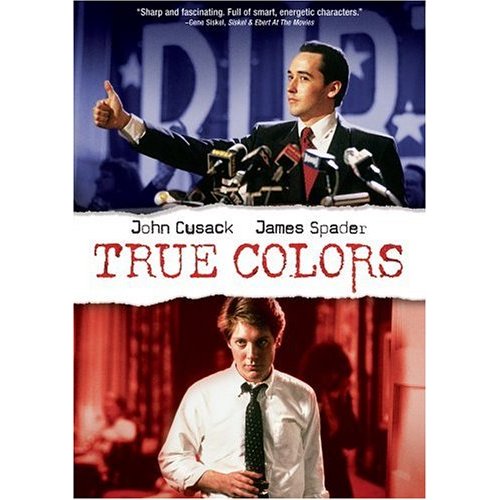
True Colors tells the story of two ambitious law students.  Tim Gerritty (James Spader) is a wealthy idealist who wants to work at the Justice Department so he can uncover and prosecute political corruption.  His roommate and eventual best friend is Peter Burton (John Cusack).  Although Peter initially lies about his background, it’s eventually revealed that he comes from a poor family and the result of growing up in poverty has left Peter with an obsessive desire for revenge on everyone who has ever looked down on him.  And how is Peter planning on getting that revenge?  By marrying the daughter of Sen. James Stiles (Richard Widmark) and eventually running for a seat in the U.S. House.  Despite the fact that Tim happens to be in love with Sen. Stiles’s daughter as well, he still supports his friend Peter and even agrees to be his best man.  However, as Peter gets closer and closer to achieving his goals, Tim starts to reconsider their friendship….

There’s a scene about halfway through True Colors, in which Peter Burton attempts to blackmail Sen. Stiles into supporting his political career.  Stiles agrees but then angrily adds, “God help you when the people find out.  They always do, you know.”  I was naturally waiting for Peter to come up with a properly sarcastic response but instead, Peter simply looks down at the ground, properly chastened.  It’s a jarringly false note and, unfortunately, everything that comes after this scene feels equally false.  The film, which starts out as such a strong portrait of what happens with friendship comes into conflict with ambition, ends up turning into a painfully predictable political diatribe, the type of thing that makes the portrait of politics in The Adjustment Bureau seem subtle and nuanced by comparison.  When Tim decided to betray Peter, it should be a moment full of moral ambiguity.  Instead, we’re expected to ignore their long friendship and just be happy that Tim is willing to do the right thing and protect the integrity of the American political process.

And, who knows?  Maybe that’s the way people viewed politics back in the early 90s.  But for audiences today, it all feels really naive and simplistic.

But, if you can manage to look past the film’s weak’s script, you can enjoy the acting.  John Cusack is wonderfully intense as Peter, making the character compelling even when the screenplay lets him down.  Watching him in True Colors is like watching the performance that he should have given in The Butler.  James Spader is sympathetic as Tim and, like Cusack, his performance almost allows him to overcome a script that doesn’t seem to realize that Tim is essentially a self-righteous jerk.  And finally, there’s Mandy Patikin who has a lot of fun playing the local crime boss who sponsors Peter’s career and who, in one memorable (if out-of-place ) scene beats up a shark that’s jumped up on the desk of his yacht.

Much like High Stakes, True Colors is one of those obscure films that occasionally pops up on cable, usually late at night and usually serving as filler between showings of better-known films.  Keep an eye out for it, if just for the chance to enjoy the performances.

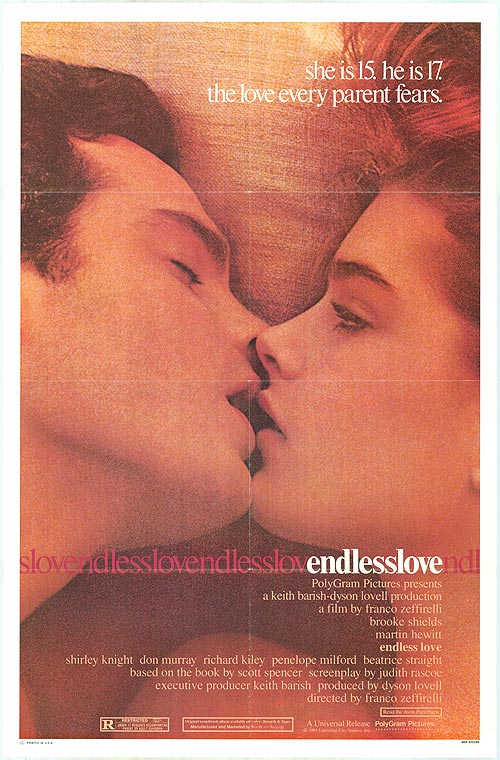
Embracing the Melodrama #33: Endless Love (dir by Franco Zefferilli)


endless love

Do anyone remember a movie that came out in February that was called Endless Love? If you do, you’ve got a better memory than I do because, even though I saw it, I really can’t really remember much about it beyond the fact that I was disappointed by it. I know I had high hopes because the trailer was damn sexy but the film itself just turned out to be rather bland and forgettable.

Well, the 2014 version of Endless Love may have been forgettable but the same can not be said of the original 1981 version.

Endless Love tells the sweet story of two teenagers who want to have sex.  Well, actually, it’s debatable how sweet the story is  because the boy is a creepy stalker-type and the girl appears to be suffering from Stockholm Syndrome but director Franco Zefferilli directs the film as if he’s bringing to life the greatest romance of all time.  The entire film is full of lush images and the swelling musical score suggests that we should hope that these two end up together, even as the boy is burning down the girl’s house.

(Believe me, I love elaborate expressions of love and romantic feelings as much as the next girl but I draw the line at burning down my house.)

David (Martin Hewitt) and Jade (Brooke Shields) both live in the suburbs of Chicago.  Jade’s parents are aging hippies.  Her father (Don Murray) may smoke weed with the neighborhood teenagers and play the trumpet at wild parties but he’s still very protective of his daughter.  Her mother (Shirley Knight) is far more permissive and open-minded.  Jade’s brother, Keith (played by a really young and dangerous-looking James Spader), is friends with David and invites him to a party at his house.  David meets Jade and soon, the two of them are obsessed with each other.

However, not everyone is happy about their newfound love.  Jade’s father doesn’t trust David.  Keith soon starts saying stuff like, “Just because you’re fucking my sister, that doesn’t make you a part of the family.”  (And, as rude as that may be, it’s really hot when said by a young and dangerous-looking James Spader.)  Meanwhile, David’s mom (Beatrice Straight) doesn’t want David hanging out with a family that she describes as being “a relic of the 60s.”

Eventually, Jade is spending so much time thinking about David that her grades start to suffer and she finds that she can no longer sleep.  She starts stealing her father’s sleeping pills.  When she’s caught in the act, David is forbidden from seeing her until the end of the school year.  “It’s only 30 days,” Jade’s mom promises him.

Well, that’s 30 days too long for David!

Taking the advice of a young arsonist (played, in his film debut and with a notably squeaky voice, by Tom Cruise), David decides to set Jade’s house on fire.  His original plan is to save Jade and her family and be hailed as a hero.  Instead, the fire ends up raging out of control and the house is destroyed.

Arrested for arson, David spends some time in a mental asylum and is legally forbidden from ever seeing Jade or her family again.  Eventually, David gets out of the asylum and that’s when the movie gets really weird…

Endless Love is a really creepy movie that makes the mistake of equating stalking with true romance.  There’s no other way to put it.  Yet, at the same time, Franco Zefferilli’s images are so vividly romantic and Martin Hewitt and Brooke Shields are both so physically attractive (never mind that neither one of them apparently knew how to act back in 1981) that you can’t help but sometimes get swept up in the film’s silliness.  Add to that, the film has a great soundtrack and you also get a chance to see Tom Cruise act like a total jackass.

Check it out below!

Trailer: The Avengers: Age of Ultron (SDCC 2013 Reveal)


AgeofUltron

This past summer those who attended the Marvel panel over at San Diego Comic-Con 2013 were treated to Joss Whedon’s reveal for The Avengers sequel.

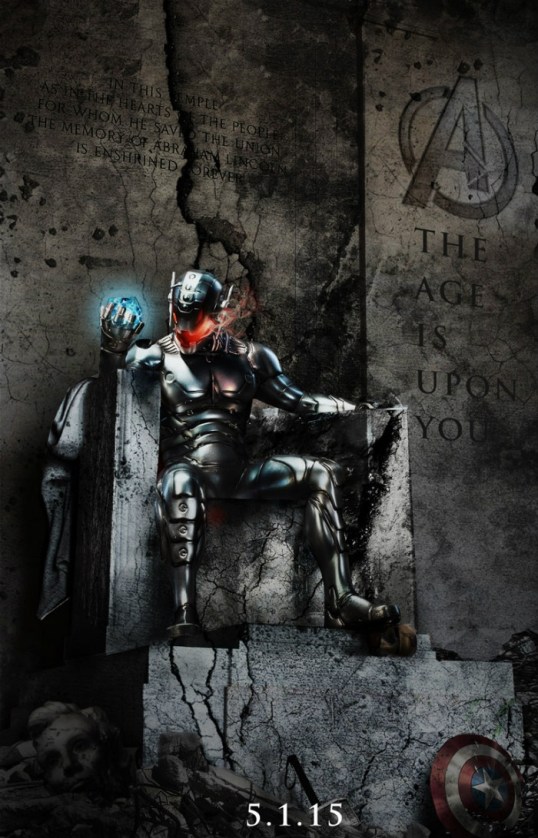
From the mid-credits scene at the end of The Avengers many thought that the villain for the sequel will be the cosmic baddie Thanos. I guess Whedon and Feige decided that it was best to keep Whedon in their pockets for now and went in a different direction. The sequel to The Avengers will have one of the superhero team’s toughest and most persistent archenemies: The self-aware and truly pissed off android known as Ultron.

The Avengers: Age of Ultron will not be following the events from this past year’s Age of Ultron crossever series in the comics. It instead will just use the title and create a brand-new story behind the origins (this time around it won’t be Hank Pym aka Ant-Man who creates Ultron, but someone else) of the Avengers main enemy and it’s plans for the team and Earth.

This change in Ultron’s creator didn’t sit well with some of the purists who want everything in the Marvel Universe to be adapted exactly how it was originally written. Fortunately, I’m not one of them and I actually think this change further solidifies the Marvel Cinematic Universe as it’s own alternate universe that comprises the near-infinite realities of the Marvel Multiverse. Where the universe with make’s up the original comic books have been given the Earth-616 label the Marvel Cinematic Universe has now been given it’s own of Earth-199999.

It’s going to be interesting to see what Whedon and company will come up with to make Ultron a villain worthy to get the team back together again. It helps that they’ve chosen James Spader to voice the bugshit-crazy and angry Ultron.

The Avengers: Age of Ultron will premiere in our universe on May 1, 2015.

Film Review: Lincoln (dir. by Steven Spielberg)


I am a history nerd.

If you’ve read my previous reviews here on the Shattered Lens, that’s not necessarily a major revelation.  Still, before I talk about Steven Spielberg’s latest film, the sure-to-be Oscar nominated Lincoln, you should know where I’m coming from as a reviewer.  Cinema may be my number one love but history, and especially political history, runs a close second.  To me, there is nothing more fascinating than learning how those in the past both viewed and dealt with the issues that we still face in the present.  Whereas some people take pride in being able to name every player that’s ever played for the Dallas Cowboys, I take pride in the fact that I can not only name every President and Vice President in order but I can also tell you exactly who they had to defeat in order to serve in those offices.

I love history and therefore, it was hard for me not to feel as if Lincoln was a film that was made specifically for me.  Covering the final four months of the life of the 16th president, this film tells the story of Lincoln’s struggle to pass the 13th Amendment and to bring an end to the U.S. Civil War.  The film also documents Lincoln’s troubled marriage to the unstable Mary and his son’s decision to enlist in the Union Army.  Even though Spielberg and screenwriter Tony Kushner don’t include any vampires*, there’s still a lot going on in Lincoln and it is to their credit that the film remains compelling despite the fact that everyone already knows how the story is going to end.

Daniel Day-Lewis is getting a lot of critical acclaim for his performance in the title role and, for once, I actually have to agree with the critics.  Abraham Lincoln is one of the most iconic figures in American history.  He is such an icon that, at times, it’s hard to believe that this larger-than-life figure, with his stove-pipe hat and his homely face, was an actual human being who lived and breathed and died like any other human being.  It’s easier to think of him in the same way that Jesus Christ used to be represented in films like Ben-Hur, as an inspiring character who is always standing just a little bit off-camera.  The brilliance of Day-Lewis’s performance is that he makes us believe that this legendary figure could actually exist with all the rest of history’s mortals.  For lack of a better term, Day-Lewis humanizes Lincoln.  His performance contains all the bits of the Lincoln legend: the fatalistic melancholy, the steely resolve, the quick humor, and occasional flashes of self-doubt.  The genius of the performance is the way that it takes all the legendary pieces and arranges them to create a portrait of a very believable man.

Though the film is dominated by Day-Lewis’s lead performance, the film’s supporting cast does a good job at bringing to life the people around Lincoln.  Whenever one film can manage to find roles for Hal Holbrook, David Strathairn, Jared Harris, James Spader, John Hawkes, and Jackie Earle Haley, you’ve got good reason to be optimistic about what you’re about to see.  Probably the film’s showiest supporting role goes to Tommy Lee Jones, who plays the firebrand abolitionist Thaddeus Stevens.  Admittedly, Tommy Lee Jones gives a standard Tommy Lee Jones performance here but, especially when paired with Day-Lewis’s more internal acting style, the end result is still fun to watch.  Also giving a good performance is Sally Field, who plays Lincoln’s mentally unstable wife.  Historians have rarely been kind (or fair) to Mary Lincoln but Field makes her into a difficult but sympathetic figure.  Finally, even though the role of Lincoln’s son is not a challenging one, I’m always happy whenever Joseph Gordon-Levitt shows up onscreen.

Ultimately, however, Lincoln is a Steven Spielberg film.  Spielberg is a very good director but he’s also a very safe one.  The same can be said of Lincoln as a film.  The film’s cinematography, art design, and costume design are all brilliantly done and award-worthy but it’s still hard not to occasionally wish that Spielberg would have enough faith in his audience that he wouldn’t feel the need to have John Williams provide constant musical cues to let us know what we are supposed to be feeling about what we’re experiencing.  If you’re looking for hints of moral ambiguity, an unflinching examination of the rivers of blood that flowed on the Civil War battlefield, or for an in-depth portrait of Lincoln’s personal demons (and most historians agree that he had a few), you might want to look elsewhere.  This is not Martin Scorsese’s Lincoln.  This is Steven Spielberg’s Lincoln.  This is a film that is meant to be inspiring (as opposed to thought-provoking) and, for the most part, it succeeds.

I have to admit that I went into Lincoln expecting to be disappointed.  Ever since the film first went into production in 2011, websites like Awards Daily have been hyping this film to death.  Before many of them had even seen the completed film, online critics were announcing that both the film and Daniel Day-Lewis were the clear front-runners for the Oscars in 2013.  As anyone who has read my previous reviews on this site knows, nothing turns me off more than the bandwagon mentality of the critical establishment.  Often times, when a film is embraced as vehemently and as early as Lincoln has been, I feel almost honor-bound to be a hundred times more critical of it than I would be of a film like Step Up Revolution.

However, Lincoln is a rarity.  It’s a film that, for the most part, actually lives up to all the hype.

—-

*I imagine that little joke will cause a lot of confusion to anyone who, ten years in the future, happens to stumble across this review.  To you, future reader who has forgotten all about Abraham Lincoln: Vampire Hunter, I can only apologize.