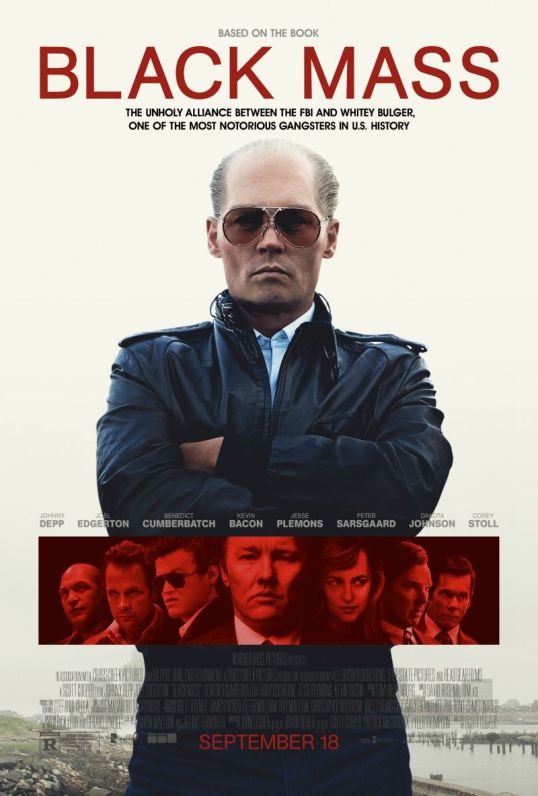
One of this year’s most-anticipated films (well, at least when it comes to award season) has a new trailer.
Black Mass stars Johnny Depp in the role of the infamous gangster Whitey Bulger who, as the film’s tagline states, became the most notorious gansgter in U.S. history. This is bold claim considering other gangsters in U.S. history such as Lucky Luciano, Bugsy Siegel, Vito Genovese and Meyer Lansky to name a few.
What makes this film so interesting is the fact that we finally get to see Depp return to acting real, complex characters instead of just acting like a character these past decade. Plus, have you seen this cast supporting Depp: Benedict Cumberbatch, Kevin Bacon, Joel Edgerton, Corey Stoll and Jesse Plemons just for starters.
Black Mass is set for a September 18, 2015 release date.
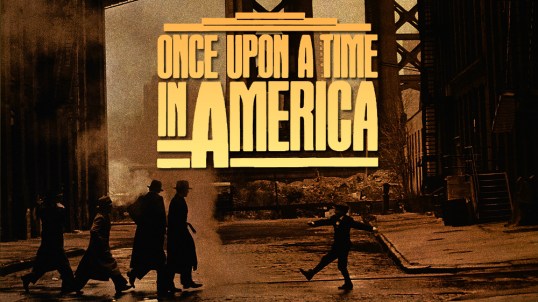
Before I start this review of Sergio Leone’s 1984 gangster epic, Once Upon A Time In America, I want to issue two warnings.
First off, this review is going to have spoilers. I’ve thought long and hard about it. Usually, I try to avoid giving out spoilers but, in this case, there’s no way I can write about this movie without giving away a few very important plot points. So, for those of you who don’t want to deal with spoilers, I’ll just say now that Once Upon A Time In America is a great film and it’s one that anyone who is serious about film must see.
Secondly, I’m not going to be able to do justice to this film. There’s too much to praise and too much going on in the film for one simple blog post to tell you everything that you need to know. Once Upon A Time In America is the type of film that books should be written about, not just mere blog posts. Any words that I type are not going to be able to match the experience of watching this film.
For instance, I can tell you that, much as he did with his classic Spaghetti westerns, Sergio Leone uses the conventions of a familiar genre to tell an epic story about what it means to be poor and to be rich in America. But you’ll never truly understand just how good a job Leone does until you actually see the film, with its haunting images of the poverty-stricken Jewish ghetto in 1920s New York and it’s surreal climax outside the mansion of a very rich and very corrupt man.
I can tell you that Ennio Morricone’s score is one of his best but you won’t truly know that until you hear it while gazing at Robert De Niro’s blissfully stoned face while the final credits roll up the screen.
I can tell you that the film’s cast is amazing but you probably already guessed that when you saw that it featured Robert De Niro, James Woods, Treat Williams, Danny Aiello, Joe Pesci, Burt Young, Tuesday Weld, Elizabeth McGovern, and Jennifer Connelly. But, again, it’s only after you’ve seen the film that you truly understand just how perfectly cast it actually is. Given the politics of Hollywood and the fact that he’s unapologetically critical of Barack Obama, it’s entirely possible that James Woods might never appear in another major motion picture. A film like Once Upon A Time in America makes you realize what a loss that truly is.
So, if you haven’t seen it yet, I encourage you to see it. Order it off of Amazon. Do the one day shipping thing. Pay the extra money, the film is worth it.
Much like The Godfather, Part II (and Cloud Atlas, for that matter), Once Upon A Time In America tells several different stories at once, jumping back and forth from the past to the present and onto to the future.
The film’s “past” is 1920. Noodles (Scott Tiler) is a street kid who lives in New York’s ghetto. He makes a living by doing small jobs for a local gangster and occasionally mugging a drunk. He’s also the head of his own gang, made up of Patsy (Brian Bloom), Cockeye (Adrian Curry), and Dominic (Noah Moazezi). Despite his rough edges, Noodles has a crush on Deborah (Jennifer Connelly), a refined girl who practices ballet in the back of her family’s store. When Nooldes meets Max (Rusty Jacobs), the two of them become quick friends. However, their criminal activities are noticed by the demonic Bugsy (James Russo), who demands any money that they make.
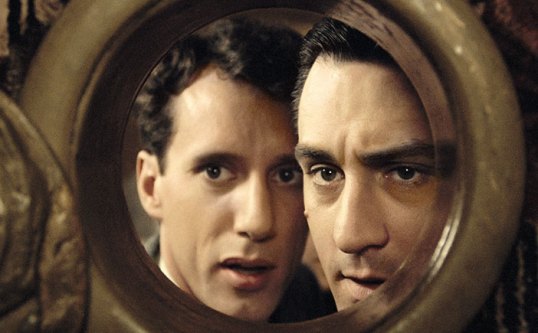
The film’s “present” is 1932. Noodles (Robert De Niro) has spent twelve years in prison and, when he’s released, he discovers that some things have changed but some have remained the same. Max (James Woods), Cockeye (William Forsythe), and Patsy (James Hayden) are still criminals but they’ve prospered as bootleggers. Occasionally, they do jobs for a local gangster named Frankie (Joe Pesci) and sometimes, they just rob banks on their own. During one such robbery, they meet a sado-masochistic woman named Carol (Tuesday Weld), who quickly becomes Max’s girlfriend.
As for Noodles, he continues to love Deborah (Elizabeth McGovern). But, when he discovers that she’s leaving New York to pursue a career as an actress, he reveals his true nature and rapes her. It’s a devastating scene — both because all rape scenes are (or, at the very least, should be) devastating but also because it forces us to ask why we expected Noodles to somehow be better than the men who surround him. After spending nearly two hours telling ourselves that Noodles is somehow better than his friends and his activities, the movie shows us that he’s even worse. And, when we look back, we see that there was no reason for us to believe that Noodles was a good man. It’s just what we, as an audience, wanted to believe. After all, we all love the idea of the romanticized gangster, the dangerous man with a good heart who has been forced into a life of crime by his circumstances and who can be saved by love. In that scene, Once Upon A Time In America asks us why audiences continue to romanticize men like Noodles and Max.
As for the gang, they’re hired to serve as unofficial bodyguards for labor leader Jimmy O’Donnell (Treat Williams) and, in their way, help to found the modern American labor movement. (“I shed some blood for the cause,” Patsy says while showing off a huge bandage on his neck.) When fascistic police chief Aiello (Danny Aiello) needs to be taken down a notch, they kidnap his newborn son and hold him for ransom. (While pulling off this crime, they also manages to switch around all the babies and, as a result, poor babies go home with rich families and vice versa, neatly highlighting both the power of class and the randomness of fate.) However, the good times can’t last forever and, when prohibition is repealed, the increasingly unstable Max has to find a new way to make some money.
Finally, the film’s third storyline (the “future” storyline) takes place in 1967. Noodles has spent decades living under a false identity in Buffalo. When he gets a letter addressed to his real name, Noodles realizes that someone knows who he is. He returns to a much changed New York. Carol now lives in a retirement home. Deborah is an acclaimed Broadway actress. Jimmy O’Donnell is the most powerful union boss in America. Fat Moe’s Speakeasy is now Fat Moe’s Restaurant.
Once Noodles is back in town, he receives a briefcase full of money and a note that tells him that it’s an advanced payment for his next job. He also receives an invitation to a party that’s being held at the home of Christopher Bailey, the U.S. Secretary of Commerce.
Who is Secretary Bailey? He’s a shadowy and powerful figure and he’s also a man who is at the center of a political scandal that has turned violent. And, when Noodles eventually arrives at the party, he also discovers that Secretary Bailey is none other than his old friend Max.
How did a very Jewish gangster named Max transform himself into being the very WASPy U.S. Secretary of Commerce? That’s a story that the film declines to answer and it’s all the better for it. What doesn’t matter is how Max became Bailey. All that matters is that he did. And now, he has one final favor to ask Noodles.
(There’s a very popular theory that all of the 1967 scenes are actually meant to be a hallucination on Noodles’s part. And the 1967 scenes are surreal enough that they very well could be. Though you do have to wonder how Noodles in 1932 could hallucinate the Beatles song that is heard when he returns to New York in 1967.)
Once Upon A Time In America is an amazing film, an epic look at crime, business, and politics in America. It’s a film that left me with tears in my eyes and questions in my mind. The greatness of the film can not necessarily be put into words. Instead, it’s a film that everyone needs to see.
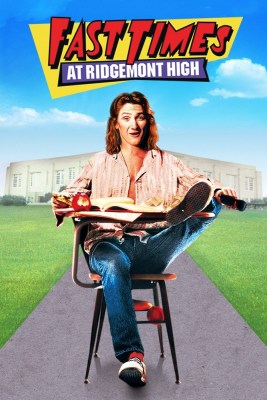
I’ve watched the 1982 high school dramedy Fast Times At Ridgemont High a handful of times. I’ve reached the point where, every time I watch it, I know exactly what’s going to happen. I know when stoner Jeff Spicoli (Sean Penn) is going to order pizza. I know that Charles Jefferson (Forest Whitaker) is going to go crazy during the big game against Lincoln High. I know that when Stacy (Jennifer Jason Leigh) kisses the sweet but shy Mark Ratner (Brian Backer), he’s going to end up panicking and scrambling for an excuse to go home. I know that Brad (Judge Reinhold) is going to get caught masturbating. I even know when Anthony Edwards, Nicolas Cage, and Eric Stoltz are all going to appear in early performances.
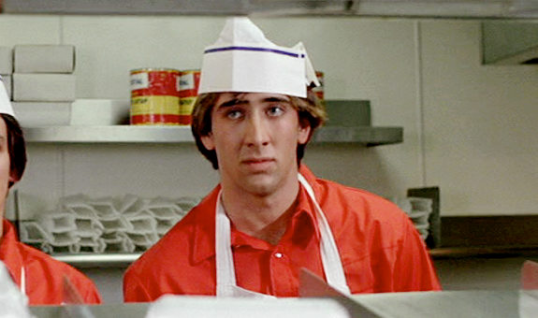
Nicolas Cage, 30 years before he would agree to star in a remake of Left Behind.
In other words, I know exactly what’s going to happen.
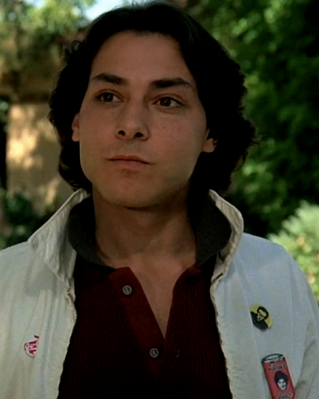
But, Mike Damone (played, very well, by Robert Romanus, who is only an actor and shouldn’t be held responsible for the actions of a fictional character) — every time, I find myself hoping you’ll do the right thing and every time, you let me down.
Oh sure. I know that you tried to raise the money to help pay for Stacy’s abortion. I saw the scene of you on the phone in your bedroom, begging people to finally pay for the tickets that you’d sold them. I know that you tried but when you couldn’t get the money, where were you? When Stacy had to ask her older brother, Brad, for a ride to the clinic, where were you? After Stacy left the clinic, she found Brad waiting for her. Brad agreed not to ask Stacy who had gotten her pregnant. He agreed not to tell their parents. Brad was there for his sister. Where were you, Mike Damone?
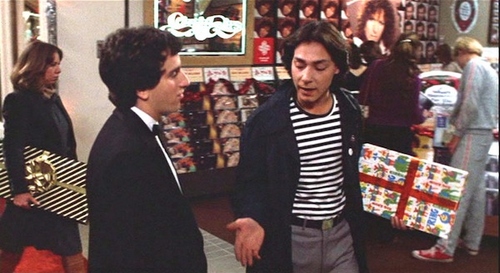
What really upsets me is that, up until you abandoned Stacy, you were one of the more likable characters in Fast Times At Ridgemont High. I mean, sure — you didn’t get to deliver any classic lines like Spicoli did. And you weren’t adorably shy like Mark. But, Mike Damone — I believed in you! We all believed in you! (Imagine me doing my best Tyra Banks imitation here.) You were a cocky guy who spent all of your time selling concert tickets at the mall but you know what? We all assumed that, underneath all of the attitude, there secretly lurked a good guy. I mean, we could tell that you sincerely cared about your friend Mark and, because we’re all fools apparently, we even thought that maybe Stacy could bring out the real you. When Stacy sat there writing “Mrs. Stacy Damone” on her test paper in history class, we understood. Because, after all, we’ve all had a Mike Damone in our life.
Rat and Mike
But then, what happened? Well, first, you had sex with Stacy despite the fact that you knew Mark liked her. Of course, for all your bluster and talk, it turned out that sex with Mike Damone amounted to 2 minutes of squirming followed by that classic line, “I think I came.” And then you left, saying those words that every girl dreams of hearing from someone she’s just been with: “I’ll see you around.” (Or maybe you said, “I’ll give you a call,” or “I’ve got to go now.” Either way, it was a pretty shitty thing to say, Damone.)
As you may have guessed, Fast Times At Ridgemont High is not your typical teen comedy. In fact, over three decades since it was first released, it remains one of the best and most perceptive films about teenagers ever made. Over on the A.V. Club, Keith Phipps refers to Fast Times as being “a Trojan horse of a teen comedy that balanced lowbrow gags with subtle humor, genuine insight .. and pathos,” and that’s such a perfect description that I’m not at all ashamed to repeat it word-for-word here.
Don’t get me wrong. Though Fast Times At Ridgemont High has a lot more drama than you would expect from a film with the words “Fast Times” in the title, it’s also an undeniably funny film. It’s just that, unlike so many other teen comedies, the comedy comes from a very real place. This is one of those rare films where the characters are funnier than the situations that they find themselves in. You laugh because you relate to the characters. (Admitedly, you might also laugh at what some of them are wearing. Mike Damone’s keyboard print scarf comes to mind…)
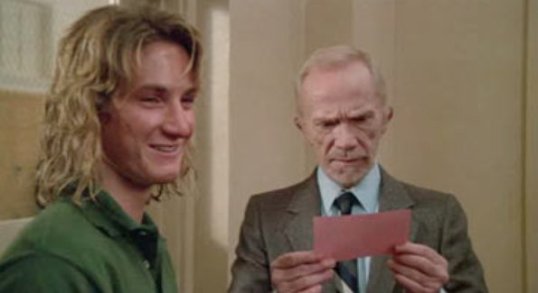
Spicoli and Hand
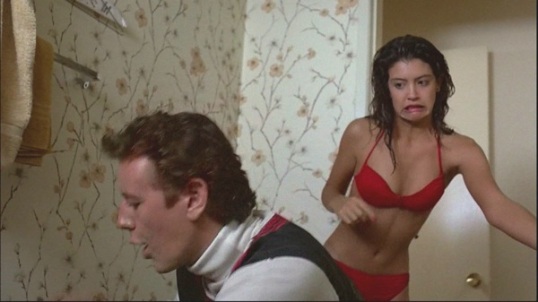
Like many classic teen films — American Graffiti, Fame and Dazed and Confused, to cite just three obvious examples — Fast Times At Ridgemont High is an ensemble piece that follows several different students as they survive a year at Ridgemont High. Sean Penn’s Jeff Spicoli is the character that everyone always mentions as a favorite and indeed, he does get the best lines and his battles with Mr. Hand (Ray Waltson) are definitely a highlight of the film. People also always mention Linda (Pheobe Cates), who has a boyfriend in college and who walks in on Brad while he’s fantasizing about her. And yes, Linda is a memorable character and not just because she bares her breasts during Brad’s fantasy. She’s also Stacy’s best friend and I think we’ve all had a friend like Linda, someone who we looked up to and assumed had all the answers. For that matter, Brad is also an interesting character and there’s something undeniably fascinating about watching as he goes from being a carefree, popular teen to being a guy working behind the counter at 7-11.
(If only Brad had not gotten Arnold that job at All-American Burger…)
Agck!
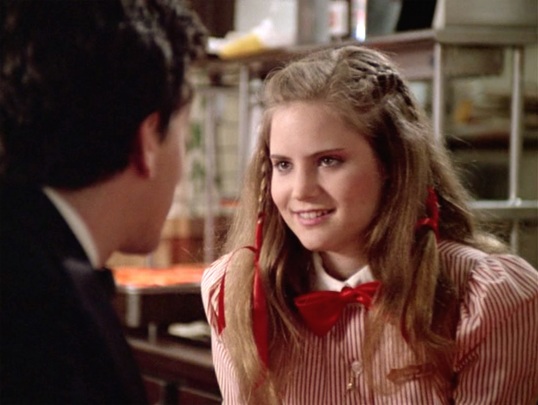
However, for me, the film will always be about Stacy, if just because she’s the character to which I relate. I know when I was 15, I felt a lot like Stacy and, every time I watch Fast Times, I feel like some of Stacy’s experiences could have been taken straight out of my diary. I had the same combination of confidence and insecurity and the same questions about why boys could talk like men but never act like them. Stacy, of course, is played by Jennifer Jason Leigh who gives a remarkably brave and vulnerable performance in this film. Off the top of my head, I can’t tell you who won the Oscar for best supporting actress of 1982 but it doesn’t matter. Jennifer Jason Leigh should have won it.
Jennifer Jason Leigh in Fast Times At Ridgemont High
Fast Times is often referred to as being a Cameron Crowe film, largely because Crowe famously went undercover at an actual high school while writing the book that served as the basis for his script. And yes, Fast Times is filled with scenes and characters that feel undeniably Cameron Crowe-like. However, Fast Times was directed by Amy Heckerling and thank God for that. Heckerling brings a sensitive touch to material that a male director would be tempted to play solely for exploitation. Cameron Crowe may have written the script but it’s definitely an Amy Heckerling film.
And, sorry, Mike Damone — you’re still a little prick.
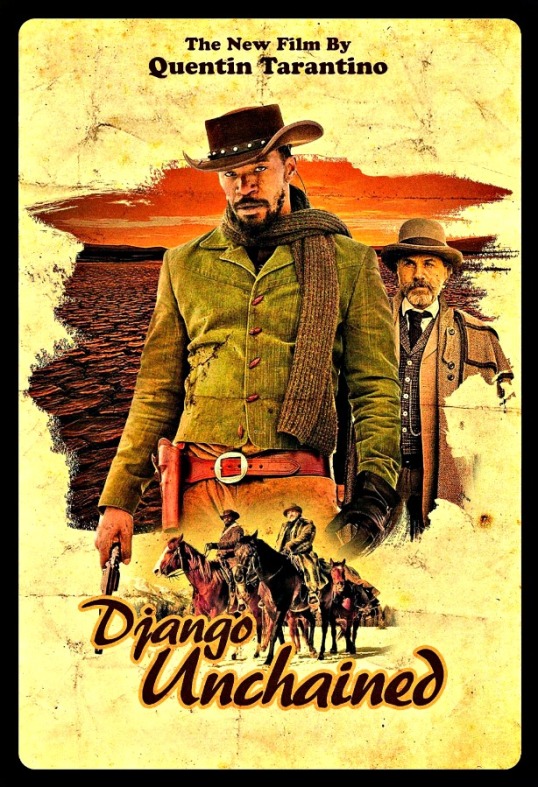
The last couple days have seen the release of a number of upcoming films that should be jockeying for all those fancy-pants end of season awards. One such film is the latest film from Quentin Tarantino. Django Unchained is his latest trip into the grindhouse world with this film being his take on the spaghetti westerns made popular by Italian maestros like Sergio Leone, Sergio Corbucci and Enzo G. Castellari.
It’s an ensemble cast that’s headlined by Jamie Foxx in the title role with Christoph Waltz, Samuel L. Jackson and Leonardo DiCaprio (playing against the grain as the main villain of the piece). To pay respect to the very genre that this film owes not just it’s title, but theme and tone, Tarantino has even cast the original Django in Franco Nero in the role of Amerigo Vassepi.
Django Unchainedis set for a Christmas Day 2012 release date (hopefully the world didn’t end just four days earlier).
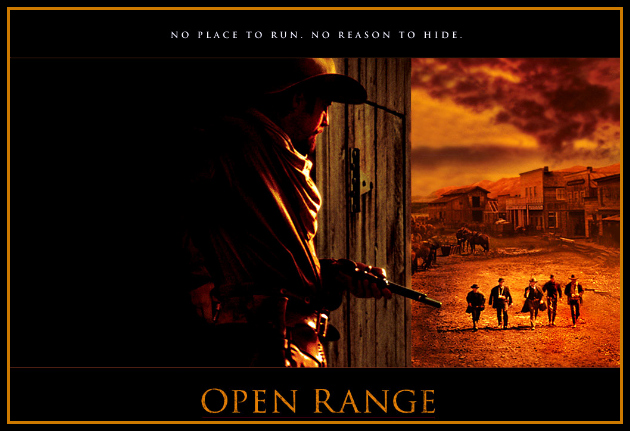
2003 marked a sort of a small comeback for Kevin Costner both as a director and as an actor. The work in question was the very well-done Western, Open Range. Open Range was a moderately budgeted film which has more in common with Costner’s first directorial work, Dances with Wolves than his last big-budget flop, The Postman.
The film was an adaptation of the Lauran Paine novel, The Open Range Men, and it captures much of the themes found in the novel. This was probably due to the fact that screenwriter Craig Storper didn’t deviate from the novel’s basic story. There were no superfluous action sequences and gunfights to ratchet up the action. Everything about Open Range was about the gradual and inevitable final confrontation between the “free-grazers” and the “barbed-wire” men. The free-grazers were played by Kevin Costner and Robert Duvall as Charles Waite and Boss Spearman, respectively. On the other side of the conflict was Michael Gambon playing Denton Baxter, the ruthless land-baron whose attempt to keep the free-grazers from grazing on his land also hides another agenda. Caught in-between these two strong-willed groups were the people in the town Baxter pretty much controls through his “town marshal” (played with fake bravado by James Russo) and the herd helpers under Boss Spearman’s employ.
The theme of freedom to roam the open country versus the rights of a landowner echoes throughout the film. Set in the latter end of the 19th-century, Open Range shows the clash of the more natural ways of the Old West slowly eroding to be replaced by the more industrial, monopolistic practices that became prevalent during the 1880’s, also known in US History as the Gilded Age. Even the personalities of the conflicting characters mirror this theme as the free-grazers only want to use the land as it has been used for years upon years and thats sharing between all men of the West. The land-baron has other ideas in mind and everything boils down to him owning everything around him, even if it means using ruthless tactics to gather even more property.
Open Range also has a bit of modernism in its subplot of Charley Waite’s growing attraction to the sister of the town doctor and the same sister’s well-rounded characterization. It’s not often that a traditional Western shows women in a very positive light instead of the usual submissive and stay-at-home characters of Western’s past. This could also be attributed to the wonderful, underrated performance by Annette Bening who plays Sue Barlow, the doctor’s sister and Charley Waite’s love interest. Bening doesn’t play Sue as the traditional Western female. She also doesn’t go overboard and turn Sue into a 20th-century feminist. She instead plays the character as someone who knows her place in the world, but also one who is strong-willed and willing to stand for what is right.
Open Range was a wonderful throwback to what made such modern Westerns like Unforgiven and Tombstone such a success both for traditionalists and new fans. Kevin Costner’s direction was very low-key. Allowing the story to tell itself at its own pace until the final confrontation. The final gunfight in the end gets a lot of well-earned attention from critics and fans. The entire sequence takes at least 10-15 minutes from start to finish. The fight itself was done in a realistic fashion. There was no sharpshooter dead-eyes in this film, but individuals who had skill but still missed. It was a fight where it wasn’t who was the fastest, but who was the calmest under fire. There’s also a suddenness to the brutality in the final gunfight that demystifies the old-style Western shootouts of past. Some complained that the film was very slow and took too long to get to the “good stuff”, but I actually thought the gradual pacing of most of the film’s length gave the final confrontation even more impact. Costner seem to have learned the lesson all good directors know: less means more.
Open Range won’t go down as a great piece of film making. It surely won’t go down as one of the best in history. What Open Range did accomplish was putting the Western back to its epic and majestic roots, but at the same time keeping the intimacy of a character-driven story. In time, Open Range would probably go down as one of the underrated gems of the last decade and find a place next to its closest comparison, Unforgiven, as one of the best Westerns of the new era.
 Through the Shattered Lens