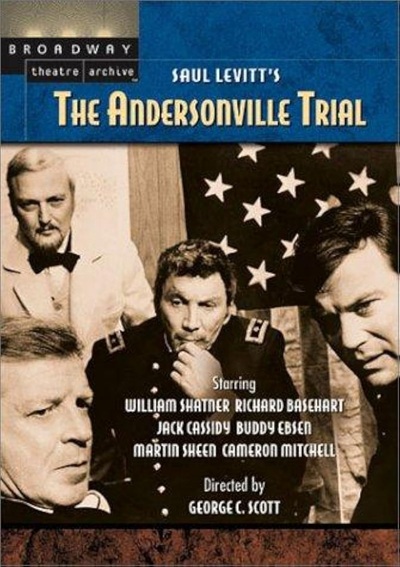
On Stage On The Lens: The Andersonville Trial (dir by George C. Soctt)


1970’s The Andersonville Trial takes place in one muggy military court room.  The year is 1865.  The Civil War is over but the wounds of the conflict are still fresh.  Many of the leaders of the Confederacy are still fugitives.  Abraham Lincoln has been dead for only a month.  The people want someone to pay and it appears that person might be Captain Henry Wirz (Richard Basehart).

Originally born in Switzerland and forced to flee Europe after being convicted of embezzlement, Henry Wirz eventually ended up in Kentucky.  He served in the Confederate Army and was eventually named the commandant of Camp Sumter, a prison camp located near Andersonville, Georgia.  After the war, Captain Wirz is indicted for war crimes connected to his treatment of the Union prisoners at the camp.  Wirz and his defense counsel, Otis Baker (Jack Cassidy), argue that the prison soon became overcrowded due to the war and that Wirz treated the prisoners as well as he could considering that he had limited resoruces.  Wirz points out that his requests for much-needed supplies were denied by his superiors.   Prosecutor Norton Chipman (William Shatner) argues that Wirz purposefully neglected the prisoners and their needs and that Wirz is personally responsible for every death that occurred under his watch.  The trial is overseen by Maj. General Lew Wallace (Cameron Mitchell), the same Lew Wallace who would later write Ben-Hur and who reportedly offered a pardon to Billy the Kid shortly before the latter’s death.  Wallace attempts to give Wirz a fair trial, even allowing Wirz to spend the trial reclining on a couch due to a case of gangrene.  (Agck!  The 19th century was a scary time!)

The Andersonville Trial started life as a 1959 Broadway production.  On stage, George C. Scott played Chipman, an experience he described as difficult because, even though Chipman was nominally the play’s hero, Wirz was actually a much more sympathetic character.  When the play was adapted for television in 1970, Scott returned to direct.  Admittedly, the television version is very stagey.  Scott doesn’t make much effort to open up the play.  Almost all of the action is confined to that courtroom.  We learn about the conditions at Fort Sumter in the same way that the judges learned about the conditions.  We listen as the witnesses testify.  We listen as a doctor played by Buddy Ebsen talks about the deplorable conditions at Fort Sumter.  We also listen as a soldier played by Martin Sheen reports that Wirz has previously attempted to suicide and we’re left to wonder if it was due to guilt or fear of the public execution that would follow a guilty verdict.  We watch as Chipman and Baker throw themselves into the trial, two attorneys who both believe that they are correct.  And we watch as Wirz finally testifies and the play hits its unexpected emotional high point.

As most filmed plays do, The Andersonville Trial demands a bit of patience on the part of the viewer.  It’s important to actually focus on not only what people are saying but also how they’re saying it.  Fortunately, Scott gets wonderful performances from his ensemble cast.  Even William Shatner’s overdramatic tendencies are put to good use.  Chipman is outraged but the play asks if Chipman is angry with the right person.  With many of the Confederacy’s leaders in Canada and Europe, Wirz finds himself standing in for all of them and facing a nation that wants vengeance for the death of their president.  Wirz claims and his defense attorney argues that Wirz was ultimately just a soldier who followed orders, which is what soldiers are continually told to do.  The Andersonville Trial considers when military discipline must be set aside to do what is morally right.

Admittedly, when it comes to The Andersonville Trial, it helps to not only like courtroom dramas but to also be a bit of a history nerd as well.  Fortunately, both of those are true of me.  I found The Andersonville Trial to be a fascinating story and a worthy production.
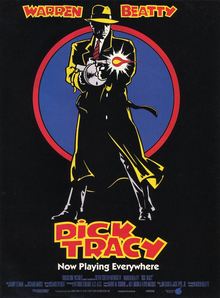
Dick Tracy (1990, directed by Warren Beatty)


The year is 1937 and “Big Boy” Caprice (Al Pacino) and his gang of flamboyant and often disfigured criminals are trying to take over the rackets.  Standing in their way is ace detective Dick Tracy (Warren Beatty), the yellow trench-wearing defender of the law.  Tracy is not only looking to take down Caprice but he and Tess Trueheart (Glenne Headly) are currently the guardians of The Kid (Charlie Korsmo), a young street kid who witnessed one of Caprice’s worst crimes.  Tracy’s investigation leads him through a rogue’s gallery of criminals and also involves Breathless Mahoney (Madonna), who has witnessed many of Caprice’s crimes but who also wants to steal Tracy’s heart from Tess.

Based on the long-running comic strip, Dick Tracy was a labor of love on the part of Warren Beatty.  Not only starring but also directing, Tracy made a film that stayed true to the look and the feel of the original comic strip (the film’s visual palette was limited to just seven colors) while also including an all-star cast the featured Madonna is an attempt to appeal to a younger audience who had probably never even heard of Dick Tracy.  When Dick Tracy was released, the majority of the publicity centered around Madonna’s participation in the film and the fact that she was dating Beatty at the time.  Madonna is actually probably the weakest element of the film.  More of a personality than an actress, Madonna is always Madonna no matter who she is playing and, in a film full of famous actors managing to be convincing as the members of Dick Tracy’s rogue gallery, Madonna feels out of place.  Michelle Pfeiffer would have been the ideal Breathless Mahoney.

It doesn’t matter, though, because the rest of the film is great.  It’s one of the few comic book films of the 90s to really hold up, mostly due to Beatty’s obvious enthusiasm for the material and the performances of everyone in the supporting cast who was not named Madonna.  Al Pacino received an Oscar nomination for playing Big Boy Caprice but equally good are Dustin Hoffman as Mumbles, William Forsythe as Flaptop, R.G. Armstong as Pruneface, and Henry Silva as Influence.  These actors all create memorable characters, even while acting under a ton of very convincing makeup.  I also liked Dick Van Dyke as the corrupt District Attorney.  Beatty knew audience would be shocked to see Van Dyke not playing a hero and both he and Van Dyke play it up for all its worth.  Beatty embraces the comic strip’s campiness while still remaining respectful to its style and the combination of Danny Elfman’s music and Stephen Sondheim’s songs provide just the right score for Dick Tracy’s adventures.  The film can be surprisingly violent at times but the same was often said about the Dick Tracy comic strip.  It wasn’t two-way wrist radios and trips to the Moon.  Dick Tracy also dealt with the most ruthless and bloodthirsty gangsters his city had to offer.

Dick Tracy was considered to be a box office disappointment when it was originally released.  (Again, you have to wonder if Beatty overestimated how many fans Dick Tracy had in 1990.)  But it holds up well and is still more entertaining than several of the more recent comic book movies that have been released.

Lisa Marie Reviews An Oscar Nominee: Reds (dir by Warren Beatty)


In the 1981 film Reds, Warren Beatty plays Jack Reed, the radical journalist who, at the turn of the century, wrote one of the first non-fiction books about Russia’s communist revolution and then went on to work as a propagandist for the communists before becoming disillusioned with the new Russian government and then promptly dying at the age of 32.

Diane Keaton plays Louise Bryant, the feminist writer who became Reed’s lover and eventually his wife.  Louise found fame as one of the first female war correspondents but then she also found infamy when she was called before a Congressional committee and accused of being a subversive.

Jack Nicholson plays Eugene O’Neill, the playwright who was a friend of both Reed and Bryant’s and who had a brief affair with Bryant while Reed was off covering labor strikes and the 1916 Democratic Convention.

Lastly, Maureen Stapleton plays Emma Goldman, the anarchist leader who was kicked out of the country after one of her stupid little dumbass followers assassinated President McKinley.  (Seriously, don’t get me started on that little jerk Leon Czolgosz.)

Together …. well, I was going to say that they solve crimes but that joke is perhaps a bit too flippant for a review of RedsReds is a big serious film about the left-wing activists at the turn of the century, one in which the characters move from one labor riot to another and generally live the life of wealthy bohemians.  Reed spends the film promoting communism, just to be terribly disillusioned when the communists actually come to power in Russia.  For a history nerd like me, the film is interesting.  For those who are not quite as obsessed with history, the film is extremely long and the scenes of Reed and Bryant’s domestic dramas often feel a bit predictable, especially when they’re taking place against such a large international tableaux.  At its best, the film is almost a Rorschach test for how the viewer feels about political and labor activists.  Do you look at Jack Reed and Louise Bryant and see two inspiring warriors for the cause or do you see two wealthy people playing at being revolutionaries?

Reds was a film that Warren Beatty spent close to 20 years trying to make, despite the fact that the heads of the Hollywood studios all told him that audiences would never show up for an epic film about a bunch of wealthy communists.  (The heads of the studio turned out to be correct, as the film was critically acclaimed but hardly a success at the box office.)  It was only after the success of the 1978, Beatty-directed best picture nominee Heaven Can Wait that Beatty was finally able to get financing for his dream project.  He ended up directing, producing, and writing the film himself and he cast his friend Jack Nicholson as O’Neill and his then-romantic partner Diane Keaton as Louise Bryant.  (Gene Hackman, Beatty’s Bonnie and Clyde co-star, shows up briefly as one of Reed’s editors.)  One left-wing generation’s tribute to an early left-wing generation, Reds is fully a Warren Beatty production and, for his efforts, Beatty was honored with the Oscar for Best Director.  That said, the Reds lost the award for Best Picture to another historical epic, Chariots of Fire.  Chariots of Fire featured no communists and did quite well at the box office.

The film is good but a bit uneven, especially towards the end when we suddenly get scenes of Louise Bryant trudging through Finland as she attempts to make it to Russia to be reunited with Reed.  The film actually works best when it features interviews with people who were actual contemporaries of Reed and Bryant and who share their own memoires of the time.  In fact, the interviews work almost too well.  The “witnesses,” as the film refers to them, paint such a vivid picture of the Reed, Bryant, and turn of the century America that Beatty’s attempt to cinematically recreate history often can’t compete.  One can’t help but feel that Beatty perhaps should have just made a documentary instead of a narrative film.

(Interestingly enough, many of the witnesses were people who were sympathetic to Reed’s politics in at the start of the century but then moved much more to the right as the years passed.  Reed’s friend and college roommate, Hamilton Fish, went on to become a prominent Republican congressman and a prominent critics of FDR.)

That said, Jack Nicholson gives a fantastic performance as Eugene O’Neill, adding some much needed cynicism to the film’s portrayal of Reed and Bryant’s idealism.  Keaton and Beatty sometime both seem to be struggling to escape their own well-worn personas as Bryant and Reed but Beatty does really sell Reed’s eventually disillusionment with Russia and the scene where he finally tells off his Russian handler made me want to cheer.  Fans of great character acting will want to keep an eye out for everyone from Paul Sorvino to William Daniels to Edward Herrmann to M. Emmet Walsh and IanWolfe, all popping up in small roles.

Reds is not a perfect film but, as a lover of history, I enjoyed it.


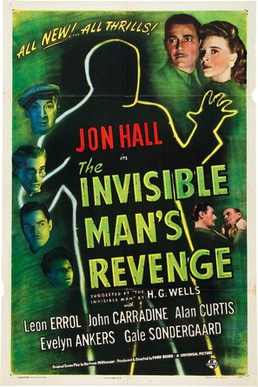
Horror Film Review: The Invisible Man’s Revenge (dir by Ford Beebe)


1944’s The Invisible Man’s Revenge opens with Robert Griffin (Jon Hall) arriving in England.

Despite his last name and the fact that he’s played by the star of Invisible Agent, this Robert Griffin would not appear to be in any way related to the previous invisible men.  Instead, he is someone who has just escaped from a mental institution in South Africa.  He has already murdered two orderlies and now, he’s come to England to take vengeance on Sir Jasper Herrick (Lester Matthews) and his wife, Lady Irene (Gale Sondergaard), two old friends who the paranoid Robert thinks tried to kill him in Africa so that they could steal his money.  When Robert sees Sir Jasper and Lady Irene, he informs them that they can either give him half of their fortune or they can allow him to marry their daughter, Julie (Evelyn Ankers).  Lady Irene responds by drugging Robert and having him kicked out of the house.

Dejected, Robert eventually comes across the cottage of Dr. Peter Drury (John Carradine, giving a surprisingly low-key performance in the mad scientist role).  Dr. Drury reveals to Robert that he has developed a serum that can turn living things invisible.  Drury goes on to “show” Robert all of the invisible pets that he has hanging out around the cottage, from an invisible dog to an invisible parrot.  When Robert asks how long the invisibility lasts, Drury says that it will last until the invisible person dies.  That sounds pretty good to Robert so he volunteers to be Drury’s latest test subject.

Soon, Robert is invisible and going out of his way to haunt that Herrick family.  Some of Robert’s antics are merely playful.  He helps a cobbler (Leon Errol) win a game of darts and later turns the man into his personal servant.  Robert’s other actions are a bit more destructive.  Robert, after all, was a murderer to begin with and using a serum that cause additional insanity is definitely not helping him with his temper.  When Robert decides that he wants to be visible again, he discovers that there’s only one temporary way to do it and it involves a lot of blood.

After being portrayed as being a hero in Invisible Agent, The Invisible Man is once again a villain in The Invisible Man’s Revenge and it just feels right.  There’s just something inherently sinister about the idea of someone being invisible.  Jon Hall, who was so boring in Invisible Agent, is far more compelling here, playing Robert as a paranoid megalomaniac who has so convinced himself of his own cleverness that he can’t even understand that he’s writing the script for his own downfall.  This is a good, solid Universal horror movie.  The true hero of the movie is Drury’s dog, played by a talented canine actor named Grey Shadow.  It takes more than invisibility to fool that dog!

Previous Universal Horror Reviews:

  1. Dracula (1931)
  2. Dracula (Spanish Language Version) (1931)
  3. Frankenstein (1931)
  4. Island of Lost Souls (1932)
  5. The Mummy (1932)
  6. The Invisible Man (1933)
  7. The Bride of Frankenstein (1935)
  8. Dracula’s Daughter (1936)
  9. Son of Frankenstein (1939)
  10. The Invisible Man Returns (1940)
  11. The Wolf Man (1941)
  12. Ghost of Frankenstein (1942)
  13. Invisible Agent (1942)
  14. Frankenstein Meets The Wolf Man (1943)
  15. Son of Dracula (1943)
  16. House of Frankenstein (1944)
  17. House of Dracula (1945) 
  18. Creature From The Black Lagoon (1954)

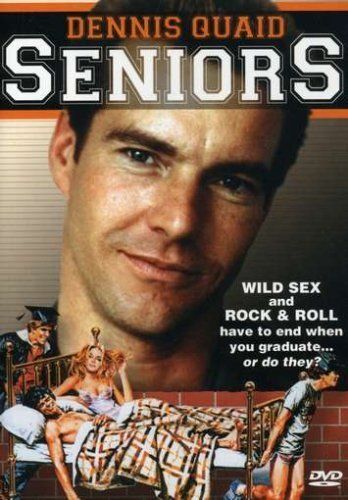
The Seniors (1978, directed by Rod Amateau)


Four college seniors (including one played by Dennis Quaid) are upset at the prospect of graduating, having to get real job, and losing Sylvia (Priscilla Barnes), the mute nymphomaniac who lives in their house with them and does all the cleaning and cooking.  They decide that the best way to avoid getting a real job is by setting up a fake company called Phantom Research.  They apply for and get a grant to study female sexuality, which essentially means that they pay the girls on campus to have sex with them.  Before you can say Risky Business (which was actually released years after this film), they expand their operations, get involved with some crooked businessmen, and nearly lose their lives.  It’s a comedy.

The Seniors is one of those films that used to come on television frequently when I was a kid.  I remember watching it when I was 12 and enjoying it, mostly because I was a stupid kid and I was at that age where any film about sex seemed clever and hilarious.  I recently rewatched it and discovered that there was only one funny bit and that was about a nerdy research assistant named Arnold (Rocky Flintermann) who helps out the seniors in return for them setting him up with Sylvia.  Throughout the film, the formerly virginal Arnold gets laid so often that he loses the ability to walk and then he dies.  Ha ha.  The rest of the film is just dumb.  The problem is that the film wants to be a raunchy, Animal House-style comedy but it was written by Stanley Shapiro (who previously wrote Doris Day comedies) and directed by Rod Amateau, who had previously directed several episodes of Gilligan’s Island.  Their style is all wrong for the material.

The film’s opening credits announce that it stars, among others, Ryan O’Neal, Clint Eastwood, and Charles Bronson.  A cartoon professor then walks out and announces that, “All of these big stars!  None of them are in this film!”  That’s too bad.  I would have liked to have seen some of those stars in this movie.  I think Eastwood would have told the seniors to get jobs and stop exploiting Sylvia.  Bronson would have blown away the entire operation but Ryan O’Neal probably would have been cool with it all.

O’Neal, Eastwood, and Bronson are not in the film.  Dennis Quaid is, though he probably doesn’t brag about.  Edward Andrews and Ian Wolfe both have minor roles as corrupt businessmen who help fund Phantom Research.  Alan Reed, the voice of Fred Flinstone, plays a professor.  This was his last performance before his death.

Lisa Reviews An Oscar Nominee: Romeo and Juliet (dir by George Cukor)


http://www.youtube.com/watch?v=IoAgB_sbDOE

You know the story that’s told in this 1936 film already, don’t you?

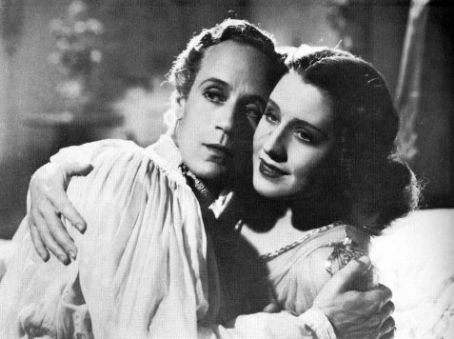
In the city of Verona, Romeo Montague (Leslie Howard) has fallen in love with Juliet Capulet (Norma Shearer).  Normally, this would be cause for celebration because, as we all know, love is a wonderful thing.  However, the House of Capulet and the House of Montague have long been rivals.  When we first meet them all, they’re in the process of having a brawl in the middle of the street.  There’s no way that Lord Capulet (C. Aubrey Smith) will ever accept the idea of Juliet marrying a Montague, especially when he’s already decided that she is to marry Paris (Ralph Forbes).  Things get even more complicated with Juliet’s cousin, Tybalt (Basil Rathbone), kills Romeo’s best friend, Mercutio (John Barrymore).  Romeo then kills Tybalt and things only grow more tragic from there.

It’s hard to keep track of the number of films that have been made out of William Shakespeare’s tale of star-crossed lovers and tragedy.  The plot is so universally known that “Romeo and Juliet” has become shorthand for any story of lovers who come from different social sects.  Personally, I’ve always felt that Romeo and Juliet was less about love and more about how the rivalry between the Montagues and the Capulets forces the young lovers into making hasty decisions.  If not for Lord Capulet throwing a fit over his daughter’s new boyfriend, she and Romeo probably would have split up after a month or two.  Seriously, I’ve lost track of how many losers I went out with in high school just because my family told me that I shouldn’t.

Producer Irving Thalberg spent five years trying to get MGM’s Louis B. Mayer to agree to greenlight a film version of Romeo and Juliet.  Mayer thought that most audiences felt that Shakespeare was above them and that they wouldn’t spend money to see an adaptation of one of his plays.  Thalberg, on the other hand, thought that the story would be a perfect opportunity to highlight the talents of his wife, Norma Shearer.  It was only after Warner Bros. produced a financially successful version of A Midsummer Night’s Dream that Mayer gave Romeo and Juliet the go ahead.

Of course, by the time the film went into production, Norma Shearer was 34 years old and a little bit too mature to be playing one of the most famous teenagers in literary history.  Perhaps seeking to make Shearer seem younger, Thalberg cast 43 year-old Leslie Howard as Romeo, 44 year-old Basil Rathbone as Tybalt, and 54 year-old John Barrymore as Mercutio,  (In Barrymore’s defense, to me, Mercutio always has come across as being Verona’s equivalent of the guy who goes to college for ten years and then keeps hanging out on the campus even after dropping out.)

In short, this is the middle-aged Romeo and Juliet and, despite all of the good actors in the cast, it’s impossible not to notice.  There were few Golden Age actors who fell in love with the authenticity of Leslie Howard and Basil Rathbone is a wonderfully arrogant and sinister Tybalt.  Norma Shearer occasionally struggles with some of the Shakespearean dialogue but, for the most part, she does a good job of making Juliet’s emotions feel credible.  As for Barrymore — well, he’s John Barrymore.  He’s flamboyant, theatrical, and a lot of fun to watch if not always totally convincing as anything other than a veteran stage actor hamming it up.  The film is gorgeous to look at and George Cukor embraces the melodrama without going overboard.  But, everyone in the movie is just too old and it does prove to be a bit distracting.  A heart-broken teenager screaming out, “I am fortune’s fool!” is emotionally powerful.  A 43 year-old man doing the same thing is just not as effective.

Despite being a box office failure (it turned out that Mayer was right about Depression-era audiences considering Shakespeare to be too “arty”), Romeo and Juliet was nominated for Best Picture of the year, the second Shakespearean adaptation to be so honored.  However, the award that year went to another big production, The Great Ziegfeld.

Lisa Reviews An Oscar Nominee: The Barretts of Wimpole Street (dir by Sidney Franklin)


The 1934 best picture nominee, The Barretts of Wimpole Street, takes place largely in one room.

That room is a bedroom located in a mansion that sits on Wimpole Street in London.  The room is occupied by Elizabeth (Norma Shearer), a sickly woman who has spent years in bed and who is barely able to walk.  She is the eldest of 11 siblings and all of them live in the house together, under the watchful eye of their tyrannical father, Edward (Charles Laughton).  Edward has forbidden any of his children from ever leaving home.  None of them are to get married.  In fact, none of them are to have even a relationship.  Even when he hears that a trip to Italy could actually improve Elizabeth’s health, he sternly forbids her from leaving.  Edward is obsessed with sin.  As he explains it, he was once a sinner himself.  In fact, he was such a sinner that he sometimes lost control of himself.  Now that he’s a father and a widower, Edward deals with his less savory impulses through constant prayer and he’s determined to never allow his children to fall into sin as well.

Despite her father’s attempts to keep her isolated from the outisde world, Elizabeth has managed to find an escape.  She’s a poet and her words have won her admirers from around world.  One of those admirers is another poet, a young man named Robert (Fredric March), who frequently writes her letters about his love of her work.  One day, in the middle of a snowfall, Robert shows up at the house on Wimpole Street and requests to see Elizabeth.  Robert tells her that her poetry has not only inspired him but it has also caused him to fall in love with her.  When Elizabeth explains that she is dying and cannot leave the bedroom, Robert says that she’s going to live forever.  After Robert leaves, Elizabeth manages to stand and, for the first time in years, walks over to the window to watch as he departs.

Sounds like a perfect love story, right?  Well, there’s a problem.  Edward has absolutely no intention of allowing Elizabeth to leave the house, regardless of how much her health improves after her initial meeting with Robert.  He is determined to keep her in that bedroom and, this being a pre-code film, it becomes obvious that there’s more to Edward’s behavior than just being an overprotective father.  Though the dialogue may be euphemistic, Edward’s incestuous desires are plain to see.  It’s there every time that he leers as his daughters while also saying that he’ll be sure to pray for their souls.  It’s there in the film’s final moments, when Edward makes a request that’s so dark and cruel that it will take even a modern audience by surprise.  Charles Laughton played a lot of villains over the course of his long career but Edward is perhaps the most monstrous.

As a film, The Barretts of Wimpole Street is undeniably stagy and it’s a bit overlong as well.  Charles Laughton so dominates the film with menace that he threatens to overshadow not just March and Shearer but also Maureen O’Sullivan, who plays one of Elizabeth’s sisters.  But no matter!  I absolutely love The Barretts of Wimpole Street.  The house is gorgeous, the plot is wonderfully melodramatic, and Shearer and March both have a wonderful chemistry.  You can debate whether or not March and Shearer are credible as poets but, ultimately, what matters more is that they are totally believable as soul mates.  From the minute they first meet, you simply buy them as a couple that is meant to be.  Robert’s earnestness is perfectly matched with Elizabeth’s growing strength and it’s impossible not to cheer at least a little when Elizabeth first manages to walk down a staircase without collapsing.

Of course, as any student of literature should be aware, Robert is Robert Browning and Elizabeth is Elizabeth Barrett.  In real life, Robert Browning did arrange a meeting with Elizabeth after having read her poetry and, as well, it’s been said that Elizabeth’s father did not approve of her relationship with Robert.  It’s also apparently true that Edward actually did disinherit any of his children who married.  As for the other details of Edward’s depiction in The Barretts of Wimpole Street, it’s unknown how close to the truth Laughton’s performance may have been.

The Barretts of Wimpole Street is a wonderful historical romance.  It was Oscar-nominated for best picture, though it lost to a far different romance, It Happened One Night.

Lisa Cleans Out Her DVR: The Silver Chalice (dir by Victor Saville)


If you ever needed proof that everyone has to start somewhere, look no further than the 1954 biblical epic, The Silver Chalice.

The Silver Chalice features the film debut of Paul Newman, who later proved himself to be a legitimately great actor.  It’s true that, unlike a lot of actors, Newman made his debut in a starring role.  He never had to humiliate himself with any one-line roles or walk-on bits.  No, Paul got to humiliate himself with a starring role.

Paul Newman was 29 years old when he played Basil, a former slave turned sculptor.  Not only did Newman bear a disconcerting resemblance to Ben Savage (of Boy Meets World fame) but he gave a performance that was so bad that it’s kind of a shock that he ever worked again.  Basil is a passionate artist, one who survived being betrayed by his adopted family and slavery.  Newman comes across like a nice, young man from Iowa.  Usually, Newman looks miserable but occasionally, he flashes a somewhat weak smile.  When Basil gets mad, Newman speaks in a squeaky voice.  When Basil is feeling reverent, Newman furrows his brow like a hungover Russell Brand staring straight into the sun.

“But me and Topanga are soul mates…”

Then again, I’m not sure that any actor could have given a good performance as Basil.  The Silver Chalice has a terrible script, one that was written by Lesser Samuels.  (I’ll avoid the obvious joke about whether or not The Silver Chalice would have been better if written by Greater Samuels.)  Apparently, before Newman was cast, the producers pursued James Dean for the role.  I’m sure we all would have enjoyed seeing Dean slouch his way through the film but I doubt that even he could have done much with The Silver Chalice.

The Silver Chalice is based on a novel, which perhaps explains why there’s so many characters and so many unnecessary subplots.  Basil follows a path that will be familiar to anyone who has seen a 1950s biblical epic.  He’s a young Greek who is adopted into a noble Roman family.  When his kindly stepfather dies, Basil’s stepsiblings sell him into slavery.  It’s not an easy life but Basil is a talented sculptor so Joseph of Arimathea commissions him to make a silver chalice for the Holy Grail.  Basil goes from poor to rich to poor again to rich again to ultimately saved by grace.  He even gets to do the same walking towards Heaven thing that Richard Burton did at the end of The Robe.

Meanwhile, Simon Magus (Jack Palance) is wowing the citizenry with his magic tricks and claiming to be the risen Messiah.  Simon’s assistant just happens to be Helena, who knew Basil when he was younger.  Young Helena is played by dark-haired Natalie Wood.  Grown-up Helena is played by blonde Virgina Mayo.  They were both good actresses but there’s seriously no way that Natalie Wood would have ever grown up to be Virginia Mayo.

Jack Palance pretty much steals the movie, mostly because he gets to wear the silliest costumes:

Poor Paul Newman has to settle for a tunic and a miniskirt, while Jack Palance gets to wear this:

Personally, I’ve always enjoyed the story of Simon Magus.  He tried to show off by flying over the Roman Forum so St. Peter said a prayer and Simon promptly plunged to his death.  Take that, you Gnostic!

Another interesting thing about The Silver Chalice is that the sets are very deliberately fake.  I don’t mean that they look cheap.  I mean, much as in the style of German Expressionism, the sets are specifically designed to remind you that you’re watching a movie.

For instance, look at the wall behind Palance:

Look at this pleasure palace:

Look at Rome at night:

The sets are extremely dream-like and yet everything else about the film is extremely slow and conventional.  One wonders if director Victor Saville was trying to make an art film, though there’s nothing else in his long filmography that would suggest that Saville was anything other than a workmanlike director.  In fact, most biblical epics of the time took a lot of pride in looking as expensive and “accurate” as possible.  Major studios in the 1950s were not known for artistic experimentation, especially when it came to Biblical epics.  It’s hard to know what to make of The Silver Chalice‘s artistic flourishes, which is why it’s easier to just focus on what a terrible performance Paul Newman gives.

That’s certainly what Paul did!  In 1966, when The Silver Chalice finally premiered on TV, Newman took out a newspaper ad in which he apologized for his performance and then asked people not watch.  Apparently, he also used to show the movie during parties on the condition that his guests mock the film while watching it.

I don’t really blame him.  It’s an amazingly dull film and Newman looks absolutely miserable in nearly every other scene.  However, because it did star Paul Newman, The Silver Chalice will always have a life on TCM.

Speaking of TCM, they last broadcast this film on February 24th as part of their 31 Days of Oscar.  (It was nominated for both its sets and its score.)  That is when I recorded it.  And, after watching it yesterday, I was more than happy to erase it.

Master of Horror: Boris Karloff in BEDLAM (RKO 1946)


gary loggins's avatarcracked rear viewer

bedlam1

(This post is part of the TCM SUMMER UNDER THE STARS blogathon hosted by Kristen at JOURNEYS IN CLASSIC FILM! )

bedlam2

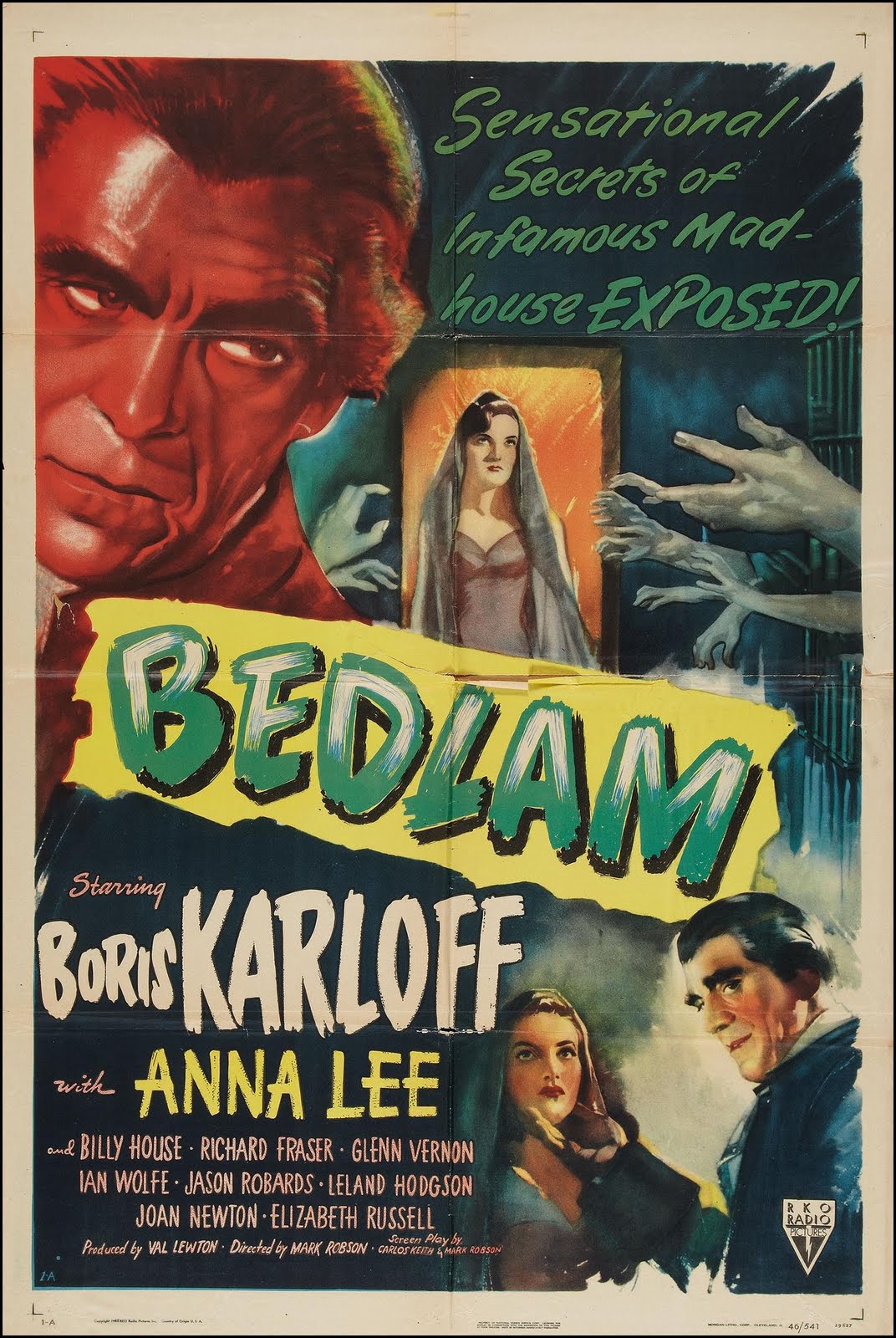
Boris Karloff made a trio of films for producer Val Lewton in the mid-40’s: THE BODY SNATCHER , ISLE OF THE DEAD, and BEDLAM. The Old Master of Terror was given the opportunity to show off his acting prowess in these dark, psychological horrors. Freed from the restraint of playing yet another mad scientist or creature, Karloff excels in the roles of murderous Cabman Grey, plague-ridden General Pherides, and here as the cruel martinet of Bedlam, Master George Sims.

bedlam3

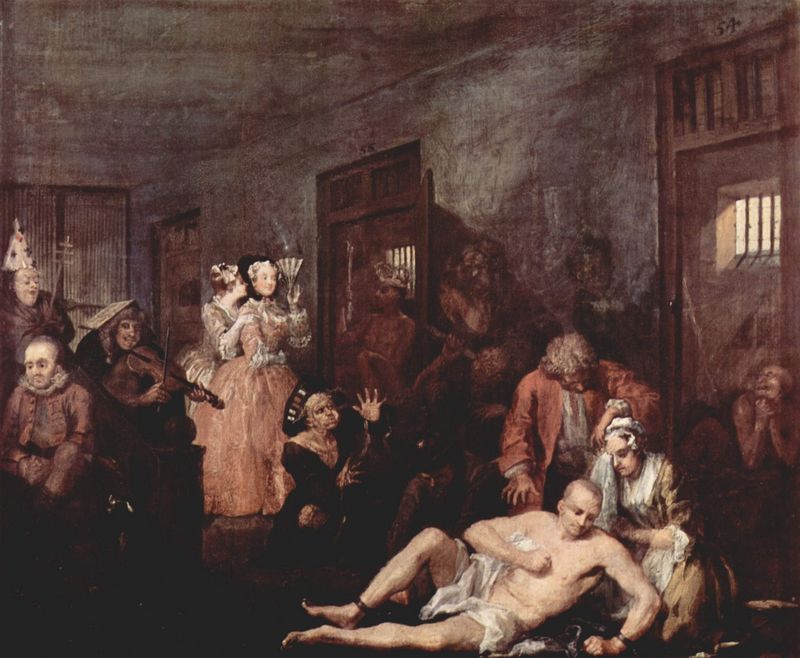
Lewton cowrote the script with director Mark Robson  , “suggested by” William Hogarth’s 8th painting in the series “A Rake’s Progress”. There are a lot of sly references to Hogarth in BEDLAM, and the artist even gets a screenwriting credit. It’s 1761 London, and the class struggle between rich and poor rages…

View original post 615 more words

Cleaning Out The DVR #16: Johnny Belinda (dir by Jean Negulesco)


X-johnnybelindalenda48-jjp

Continuing my effort to watch 38 films in 10 days (and, as of today, I only have 6 days left!), I spent part of last night watching the 1948 film Johnny Belinda.

Johnny Belinda takes place in Canada, on Cape Breton Island.  The residents of the island are a hearty, no-nonsense group of people.  They work hard, they don’t play hard because they never play, they farm, and they don’t have much use for outsiders.  When a new doctor, Robert Richardson (Lew Ayres), arrives on the island, he has to work hard to earn their trust.

Dr. Richardson is fascinated by Belinda McDonald (Jane Wyman), a young woman who is deaf and mute.  Belinda lives on a farm with her father (Charles Bickford) and her aunt (Agnes Moorehead).  Everyone in the community assumes that Belinda is a simple-minded and, because her mother died giving birth to her, she is resented by her father.  Only Dr. Richardson believes that Belinda is in any way intelligent and, over her father’s objections, he teaches Belinda sign language.

Dr. Richardson’s secretary, Stella (Jan Sterling), falls in love with him and grows angry when it becomes apparent that he’s more interested in taking care of Belinda than pursuing an adulterous romance with Stella.  Meanwhile, Stella’s husband, a viscous alcoholic named Locky (Stephen McNally), gets drunk and rapes Belinda.  9 months later, when Belinda gives birth to a boy that she names Johnny, everyone assumes that Dr. Richardson is the father.  Soon, both Richardson and the McDonald family are being shunned by the judgmental community.

Locky, meanwhile, is determined to keep anyone from finding out about his crime, to the extent that he’s willing to commit murder.  Both Locky and Stella are determined to take Johnny away from Belinda and it all eventually leads to further tragedy and, somewhat inevitably, a dramatic murder trial.

Much like Random Harvest, Johnny Belinda is another film that I could imagine being remade for Lifetime.  It’s a well-made melodrama that appeals to all of the emotions and features a cast of talented actors doing good work playing characters that are probably just a bit too familiar.  In fact, there’s really not a single moment of Johnny Belinda that will take you by surprise but, despite that, the film still works.  Jane Wyman does such a good job playing the silent Belinda that it makes the entire movie worth watching.  (It’s interesting to contrast Wyman’s innocent, vulnerable, and sympathetic performance here with her far more severe work in The Yearling.)  Reportedly, Wyman devoted so much time and effort to her performance that it was cited as a reason for her divorce from future President Ronald Reagan.  For Johnny Belinda, Wyman lost the chance to be first lady but she did win an Oscar.

(And, for the record, Wyman voted for Reagan in 1980 and 1984, saying that it wasn’t often that you got to vote for your ex-husband.)

Johnny Belinda was nominated for best picture of the year and, with 10 nominations, it was the most nominated film of 1947.  Though it won an Osar for Wyman, it lost best picture to Laurence Olivier’s Hamlet.